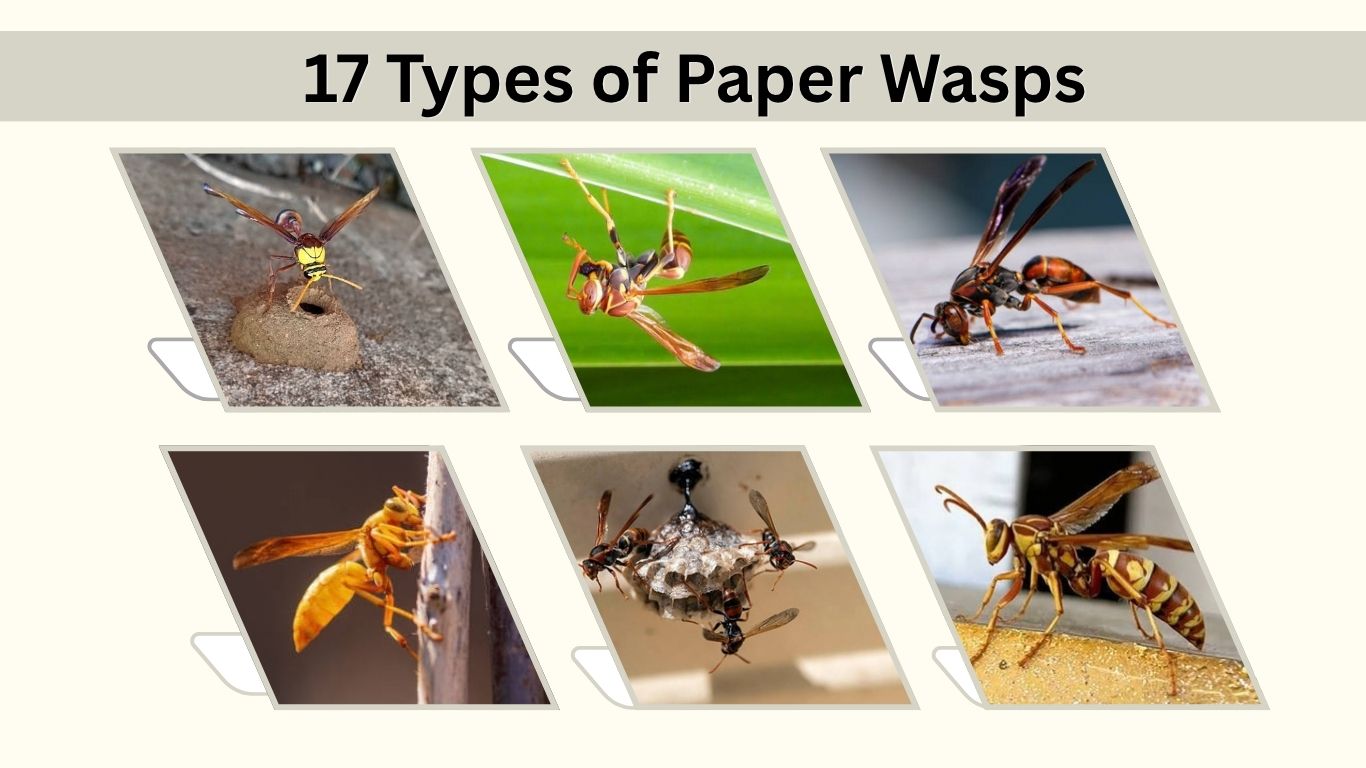
Paper wasps are slender, long-legged social wasps known for building open, umbrella-shaped nests from chewed wood fibers. They occur across many parts of the world and vary widely in color, size, habitat, and behavior. Some species live around homes and gardens, while others prefer forests, deserts, or tropical regions. In this guide, you will discover 17 types of paper wasps, including their identification features, habitat and distribution, behavior and diet, and life cycle.
1. Ringed Paper Wasp
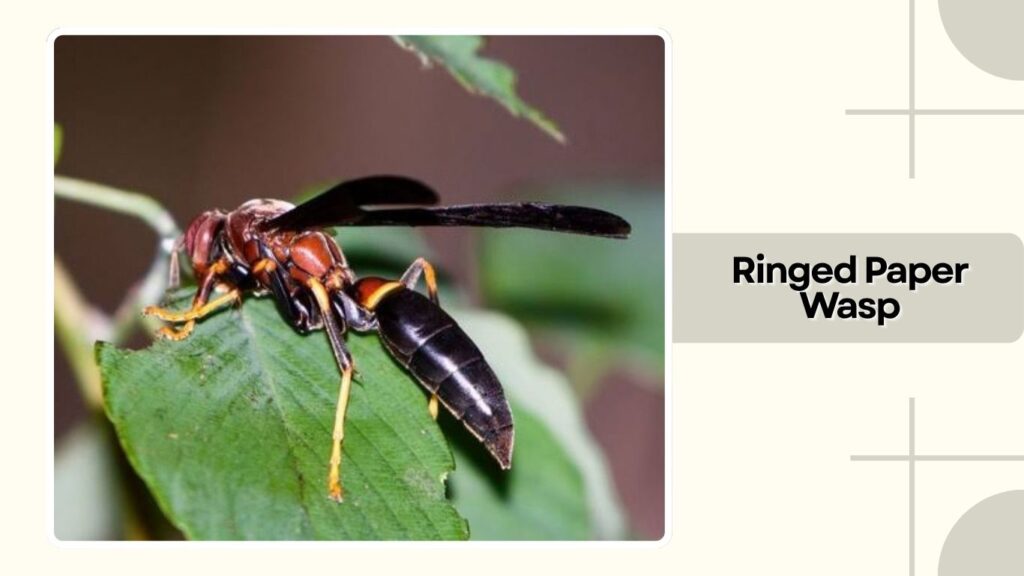
The Ringed Paper Wasp, scientifically known as Polistes annularis, is a large social wasp recognized by its reddish body, dark abdomen, and distinctive yellow abdominal band. It belongs to the Vespidae family and builds open, umbrella-shaped paper nests. This species is mainly found in the eastern United States and commonly nests beneath protected overhangs near wooded areas or water.
Identification
- Color: Usually reddish-brown or dark red with a mostly black abdomen.
- Size: Adults are relatively large, generally around 17–24 mm long.
- Abdominal marking: A narrow yellow band appears near the front portion of the abdomen.
- Antennae: The tips are orange or yellow-orange, contrasting with darker basal sections.
- Wings: Dark or smoky in appearance.
- Legs: Long and typically hang below the body during flight.
- Nest: Builds exposed paper combs with visible hexagonal cells rather than a fully enclosed nest.
Habitat and Distribution
Ringed Paper Wasps occur mainly throughout the eastern half of the United States, from parts of the Northeast south to Florida and westward into portions of the central states. They commonly inhabit woodlands, forest edges, wetlands, parks, gardens, and areas close to water. Nests are often attached beneath rock ledges, decks, eaves, and other sheltered overhangs.
Behavior and Diet
This species lives socially in colonies composed of reproductive females and workers. Adults obtain carbohydrates from nectar, honeydew, and other sugary substances. Workers also hunt insects to feed developing larvae, particularly caterpillars of moths and butterflies. This predatory behavior can make Ringed Paper Wasps useful natural controllers of plant-feeding insects.
Lifespan and Life Cycle
New nests are generally founded during spring by females that survived the colder months. Eggs are deposited inside individual nest cells and develop into larvae. Workers supply the larvae with captured insect prey until they pupate and emerge as adults. Colonies grow throughout the warmer months, eventually producing reproductive males and females. New reproductive females survive to establish colonies the following year, while old nests are generally not reused.
2. Apache Paper Wasp
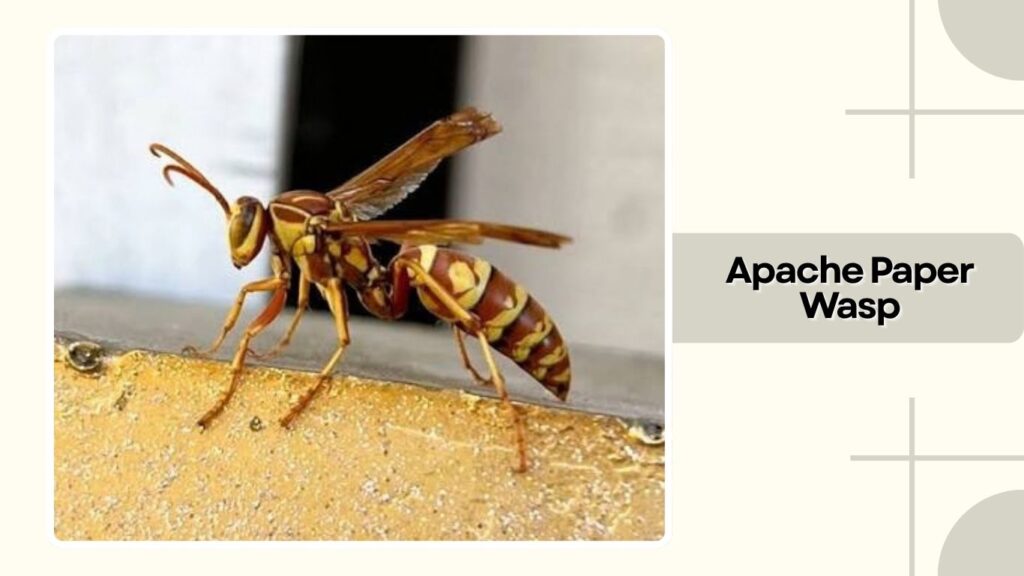
The Apache Paper Wasp, scientifically known as Polistes apachus, is a large social paper wasp native to western North America. It is also called the Texas Paper Wasp in some regions. This species is commonly associated with grasslands, orchards, vineyards, gardens, and buildings, where colonies construct characteristic open-comb paper nests.
Identification
- Color: Typically yellow with extensive reddish-brown or dark markings.
- Body: Long and slender with the narrow waist typical of paper wasps.
- Wings: Usually smoky or brownish and folded lengthwise while resting.
- Legs: Long and noticeable, often hanging beneath the body during flight.
- Antennae: Long and usually dark toward the base.
- Nest: An exposed, umbrella-shaped paper comb containing open hexagonal cells.
Habitat and Distribution
Apache Paper Wasps occur primarily in western parts of North America. They are associated with grasslands and mesquite habitats but have adapted well to agricultural and urban environments. Colonies can occur in vineyards and orchards, as well as beneath building eaves, inside attics, in barns, and on shrubs or low trees.
Behavior and Diet
These wasps live in social colonies. Adults obtain energy from nectar and other sugary substances and can frequently be seen drinking water during hot weather. Workers capture caterpillars and other insects, process the prey, and provide the protein-rich material to developing larvae. Adults generally fly with their long legs trailing beneath them.
Lifespan and Life Cycle
A fertilized female usually survives the colder season and begins a new nest in spring, although several females may cooperate when founding a colony. Eggs are laid inside individual cells and develop through larval and pupal stages. Workers gradually take over foraging and nest maintenance. Reproductive males and females are produced later in the season.
3. Arizona Paper Wasp
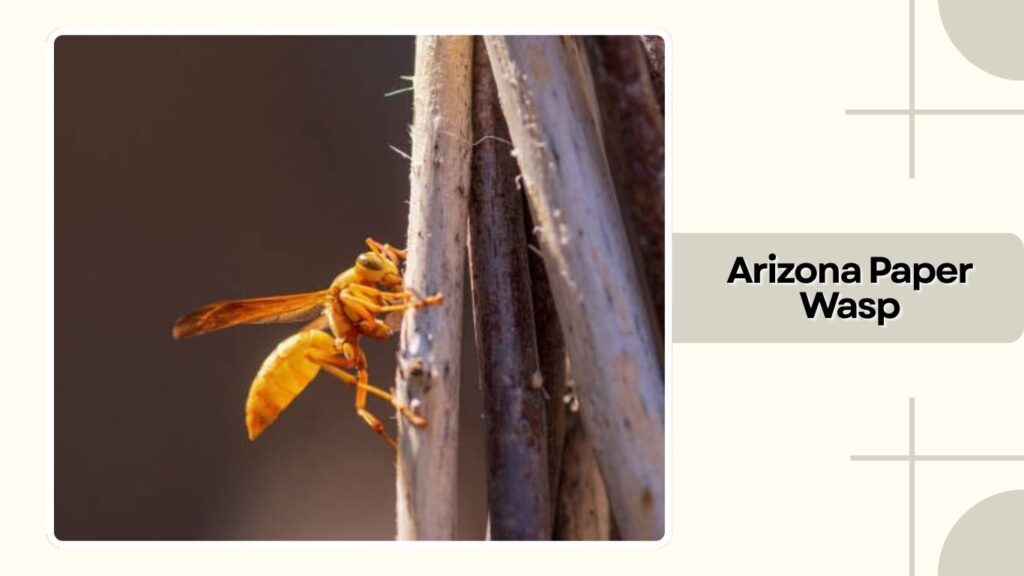
The Arizona Paper Wasp is a regional paper wasp referred to as Polistes exclamans arizonicus in University of Arizona materials. It has the slim, long-legged appearance typical of Polistes wasps and is noted for its reddish-brown coloration combined with narrow yellow bands. It builds exposed paper nests and is frequently encountered in warm, dry environments.
Identification
- Color: Mainly reddish-brown with contrasting yellow markings.
- Abdomen: Slender and marked with narrow yellow cross-bands.
- Body shape: Long, narrow, and spindle-shaped.
- Waist: Very thin between the thorax and abdomen.
- Legs: Long and usually visible hanging downward during flight.
- Nest: Open paper comb with uncovered hexagonal cells.
Habitat and Distribution
As its common name suggests, this paper wasp is particularly associated with Arizona and the American Southwest. It occurs in warm habitats where sheltered nesting sites and insect prey are available. Paper wasps in this region readily use shrubs, trees, roof overhangs, sheds, fences, and other protected structures for nesting.
Behavior and Diet
Arizona Paper Wasps are social insects that cooperate in raising their young and maintaining their nests. Adults primarily seek sugary foods such as flower nectar, while workers hunt soft-bodied insects, especially caterpillars, as food for larvae. They may forage around gardens, flowering vegetation, and other places rich in insect activity.
Lifespan and Life Cycle
Their colony cycle follows the typical pattern of temperate paper wasps. Overwintered reproductive females establish nests as temperatures become warmer. The first offspring develop into workers that help expand and defend the colony. Later in the season, colonies produce males and new reproductive females. Fertilized females survive the colder period and begin new colonies the following year.
4. Golden Paper Wasp
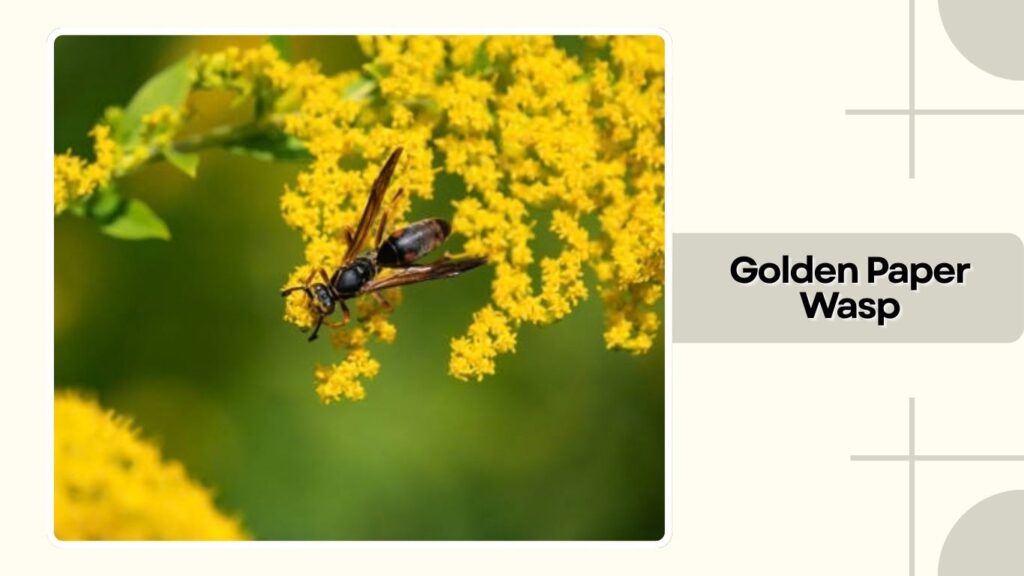
The Golden Paper Wasp, scientifically known as Polistes aurifer, is a western North American paper wasp with highly variable coloration. Some individuals are predominantly black with bright yellow markings, while populations farther south may appear reddish or extensively yellow. Its scientific name reflects its distinctive golden or yellow coloration.
Identification
- Color: Variable combinations of yellow, black, and reddish-brown.
- Wings: Often have a noticeable yellowish tint.
- Abdomen: Commonly marked with yellow bands or spots.
- Body: Slender with a narrow waist.
- Antennae: Long, with males having noticeably hooked tips.
- Nest: Exposed paper comb suspended from a short stalk.
Habitat and Distribution
Golden Paper Wasps range through western North America from western Canada south through the western United States and into northern Mexico. They usually construct nests in sheltered locations. Building eaves, overhangs, structural cavities, and other protected spaces may provide nesting sites, although natural sites are also used.
Behavior and Diet
Golden Paper Wasps are social and cooperate within colonies. Adults obtain carbohydrates from nectar and similar sugary resources. Like other predatory Polistes, workers capture insects, particularly caterpillars, to provide protein for their developing larvae. Their hunting behavior can contribute to natural control of plant-feeding insects around gardens and agricultural areas.
Lifespan and Life Cycle
Colonies are generally seasonal. A reproductive female establishes a nest and lays eggs into individual cells. The larvae are fed by adult females until they pupate within the nest. New workers expand the colony during the warm season. Later, reproductive males and females appear, with mated females surviving to establish colonies after the unfavorable season.
5. Bahamian Paper Wasp
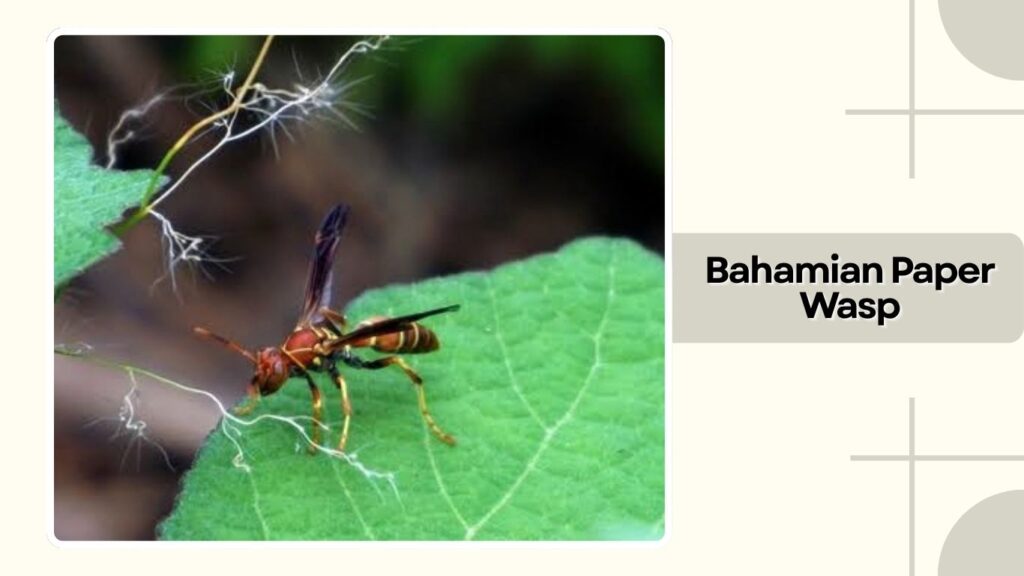
The Bahamian Paper Wasp, scientifically known as Polistes bahamensis, is a tropical and subtropical paper wasp recognized by its combination of dark coloration and yellow markings. It is particularly associated with the Bahamas but also occurs in parts of the southeastern United States. It closely resembles some other yellow-marked paper wasps, especially the Guinea Paper Wasp.
Identification
- Color: Mainly dark brown to black with yellow markings.
- Antennae: Dark at the base with contrasting orange-colored tips.
- Abdomen: Usually has yellow bands or markings.
- Thorax: Displays developed yellow markings.
- Body shape: Slender with a slightly elongated first abdominal segment.
- Nest: Open, umbrella-like paper comb typical of Polistes species.
Habitat and Distribution
This species occurs throughout the Bahamas and has also been documented in parts of the southeastern United States, including Florida, Georgia, and Louisiana, with records from additional coastal states. It commonly uses warm subtropical environments and frequently nests beneath building eaves or other protected overhead structures.
Behavior and Diet
Bahamian Paper Wasps live socially and cooperate in building nests and caring for immature wasps. Adults visit flowers and other sugar sources for energy. Workers also search vegetation for caterpillars and other soft-bodied insects that can be processed and fed to larvae developing inside the paper nest.
Lifespan and Life Cycle
Females establish paper nests and deposit individual eggs within the open cells. Eggs develop into larvae, which are supplied with insect prey by adults. Larvae eventually pupate inside their cells before emerging as adult wasps. As colonies mature, they produce new reproductive individuals that continue the species’ life cycle.
6. Red Paper Wasp
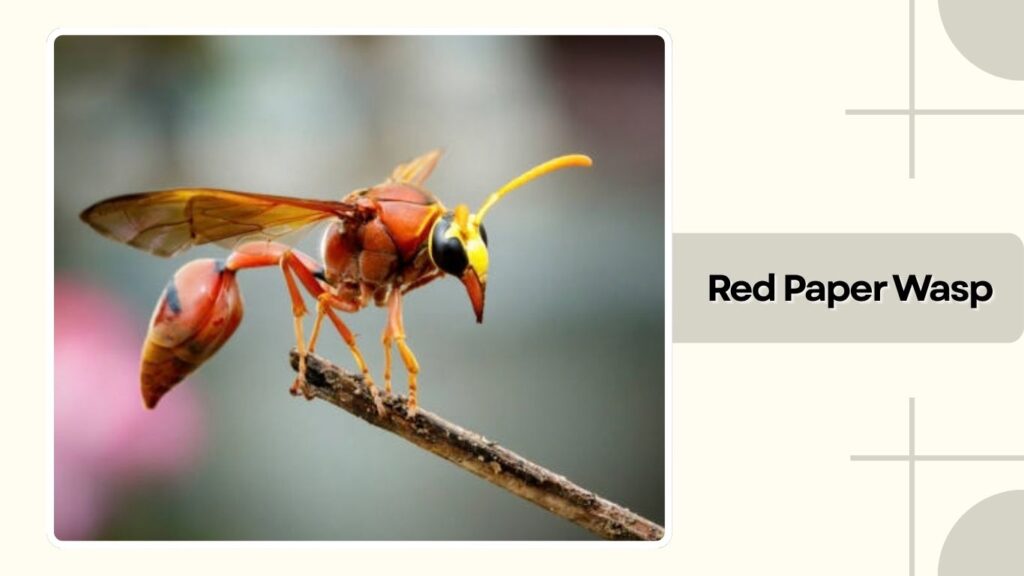
The Red Paper Wasp commonly refers to reddish species of Polistes, with Polistes carolina being one of the best-known examples in the eastern United States. It has a largely rust-red body and dark wings, making it very different in appearance from the familiar black-and-yellow paper wasps. It often nests in protected spaces around buildings or vegetation.
Identification
- Color: Mostly reddish or rust-colored.
- Wings: Dark brown to almost black.
- Body: Long and slender with a narrow waist.
- Legs: Generally reddish and long.
- Size: A relatively large paper wasp.
- Nest: Grayish, open-celled paper nest without an outer envelope.
Habitat and Distribution
Polistes carolina is primarily found in the eastern United States, from the southern states northward into portions of the Northeast and west into parts of the central United States. It is frequently associated with woodland but also nests around houses. Protected locations beneath roofs, bridges, eaves, and within tree cavities are commonly selected.
Behavior and Diet
Red Paper Wasps are social and defend their nests when they perceive a threat nearby. Away from the colony, individuals generally spend much of their time searching for food and nesting materials. Adults consume sugary liquids, while workers capture caterpillars and other insects that provide protein for developing larvae.
Lifespan and Life Cycle
Mated females survive winter in protected locations and become nest founders during spring. Eggs are laid individually inside cells and hatch into grub-like larvae. Early workers help the reproductive female feed larvae, enlarge the nest, and defend the colony. By late summer or autumn, new males and reproductive females appear before the old colony declines.
7. Executioner Paper Wasp
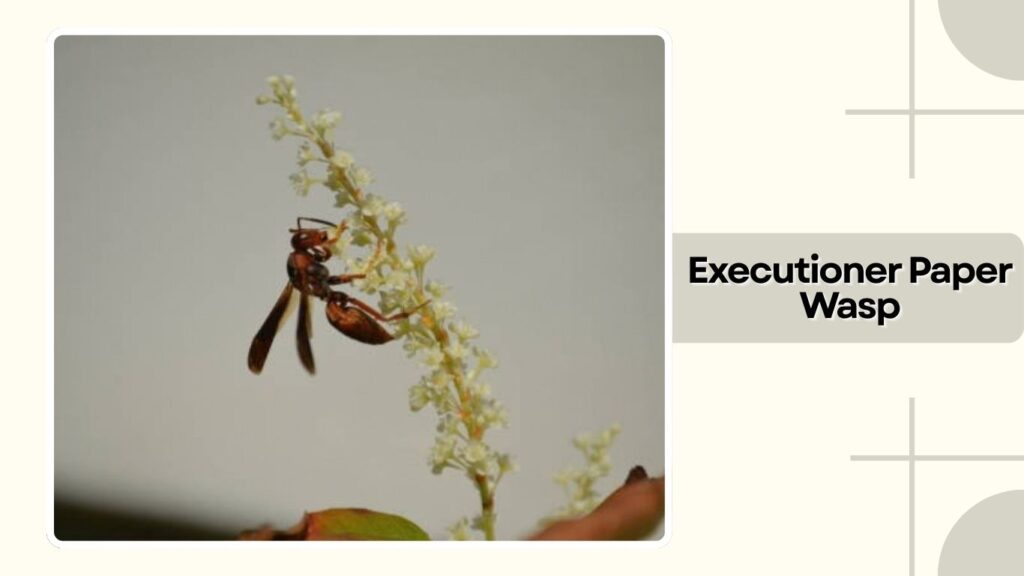
The Executioner Paper Wasp, scientifically known as Polistes carnifex, is a large Neotropical paper wasp famous for its powerful defensive sting. Despite its intimidating common name, it behaves like other social paper wasps, building relatively small colonies and open paper nests. Its large body and striking yellow-and-brown coloration make adults particularly noticeable.
Identification
- Color: Usually yellow with reddish-brown or dark brown areas.
- Size: One of the larger species of Polistes paper wasps.
- Head: Large with strong toothed mandibles.
- Body: Long and robust compared with many smaller paper wasps.
- Legs: Long and typically hang beneath the body in flight.
- Nest: Exposed paper comb containing individually separated cells.
Habitat and Distribution
Executioner Paper Wasps are native to the Neotropical region, occurring through parts of Central and South America. Their nests may be constructed beneath building eaves or suspended from vegetation and tree branches. Protected locations help shelter the exposed paper comb from heavy rain and other environmental conditions.
Behavior and Diet
Colonies are relatively small and may begin with a single founding female. Adults visit flowers and consume nectar or other carbohydrate sources. Foraging workers also capture insect prey. The prey is chewed into softer material and carried back to the nest, where it provides protein for growing larvae.
Lifespan and Life Cycle
A founding female establishes the nest and lays eggs in individual cells. Larvae remain inside their cells while adults supply them with food. After completing larval development, each immature wasp pupates before emerging as an adult. Workers then assist with foraging, defense, nest construction, and brood care as the colony develops.
8. European Paper Wasp
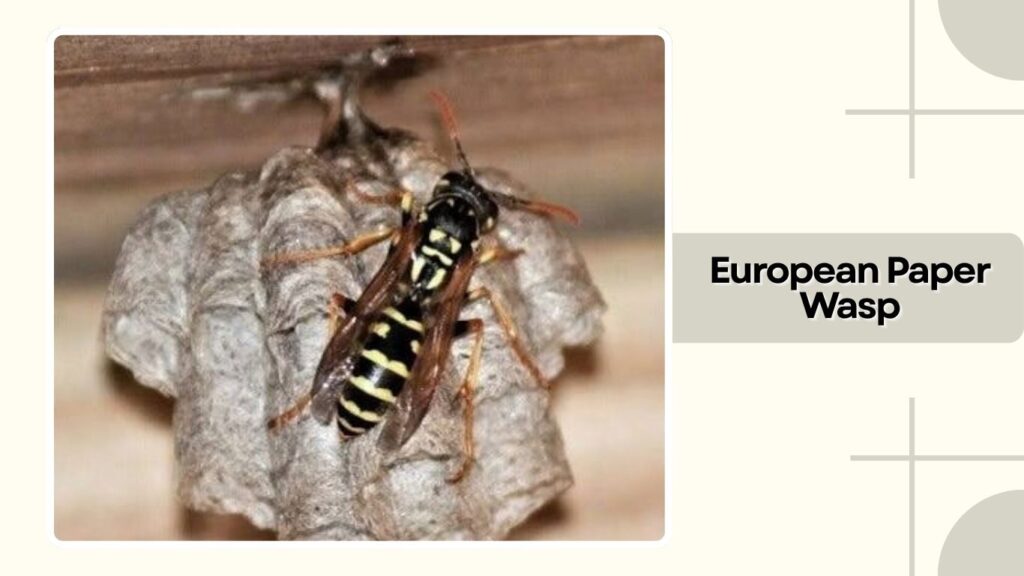
The European Paper Wasp, scientifically known as Polistes dominula, is one of the world’s best-known paper wasps. Native to parts of Europe, North Africa, and Asia, it has become established in additional regions. Its bright black-and-yellow markings sometimes cause it to be mistaken for a yellowjacket, although its slimmer body and long legs are characteristic of paper wasps.
Identification
- Color: Strong black-and-yellow pattern.
- Body: Slender compared with most yellowjackets.
- Antennae: Orange-yellow toward the tips.
- Legs: Long, with yellow markings.
- Wings: Narrow and folded lengthwise when the wasp rests.
- Nest: Open paper comb without a surrounding outer envelope.
Habitat and Distribution
European Paper Wasps occupy forests, grasslands, agricultural areas, suburbs, cities, and gardens. They readily live near people and often use sheltered artificial structures for nesting. Suitable sites include cavities, roof spaces, pipes, equipment, and protected corners. Fertilized females spend winter in sheltered places before establishing nests in spring.
Behavior and Diet
This species has a particularly broad diet. Adults consume nectar, honeydew, fruit, and other sugary materials. Workers prey upon caterpillars and numerous other insects, which are used as food for larvae. The ability to exploit a wider variety of prey than some native paper wasps has helped it establish successfully in introduced regions.
Lifespan and Life Cycle
A fertilized female survives the winter and begins a new colony when temperatures rise. She lays eggs and initially performs the colony’s foraging and brood care. Her first daughters become workers, allowing the colony to expand. New reproductive males and females are produced later in the season, after which fertilized females seek protected overwintering sites.
9. Guinea Paper Wasp
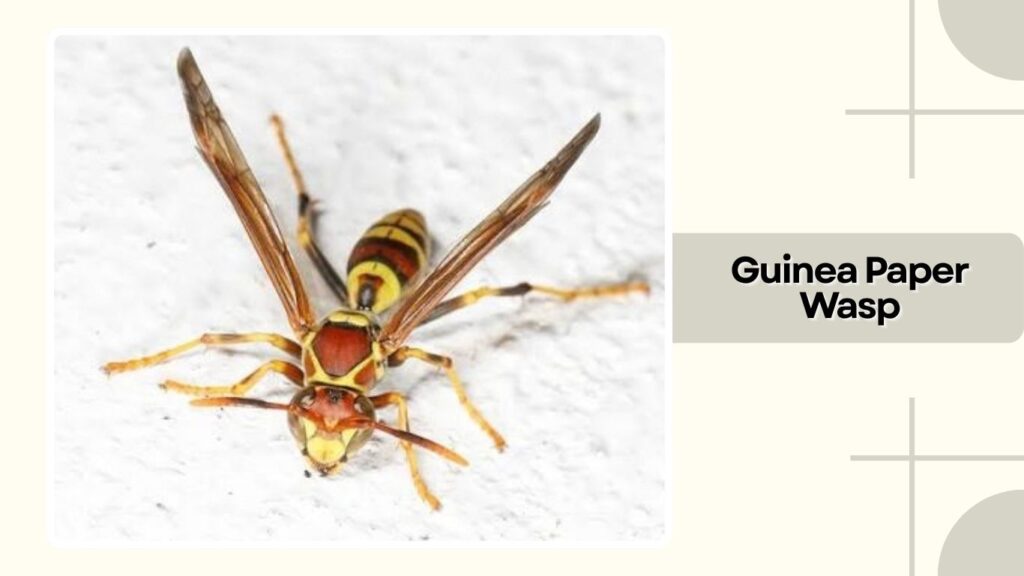
The Guinea Paper Wasp, scientifically called Polistes exclamans, is a colorful North American paper wasp characterized by reddish-brown, yellow, and dark markings. It is widely distributed across much of the southern United States, extends westward, and also occurs in Mexico. It frequently nests around buildings as well as on trees, shrubs, and other vegetation.
Identification
- Color: Reddish-brown with extensive yellow markings.
- Antennae: Dark with contrasting orange tips.
- Abdomen: Usually displays noticeable yellow bands.
- Thorax: Often has several yellow markings or stripes.
- Legs: Long and partly yellow.
- Body: Slender and narrow-waisted with the typical paper wasp profile.
Habitat and Distribution
Guinea Paper Wasps have a broad North American distribution, ranging across much of the United States and into Mexico. They often select exposed but sheltered nesting sites around human structures. Eaves, railings, signs, ceilings, shrubs, trees, palm fronds, and even cultivated plants may support their open paper nests.
Behavior and Diet
These social wasps live in colonies where workers cooperate in nest construction, defense, and brood care. Adults obtain carbohydrates from nectar and other sugary foods. Workers hunt caterpillars and other small insects, chew the prey, and carry it to the colony to feed developing larvae.
Lifespan and Life Cycle
During spring, surviving reproductive females establish new nests and begin laying eggs. The first generation develops into workers that take over much of the colony’s food gathering and maintenance. Colonies increase in size through summer before producing new reproductive males and females. Mated females find sheltered overwintering locations and begin the cycle again the following season.
10. Yellow Paper Wasp
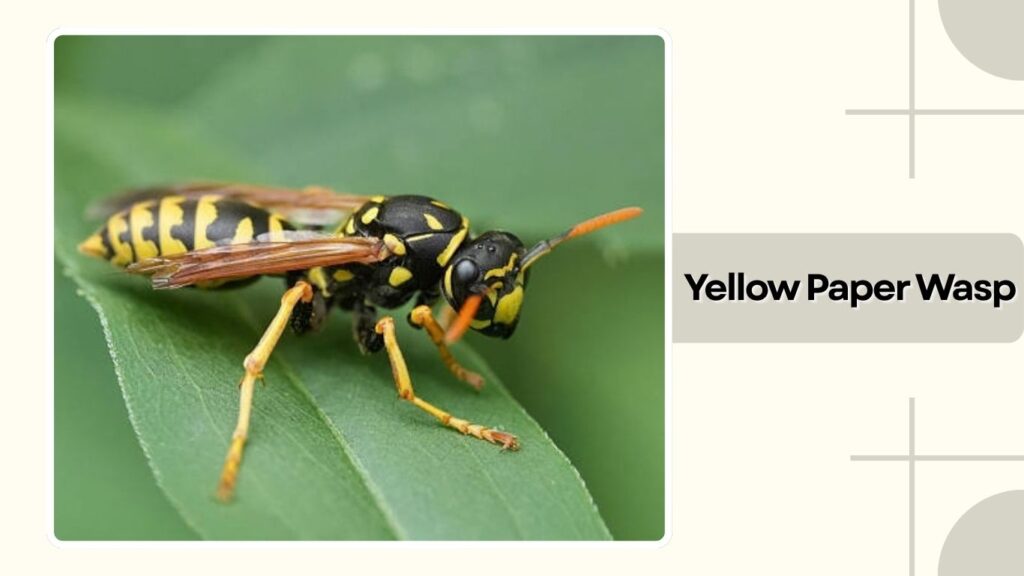
The Yellow Paper Wasp is a common name applied to several yellow-colored paper wasps. For this guide, it refers to Polistes flavus, a species recognized from the southwestern United States and Mexico. Like other members of the genus Polistes, it has a slender body, long legs, and an exposed paper nest rather than an enclosed aerial nest.
Identification
- Color: Predominantly yellow with darker brown or black markings.
- Body: Long and slender with a narrow waist.
- Legs: Long and conspicuous, often dangling during flight.
- Wings: Narrow and usually folded lengthwise while resting.
- Antennae: Long and slightly curved.
- Nest: Open paper comb consisting of visible hexagonal cells.
Habitat and Distribution
Yellow Paper Wasps are associated particularly with warm, dry parts of the southwestern United States and Mexico. They can occupy desert edges, scrub, gardens, agricultural areas, and developed landscapes. Protected sites beneath overhangs, branches, or structures offer suitable places for their exposed paper nests.
Behavior and Diet
Adults commonly visit flowers and other sugary food sources for energy. Workers also search vegetation for caterpillars and other soft-bodied insects. Captured prey is chewed into small portions and carried to the nest as protein-rich food for developing larvae. Away from their nests, paper wasps generally focus on feeding and foraging rather than defending territory.
Lifespan and Life Cycle
A reproductive female establishes a nest and lays individual eggs in open cells. The larvae remain inside these cells while workers feed them. Once mature, each larva pupates within its cell before emerging as an adult. New reproductive males and females are produced as the colony matures, allowing the next generation to continue the cycle.
11. Dark Paper Wasp
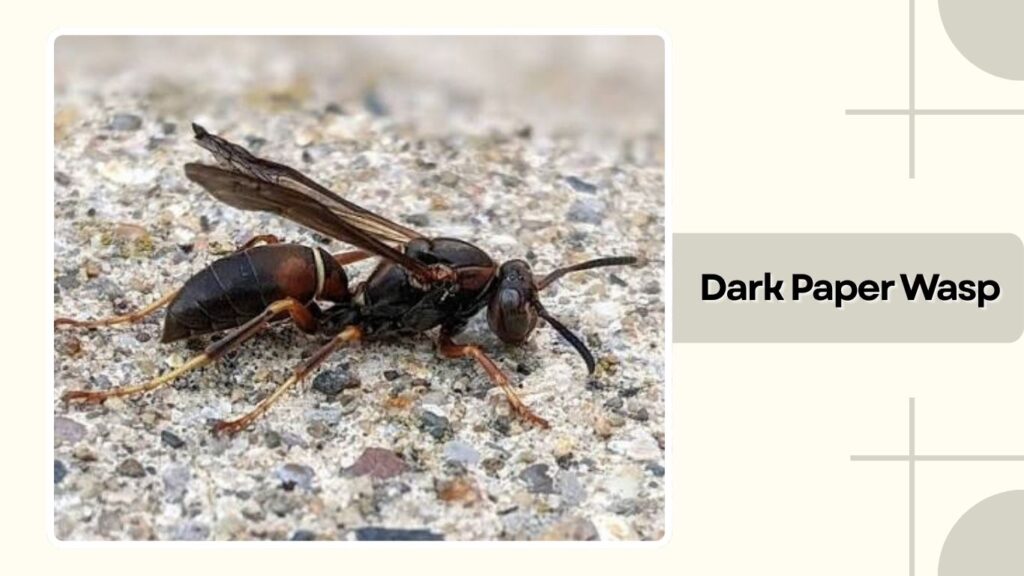
The Dark Paper Wasp, scientifically known as Polistes fuscatus, is also widely called the Northern Paper Wasp. It is notable for considerable variation in coloration, meaning individuals from different locations may look surprisingly different. Northern females are often predominantly dark, while populations farther south may display more reddish and yellow coloration.
Identification
- Color: Usually dark brown, blackish, or reddish-brown with variable yellow markings.
- Size: About 15–21 mm long.
- Body: Slender with a narrow connection between thorax and abdomen.
- Antennae: Males have distinctive darkened tips.
- Legs: Long and often partly reddish or yellow.
- Variation: Color patterns differ considerably between individuals and regions.
Habitat and Distribution
Dark Paper Wasps are widespread across eastern North America, extending from southern Canada through much of the eastern United States. They inhabit woodlands, savannas, suburban areas, farms, and gardens. They are particularly common where weathered or exposed wood is available because fibers can be collected and processed into paper for nest construction.
Behavior and Diet
This species lives in social colonies organized around reproductive females and workers. Adults obtain carbohydrates from nectar and other sugary liquids. Workers prey primarily on caterpillars, although other insects can also be captured. The prey is processed before being delivered to larvae developing inside the nest.
Lifespan and Life Cycle
Overwintered females establish colonies during spring and initially handle nest construction, egg laying, and feeding. Their first daughters become workers that assume much of the colony maintenance. The nest expands through summer, eventually producing males and new reproductive females. Fertilized females seek sheltered overwintering locations and establish new colonies the following spring.
12. Metric Paper Wasp
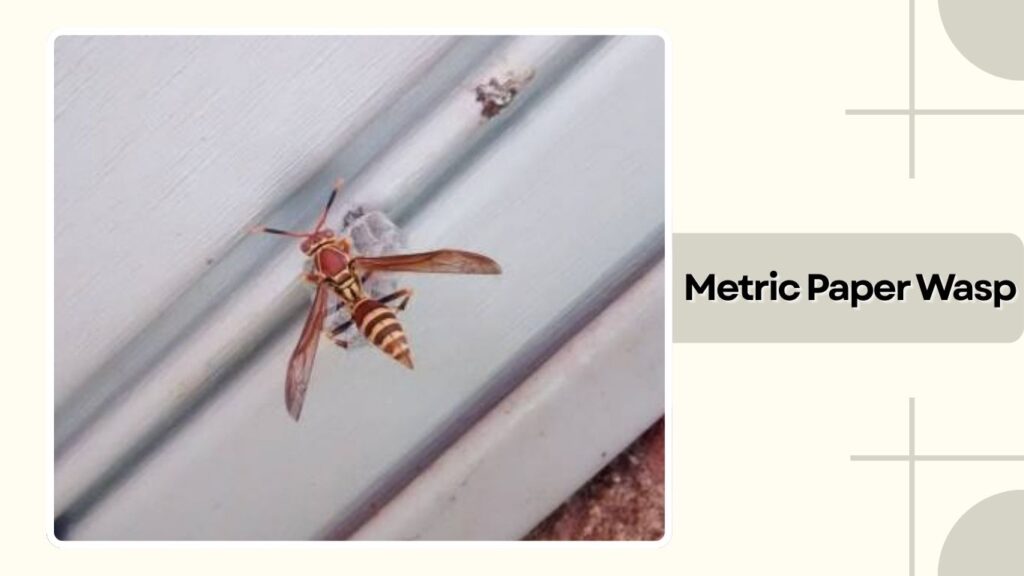
The Metric Paper Wasp, scientifically known as Polistes metricus, is a dark-colored North American paper wasp. Its reddish-brown thorax, dark abdomen, and contrasting yellow portions of the legs help distinguish it from several related species. It builds exposed umbrella-like nests on buildings, trees, shrubs, and other supporting surfaces.
Identification
- Color: Mainly dark reddish-brown and black.
- Abdomen: Usually very dark, sometimes with reddish markings near the base.
- Legs: Yellow tarsi contrast with darker portions of the legs.
- Face: Males generally have a yellow face, while females have a reddish-brown face.
- Wings: Dark brown and folded lengthwise at rest.
- Size: Can reach roughly 25 mm in length.
Habitat and Distribution
Metric Paper Wasps are native to North America and occur particularly through the southern Midwest and southern United States, extending into parts of the Northeast. They inhabit forests, woodland edges, gardens, suburban properties, and other environments offering suitable nesting surfaces. Nests may occur beneath eaves, on branches, or among shrubs.
Behavior and Diet
Adults can often be observed visiting flowers for nectar or collecting weathered wood fibers for nest construction. Workers hunt mainly caterpillars, carrying captured prey back to the colony for the larvae. Because caterpillars form an important part of their prey, these wasps can contribute to controlling some foliage-feeding insects.
Lifespan and Life Cycle
Fertilized reproductive females survive the colder months beneath bark, inside crevices, or in similarly protected locations. They establish colonies as weather warms. Eggs develop into larvae and then pupae inside nest cells. Workers later take responsibility for foraging and nest maintenance, while reproductive individuals appear toward the end of the colony cycle.
13. French Paper Wasp
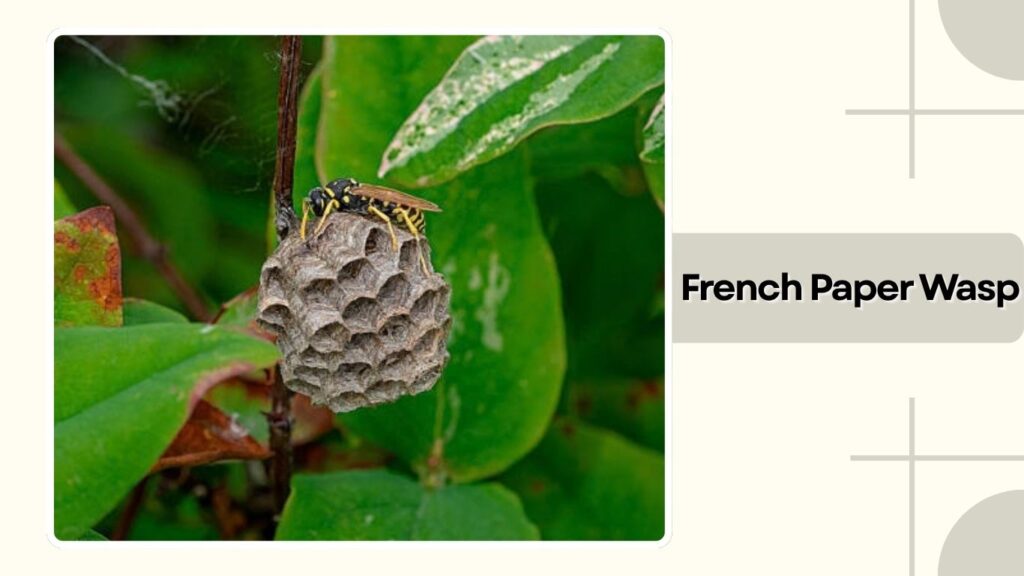
The French Paper Wasp, scientifically known as Polistes gallicus, is a European member of the paper wasp genus Polistes. It has the characteristically narrow waist, long legs, and black-and-yellow pattern associated with many European paper wasps. Its open umbrella-like nest helps distinguish paper wasps from species that construct completely enclosed nests.
Identification
- Color: Primarily black and yellow.
- Body: Slender and elongated with a narrow waist.
- Legs: Long and usually partly yellow.
- Antennae: Often show orange or yellowish coloration toward the ends.
- Wings: Narrow and folded lengthwise when resting.
- Nest: Small exposed comb attached to a surface by a short stalk.
Habitat and Distribution
French Paper Wasps occur in parts of southern Europe and the Mediterranean region. They can inhabit grasslands, scrub, gardens, farmland, woodland edges, and warm urban environments. Their nests are usually established in locations that provide some shelter from heavy rain while allowing adults easy access to flowers and insect prey.
Behavior and Diet
Adults frequently forage among flowering plants, where nectar supplies energy. Workers also hunt caterpillars and other relatively soft-bodied insects that can be carried back to the colony. Food brought to the nest supports developing larvae, while adults depend more heavily on carbohydrate-rich foods such as nectar.
Lifespan and Life Cycle
A reproductive female begins a nest and deposits eggs individually into its cells. The first developing larvae depend entirely on the founding female for food. Once the first workers emerge, they assist with feeding larvae, constructing additional cells, and defending the nest. Mature colonies later produce males and reproductive females that continue the next generation.
14. Giant Brown Paper Wasp
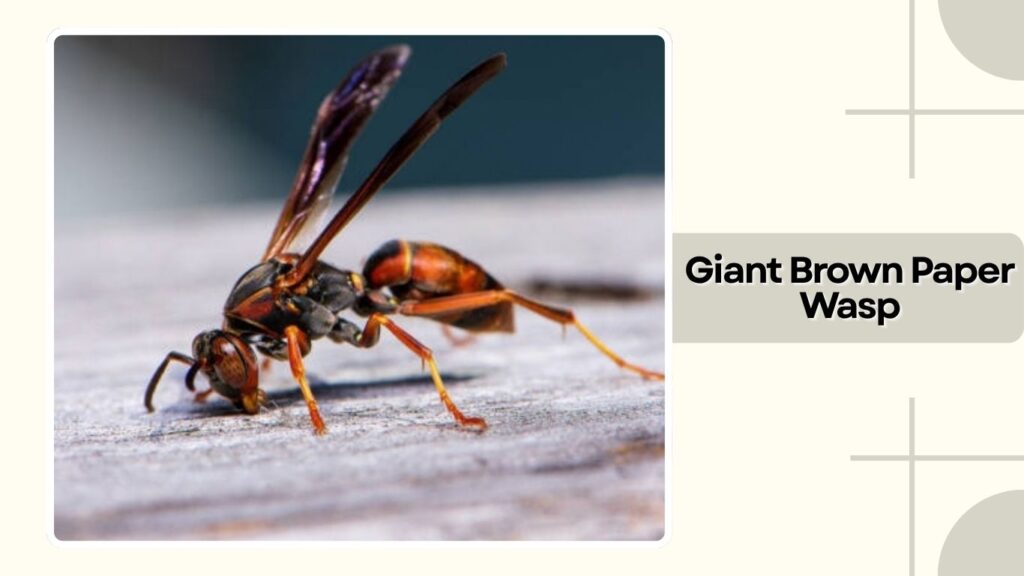
The Giant Brown Paper Wasp, scientifically known as Polistes gigas, is among the largest members of the paper wasp group. Females may reach an impressive body length of roughly 35–45 mm. The species occurs in parts of Asia, including areas of India, China, Taiwan, and Vietnam, where its unusually large size makes it especially noticeable.
Identification
- Color: Predominantly brown to dark reddish-brown.
- Size: Females may reach approximately 35–45 mm.
- Body: Very large and robust for a paper wasp.
- Waist: Narrow despite the species’ substantial overall size.
- Legs: Long and noticeable during flight.
- Wings: Long and usually brownish or smoky.
Habitat and Distribution
The Giant Brown Paper Wasp has been documented from parts of South and East Asia. Its known distribution includes Sikkim in India, southern or northern regions of China depending on records, Taiwan, and numerous localities in Vietnam. It occurs in warm habitats where vegetation, water, prey, and sheltered nesting locations are available.
Behavior and Diet
Like other Polistes, Giant Brown Paper Wasps are social insects that cooperate in nest construction and brood care. Adults rely mainly on liquid carbohydrates such as nectar, while workers hunt insects to provide larvae with protein. Their powerful mandibles allow workers to process captured prey before delivering it to immature wasps.
Lifespan and Life Cycle
The colony begins with one or more reproductive females establishing an exposed paper nest. Eggs hatch into larvae that remain within individual cells and depend on adults for food. Larvae later pupate, after which adults emerge and take on colony tasks. Reproductive males and females are produced once the colony reaches maturity.
15. Australian Paper Wasp
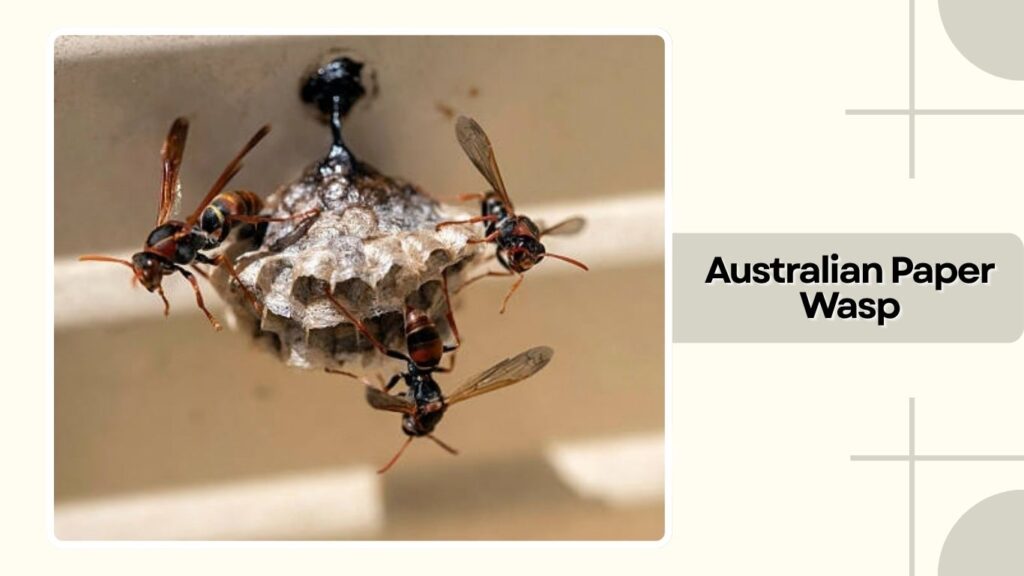
The Australian Paper Wasp, scientifically known as Polistes humilis, is also called the Common Paper Wasp in Australia. It is a native social wasp easily recognized by its reddish-brown body combined with yellow markings. The species builds exposed nests from chewed plant or wood fibers mixed with saliva.
Identification
- Color: Reddish-brown or tan with distinctive yellow markings.
- Size: Approximately 10–15 mm long.
- Face: Usually shows prominent yellow coloration.
- Body: Slender with the narrow waist typical of paper wasps.
- Nest: Grayish paper comb containing numerous hexagonal cells.
- Legs: Long and visible beneath the body during flight.
Habitat and Distribution
Australian Paper Wasps are widespread across southern mainland Australia. Their distribution includes southern Queensland, New South Wales, Victoria, South Australia, and southern Western Australia. They occur in gardens, bushland, suburban areas, parks, and agricultural landscapes, provided appropriate nesting sites and food resources are available.
Behavior and Diet
Adults consume nectar and other carbohydrate-rich materials. Workers capture caterpillars and additional small prey to feed their developing brood. Research indicates that lepidopteran larvae form an important part of their protein diet, while small spiders may also be taken. Their predatory habits help regulate populations of other small arthropods.
Lifespan and Life Cycle
Colonies contain reproductive females and workers that cooperate in brood care. Eggs are placed in individual cells and hatch into larvae that are fed by adults. The larvae pupate before emerging as mature wasps. Interestingly, some colonies may reuse nests or persist longer than the simple annual colony cycle typical of many temperate paper wasps.
16. Palm Paper Wasp
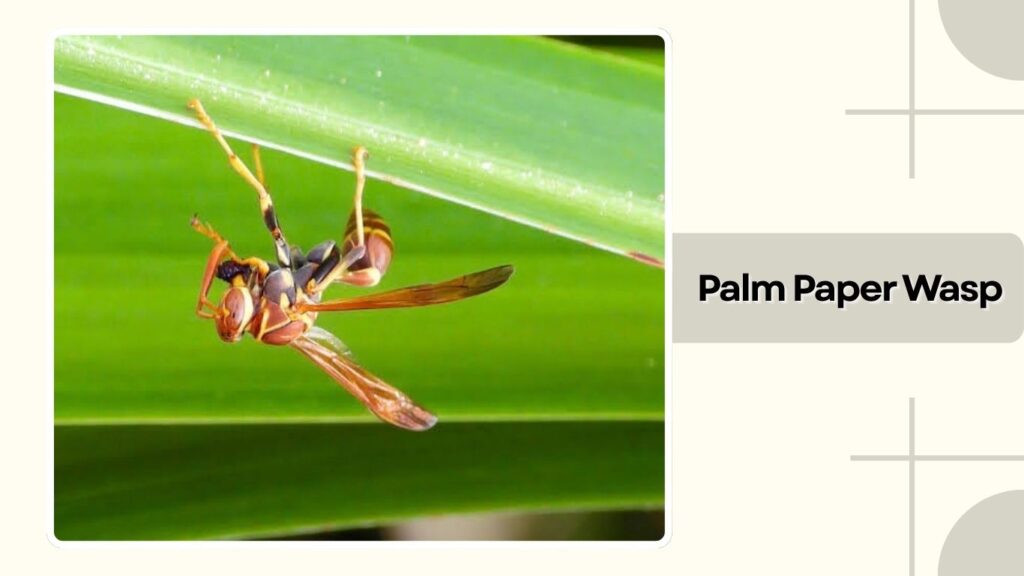
The Palm Paper Wasp, scientifically known as Polistes palmarum, is a localized North American paper wasp closely associated with desert palm habitats. Its common name reflects its tendency to occur around palm trees, where colonies may establish nests among protected fronds. Its limited geographic distribution makes it much less familiar than widespread North American paper wasps.
Identification
- Body: Slender with a strongly narrowed waist.
- Legs: Long, as is typical of Polistes wasps.
- Wings: Narrow and folded along the body while resting.
- Color pattern: Brownish to dark with lighter contrasting areas.
- Antennae: Long and clearly visible.
- Nest: Exposed paper comb rather than an enclosed spherical nest.
Habitat and Distribution
Palm Paper Wasps have a restricted distribution centered on extreme southern California and Baja California. Palm-rich desert canyons provide particularly characteristic habitat. Observations in Palm Canyon, California, have documented the species nesting high among mature Washingtonia palm fronds and descending to ground level to collect water.
Behavior and Diet
Adults are active during warm conditions and may travel between palms, flowering vegetation, and water sources. Like other paper wasps, adults obtain much of their energy from sugary liquids. Workers capture small insects and process them into food for the developing larvae. Palm foliage also offers sheltered locations where exposed nests receive some protection.
Lifespan and Life Cycle
Reproductive females establish open paper nests and lay eggs within individual hexagonal cells. Larvae hatch and remain in those cells while adults deliver food. After sufficient growth, each larva pupates and later emerges as an adult. Workers expand and maintain the colony until reproductive males and females are eventually produced.
17. Peruvian Paper Wasp
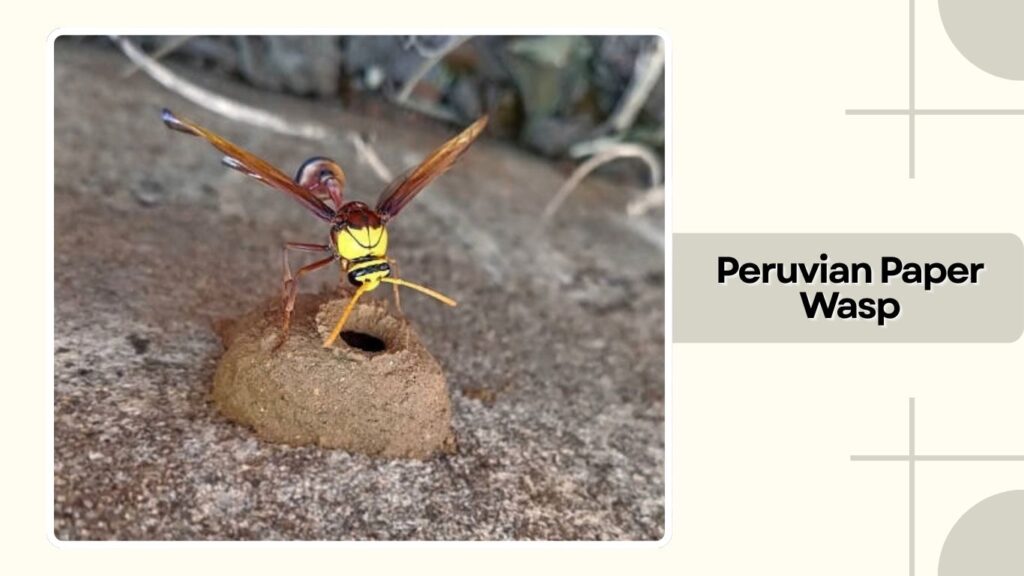
The Peruvian Paper Wasp, scientifically known as Polistes peruvianus, is a South American species named for its association with Peru. It belongs to the genus Polistes, whose members construct characteristic exposed paper combs and form social colonies. Compared with well-known North American and European paper wasps, relatively little general natural-history information is widely published about this species.
Identification
- Body: Slender and elongated.
- Waist: Narrow between the thorax and abdomen.
- Legs: Long and conspicuous.
- Wings: Narrow and folded lengthwise when the wasp rests.
- Antennae: Long and slightly curved.
- Nest type: Expected to follow the exposed open-comb structure characteristic of Polistes paper wasps.
Habitat and Distribution
The species is recorded from Peru and is included among the country’s native Polistes fauna. Observations have documented it in Peruvian environments, including records from the country’s Andean region. Its precise habitat preferences are less comprehensively documented than those of many commonly studied paper wasps.
Behavior and Diet
Peruvian Paper Wasps are social insects. Adults are expected to rely primarily on carbohydrate-rich resources such as flower nectar, while workers collect animal protein for their larvae. As with other Polistes, caterpillars and other soft-bodied insects can serve as practical prey because they can be chewed and distributed among developing larvae.
Lifespan and Life Cycle
The life cycle includes egg, larva, pupa, and adult stages. Females deposit eggs in individual cells of an open nest, and larvae are fed by adult colony members. Once fully grown, larvae pupate inside their cells before emerging as adults. New workers help enlarge and maintain the colony, while reproductive individuals eventually provide the next generation.
FAQs
1. What are paper wasps?
Paper wasps are social wasps belonging mainly to the genus Polistes. They get their name from the paper-like nests they create by chewing wood fibers and mixing them with saliva. Their nests usually consist of exposed hexagonal cells and can be found beneath eaves, branches, decks, and other sheltered locations.
2. Are paper wasps dangerous to humans?
Paper wasps generally avoid people when they are away from their nests. However, females can sting when they believe their colony is threatened. Their sting can be painful, and some people may experience serious allergic reactions. Keeping a reasonable distance from an active nest greatly reduces the likelihood of being stung.
3. What do paper wasps eat?
Adult paper wasps mainly consume nectar, honeydew, fruit juices, and other sugary substances for energy. Workers also hunt caterpillars and other soft-bodied insects. They chew captured prey into smaller portions and feed it to developing larvae, making many paper wasp species useful natural predators of garden pests.
4. Where do paper wasps build their nests?
Paper wasps usually choose protected locations that shield their exposed nests from severe weather. Common nesting places include roof eaves, porch ceilings, tree branches, shrubs, railings, sheds, decks, and building cavities. Their nests typically have an umbrella-like shape with uncovered hexagonal cells clearly visible from underneath.
5. How long do paper wasps live?
A paper wasp’s lifespan depends on its role and species. Workers generally live for only several weeks or months during the active season. Reproductive females can survive considerably longer, with fertilized females of many temperate species overwintering in protected places before establishing new colonies when warm weather returns.