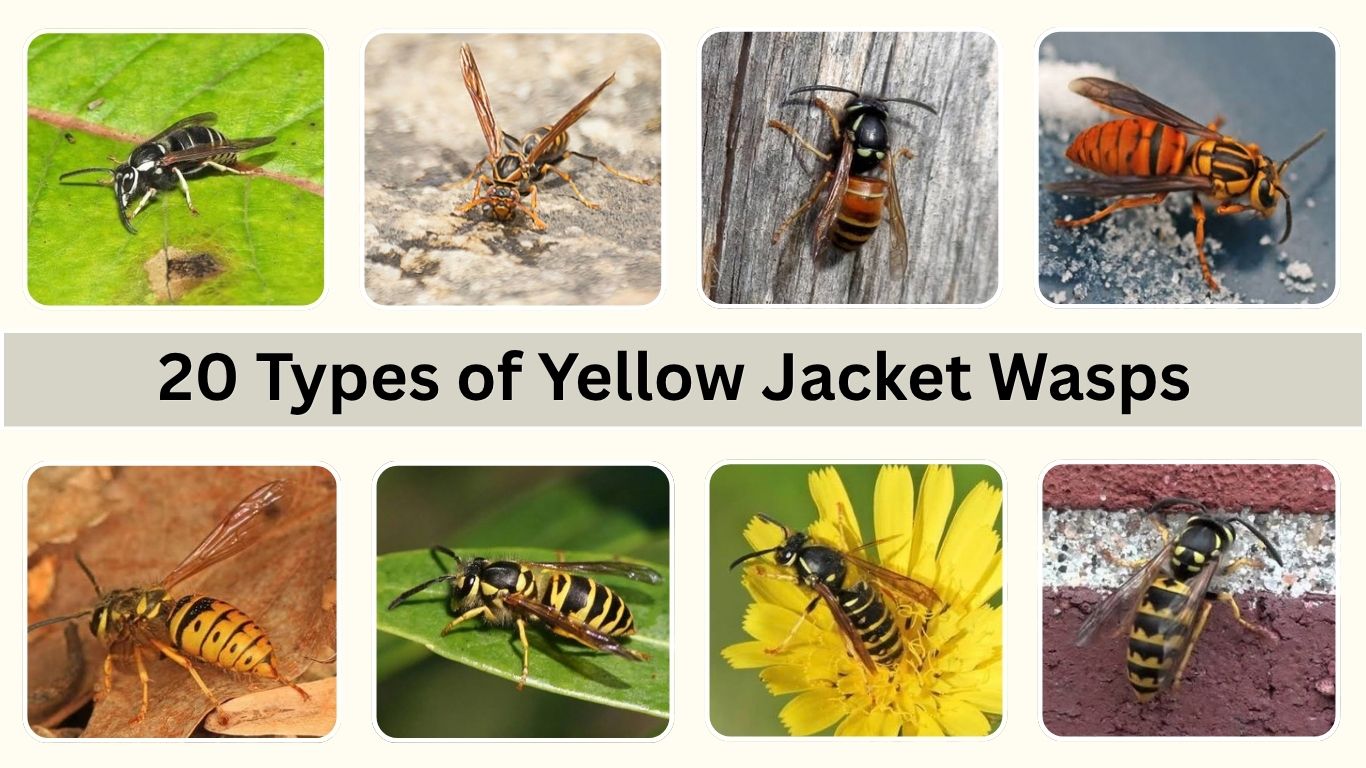
Yellow jacket wasps are social insects known for their bold markings, defensive behavior, and highly organized colonies. Although many species appear similar, they can differ in coloration, nesting habits, geographic range, diet, and behavior. Some build nests underground, while others construct aerial paper nests in trees, shrubs, or buildings. In this guide, you’ll discover 20 types of yellow jacket wasps, including the Eastern, Western, German, Bald-Faced, and Arctic Yellowjackets, along with key identification features, habitat, behavior, diet, lifespan, and life cycle.
1. Eastern Yellowjacket
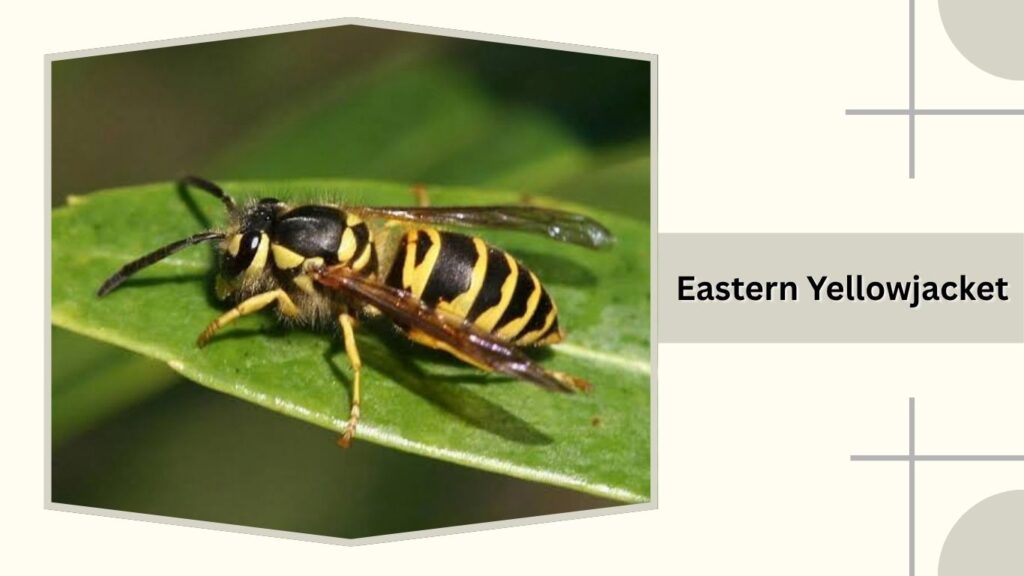
The Eastern Yellowjacket (Vespula maculifrons) is a common social wasp native to eastern North America. It is especially recognizable by its bold black-and-yellow coloration and its tendency to establish large underground colonies. Although these wasps can become defensive around their nests, they also play an important ecological role by hunting insects that may otherwise become garden or agricultural pests.
Identification
Eastern Yellowjackets have the compact body shape typical of Vespula wasps, with bright yellow markings contrasting against a black background. Workers are generally around 12 mm long, while queens may reach approximately 18 mm.
- Black body with distinctive bright yellow markings
- Workers are roughly ½ inch long
- Queens are noticeably larger than workers
- First abdominal segment has a broad, anchor-shaped black marking
- Yellow band occurs along the cheek area
- Wings are narrow and fold lengthwise when resting
- Body has a clearly defined narrow waist
Habitat and Distribution
Eastern Yellowjackets occur throughout much of eastern North America and are particularly widespread east of the Great Plains. They inhabit forests, meadows, pastures, parks, lawns, forest edges, and suburban areas. Their colonies are usually constructed underground, often in abandoned animal burrows, beneath tree roots, or around decaying wood. They may occasionally establish nests inside wall cavities and other protected spaces in buildings.
Behavior and Diet
Eastern Yellowjackets are social wasps living in organized colonies consisting of a queen and numerous female workers. Workers hunt caterpillars, earwigs, and various other arthropods, which are chewed and provided to developing larvae. Adults mainly consume sugary liquids, including flower nectar and fruit juices. They may also visit garbage, outdoor meals, or other human food sources, particularly later in the season.
Eastern Yellowjackets aggressively defend their colony when they perceive a threat. Unlike honey bees, an individual yellowjacket can sting repeatedly.
Lifespan and Life Cycle
A new colony normally begins in spring when a fertilized queen emerges from overwintering and selects a suitable nesting cavity. She builds the first cells, lays eggs, and raises the initial generation of workers. Once workers mature, they handle foraging, nest expansion, and brood care while the queen concentrates on laying eggs.
By late summer, colonies produce males and new queens. After mating, newly fertilized queens find protected places to overwinter. Most workers, males, and the old queen eventually die as cold weather arrives, leaving the young queens to begin the next generation the following spring.
2. Western Yellowjacket
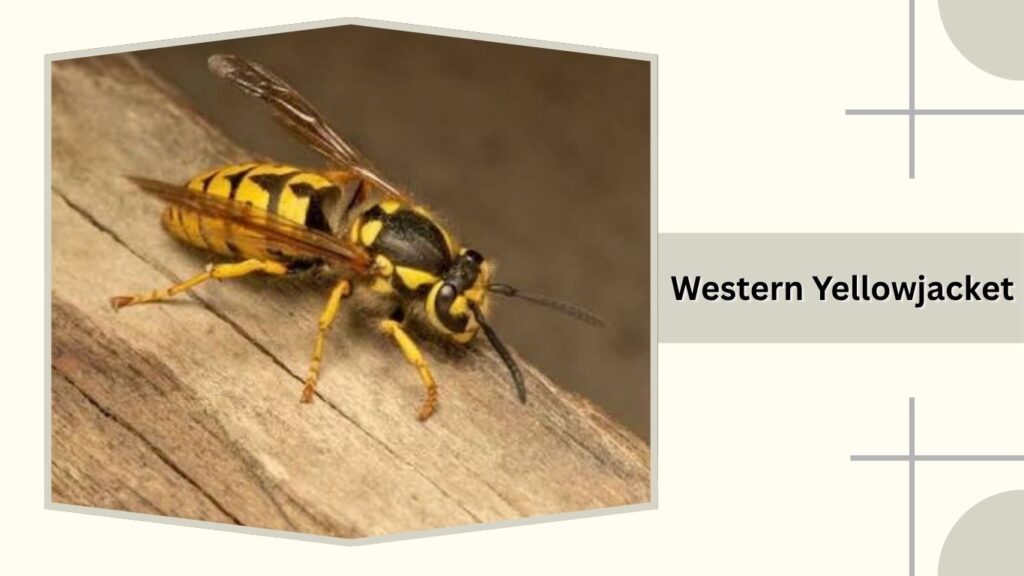
The Western Yellowjacket (Vespula pensylvanica) is one of the most widespread yellowjackets in western North America. It is a highly social wasp that often becomes noticeable around yards, parks, campgrounds, and outdoor eating areas. Colonies are normally established in protected underground cavities and grow steadily throughout summer. Like other yellowjackets, this species is both an important insect predator and a potential nuisance when nests occur close to people.
Identification
Western Yellowjackets have the familiar compact, smooth-bodied appearance of ground-nesting yellowjackets. Their black-and-yellow markings can resemble several related species, although the yellow marking forming a complete loop around the eye is an important identification feature.
- Approximately 3/8 to 5/8 inch long
- Smooth black-and-yellow body
- Distinct narrow waist
- Yellow markings surrounding the eyes
- Relatively short legs compared with paper wasps
- Transparent to slightly brownish wings
- Queens noticeably larger than typical workers
Habitat and Distribution
This species occurs widely across western North America, ranging from British Columbia and California eastward into portions of the central United States and south into Mexico. It has also become established outside portions of its original range. Western Yellowjackets commonly establish colonies in abandoned rodent burrows, soil cavities, holes beneath landscaping, and occasionally protected structural voids.
Urban parks, gardens, campgrounds, orchards, and other locations offering abundant food can support large numbers of workers during summer.
Behavior and Diet
Western Yellowjackets are active predators and scavengers. Workers hunt insects to provide protein for developing larvae while adults consume nectar and other carbohydrate-rich liquids. They also readily investigate meat, sugary drinks, ripe fruit, and discarded human food, explaining their frequent appearance around outdoor dining areas.
Workers vigorously protect the nest and can sting repeatedly if the colony is disturbed.
Lifespan and Life Cycle
A fertilized queen survives winter and establishes a new colony during spring. Her first workers eventually assume nest construction, brood care, defense, and foraging duties. The population continues growing through summer.
Toward the end of the season, colonies produce males and new queens. After mating, fertilized queens locate sheltered overwintering sites. The old queen, workers, males, and remaining colony typically die as autumn conditions worsen, so a new nest is generally constructed each year.
3. Southern Yellowjacket
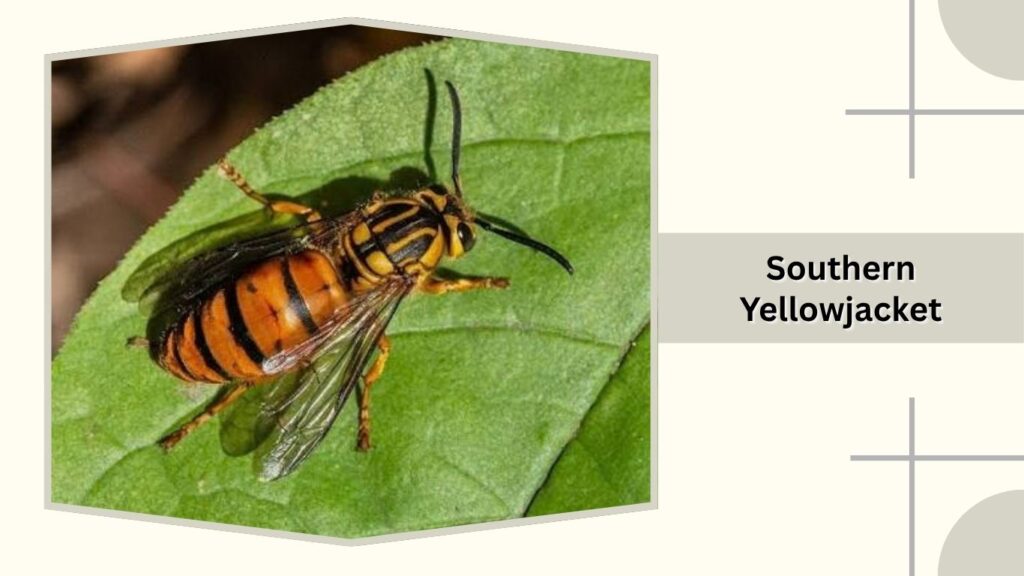
The Southern Yellowjacket (Vespula squamosa) is a distinctive yellowjacket found mainly in warmer portions of North America and Central America. It is particularly notable for its heavily yellow-marked body and unusually large queens. Another fascinating feature is its ability to take over colonies established by other yellowjacket species, although queens can also establish colonies independently.
Identification
Southern Yellowjackets can often be distinguished from other yellowjackets by the conspicuous yellow longitudinal stripes on the upper thorax. Queens and workers can look noticeably different, with queens generally displaying more orange-yellow coloration.
- Black-and-yellow to orange-yellow coloration
- Prominent yellow stripes running along the thorax
- Workers have strongly patterned abdominal bands
- Queens are exceptionally large and robust
- Queen abdomen may appear predominantly orange or yellow
- Short, narrow yellowjacket waist
- Clear to brownish transparent wings
Habitat and Distribution
Southern Yellowjackets occur through much of the eastern and southeastern United States and extend southward into Central America as far as Honduras. They favor relatively warm climates and are considered among the most southerly distributed Vespula species.
Colonies commonly occur underground in fields, lawns, woodland edges, and disturbed landscapes. Existing underground cavities can provide particularly suitable nesting sites.
Behavior and Diet
One unusual behavior of the Southern Yellowjacket is temporary social parasitism. A queen may enter the young colony of another species—particularly the Eastern Yellowjacket—kill or replace the resident queen, and use the existing workers to raise her offspring. Eventually, her own workers replace the original colony members.
Like other yellowjackets, workers capture arthropods as protein for larvae, while adults obtain carbohydrates from nectar and other sugary liquids.
Lifespan and Life Cycle
Queens become active during spring, although they often emerge somewhat later than Eastern Yellowjacket queens. A queen can establish her own nest or take over another young yellowjacket colony. Workers then expand the paper nest and care for the developing brood.
Colonies grow throughout warmer months and later produce reproductive males and queens. Most colonies decline toward late autumn. However, in the warmest parts of their range, Southern Yellowjackets are more capable than many native Vespula species of maintaining unusually long-lived or occasionally perennial colonies.
4. German Yellowjacket
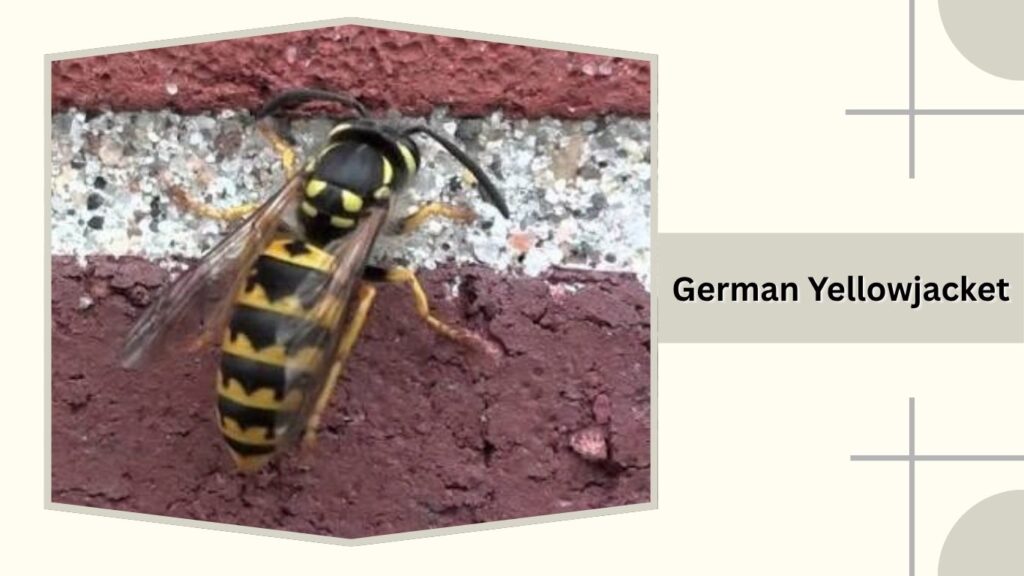
The German Yellowjacket (Vespula germanica), also called the German wasp or European wasp, is a highly adaptable social wasp native to Eurasia and parts of northern Africa. It has been introduced to numerous regions worldwide, including North America, Australia, New Zealand, South Africa, and South America. Its ability to nest around buildings and exploit many different food sources has helped it become highly successful in introduced areas.
Identification
German Yellowjackets have a compact black-and-yellow body and can easily be confused with several other Vespula species. Workers commonly measure about 12–15 mm long, while queens are larger.
- Bright yellow and black abdominal pattern
- Smooth body with little obvious hair
- Workers approximately 12–15 mm long
- Queens substantially larger than workers
- Broad head with yellow facial markings
- Short and narrow waist
- Dark antennae and transparent brownish wings
Habitat and Distribution
Originally native to Eurasia, the German Yellowjacket has established populations in many parts of the world. In North America it has spread across portions of Canada and the United States.
It can build underground nests, but introduced populations frequently exploit protected cavities in buildings. Wall spaces, attics, roof voids, and similar enclosed areas can provide favorable locations where colonies remain protected from weather.
Behavior and Diet
German Yellowjackets are opportunistic predators and scavengers. Workers capture insects and other small animals and process them as protein-rich food for larvae. Adults are strongly attracted to carbohydrate sources and may visit flowers, fruit, sweet drinks, garbage, and outdoor food.
Their adaptability makes them especially noticeable around restaurants, picnic areas, garbage containers, and urban environments later in summer.
Lifespan and Life Cycle
A single fertilized queen normally establishes the colony in spring. Once the first workers mature, they perform most nest construction, foraging, and brood-care activities while the queen concentrates on egg production. Mature colonies can contain thousands of individuals.
Later in the year, males and new queens develop and leave to mate. Fertilized queens overwinter in protected locations while the original colony usually dies. In warm climates or insulated structures, however, some colonies may survive longer than a single season.
5. American Yellowjacket
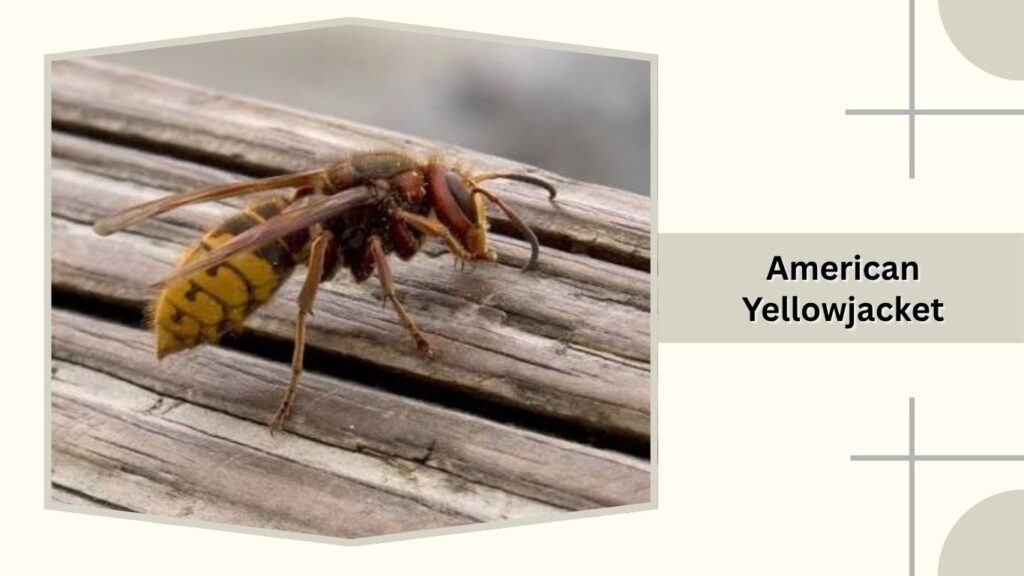
The American Yellowjacket (Vespula alascensis) is also known as the Alaska Yellowjacket or North American Yellowjacket. It occurs widely across northern and western North America and extends southward into parts of Mexico. For many years it was confused taxonomically with the Common Yellowjacket, Vespula vulgaris, but it is now recognized as a distinct species.
Identification
American Yellowjackets display the characteristic black-and-yellow pattern typical of many Vespula species. Because closely related species can look extremely similar, accurate identification may require careful examination of abdominal, facial, and thoracic markings.
- Bright black-and-yellow coloration
- Compact, smooth-bodied appearance
- Narrow waist between thorax and abdomen
- Dark antennae
- Bold yellow abdominal bands
- Workers smaller than reproductive queens
- Wings usually held folded over the abdomen while resting
Habitat and Distribution
The American Yellowjacket occurs across Canada and much of the northern and western United States, with its range extending into central Mexico. It is especially well adapted to temperate and cooler environments.
Nests are generally built underground, frequently using abandoned rodent burrows or similar cavities. Colonies may also occur in other sheltered locations where the expanding paper nest remains protected.
Behavior and Diet
American Yellowjackets live in organized social colonies dominated by a reproductive queen. Workers forage for insects and other animal material to feed developing larvae. Adults themselves rely heavily on carbohydrate-rich foods such as nectar and ripe fruit.
They may also scavenge meat and investigate human food, making them noticeable around campsites, garbage, picnics, and other outdoor areas.
Lifespan and Life Cycle
Fertilized queens overwinter away from the old colony and become active in spring. A queen locates a suitable nesting cavity, constructs the first cells, and raises the initial workers herself.
As workers emerge, they enlarge the nest and assume foraging and brood-care duties. Colony numbers increase during summer, followed by the production of males and new queens later in the season. After mating, newly fertilized queens search for protected overwintering sites. The original workers and old queen normally die as cold conditions arrive, completing the annual colony cycle.
6. Forest Yellowjacket
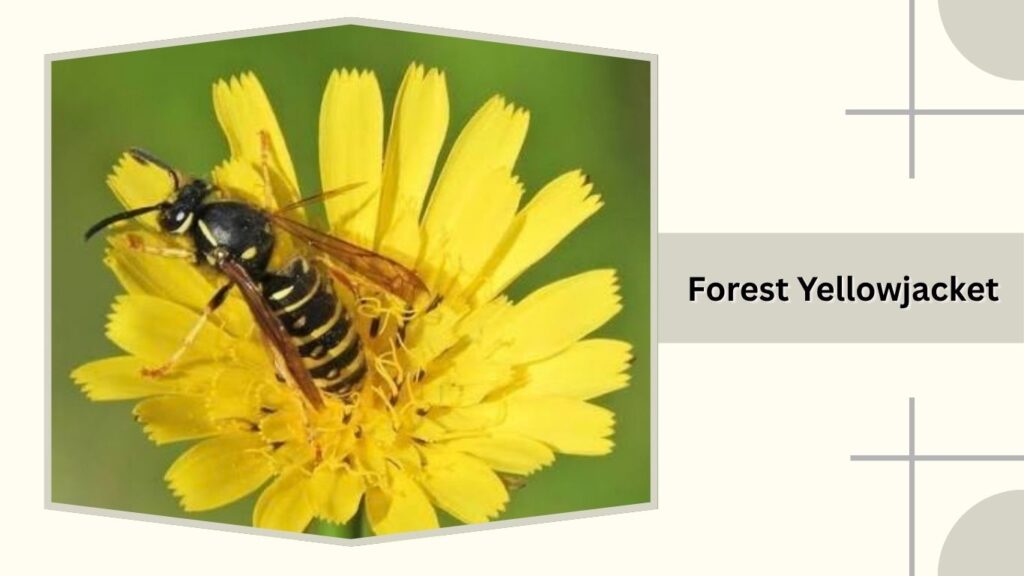
The Forest Yellowjacket (Vespula acadica) is a North American species strongly associated with boreal, northern, and high-elevation forests. Unlike scavenging yellowjackets commonly encountered around outdoor meals, this species relies heavily on live arthropod prey. Its forest-centered lifestyle generally keeps it farther away from human activity than many familiar pest yellowjackets.
Identification
Forest Yellowjackets have a classic black-and-yellow Vespula appearance. They belong to the Vespula rufa species group and can be difficult to separate visually from related species without carefully examining structural features and body markings.
- Black body with yellow abdominal markings
- Compact, sturdy body shape
- Distinct narrow waist
- Relatively short legs
- Dark antennae
- Transparent wings
- Queens larger and more robust than workers
Habitat and Distribution
The Forest Yellowjacket has a broad northern range. It occurs from Alaska south through the Sierra Nevada of California, through the Rocky Mountains to Arizona and New Mexico, and eastward across Canada’s boreal forests to Newfoundland and New England. At higher elevations, its eastern range extends south through the Appalachians into North Carolina.
Its preferred habitats are boreal and northern forests, and nests have frequently been recorded in decaying logs and similar protected forest locations.
Behavior and Diet
Forest Yellowjackets are active predators. Workers capture arthropods, chew the prey, and carry it back to the colony to feed developing larvae. Unlike strongly scavenging species, they are regarded as primarily or strictly predatory when obtaining protein. Adult wasps obtain energy from nectar and other liquid carbohydrate sources.
Because they forage mainly in natural forest habitats, they are less frequently encountered around human food.
Lifespan and Life Cycle
Forest Yellowjackets normally form annual colonies. An overwintered queen establishes the nest, after which the first workers take responsibility for feeding larvae, collecting prey, defending the colony, and expanding the nest.
Colonies tend to be relatively modest compared with some highly successful scavenging yellowjackets. Reproductive males and new queens develop later in the season. They leave the colony, mate, and fertilized queens eventually seek sheltered places in which to overwinter. The workers, males, and original queen die as the seasonal colony declines, and surviving young queens begin new colonies the following year.
7. Prairie Yellowjacket
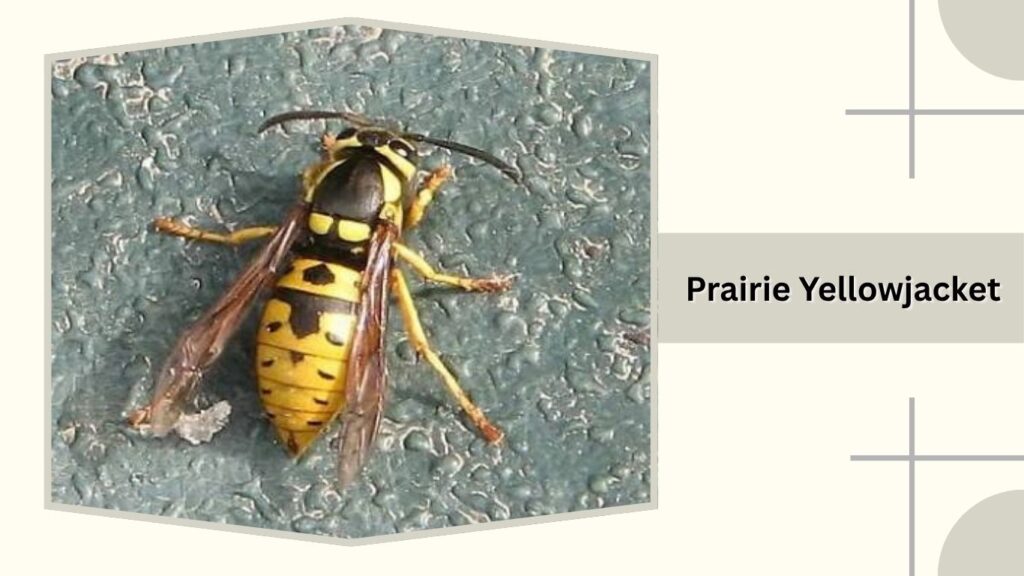
The Prairie Yellowjacket (Vespula atropilosa) is a social wasp native to western and central portions of North America. As its common name suggests, it is strongly associated with open grasslands, prairies, pastures, and similar sunny habitats. Unlike some yellowjackets that frequently scavenge around human food, this species is primarily a predator of other insects, making it beneficial in many natural and managed landscapes.
Identification
Prairie Yellowjackets have the compact black-and-yellow body typical of the genus Vespula. Their markings can vary somewhat, especially among males, so close examination may be required to separate them from similar species.
- Black body with bright yellow markings
- Compact and relatively smooth body
- Distinct narrow waist
- Yellow bands across the abdomen
- Short legs compared with many paper wasps
- Transparent to slightly brownish wings
- Queens are larger and heavier-bodied than workers
Habitat and Distribution
Prairie Yellowjackets occur mainly across the western and Midwestern United States and parts of southern Canada. They favor large open environments such as grasslands, pastures, lawns, parks, and golf courses. Colonies are usually constructed underground, often inside abandoned rodent burrows or existing cavities in the soil.
Behavior and Diet
This species is primarily predatory rather than scavenging. Workers hunt insects such as flies, grasshoppers, and other small arthropods, which provide protein for growing larvae. Adult yellowjackets obtain much of their own energy from nectar and other sugary liquids.
Because Prairie Yellowjackets are less attracted to garbage and outdoor meals than heavily scavenging species, they are generally considered less troublesome around people.
Lifespan and Life Cycle
Colonies are annual. A fertilized queen emerges from overwintering in spring and begins constructing a small underground nest. She raises the first workers, which later take over foraging, nest expansion, and brood care.
The colony grows through summer and eventually produces males and new queens. After mating, young fertilized queens seek protected overwintering sites. Workers, males, and the original queen die as colder weather arrives, and new colonies begin the following spring.
8. California Yellowjacket
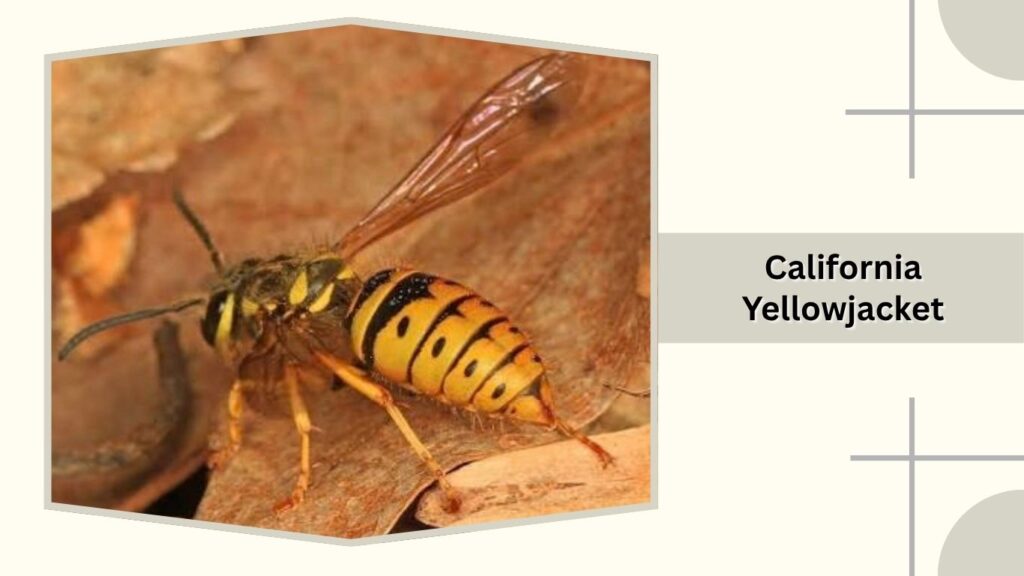
The California Yellowjacket (Vespula sulphurea) is a relatively uncommon yellowjacket native to western North America. It is especially associated with California and surrounding dry regions. Although it has the familiar yellow-and-black appearance of other yellowjackets, it is not considered one of the major nuisance species because colonies are generally moderate in size and workers are not especially associated with human food.
Identification
California Yellowjackets have bold yellow markings over a mostly black body. Their abdominal pattern and facial markings help specialists distinguish them from Western and Prairie Yellowjackets.
- Bright yellow-and-black body coloration
- Bold yellow abdominal bands
- Compact, sturdy body shape
- Short, narrow waist
- Dark antennae
- Transparent or lightly tinted wings
- Queens noticeably larger than workers
Habitat and Distribution
The species is concentrated mainly in the Upper Sonoran regions of California. Its range also extends into southern Oregon, western Nevada, southern Arizona, and northern Baja California in Mexico.
California Yellowjackets typically construct nests underground. Natural soil cavities, abandoned burrows, and other sheltered spaces can provide suitable nesting locations. They are often associated with relatively warm and dry landscapes.
Behavior and Diet
Workers forage for arthropods that can be carried back to the colony as food for developing larvae. Adults also visit flowers and obtain carbohydrates from nectar. California Yellowjackets have been recorded feeding on plants such as fennel and California figwort, and they can contribute to pollination while visiting flowers.
Unlike the Western Yellowjacket, this species is not commonly regarded as a serious picnic or garbage-scavenging pest.
Lifespan and Life Cycle
A fertilized queen begins a colony after emerging from winter dormancy. She constructs the first cells, lays eggs, and raises the first workers. These workers gradually take over food collection and nest maintenance.
Colonies increase in size throughout spring and summer. Known nests have contained fewer than about 1,100 active workers, making them smaller than some extremely populous yellowjacket colonies.
9. Downy Yellowjacket
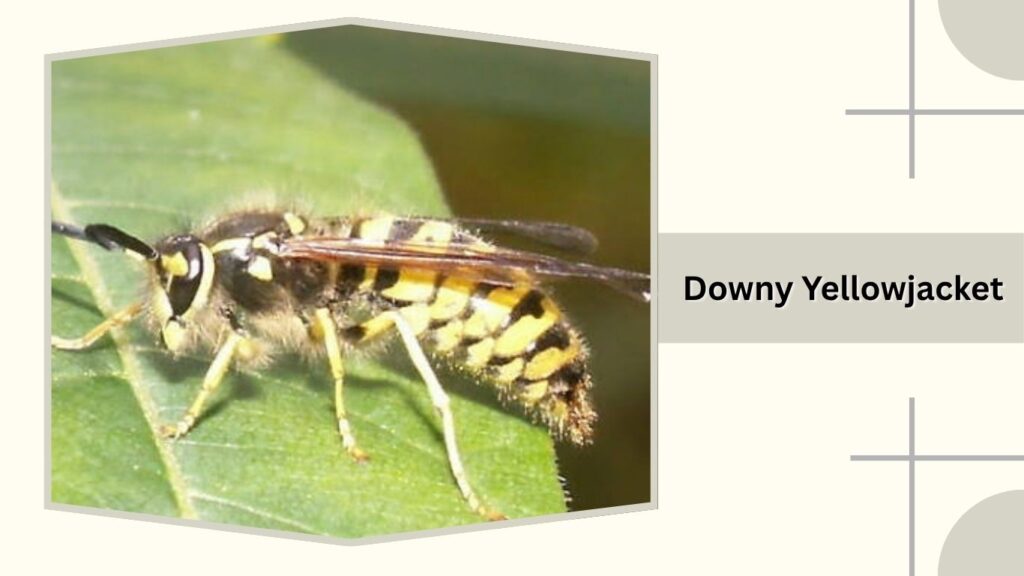
The Downy Yellowjacket (Vespula flavopilosa) is an eastern North American yellowjacket distinguished partly by its relatively noticeable body hairs. It is also known as the yellow-haired yellowjacket and has sometimes been called the hybrid yellowjacket. An especially interesting feature of this species is its association with colonies of other yellowjackets, which queens may take over during the early stages of colony development.
Identification
The Downy Yellowjacket resembles several other black-and-yellow Vespula species, but its relatively dense yellowish hair helps give it its common name.
- Black-and-yellow body pattern
- Noticeably hairy or “downy” appearance
- Yellowish hairs on portions of the body
- Compact yellowjacket body shape
- Narrow waist
- Transparent wings
- Queen larger than ordinary workers
Habitat and Distribution
Downy Yellowjackets occur mainly in the eastern United States, with their known range extending south to Georgia. They may inhabit woodland edges, suburban environments, gardens, and other locations where suitable underground nesting cavities are available.
Most documented colonies have been subterranean. However, nests have also been recorded inside exterior building walls and beneath rotten tree stumps.
Behavior and Diet
Like other yellowjackets, workers obtain animal protein for larvae by capturing insects and other small arthropods. Adults obtain carbohydrates from nectar and other sugary liquids.
The species is especially interesting because queens may behave as temporary social parasites. They can enter young colonies of species such as the Eastern Yellowjacket or American Yellowjacket and take control of the nest. The existing workers may then help rear the invading queen’s offspring.
Lifespan and Life Cycle
The seasonal cycle begins with queens becoming active in spring. Rather than always founding colonies independently, a Downy Yellowjacket queen may locate a young colony belonging to another species and usurp it.
Once established, the colony expands through the warmer months. Workers care for larvae while the reproductive female produces additional eggs. Later in the season, males and new queens are produced.
After mating, fertilized young queens overwinter in sheltered locations. Most workers and males die as temperatures decline. Available evidence suggests that social parasitism plays an important role in the establishment of many Downy Yellowjacket colonies.
10. Widow Yellowjacket
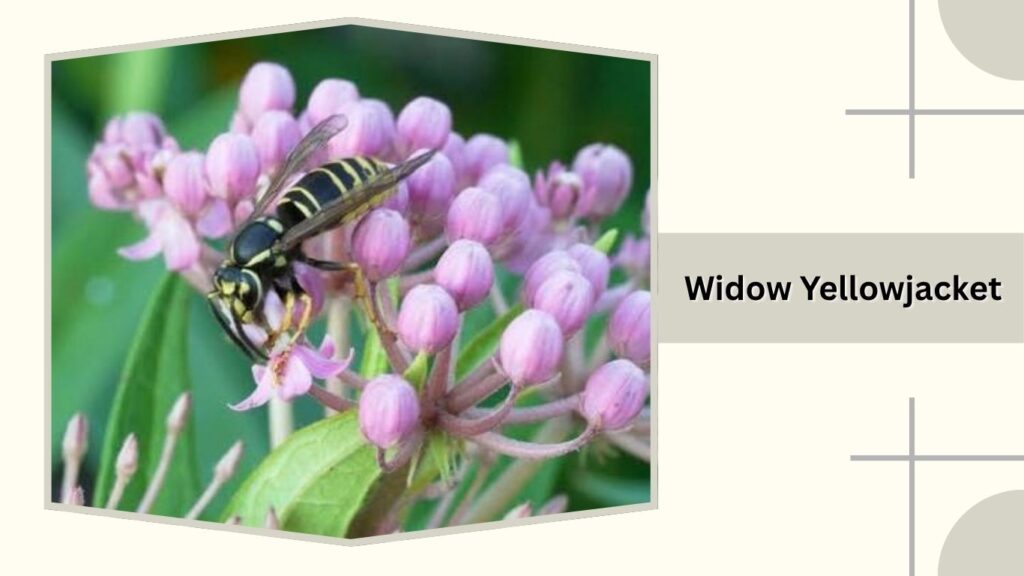
The Widow Yellowjacket (Vespula vidua), sometimes called the Long Yellowjacket or Ground Hornet, is a distinctive North American yellowjacket with unusually extensive black markings. The scientific name vidua means “widow” in Latin and may refer to the species’ comparatively dark appearance. It is a large member of the ground-nesting yellowjacket group and occurs mainly in eastern portions of North America.
Identification
The Widow Yellowjacket generally appears darker than many related yellowjackets. Its abdominal pattern includes broad black areas against a bright yellow background.
- Large, sturdy yellowjacket
- Extensive black body markings
- Bright yellow contrasting areas
- Second abdominal segment largely black
- Later abdominal segments may contain isolated yellow or pale markings
- Sparse hair on much of the abdomen
- Narrow waist and folded transparent wings
Habitat and Distribution
Widow Yellowjackets occur in eastern North America, including parts of the northeastern and Midwestern United States and adjoining regions of Canada. Records include populations throughout natural forests, woodland margins, meadows, parks, and other suitable terrestrial habitats.
Like other members of Vespula, they usually make nests in protected ground cavities rather than constructing large exposed aerial nests.
Behavior and Diet
Widow Yellowjackets live in colonies composed of a reproductive queen and female workers. Workers search surrounding vegetation and ground-level habitats for arthropod prey. Captured prey provides protein for developing larvae.
Adult wasps primarily require carbohydrate-rich foods and therefore visit flowers and other natural sources of sugar. They may defend the nest forcefully when disturbed and, like other yellowjackets, females are capable of delivering repeated stings.
Lifespan and Life Cycle
The colony cycle is generally annual. A fertilized queen survives winter and becomes active when temperatures rise in spring. She establishes a new nest, produces the first workers, and initially performs most colony duties herself.
Once workers mature, they forage, enlarge the nest, defend the entrance, and care for larvae while the queen concentrates on reproduction.
Toward late summer or autumn, the colony produces males and young queens. These reproductives leave the nest and mate. Newly fertilized queens then seek protected sites for winter. The old queen, workers, and males normally die as the season ends, leaving overwintering queens to continue the next generation.
11. American Cuckoo Yellowjacket
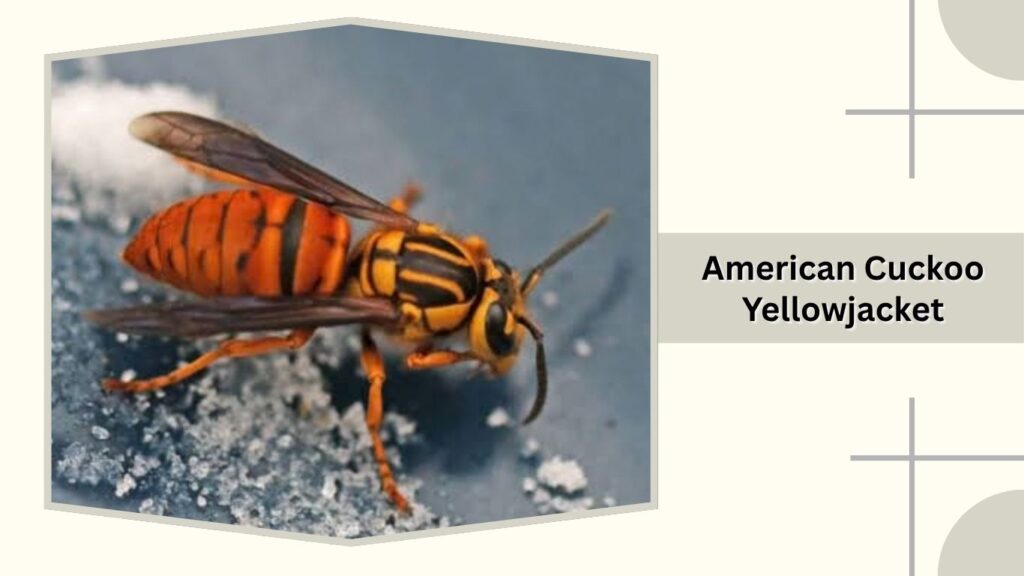
The American Cuckoo Yellowjacket (Vespula infernalis) is one of the most unusual North American yellowjackets. Unlike ordinary social yellowjackets, it has no worker caste of its own. Instead, it survives as an obligate social parasite, taking over colonies of other yellowjackets—especially the Forest Yellowjacket (Vespula acadica). North American populations were once called Vespula austriaca, but they are now recognized as the separate species Vespula infernalis.
Identification
Because the American Cuckoo Yellowjacket lacks workers, individuals encountered are reproductive females or males. Females possess adaptations that help them survive aggressive encounters during colony takeover.
- Black-and-yellow yellowjacket pattern
- No worker caste
- Females relatively large and strongly built
- Thickened protective body structure
- Powerful curved sting in reproductive females
- Dark antennae
- Transparent wings held over the abdomen
Habitat and Distribution
American Cuckoo Yellowjackets occur in North America wherever suitable host yellowjackets are present. Their distribution is closely tied to that of the Forest Yellowjacket because they depend on host colonies for reproduction.
Rather than building an independent nest, a female searches for an established host colony, usually located underground or within another protected cavity.
Behavior and Diet
The American Cuckoo Yellowjacket is an obligate social parasite. A female enters a Forest Yellowjacket colony and takes control of it. Instead of producing workers, she lays eggs that develop into reproductive males and females.
The surviving host workers continue gathering food, maintaining the nest, and feeding the parasite’s developing larvae. This strategy allows the cuckoo yellowjacket to reproduce without maintaining its own worker population.
Lifespan and Life Cycle
Its life cycle differs greatly from ordinary yellowjackets. A reproductive female must first locate an active host colony. After successfully taking over the nest, she uses the existing worker force to rear her offspring.
Because the species produces no workers, its colony phase depends completely on the host workers. Eventually, new males and females mature and leave the nest. Mating occurs outside the colony, after which fertilized females survive through winter in protected locations.
The following season, each surviving female must locate another suitable yellowjacket colony and repeat the takeover process. This dependence on another species makes the American Cuckoo Yellowjacket one of the most specialized members of the Vespula genus.
12. American Red-Banded Yellowjacket
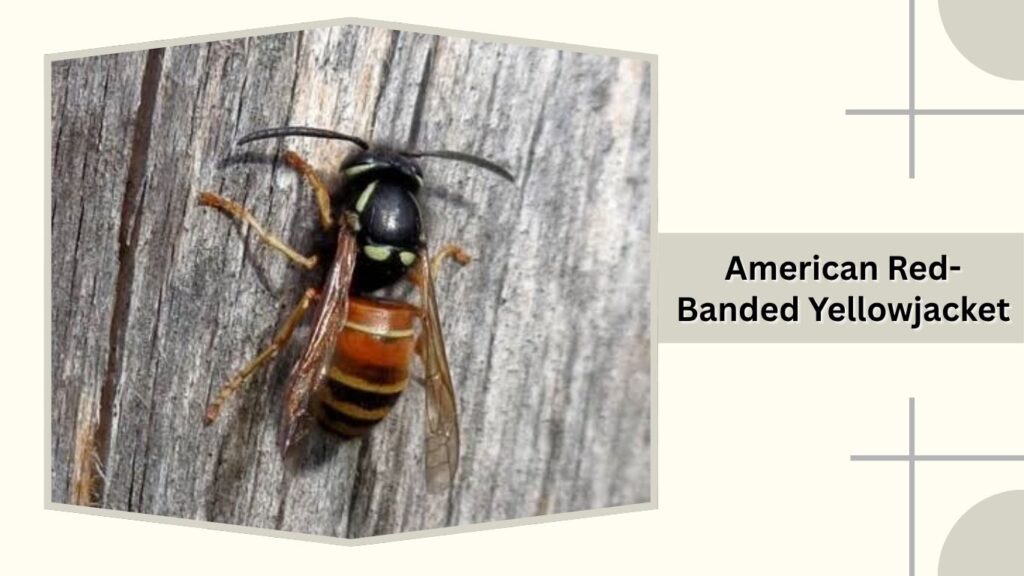
The American Red-Banded Yellowjacket (Vespula intermedia), also called the Northern Red-Banded Yellowjacket, is a northern North American species recognized for the reddish-brown coloration mixed with the usual pale markings of yellowjackets. It was previously treated by some researchers as the North American form of Vespula rufa, but modern North American references recognize V. intermedia as a distinct species.
Identification
American Red-Banded Yellowjackets can look quite different from the familiar bright yellow-and-black species. Their reddish abdominal markings and relatively pale bands are useful clues, although close examination may be required for reliable identification.
- Black body with pale yellow or ivory markings
- Noticeable reddish-brown areas on the abdomen
- Compact and sturdy body
- Relatively short face compared with aerial yellowjackets
- Narrow waist between thorax and abdomen
- Dark antennae
- Queens larger and heavier-bodied than workers
Habitat and Distribution
This species occurs mainly across northern North America. Records extend across much of Canada and into Alaska and portions of the northeastern United States. Its distribution is therefore associated strongly with cooler boreal and northern environments.
Like closely related members of its species group, it generally uses protected nesting locations. Underground cavities, shallow soil sites, and sheltered spaces around vegetation can provide appropriate places for colony development.
Behavior and Diet
The detailed biology of North American populations remains comparatively poorly studied. Related red-banded yellowjackets primarily hunt living arthropods rather than relying heavily on carrion or human food. Workers capture small insects and other prey that provide protein for developing larvae. Adults obtain carbohydrates from nectar, plant secretions, and other naturally occurring sugary liquids.
The colony is social, with workers handling nest maintenance, defense, food collection, and brood care.
Lifespan and Life Cycle
Like most temperate Vespula, the American Red-Banded Yellowjacket has an annual colony cycle. A fertilized queen survives winter and becomes active during spring. She establishes a nest, lays eggs, and raises the first workers.
As worker numbers increase, the queen concentrates on reproduction. Later in the season, the colony produces males and new queens. After mating, fertilized young queens seek protected overwintering sites, while workers, males, and the old queen die as colder weather brings the colony cycle to an end.
13. Common Aerial Yellowjacket
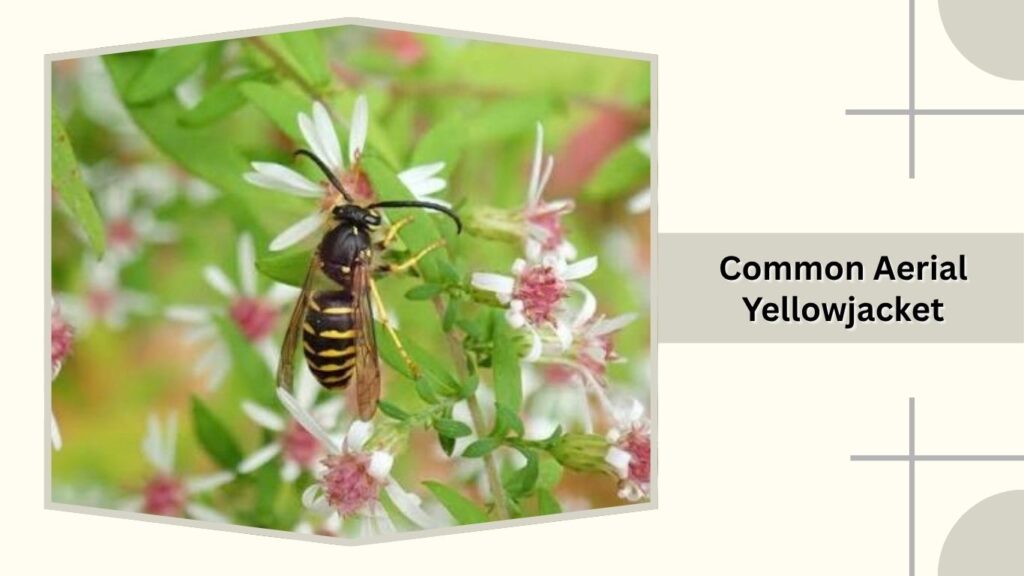
The Common Aerial Yellowjacket (Dolichovespula arenaria) is one of the most widespread aerial-nesting yellowjackets in North America. Unlike many Vespula species that usually construct nests underground, this species frequently suspends its enclosed paper nest from branches, shrubs, buildings, and other above-ground supports. It is especially common in eastern North America and can occasionally become troublesome when a nest is built close to human activity.
Identification
Common Aerial Yellowjackets have bright yellow and black markings and the relatively long face characteristic of the genus Dolichovespula. Several closely related species appear similar, so abdominal markings are important for identification.
- Black body with bright yellow markings
- Relatively elongated face
- Wide gap between the eye and mandible
- Yellow bands across the abdomen
- Narrow waist
- Dark antennae
- Clear to lightly brown-tinted wings
Habitat and Distribution
The Common Aerial Yellowjacket is widely distributed across North America, from northern regions into much of the United States. It is particularly abundant in eastern North America.
Nests are normally aerial and may be attached to tree branches, shrubs, tall vegetation, houses, sheds, and other structures. Occasionally, colonies occur beneath rocks or even underground. The nest consists of multiple paper combs surrounded by a protective envelope.
Behavior and Diet
Workers primarily hunt live arthropods. Known prey includes caterpillars, flies, crickets, grasshoppers, spiders, lacewings, and even lady beetles. Adults obtain energy from nectar and ripe fruit juices.
Common Aerial Yellowjackets are generally less interested in human food than highly scavenging ground yellowjackets. Colonies may nevertheless become defensive when their nest is approached or disturbed.
Lifespan and Life Cycle
An overwintered queen begins a new colony during spring. She constructs a small paper nest, lays eggs, and raises the first generation of workers. After workers mature, they take over hunting, nest construction, and brood care.
Colonies grow through summer and eventually produce males and future queens. The new queens mate and overwinter, while the rest of the colony dies as cold weather arrives. This annual cycle means abandoned aerial nests are normally not reused the following year.
14. Northern Aerial Yellowjacket
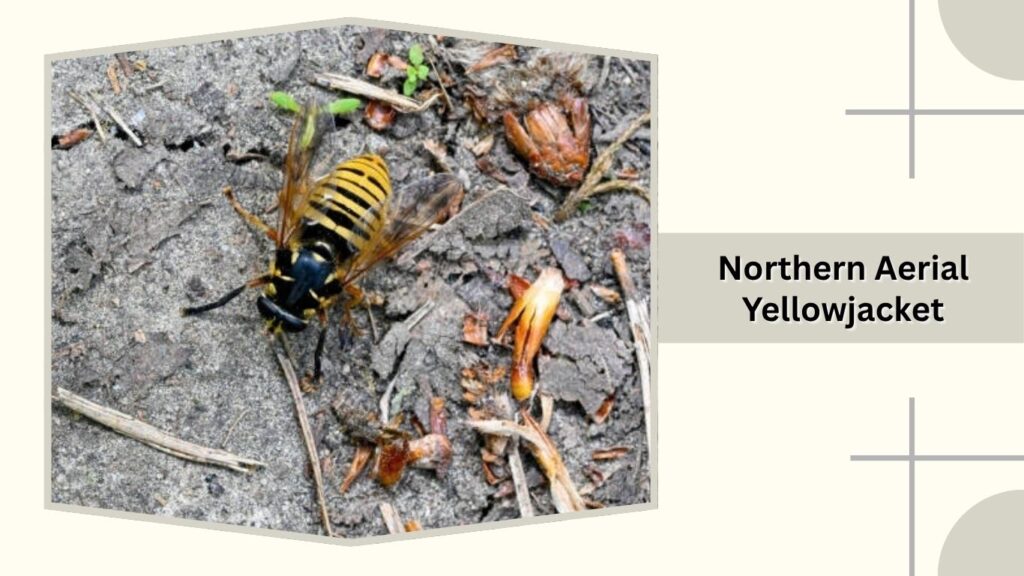
The Northern Aerial Yellowjacket (Dolichovespula norvegicoides) is a predominantly northern North American wasp adapted to boreal and cooler environments. It is less frequently encountered than the Common Aerial Yellowjacket and remains relatively poorly studied. Its colonies typically construct comparatively small paper nests above ground, particularly among low shrubs and other protected vegetation.
Identification
Northern Aerial Yellowjackets possess yellow-and-black markings similar to several related species. Their relatively long cheeks help distinguish aerial yellowjackets from the shorter-faced ground-nesting Vespula species.
- Black body with bright yellow markings
- Long facial area between eyes and mandibles
- Yellow bands across the abdomen
- Yellow markings behind the eyes
- Compact but elongated body form
- Dark antennae with some lighter coloration possible
- Transparent brownish wings
Habitat and Distribution
This species occurs widely across northern North America and extends farther south primarily along mountain systems. Canadian records cover most provinces and territories, while U.S. records extend from Alaska into northern states and mountainous regions farther south.
Northern forests, boreal woodland, shrublands, and mountain habitats provide suitable environments. Recorded nests have typically been aerial and attached to low shrubs rather than buried underground.
Behavior and Diet
The specific feeding behavior of the Northern Aerial Yellowjacket is not as thoroughly documented as that of several common yellowjacket species. As a social Dolichovespula, workers forage primarily to obtain protein-rich arthropod prey for developing larvae.
Adult workers require carbohydrates for their own energy and can obtain them from nectar and other plant-derived sugary liquids. The colony operates cooperatively, with workers maintaining the nest, feeding larvae, foraging, and defending the colony while the queen concentrates mainly on reproduction.
Lifespan and Life Cycle
Northern Aerial Yellowjacket colonies are seasonal. An overwintered fertilized queen becomes active during spring or early summer and establishes a new aerial nest.
The first generation consists primarily of workers. Once mature, these workers enlarge the paper nest and raise additional broods. Colonies are described as relatively small compared with those of many ground-nesting yellowjackets.
Toward the end of the short northern summer, males and new queens are produced. After mating, the fertilized queens overwinter, while the workers, males, and founding queen die as winter approaches.
15. Rocky Mountain Aerial Yellowjacket
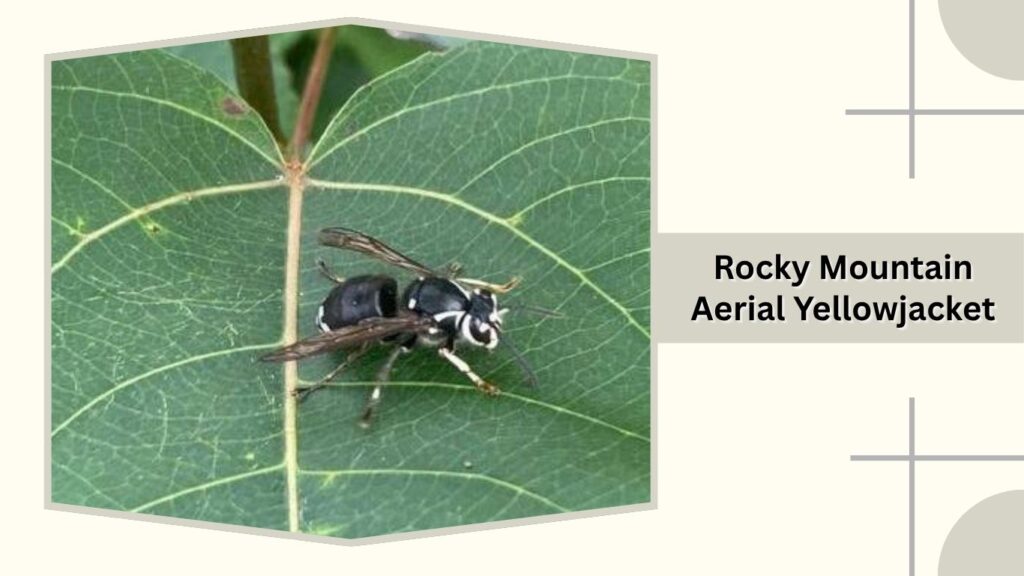
The Rocky Mountain Aerial Yellowjacket (Dolichovespula alpicola) is a relatively uncommon and poorly studied North American aerial yellowjacket. As its name suggests, much of its known distribution follows mountainous western regions. The species was formally distinguished from similar aerial yellowjackets and is noteworthy because comparatively few colonies have been documented, leaving portions of its natural history less understood than those of widespread species.
Identification
The Rocky Mountain Aerial Yellowjacket has the yellow-and-black coloration characteristic of several Dolichovespula species. Reliable species-level identification can require close examination because it resembles other yellow-marked aerial yellowjackets.
- Black body with contrasting yellow markings
- Yellow abdominal bands
- Relatively long cheek or facial area
- Narrow waist
- Long dark antennae
- Clear to brownish wings
- Queens larger and more robust than workers
Habitat and Distribution
The species is associated mainly with western and mountainous North America. BugGuide summarizes its North American range as extending from Alaska and Alberta south along the Rocky Mountains toward Arizona and New Mexico. Records also occur from other western mountain areas.
Its habitats include mountain forests, woodland edges, meadows, and areas containing suitable trees and shrubs. The limited number of studied nests means its nesting preferences are still being documented.
Behavior and Diet
Rocky Mountain Aerial Yellowjackets are social wasps. As in other nonparasitic Dolichovespula, a queen heads the colony while workers perform most routine activities.
Workers are expected to hunt small arthropods as protein for larvae, while adult wasps obtain carbohydrate-rich liquids from flowers and other plant sources. Individuals may therefore be observed visiting flowers in mountain meadows during the warmer part of the year.
Lifespan and Life Cycle
Available observations indicate a seasonal colony cycle typical of aerial yellowjackets. Queens emerge during spring and establish new nests. Workers become active later and maintain the developing colony through summer.
Documented nesting observations include nests around shrubs, trees, sheltered structures, and protected building locations, although the species is too poorly studied to define one universal nesting pattern.
Males and new queens appear toward the end of summer. After mating, fertilized queens find protected overwintering sites. The remaining colony dies as temperatures fall, and each surviving queen starts a new colony during the following season.
16. Arctic Aerial Yellowjacket
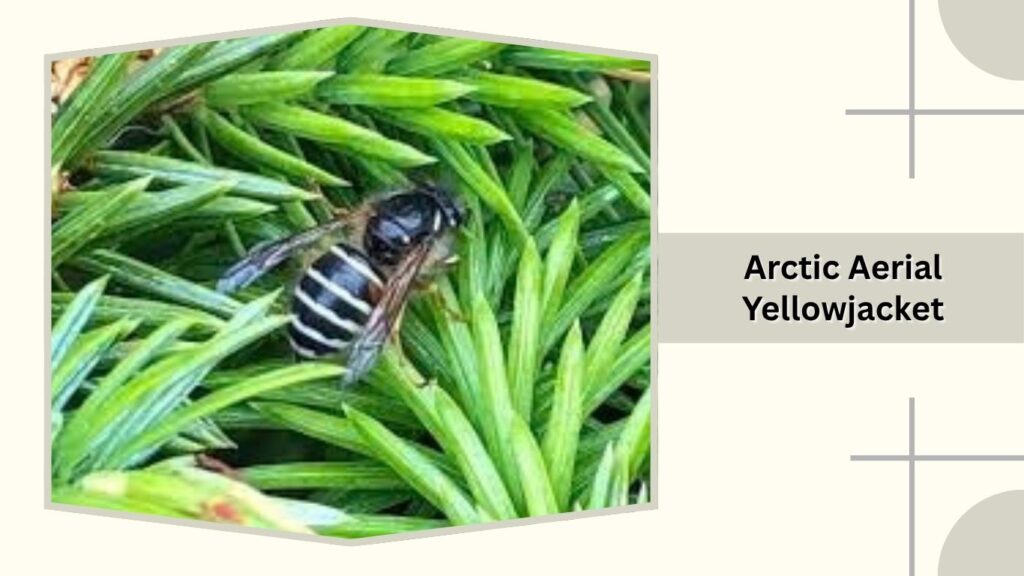
The Arctic Aerial Yellowjacket (Dolichovespula albida) is a cold-adapted social wasp found across northern North America. It is also called the Arctic Yellowjacket or White Aerial Yellowjacket because many of its pale markings are ivory-white rather than the bright yellow typical of numerous other yellowjackets. Its ability to maintain colonies during the short summers of boreal and Arctic environments makes it one of the more interesting members of the genus.
Identification
The Arctic Aerial Yellowjacket closely resembles the Northern Aerial Yellowjacket in pattern, but its pale markings are usually ivory or white rather than bright yellow. This feature provides one of the most noticeable distinctions between the two species.
- Primarily black body
- Ivory-white rather than bright yellow markings
- Pale abdominal bands
- Relatively long face
- Narrow waist
- Dark antennae
- Transparent to brownish wings
Habitat and Distribution
The Arctic Aerial Yellowjacket has a broad boreal distribution across northern North America, roughly from Alaska eastward toward Maine. It occurs in northern forests, taiga, tundra margins, and other cool environments. Government records from Canada’s Northwest Territories include the Taiga Plains, Taiga Shield, and Boreal Cordillera.
Its nesting habits are adapted to environments where the warm season can be extremely short. Nests are generally constructed above or close to ground level in protected situations.
Behavior and Diet
Arctic Aerial Yellowjackets live in organized colonies with a queen and female workers. Workers forage outside the nest, while the queen performs most egg-laying duties.
Like related aerial yellowjackets, workers obtain animal protein by hunting arthropods for their larvae. Adults rely primarily on carbohydrate-rich liquids such as flower nectar. Their relatively short active season means colony development must occur rapidly during favorable summer conditions.
Lifespan and Life Cycle
The Arctic environment strongly influences the species’ life cycle. Research on colonies from Arctic Canada found remarkably small nests, including studied colonies containing only two combs and roughly 170 cells. This is considerably smaller than colonies of many Dolichovespula species living in temperate regions.
An overwintered queen establishes the colony once warmer weather arrives. Workers are produced first and quickly assume foraging and brood-care responsibilities. Later, the colony shifts toward producing males and new queens.
17. Parasitic Aerial Yellowjacket
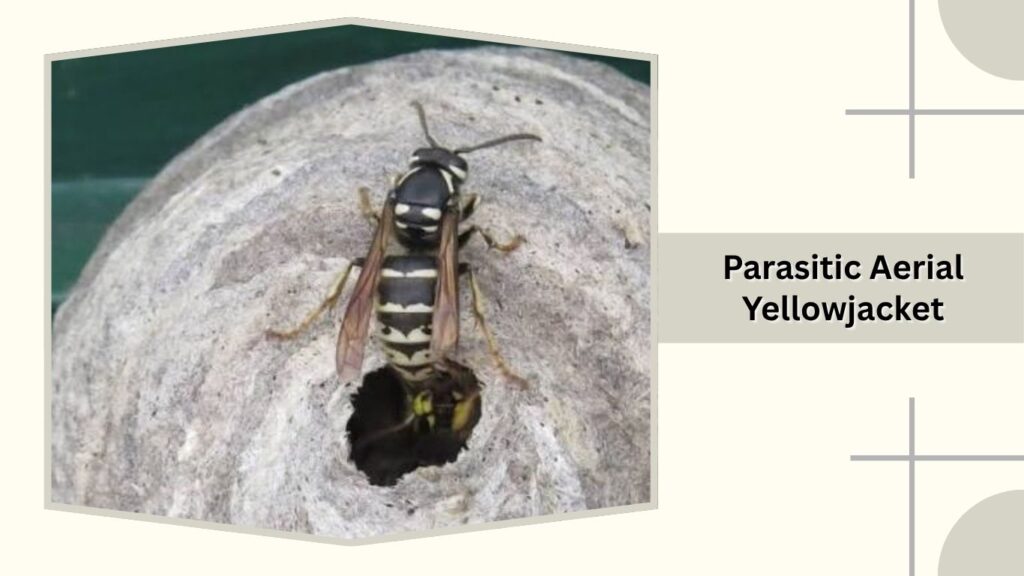
The Parasitic Aerial Yellowjacket (Dolichovespula arctica) is an unusual North American yellowjacket that survives entirely through social parasitism. Unlike most social yellowjackets, this species produces no worker caste. Instead, a reproductive female invades the nest of another aerial yellowjacket and relies on the host workers to raise her offspring. Its principal hosts include the Common Aerial Yellowjacket and Northern Aerial Yellowjacket.
Identification
Parasitic Aerial Yellowjackets are predominantly black with contrasting white or ivory markings. Because the species has no workers, adults encountered are reproductive females or males. Queens reach about 18 mm, while males are approximately 15 mm long.
- Black body with white or ivory markings
- Pale bands across several abdominal segments
- Queens approximately 18 mm long
- Males approximately 15 mm long
- No worker caste
- Relatively long face typical of Dolichovespula
- Transparent to brown-tinted wings
Habitat and Distribution
The Parasitic Aerial Yellowjacket has a broad northern North American distribution. Its range extends from Labrador across Canada to Alaska and reaches south into areas including Georgia, Arizona, and California, although it is absent from much of the central Midwest.
Because it cannot establish an independent colony, its habitat is closely connected to populations of suitable host yellowjackets. Forest edges, wooded areas, shrublands, and other environments containing aerial yellowjacket nests provide opportunities for reproduction.
Behavior and Diet
This species is an obligate social parasite. A female enters an established colony belonging primarily to Dolichovespula arenaria or D. norvegicoides. She eventually eliminates or replaces the host queen and begins laying her own eggs.
The host workers remain active and perform essential colony duties, including gathering food, maintaining the paper nest, and feeding the parasite’s developing larvae. Because the parasitic species produces no workers, it depends completely on these host females during colony development.
Lifespan and Life Cycle
The life cycle differs greatly from ordinary yellowjackets. An overwintered female must locate an active host nest rather than constructing her own colony. After successfully taking control, she produces reproductive offspring instead of workers.
Host workers raise the developing males and females until they mature. The new reproductives eventually leave the colony and mate. Fertilized females then locate sheltered overwintering sites.
The host colony and remaining insects disappear as the season ends. The following year, each surviving parasitic female must locate another suitable aerial yellowjacket colony, making successful host invasion essential to the species’ survival.
18. Bald-Faced Yellowjacket
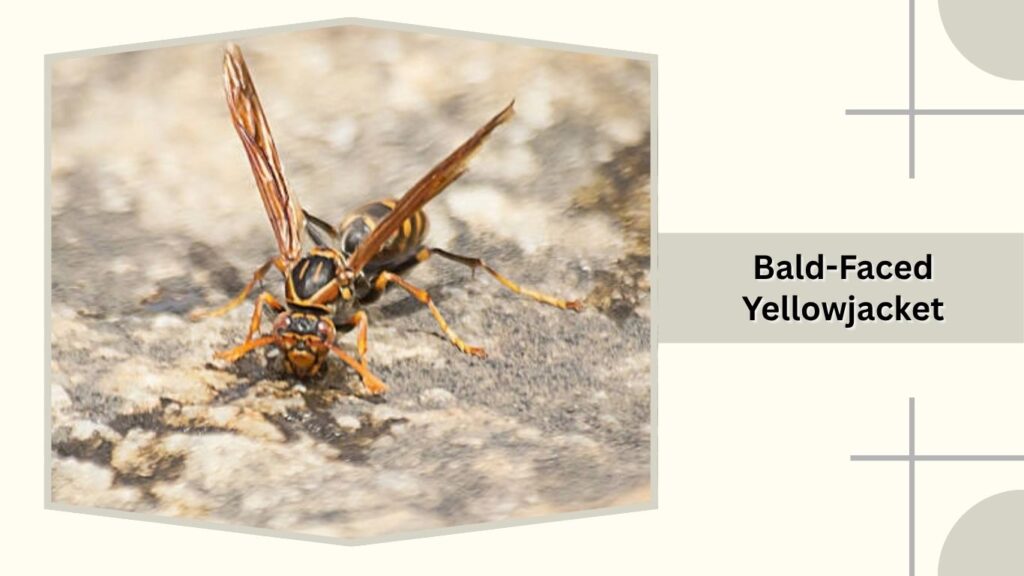
The Bald-Faced Yellowjacket (Dolichovespula maculata) is much better known as the Bald-Faced Hornet. Despite that name, it is not a true hornet of the genus Vespa; taxonomically, it is an aerial yellowjacket. Its striking black-and-white coloration and large enclosed paper nests make it one of the easiest North American social wasps to recognize.
Identification
Unlike typical yellow-and-black yellowjackets, Bald-Faced Yellowjackets have bold ivory-white markings. Workers measure approximately 12–14 mm, while queens are larger at about 18–20 mm.
- Mostly glossy black body
- Ivory-white facial markings
- White bands near the end of the abdomen
- Workers about 12–14 mm long
- Queens about 18–20 mm long
- Long face characteristic of aerial yellowjackets
- Dark, transparent wings
Habitat and Distribution
Bald-Faced Yellowjackets occur widely across North America. They inhabit forests, woodland edges, parks, gardens, suburban neighborhoods, and other areas containing trees or structures suitable for nest attachment.
Their large paper nests are normally built above ground. Colonies commonly attach them to tree branches, shrubs, utility structures, roof edges, and occasionally buildings. The outer paper envelope protects several internal layers of brood comb.
Behavior and Diet
These yellowjackets are active predators. Workers capture flies and numerous other insects, including some other social wasps, and use the prey as protein for growing larvae.
Adults also consume carbohydrate-rich liquids from flowers and other natural sugar sources. Workers collect wood fibers and mix them with saliva to create the distinctive gray paper used for their nests.
They can strongly defend the colony if the nest is threatened. Females are capable of stinging repeatedly, so active nests are best observed from a safe distance.
Lifespan and Life Cycle
A fertilized queen survives winter and begins a new nest during spring. She initially builds a small group of cells and personally raises the first workers.
Once workers mature, they expand the nest, gather food, protect the colony, and care for additional larvae. Colonies may eventually contain several hundred workers.
During late summer, reproductive males and new queens develop. They leave the nest and mate, after which fertilized queens search for protected places to overwinter. The old queen, workers, and males die when cold weather arrives, and the abandoned paper nest is normally not reused.
19. Blackjacket
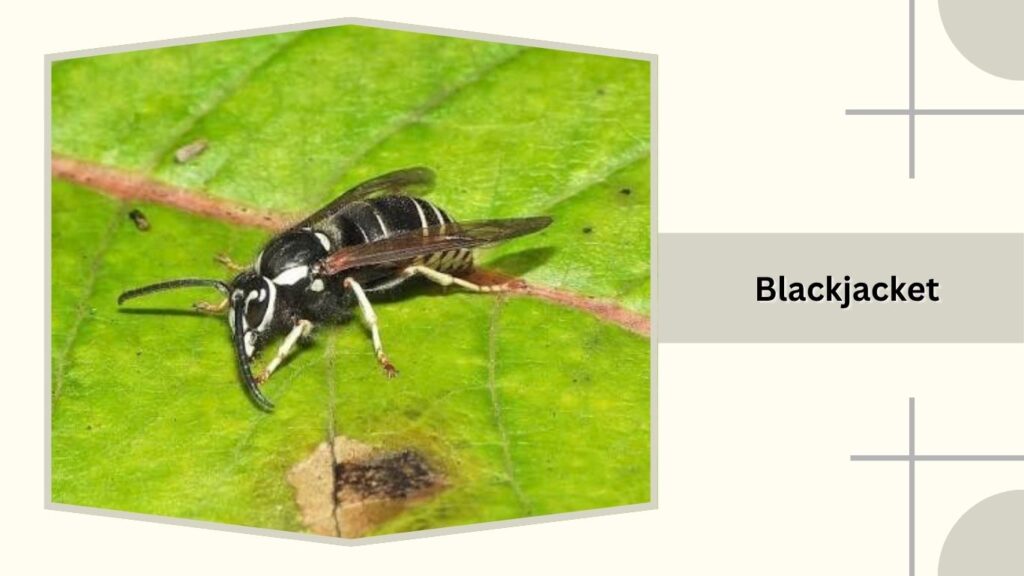
The Blackjacket (Vespula consobrina) is a distinctive North American ground yellowjacket whose black-and-white coloration makes it stand apart from the familiar yellow-and-black members of the genus. It is primarily associated with northern forests and tends to have less contact with people than scavenging species found around cities and picnic areas. It was once considered a form of the Eurasian red-banded yellowjacket Vespula rufa.
Identification
Blackjackets are appropriately named because most of their body is black, accompanied by ivory-white rather than bright yellow markings. Workers usually reach about 10–12 mm in length, while queens may reach approximately 17 mm.
- Predominantly black body
- White or ivory abdominal bands
- White markings around the face and thorax
- Workers approximately 10–12 mm long
- Queens around 17 mm long
- Compact Vespula body shape
- Brownish transparent wings
Habitat and Distribution
Blackjackets are primarily northern insects. They occur across much of Canada and extend into northern parts of the United States. Forested landscapes are especially important habitats for this species.
Colonies are commonly established in protected cavities. Abandoned rodent burrows, rotten logs, cavities beneath roots, rock spaces, and occasionally hollow structural areas can provide nesting locations.
Behavior and Diet
Blackjackets are social predators. Workers search forest vegetation and nearby ground for insects and other small arthropods. These prey items are chewed into manageable portions and carried back to larvae as a source of protein.
Adult workers need carbohydrates for flight and other activities, so they also visit flowers and natural sugary resources. Because Blackjackets are primarily forest-associated and are not among the major food-scavenging yellowjackets, people generally encounter them less frequently around garbage, picnics, and outdoor restaurants.
They can nevertheless defend their nests with repeated stings when disturbed.
Lifespan and Life Cycle
Blackjacket colonies normally last only one season. An overwintered queen becomes active in spring and searches for an appropriate cavity. She constructs the first paper cells, deposits eggs, and cares for the initial larvae.
After workers emerge, they take over food collection, nest construction, defense, and brood care. The colony gradually increases in population throughout summer.
Males and new queens are produced toward the end of the season. They leave to mate, and fertilized queens eventually enter protected overwintering locations. The original queen, workers, and males die as winter approaches, while surviving young queens establish entirely new colonies the following year.
20. Common Yellowjacket
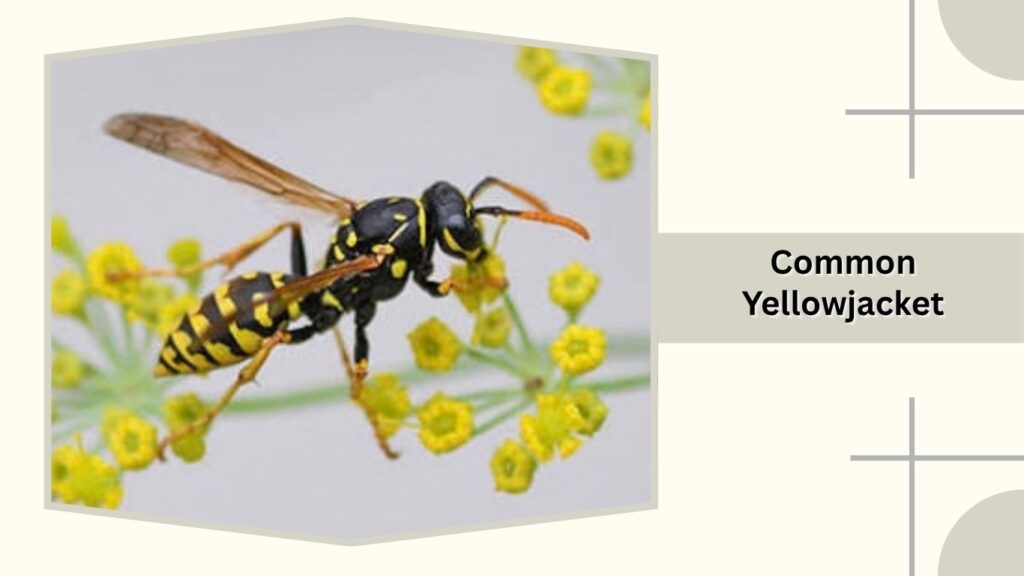
The Common Yellowjacket (Vespula vulgaris), widely called the Common Wasp in Europe, is one of the best-known social wasps across much of Eurasia. It has also become established in several regions outside its native range. Although North American insects were historically identified as V. vulgaris, many of those populations are now recognized as the separate American Yellowjacket, Vespula alascensis.
Identification
Common Yellowjackets display the classic combination of black and bright yellow. Their appearance closely resembles the German Yellowjacket, so careful examination of facial and abdominal markings may be necessary for confident identification.
- Bright yellow-and-black coloration
- Bold abdominal bands
- Compact, smooth body
- Short facial area typical of Vespula
- Narrow waist
- Dark antennae
- Transparent brownish wings
Habitat and Distribution
The Common Yellowjacket is widespread through Europe and parts of Asia and has been introduced into regions including Australia and New Zealand.
It is highly adaptable and inhabits forests, farmland, grasslands, gardens, parks, and urban landscapes. Colonies are commonly underground, particularly in abandoned animal burrows. They may also occupy wall cavities, roof spaces, hollow trees, and other protected locations.
Behavior and Diet
Common Yellowjackets are both predators and opportunistic scavengers. Workers hunt insects and other small invertebrates, providing animal protein for developing larvae.
Adults require carbohydrates and regularly consume nectar, fruit juices, and other sugary materials. Their scavenging behavior also attracts them to soft drinks, desserts, meat, garbage, and outdoor meals, particularly later in summer.
Workers vigorously defend their colony when disturbed. Unlike honey bees, female yellowjackets retain their stinger and can sting several times.
Lifespan and Life Cycle
A fertilized queen usually emerges from winter dormancy during spring and searches for a suitable nest site. She builds a small paper nest and raises the first generation of workers herself.
Once workers become established, they perform most colony duties while the queen concentrates on laying eggs. Populations can become large as summer progresses.
Later, males and future queens develop. These reproductives leave the colony and mate. Newly fertilized queens find sheltered locations for winter, while the old queen, workers, and males normally die as temperatures decline. In unusually mild environments, some V. vulgaris colonies can persist longer and develop exceptionally large populations.
FAQs
1. What is a yellowjacket wasp?
A yellowjacket is a social wasp belonging mainly to the genera Vespula and Dolichovespula. Most species have black-and-yellow markings, although some, such as the Blackjacket and Bald-Faced Yellowjacket, are predominantly black and white.
2. Do all yellowjackets build nests underground?
No. Many Vespula species commonly build nests underground, while Dolichovespula species are generally called aerial yellowjackets because they frequently construct nests above ground in trees, shrubs, or on structures.
3. Can yellowjackets sting more than once?
Yes. Female yellowjackets have smooth stingers and are capable of stinging repeatedly. They are most likely to become defensive when their nest or colony is disturbed.
4. What do yellowjackets eat?
Yellowjacket workers commonly hunt insects and other arthropods to obtain protein for larvae. Adults rely heavily on carbohydrate-rich foods such as nectar and fruit juices. Some species also readily scavenge meat, sweet drinks, garbage, and human food.
5. Do yellowjacket nests survive through winter?
Most temperate yellowjacket colonies are annual. Workers, males, and the original queen normally die during autumn or winter. Newly fertilized queens survive in sheltered locations and establish fresh colonies the following spring. In mild climates, however, some species can occasionally maintain perennial colonies.