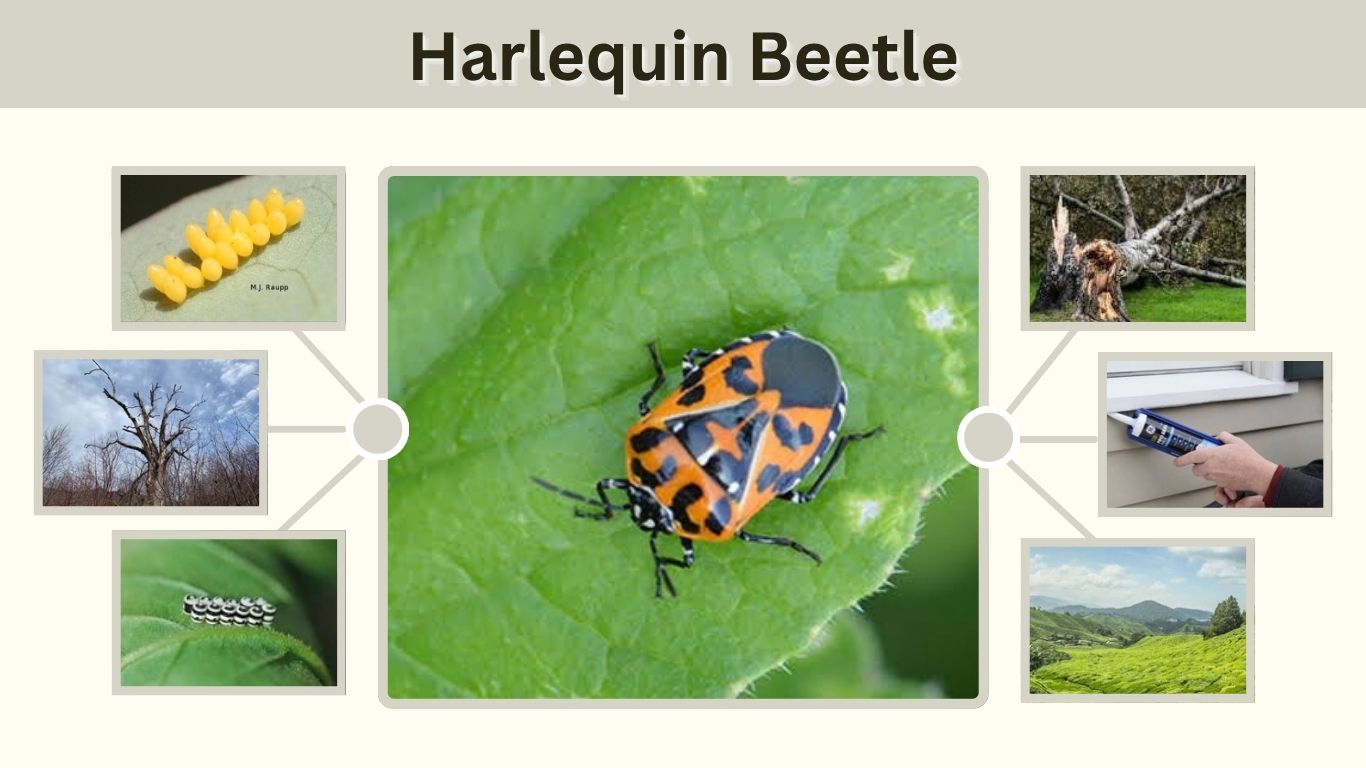
The harlequin beetle (Acrocinus longimanus) is a spectacular tropical longhorn beetle known for its colorful patterned body and extraordinarily long front legs. Native to Central and South America, this large beetle spends its larval stage tunneling through weakened, recently fallen, or dead wood. Adult males are especially distinctive because their front legs can be much longer than those of females. This guide covers harlequin beetle identification, habitat, eggs, larvae, life cycle, diet, behavior, distribution, and how it differs from similarly named insects.
What Is a Harlequin Beetle?
The harlequin beetle is a large member of the longhorn beetle family Cerambycidae. Its scientific name is Acrocinus longimanus, and NCBI also lists “giant harlequin beetle” as a common name. The species occurs naturally in the Neotropical region rather than Australia or Europe and is particularly associated with tropical forests containing suitable host trees.
Harlequin Beetle Quick Facts
- Scientific name: Acrocinus longimanus
- Family: Cerambycidae
- Order: Coleoptera
- Type: Longhorn beetle
- Distribution: Mexico through parts of Central and South America
- Activity: Mainly nocturnal
- Larval food: Wood of weakened, dead, or recently fallen trees
- Distinctive feature: Extremely long front legs in males
- Coloration: Complex black, gray, red, orange, or pinkish patterning
Despite its striking appearance, the harlequin beetle is not closely related to the Australian insects commonly called harlequin bugs.
What Does a Harlequin Beetle Look Like?
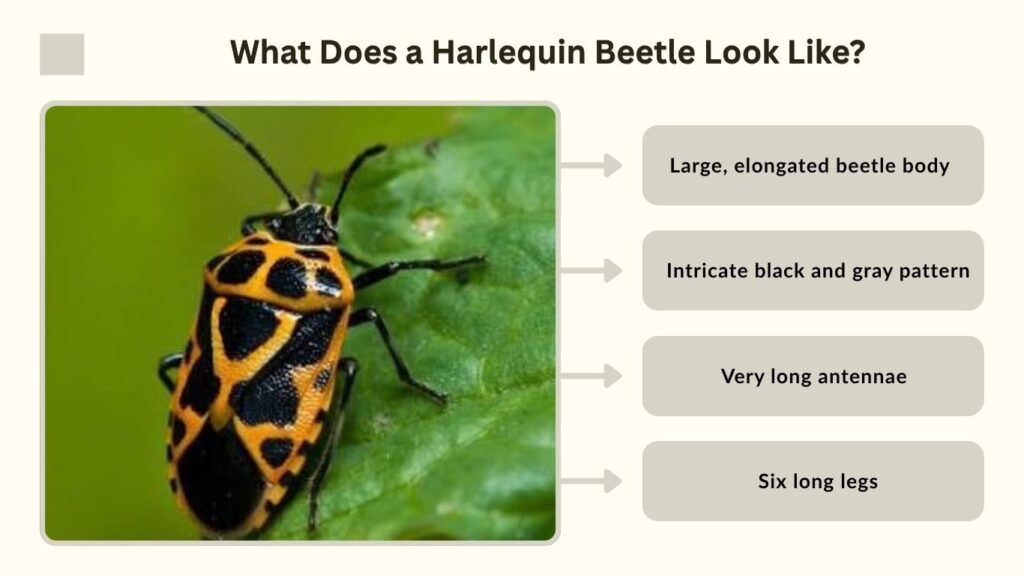
Harlequin beetles are difficult to mistake once seen clearly. Their bodies have complex patches and bands rather than a single solid color, while their long antennae and legs give them the classic appearance of a longhorn beetle. Males are particularly dramatic because their front legs are disproportionately elongated, giving rise to the scientific name longimanus, referring to the unusually long forelimbs.
Harlequin Beetle Identification
Look for these characteristics:
- Large, elongated beetle body
- Intricate black and gray pattern
- Red, orange, or pinkish markings
- Very long antennae
- Exceptionally long forelegs in males
- Hardened forewings, or elytra
- Six long legs
- Strong sexual differences in front-leg length
Research describes individuals reaching roughly 75 mm in body length, with measurements including extended legs reaching around 150 mm in some specimens. Males have front femora and tibiae that can be about twice as long as those of females.
Male vs Female Harlequin Beetle
Body length is not necessarily the easiest way to tell the sexes apart. Instead, examine the front legs.
Males have extremely elongated front legs that extend well beyond the body. Females have much shorter and more proportionate forelegs.
A morphological study found that male and female average body lengths were similar, while male front femora and tibiae were roughly twice the length of those in females.
Where Do Harlequin Beetles Live?
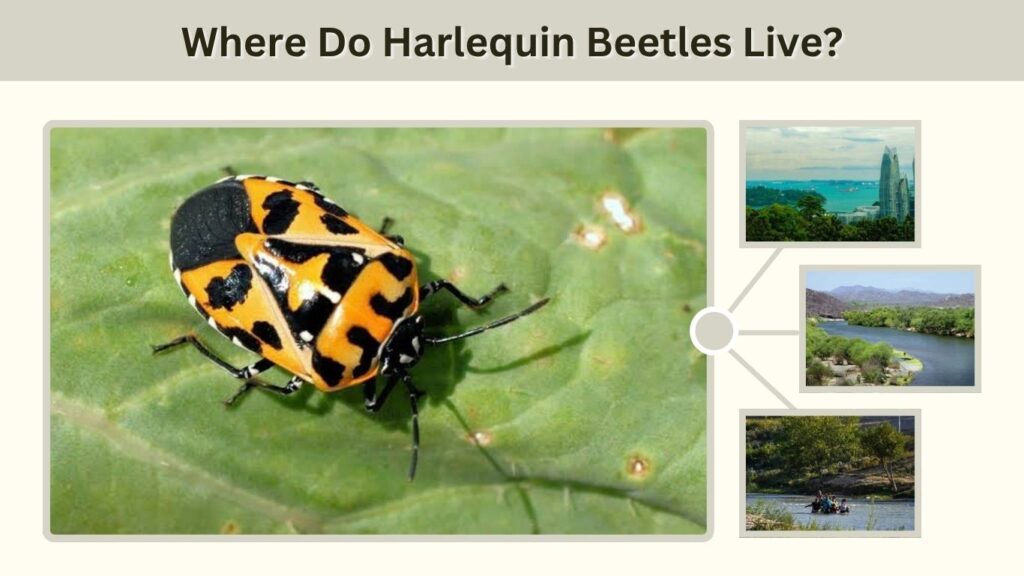
True harlequin beetles are tropical American insects. Their geographic range extends from Mexico southward through Central America and into much of northern and central South America. They are closely associated with forest environments where damaged, weakened, or fallen trees provide suitable sites for reproduction and larval development.
Harlequin Beetle Distribution
Records include countries such as:
- Mexico
- Belize
- Guatemala
- Honduras
- Nicaragua
- Costa Rica
- Panama
- Colombia
- Venezuela
- Ecuador
- Guyana
- Suriname
- French Guiana
- Brazil
- Bolivia
- Paraguay
- Argentina
Adults are predominantly active from dusk through the night and can be attracted to artificial lights. They also appear able to locate recently damaged or fallen trees suitable for reproduction.
Are There Harlequin Beetles in Australia?
Searches for “harlequin beetles Australia” can be confusing because several Australian insects carry similar common names. The true harlequin beetle, Acrocinus longimanus, is a Neotropical longhorn beetle and is not an Australian native species.
Australian Harlequin Bugs Are Different
Australia has insects called harlequin bugs, but they are not Acrocinus longimanus.
For example, Dindymus versicolor is an Australian harlequin bug found in southeastern mainland Australia and Tasmania. It is a true bug in the order Hemiptera rather than a beetle in Coleoptera. It has red-orange and black coloration and may gather in groups on trees, walls, fences, and wood piles.
Australia also has the brightly colored cotton harlequin bug, Tectocoris diophthalmus, another true bug rather than a beetle.
Harlequin Beetle Eggs and Reproduction
Reproduction is closely linked to suitable wood. Females seek trees or logs where their larvae will have enough woody tissue to develop. Recently damaged, cut, or fallen trees are especially attractive because they provide both suitable bark and wood and often release sap that adults can detect.
Where Are the Eggs Laid?
Females create or use small cuts in the bark and deposit eggs in suitable areas of tree trunks.
A biological study reported that females contained an average of about 160 developing eggs and deposited eggs in groups within feeding or egg-laying incisions on tree bark.
Common larval host genera include Ficus, Coussapoa, Artocarpus, Inga, Persea, and several other tropical trees.
Harlequin Beetle Life Cycle
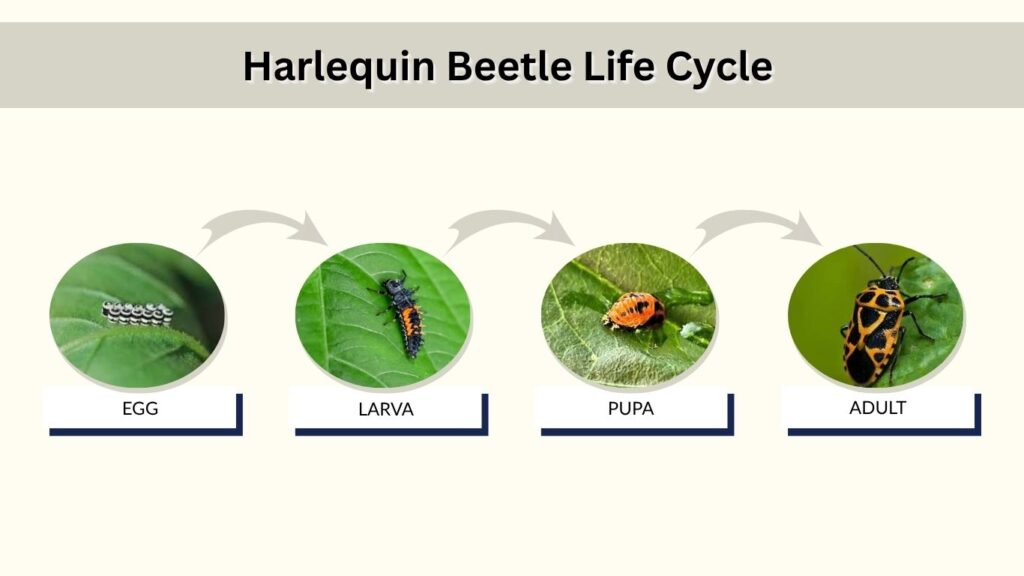
Like other beetles, Acrocinus longimanus undergoes complete metamorphosis. Its development includes four major stages: egg, larva, pupa, and adult. Most of its immature life is hidden inside wood, which helps protect the larva while it feeds and grows. Development can be relatively slow compared with many smaller insects.
Egg to Adult Development
The life cycle includes:
- Egg: A female deposits eggs in bark or wood.
- Larva: Newly hatched larvae tunnel beneath the bark and into wood.
- Growing larva: The larva enlarges substantially while feeding inside the tree.
- Pupa: Mature larvae form a protected pupal chamber.
- Adult: The beetle eventually chews its way out and becomes active outside the wood.
Research from Brazil found that some individuals completed development in about one year while others took approximately two years. Mature two-year-old larvae averaged around 83 mm long in that study.
What Do Harlequin Beetles Eat?
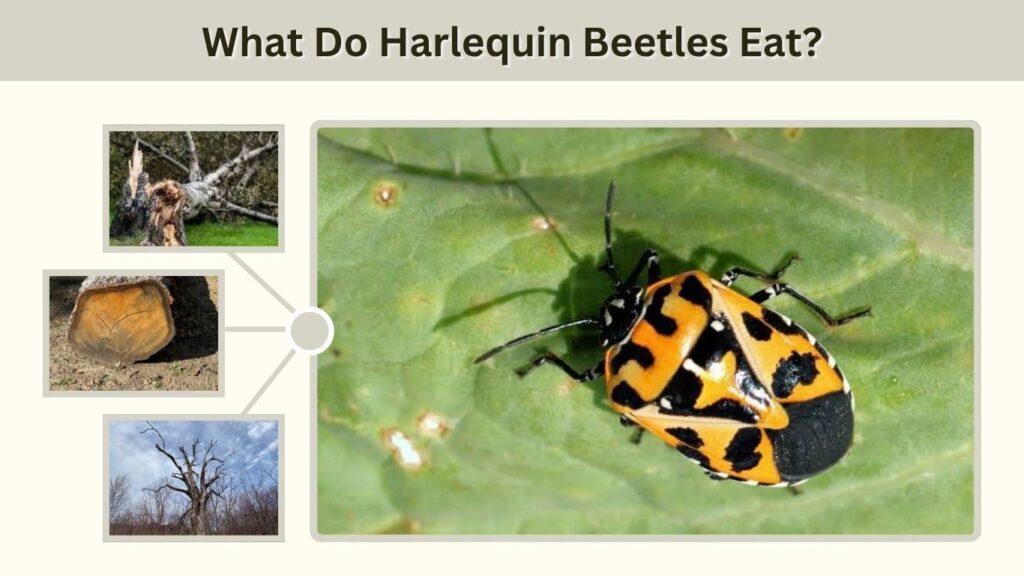
Diet changes dramatically between the larval and adult stages. Larvae are wood borers, whereas adults are associated with tree sap and damaged tree surfaces. Their relationship with weakened and recently fallen trees means they can play an important role in breaking down woody material within tropical forests.
Larvae Feed Inside Wood
After hatching, the larva enters the wood and creates tunnels as it grows.
Recorded host trees include figs and many other tropical tree genera. Researchers have found larvae particularly associated with injured trees, recently cut trunks, dead sections of living trees, and fresh fallen wood.
This feeding helps begin the decomposition process and creates spaces that other wood-dependent organisms can later use.
Adults Seek Sap-Rich Trees
Adults are attracted to damaged or recently fallen trees where sap is available.
These sites serve two purposes: they provide feeding opportunities for adults and suitable locations for females to lay eggs.
Because the beetles are most active at night, people may occasionally encounter adults around artificial lights near forested areas.
Are Harlequin Beetles Harmful?
Harlequin beetles are not primarily considered insects that threaten people. Their ecological relationship is with trees and decomposing wood rather than humans. Problems can arise when females use weakened living trees or economically important trees for egg laying, but much of their normal activity occurs in dead or declining wood.
Importance in Forest Ecosystems
Their activity can contribute to:
- Breaking down dead wood
- Opening tunnels inside tree trunks
- Recycling organic material
- Creating habitats for other wood-associated organisms
- Returning nutrients from wood to forest ecosystems
Because larvae primarily use weakened or dead woody material, seeing a harlequin beetle does not automatically mean healthy trees nearby will be destroyed.
Harlequin Beetle Control
Control is rarely necessary in the beetle’s natural forest habitat. Management may become relevant when egg laying occurs repeatedly on valuable cultivated or weakened trees. Identifying the insect correctly should always come first because several unrelated insects are also called harlequin beetles or harlequin bugs.
Ways to Reduce Problems
Where management is genuinely necessary:
- Remove severely damaged or recently cut wood where appropriate.
- Inspect weakened trees for egg-laying marks.
- Avoid unnecessarily leaving fresh logs close to valuable trees.
- Maintain tree health to reduce attractive damaged areas.
- Confirm the insect’s identity before treating anything.
- Use local professional advice for valuable or commercial trees.
Older biological research on A. longimanus specifically suggested destroying egg masses as a protective measure for affected fig trees.
Broad pesticide use is usually unnecessary for a single adult encountered outdoors.
Harlequin Beetle vs Harlequin Ladybird
Another source of confusion is the harlequin ladybird, Harmonia axyridis. Despite the similar common name, it is an entirely different beetle species.
They Are Very Different Beetles
The harlequin beetle Acrocinus longimanus is a large tropical longhorn beetle with very long legs and antennae.
The harlequin ladybird is a small member of the lady beetle family Coccinellidae. Adults are rounded and may be orange, red, yellow, or black with variable spotting.
Therefore, searches for “harlequin beetle UK” frequently refer to the harlequin ladybird, rather than the giant tropical Acrocinus longimanus.
FAQs
What is a harlequin beetle?
The harlequin beetle is Acrocinus longimanus, a large tropical longhorn beetle native to the Americas. It has striking black, gray, red, and orange-patterned wing covers, long antennae, and extremely elongated front legs in males. Its larvae develop inside weakened, dead, or recently fallen wood.
How big is a harlequin beetle?
Harlequin beetles are large insects. Published descriptions report body lengths reaching roughly 75 mm, while the overall measurement can approach about 150 mm when the extended front legs are included. Males appear especially large because their forelegs are dramatically longer than those of females.
Where do harlequin beetles live?
Acrocinus longimanus occurs in the Neotropical region from Mexico through Central America and into South America, including Brazil, Colombia, Venezuela, Bolivia, Paraguay, and Argentina. Adults are associated with tropical forests, while females often choose recently fallen, damaged, or weakened trees for egg laying.
What do harlequin beetle larvae eat?
The larvae are wood borers. After hatching, they tunnel into suitable tree trunks and feed while developing inside the wood. Recorded hosts include figs and numerous other tropical trees. They frequently develop in recently fallen, injured, dead, or weakened wood rather than attacking only healthy trees.
Is the Australian harlequin bug the same insect?
No. Australia’s harlequin bugs are different insects. For example, Dindymus versicolor is a native Australian true bug belonging to the order Hemiptera, whereas Acrocinus longimanus is a tropical American beetle belonging to Coleoptera. Their shared “harlequin” name refers mainly to their conspicuous coloration.