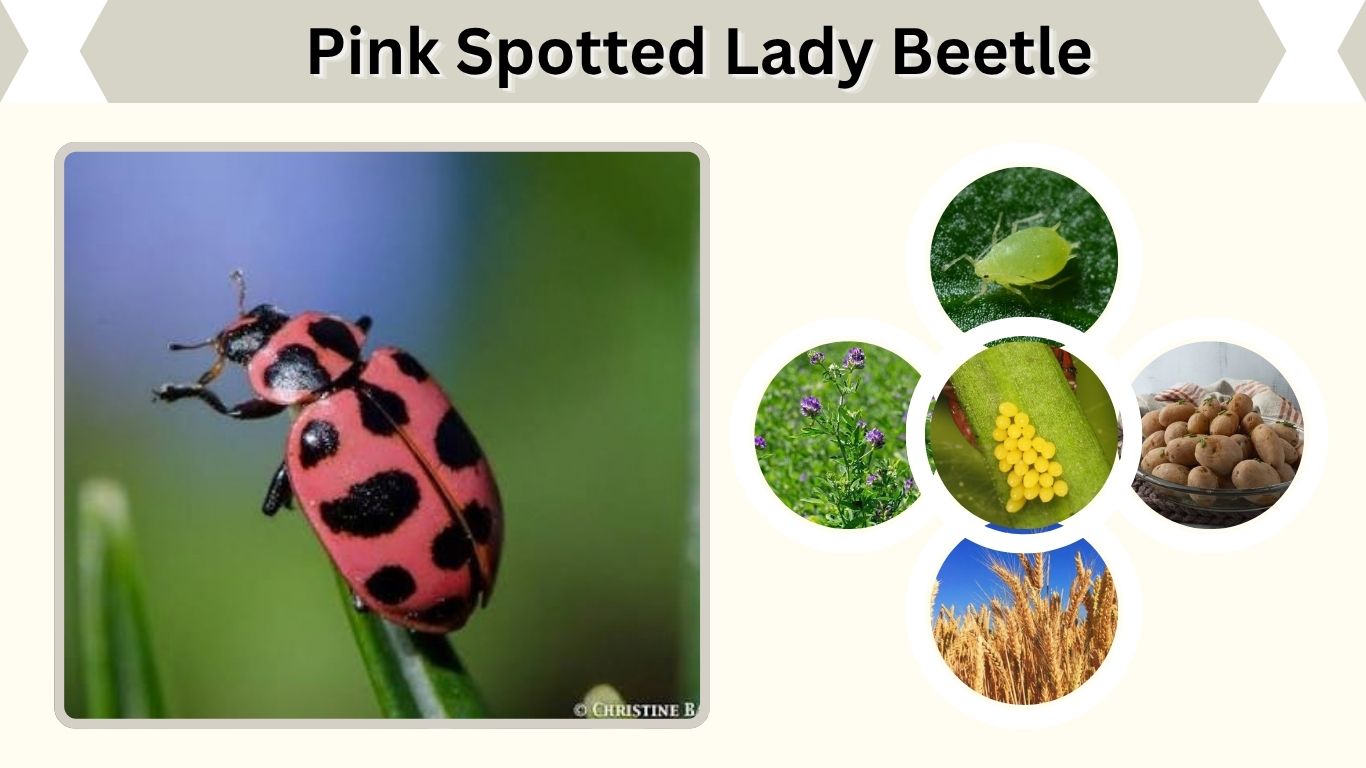
The pink spotted lady beetle is a colorful, beneficial insect commonly found in gardens, agricultural fields, and flowering vegetation across much of North America. Also called the spotted pink lady beetle or twelve-spotted lady beetle, it is especially valuable because both adults and larvae feed on aphids and other plant pests. Its pinkish-red body and distinctive black markings make identification relatively easy. Understanding its appearance, habitat, diet, larvae, and life cycle can help gardeners distinguish this helpful beetle from other spotted lady beetles.
What Is a Pink Spotted Lady Beetle?
The pink spotted lady beetle is a native North American lady beetle scientifically known as Coleomegilla maculata. It belongs to the family Coccinellidae, the group commonly called ladybugs or lady beetles. Unlike some lady beetles that depend mainly on animal prey, this species has an unusually flexible diet that includes insects as well as considerable amounts of pollen.
Common Names and Scientific Name
Its accepted scientific name is Coleomegilla maculata. Depending on the region or source, it may be called the pink spotted lady beetle, pink lady beetle, spotted pink lady beetle, or twelve-spotted lady beetle.
These names generally describe the same distinctive beetle rather than separate species. The word “pink” refers to its typical pinkish-red wing covers, although individuals may sometimes appear more red or orange.
Pink Spotted Lady Beetle Identification
Adult pink spotted lady beetles are usually about 5–6 mm long and have a somewhat elongated oval shape. Useful identification features include:
- Pink, reddish, or orange body coloration
- Six black spots on each wing cover
- Twelve main spots across the two wing covers
- Two dark triangular markings behind the head
- Black legs and darker head
- More elongated body than many round-bodied ladybugs
- Adult length of roughly 5–6 mm
The exact size and shape of the spots can vary somewhat between individuals.
Pink Spotted Lady Beetle Larvae
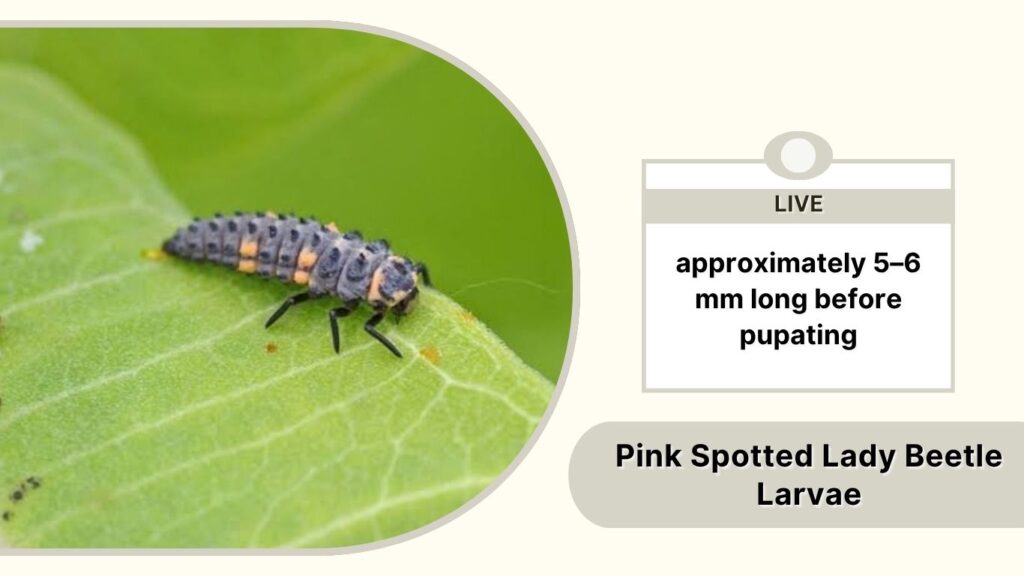
The larvae look dramatically different from adult lady beetles. Someone unfamiliar with their life cycle could easily mistake them for another insect. However, finding these larvae around aphid colonies is often a positive sign because they are active predators that begin hunting pests well before developing their familiar adult coloration.
What Do the Larvae Look Like?
Pink spotted lady beetle larvae are dark, elongated, and somewhat alligator-like. They have six clearly visible legs and become approximately 5–6 mm long before pupating.
Young larvae begin at around 1 mm and grow through several developmental stages. Rather than remaining in one spot, they actively move across leaves and stems looking for suitable prey.
Are the Larvae Beneficial?
Yes. Pink spotted lady beetle larvae are important natural predators. Research has shown that both larvae and adults readily recognize and attack suitable aphids. This makes the larval stage especially valuable in gardens or crops where aphid populations are developing.
Pink Spotted Lady Beetle Diet
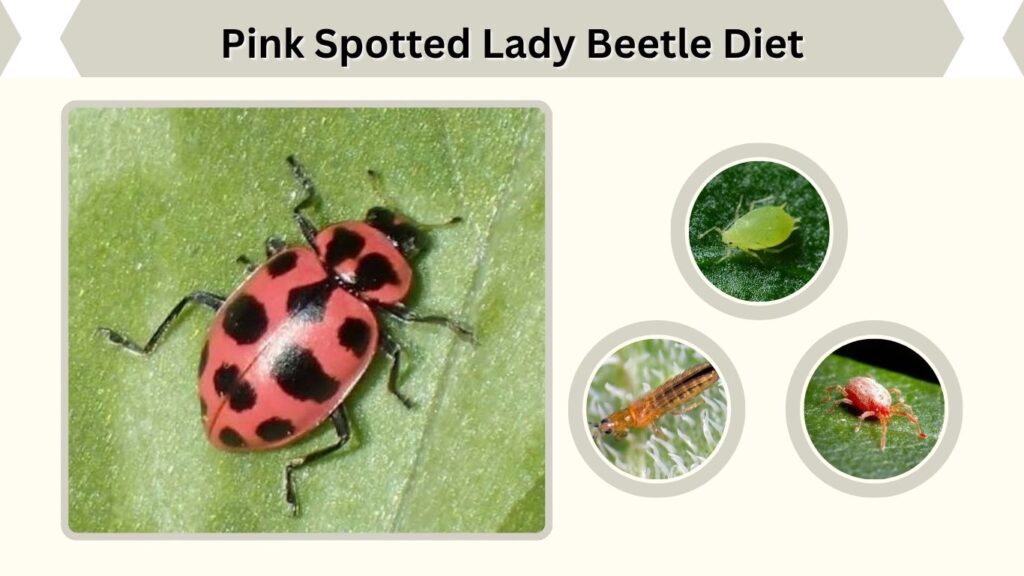
This species is an omnivorous predator rather than a strict insect eater. Aphids are among its preferred foods, but it can consume several other small arthropods and insect eggs. Pollen is particularly important because it allows adult beetles to survive in an area even when their usual insect prey becomes temporarily scarce.
What Does a Spotted Lady Beetle Eat?
The pink spotted lady beetle may feed on:
- Aphids
- Spider mites
- Thrips
- Small insect larvae
- Colorado potato beetle eggs
- Mexican bean beetle eggs or young stages
- Caterpillar eggs
- Other small insect eggs
- Flower pollen
Pollen can make up a substantial portion of its diet, which distinguishes this species from many strongly predatory lady beetles.
How It Helps Control Garden Pests
Both adult beetles and larvae patrol vegetation for prey. Aphids are especially important food, but the beetles may also attack mites and pest eggs before those pests reach damaging adult stages.
USDA researchers have investigated pink spotted lady beetles as biological-control insects because they prey on economically important pests, including aphids and spider mites.
Pink Spotted Lady Beetle Habitat
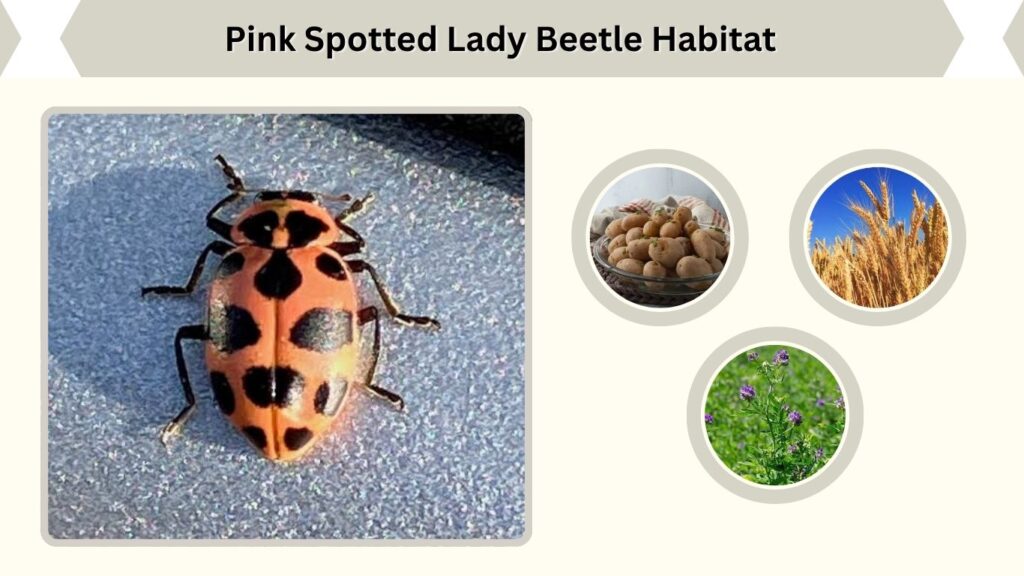
Pink spotted lady beetles can occupy gardens, crop fields, field margins, flowering vegetation, and other habitats where prey and pollen are available. They are frequently associated with agricultural environments because crops can provide abundant aphids, insect eggs, and flowers or pollen during different portions of the growing season.
Where Do Pink Spotted Lady Beetles Live?
The species is native to North America and occurs across a broad geographical range. It can be particularly common around crops such as corn, potatoes, wheat, alfalfa, soybeans, peas, beans, tomatoes, and other plants supporting aphids or suitable prey.
Adults may also appear around flowering plants because pollen is an important food source.
Where Can You Find Them in a Garden?
Look closely at plants containing aphids, especially along young leaves, stems, flowers, and growing tips. Flowering plants nearby can also attract adults.
Unlike household-invading Asian lady beetles, pink spotted lady beetles are primarily associated with outdoor vegetation and agricultural habitats rather than becoming major indoor nuisance insects.
Pink Spotted Lady Beetle Life Cycle
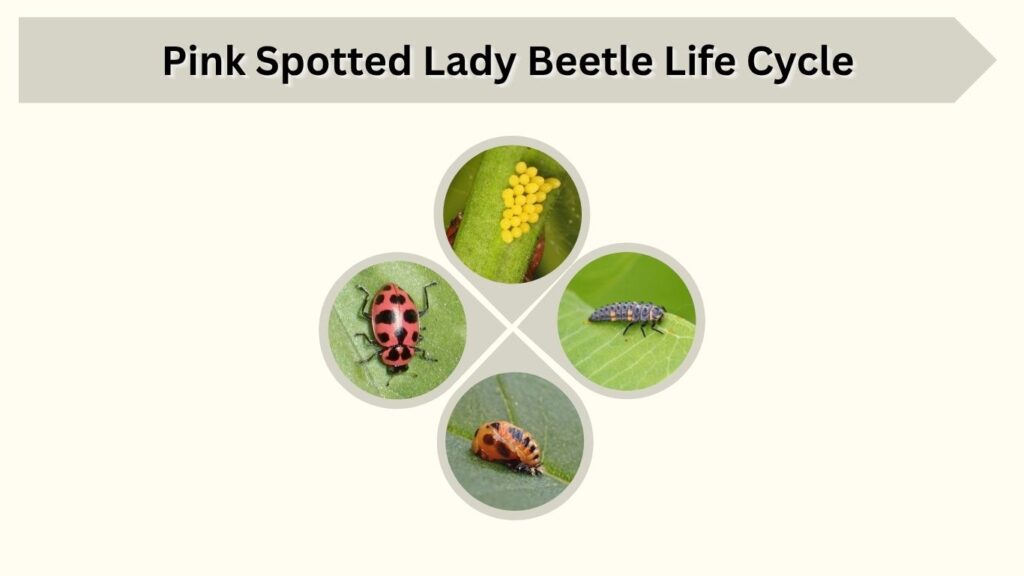
Like other lady beetles, Coleomegilla maculata undergoes complete metamorphosis. Development progresses through four distinctly different stages. Females typically place their eggs close to food sources, giving newly hatched larvae quick access to aphids or other prey. Several generations may develop during a single year when temperatures and food supplies are favorable.
Four Stages of the Life Cycle
The pink spotted lady beetle life cycle includes:
- Egg: Females deposit small eggs, often in clusters near prey.
- Larva: Dark larvae actively search for aphids and other food.
- Pupa: Mature larvae attach themselves to vegetation before pupating.
- Adult: Adults emerge and continue feeding on insects and pollen.
Females may produce roughly 200 to more than 1,000 eggs during an extended egg-laying period. The pupal stage can last approximately 3–12 days depending largely on temperature.
Overwintering and Generations
Adults usually overwinter in protected locations, including beneath leaf litter, stones, and sheltered areas along field margins. They become active again during spring and begin searching for food and suitable egg-laying locations.
Depending on environmental conditions, approximately two to five generations can occur annually.
Are Pink Spotted Lady Beetles Good or Bad?
Pink spotted lady beetles are generally considered good and beneficial insects. Their appetite for aphids, mites, pest eggs, and small larvae gives them an important role as natural predators. They can reduce populations of several plant-damaging insects without directly damaging healthy garden plants.
Are They Harmful to Plants?
Normally, no. Their consumption of pollen does not make them important plant pests. Instead, gardeners generally benefit from having them around because their predatory behavior helps suppress unwanted insects.
They are particularly useful where aphids are present because both adults and larvae actively consume them.
Are They Harmful to People or Pets?
Pink spotted lady beetles are not considered dangerous to humans or pets. Cornell’s IPM guidance lists them as posing no harm to people or pets.
They should therefore normally be left alone when encountered outdoors.
Pink Spotted Lady Beetle vs Ladybug
There is no major biological distinction between a “lady beetle” and a “ladybug.” Lady beetle is the more technically accurate term because these insects belong to the beetle order Coleoptera. “Ladybug” is simply a widely used common name.
How It Differs From Other Spotted Lady Beetles
Spot number alone should not be used to identify every lady beetle. Species such as the two-spotted lady beetle, nine-spotted lady beetle, seven-spotted lady beetle, eye-spotted lady beetle, fifteen-spotted lady beetle, twenty-spotted lady beetle, and twenty-eight-spotted lady beetle are different insects.
The pink spotted species is especially recognizable by its elongated pink-to-red body, twelve characteristic spots, and dark markings behind its head.
How to Attract Pink Spotted Lady Beetles
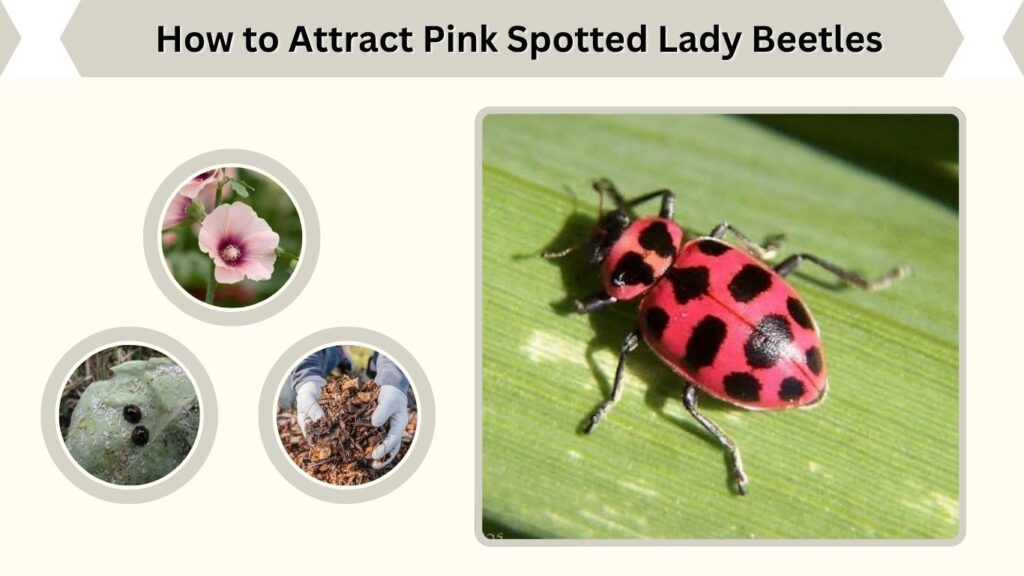
Supporting naturally occurring populations is usually more practical than trying to control them. Gardens containing flowering plants, suitable shelter, and some natural prey can provide food throughout the growing season. Maintaining diverse vegetation is particularly valuable because pink spotted lady beetles depend more heavily on pollen than many other familiar lady beetle species.
Make Your Garden More Lady-Beetle Friendly
You can encourage these beneficial beetles by:
- Growing pollen-producing flowering plants
- Leaving some protected leaf litter around suitable areas
- Maintaining diverse garden vegetation
- Avoiding unnecessary broad-spectrum insecticide applications
- Allowing small aphid populations to support natural predators
- Providing flowers throughout different seasons
Cornell specifically notes that flowering plants such as dandelions and clover can provide useful pollen resources.
Avoid Killing Beneficial Beetles
Before treating an unknown beetle or larva with insecticide, identify it carefully. Pink spotted lady beetles and their larvae may already be controlling the pests that prompted concern.
Reducing unnecessary pesticide use helps preserve these natural predators and allows them to contribute to longer-term biological pest control.
FAQs
1. How many spots does a pink spotted lady beetle have?
A typical pink spotted lady beetle has 12 black spots, with six visible spots on each wing cover. Its markings can vary somewhat between individual beetles.
2. Do pink spotted lady beetles bite?
They are not considered harmful to people. Their mouthparts are designed primarily for feeding on small insects and other food, and this species is not regarded as a human health threat.
3. Are pink spotted lady beetles good or bad?
They are generally good for gardens and farms. Adults and larvae eat aphids, mites, insect eggs, and other small pests.
4. What do pink spotted lady beetle larvae eat?
The larvae primarily prey on aphids and other suitable soft-bodied insects. They can also consume small insect eggs and actively search vegetation for prey.
5. What is the scientific name of the pink spotted lady beetle?
Its scientific name is Coleomegilla maculata. It is also widely known as the twelve-spotted lady beetle, spotted pink lady beetle, or simply pink lady beetle.