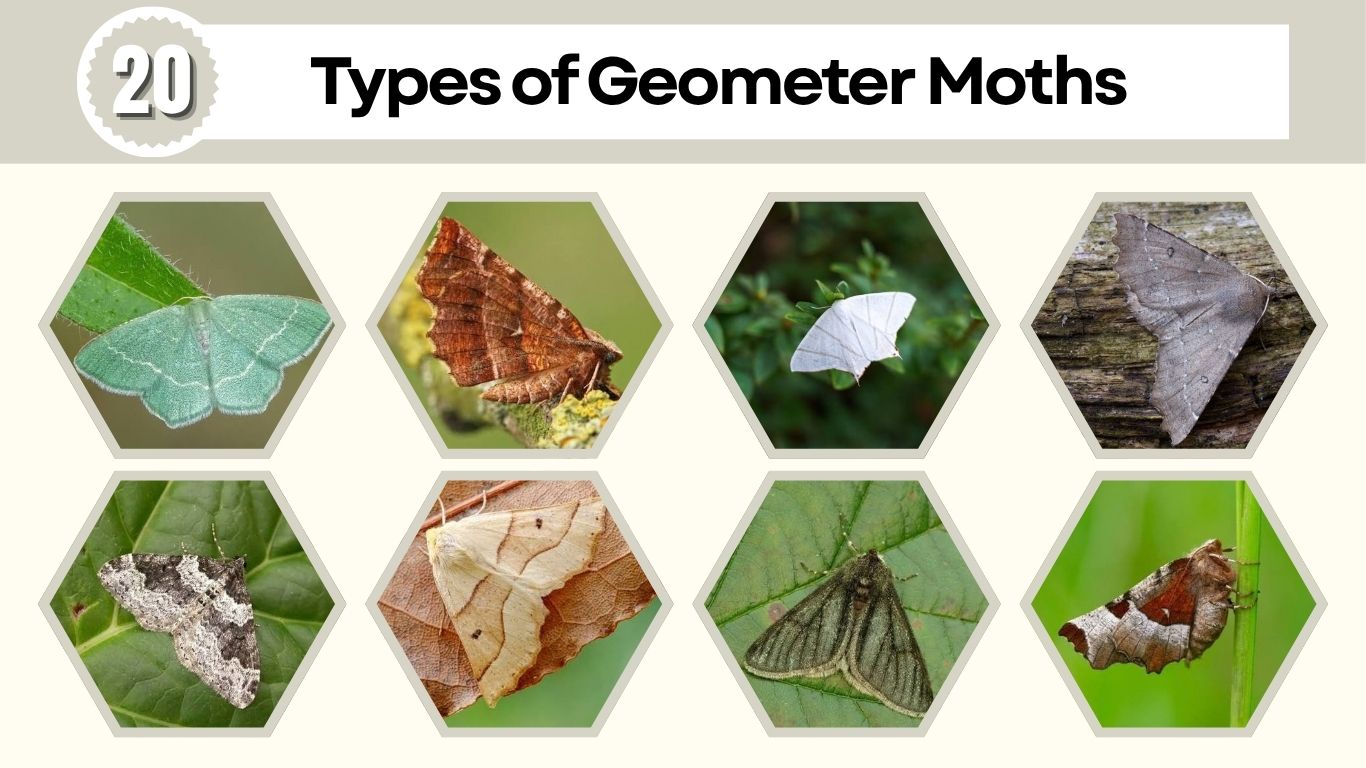
Geometer moths are members of the large Geometridae family, known for their beautifully patterned wings and distinctive inchworm caterpillars. These moths occur in forests, gardens, grasslands, and many other habitats around the world. Species can vary greatly in color, size, behavior, and preferred food plants. In this guide, you will discover 20 types of geometer moths, including the Peppered Moth, Winter Moth, Oak Beauty, Garden Carpet, Yellow Shell, and Small Emerald, along with their identification, habitat, diet, behavior, and life cycle.
1. Peppered Moth
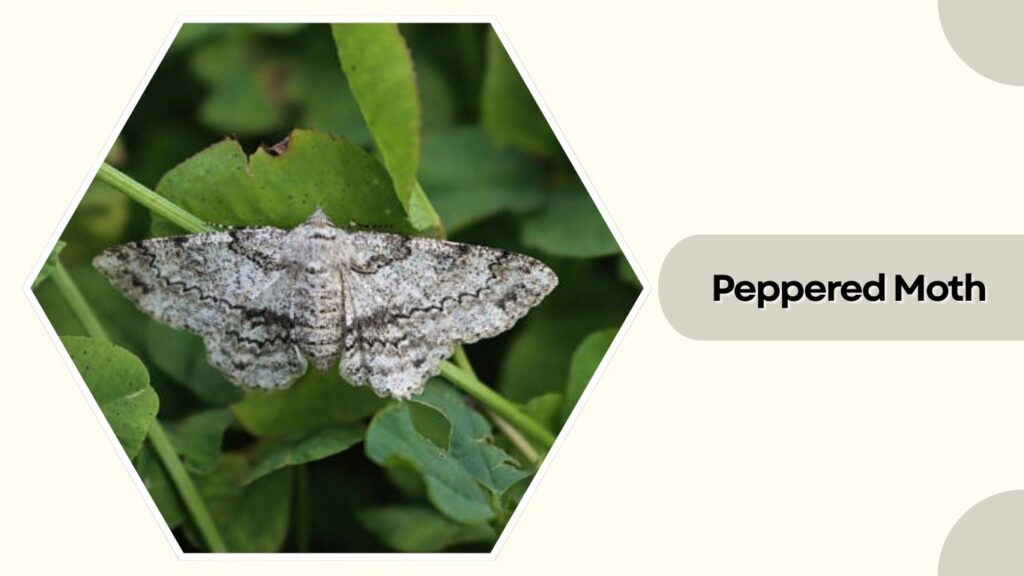
The Peppered Moth is a well-known geometer moth recognized for its speckled wings and remarkable color variation. Scientifically known as Biston betularia, it belongs to the Geometridae family. This moth is especially famous for its role in studies of natural selection, as darker and lighter forms became more or less common depending on environmental conditions.
Identification
The Peppered Moth has a distinctive appearance that helps separate it from many other geometer moths.
- Color: Usually white or pale gray with numerous black speckles.
- Wingspan: Approximately 45–60 mm.
- Wing shape: Broad forewings with slightly rounded outer edges.
- Body: Thick, hairy, and generally patterned similarly to the wings.
- Color variations: Some individuals are very pale, while others can be almost completely black.
- Caterpillar: Slender and twig-like, usually brown, green, or gray for effective camouflage.
Habitat and Distribution
Peppered Moths occur across much of Europe, parts of Asia, and North America. They are commonly associated with woodlands, gardens, parks, hedgerows, and other places where suitable trees and shrubs grow. During the daytime, adults usually rest on tree trunks or branches where their patterned wings help them blend into bark, lichens, and surrounding vegetation.
Behavior and Diet
Adult Peppered Moths are primarily active at night and are often attracted to artificial lights. Their camouflage provides protection from birds and other daytime predators. The caterpillars feed on the leaves of several deciduous trees and shrubs, including birch, willow, oak, and hazel. Their twig-like appearance makes them difficult for predators to detect while feeding.
Lifespan and Life Cycle
The life cycle begins when females lay eggs on suitable host plants. The eggs hatch into caterpillars that feed and grow through several developmental stages. Mature larvae eventually form pupae, commonly overwintering in this stage. Adults usually emerge during the warmer months, mate, and produce the next generation. Like other moths, the Peppered Moth completes four main stages: egg, larva, pupa, and adult.
2. Winter Moth
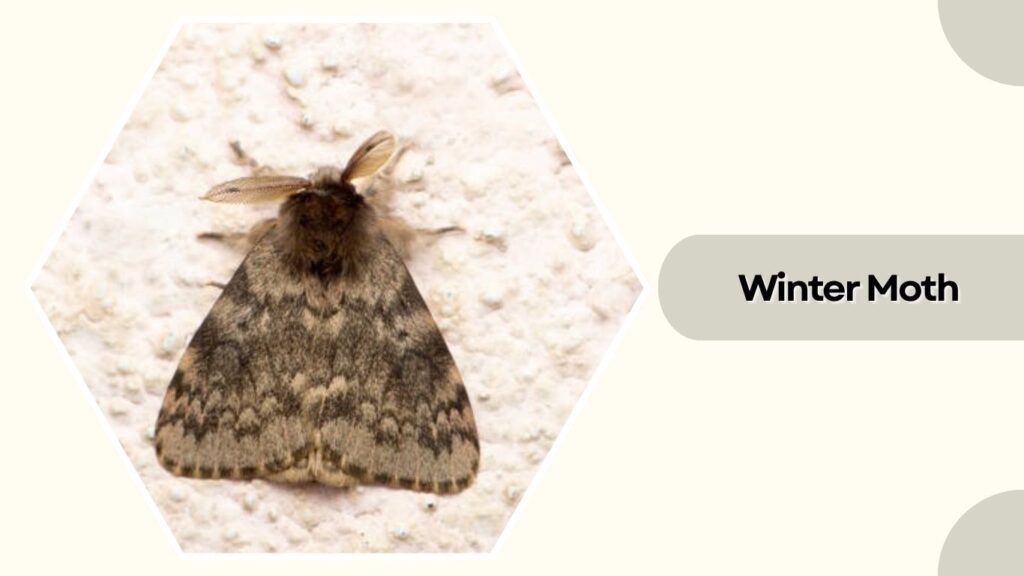
The Winter Moth is a distinctive geometer moth scientifically known as Operophtera brumata. Unlike most moths, it remains active during the cold months of late autumn and winter. Males have fully developed wings, while females are almost wingless. The species is widespread in Britain and is also found across other temperate regions where suitable host trees occur.
Identification
- Color: Males are usually pale grayish-brown with darker wavy cross-lines.
- Wingspan: Approximately 22–28 mm in males.
- Female appearance: Females have extremely reduced wings and cannot fly.
- Body: Relatively slender in males, while females have a heavier body.
- Caterpillar: Usually green with pale longitudinal stripes.
- Special feature: Adults appear during cold weather when relatively few other moths are active.
Habitat and Distribution
Winter Moths occur in woodlands, orchards, gardens, hedgerows, parks, and areas containing deciduous trees and shrubs. They are common across much of Britain and occur more widely across temperate regions. Their ability to tolerate low temperatures allows adults to remain active from late autumn into winter.
Behavior and Diet
The adults are mainly active after dark. Male Winter Moths fly in search of females, whereas the nearly wingless females climb tree trunks and wait for males. The caterpillars feed on numerous trees and shrubs and may also use plants such as heather. Large populations can occasionally cause significant defoliation of small trees.
Lifespan and Life Cycle
Females lay eggs on or near suitable host trees, and these eggs remain dormant through winter. Caterpillars emerge when temperatures rise and fresh foliage becomes available. After several weeks of feeding, mature caterpillars descend to the soil, where they pupate. Adults generally emerge from late autumn onward, completing one generation each year.
3. November Moth
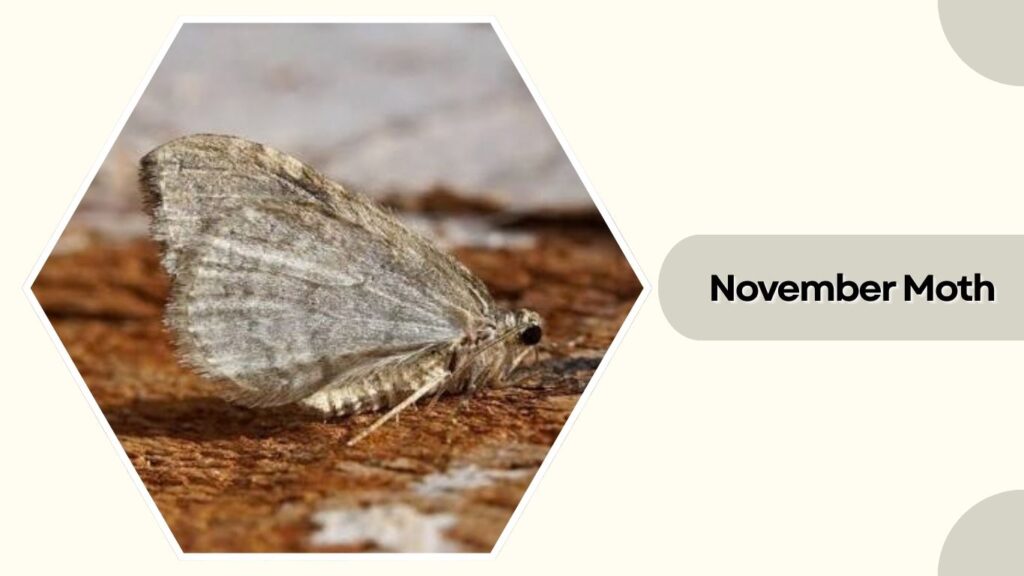
The November Moth, scientifically called Epirrita dilutata, is an autumn-flying member of the Geometridae family. Its subtle gray and brown pattern provides excellent camouflage when resting against tree bark. It is closely related to several similar Epirrita moths, making exact identification challenging from wing markings alone. Adults occur mainly between late September and November.
Identification
- Color: Usually grayish or gray-brown with darker cross-lines.
- Wingspan: Approximately 38–44 mm.
- Forewings: Broad with several irregular darker bands and lines.
- Hindwings: Generally paler and less heavily marked.
- Body: Slender and usually similar in color to the wings.
- Identification challenge: It can closely resemble the Pale November Moth and Autumnal Moth, so some specimens require detailed examination for reliable identification.
Habitat and Distribution
November Moths inhabit broadleaved woodland, gardens, hedgerows, scrub, and other areas containing trees and shrubs. They are widespread across much of Britain and can occur in both rural and suburban environments. Woodland edges provide particularly suitable conditions because they contain abundant larval food plants.
Behavior and Diet
Adults are nocturnal and commonly come to artificial lights. Caterpillars appear during spring and feed on a broad range of deciduous trees and shrubs. Known food plants include oak, birch, hazel, hawthorn, elm, and blackthorn, allowing the species to survive in many different wooded habitats.
Lifespan and Life Cycle
The November Moth normally produces one generation each year. Females lay eggs on bark or twigs during autumn, and the species overwinters in the egg stage. The larvae hatch in spring and feed mainly from April through June. Mature larvae eventually pupate underground before adults emerge again during autumn.
4. Swallow-tailed Moth
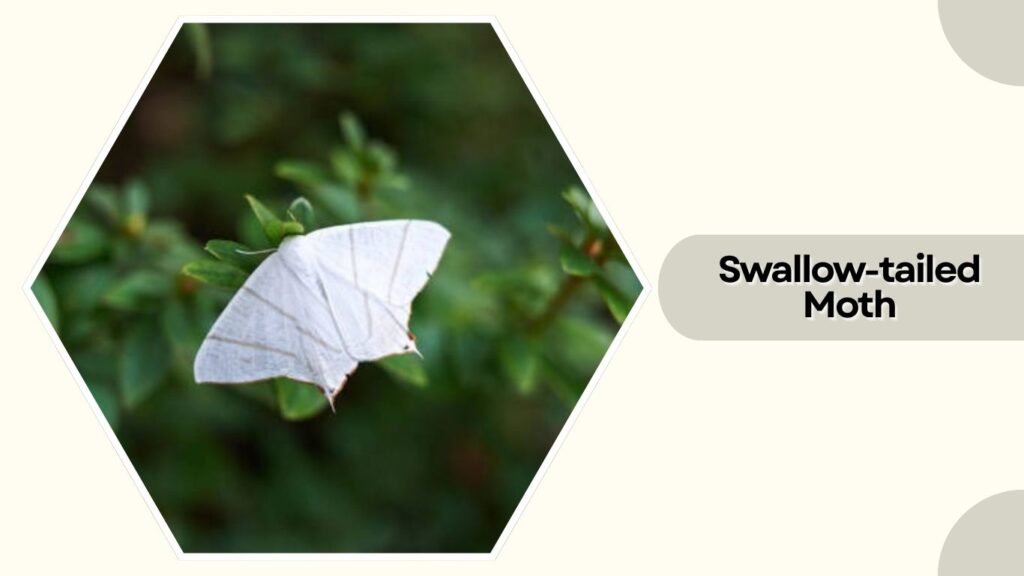
The Swallow-tailed Moth, scientifically known as Ourapteryx sambucaria, is one of the larger and more recognizable geometer moths. Its creamy wings, dark cross-lines, and pointed hindwing tails create an elegant appearance. Although relatively common in much of Britain, it is strictly nocturnal, so people may overlook it even where established populations are present.
Identification
- Color: Creamy white to pale yellow.
- Wingspan: Approximately 40–50 mm.
- Wing markings: Fine brownish cross-lines run across the wings.
- Hindwings: Each hindwing ends in a noticeable tail-like projection.
- Special markings: Small dark or reddish-brown spots occur near the hindwing tails.
- Overall appearance: Large, delicate, and easily distinguished from most other British geometer moths.
Habitat and Distribution
Swallow-tailed Moths occur in woodland edges, hedgerows, gardens, parks, scrub, and other places where their food plants grow. They are reasonably common across much of Britain, although they become more localized or absent toward northern Scotland. Gardens containing mature shrubs and climbing plants may provide especially suitable habitat.
Behavior and Diet
Adults are strictly nocturnal and generally remain hidden among vegetation during daylight hours. They become active after dark and may visit lights. Caterpillars feed on a variety of woody plants, with ivy being an important and preferred food plant. Their elongated bodies and twig-like posture help provide camouflage against branches.
Lifespan and Life Cycle
Adults are seen mainly during June and July, with July representing an important flight period. After mating, females lay eggs on suitable vegetation. The caterpillars feed and develop on host plants before entering the pupal stage. Following metamorphosis, the pale swallow-tailed adults emerge to reproduce and begin another generation.
5. Feathered Thorn
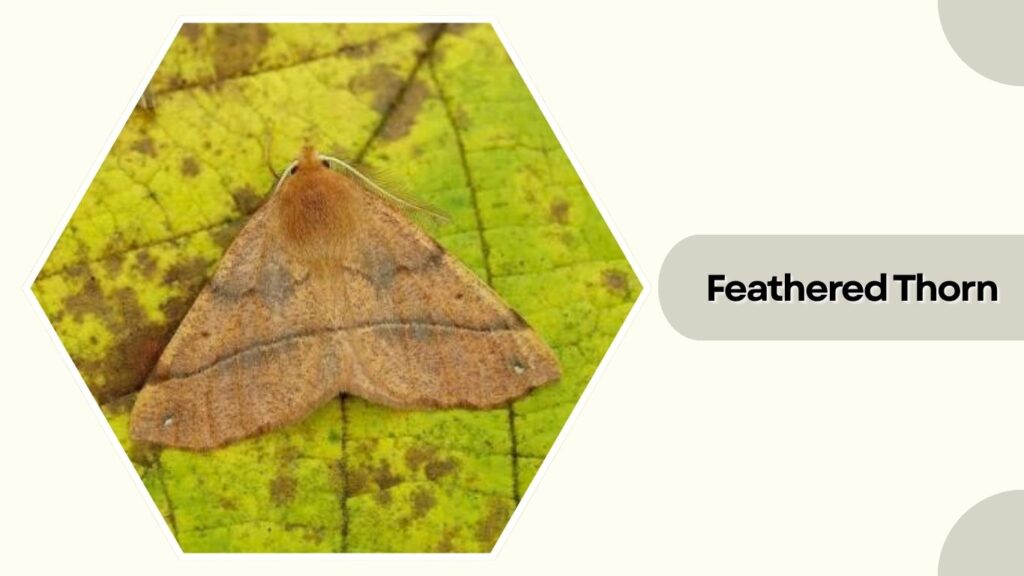
The Feathered Thorn, scientifically known as Colotois pennaria, is an attractive autumn geometer moth recognized for its rich reddish-brown wings. Its common name comes from the strongly feathered antennae found on males. The moth appears mainly during autumn and can be found in woodland, hedgerows, and gardens containing the deciduous trees used by its caterpillars.
Identification
- Color: Usually reddish-brown, orange-brown, or warm tan.
- Wingspan: Approximately 35–45 mm.
- Wing markings: Usually shows dark cross-lines and a small central spot.
- Male antennae: Broadly feathered and particularly noticeable.
- Female antennae: Much less feathery than those of males.
- Wing shape: Broad wings with slightly angular edges give the moth a leaf-like appearance.
Habitat and Distribution
Feathered Thorns are associated mainly with woodland, woodland edges, scrub, hedgerows, and large gardens. They occur across much of Britain, although their distribution becomes more localized in Scotland. Both broadleaved and mixed wooded habitats can support the species when suitable larval food plants are available.
Behavior and Diet
Adults fly primarily at night and may be attracted to artificial lights. The caterpillars eat leaves from numerous deciduous trees and shrubs, including oak, birch, hazel, hawthorn, willow, maple, blackthorn, and poplar. This broad diet allows the species to occupy a variety of wooded environments.
Lifespan and Life Cycle
The Feathered Thorn generally produces one generation per year. Adults mainly fly from September through November, with peak activity occurring during autumn. Eggs survive through winter before caterpillars emerge in spring. The larvae feed on fresh leaves, grow through several stages, and later pupate before the autumn generation of adults emerges.
6. Early Thorn
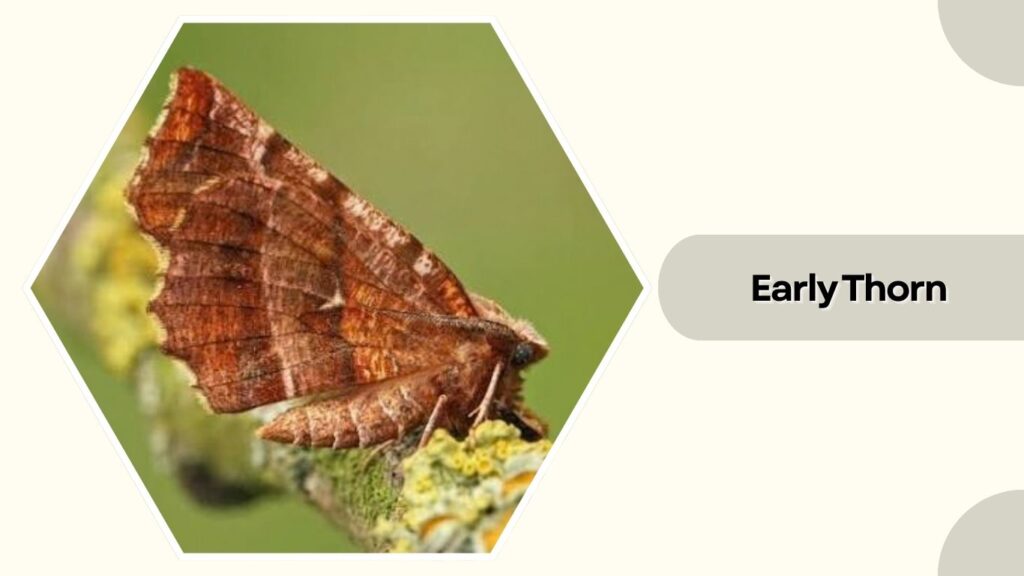
The Early Thorn, scientifically called Selenia dentaria, is a distinctive geometer moth named for its relatively early seasonal appearance and sharply angled wings. When resting, it often holds its wings raised and partially folded rather than completely flat. The species is widespread across Britain and occupies many habitats where deciduous trees and shrubs provide food for its caterpillars.
Identification
- Color: Variable shades of brown, reddish-brown, tan, or orange-brown.
- Wingspan: Approximately 28–40 mm.
- Wing shape: Strongly angular with pointed edges.
- Wing markings: Usually includes darker transverse lines and a central mark.
- Resting position: Frequently rests with the wings raised or partly folded.
- Seasonal variation: Summer-generation adults are often smaller and paler than those appearing earlier in the year.
Habitat and Distribution
Early Thorns occur in a wide variety of environments, including deciduous woodland, hedgerows, gardens, parks, scrub, and countryside containing suitable trees. They are commonly distributed throughout Britain, although they become less common farther north in Scotland. Their flexible habitat requirements help make them relatively widespread.
Behavior and Diet
Adults are mostly nocturnal and can be attracted to light after dark. Their brown, leaf-like coloring provides effective camouflage while resting during daylight. The caterpillars feed on a variety of deciduous trees and shrubs rather than relying on a single host species, giving them access to food across many wooded and garden habitats.
Lifespan and Life Cycle
Early Thorns commonly have two generations per year across much of their range in Britain. The first generation flies mainly during spring, while a second appears in summer. In far northern areas, this pattern may differ. Eggs hatch into caterpillars that feed on deciduous foliage before pupating and later emerging as adults to continue the reproductive cycle.
7. Lunar Thorn
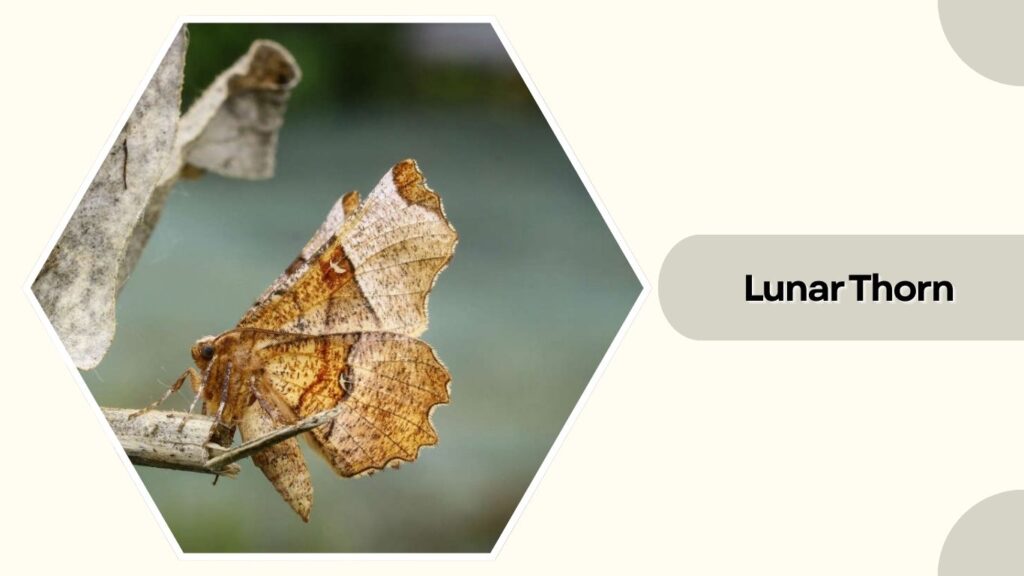
The Lunar Thorn is an attractive geometer moth known scientifically as Selenia lunularia. Its angular wings and warm brown coloring give it a dry-leaf appearance that provides excellent camouflage. The moth belongs to the Geometridae family and is mainly associated with woodland, hedgerows, and other habitats containing broadleaved trees and shrubs.
Identification
- Color: Usually orange-brown, reddish-brown, or pale brown.
- Wingspan: Around 35–45 mm.
- Wing shape: Broad and strongly angular with pointed edges.
- Markings: Dark curved cross-lines are normally visible across the wings.
- Central spots: Small crescent-shaped markings may appear on the wings.
- Resting appearance: Resembles a curled or dried leaf when motionless.
Habitat and Distribution
Lunar Thorns are commonly found in deciduous woodland, woodland edges, gardens, hedgerows, parks, and scrubland. They prefer areas containing plenty of trees and shrubs that can support their larvae. Their natural camouflage makes them difficult to notice during daylight, especially when resting among dead leaves or on branches.
Behavior and Diet
Adults are primarily nocturnal and become active after sunset. They may fly around woodland openings and gardens and are sometimes attracted to artificial lights. The caterpillars feed on several broadleaved trees and shrubs, including oak, birch, hawthorn, blackthorn, and willow. Their slender bodies help them resemble small twigs.
Lifespan and Life Cycle
The Lunar Thorn usually completes one or two generations each year depending on climate and location. Females lay eggs on suitable host plants, where larvae hatch and begin feeding on leaves. After reaching maturity, the caterpillars pupate. Adults generally appear during the warmer months, mate, and begin another generation.
8. Purple Thorn
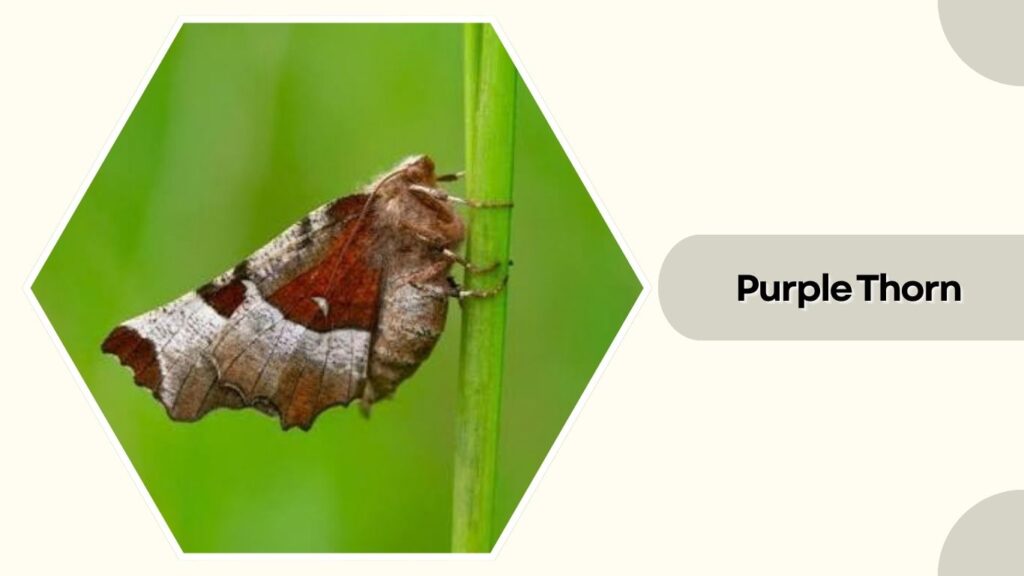
The Purple Thorn is a distinctive geometer moth scientifically known as Selenia tetralunaria. Despite its name, the moth is usually brown rather than bright purple, although its wings may show subtle purplish tones. Its sharply angled wings and unusual resting posture make it one of the more recognizable members of the thorn moth group.
Identification
- Color: Reddish-brown, chocolate-brown, or purplish-brown.
- Wingspan: Approximately 35–45 mm.
- Wing shape: Strongly angular with noticeably scalloped edges.
- Markings: Dark transverse lines cross the forewings.
- Wing spots: Often shows small crescent-shaped markings.
- Resting position: Holds its wings in a way that resembles a dead leaf.
Habitat and Distribution
Purple Thorns occur mainly in woodland, hedgerows, gardens, scrub, and areas containing deciduous trees. They are especially associated with birch-rich habitats but can survive wherever suitable food plants are available. Their leaf-like coloration helps them remain hidden against bark, branches, and dead vegetation.
Behavior and Diet
Adults fly at night and are often difficult to observe naturally because they remain well camouflaged during the day. They may visit lights after dark. The caterpillars feed on the foliage of several deciduous trees, with birch being one of their most important host plants. Other suitable trees can also support larval development.
Lifespan and Life Cycle
Purple Thorns may produce two generations during favorable years. Adults can appear in spring and again later in summer. Females deposit eggs on host plants, followed by a larval feeding period. Once fully developed, the caterpillars enter the pupal stage. The species can survive unfavorable seasons as part of its immature development before adults emerge.
9. Oak Beauty
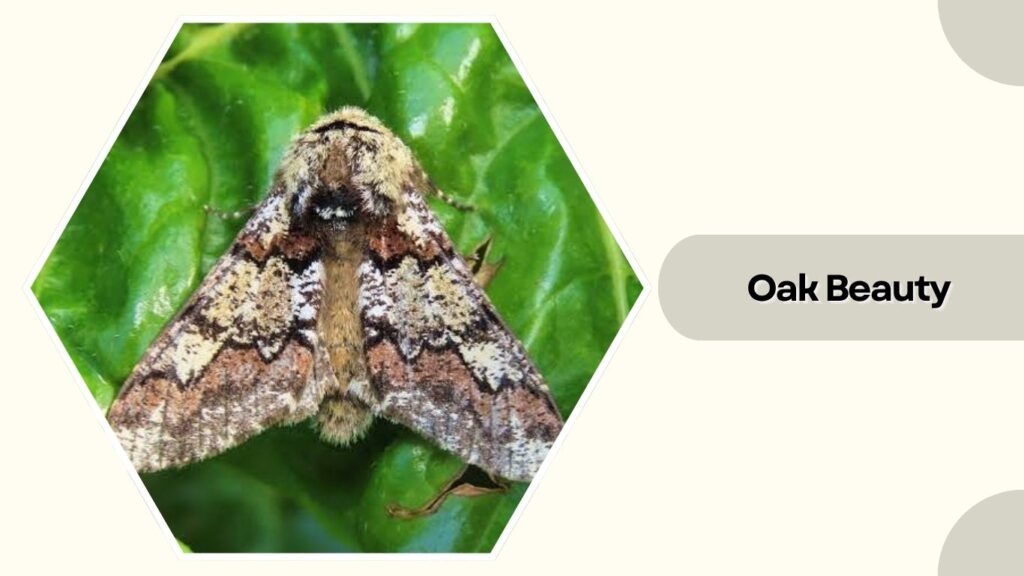
The Oak Beauty is a large and beautifully patterned geometer moth known scientifically as Biston strataria. Its mottled gray, brown, and black wings allow it to blend exceptionally well with tree bark. Although its name refers to oak, the caterpillars can feed on several species of deciduous trees rather than depending exclusively on oak.
Identification
- Color: Grayish-white with brown and black markings.
- Wingspan: Approximately 40–55 mm.
- Wing pattern: Bold dark bands and irregular markings across the forewings.
- Body: Thick and hairy with colors matching the wings.
- Antennae: Males have strongly feathered antennae.
- Camouflage: Wing pattern closely resembles lichen-covered tree bark.
Habitat and Distribution
Oak Beauties inhabit woodland, mature gardens, parks, hedgerows, and countryside containing broadleaved trees. They are particularly associated with areas where oak and other deciduous trees are abundant. Adults often spend daylight hours resting on tree trunks, where their mottled coloration makes them extremely difficult to detect.
Behavior and Diet
The Oak Beauty is mainly nocturnal, and adults may be attracted to lights during their flight period. Males use their feathered antennae to detect female pheromones. The caterpillars eat leaves from various deciduous trees, including oak, birch, hazel, elm, and alder. Their flexible diet allows the species to occupy several woodland habitats.
Lifespan and Life Cycle
Females lay eggs on or near suitable host trees during the adult flight season. The eggs hatch into caterpillars that feed throughout the warmer months. Once mature, the larvae pupate and remain in this stage through the colder period. Adults typically emerge around late winter or early spring, continuing the annual cycle.
10. Willow Beauty
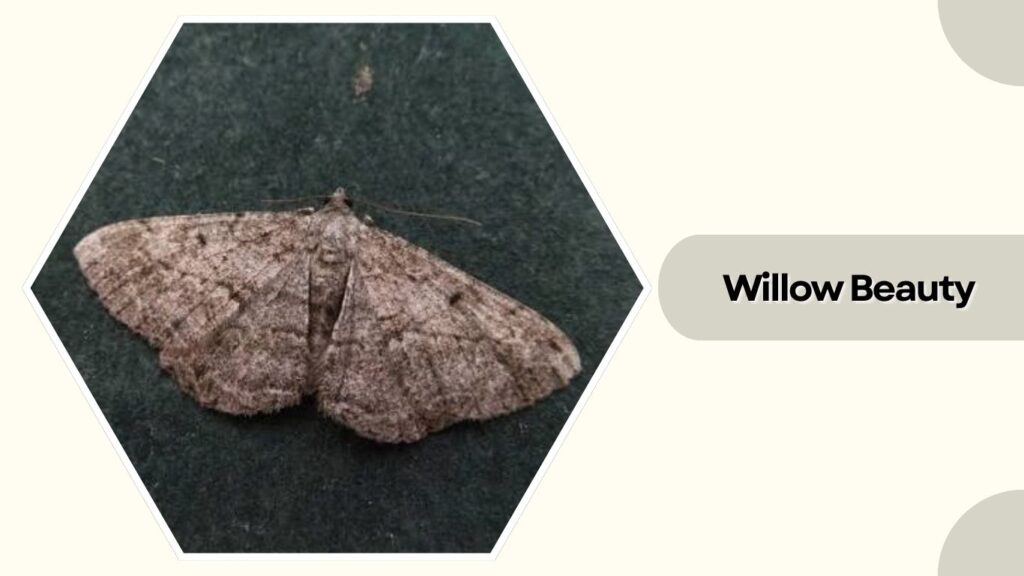
The Willow Beauty, scientifically known as Peribatodes rhomboidaria, is a medium-sized geometer moth with an intricate gray-brown wing pattern. Its appearance provides strong camouflage against tree bark, fences, and stone surfaces. Despite its common name, its caterpillars are not limited to willow and can use a broad variety of trees and shrubs.
Identification
- Color: Gray, brown, or grayish-brown.
- Wingspan: About 35–45 mm.
- Wing markings: Several dark, wavy cross-lines cover the forewings.
- Wing shape: Broad with slightly scalloped outer margins.
- Body: Grayish and relatively robust.
- Camouflage: Easily blends with bark, walls, and weathered wooden surfaces.
Habitat and Distribution
Willow Beauties occur in woodlands, gardens, parks, hedgerows, urban areas, and scrub. They adapt well to both natural and human-modified environments. During the daytime, adults often rest on walls, fences, tree trunks, or other surfaces where their mottled wings make them difficult for predators to distinguish.
Behavior and Diet
Adults are active at night and frequently come to outdoor lights. They usually remain motionless during the daytime. Caterpillars feed on a wide variety of woody plants, including ivy, privet, hawthorn, clematis, and several deciduous trees. This broad feeding range is one reason the species can survive in gardens and urban habitats.
Lifespan and Life Cycle
The Willow Beauty may produce more than one generation in warmer parts of its range. Females lay eggs on suitable plants, followed by the caterpillar stage. Larvae feed on leaves before pupating in protected locations. Adult activity is often concentrated during summer, although the exact flight period varies with climate and geographical region.
11. Brindled Beauty
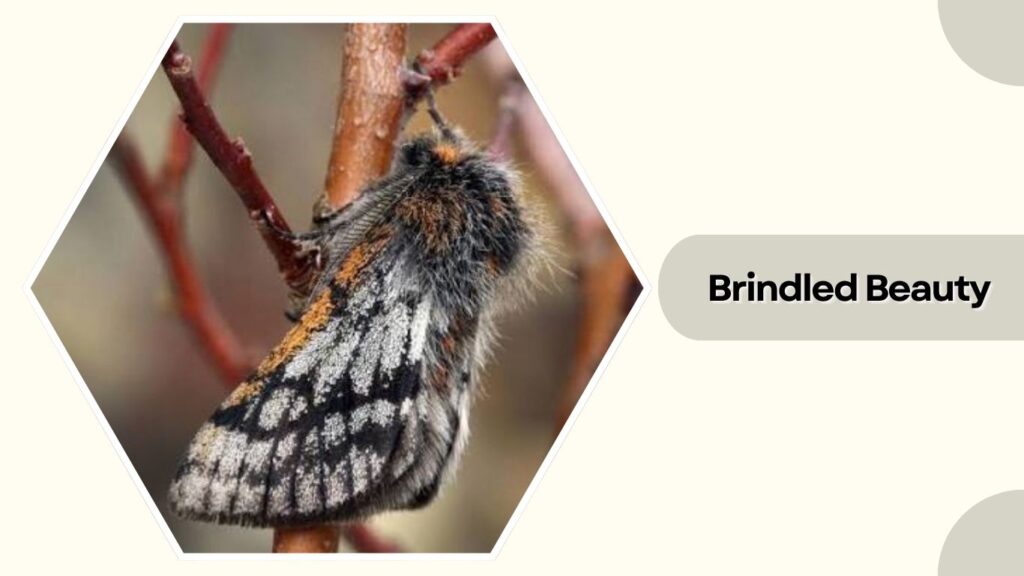
The Brindled Beauty is a large spring-flying geometer moth scientifically called Lycia hirtaria. It is recognized by its gray-brown patterned wings and noticeably furry body. Males and females can look quite different, and males are usually the individuals most often noticed flying at night around woodland, gardens, and other tree-rich habitats.
Identification
- Color: Grayish-brown with dark irregular markings.
- Wingspan: Usually around 40–50 mm.
- Body: Thick, furry, and dark-colored.
- Male antennae: Strongly feathered.
- Female appearance: Larger-bodied with narrower antennae.
- Wing markings: Dark bands and mottled patterns create a bark-like appearance.
Habitat and Distribution
Brindled Beauties occur in deciduous woodland, parks, gardens, hedgerows, and other areas with mature trees. They are often associated with wooded environments but can also appear in suburban locations containing suitable vegetation. Their bark-like wing pattern provides effective daytime camouflage when they rest on trunks and branches.
Behavior and Diet
Adults are primarily nocturnal. Males frequently fly in search of females and may be attracted to artificial light. The caterpillars feed on many deciduous trees and shrubs, including oak, birch, willow, lime, elm, and hawthorn. Because they use numerous host plants, they can develop successfully in a wide range of wooded habitats.
Lifespan and Life Cycle
The Brindled Beauty generally has one generation each year. Adults usually emerge in spring, when mating and egg laying take place. Caterpillars hatch and feed on fresh foliage through late spring and summer. After completing their growth, they pupate in or near the soil, remaining there until the next season’s adults emerge.
12. Pale Brindled Beauty
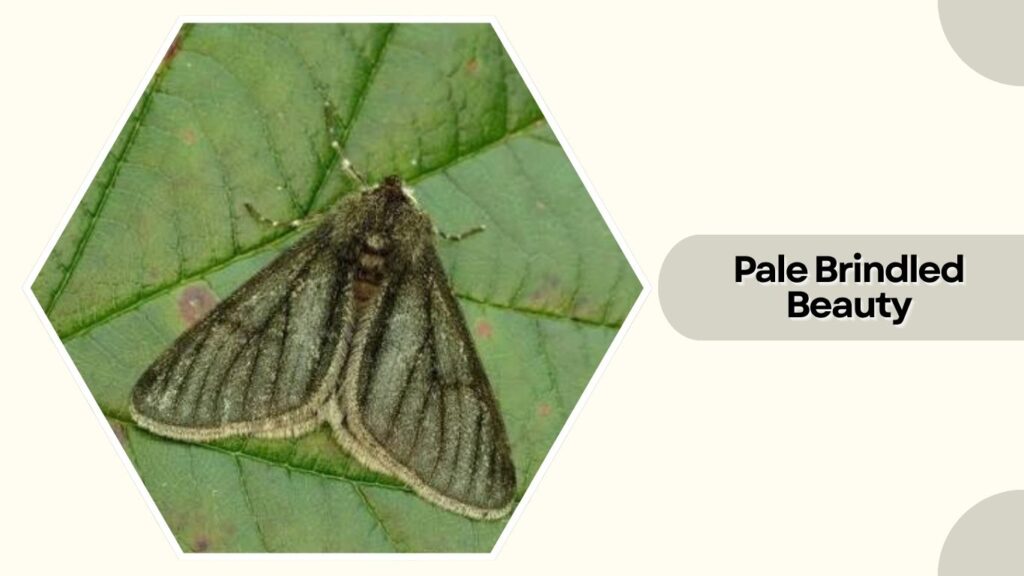
The Pale Brindled Beauty is a winter and early-spring geometer moth scientifically known as Phigalia pilosaria. It is especially interesting because males and females look dramatically different. Males have normally developed wings, while females are almost completely wingless. Its gray mottled coloration helps males blend easily with tree bark during daylight hours.
Identification
- Color: Usually pale gray, brownish-gray, or whitish-gray.
- Wingspan: Males generally measure around 35–45 mm.
- Wing markings: Irregular dark cross-lines and scattered markings.
- Male appearance: Fully winged with a hairy body.
- Female appearance: Nearly wingless with a large, rounded body.
- Camouflage: Closely resembles weathered or lichen-covered tree bark.
Habitat and Distribution
Pale Brindled Beauties inhabit deciduous woodland, hedgerows, gardens, parks, and areas containing mature trees. They are particularly associated with wooded landscapes where their larvae can access suitable food plants. Adults often rest directly on trunks, fence posts, or branches, where their muted coloration makes them difficult to notice.
Behavior and Diet
Males are nocturnal and fly at night searching for females, which remain close to the trees or surfaces where they emerged. Males may also be attracted to lights. The caterpillars feed on various broadleaved trees and shrubs, including oak, birch, hawthorn, willow, and blackthorn.
Lifespan and Life Cycle
This species generally has one generation each year. Adults appear from winter into early spring. Females lay eggs on suitable trees, and larvae hatch when fresh foliage becomes available. Caterpillars feed during spring and early summer before pupating in the soil. The pupae remain dormant until adults emerge during the following winter season.
13. Scalloped Oak
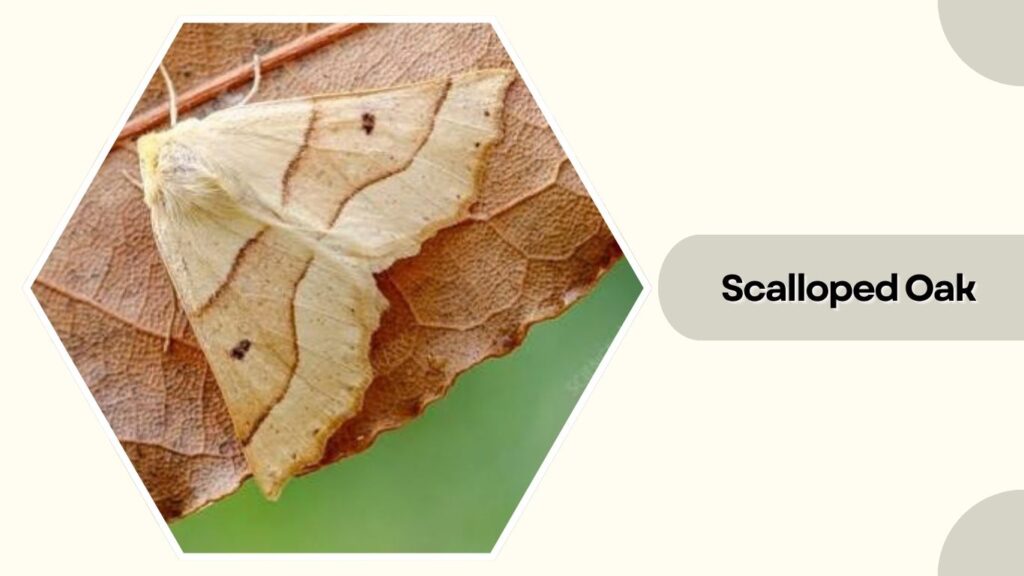
The Scalloped Oak, scientifically called Crocallis elinguaria, is a distinctive geometer moth recognized by its broad wings and strongly scalloped edges. Its yellowish to brown coloration allows it to resemble dead leaves when resting. Although its common name mentions oak, its caterpillars feed on many different trees and shrubs.
Identification
- Color: Yellowish-brown, tan, or light brown.
- Wingspan: Approximately 35–45 mm.
- Wing shape: Broad with noticeably scalloped outer margins.
- Markings: Dark cross-lines usually form a broad central band.
- Body: Thick and generally similar in color to the wings.
- Resting appearance: Often resembles a dried leaf or piece of bark.
Habitat and Distribution
Scalloped Oaks are found in woodland, hedgerows, scrub, gardens, parks, heathland, and other places with shrubs and trees. Their broad choice of host plants enables them to live in many habitats. During daylight, adults usually remain hidden among vegetation or rest against tree bark and fences.
Behavior and Diet
Adults are primarily nocturnal and may be attracted to artificial lights. Their subdued coloration provides protection from predators while resting. The larvae feed on numerous plants, including oak, birch, willow, hawthorn, blackthorn, heather, and several other woody species. This diverse diet contributes to their widespread occurrence.
Lifespan and Life Cycle
Scalloped Oaks normally have one generation per year. Adults are most commonly seen during summer. Females lay eggs on suitable vegetation, and the species generally passes the colder months in the egg stage. Caterpillars emerge in spring, feed on new growth, and later pupate before the next generation of adults appears.
14. Scalloped Hazel
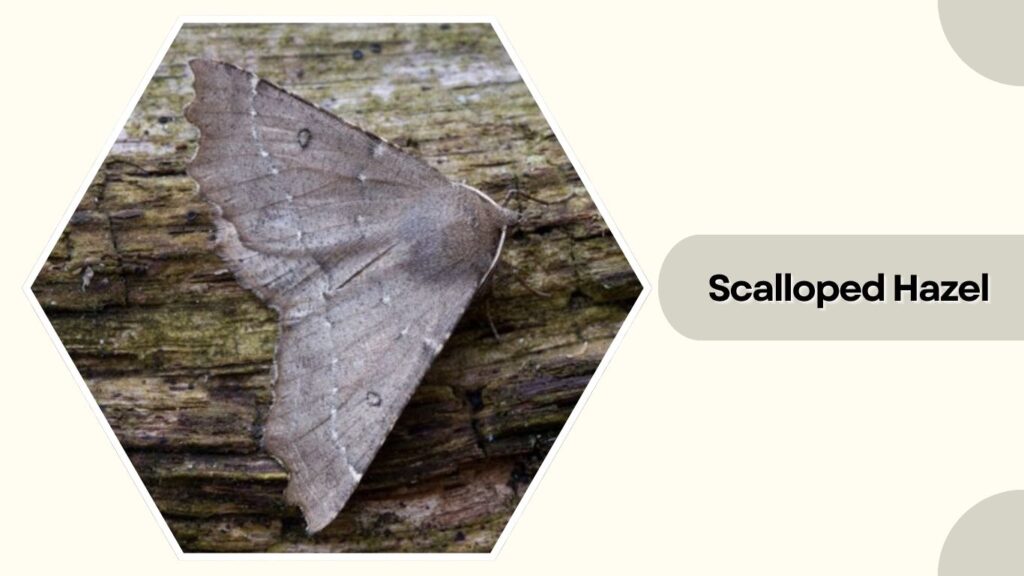
The Scalloped Hazel is a geometer moth scientifically known as Odontopera bidentata. It gets its name from the distinctly scalloped edges of its wings and its association with wooded habitats. Its mottled brown coloration varies considerably between individuals, helping the moth blend into leaves, bark, and branches while resting during the daytime.
Identification
- Color: Brown, gray-brown, reddish-brown, or yellowish-brown.
- Wingspan: Usually around 35–45 mm.
- Wing shape: Broad with clearly scalloped outer edges.
- Markings: Dark cross-lines and small central wing spots.
- Variation: Individuals can differ noticeably in shade and pattern.
- Camouflage: Resembles dead leaves and tree bark.
Habitat and Distribution
Scalloped Hazels occur in deciduous woodland, hedgerows, gardens, parks, scrubland, and countryside containing mature trees. They are commonly associated with habitats offering a variety of broadleaved plants. Adults may rest on trunks, branches, or foliage during the day, remaining well concealed until evening.
Behavior and Diet
The moth is mainly active after dark and may be attracted to lights. Caterpillars feed on a range of deciduous trees and shrubs rather than depending entirely on hazel. Host plants can include oak, birch, hazel, hawthorn, willow, and other woody vegetation. The larvae often adopt a stiff posture resembling a small twig.
Lifespan and Life Cycle
Scalloped Hazels typically produce one generation annually. Adults mainly fly during late spring and early summer. Females deposit eggs on suitable host plants, where larvae later hatch and begin feeding. Once fully developed, caterpillars pupate and remain in that stage through the colder months before adults emerge the following season.
15. Common Carpet
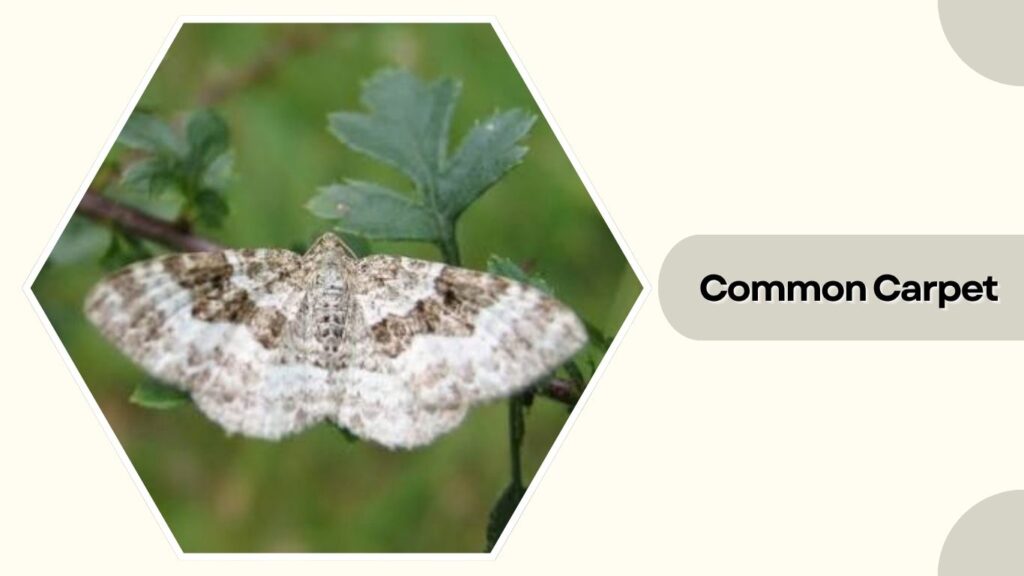
The Common Carpet, scientifically known as Epirrhoe alternata, is a small but attractively patterned member of the Geometridae family. Its contrasting bands of gray, brown, white, and black make it relatively easy to recognize. Despite its name, “carpet” refers to the patterned appearance of the wings rather than where the moth lives.
Identification
- Color: Mixture of gray, white, brown, and black.
- Wingspan: Approximately 25–30 mm.
- Forewings: Covered with contrasting bands and wavy cross-lines.
- Hindwings: Paler gray with less pronounced markings.
- Body: Slender and grayish-brown.
- Overall appearance: Intricate wing pattern resembles decorative fabric.
Habitat and Distribution
Common Carpets can be found in gardens, woodland edges, grassland, hedgerows, roadside vegetation, and open countryside. They are particularly common where bedstraw plants grow because these plants provide food for their caterpillars. Their ability to live in different environments allows them to occur in both rural and suburban areas.
Behavior and Diet
Adults are active mainly at night but may also be disturbed from vegetation during daylight. They frequently visit flowers for nectar and can be attracted to lights. The caterpillars primarily feed on bedstraw species, including hedge bedstraw and related plants. Their coloring helps them remain concealed among stems and foliage.
Lifespan and Life Cycle
The Common Carpet can produce two or sometimes more generations each year in suitable climates. Adults may be seen from spring through autumn. Females lay eggs on larval food plants, where caterpillars hatch and feed. After growing through several stages, larvae pupate before emerging as adults and repeating the cycle.
16. Garden Carpet
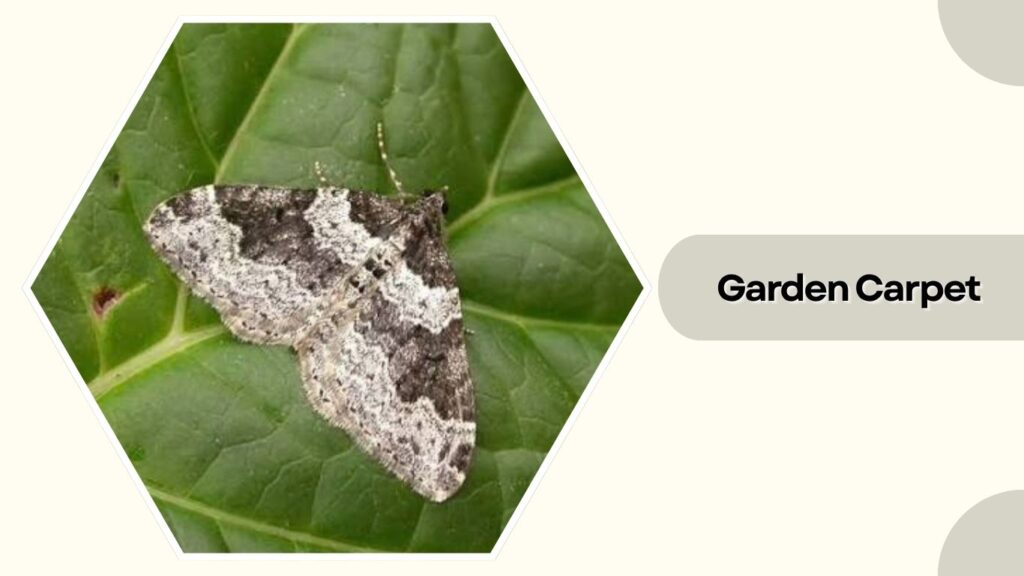
The Garden Carpet, scientifically named Xanthorhoe fluctuata, is one of the more familiar small geometer moths found around homes and gardens. It has a striking black, gray, and white wing pattern that makes it recognizable despite its modest size. It adapts particularly well to urban environments and can often be seen near buildings.
Identification
- Color: Predominantly white or pale gray with dark gray and black markings.
- Wingspan: About 25–30 mm.
- Forewings: Feature strong dark patches and irregular cross-bands.
- Hindwings: Usually pale gray with subtle darker markings.
- Body: Small and slender.
- Appearance: High-contrast pattern makes it easier to identify than many similar moths.
Habitat and Distribution
Garden Carpets occur in gardens, urban areas, woodland edges, waste ground, hedgerows, farmland, and parks. They are especially comfortable around human settlements where their larval food plants grow abundantly. Adults commonly rest on walls, fences, vegetation, and other sheltered surfaces during daylight.
Behavior and Diet
Adults are mainly nocturnal but can occasionally be disturbed during the day. They readily come to lights after dark. Caterpillars feed on several plants in the cabbage family, including cultivated and wild cruciferous species. This feeding habit makes gardens and disturbed areas particularly suitable habitats for the moth.
Lifespan and Life Cycle
Garden Carpets commonly produce multiple generations each year, especially in warmer regions. Adults can therefore appear over a long period from spring into autumn. Females lay eggs on suitable host plants, and caterpillars begin feeding shortly after hatching. The larvae later pupate before emerging as adults to continue the reproductive cycle.
17. Green Carpet
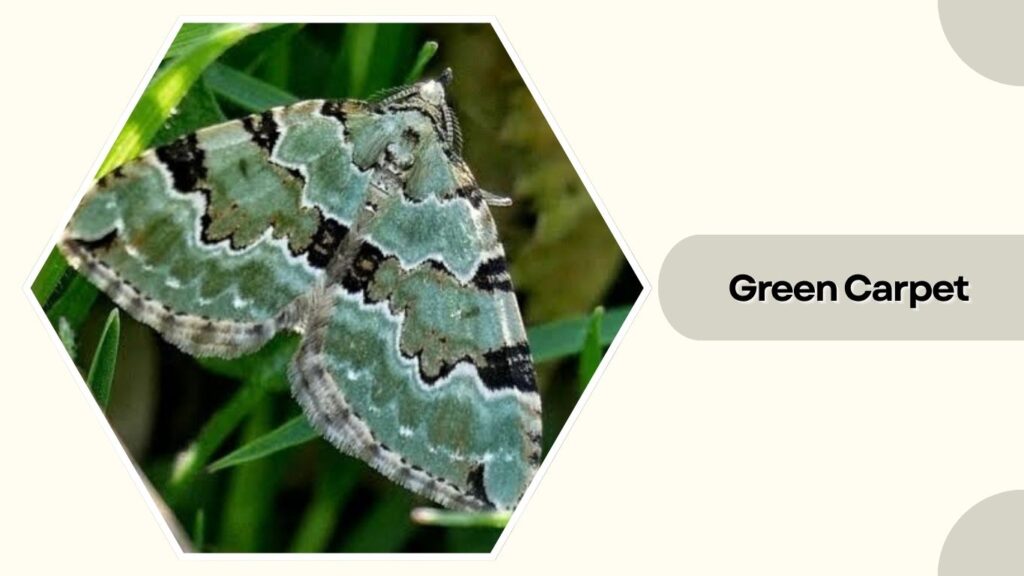
The Green Carpet, scientifically known as Colostygia pectinataria, is a small and attractive geometer moth recognized for the green coloration of freshly emerged adults. Its wing color gradually fades with age, sometimes becoming grayish or brownish. The combination of green tones, dark cross-lines, and pale markings provides excellent camouflage among mosses, leaves, and woodland vegetation.
Identification
- Color: Fresh adults are usually green with darker green or blackish markings.
- Wingspan: Approximately 25–30 mm.
- Forewings: Display several irregular dark and pale cross-bands.
- Hindwings: Usually much paler than the forewings.
- Color change: Green coloration often fades as the moth ages.
- Body: Small, slender, and generally patterned to match the wings.
Habitat and Distribution
Green Carpets are typically associated with woodland, woodland edges, hedgerows, damp grassland, gardens, and other areas containing abundant low vegetation. They are especially likely to occur where their larval food plants grow. Adults often remain concealed among foliage during daylight, where their greenish coloration provides effective protection from predators.
Behavior and Diet
Adults are primarily nocturnal and become active after sunset. They may visit flowers and can also be attracted to artificial lights. The caterpillars mainly feed on bedstraw plants, including various species of Galium. Their relatively specialized food preference means suitable vegetation is an important part of the moth’s habitat.
Lifespan and Life Cycle
Green Carpets usually produce one main generation each year, although their exact flight period varies with region and climate. Females lay eggs near suitable larval food plants. Caterpillars hatch and feed on bedstraw before eventually pupating. The species passes through the standard egg, larval, pupal, and adult stages before beginning the next generation.
18. Flame Carpet
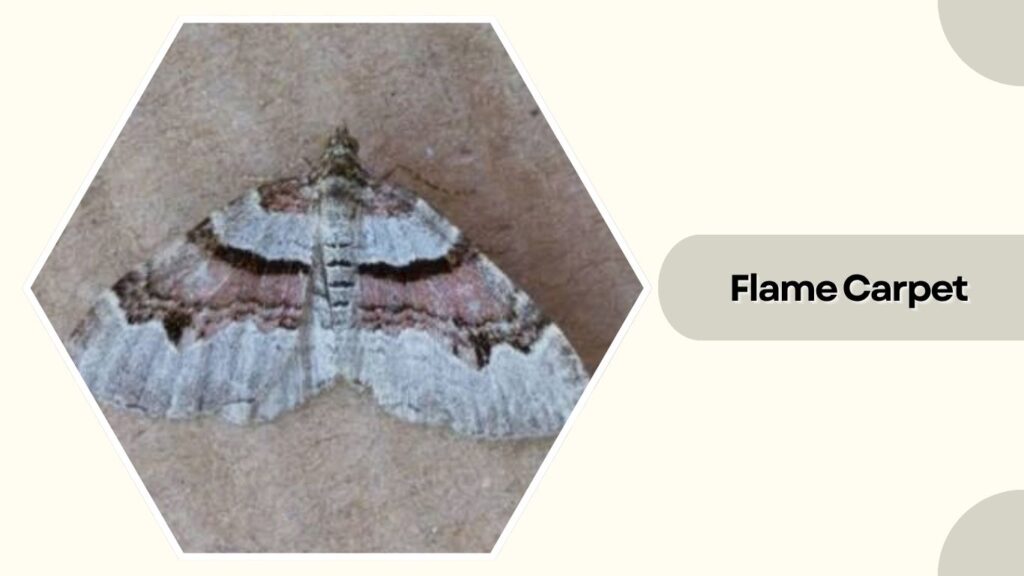
The Flame Carpet, scientifically called Xanthorhoe designata, is a small geometer moth named for the reddish or fiery-looking band that crosses its forewings. Although compact in size, its contrasting pattern makes it relatively distinctive. The species commonly inhabits gardens, grasslands, woodland margins, and disturbed areas where its caterpillar food plants are available.
Identification
- Color: Grayish or whitish with reddish-brown to dark brown markings.
- Wingspan: Approximately 23–28 mm.
- Central band: A broad reddish or dark central band crosses each forewing.
- Wing edges: Usually show fine dark and pale lines.
- Hindwings: Pale gray with subtle darker markings.
- Body: Slender and generally grayish.
Habitat and Distribution
Flame Carpets occur in gardens, hedgerows, woodland clearings, grassland, farmland, roadside vegetation, and other open habitats. They adapt particularly well to areas where wild and cultivated members of the cabbage family grow. This allows them to occur close to human settlements as well as in more natural environments.
Behavior and Diet
Adults are mainly active after dark and can frequently be attracted to artificial lights. During the day, they generally remain hidden among vegetation. The caterpillars feed on plants belonging to the cabbage family, including various cruciferous weeds. Their access to common food plants makes the species capable of surviving in many disturbed habitats.
Lifespan and Life Cycle
The Flame Carpet commonly produces two generations annually in suitable climates. Adults may appear during spring and again later in summer. Females lay their eggs on appropriate host plants, where caterpillars hatch and feed. Mature larvae eventually pupate, with later generations sometimes spending the colder months in the pupal stage.
19. Yellow Shell
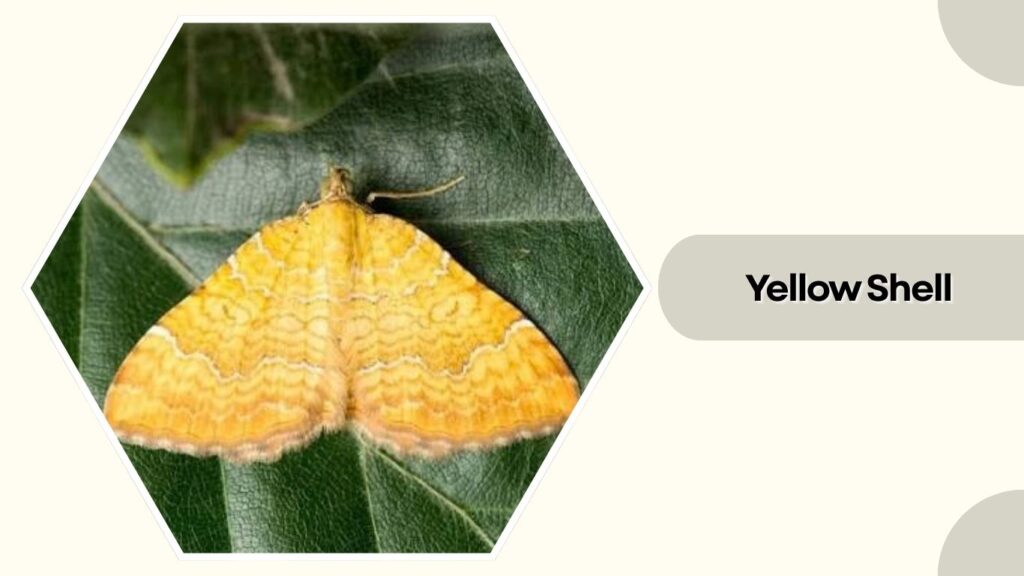
The Yellow Shell, scientifically known as Camptogramma bilineata, is a colorful geometer moth with yellow, orange, or brownish wings covered in numerous fine wavy lines. Its intricate pattern makes the wings resemble a decorative shell, inspiring its common name. It is often encountered in grassy habitats, gardens, woodland margins, and hedgerows during the warmer months.
Identification
- Color: Usually yellow, golden, orange-yellow, or light brown.
- Wingspan: Approximately 25–30 mm.
- Wing pattern: Numerous fine brown and white wavy lines cross the wings.
- Variation: Individuals can vary considerably in color intensity.
- Wing shape: Broad and triangular when spread.
- Resting appearance: Wings are commonly held flat, displaying the full patterned surface.
Habitat and Distribution
Yellow Shells inhabit meadows, grasslands, gardens, hedgerows, woodland edges, roadside vegetation, and other places with dense herbaceous growth. They are particularly associated with areas containing bedstraws and related plants. Adults can sometimes be disturbed from vegetation during daytime walks through grassy or overgrown environments.
Behavior and Diet
Although primarily active at dusk and during the night, Yellow Shells may occasionally fly during daylight when disturbed. Adults can visit flowers for nectar. Their caterpillars feed mainly on low-growing plants, particularly bedstraw species. The larvae remain close to vegetation where their coloration and body shape help them avoid detection.
Lifespan and Life Cycle
Yellow Shells commonly produce one or two generations annually depending on local climate. Females lay eggs on appropriate vegetation, and the emerging caterpillars feed on host plants before entering the pupal stage. Adults are generally most noticeable during summer, when warm temperatures provide suitable conditions for feeding, mating, and reproduction.
20. Small Emerald
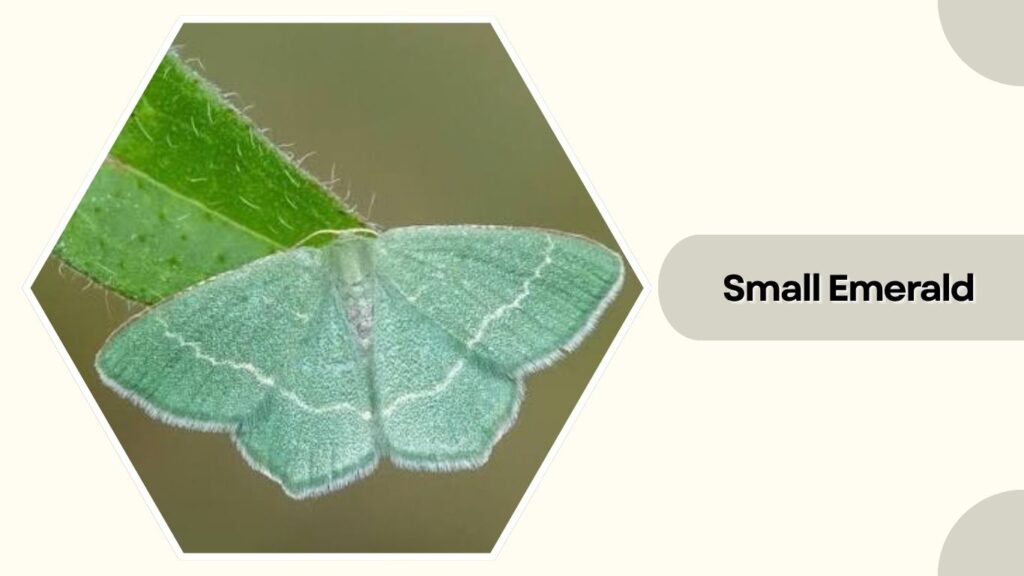
The Small Emerald, scientifically called Hemistola chrysoprasaria, is a delicate green geometer moth admired for its soft coloration and elegant wing shape. Fresh adults are usually pale green, though their color can fade with age. Its subtle appearance allows it to blend remarkably well with leaves, making it easy to overlook when resting during daylight.
Identification
- Color: Pale green to bluish-green when freshly emerged.
- Wingspan: Approximately 25–30 mm.
- Wing markings: Fine pale or whitish cross-lines may be visible.
- Wing shape: Broad, smooth, and slightly rounded.
- Body: Slender and usually greenish to match the wings.
- Color fading: Older adults may become pale green, cream, or almost whitish.
Habitat and Distribution
Small Emeralds are most often associated with hedgerows, scrub, woodland edges, gardens, and areas containing climbing plants. Habitats where wild clematis grows are particularly important because it provides a major food source for the larvae. Adults hide among vegetation during daylight and become much more active after sunset.
Behavior and Diet
Adults are nocturnal and may be attracted to artificial light. Their green coloration provides excellent camouflage against fresh vegetation. Small Emerald caterpillars are strongly associated with wild clematis, commonly called traveller’s joy. The larvae feed on its leaves and stems while using their slender, twig-like appearance to remain concealed from predators.
Lifespan and Life Cycle
The Small Emerald normally completes one generation each year. Adults appear mainly during summer, when mating and egg laying occur. Eggs are deposited near suitable food plants, and the caterpillars later begin feeding on clematis. Larvae continue their development before pupating, eventually producing the next generation of pale green adults.
FAQs
1. What is a geometer moth?
A geometer moth is any moth belonging to the family Geometridae, one of the largest moth families in the world. They occur in many colors and patterns. Their caterpillars are especially recognizable because they move with a looping motion, which has earned them names such as inchworms, loopers, and measuring worms.
2. Why are geometer moth caterpillars called inchworms?
Geometer moth caterpillars have fewer abdominal prolegs than many other caterpillars. As they move, they bring the rear of the body toward the front and then stretch forward again. This creates a characteristic looping movement that looks as though the caterpillar is measuring the ground one small section at a time.
3. What do geometer moths eat?
Adult diets vary between species, and some adults feed little or not at all. Their caterpillars mainly consume leaves from trees, shrubs, grasses, and herbaceous plants. Different species favor particular hosts, including oak, birch, willow, bedstraw, clematis, hawthorn, and plants belonging to the cabbage family.
4. Are geometer moths harmful?
Most geometer moths are harmless to people because they do not sting or bite. Their caterpillars normally cause only limited plant damage. However, a few species can become significant pests when populations become unusually large, potentially defoliating forest trees, ornamental plants, orchards, or other vegetation.
5. Where do geometer moths live?
Geometer moths occur across most parts of the world and occupy many different habitats. They can be found in forests, grasslands, gardens, wetlands, mountains, hedgerows, and urban environments. Their exact habitat depends largely on climate and the availability of plants required by their caterpillars for feeding and development.