
If Asian lady beetles are gathering around your windows, walls, or ceilings, you may be wondering how to kill Asian lady beetles and stop them from returning. These beetles are beneficial outdoors because they eat aphids, but large indoor infestations can become frustrating. The fastest solutions include vacuuming exposed beetles, using appropriately labeled treatments, and sealing their entry points. This guide explains what kills Asian lady beetles, which control methods work indoors, and how to prevent another invasion.
What Kills Asian Lady Beetles Quickly?
Several methods can remove or kill Asian lady beetles, but not every approach provides long-term control. Beetles hiding inside walls and attics are particularly difficult to reach. For beetles already inside living areas, physical removal is usually more practical than widespread pesticide spraying. Preventive exterior treatment is most useful before large numbers enter the structure.
Fastest Ways to Control Asian Lady Beetles
Common options include:
- Vacuuming: Quickly removes clusters from walls, windows, and ceilings.
- Labeled contact sprays: Can kill exposed beetles when used according to the product label.
- Exterior residual treatments: Help reduce beetles entering through windows, doors, and other gaps.
- Sealing entry points: Prevents additional beetles from getting inside.
- Professional pest control: Useful when thousands of beetles repeatedly invade a building.
Avoid crushing beetles because they can release a yellow defensive fluid that produces an unpleasant odor and may stain surfaces.
How to Kill Asian Lady Beetles in the House
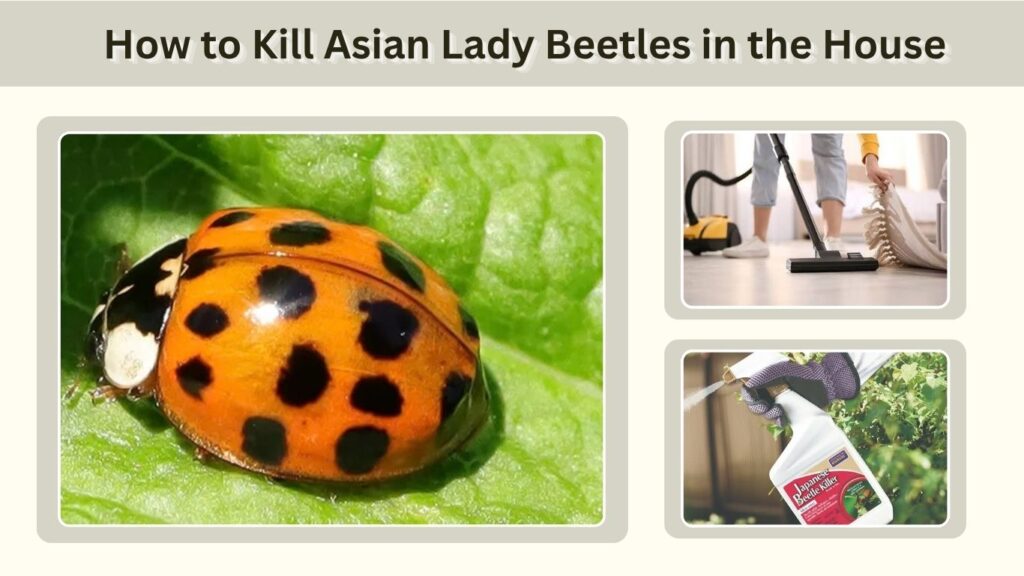
Asian lady beetles commonly enter homes in fall while searching for protected overwintering locations. Once inside, they may hide behind siding, inside walls, around attics, and beneath trim. Warm winter or spring days can cause hidden beetles to become active and enter living areas, even months after the original infestation began.
Use a Vacuum for Indoor Beetles
Vacuuming is one of the easiest methods for dealing with visible Asian lady beetles. It removes them without crushing their bodies and releasing defensive secretions.
A hose attachment works particularly well around window frames and ceilings. A disposable stocking or similar removable collection barrier inside the vacuum hose can make disposal easier.
Vacuuming does not necessarily kill every beetle immediately, so captured beetles should be securely disposed of where they cannot return indoors. University of Minnesota Extension recommends vacuum removal rather than relying on indoor pesticide applications.
Why Indoor Spraying Is Often Less Effective
Spraying a few visible beetles may kill those individuals, but it does not eliminate hundreds or thousands hiding inside wall voids.
Indoor sprays also cannot stop hidden insects from emerging later. Penn State Extension notes that insecticidal treatment of wall voids is generally not advisable, partly because large numbers of dead beetles can provide food for other household pests such as carpet beetles.
What Insecticide Kills Asian Lady Beetles?
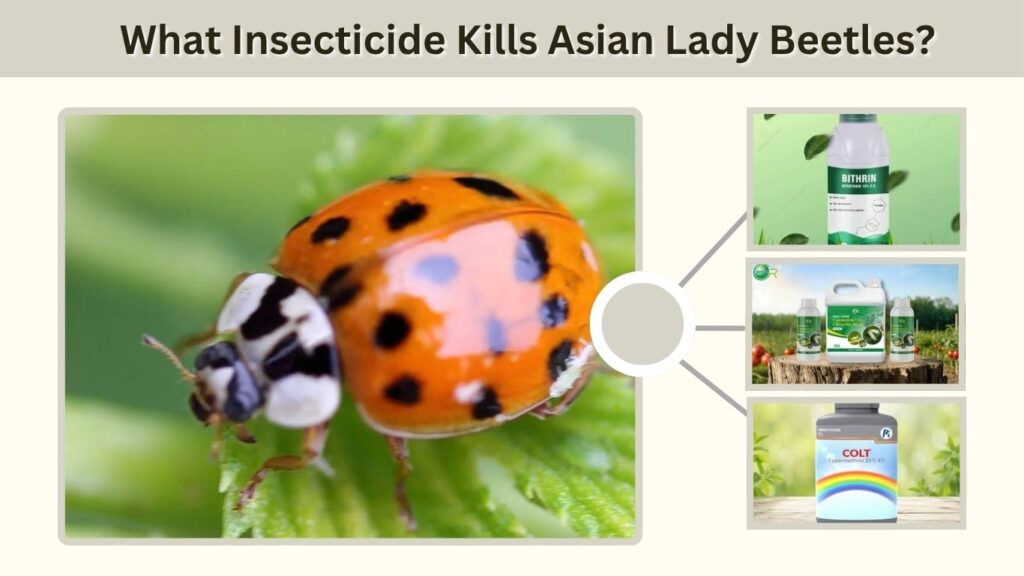
Insecticides can be useful when correctly applied, particularly as an exterior barrier before beetles enter a building. Product labels vary considerably, so the treatment must specifically permit the intended pest, surface, and application location. Never assume that a pesticide suitable outdoors is also approved for use throughout indoor living spaces.
Common Active Ingredients
University of Minnesota Extension lists several active ingredients used in residual barrier products for Asian lady beetles, including:
- Bifenthrin
- Cyfluthrin
- Cypermethrin
- Deltamethrin
- Permethrin
These treatments are generally most useful around potential exterior entry points such as windows, doors, rooflines, and building gaps before seasonal beetle migration begins. Always follow the pesticide label, keep people and pets away as directed, and comply with local pesticide regulations.
Does Permethrin Kill Asian Lady Beetles?
Permethrin is one active ingredient used in some residual insecticide products for Asian lady beetle management. Its effectiveness depends on the formulation, correct application, and whether the product label specifically permits the intended use.
It should not be sprayed indiscriminately indoors or applied to surfaces not listed on the label. Exterior prevention before beetles enter usually provides more useful control than attempting to reach beetles already hidden inside walls.
Does Harris Asian Lady Beetle Killer Work?
Harris markets a product specifically labeled Asian Lady Beetle and Box Elder Bug Killer. According to the manufacturer, the ready-to-use product is EPA-registered for residential use and is intended to kill Asian lady beetles after the treated surface dries. The label directions should determine exactly where and how the product can be applied.
Where Harris Lady Beetle Killer Is Used
The manufacturer lists areas such as:
- Door and window frames
- Window screens
- Baseboards
- Storage areas
- Exterior walls
- Areas where beetles crawl or congregate
- Exterior entry points around the building
The manufacturer particularly recommends treating likely exterior entry areas as cooler weather approaches. Availability, formulation, registration, and directions can change, so always check the current container label rather than relying solely on online instructions.
Do Natural Remedies Kill Asian Lady Beetles?

Home remedies such as vinegar, peppermint oil, diatomaceous earth, and soapy water are frequently recommended online. However, evidence and reliability vary significantly. A method that kills an individual beetle on direct contact may still do little to prevent an infestation because most overwintering insects remain concealed in inaccessible building spaces.
Does Vinegar Kill Asian Lady Beetles?
Vinegar is sometimes suggested as a homemade contact treatment or cleaning solution. Even when direct contact affects individual insects, vinegar should not be considered a dependable solution for beetles inside wall voids or attics.
Removing visible beetles and sealing their entry points provides a more practical approach.
Does Diatomaceous Earth Kill Asian Lady Beetles?
Diatomaceous earth can affect some crawling insects by damaging their protective outer layer, but performance depends on factors such as dryness and direct exposure. It is unlikely to solve a large infestation by itself.
If using any pesticide-grade or insect-control dust, follow its specific label and avoid creating airborne dust that could be inhaled.
Should You Kill Asian Lady Beetles?
You do not necessarily need to kill every Asian lady beetle you see outdoors. They are predators that consume aphids and other soft-bodied insects, making them beneficial in gardens and agricultural environments. Problems mainly arise when large numbers enter buildings to overwinter.
Indoors vs. Outdoors
Outdoors, leaving Asian lady beetles alone is often reasonable unless they are causing a specific problem.
Inside a home, removing them makes sense because they may gather in large numbers, release foul-smelling defensive secretions, stain surfaces, and occasionally pinch exposed skin.
Instead of focusing only on killing individual beetles, long-term control should prevent them from entering the building in the first place.
How to Prevent Asian Lady Beetles From Coming Back
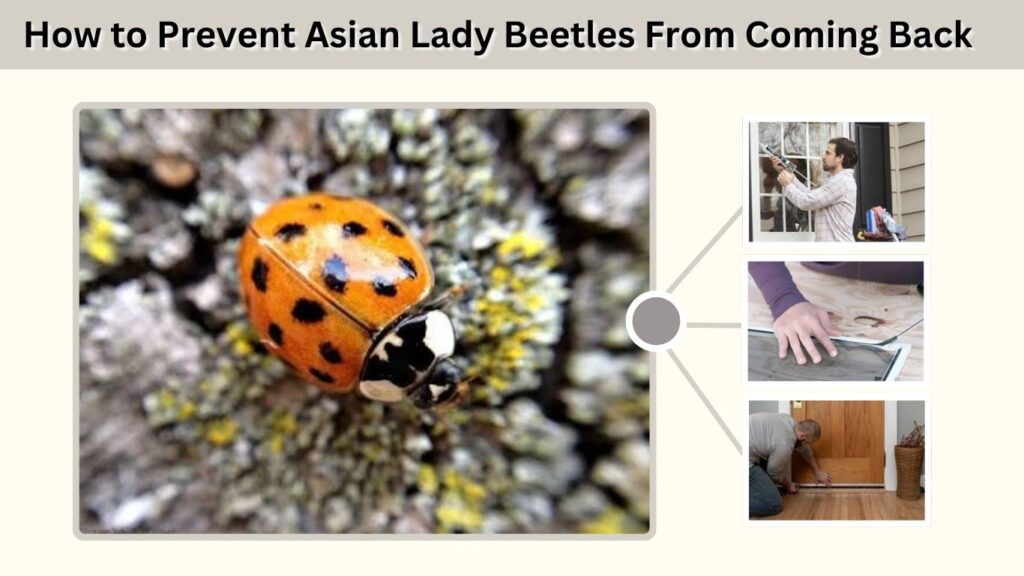
Prevention is the most effective long-term Asian lady beetle control strategy. Adults can squeeze through surprisingly small cracks and commonly enter around windows, doors, siding, vents, utility openings, and rooflines. Inspecting these locations before fall migration can dramatically reduce the number of beetles reaching indoor overwintering spaces.
Asian Lady Beetle Prevention Tips
- Seal cracks around window and door frames.
- Repair torn window screens.
- Install or replace weather stripping.
- Seal gaps around utility pipes and cables.
- Check attic, soffit, and roof vents.
- Install door sweeps where gaps are present.
- Repair loose siding and exterior trim.
- Vacuum beetles that make it indoors.
- Consider a labeled exterior barrier treatment before fall migration.
Prevention is particularly important because once beetles have entered walls and attic spaces, eliminating the entire hidden population becomes difficult.
FAQs
1. What kills Asian lady beetles instantly?
Direct-contact insecticides labeled for Asian lady beetles can kill exposed insects, although kill time varies by formulation. For beetles indoors, vacuuming is often the fastest practical way to remove large numbers without creating stains or odors.
2. What is the best way to kill Asian lady beetles in a house?
Vacuum visible beetles rather than crushing them, then seal cracks where they are entering living areas. Large recurring infestations may require exterior prevention or professional pest management.
3. Does soapy water kill Asian lady beetles?
Direct exposure to sufficiently soapy water may kill individual beetles, but it is not a reliable whole-house solution. It cannot reach the large numbers that may be hiding inside walls, siding, and attics.
4. Do bug bombs kill Asian lady beetles?
Foggers may kill exposed beetles, but Penn State Extension advises that they do not provide effective long-term management because additional beetles can continue emerging from hidden spaces after treatment.
5. How do I permanently get rid of Asian lady beetles?
The most effective long-term strategy is exclusion. Seal cracks, repair screens, close gaps around doors and utilities, and address exterior entry points before fall. Exterior treatments may provide additional protection where permitted by the pesticide label.