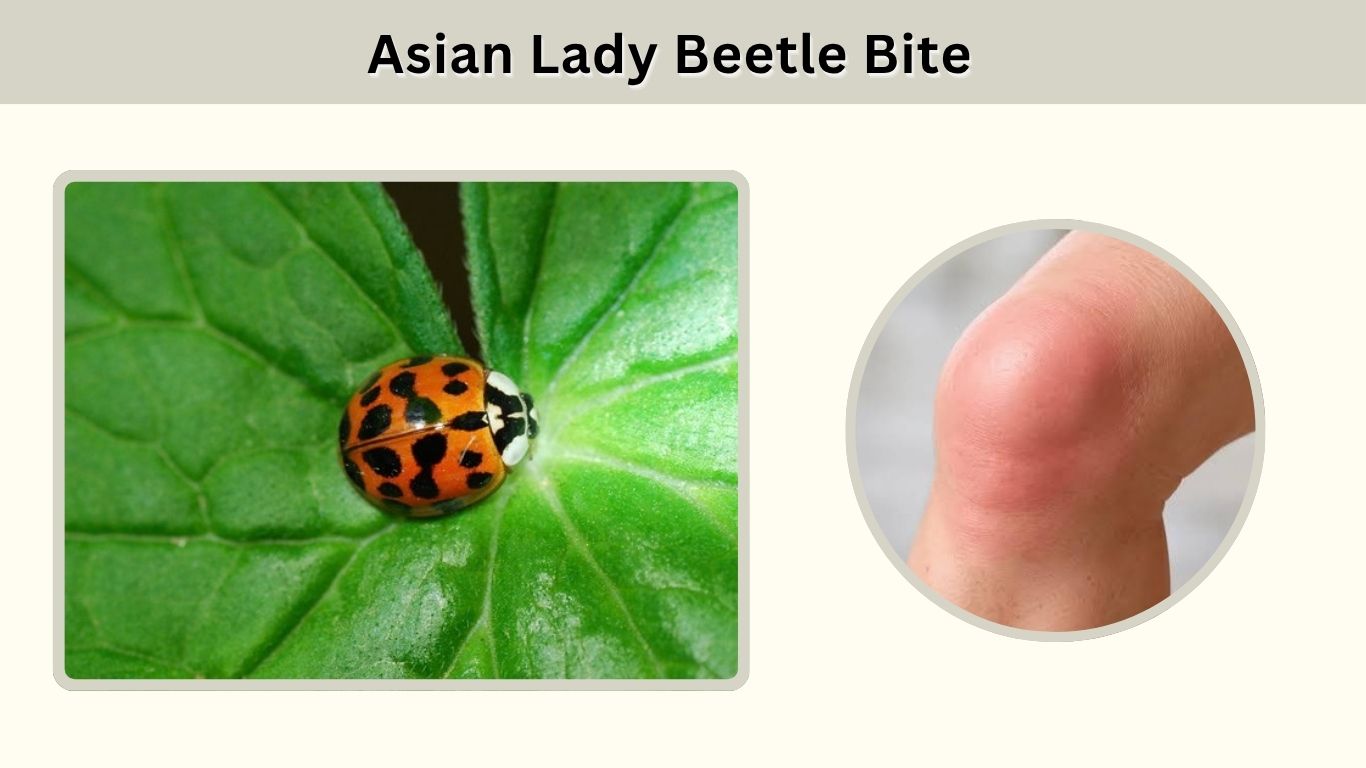
An Asian lady beetle bite can feel like a small pinch and may leave temporary redness, irritation, or a tiny raised mark on the skin. Unlike mosquitoes, these beetles do not bite to feed on blood, and unlike bees, they cannot sting. Bites are generally minor and short-lived, although some people can react to substances released by the beetles. This guide explains what an Asian lady beetle bite looks like, common symptoms, possible allergic reactions, simple treatment, and when medical attention may be necessary.
Do Asian Lady Beetles Bite Humans?
Asian lady beetles, scientifically known as Harmonia axyridis, can occasionally bite people. University extension sources report that some bites are strong enough to break the skin, although they usually cause only minor, temporary discomfort. They are not venomous and have no stinger. Biting appears to occur more commonly when beetles land on exposed skin while searching for moisture or food.
Why Do Asian Lady Beetles Bite?
Asian lady beetles normally prey on aphids and other small insects rather than humans. A person is not their normal food source.
When a beetle lands on warm skin, however, it may use its mouthparts to test the surface. University of Minnesota Extension describes the behavior as the beetle searching for food or moisture. This produces more of a pinch than a typical blood-feeding insect bite.
Can Bite Break Skin?
Yes, some Asian lady beetles can pinch hard enough to break human skin. Even then, the resulting injury is generally minor.
They do not inject venom, and extension guidance does not identify them as disease-transmitting insects. The discomfort usually comes from the mechanical pinch itself or from irritation associated with the beetle’s defensive secretions.
Asian Lady Beetle Bite Symptoms
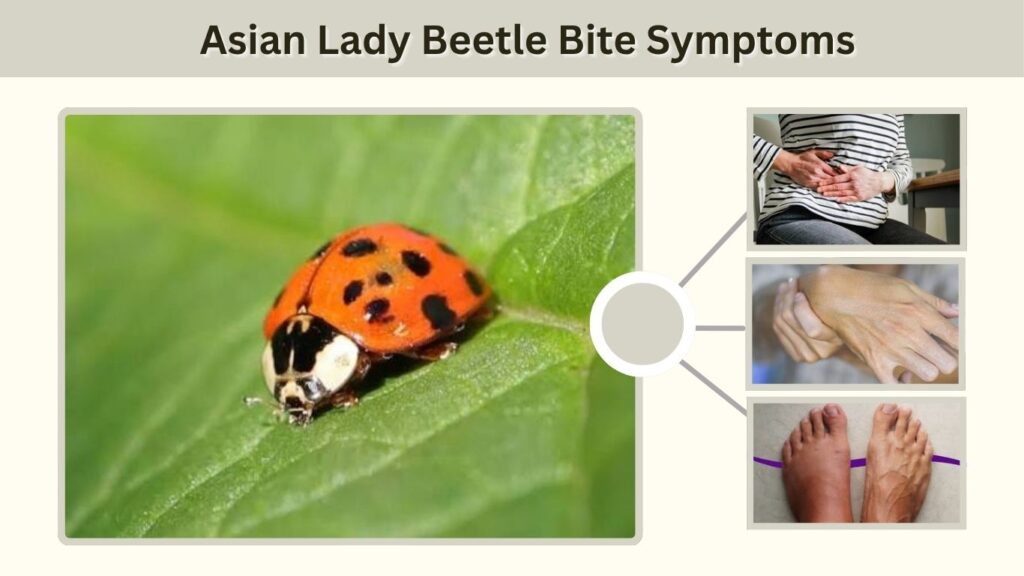
Most Asian lady beetle bites cause mild symptoms around the exact contact point. Reactions vary, and a skin mark after handling these insects may sometimes result from their defensive fluid rather than the bite itself. Penn State reports that this secretion can produce a small localized welt in some people, which can make bite identification difficult from appearance alone.
Common Bite Symptoms
Possible symptoms include:
- A sudden pinching sensation
- Mild pain or tenderness
- A small red or discolored spot
- Slight swelling
- A small raised welt
- Temporary itching
- Mild burning or irritation
- Localized skin sensitivity
These symptoms are generally expected to remain limited to the affected area. If symptoms become widespread or progressively severe, another reaction may be occurring.
Does an Asian Lady Beetle Bite Hurt?
It can. Penn State notes that bites range from slightly annoying to painful. The sensation is commonly described as a sharp pinch rather than the burning pain associated with some stinging insects.
The level of discomfort may depend on where the beetle bites and individual skin sensitivity. A bite on thin or sensitive skin may feel more noticeable.
What Does an Asian Lady Beetle Bite Look Like?
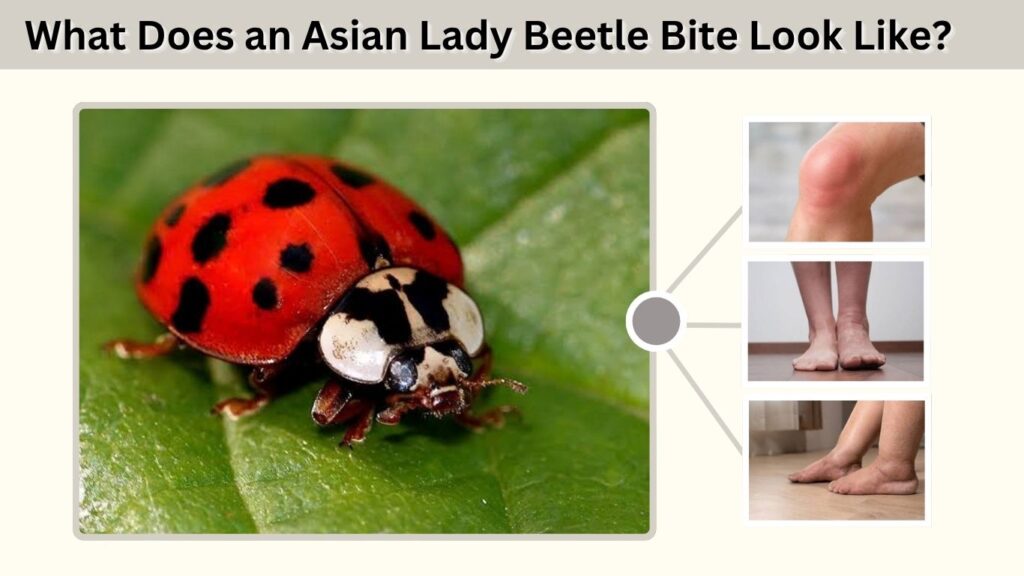
There is no unique Asian lady beetle bite pattern that allows certain identification from a skin mark alone. A bite may appear as a small localized red or raised area resembling other minor insect bites. In addition, the beetle’s yellow defensive secretion can irritate skin and create a welt without a true bite.
Asian Lady Beetle Bite Mark
A typical mark may be small and localized rather than forming a large cluster. You might see slight redness, a tiny raised bump, or mild irritation where the beetle pinched the skin.
Appearance also varies with skin tone. Redness may be less obvious on darker skin, so tenderness, swelling, warmth, or a raised area may be easier to notice.
Bite vs. Defensive Secretion
Asian lady beetles can release a yellowish liquid from joints in their legs when frightened or disturbed. This defensive behavior is known as reflex bleeding.
Penn State reports that some people develop small localized welts from contact with these secretions. Therefore, a rash after touching or crushing a beetle does not necessarily prove that the insect bit you.
Asian Lady Beetle Bite Allergic Reaction
A simple bite is usually minor, but Asian lady beetles are capable of triggering allergic reactions in susceptible individuals. Research has documented allergic rhinitis, asthma, hives, and facial swelling associated with exposure to Harmonia axyridis. These reactions can result from allergens in beetle material and defensive fluids rather than necessarily being caused by the physical bite itself.
Possible Allergy Symptoms
Watch for:
- Hives away from the bite area
- Widespread itching
- Significant facial or eyelid swelling
- Wheezing
- Difficulty breathing
- Throat or tongue swelling
- Dizziness or fainting
Published medical reports have described facial angioedema and respiratory allergy following Asian lady beetle exposure, although such significant reactions are uncommon.
Can Asian Lady Beetles Cause a Rash?
Yes. A person may develop localized irritation or a welt from direct exposure, while sensitized individuals can develop urticaria, commonly called hives.
Respiratory exposure during large indoor infestations has also been associated with allergic rhinitis and asthma. Therefore, repeated unexplained symptoms during heavy fall or winter beetle infestations may warrant discussion with a healthcare professional.
How to Treat an Asian Lady Beetle Bite
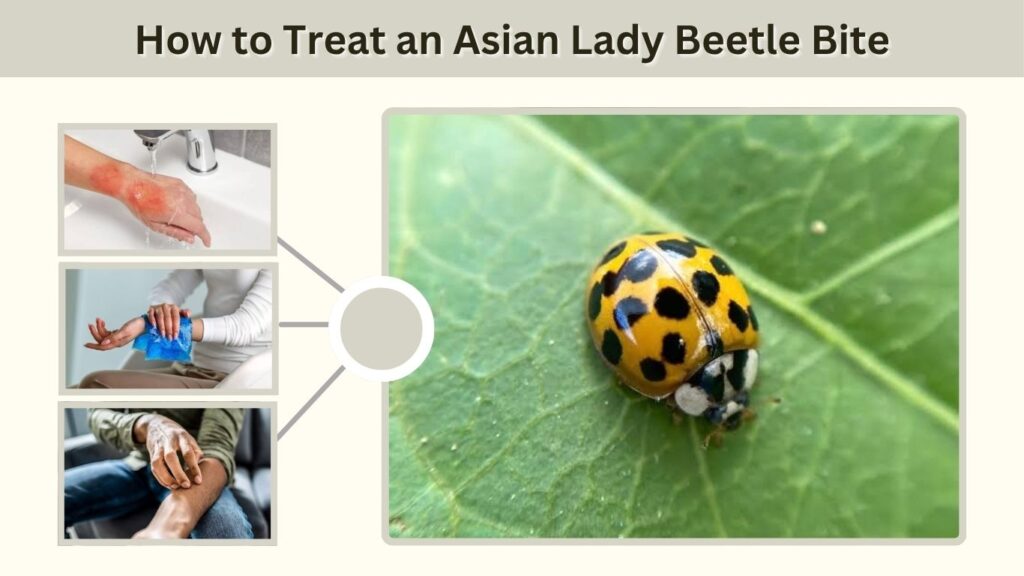
Because most bites are minor, basic insect-bite first aid is usually sufficient. The goal is to clean the area, reduce discomfort, and avoid additional irritation. There is no stinger to remove because Asian lady beetles do not sting. Seek professional advice before using medications if you have relevant medical conditions, allergies, or medication interactions.
Simple Bite Treatment
For a mild reaction:
- Move away from any remaining beetles.
- Wash the affected skin gently with soap and water.
- Apply a cold, damp cloth or wrapped cold pack.
- Avoid rubbing or scratching the area.
- Consider an appropriate OTC anti-itch treatment if needed and safe for you.
- Watch for worsening swelling, spreading redness, or allergic symptoms.
General insect-bite first-aid guidance supports washing the area and using cold applications for mild swelling and discomfort.
How Long Do Symptoms Last?
There is no well-established Asian lady beetle-specific symptom timeline because reactions vary and documented bites are usually mild.
Minor insect bites commonly improve within a few days. Persistent, worsening, or unusual symptoms should not automatically be assumed to come from an Asian lady beetle, particularly if the insect was never positively identified.
When to Seek Medical Attention
Most Asian lady beetle bites do not require medical care. The situation changes if symptoms suggest a serious allergy, significant infection, or another medical problem. Although severe reactions are unusual, documented allergy to Asian lady beetles means concerning symptoms should be treated seriously rather than dismissed as an ordinary insect bite.
Get Medical Help If You Notice
Seek urgent or emergency care for symptoms such as:
- Trouble breathing or severe wheezing
- Swelling of the lips, tongue, mouth, or throat
- Significant facial swelling
- Widespread hives
- Dizziness or fainting
- Rapidly worsening symptoms
Also contact a healthcare professional if the bite area becomes increasingly painful, hot, swollen, or appears infected. Severe allergic symptoms require emergency attention.
How to Prevent Asian Lady Beetle Bites
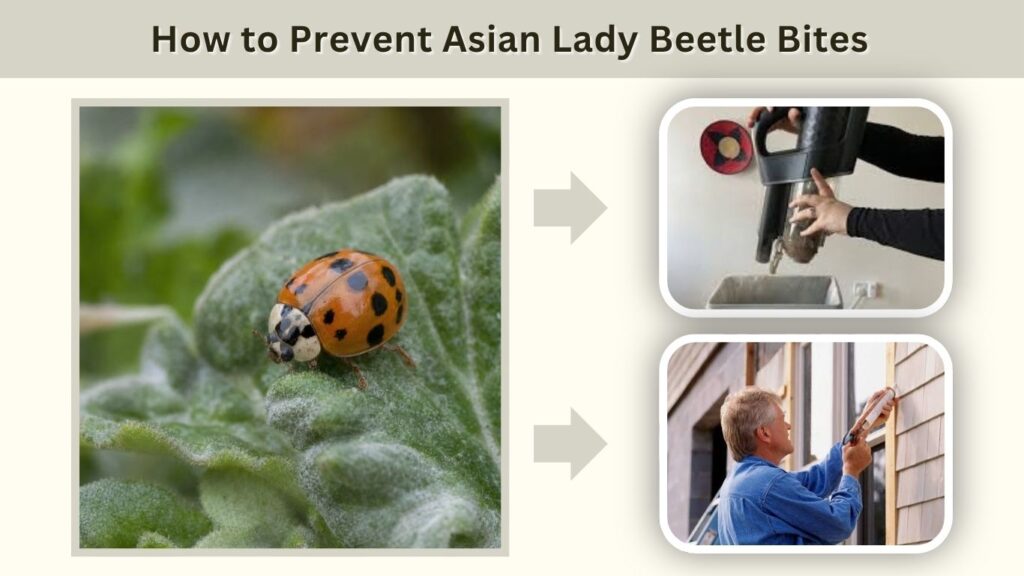
Bites are most likely when people have direct contact with beetles, particularly during large indoor invasions. Asian lady beetles commonly enter houses in fall to find sheltered overwintering sites. Reducing indoor populations and handling them carefully can lower the chance of bites as well as exposure to their irritating defensive secretions.
Prevention Tips
- Avoid handling beetles with bare hands.
- Do not deliberately crush beetles against your skin.
- Vacuum indoor beetles instead of picking them up individually.
- Seal gaps around doors and windows.
- Repair damaged screens.
- Seal openings around siding and utility lines.
- Wear gloves when removing large groups.
- Wash exposed skin after extensive contact.
Vacuuming is preferable to crushing because disturbed beetles can release their strong-smelling yellow defensive fluid.
FAQs
1. Can an Asian lady beetle really bite?
Yes. Asian lady beetles can use their mouthparts to pinch human skin, and some bites are strong enough to break the skin. They cannot sting and are not blood-feeding insects.
2. What does an Asian lady beetle bite feel like?
It usually feels like a quick pinch. Discomfort can range from barely noticeable to temporarily painful. Minor redness, irritation, or a small raised mark may occur afterward.
3. Is an Asian lady beetle bite poisonous?
No. Asian lady beetles are not venomous. They do release defensive chemicals that smell unpleasant and can irritate the skin of some people, but this is different from injecting venom through a sting.
4. Can Asian lady beetle bites cause an allergic reaction?
Allergic reactions to Asian lady beetles are documented, although significant reactions are uncommon. Exposure has been associated with hives, rhinitis, asthma, and facial swelling in sensitized people. These reactions may come from beetle allergens rather than the bite alone.
5. Do Asian lady beetle larvae bite humans?
Asian lady beetle larvae are predators of aphids and other small arthropods. Human biting is mainly discussed in relation to adult beetles. If an unidentified larva causes skin irritation, wash the area and monitor it rather than assuming the mark was definitely caused by a lady beetle.