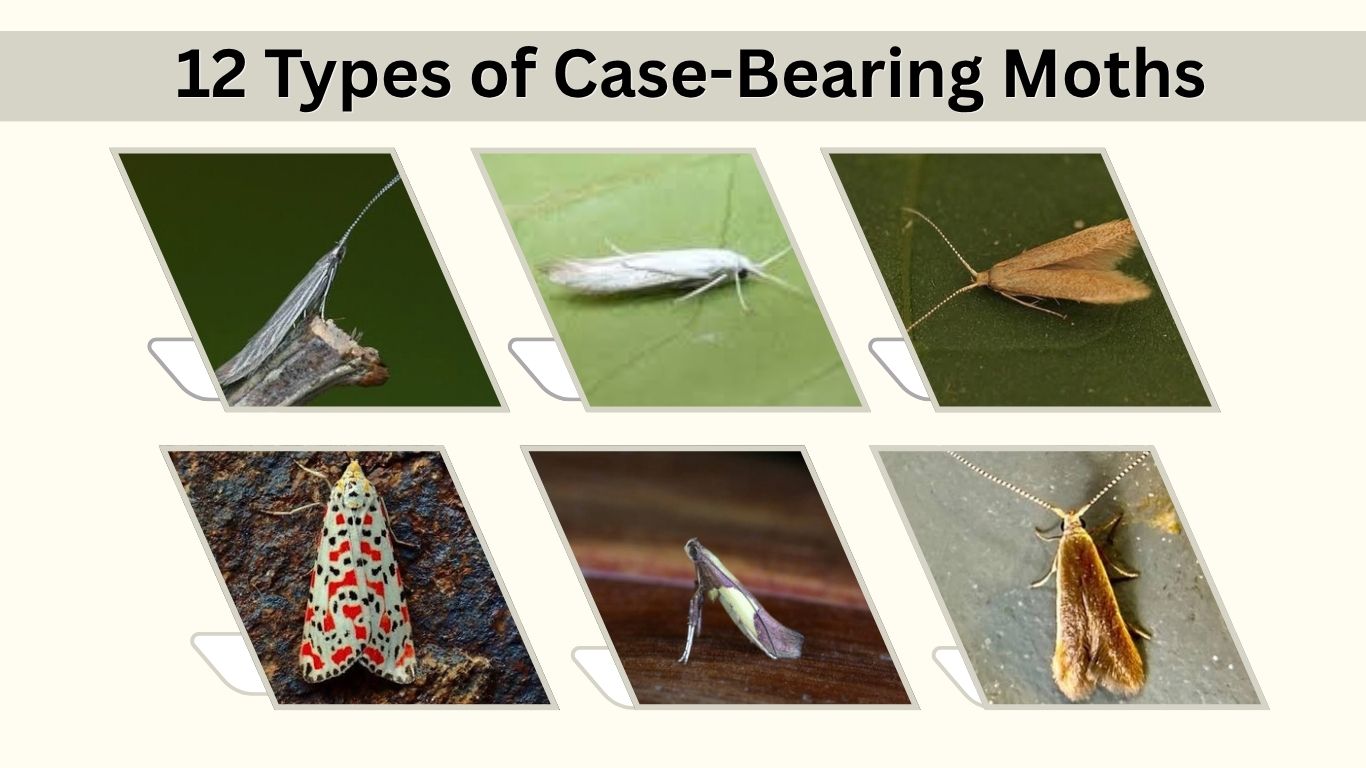
Case-bearing moths are small but fascinating insects known for the portable protective cases built and carried by their larvae. These cases may be made from silk, leaves, seeds, or other plant material, helping the caterpillars stay camouflaged while feeding. Different species are associated with particular host plants, including birch, larch, oak, willow, basswood, and fruit trees. In this guide, you’ll discover 12 types of case-bearing moths, along with their identification features, habitats, feeding behavior, and lifecycles.
1. Birch Casebearer
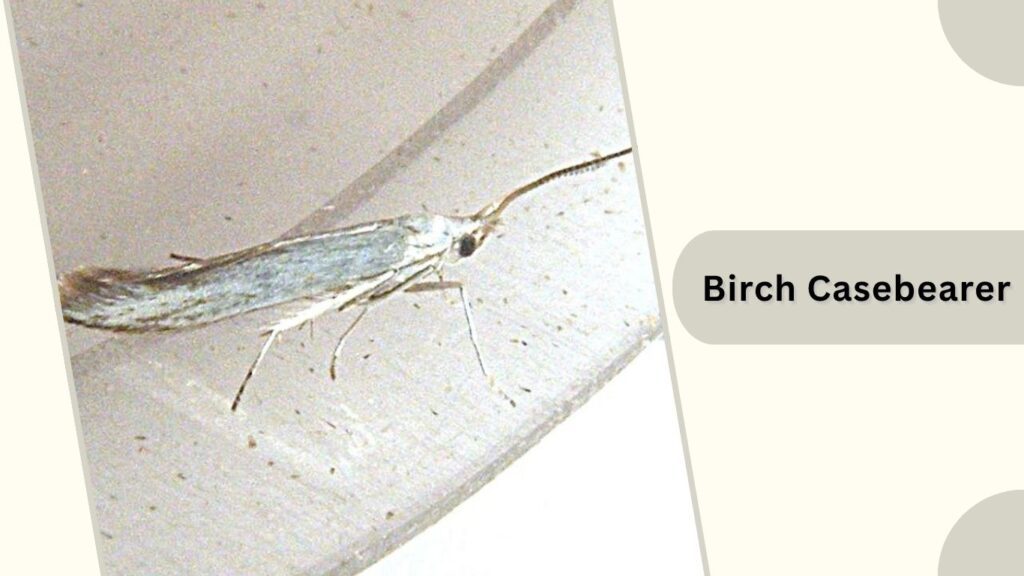
The Birch Casebearer is a small case-bearing moth associated mainly with birch trees. Its larvae create portable protective cases from silk and plant material, which they carry while feeding on leaves. Although the adult moth is tiny and easy to overlook, the larval stage can sometimes cause noticeable browning or damage to birch foliage when populations become high.
Identification
- Adult size: Usually a very small, slender moth with a narrow wingspan.
- Color: Adults are generally pale, grayish, tan, or light brown.
- Wings: Narrow wings are held close to the body when resting.
- Larvae: Small caterpillars live inside elongated protective cases.
- Larval case: Usually made from silk combined with fragments of leaves or plant material.
- Host signs: Small mined or damaged areas may appear on birch leaves where larvae have been feeding.
Habitat and Distribution
Birch Casebearers are most closely associated with places where birch trees grow. They may occur in deciduous forests, woodland edges, parks, landscaped areas, and gardens containing suitable host trees. The larvae spend much of their development directly on birch foliage, so their distribution generally follows the presence of their host plants. They can remain difficult to notice because of their small size and well-camouflaged cases.
Behavior and Diet
The larva is the main feeding stage of the Birch Casebearer. Young larvae feed on birch leaves, sometimes mining within leaf tissue before becoming more mobile. As the caterpillar grows, it carries its protective case and extends its body outward to feed. Birch leaves provide the primary food source. Adult moths do not cause leaf damage and are mainly concerned with reproduction and locating suitable plants for egg laying.
Lifespan and Lifecycle
The Birch Casebearer develops through four main stages: egg, larva, pupa, and adult. Eggs are laid on or close to suitable birch foliage. After hatching, the caterpillar begins feeding and constructs a protective case that becomes larger as it grows. The larva eventually pupates within a sheltered location or its case. An adult moth later emerges, mates, and lays eggs, beginning the lifecycle again.
2. Larch Casebearer
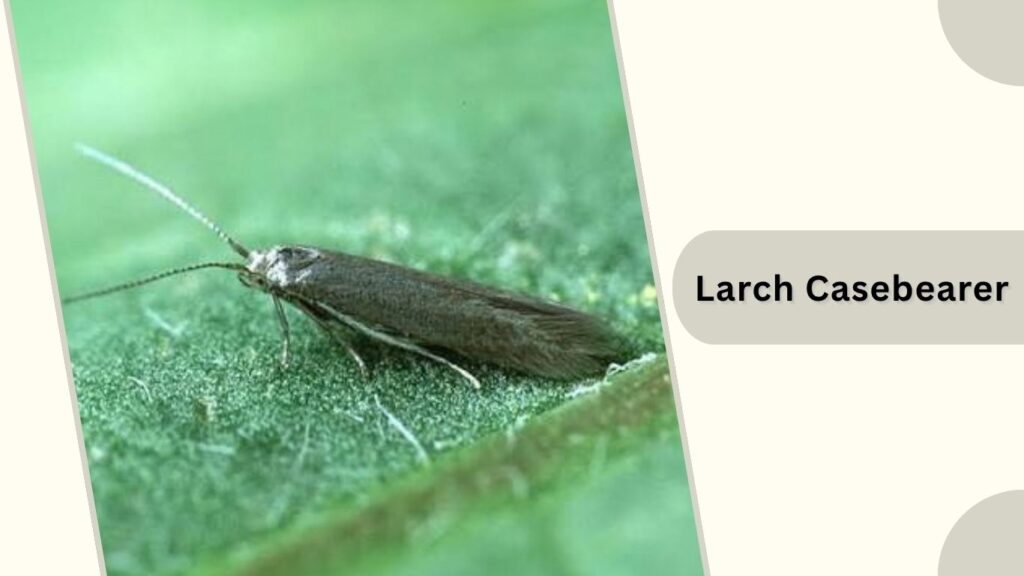
The Larch Casebearer is a tiny case-bearing moth best known for its close association with larch trees. Its caterpillars live inside small portable cases and feed on larch needles, sometimes causing sections of foliage to turn pale or brown. The species is native to Europe but has become established across large parts of North America.
Identification
- Adult appearance: Small, slender moth with silvery-gray coloration.
- Larval case: Tiny, light brown, and cigar-shaped.
- Host plant: Primarily larch and tamarack trees.
- Feeding signs: Damaged needles often become pale, dry, or brown.
- Larvae: Small caterpillars that remain protected inside portable cases.
- Resting behavior: Cases may be attached to needles, twigs, or near buds.
Habitat and Distribution
Larch Casebearers inhabit forests, plantations, parks, and landscaped areas where larch trees occur. Native to Europe, they were introduced into North America and have spread through many regions containing suitable larch species. They commonly occur on European larch, tamarack, and western larch.
Behavior and Diet
The caterpillars feed mainly on larch needles. Young larvae mine inside individual needles, consuming the soft internal tissue. As they develop, they live within protective cases and move from needle to needle. Heavy feeding can produce brown foliage and sometimes significant defoliation. Adults do not cause this feeding damage.
Lifespan and Lifecycle
The lifecycle begins when adult females place eggs individually on larch needles. After hatching, larvae enter the needles and begin feeding. They later construct cases and eventually overwinter as larvae attached near buds or twigs. Feeding resumes during spring. Mature larvae pupate inside their cases, and small adult moths emerge during summer to reproduce and begin another generation.
3. Pecan Cigar Casebearer Moth
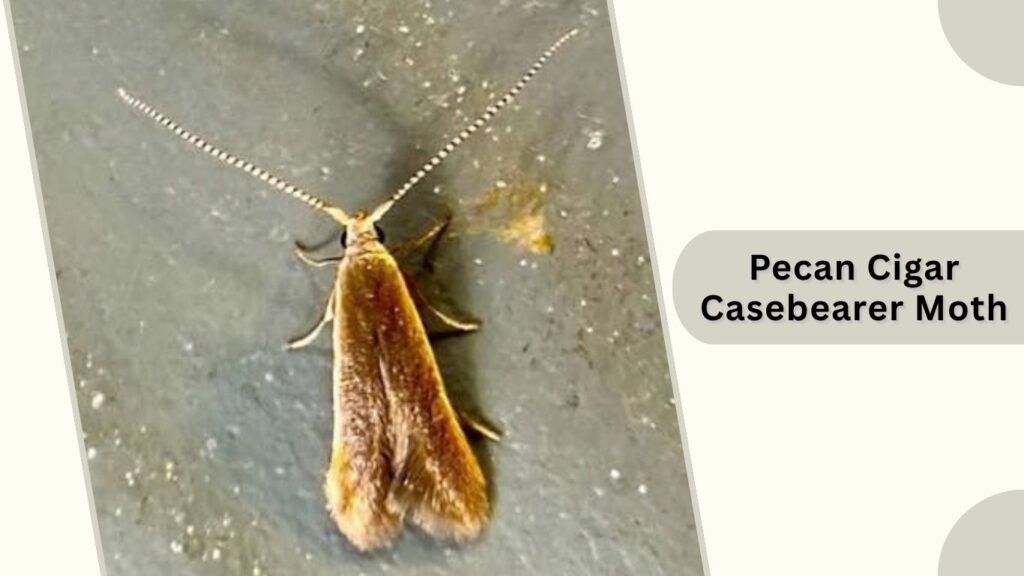
The Pecan Cigar Casebearer Moth is a North American case-bearing moth associated primarily with pecan, hickory, and related trees. Its larvae begin as leaf miners and later construct portable cases that protect them while feeding. They may attack both foliage and developing buds, making the larval stage much more noticeable than the inconspicuous adult moth.
Identification
- Adult appearance: Slender, narrow-winged moth with subdued tan or brown coloration.
- Larvae: Small caterpillars protected inside portable cases.
- Case shape: Usually elongated or spatula-like in appearance.
- Primary hosts: Pecan and several hickory species.
- Other hosts: Some records include walnut and related deciduous trees.
- Feeding signs: Damaged foliage, leaf mines, and injured young buds may be visible.
Habitat and Distribution
This casebearer is native to North America and is particularly associated with areas containing pecan and hickory trees. It can occur in woodlands, orchards, yards, and other places where suitable host trees grow. Records extend through much of the eastern United States, from New England southward to Florida and west toward Texas.
Behavior and Diet
Young larvae initially mine within leaves. As they become larger, they construct cases and feed externally while carrying their shelter. Pecan leaves and buds are important food sources, although other hickories may also be used. Caterpillars can move around the host tree while remaining partly protected by their cases.
Lifespan and Lifecycle
Larvae can overwinter inside cases attached to twigs or branches. When growth resumes in spring, they feed on newly developing buds and foliage. Mature caterpillars pupate inside their protective cases. Adults eventually emerge and lay eggs on leaves. Newly hatched caterpillars restart the leaf-mining phase before constructing their own cases.
4. Cherry Casebearer Moth
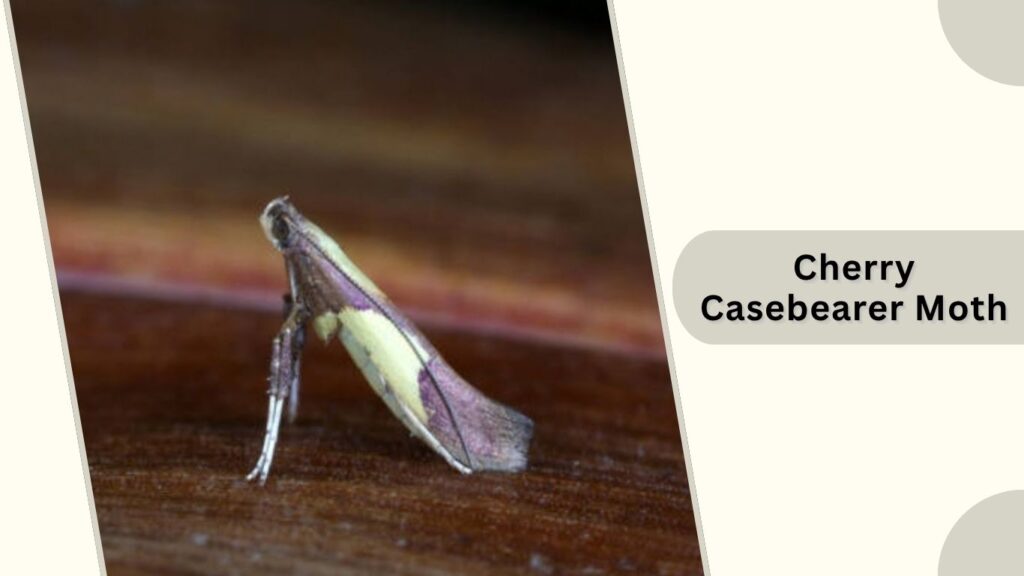
The Cherry Casebearer Moth is a small North American case-bearing moth whose caterpillars feed on the foliage of several deciduous trees and shrubs. Despite its common name, it is not restricted to cherry trees. Its larvae construct protective cases from plant material and silk, allowing them to move between feeding locations while remaining partially concealed.
Identification
- Adult: Small and narrow-bodied like many case-bearing moths.
- Wings: Slender wings are normally folded tightly along the body.
- Larvae: Tiny caterpillars that live within portable leaf cases.
- Case: Constructed using silk and pieces of plant material.
- Host signs: Small areas of damaged or eaten leaf tissue.
- Common hosts: Cherry, apple, birch, willow, alder, aspen, and other deciduous plants.
Habitat and Distribution
Cherry Casebearers can occur in deciduous woodland, forest edges, orchards, gardens, and landscaped areas. They are especially likely wherever their broad range of host trees is available. Black cherry and chokecherry are known hosts, but larvae have also been recorded using birch, apple, hawthorn, willow, alder, and trembling aspen.
Behavior and Diet
The caterpillar is primarily a foliage feeder. It remains within its protective case and extends the front part of its body outside when feeding. Because the case can be carried from place to place, a larva is able to move to fresh leaf tissue without abandoning its shelter. This behavior also provides some protection from environmental conditions and predators.
Lifespan and Lifecycle
The Cherry Casebearer passes through egg, larval, pupal, and adult stages. Caterpillars build cases during development and spend most of the feeding period inside them. As seasonal conditions change, larvae may remain sheltered on host plants before becoming active again. Once fully developed, the caterpillar pupates and eventually emerges as an adult moth. Adults reproduce and place eggs on suitable host plants, restarting the lifecycle.
5. Apple and Plum Casebearer Moth
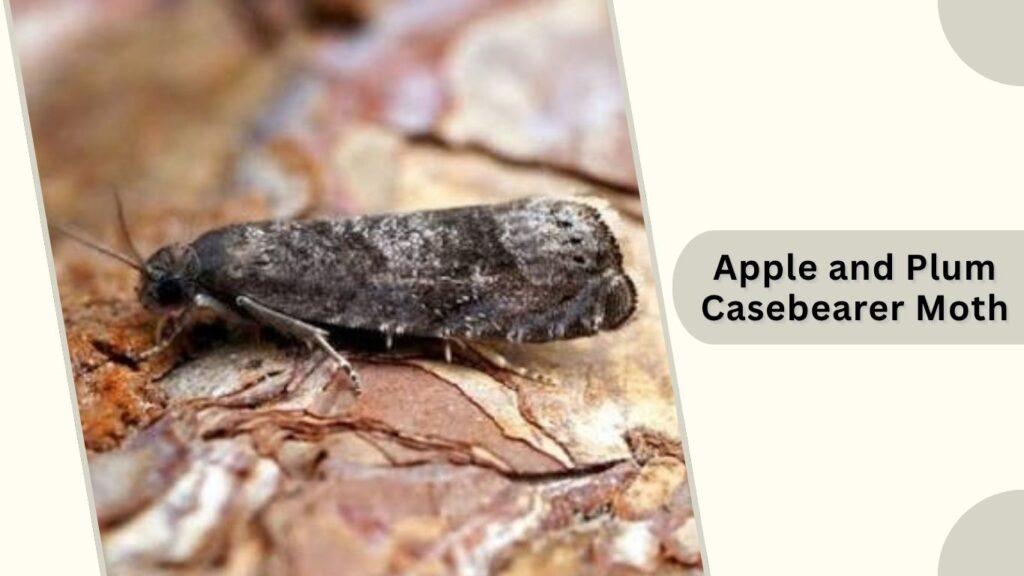
The Apple and Plum Casebearer Moth is a small case-bearing species associated with various fruit and deciduous trees. Its muted coloration helps adults remain inconspicuous, while its larvae are protected within portable cases as they feed. Apple and plum are among its recognized hosts, which explains the species’ descriptive common name.
Identification
- Adult size: Wingspan is approximately 10–12 mm.
- Color: Usually grayish, ochre-brown, or dull brown.
- Forewings: Narrow and generally lack prominent white markings.
- Hindwings: Narrow with relatively long fringes.
- Body shape: Slim and elongated when resting.
- Larvae: Live and feed while protected inside portable cases.
Habitat and Distribution
Apple and Plum Casebearers occur across parts of Europe, the Near East, and North America. Their habitat is closely connected to the presence of suitable deciduous host plants. Orchards, gardens, hedgerows, woodland margins, and areas containing fruit trees may provide appropriate conditions for this moth.
Behavior and Diet
Larvae feed on host vegetation while using their cases for protection. Apple and plum trees are particularly associated with the common name, although closely related woody plants may also support larval development. The caterpillar can project part of its body from the case to reach leaf tissue and then retreat inside when disturbed.
Lifespan and Lifecycle
Like other case-bearing moths, this species undergoes complete metamorphosis. An egg hatches into a feeding caterpillar, which develops while constructing and carrying a case. The case becomes an important shelter throughout much of the larval period. Eventually, feeding stops and pupation occurs. An adult moth later emerges, mates, and lays eggs on or near appropriate host plants, allowing another generation to begin.
6. Speckled Casebearer Moth
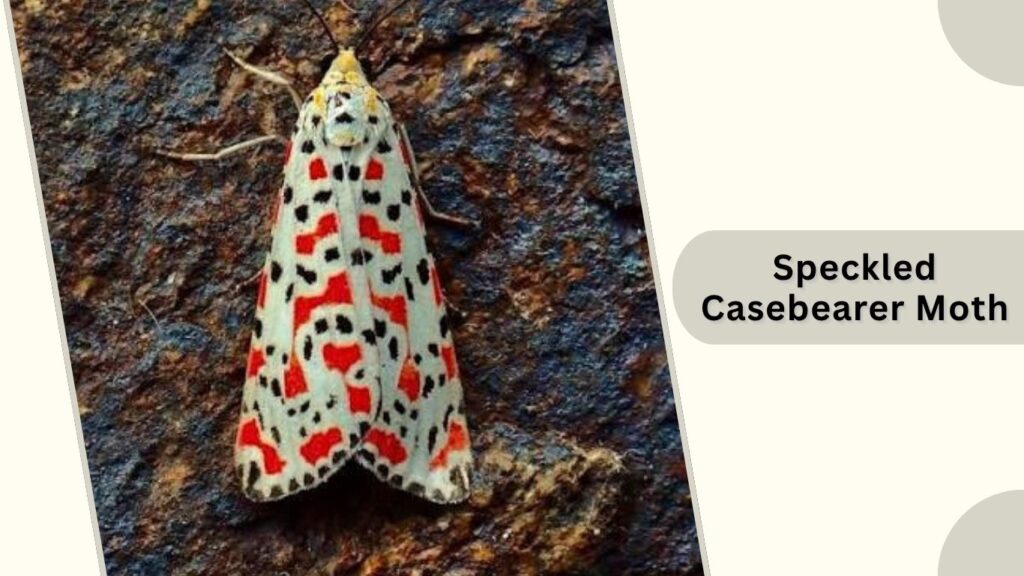
The Speckled Casebearer Moth is a small North American member of the case-bearing moth family. Its caterpillars are particularly interesting because they construct distinctively shaped portable cases while feeding on host plants. The larvae are associated with plants such as oleaster relatives, sea buckthorn, and buffaloberry, rather than the fruit trees used by several other casebearer species.
Identification
- Adult: Small moth with narrow wings and a slender body.
- Wing pattern: Fine mottling or speckled markings may be visible.
- Larvae: Small caterpillars living inside portable protective cases.
- Case shape: Characteristically curved or pistol-shaped.
- Feeding signs: Damaged areas occur where larvae consume leaf tissue.
- Host plants: Includes plants in the genera Elaeagnus, Hippophae, and Shepherdia.
Habitat and Distribution
The Speckled Casebearer occurs in North America, including areas around the Great Lakes and farther north. Records include Michigan and Ontario. Its local presence depends heavily on suitable larval host plants, so it may occur in shrublands, woodland edges, gardens, roadsides, and other locations where these plants grow.
Behavior and Diet
Larvae feed primarily on leaves. Their protective case is carried as they move over the host plant, with the caterpillar extending its head and front portion of the body to eat. The pistol-shaped construction provides both camouflage and physical protection. Adults are much less conspicuous and do not produce the foliage damage associated with larvae.
Lifespan and Lifecycle
Development follows the typical sequence of egg, larva, pupa, and adult. After hatching on a suitable host, the young caterpillar begins feeding and develops its portable case. The case is modified or enlarged as the larva grows. Eventually, the mature caterpillar stops feeding and pupates. The adult later emerges, reproduces, and lays eggs on plants capable of supporting the next generation.
7. Pistol Casebearer
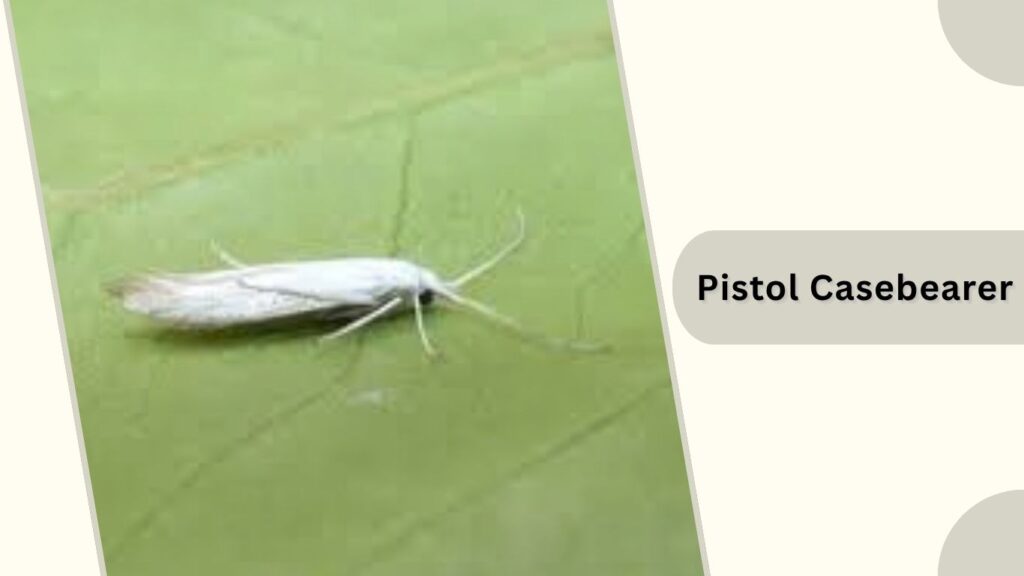
The Pistol Casebearer gets its common name from the distinctive curved case carried by its caterpillar. It is a small case-bearing moth associated with a variety of deciduous trees, including several fruit trees. Much of its lifecycle occurs in close contact with leaves, where the larva feeds while remaining protected within its portable shelter.
Identification
- Adult: Small, narrow-bodied moth typical of the casebearer family.
- Larvae: Tiny caterpillars concealed inside portable cases.
- Case: Curved and often resembles the outline of a miniature pistol.
- Host plants: Includes apple, pear, cherry, poplar, willow, birch, and alder.
- Feeding location: Primarily leaves of deciduous trees.
- Damage: Small feeding patches or mined sections may occur on foliage.
Habitat and Distribution
Pistol Casebearers are associated with environments supporting broadleaf host trees. They may inhabit orchards, woodland margins, gardens, parks, and other vegetated areas. Host records include apple, pear, quince, cherry, birch, poplar, willow, and alder, allowing the species to use a relatively diverse range of deciduous habitats.
Behavior and Diet
The larval stage is responsible for feeding damage. A caterpillar stays inside its case while moving across leaves and extends the front portion of its body to eat. Its portable shelter reduces exposure while allowing it to move between feeding sites. Leaves are the principal food source during larval development.
Lifespan and Lifecycle
The lifecycle includes egg, larva, pupa, and adult. Eggs are associated with suitable host vegetation, and the caterpillars begin feeding after hatching. As development continues, each larva constructs and enlarges its characteristic protective case. Once mature, the caterpillar eventually pupates within a protected setting. The adult moth emerges afterward, mates, and produces eggs, beginning the next generation.
8. Ironwood Casebearer
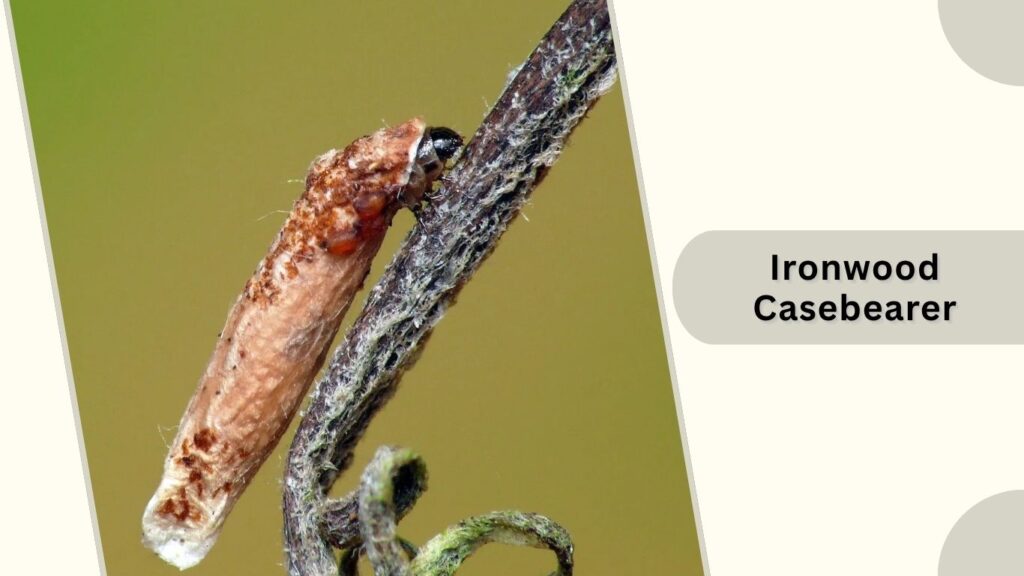
The Ironwood Casebearer is a small case-bearing moth closely associated with ironwood, particularly hop-hornbeam trees. Like other members of the casebearer family, its caterpillar constructs a portable shelter and carries it while feeding. Because both the adult moth and larval case are small and well camouflaged, this species can easily remain unnoticed even when present on its host trees. Ironwood is documented as its principal host.
Identification
- Adult size: Small and slender compared with many common moths.
- Wings: Narrow wings are folded closely against the body when resting.
- Color: Generally subdued, helping adults blend with bark and vegetation.
- Larvae: Small caterpillars protected inside portable cases.
- Larval case: Constructed from silk and plant material.
- Main host: Ironwood or hop-hornbeam trees.
Habitat and Distribution
Ironwood Casebearers are most likely to occur in habitats containing their primary host trees. These include deciduous forests, woodland margins, wooded slopes, and other areas where ironwood grows naturally. Ironwood commonly forms part of the understory in eastern North American forests, providing leaves and shelter suitable for developing casebearer larvae.
Behavior and Diet
The larval stage is responsible for feeding. Caterpillars remain partly concealed in their portable cases and extend the front portion of their bodies when eating. They primarily consume leaf tissue from ironwood. The ability to carry their cases allows larvae to move to new feeding locations without leaving their protective shelter behind.
Lifespan and Lifecycle
The Ironwood Casebearer develops through egg, larva, pupa, and adult stages. Eggs are placed on or near suitable host foliage. After hatching, larvae begin feeding and construct protective cases that are enlarged as they grow. Mature caterpillars eventually stop feeding and pupate. Adults later emerge, mate, and produce eggs to begin another generation.
9. Oak Casebearer
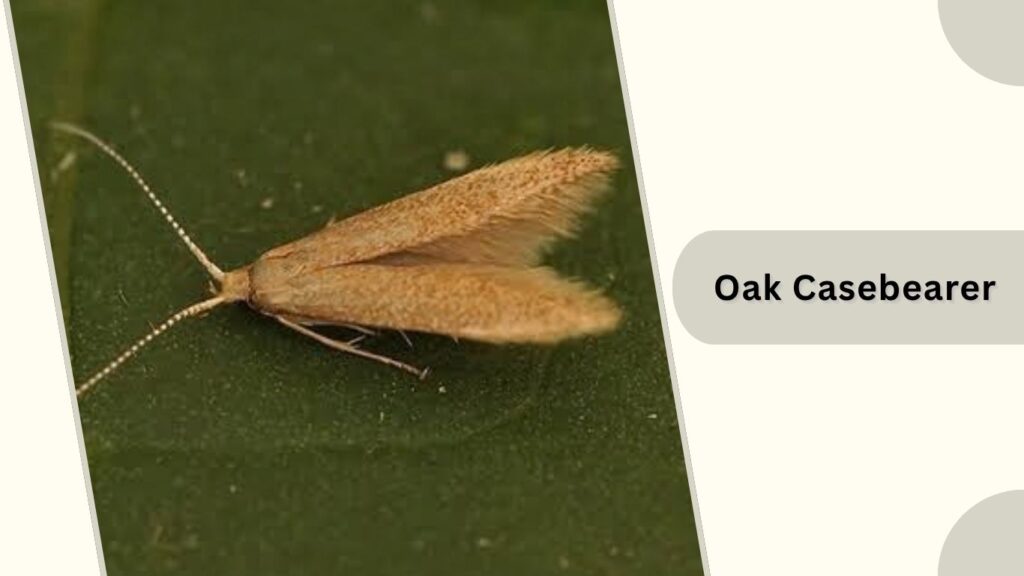
The Oak Casebearer is a small case-bearing moth strongly associated with oak trees. Its caterpillars feed on foliage while living within portable protective cases. Some North American oak casebearers can also use other deciduous hosts, but oak remains especially important. Their feeding activity can leave small skeletonized areas or holes on leaves, making larval signs more noticeable than the adult moths themselves.
Identification
- Adult: Small moth with a narrow, elongated body.
- Wings: Usually narrow and held tightly against the body.
- Larvae: Case-bearing caterpillars found on leaves.
- Case shape: Often elongated or somewhat pistol-shaped.
- Feeding signs: Skeletonized patches or small areas of missing leaf tissue.
- Primary host: Oak trees.
Habitat and Distribution
Oak Casebearers occur primarily in places supporting oak trees, including deciduous forests, woodland edges, parks, gardens, and suburban landscapes. Some species are widespread across portions of eastern North America. Because oak trees are abundant in many woodland environments, suitable habitat can be extensive wherever climatic conditions support the moth.
Behavior and Diet
The caterpillar feeds on oak foliage while keeping most of its body safely inside its case. It attaches the case to a leaf surface and reaches outward to consume tissue. Some species skeletonize leaves rather than creating deep internal mines. Once one feeding area is depleted, the caterpillar can detach its shelter and move elsewhere.
Lifespan and Lifecycle
Oak Casebearers undergo complete metamorphosis. Larvae develop inside their cases and may remain protected there through unfavorable seasonal conditions. Feeding resumes when suitable foliage becomes available. Once mature, the caterpillar pupates, and an adult moth eventually emerges. Adults reproduce during their seasonal flight period and lay eggs on appropriate host plants.
10. Basswood Casebearer
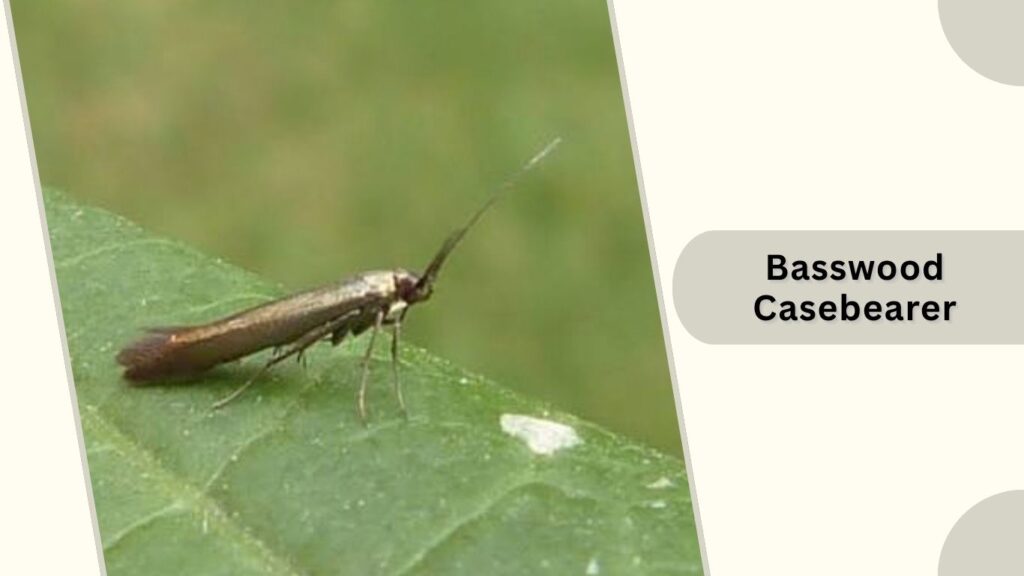
The Basswood Casebearer is a small case-bearing moth whose caterpillars specialize in feeding on basswood leaves. Its close relationship with basswood makes host-tree identification particularly useful when looking for this species. The larvae use portable cases as both camouflage and physical protection while moving across foliage. Basswood is documented as the principal caterpillar host.
Identification
- Adult: Tiny, slender moth with narrow wings.
- Body: Elongated and delicate in appearance.
- Larvae: Small caterpillars living within portable cases.
- Case: Made from silk and plant-derived materials.
- Host tree: Basswood or linden.
- Feeding signs: Small damaged areas may develop on leaves.
Habitat and Distribution
Basswood Casebearers are closely associated with forests and landscapes containing basswood trees. They may occur in deciduous woodlands, woodland borders, parks, residential areas, and other environments where suitable host trees are established. Verified records occur in several parts of eastern North America, reflecting the distribution of basswood and related habitat.
Behavior and Diet
The caterpillar feeds primarily on basswood leaves. Instead of exposing its entire body while feeding, it remains largely protected inside its case. The larva can attach the case to foliage, feed on nearby tissue, and then move to another portion of the plant. This portable-case strategy provides protection while still allowing relatively free movement.
Lifespan and Lifecycle
Development progresses through egg, larva, pupa, and adult. Eggs are deposited on suitable host vegetation, after which newly hatched larvae begin feeding. During larval development, the protective case becomes an important shelter. The caterpillar enlarges or modifies it as necessary. Eventually, feeding ends and pupation occurs, followed by adult emergence and reproduction.
11. Willow Case-bearer
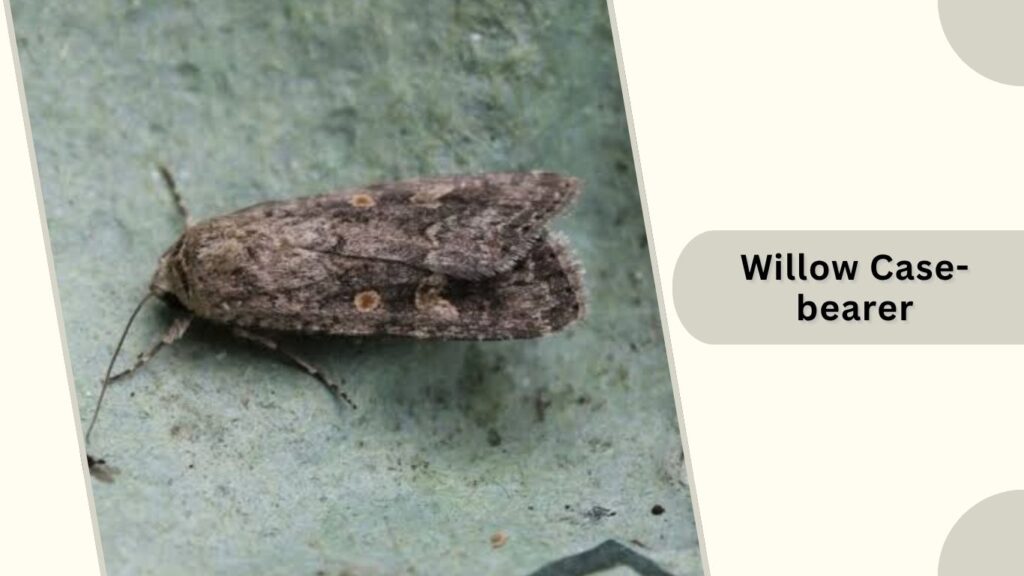
The Willow Case-bearer is a small brownish case-bearing moth associated mainly with willow and sallow. Its caterpillars live within portable cases while feeding on host leaves. Adults have narrow bodies and wings and can be difficult to distinguish from similar species without close examination. The larval case and host plant are often especially useful when identifying this moth.
Identification
- Wingspan: Approximately 10–14 mm.
- Adult color: Usually brown or muted brownish shades.
- Body shape: Long, narrow, and slender.
- Larvae: Live inside portable protective cases.
- Case: May develop differently colored sections as the larva grows.
- Primary hosts: Willow and sallow; bog myrtle may also be used.
Habitat and Distribution
Willow Case-bearers occur in places containing suitable willow species. Typical habitats include damp woodland, riverbanks, lakesides, wetlands, hedgerows, and other moist areas where willows grow. They can also occur in gardens or landscaped areas containing host plants. Their distribution is therefore strongly influenced by the availability of suitable willow and sallow vegetation.
Behavior and Diet
The larva feeds by mining or consuming willow leaf tissue while remaining protected inside a portable case. It can attach the case to a leaf during feeding and move when additional food is needed. This combination of leaf feeding and case-carrying makes the larval stage distinctive. Adults may be active around dawn, dusk, or nighttime depending on local conditions.
Lifespan and Lifecycle
Willow Case-bearers generally produce a seasonal generation. Larvae may feed during autumn, overwinter, and become active again during spring. They continue developing until mature and then pupate. Adults commonly appear during the warmer part of the year, reproduce, and place eggs near appropriate host foliage, restarting the lifecycle.
12. Sea Rush Case-bearer
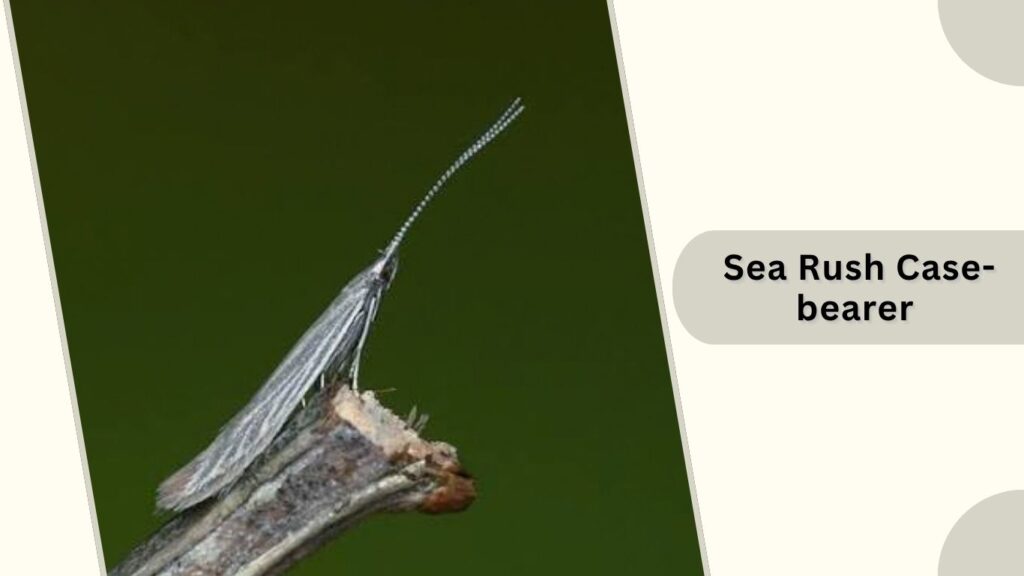
The Sea Rush Case-bearer is a tiny coastal moth whose lifecycle is closely connected with sea rush. Unlike casebearers that primarily use pieces of leaves for shelter, its caterpillar can construct a remarkably well-camouflaged case from a hollowed seed of its host plant. This specialized lifestyle makes the species particularly characteristic of coastal saltmarsh environments where sea rush grows.
Identification
- Wingspan: Approximately 9–11 mm.
- Adult: Small, narrow-winged micro-moth.
- Color: Generally pale brownish or whitish.
- Larval case: Often constructed from a hollowed sea-rush seed.
- Larvae: Found around seedheads of the host plant.
- Main host: Sea rush.
- Feeding signs: Small feeding holes may appear in seedheads.
Habitat and Distribution
The Sea Rush Case-bearer is strongly associated with coastal saltmarshes and saltings where sea rush grows. In Britain, it has been recorded mainly along coastal areas of England and Wales, with additional records elsewhere around the British Isles. Its dependence on saltmarsh plants makes its habitat much more specialized than that of many woodland casebearers.
Behavior and Diet
Larvae feed primarily within the seedheads of sea rush. Their portable cases are exceptionally difficult to spot because they resemble the seeds surrounding them. Caterpillars can remain around standing seedheads or those lying on the ground. This camouflage provides protection while allowing them to stay close to their primary food supply.
Lifespan and Lifecycle
Larvae may be found from roughly September through May. As development progresses, they continue feeding within sea-rush seedheads while carrying their protective cases. Pupation generally occurs on plant stems during May and June. Adults emerge afterward and are mainly recorded from late June into early August, when mating and egg laying allow the next generation to begin.
FAQs
1. What is a case-bearing moth?
A case-bearing moth is a small moth whose caterpillar constructs and carries a protective shelter known as a case. Depending on the species, this case may contain silk, pieces of leaves, plant fibers, seeds, or other materials. The caterpillar can extend part of its body from the case to move and feed.
2. Why do case-bearing moth larvae carry cases?
The case provides camouflage and physical protection. It helps shield the soft-bodied caterpillar from predators, changing weather conditions, and other environmental threats. Because the shelter is portable, the larva can move between feeding locations without becoming completely exposed.
3. What do case-bearing moths eat?
Diet varies considerably between species. Many larvae feed on leaves of trees such as birch, oak, willow, cherry, apple, basswood, and ironwood. Others specialize in grasses, rushes, seeds, or herbaceous plants. Adult moths generally do not cause the plant damage associated with caterpillars.
4. Are case-bearing moths harmful to trees?
Most cause only minor or localized feeding damage. However, large populations of certain species, particularly those associated with commercially or environmentally important trees, may cause noticeable browning, leaf mining, or defoliation. Healthy mature trees can often tolerate limited feeding.
5. How can you identify a case-bearing moth?
Identification often involves examining the host plant, shape and construction of the larval case, feeding pattern, adult wing markings, size, and seasonal activity. Many adults look extremely similar, so reliable identification of some species may require specialist examination. Larval cases and known host plants can sometimes provide more useful clues than adult appearance alone.