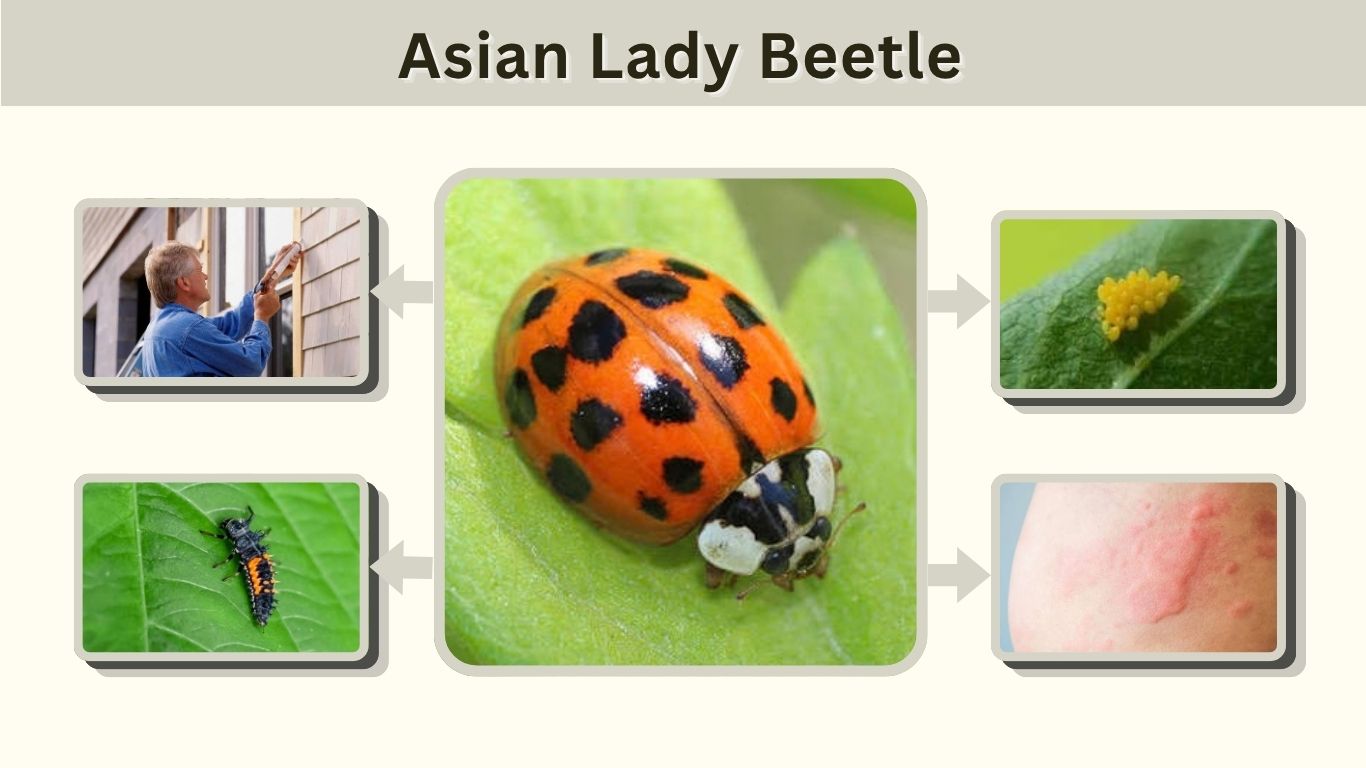
The Asian lady beetle is a highly variable lady beetle known for its orange, red, yellow, or sometimes dark coloration and its habit of gathering around homes in fall. Also called the multicolored Asian lady beetle, Harmonia axyridis feeds heavily on aphids and other soft-bodied insects but can become an indoor nuisance when large numbers seek winter shelter. This guide explains Asian lady beetle identification, larvae, bites, life cycle, infestations, differences from other ladybugs, and practical ways to control them around the home.
What Is an Asian Lady Beetle?
The multicolored Asian lady beetle is a member of the lady beetle family Coccinellidae. It is native to Asia but has become established across many other regions. Both adults and larvae prey heavily on aphids and similar pests, making them useful predators outdoors. Problems arise mainly when adults congregate around buildings and move indoors to overwinter.
Scientific Name and Origin
The scientific name of the Asian lady beetle is Harmonia axyridis. Its native range includes parts of East and Central Asia, but it has spread widely around the world.
Established North American populations were first recognized in Louisiana in 1988. The species subsequently expanded rapidly and is now familiar in agricultural areas, gardens, cities, and residential landscapes.
Are Asian Lady Beetles Invasive?
The species is non-native and invasive in many parts of its introduced range. Although it can suppress aphids and other crop pests, it also competes with native lady beetles for food and habitat.
This combination explains why the insect may be considered beneficial in one setting and troublesome in another.
Asian Lady Beetle Identification
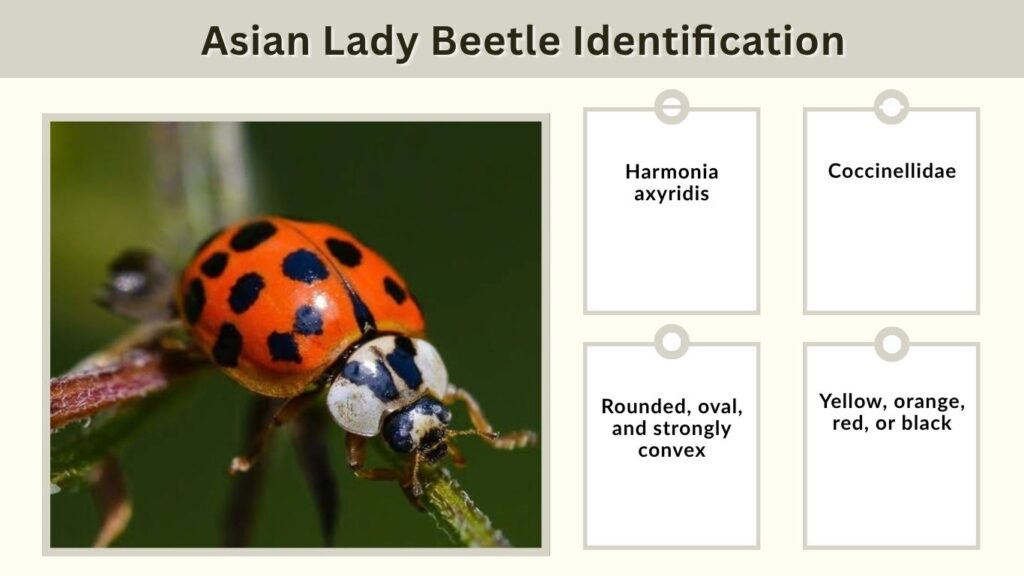
Asian lady beetles are unusually variable, which can make identification confusing. Their wing covers may be yellow, orange, red, or nearly black, and the number of spots varies dramatically. One of the most useful characteristics is the pale section directly behind the head, which often carries a dark marking resembling an M or W.
Key Identification Features
- Scientific name: Harmonia axyridis
- Family: Coccinellidae
- Shape: Rounded, oval, and strongly convex
- Size: About 7 mm long in typical adults
- Colors: Yellow, orange, red, or black
- Spots: May have numerous spots or none at all
- Pronotum: Usually pale with a dark M- or W-shaped marking
- Legs: Usually brownish to dark
- Behavior: Often gathers in large groups during fall
- Defensive response: Can release yellow, strong-smelling fluid when disturbed
The extreme color variation is why the name “multicolored Asian lady beetle” is commonly used.
Asian Lady Beetle Larva
Asian lady beetle larvae look completely different from adults. They are elongated and somewhat alligator-like rather than round.
Mature larvae are usually dark gray to black with orange markings and rows of branching projections along the body. They crawl actively across leaves and stems searching for aphids, insect eggs, and other small prey.
Asian Lady Beetle vs. Ladybug
The popular search phrase “Asian lady beetle vs. ladybug” can be slightly misleading because Asian lady beetles are themselves ladybugs. “Ladybug,” “lady beetle,” and “ladybird beetle” are common names applied to members of the family Coccinellidae. What people usually want to know is how Harmonia axyridis differs from familiar native lady beetle species.
Appearance Differences
Many familiar lady beetle species have relatively consistent color and spot patterns. Asian lady beetles are much more variable.
The pale pronotum with a black M- or W-like marking is a particularly useful clue. However, no single color or spot count identifies every individual because some Asian lady beetles have numerous spots while others have none.
Behavior Differences
Asian lady beetles are especially notorious for entering buildings in large numbers during fall. They may gather on sunny exterior walls, windows, roofs, doors, and other warm surfaces before finding small openings.
Some native lady beetles also overwinter in groups, but massive household invasions are strongly associated with Harmonia axyridis.
Do Asian Lady Beetles Bite?
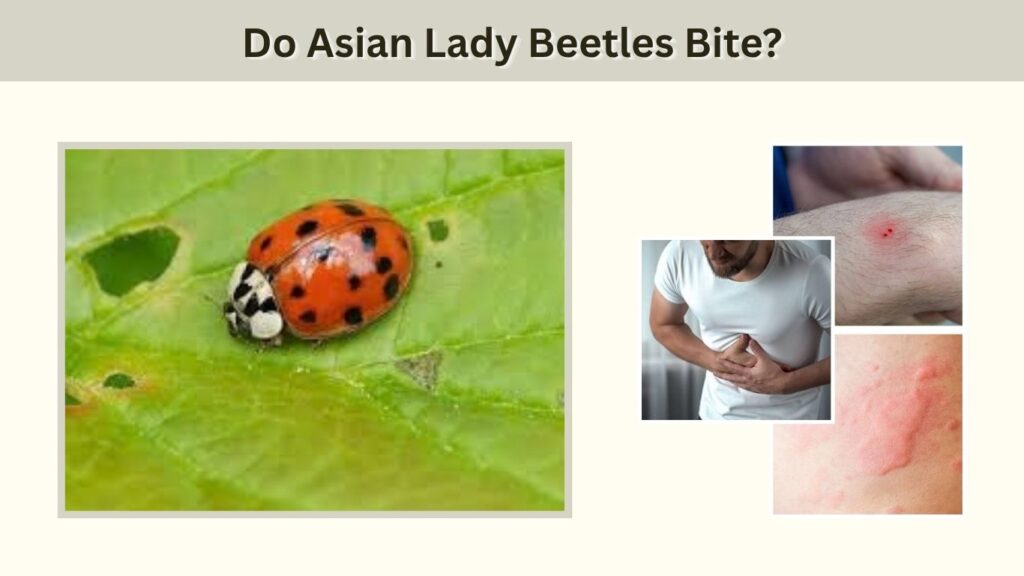
Asian lady beetles do not have a stinger and are not blood-feeding insects. However, adults can sometimes use their mouthparts to pinch exposed human skin. These incidents are usually described as bites, particularly when beetles are numerous indoors or when food and moisture are limited.
Asian Lady Beetle Bite Symptoms
Possible reactions include:
- A brief pinching sensation
- Mild localized discomfort
- Temporary redness
- A small raised area
- Minor skin irritation
- Sensitivity to defensive secretions in some people
More significant reactions can occur in sensitive individuals, but a typical pinch is not equivalent to a bee or wasp sting.
Are Asian Lady Beetles Poisonous?
Asian lady beetles release a yellow defensive fluid from their leg joints when threatened. This process is called reflex bleeding.
The secretion has an unpleasant odor and can stain light-colored surfaces. It may also irritate some people’s skin. Crushing beetles indoors can therefore create more staining and odor than simply removing them intact.
Asian Lady Beetle Life Cycle
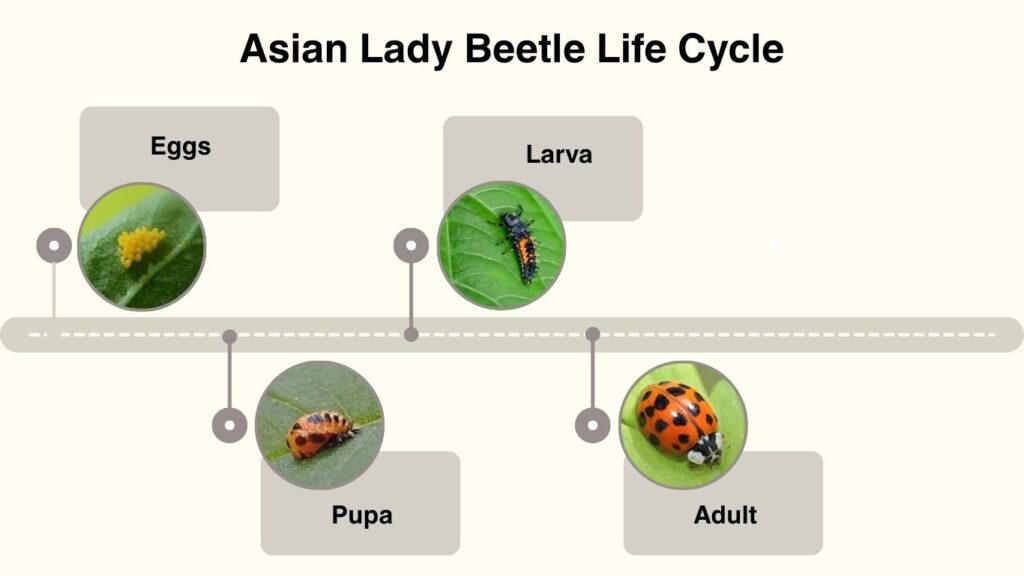
Like other beetles, the Asian lady beetle undergoes complete metamorphosis through egg, larval, pupal, and adult stages. Much of this development occurs on plants containing abundant prey. Both the larvae and adults are active predators, which is why the species can contribute to biological control in gardens and agricultural crops despite its invasive characteristics.
Life Cycle Stages
- Egg: Females lay clusters of yellow, elongated eggs on vegetation.
- Larva: Dark, spiny larvae emerge and actively hunt soft-bodied insects.
- Growth: Larvae pass through several developmental stages while feeding.
- Pupa: The pupa attaches to a plant or another firm surface.
- Adult: A new adult emerges and continues feeding before reproduction or overwintering.
What Do Asian Lady Beetles Eat?
Aphids are among their most important foods. They also prey on insect eggs and various other soft-bodied arthropods.
This appetite is why Asian lady beetles can be valuable in orchards, agricultural fields, and gardens. However, large populations can also compete with native predatory lady beetles.
Asian Lady Beetle Infestation in the House
Indoor infestations usually begin in fall rather than because beetles are reproducing inside the house. Adults seek protected places where they can survive colder weather. They locate gaps around windows, siding, roofs, vents, utility openings, and doors and may spend winter inside wall voids or attics before appearing in occupied rooms.
Signs of an Infestation
- Numerous beetles on sunny exterior walls
- Beetles collecting around doors and windows
- Groups inside window frames
- Adults appearing on ceilings or walls during winter
- Yellow stains where beetles have been crushed
- An unpleasant odor after beetles are disturbed
- Large numbers appearing indoors on warm winter days
They do not normally reproduce indoors, damage structural wood, or eat household fabrics.
Why They Appear in Fall
Cooling temperatures trigger adults to search for overwintering sites. Warm, sunlit buildings can resemble natural sheltered locations such as cliffs or rock faces.
Once beetles find openings, they can enter wall spaces in very large numbers. Indoor heat may later activate some individuals, causing them to emerge into living areas.
How to Get Rid of Asian Lady Beetles
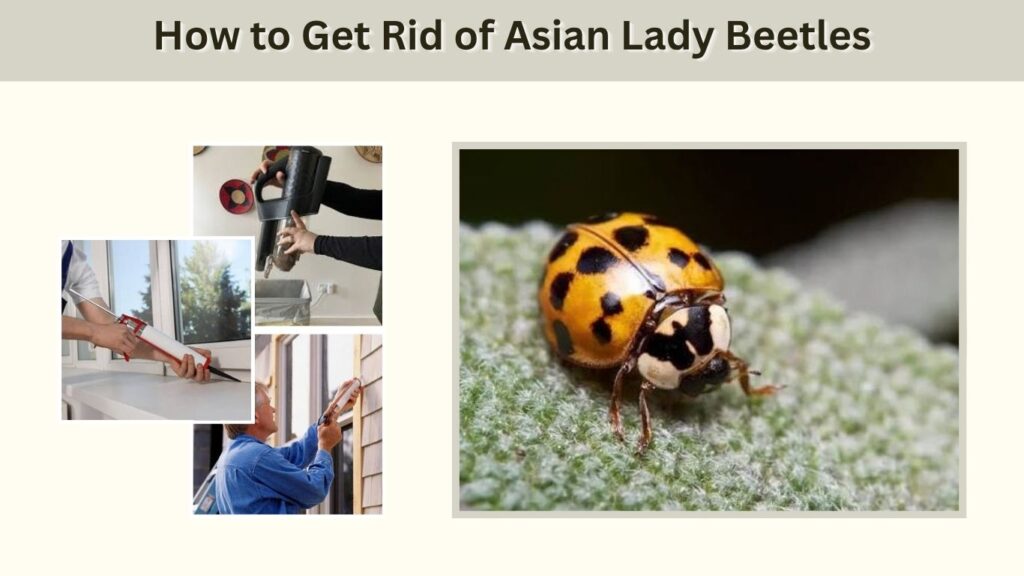
Preventing entry is usually more effective than trying to eliminate thousands of beetles after they are already inside walls. Penn State Extension identifies mechanical exclusion as the best approach for preventing home invasions. Indoor beetles can usually be physically removed without widespread pesticide applications.
Prevention and Control Methods
- Seal cracks around windows and doors.
- Caulk gaps around siding and exterior trim.
- Repair damaged window and door screens.
- Screen suitable vents and other openings.
- Check areas around pipes, wires, and utility entrances.
- Vacuum visible beetles instead of crushing them.
- Empty or secure the vacuum contents afterward.
- Concentrate prevention work before fall migration begins.
Should You Spray Asian Lady Beetles Indoors?
Routine spraying into indoor cracks and wall voids is generally not the preferred approach. Killing large numbers of beetles inside walls can leave insect carcasses that attract other household pests, while foggers do not stop additional beetles from emerging.
For severe exterior invasions where structural sealing is difficult, a qualified pest-control professional can advise whether an appropriately labeled exterior treatment is suitable.
Are Asian Lady Beetles Harmful to Dogs?
Most encounters are unlikely to cause serious problems, but dogs should not be encouraged to eat large numbers of Asian lady beetles. The insects’ defensive chemicals can irritate tissues in the mouth, and documented cases have involved beetles becoming lodged against a dog’s oral tissues.
When to Check Your Dog
If a dog has been snapping at or eating many beetles, examine its behavior rather than assuming every exposure is dangerous. Excessive drooling, obvious mouth discomfort, difficulty eating, or visible beetles attached inside the mouth warrant veterinary advice.
Avoid forcing your fingers deep into an uncomfortable animal’s mouth because this can create additional injury.
FAQs
1. What is the difference between an Asian lady beetle and a ladybug?
An Asian lady beetle is actually a type of ladybug. The name usually refers specifically to Harmonia axyridis. Compared with many familiar native species, it shows greater color variation, often has a dark M- or W-shaped marking behind the head, and commonly invades buildings in fall.
2. Can Asian lady beetles bite humans?
Yes, they can occasionally pinch human skin with their mouthparts. They do not have a stinger and do not feed on blood. Bites are generally minor, although defensive secretions can irritate sensitive individuals.
3. Why do Asian lady beetles smell?
When disturbed, they can release yellow defensive fluid from their leg joints. This substance has a noticeable odor and may leave yellowish stains on walls, fabrics, and other surfaces.
4. Why are Asian lady beetles inside my house?
They usually enter homes in autumn while searching for protected overwintering locations. Small gaps around siding, windows, doors, vents, roofs, and utility lines can provide access to wall spaces and living areas.
5. What is the best way to remove Asian lady beetles indoors?
Vacuuming is one of the simplest methods for removing visible beetles. Avoid crushing them because their defensive fluid can smell and stain surfaces. Long-term control depends mainly on sealing exterior openings before beetles begin seeking winter shelter.