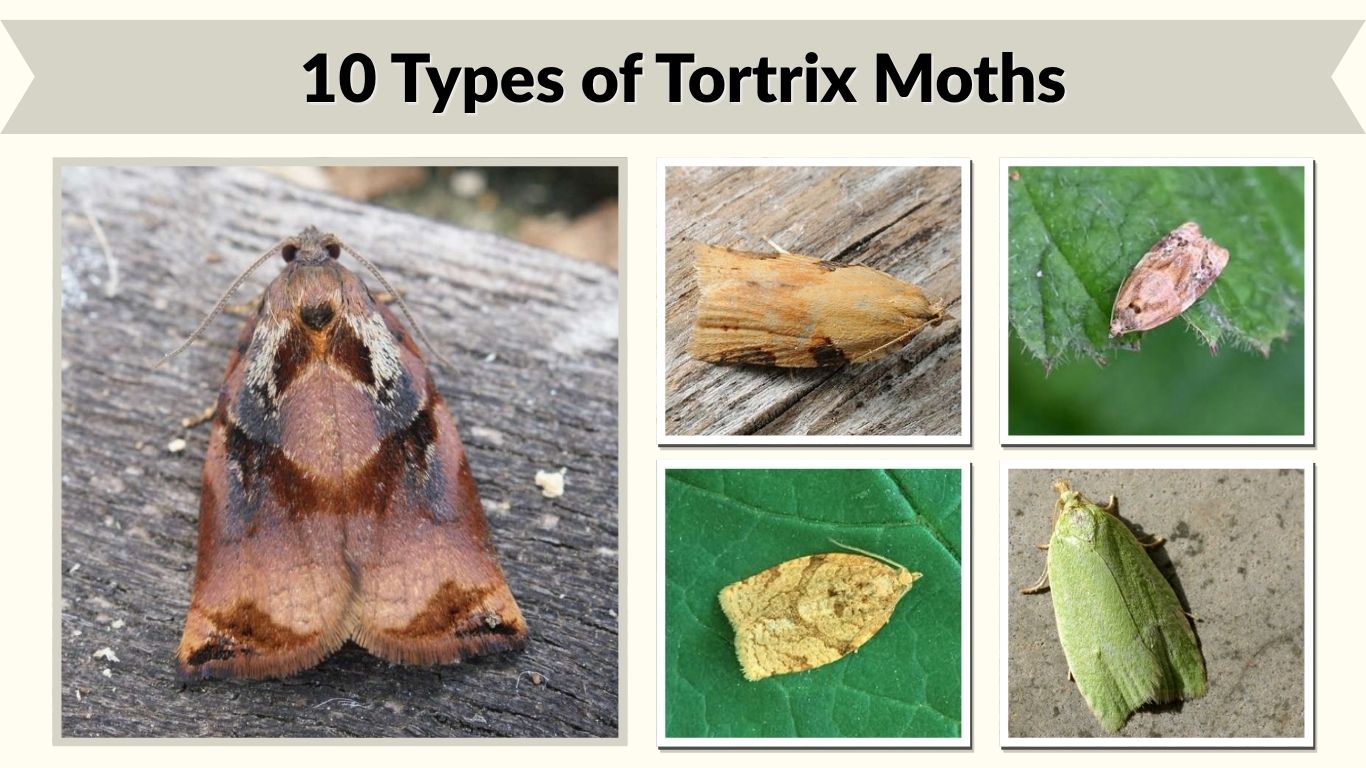
Tortrix moths are a diverse group of small moths belonging to the family Tortricidae, many of which are known for their distinctive leaf-rolling caterpillars. These moths can be found in forests, gardens, orchards, and agricultural areas, where their larvae feed on leaves, buds, flowers, and sometimes fruit. Some species are harmless, while others are considered important crop pests. In this guide, we’ll explore 10 types of Tortrix moths, including their identification features, habitat and distribution, feeding behavior, and lifecycle.
1. Green Oak Tortrix
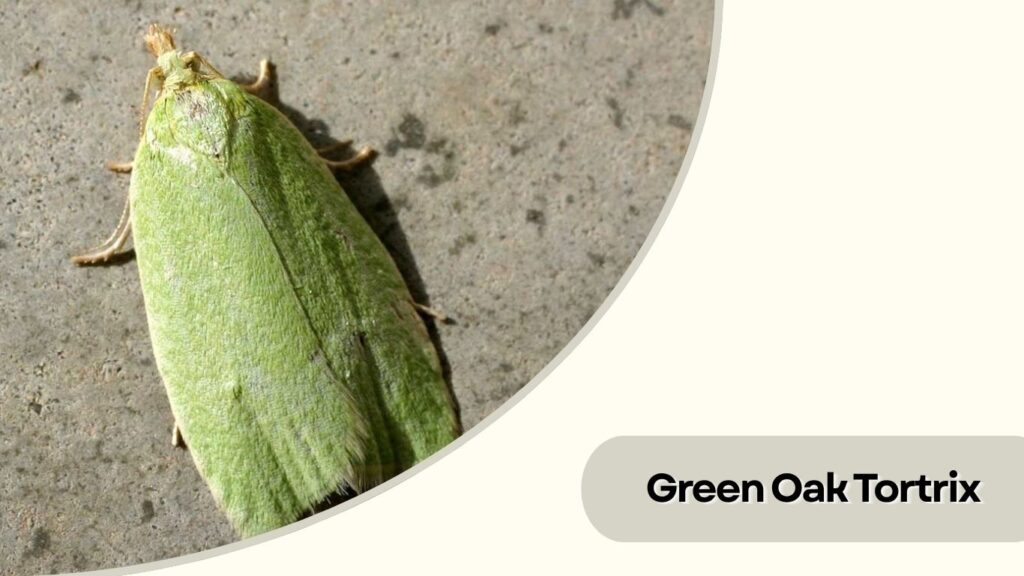
The Green Oak Tortrix is a small leaf-rolling moth best known for its association with oak trees. Its scientific name is Tortrix viridana, and it belongs to the family Tortricidae. This moth is widespread across much of Europe and parts of western Asia. Although the adult moth is relatively small and harmless, its caterpillars can become abundant and feed heavily on young oak leaves during spring.
Identification
- Common Name: Green Oak Tortrix
- Scientific Name: Tortrix viridana
- Family: Tortricidae
- Wingspan: About 18–24 mm
- Forewing Color: Bright green to yellowish-green
- Hindwing Color: Pale gray or whitish-gray
- Body Shape: Small, compact moth with broad wings
- Larvae: Greenish caterpillars with darker heads
- Distinctive Feature: Adults have striking green forewings that provide camouflage among fresh oak foliage.
Habitat and Distribution
Green Oak Tortrix moths are strongly associated with oak woodlands, forests, parks, hedgerows, and areas containing mature oak trees. They occur widely across Europe and extend into parts of western Asia and North Africa. Oak species are their primary host plants, making deciduous forests especially suitable habitats. Adults often remain close to trees where the larvae developed.
Behavior and Diet
Adult Green Oak Tortrix moths are mainly active during the warmer months and may be seen resting on leaves during the day. The adults do not cause significant damage to trees. Their larvae, however, feed primarily on young oak leaves and buds. Caterpillars often roll or fold leaves together with silk, creating protected feeding shelters. Heavy infestations may temporarily remove large amounts of foliage from oak trees.
Lifespan and Lifecycle
The Green Oak Tortrix usually produces one generation each year. Females lay eggs on oak twigs and branches, where they remain through winter. The eggs hatch in spring around the time oak buds begin opening. Larvae feed for several weeks before pupating inside folded or rolled leaves. Adult moths generally emerge from late spring into early summer, mate, and lay eggs that begin the next annual cycle.
2. Rose Tortrix
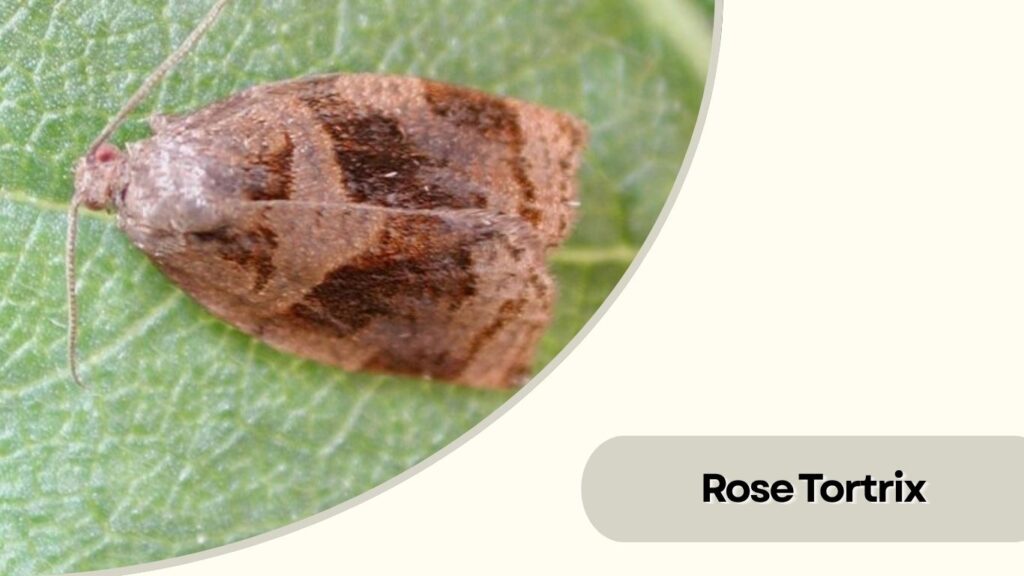
The Rose Tortrix is a small tortricid moth whose caterpillars feed on a wide variety of shrubs and deciduous trees. Despite its common name, it is not limited to roses. The larvae often roll or bind leaves together with silk, creating a protected shelter while feeding. It may occur in gardens, woodland edges, hedgerows, and other places where suitable host plants grow.
Identification
- Common Name: Rose Tortrix
- Scientific Name: Archips rosana
- Family: Tortricidae
- Wingspan: Around 18–24 mm
- Forewing Color: Brownish, tan, or reddish-brown
- Wing Pattern: Usually marked with darker bands and patches
- Larvae: Greenish caterpillars with a darker head
- Distinctive Feature: Broad forewings with variable brown markings
Habitat and Distribution
Rose Tortrix moths occur across much of Europe and parts of Asia, and they have also been introduced into some other regions. They inhabit gardens, orchards, woodland margins, hedgerows, and areas rich in shrubs. Their broad range of host plants allows them to survive in both natural and cultivated environments.
Behavior and Diet
The larvae are leaf rollers that use silk to fasten leaves together. They feed on roses as well as apple, pear, hawthorn, and various other woody plants. Adults are generally most active around dusk and at night.
Lifespan and Lifecycle
Rose Tortrix typically has one generation per year in cooler regions. Eggs overwinter on bark or branches and hatch in spring. Larvae feed during spring and early summer before pupating in rolled leaves. Adults usually emerge during summer and later lay eggs for the next generation.
3. Summer Fruit Tortrix
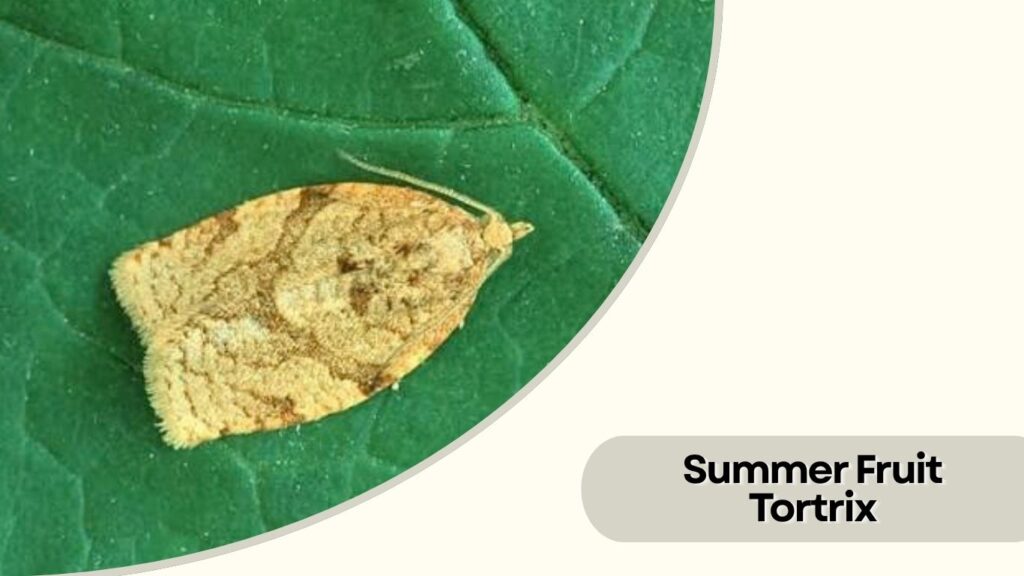
The Summer Fruit Tortrix is a widespread moth known for feeding on fruit trees and numerous ornamental plants. Its larvae can damage leaves and occasionally the surface of developing fruit. The species is especially familiar in gardens and orchards, where caterpillars create silken shelters by folding or rolling leaves around themselves.
Identification
- Common Name: Summer Fruit Tortrix
- Scientific Name: Adoxophyes orana
- Family: Tortricidae
- Wingspan: Approximately 15–22 mm
- Forewing Color: Yellowish-brown to light brown
- Markings: Darker brown bands or patches
- Larvae: Yellow-green to green caterpillars
- Distinctive Feature: Compact body and patterned brown forewings
Habitat and Distribution
Summer Fruit Tortrix moths are found across Europe and many parts of temperate Asia. They commonly inhabit orchards, gardens, woodland margins, nurseries, and agricultural areas. Apple and pear orchards can provide particularly favorable habitats because the caterpillars have an abundant food source.
Behavior and Diet
Larvae feed on the foliage of apple, pear, plum, cherry, and numerous other plants. They may also nibble the skin of developing fruits when leaves are touching the fruit surface. Adults are mostly active in the evening and at night.
Lifespan and Lifecycle
Depending on climate, the Summer Fruit Tortrix may produce one or more generations annually. Larvae can overwinter in protected shelters on host plants. Feeding resumes during spring, followed by pupation and adult emergence. Later generations may appear during the warmer summer months.
4. Fruit Tree Tortrix
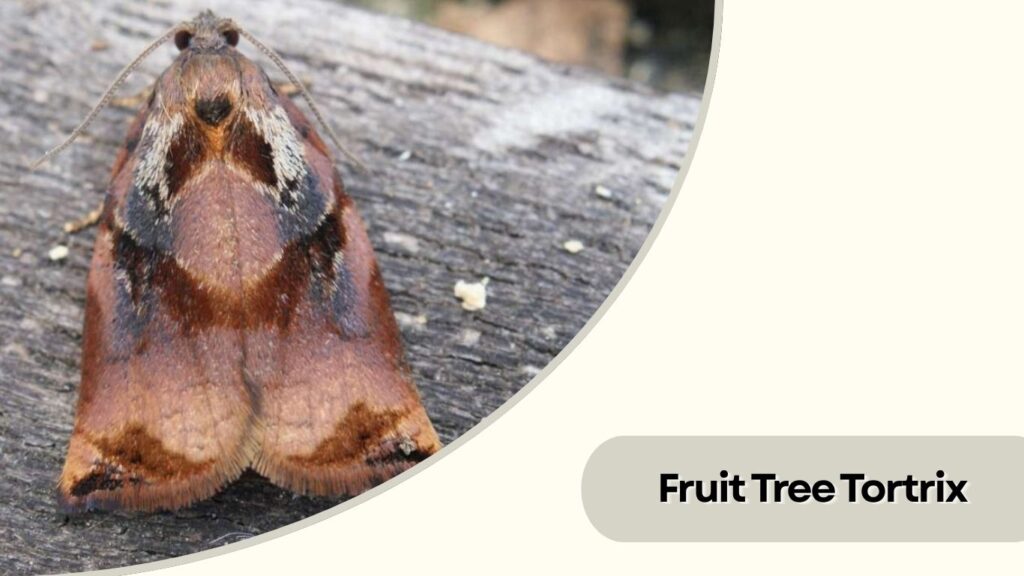
The Fruit Tree Tortrix is another leaf-rolling moth associated with deciduous trees and fruit crops. Its larvae feed on leaves, buds, flowers, and sometimes developing fruit. Because it uses many different host plants, it can be found in orchards as well as natural woodland habitats.
Identification
- Common Name: Fruit Tree Tortrix
- Scientific Name: Archips podana
- Family: Tortricidae
- Wingspan: About 18–26 mm
- Forewing Color: Brown, tan, or ochre
- Markings: Darker crossbands and irregular patches
- Larvae: Green caterpillars with a brownish head
- Distinctive Feature: Broad wings with strongly patterned brown coloration
Habitat and Distribution
Fruit Tree Tortrix moths are widespread across Europe and occur in orchards, parks, gardens, woodland edges, and hedgerows. They thrive wherever suitable deciduous trees and shrubs are available. Apples, pears, plums, and other fruit trees are commonly used by the larvae.
Behavior and Diet
Caterpillars bind leaves together with silk and remain inside while feeding. Their diet includes foliage from several fruit and ornamental trees. They may also feed near fruit clusters, occasionally causing superficial damage. Adults generally fly from evening into the night.
Lifespan and Lifecycle
This moth generally passes through egg, larval, pupal, and adult stages within one year, although timing varies with climate. Eggs hatch into larvae that feed on young foliage. After completing development, the larvae pupate within folded leaves. Adults emerge during the warmer months and reproduce before the next overwintering stage begins.
5. Carnation Tortrix
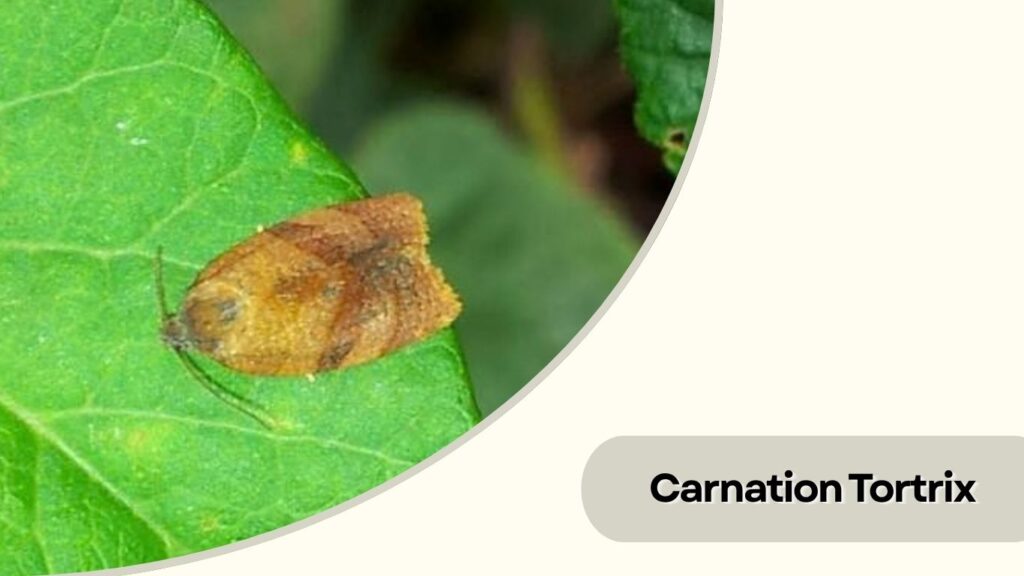
The Carnation Tortrix is a small but adaptable moth whose caterpillars feed on many ornamental and cultivated plants. It is especially associated with greenhouses, gardens, nurseries, and warm sheltered environments. The larvae often damage plants by feeding inside leaves that have been rolled or webbed together.
Identification
- Common Name: Carnation Tortrix
- Scientific Name: Cacoecimorpha pronubana
- Family: Tortricidae
- Wingspan: Roughly 15–24 mm
- Forewing Color: Orange-brown to reddish-brown
- Markings: Dark transverse bands
- Larvae: Green caterpillars with darker heads
- Distinctive Feature: Warm orange-brown wings with contrasting darker markings
Habitat and Distribution
Originally associated with warmer parts of Europe and the Mediterranean region, the Carnation Tortrix has expanded into many other areas. It is commonly found in gardens, greenhouses, plant nurseries, orchards, and landscaped areas. Sheltered environments help it survive in regions with colder winters.
Behavior and Diet
The larvae feed on a broad range of plants, including carnations, strawberries, citrus, roses, and numerous ornamentals. They create protective shelters by tying leaves together with silk. Adults tend to be most active during dusk and nighttime.
Lifespan and Lifecycle
Several generations may occur in warm climates or heated greenhouses. Females lay clusters of eggs on leaves. The larvae hatch and begin feeding before pupating inside their silken shelters. Adults emerge to mate and repeat the cycle, allowing populations to increase rapidly when temperatures remain favorable.
6. Large Fruit-tree Tortrix
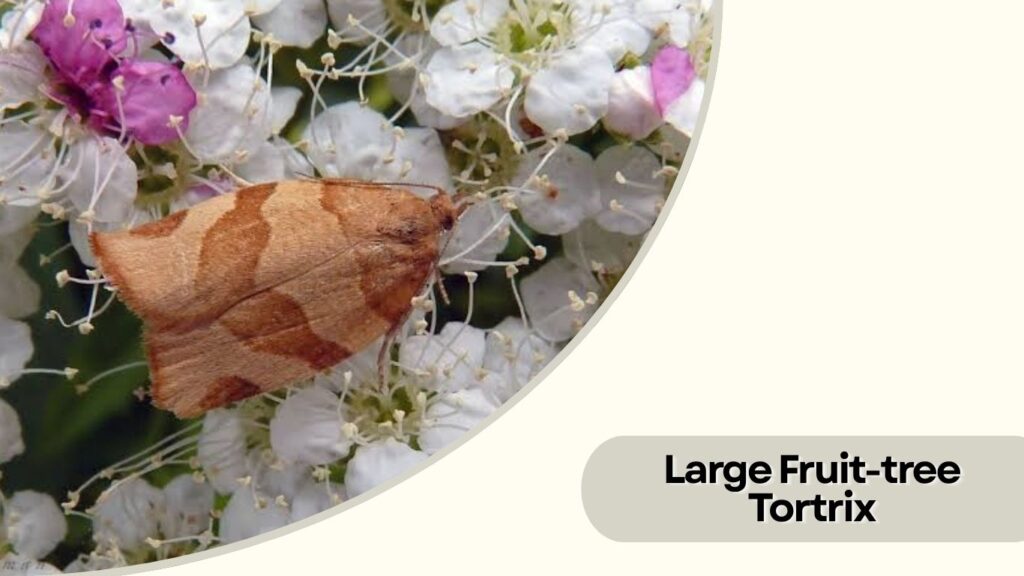
The Large Fruit-tree Tortrix is a relatively robust member of the Tortricidae family. Its larvae feed on several broadleaf trees and shrubs, including fruit trees. Like many related species, the caterpillars protect themselves by rolling or fastening leaves together before feeding inside.
Identification
- Common Name: Large Fruit-tree Tortrix
- Scientific Name: Archips podana
- Family: Tortricidae
- Wingspan: Around 18–28 mm
- Forewing Color: Brown to reddish-brown
- Wing Pattern: Broad darker bands and irregular markings
- Larvae: Greenish caterpillars
- Distinctive Feature: Comparatively broad wings and strongly marked forewings
Habitat and Distribution
Large Fruit-tree Tortrix moths inhabit orchards, gardens, woodland edges, parks, and hedgerows throughout much of Europe and nearby regions. They favor areas containing deciduous trees, especially apple, pear, cherry, and other suitable hosts.
Behavior and Diet
The caterpillars feed on young leaves, flower buds, blossoms, and occasionally fruit surfaces. Leaves are often rolled or webbed together to form feeding shelters. Adults normally rest during the daytime and become more active from dusk onward.
Lifespan and Lifecycle
Eggs are usually laid in flattened clusters on bark or branches. After hatching, young larvae move to suitable feeding sites and begin constructing silken shelters. They feed and grow before pupating within folded foliage. Adults typically appear in summer, mate, and lay eggs that continue the yearly cycle.
7. Red-barred Tortrix
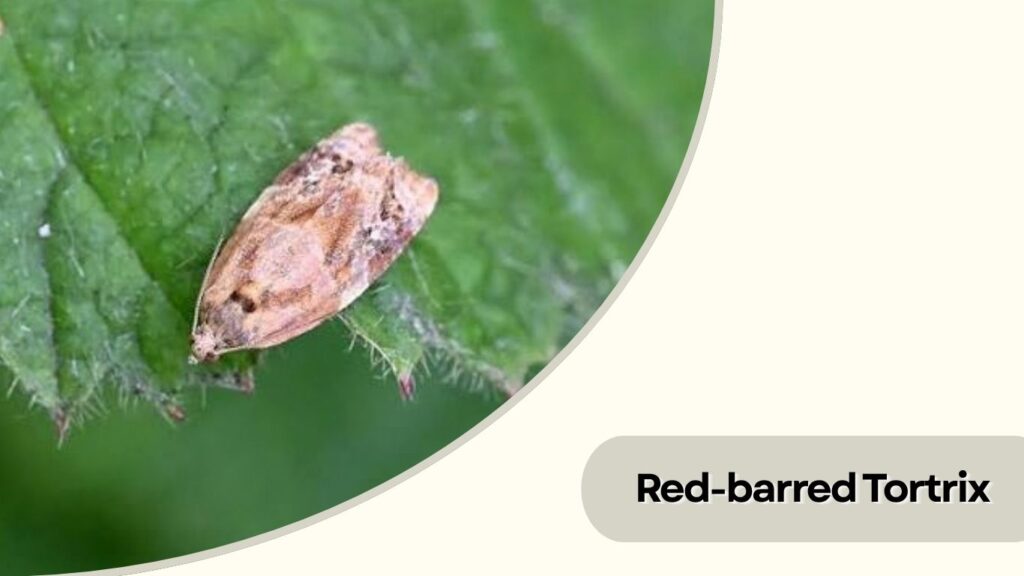
The Red-barred Tortrix is a small, attractive member of the Tortricidae family recognized by the reddish-brown markings crossing its forewings. Its scientific name is Ditula angustiorana. Like many tortrix moths, the caterpillars live and feed within leaves that they join together with silk. The species feeds on a variety of woody plants and can occur in gardens, woodland margins, and other leafy habitats.
Identification
- Common Name: Red-barred Tortrix
- Scientific Name: Ditula angustiorana
- Family: Tortricidae
- Adult Color: Brownish to reddish-brown
- Wing Pattern: Distinctive darker reddish or brown bands
- Larvae: Yellowish-green to green
- Larval Head: Brownish-yellow
- Distinctive Feature: Contrasting bands and patches across the forewings
Habitat and Distribution
Red-barred Tortrix moths inhabit areas containing deciduous trees, shrubs, and other suitable host plants. They occur widely in Europe and are also established along parts of the Pacific coast of North America, including coastal British Columbia south toward California. Woodland edges, gardens, parks, orchards, and hedgerows can all provide suitable habitat.
Behavior and Diet
The caterpillars are mainly foliage feeders. They create protected feeding areas by fastening leaves or plant parts together with silk. Young larvae remain concealed while eating tender plant material. When populations are low, feeding damage is usually scattered rather than concentrated on an entire plant.
Lifespan and Lifecycle
The species overwinters as a young larva. Feeding resumes in spring as temperatures rise and new vegetation develops. Mature caterpillars can reach about 14 mm before pupating, generally around June. Adults commonly emerge from June into July. Females then lay groups of eggs on host foliage, beginning another generation.
8. Orange Tortrix
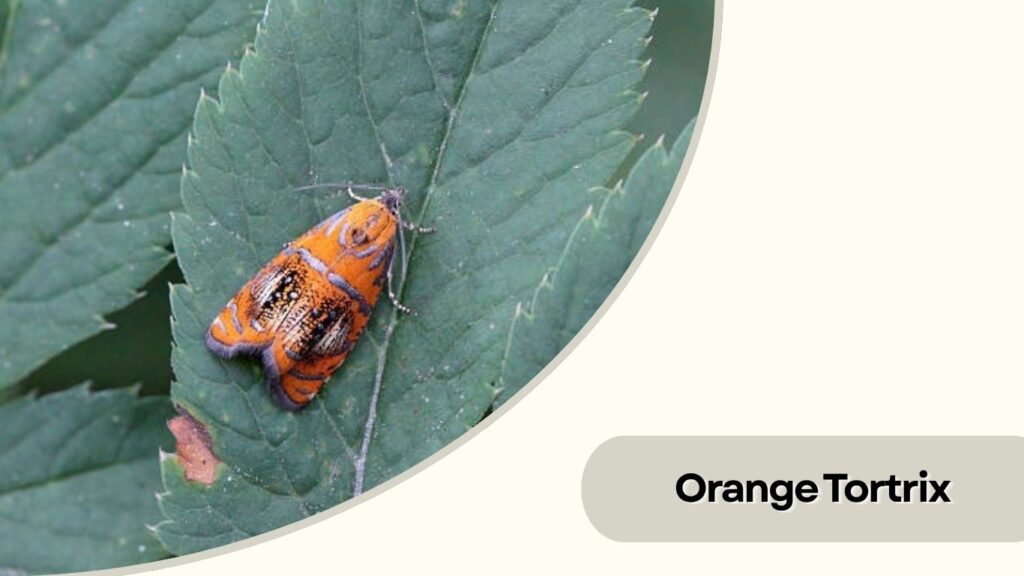
The Orange Tortrix is a leafrolling moth associated with many cultivated and wild plants. Its scientific name is generally given as Argyrotaenia franciscana, with Argyrotaenia citrana also appearing in agricultural references. It is particularly important in western North America, where its larvae may feed on foliage, buds, and fruit surfaces.
Identification
- Common Name: Orange Tortrix
- Scientific Name: Argyrotaenia franciscana (often listed as A. citrana)
- Family: Tortricidae
- Adult Color: Brown, grayish-brown, or fawn
- Forewings: Usually marked with darker mottling
- Larvae: Light green to straw-colored
- Larval Head: Brown or tan
- Distinctive Feature: Larvae often wriggle backward and drop on silk when disturbed
Habitat and Distribution
Orange Tortrix is especially associated with coastal areas of western North America. Orchards, vineyards, gardens, berry plantings, and other areas containing suitable host vegetation can support populations. Coastal conditions can be particularly favorable because mild temperatures allow several generations to develop.
Behavior and Diet
Larvae spin silken shelters around leaves, stems, buds, or fruit and feed while protected inside. Their diet is broad and can include leaves, developing buds, and fruit surfaces. In commercial crops, feeding may leave shallow scars, especially where fruits or leaves touch one another.
Lifespan and Lifecycle
Orange Tortrix generally overwinters in the larval stage. Caterpillars eventually pupate inside dense silken shelters, and adult emergence may occur roughly 8 days to three weeks later depending on temperature. Females can lay clusters containing approximately 50–150 eggs. In favorable coastal climates, two to four or even more generations may occur in a year.
9. Light Brown Apple Moth
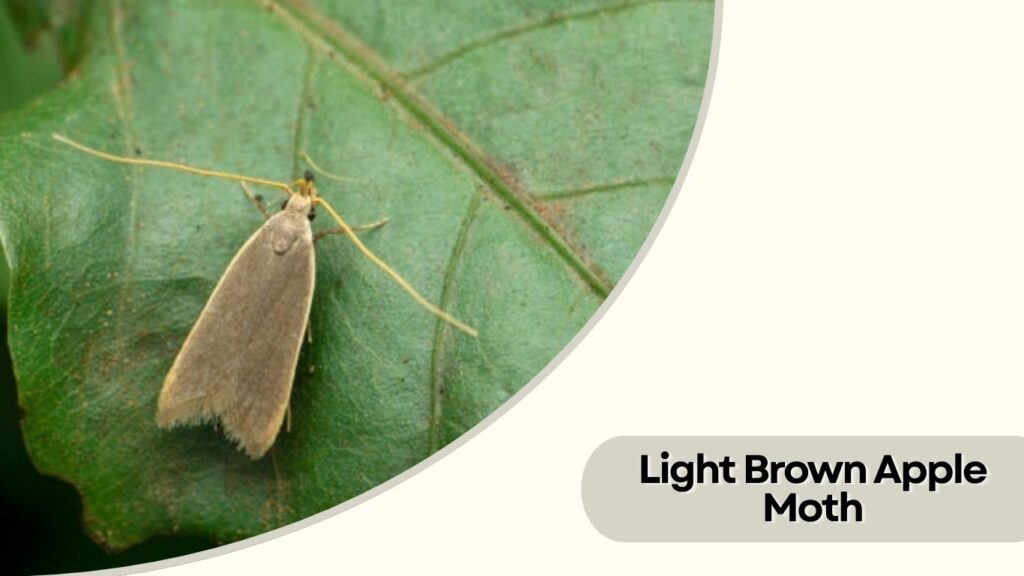
The Light Brown Apple Moth is a highly adaptable tortricid moth native to Australia. Scientifically known as Epiphyas postvittana, it has an unusually broad host range and can feed on hundreds of plant species. Its caterpillars are typical leafrollers, constructing protective shelters from leaves while feeding on foliage and sometimes fruit.
Identification
- Common Name: Light Brown Apple Moth
- Scientific Name: Epiphyas postvittana
- Family: Tortricidae
- Wingspan: Approximately 16–25 mm
- Adult Color: Light brown, buff, yellowish-brown, or reddish-brown
- Wing Pattern: Variable darker markings
- Larvae: Pale to medium green
- Distinctive Feature: Considerable variation in adult wing coloration
Habitat and Distribution
The species originated in Australia but has established populations in several other regions, including New Zealand, Hawaii, parts of Europe, and California. Because it can use many host plants, it may inhabit orchards, vineyards, gardens, nurseries, forests, and landscaped urban environments.
Behavior and Diet
Young larvae may construct small silken tunnels on leaves, while older caterpillars typically roll leaves or web several leaves together. Their extensive host range includes apple, pear, peach, grape, strawberry, rose, oak, walnut, and numerous other plants. Larvae primarily consume foliage but may also feed on fruit surfaces.
Lifespan and Lifecycle
Females deposit flattened egg masses on plant surfaces. After hatching, larvae begin feeding and gradually construct larger shelters as they grow. Pupation commonly occurs inside rolled foliage. Adults later emerge, mate, and produce another generation. The number and timing of generations vary considerably with temperature and local climate.
10. Oblique-banded Leafroller
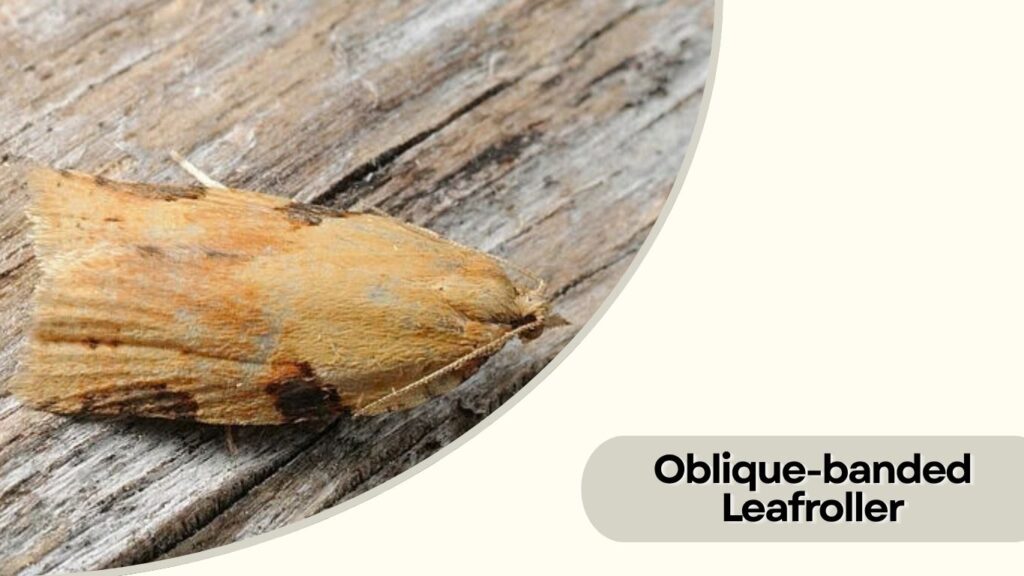
The Oblique-banded Leafroller is a widespread North American tortricid moth scientifically known as Choristoneura rosaceana. Its larvae feed on many deciduous plants, particularly members of the rose family. Apples, pears, and peaches are among its important hosts. The name comes from the dark diagonal bands visible across the forewings of many adult moths.
Identification
- Common Name: Oblique-banded Leafroller
- Scientific Name: Choristoneura rosaceana
- Family: Tortricidae
- Adult Length: About 9–12 mm
- Wingspan: Approximately 20–27 mm
- Forewing Color: Tan to reddish-brown
- Wing Pattern: Dark oblique bands across the forewings
- Larvae: Yellowish-green to green
- Distinctive Feature: Broad diagonal brown bands on adult wings
Habitat and Distribution
Oblique-banded Leafrollers are native to temperate North America and are widespread across Canada and the United States. They occur in deciduous forests, orchards, gardens, and areas containing fruit trees or other suitable broadleaf hosts. Plants in the rose family are particularly important hosts.
Behavior and Diet
Larvae use silk to roll leaves or fasten several leaves together, forming protective feeding shelters. They consume young foliage, buds, blossoms, and developing fruits. Apples, peaches, and pears can experience noticeable feeding damage when caterpillar populations become abundant.
Lifespan and Lifecycle
Partly developed larvae commonly overwinter in protected silken shelters on twigs or bark. They resume feeding when plants begin growing in spring and later pupate inside rolled leaves. Depending on climate, the species normally produces one or two generations annually, although some warmer locations can support additional generations. Eggs are deposited in overlapping masses on leaves.
FAQs
1. What are Tortrix moths?
Tortrix moths are small moths belonging to the family Tortricidae. Many are called leafrollers because their caterpillars roll, fold, or tie leaves together with silk to create protected feeding shelters.
2. Are Tortrix moths harmful to humans?
Tortrix moths are not considered dangerous to people. Adults do not sting, and their caterpillars primarily feed on plant material. Their main importance comes from the damage some species can cause to fruit trees, ornamental plants, and agricultural crops.
3. Why do Tortrix moth caterpillars roll leaves?
The caterpillars use silk to roll or fasten leaves together. This creates a protected space where they can feed while remaining less exposed to predators, unfavorable weather, and other environmental threats.
4. What do Tortrix moths eat?
Most damage is caused by the caterpillar stage. Depending on the species, larvae may eat leaves, buds, blossoms, shoots, or fruit surfaces. Some species have narrow host preferences, while others can survive on hundreds of different plants.
5. How can I identify a Tortrix moth?
Look for a relatively small moth with broad forewings that often form a bell-like or roof-shaped profile when resting. Brown, orange, green, gray, and patterned species occur. Rolled or webbed leaves containing small caterpillars are another strong sign that a tortricid moth may be present.