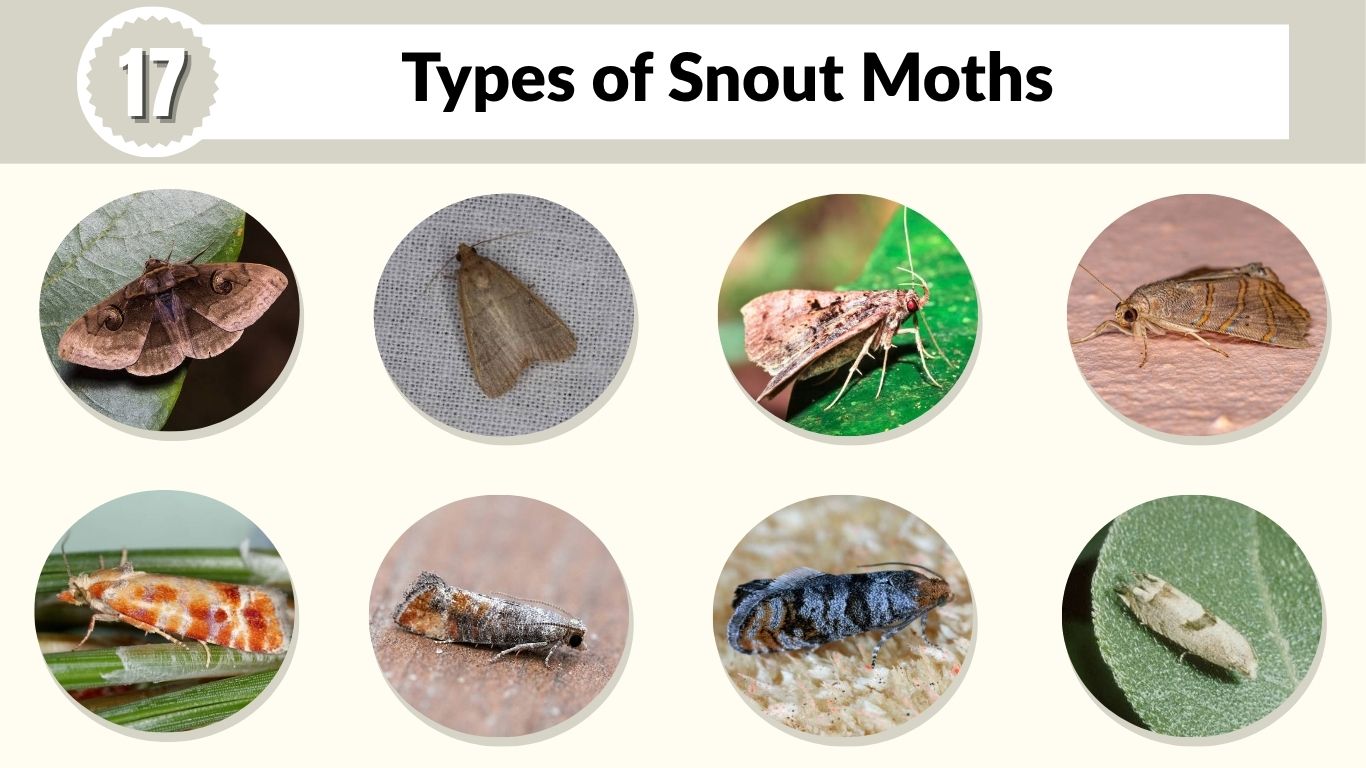
Snout moths are a diverse group of small to medium-sized moths, many of which belong to the Pyralidae family. They are named for their projecting mouthparts, which give the head a noticeable snout-like appearance. Different species can be found in forests, gardens, farms, homes, warehouses, and stored-food areas. Their caterpillars have highly varied diets, ranging from leaves and flowers to grain, hay, and decaying organic material. In this guide, you’ll discover 17 types of snout moths, including their identification, habitat, behavior, diet, and life cycle.
1. Carmine Snout Moth
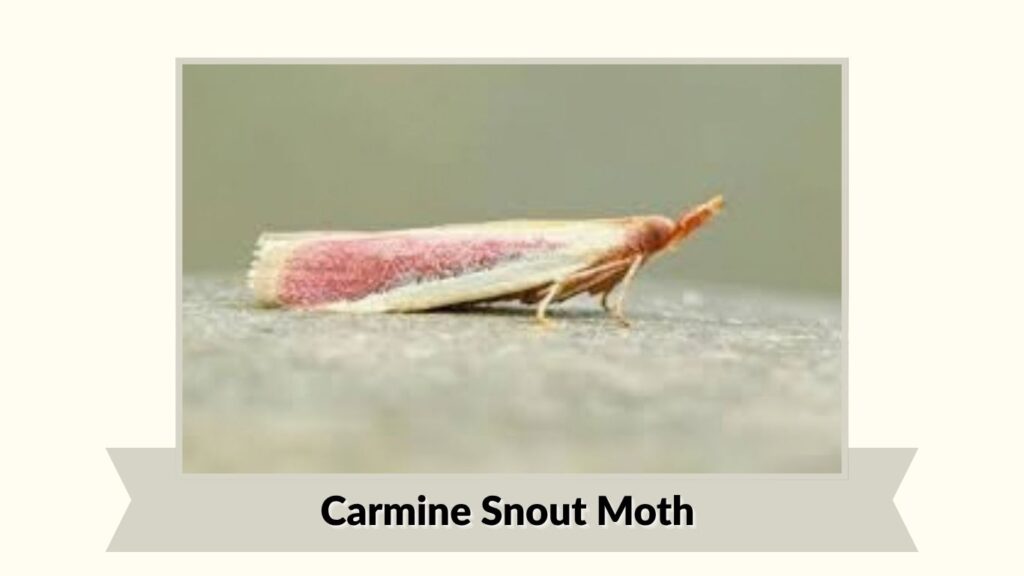
The Carmine Snout Moth (Peoria approximella) is a small and colorful member of the Pyralidae family. Its rosy pink to purplish forewings, pale wing edges, and projecting mouthparts give it a distinctive appearance. Native to North America, this moth can easily be overlooked because of its small size, but its unusual coloration helps separate it from many other snout moths.
Identification
- Scientific name: Peoria approximella
- Family: Pyralidae
- Wingspan: Around 18–20 mm
- Wing color: Dull rose, reddish-pink, or deep purplish tones
- Forewings: Often darker through the central area with a contrasting pale costa
- Markings: Tiny dark linear markings may occur near the outer portion of the forewing
- Snout: Projecting labial palps create the characteristic “snout” appearance
- Body: Small, slender, and colored to blend with the wings
Habitat and Distribution
The Carmine Snout Moth is a native North American species. Records are available from multiple regions of the United States, including North Carolina and Montana, indicating that it has a fairly broad geographic range. North Carolina observations occur from the Coastal Plain through the Piedmont and mountain regions. Detailed habitat preferences have not been thoroughly documented, so it is better regarded as a species occurring across a range of vegetated environments rather than one restricted to a single habitat type.
Behavior and Diet
Adults are small and may remain inconspicuous among vegetation during daylight. Like many pyralid moths, they become more noticeable when flying during warmer periods. However, the biology of this particular species remains poorly studied. Importantly, authoritative North Carolina records currently list the larval host plants as unknown, so specific caterpillar foods should not be assumed without further evidence.
Lifespan and Life Cycle
The Carmine Snout Moth undergoes complete metamorphosis through egg, larva, pupa, and adult stages. Detailed information about the duration of each stage is limited. North Carolina records show adults from approximately May through September, suggesting activity across much of the warmer season. Larvae are difficult to identify reliably in the field and may require rearing to adulthood for confident identification.
2. Scale-feeding Snout Moth
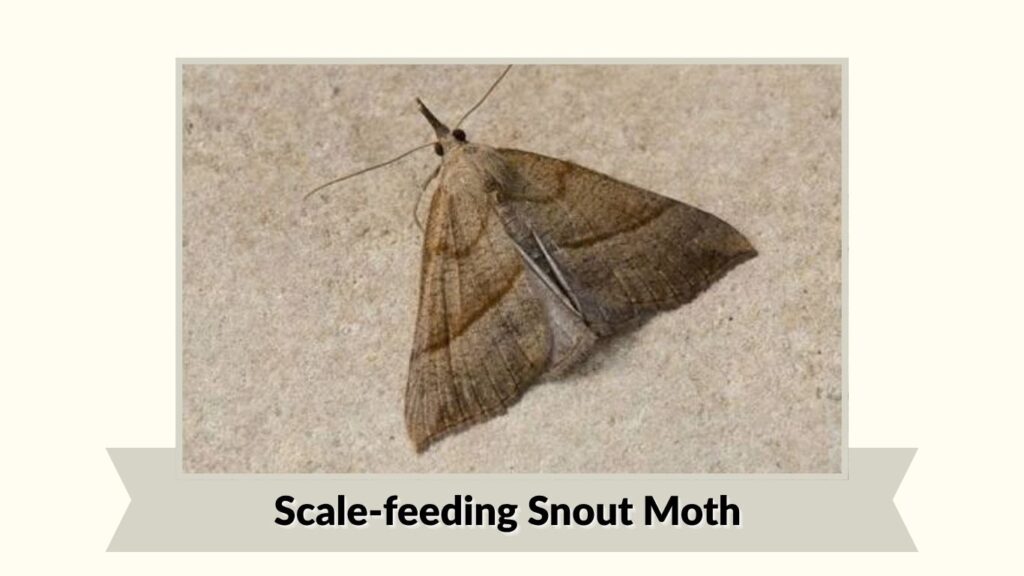
The Scale-feeding Snout Moth (Laetilia coccidivora) is an unusual member of the Pyralidae family because its caterpillars are predators rather than ordinary plant feeders. Instead of eating leaves, the larvae hunt scale insects and their eggs. This feeding behavior makes the species particularly interesting among snout moths and distinguishes it from most other moth caterpillars.
Identification
- Scientific name: Laetilia coccidivora
- Family: Pyralidae
- Wingspan: About 10–18 mm
- Forewings: Pale with scattered brownish-red scales
- Wing pattern: Whitish areas are especially noticeable along the costa
- Body: Small and slender
- Larvae: Mature caterpillars reach about 12 mm
- Special feature: Larvae prey on scale insects rather than feeding mainly on plants.
Habitat and Distribution
The Scale-feeding Snout Moth occurs in North America, with records from several parts of the United States. It has been documented in states including Florida, Texas, North Carolina, Maryland, Ohio, Oklahoma, California, and West Virginia. Its habitat is closely linked to places where suitable scale insects occur, including gardens, orchards, wooded areas, and vegetation supporting scale colonies.
Behavior and Diet
Its caterpillars are specialized predators. They feed on the eggs and young stages of several scale insects, including cochineal scales. Larvae may occasionally supplement their diet with cactus flowers. Interestingly, they can obtain carminic acid from their scale-insect prey and use this chemical as protection against their own predators.
Lifespan and Life Cycle
Like other moths, this species develops through egg, larva, pupa, and adult stages. The larval period is particularly important because that is when the moth actively hunts scale insects. Detailed timing of each developmental stage varies with environmental conditions, and complete life-cycle duration is not as well documented as it is for common stored-product moths.
3. Indian-Meal Moth
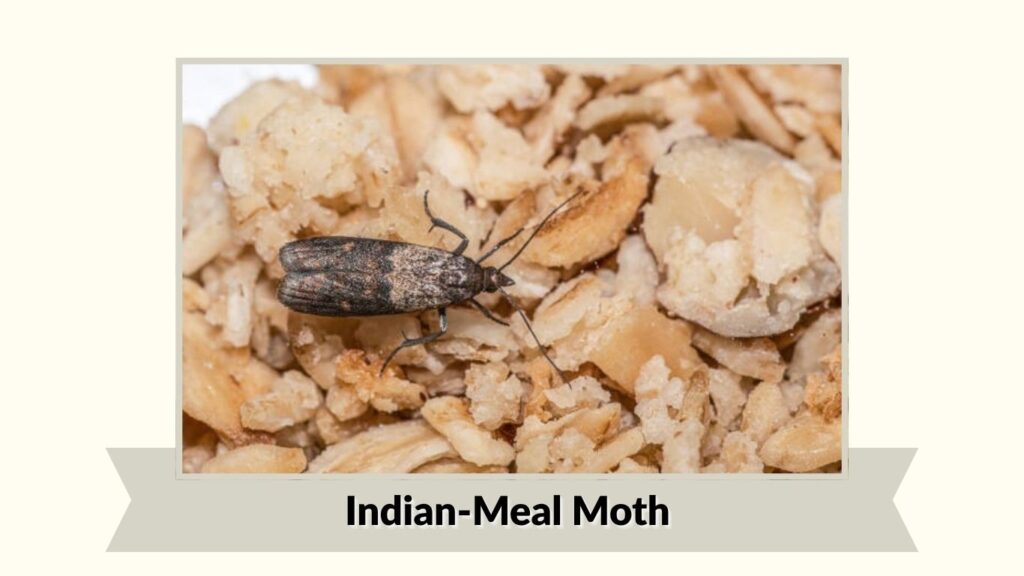
The Indian-Meal Moth (Plodia interpunctella) is one of the world’s most familiar stored-food moths. Rather than living mainly on outdoor vegetation, it thrives around human food supplies. Its distinctive two-toned wings make adults fairly easy to recognize, while the caterpillars are responsible for contaminating grains, nuts, cereals, dried fruits, and many other stored products with silk webbing.
Identification
- Scientific name: Plodia interpunctella
- Family: Pyralidae
- Adult size: Small, slender pantry moth
- Forewing base: Pale grayish or whitish
- Outer wings: Coppery, reddish-brown, or bronze
- Head and thorax: Reddish-brown to dark brown
- Larvae: Creamy white, sometimes pinkish or greenish
- Key sign: Silk webbing mixed with food particles and frass.
Habitat and Distribution
Indian-Meal Moths are found worldwide and are strongly associated with stored foods. They commonly occur in kitchens, pantries, grocery stores, grain elevators, warehouses, processing facilities, and other locations containing dry food products. Heated buildings allow populations to reproduce throughout the year.
Behavior and Diet
Only the larvae damage food. They feed on cereals, grain products, nuts, dried fruit, seeds, spices, pet foods, and similar dry materials. As they move through food, caterpillars produce silk that creates characteristic webbing. Adults do not damage stored food and mainly focus on mating and egg laying.
Lifespan and Life Cycle
Females lay eggs directly on or close to suitable food. After hatching, larvae feed through several instars before wandering away to find protected pupation sites. Pupation occurs inside a thin silken cocoon. Development is strongly affected by temperature, with the entire life cycle ranging from roughly 27 to more than 300 days under different conditions.
4. Mediterranean Flour Moth
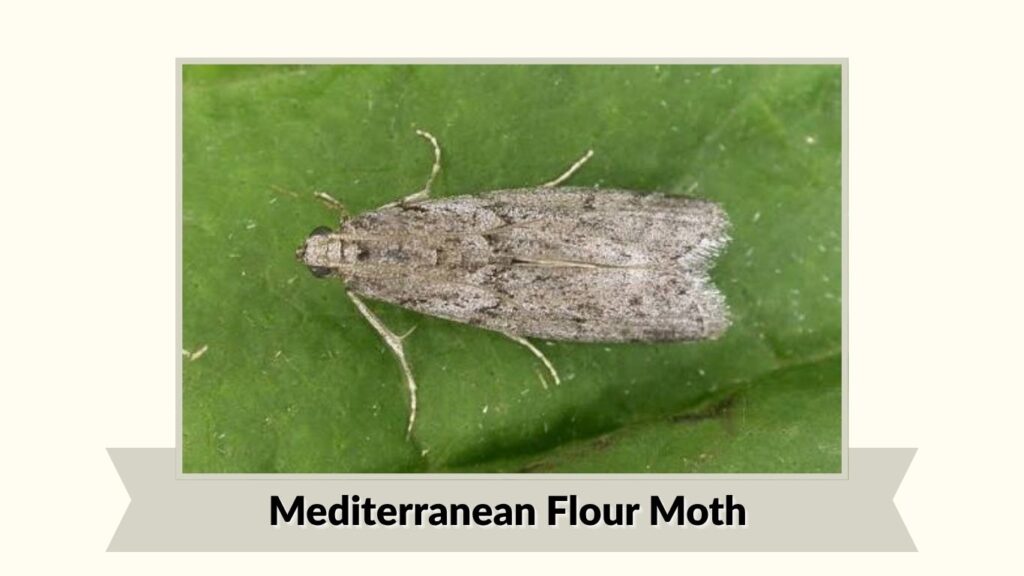
The Mediterranean Flour Moth (Ephestia kuehniella) is another important stored-product snout moth. It is especially associated with flour mills, bakeries, warehouses, and places where cereal products are stored. Its larvae produce large quantities of silk, sometimes causing flour to clump together and even interfering with machinery in heavily infested commercial facilities.
Identification
- Scientific name: Ephestia kuehniella
- Family: Pyralidae
- Wingspan: Approximately 20–25 mm
- Adult length: Roughly 9–12 mm
- Forewings: Gray with brown and whitish markings
- Labial palps: Noticeably upturned
- Larvae: White to pinkish with a distinct head capsule
- Larval size: Up to about 20 mm when mature.
Habitat and Distribution
The Mediterranean Flour Moth has become widely distributed around the world, particularly in temperate and subtropical regions. It prefers warm indoor locations such as flour mills, bakeries, grain-processing facilities, warehouses, and homes. Populations may continue breeding throughout the year where indoor temperatures remain favorable.
Behavior and Diet
Larvae prefer flour and meal but can also infest whole grain, bran, cereal products, and other stored foods. They produce extensive silk webbing while feeding. Adults are short-lived and do not feed. Adult activity is generally strongest around dusk, dawn, and nighttime hours.
Lifespan and Life Cycle
Females may lay hundreds of eggs on or near food. Newly hatched larvae begin feeding and producing silk before eventually leaving the food to seek sheltered pupation sites. Under warm conditions, development can be relatively rapid, and the complete life cycle may take approximately five to seven weeks, although temperature and food quality can extend development considerably.
5. Sweetgum Leafroller Moth
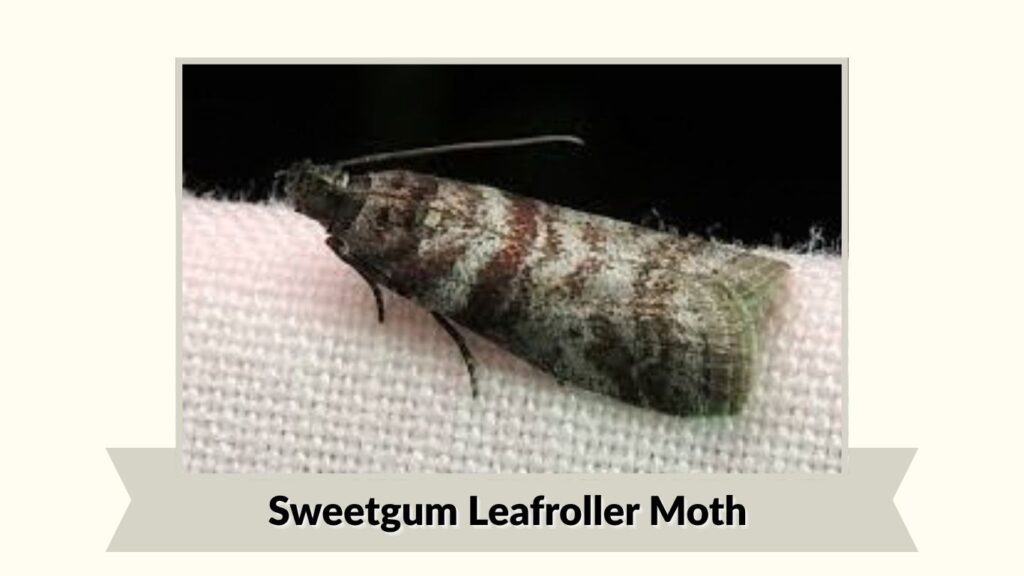
The Sweetgum Leafroller Moth (Sciota uvinella) is a small North American snout moth whose caterpillars are closely associated with sweetgum trees. Its common name reflects the larva’s characteristic habit of tying or rolling leaves together with silk, creating a protected feeding shelter. Adults are relatively small and inconspicuous compared with larger moth species.
Identification
- Scientific name: Sciota uvinella
- Family: Pyralidae
- Wingspan: About 14–18 mm
- Body: Small and narrow
- Wings: Typically muted brown or grayish tones
- Larvae: Develop inside tied sweetgum leaves
- Host plant: Sweetgum (Liquidambar)
- Key clue: Silk-tied leaves on sweetgum trees may reveal larval activity.
Habitat and Distribution
The Sweetgum Leafroller Moth occurs in eastern and southeastern North America. Records extend from New Jersey south to Florida and westward toward Texas and Kentucky. Because its caterpillars use sweetgum, the species is especially associated with forests, woodland edges, parks, and other landscapes where sweetgum trees occur naturally or are planted.
Behavior and Diet
The caterpillars feed on sweetgum leaves. Rather than remaining exposed, they use silk to tie portions of leaves together, creating a protective shelter where they can feed with reduced exposure to predators and environmental conditions. Adults are capable of flying to lights, and observations show that they may be encountered around artificial light sources at night.
Lifespan and Life Cycle
The species develops through egg, caterpillar, pupa, and adult stages. Adults have been recorded from approximately April through September, suggesting an extended warm-season activity period across parts of its range. Larvae develop on sweetgum foliage before eventually pupating and transforming into adults. Detailed stage-by-stage timing is not as extensively documented as for major stored-product moth species.
6. Elm Leaftier
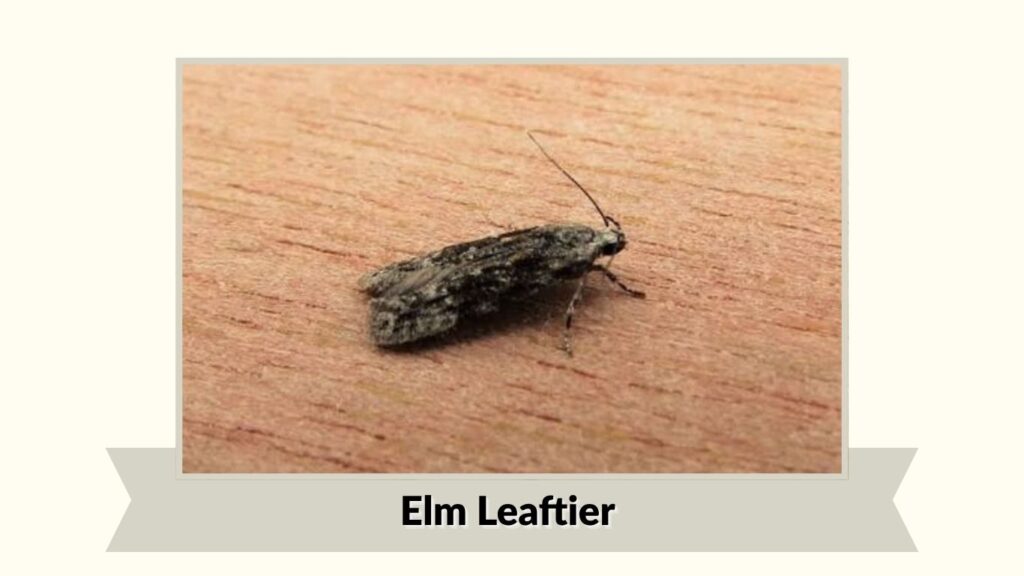
The Elm Leaftier (Canarsia ulmiarrosorella) is a North American snout moth whose caterpillars specialize in feeding on elm trees. Like other leaf-tier moths, the larvae manipulate foliage with silk, creating a sheltered feeding area between or within leaves. Adults are small, grayish moths that can be difficult to distinguish from related phycitine snout moths without close examination.
Identification
- Scientific name: Canarsia ulmiarrosorella
- Family: Pyralidae
- Forewings: Mainly fuscous gray with whitish dusting
- Color variation: Some individuals show reddish-brown coloration before the antemedial line
- Body: Small and slender
- Larvae: Leaf-tying caterpillars
- Primary host: Elm trees (Ulmus)
- Key clue: Caterpillars create silk-tied feeding shelters on elm foliage.
Habitat and Distribution
The Elm Leaftier is associated primarily with elm-dominated forests and landscapes containing elm trees. Records from North America show it occurring across a broad geographic area. Suitable habitats include deciduous woodland, forest edges, parks, residential landscapes, and other locations where native or planted elms provide food for its caterpillars. North Carolina habitat records specifically associate the species with general elm forests.
Behavior and Diet
Elm Leaftier caterpillars feed primarily on elm leaves. They use silk to tie foliage together, allowing them to remain partly concealed while feeding. This behavior provides protection from weather and may reduce exposure to predators. Because the larval host relationship is strongly centered on Ulmus, elm availability plays an important role in where populations can successfully reproduce.
Lifespan and Life Cycle
Development follows the standard moth sequence of egg, larva, pupa, and adult. Eggs hatch into caterpillars that begin feeding on elm foliage and construct silk leaf shelters as they grow. Mature larvae eventually pupate before adults emerge. Detailed information on the exact duration of each stage and number of annual generations remains limited, so timing can vary according to climate and geographic location.
7. Sunflower Moth
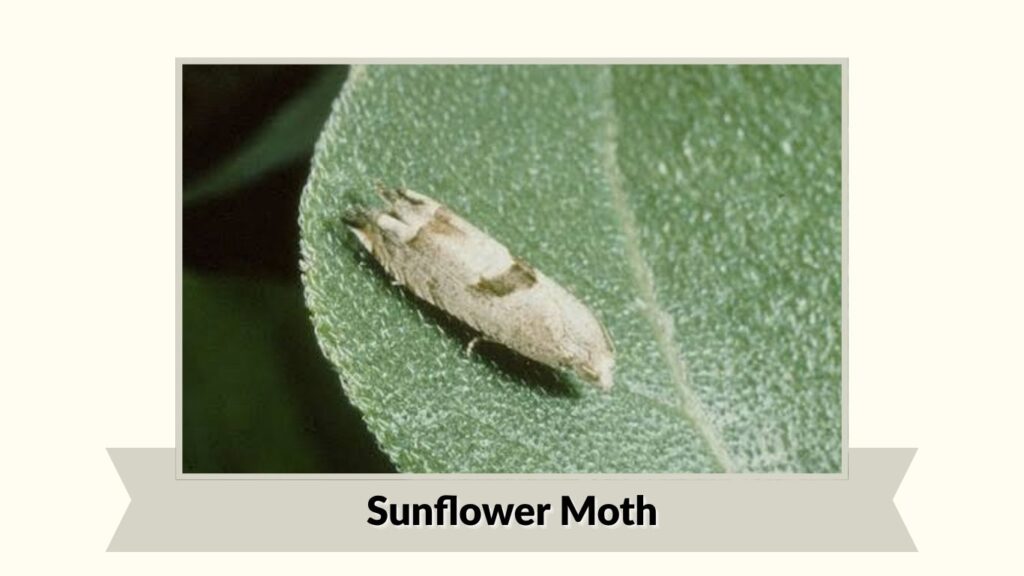
The Sunflower Moth (Homoeosoma electellum) is a small North American snout moth best known for its close association with sunflowers. Although the adult appears rather plain, its caterpillars can become significant pests because they feed directly inside flower heads and develop seeds. The species occurs across much of North America and uses several members of the daisy family as larval hosts.
Identification
- Scientific name: Homoeosoma electellum
- Family: Pyralidae
- Wingspan: About 15–24 mm
- Forewings: Usually gray or tan
- Markings: Some individuals have a noticeable whitish streak along the forewing
- Body: Small, narrow, and relatively pale
- Larvae: Young caterpillars are pale but become darker as they mature
- Key clue: Adults are commonly associated with flowering sunflowers.
Habitat and Distribution
Sunflower Moths occur broadly across North America, including many regions of the United States, Canada, and Mexico. They are especially common in areas where cultivated or wild sunflowers grow. Agricultural sunflower fields, roadsides, prairies, gardens, and open habitats containing members of the Asteraceae family can provide suitable breeding environments.
Behavior and Diet
Females typically place eggs on newly opened sunflower flowers. After hatching, larvae feed on pollen, floral tissues, and developing seeds within the flower head. Besides cultivated sunflower, recorded hosts include asters, echinacea, coreopsis, chrysanthemums, dahlias, and several other flowering plants. Most of the economically important damage occurs during the larval stage.
Lifespan and Life Cycle
The life cycle progresses through egg, larva, pupa, and adult stages. Eggs hatch near flower heads, where larvae begin feeding. Mature caterpillars eventually leave the flower and pupate. Depending on climate, more than one generation may occur during warm months. Temperature strongly influences development and adult flight periods, particularly in agricultural sunflower-growing regions.
8. Sugarbeet Crown Borer Moth
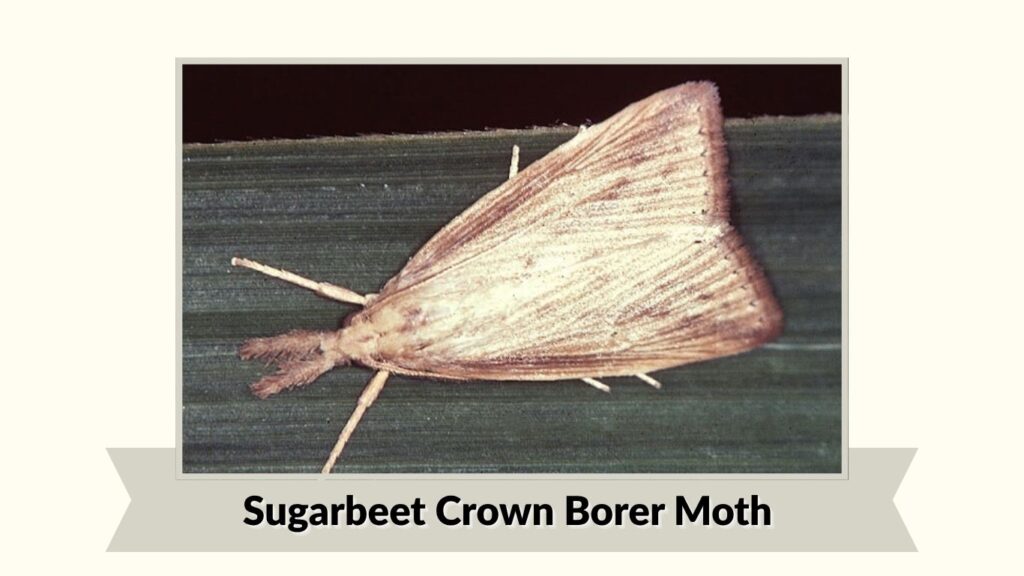
The Sugarbeet Crown Borer Moth (Ancylosis undulatella) is a small pyralid moth whose caterpillars feed on sugarbeet plants. The larvae attack leaves, leaf stalks, and especially the crown area of the plant. Although usually considered a relatively minor agricultural pest, infestations can weaken plants and reduce growth when populations become locally abundant.
Identification
- Scientific name: Ancylosis undulatella
- Family: Pyralidae
- Wingspan: About 16–18 mm
- Forewings: Narrow and grayish-brown to light brown
- Basal area: Often reddish-brown to nearly black
- Wing lines: Pale zigzag lines edged with darker scales
- Hindwings: Broad, grayish-brown, and darker toward the edge
- Body: Slender and suited to resting inconspicuously among vegetation.
Habitat and Distribution
This moth occurs across a broad portion of North America, particularly in regions where sugarbeets are cultivated. Records extend from Ontario and Michigan southward to Florida and west across the continent to California, Oregon, and Idaho. Commercial sugarbeet fields are among its most characteristic habitats.
Behavior and Diet
The caterpillars feed on sugarbeet leaves, leaf stems, and crowns. Feeding around the crown can be especially noticeable because larvae may remain partially concealed while damaging plant tissues. Adult moths are active during warmer months and are attracted to artificial lights. Because larvae concentrate around their host plants, infestations are most likely where sugarbeets are grown repeatedly.
Lifespan and Life Cycle
The Sugarbeet Crown Borer Moth commonly produces two generations per year. It survives winter as a pupa in the soil. Adults emerge in spring, mate, and lay eggs around sugarbeet crowns or on leaves and leaf stalks. The resulting larvae feed and develop before entering the pupal stage, allowing another generation to appear later in the growing season.
9. Poplar Bud Borer Moth
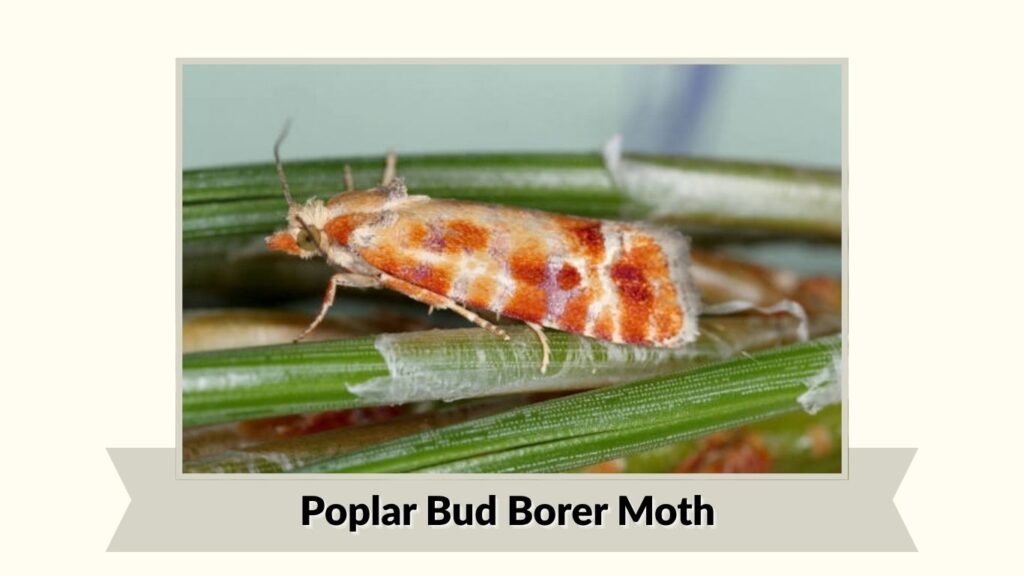
The Poplar Bud Borer Moth (Meroptera cviatella) is a North American snout moth whose larvae specialize in feeding on poplar buds. Its reddish-brown and purplish-gray forewing pattern gives the adult a distinctive appearance when viewed closely. Because its caterpillars develop in association with Populus trees, the moth is most often encountered in landscapes where poplars and aspens are abundant.
Identification
- Scientific name: Meroptera cviatella
- Family: Pyralidae
- Wingspan: Approximately 22–25 mm
- Forewings: Mix of reddish-brown and purplish-gray
- Basal area: Often strongly reddish-brown
- Body: Small and slender
- Larvae: Develop around the buds of poplar trees
- Primary hosts: Populus species.
Habitat and Distribution
The Poplar Bud Borer Moth is known from North America, with records from areas including Quebec, Illinois, Iowa, Colorado, Oklahoma, Ohio, and Indiana. Because larvae depend on poplars, suitable habitats include deciduous woodland, river margins, forest edges, parks, and landscapes containing poplar or aspen trees.
Behavior and Diet
Caterpillars feed primarily on the buds of poplar trees. Feeding inside or around developing buds offers the larvae both food and some protection from predators and weather. Damage is usually localized to individual buds rather than extensive defoliation of entire trees. Adults are much less conspicuous and are most likely to be noticed during their seasonal flight period.
Lifespan and Life Cycle
Females lay eggs in suitable areas on or near poplar hosts. After hatching, larvae begin feeding on developing buds and continue growing through several instars. Mature larvae later pupate before emerging as adults. Verified North American sightings show adults particularly during midsummer, including late July and early August in parts of the United States.
10. Darker Moodna Moth
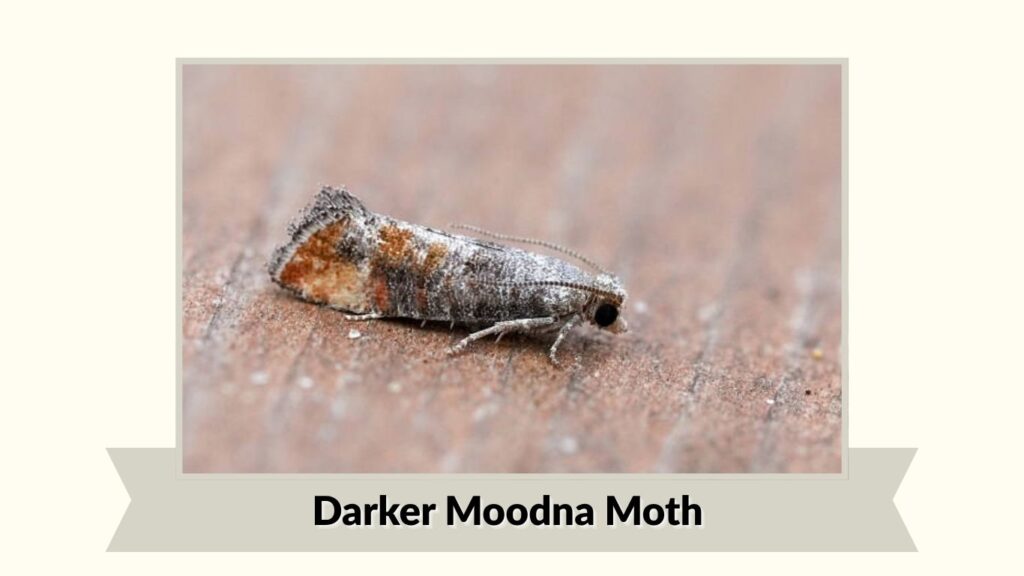
The Darker Moodna Moth (Moodna ostrinella) is a native North American pyralid moth with a surprisingly broad larval diet. Its caterpillars have been recorded feeding on fruits, flowers, plant material, and even dry organic matter. Sumac is one of its better-known hosts, but the species can also use several trees, shrubs, and herbaceous plants.
Identification
- Scientific name: Moodna ostrinella
- Family: Pyralidae
- Common name: Darker Moodna Moth
- Body: Small and slender
- Forewings: Generally dark brownish or gray-brown
- Pattern: Mottled markings help camouflage the moth when resting
- Larvae: Develop in or around plant material and fruits
- Notable host: Sumac fruit clusters.
Habitat and Distribution
The Darker Moodna Moth is a native North American species. Records extend through parts of Canada and the United States, including Quebec, Massachusetts, Iowa, Maryland, and Manitoba. It occurs in forests, woodland edges, shrublands, gardens, and other vegetated places where suitable host plants grow.
Behavior and Diet
Its caterpillars use a wide variety of food plants. Recorded hosts include sumac, apple, birch, cotton, iris, oak, pine, rose, pear, and cherry-related plants. Larvae have also been reported feeding on dry material and acorns. Sumac flower or fruit clusters are particularly notable feeding sites, where frass may reveal the presence of hidden larvae.
Lifespan and Life Cycle
Like other snout moths, the species passes through egg, caterpillar, pupa, and adult stages. Seasonal timing differs geographically. Massachusetts records show adults from approximately late May through early November, indicating a relatively long flight season in some regions. Larvae develop on suitable plant material before pupating and later emerging as adults.
11. Striped Birch Pyralid Moth
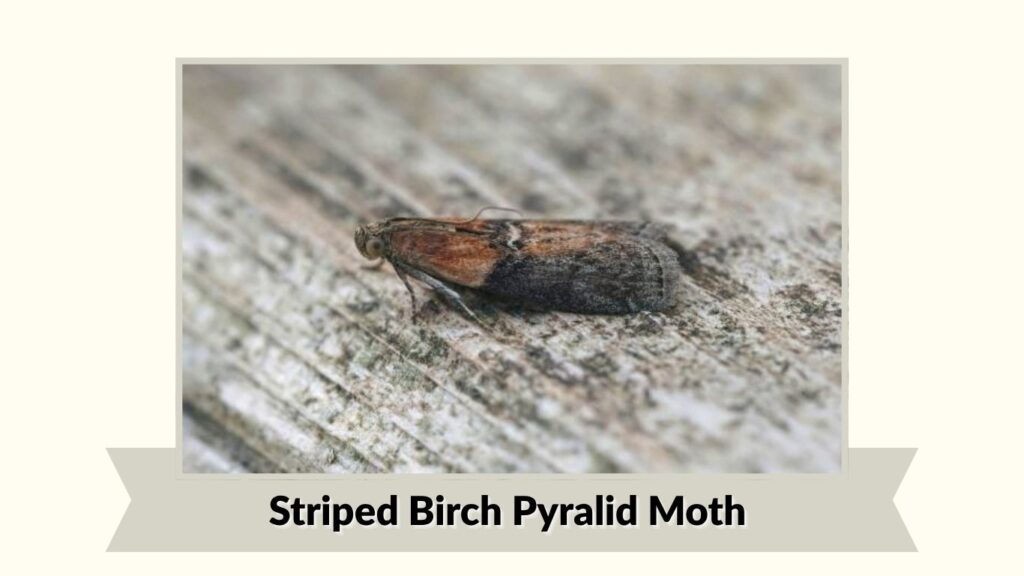
The Striped Birch Pyralid Moth (Ortholepis pasadamia) is a small North American snout moth closely associated with birch trees. Although the adult is modest in size, its patterned forewings and strong relationship with birch make it recognizable to moth enthusiasts. Caterpillars use birch foliage as their primary food source, particularly paper birch in documented populations.
Identification
- Scientific name: Ortholepis pasadamia
- Family: Pyralidae
- Wingspan: About 16–20 mm
- Body: Narrow and relatively small
- Forewings: Brownish or grayish with contrasting longitudinal markings
- Pattern: Striped appearance gives the species its common name
- Larval hosts: Mainly birch (Betula)
- Recorded host: Paper birch (Betula papyrifera).
Habitat and Distribution
The Striped Birch Pyralid occurs in North America, particularly in regions where birch trees are common. Verified records include New York, Pennsylvania, New Jersey, Massachusetts, Quebec, and other northeastern areas. Birch woodland, mixed forests, forest edges, and landscapes containing paper birch provide suitable larval habitat.
Behavior and Diet
The caterpillars feed primarily on birch trees, with paper birch being a well-documented host. Hazel has also been reported as a possible host in modern host-plant compilations. Larvae remain closely associated with their food plants while growing, whereas adults disperse more freely and may be encountered around woodland vegetation or lights.
Lifespan and Life Cycle
Females lay eggs near appropriate host vegetation, and the developing caterpillars feed on birch foliage. After completing several larval stages, they pupate and eventually emerge as adults. Massachusetts observations place the adult flight period mainly from mid-June through late July, suggesting a concentrated early-to-midsummer generation in that part of its range.
12. Pink-masked Pyralid Moth
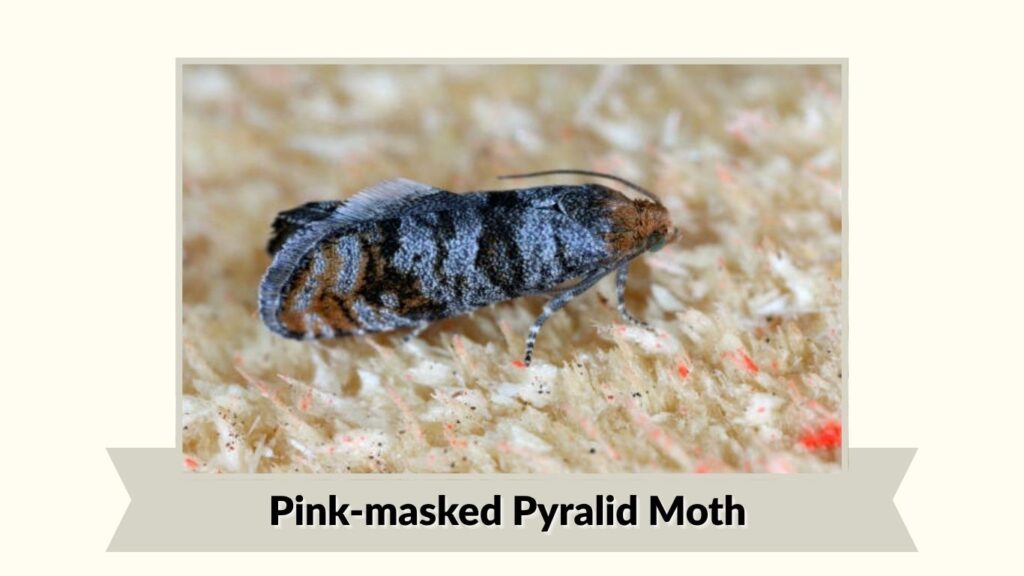
The Pink-masked Pyralid Moth (Aglossa disciferalis) is a small North American snout moth in the Pyralidae family. Its subtle brownish and pink-toned markings help it blend with bark, leaf litter, and other natural surfaces. Compared with common pantry moths, relatively little is known about its caterpillar biology, making it an interesting but still poorly documented member of the snout moth group.
Identification
- Scientific name: Aglossa disciferalis
- Family: Pyralidae
- Other common name: Pink-masked Tabby
- Wingspan: Around 15–18 mm
- Body: Small and slender
- Wings: Brownish to gray-brown with contrasting markings
- Range: Native to North America
- Larvae: Difficult to identify reliably without rearing them to adulthood.
Habitat and Distribution
The Pink-masked Pyralid Moth occurs across parts of North America, with verified observations extending from Florida and Indiana north into Ontario. In North Carolina, records come primarily from moist to moderately moist forests, particularly in mountain areas. This suggests an association with wooded environments, although the species is not limited to a single narrowly defined habitat.
Behavior and Diet
The caterpillar’s natural diet remains poorly understood. North Carolina biological records specifically report that its larval host or food material is unknown. Adults can be encountered during warmer months, but much of the moth’s behavior has received relatively little detailed study compared with economically important pyralid moths.
Lifespan and Life Cycle
Like other moths, it develops through egg, larva, pupa, and adult stages. However, reliable information on the length of each developmental stage and the number of generations produced annually is limited. Observations across its range show adults during the warmer portion of the year, while the exact overwintering strategy may vary geographically.
13. Large Tabby
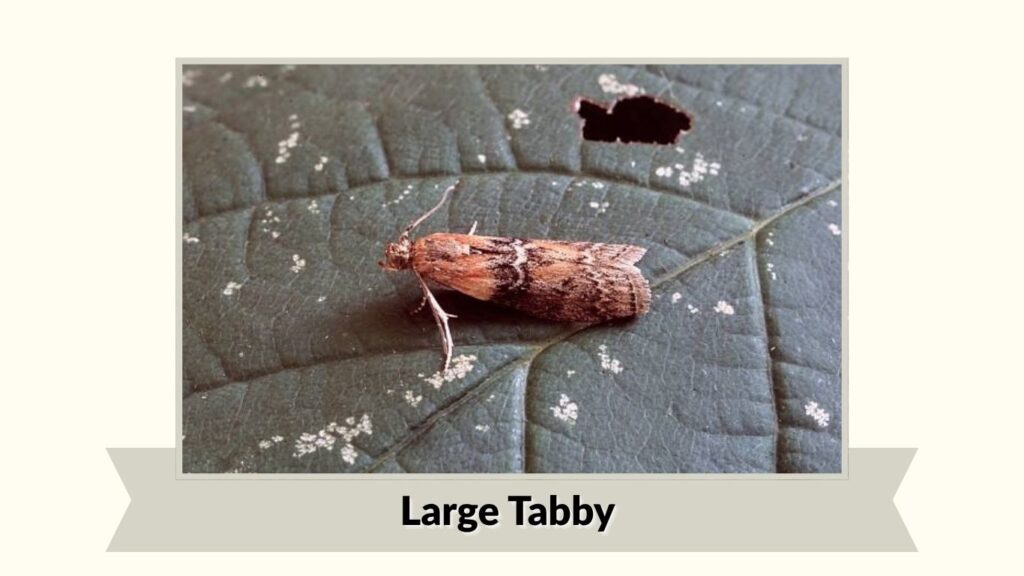
The Large Tabby (Aglossa pinguinalis) is an unusual snout moth that frequently lives around barns, warehouses, cellars, and other sheltered structures. Unlike caterpillars that depend on fresh leaves, its larvae feed mainly on decomposing organic material. This association with straw, chaff, dung, and decaying vegetation makes the Large Tabby an effective recycler of material that many other moth species cannot use.
Identification
- Scientific name: Aglossa pinguinalis
- Family: Pyralidae
- Wingspan: Approximately 25–40 mm
- Forewings: Grayish or brownish with dark speckling
- Markings: Zigzag cross-lines with pale and dark patches
- Hindwings: Pale gray to brown
- Labial palps: Slightly upturned
- Resting appearance: Broad-winged and mottled.
Habitat and Distribution
The Large Tabby is native to Eurasia and has also been introduced into North America. It is particularly associated with barns, warehouses, farm buildings, caves, cellars, animal shelters, and similar protected locations. During daylight, adults often remain hidden in dark corners before becoming more active after dusk.
Behavior and Diet
Large Tabby caterpillars are scavengers rather than conventional leaf feeders. They have been recorded feeding among straw, grain chaff, dead or decaying vegetable matter, and sheep dung. Larvae may live within silken galleries around their feeding material. Adults are nocturnal and sometimes visit artificial lights.
Lifespan and Life Cycle
Development can be unusually slow. BugGuide reports that completion of the life cycle may require about two years, with the species overwintering as a larva. When fully developed, the larva pupates inside a cocoon in or near its feeding shelter. In Britain, adults are recorded mainly from June through August.
14. Grease Moth
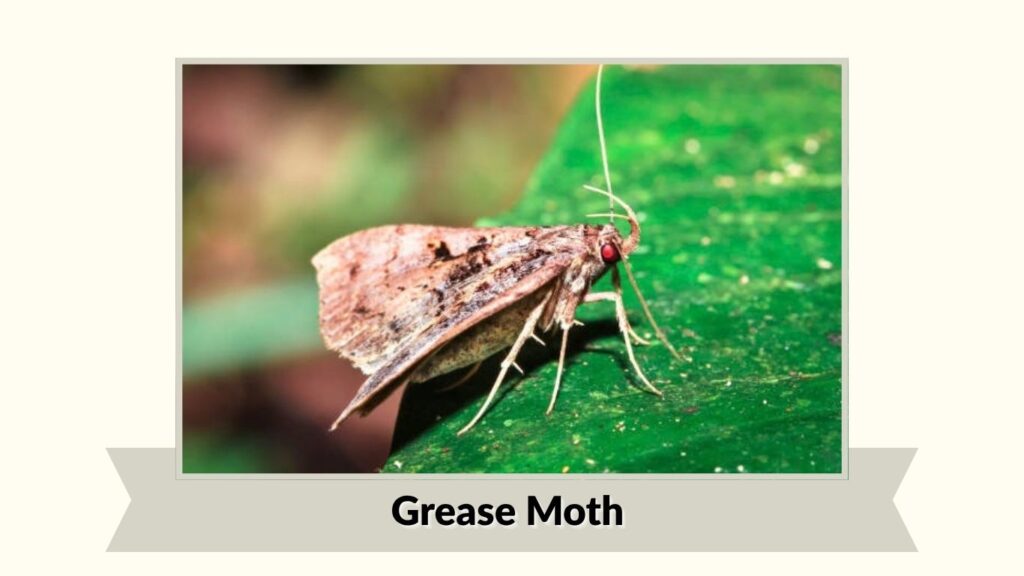
The Grease Moth (Aglossa cuprina) is a small pyramid associated with stored foods and decomposing organic materials. Its unusual common name reflects the ability of its larvae to exploit greasy or decaying substances along with grain-based materials. It frequently occurs around buildings, warehouses, barns, and other locations where food residues or organic debris accumulate.
Identification
- Scientific name: Aglossa cuprina
- Family: Pyralidae
- Wingspan: Approximately 18–27 mm
- Body: Small and relatively slender
- Forewings: Brownish or gray-brown with mottled markings
- Appearance: Similar to some other Aglossa species
- Habits: Often associated with stored or decomposing materials
- Adult activity: Mainly during the warmer months.
Habitat and Distribution
The Grease Moth has a broad distribution and has been recorded in North America and other regions. It is particularly comfortable around human structures, including kitchens, pantries, warehouses, grain-storage facilities, barns, and other places containing stored products or decomposing organic matter. Massachusetts records show it to be widespread there.
Behavior and Diet
Its larvae can feed on stored foods, grain chaff, fungi, and dead animal material. This ability to use decomposing substances separates it from many herbivorous moths. Some accounts associate the species with grease produced during microbial decomposition, which helps explain its unusual common name.
Lifespan and Life Cycle
Females lay eggs near suitable feeding material, and the caterpillars develop by consuming stored or decomposing organic matter. They eventually pupate before emerging as adults. Detailed developmental duration depends on food and environmental conditions. Massachusetts observations place adults from late April into September, indicating a lengthy seasonal activity period in suitable climates.
15. Clover Hayworm Moth
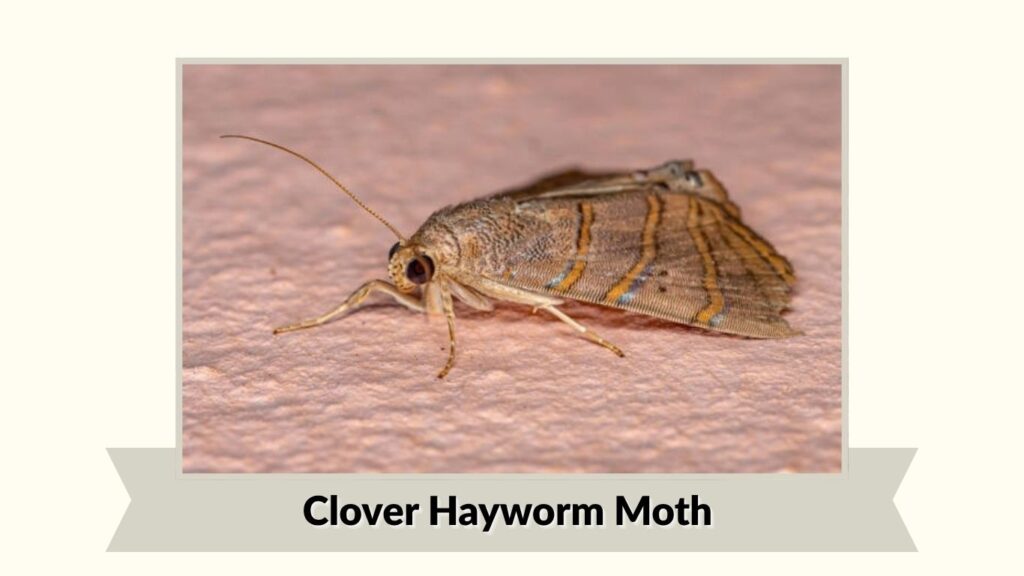
The Clover Hayworm Moth (Hypsopygia costalis) is a colorful snout moth whose larvae are particularly associated with dried vegetation. Stored hay can provide excellent feeding material, and heavy populations may cover it with silk. The adult is noticeably more colorful than many pyralid moths, displaying reddish or wine-colored wings edged with contrasting yellow.
Identification
- Scientific name: Hypsopygia costalis
- Family: Pyralidae
- Wingspan: Approximately 13–19 mm
- Wing color: Deep reddish or wine-colored
- Wing margin: Broad yellow fringe
- Forewing costa: Marked with irregular yellow patches
- Body: Small and slender
- Overall appearance: Distinctive reddish-purple and yellow combination.
Habitat and Distribution
In North America, the Clover Hayworm Moth occurs especially in the northeastern United States, ranging from Maine south toward North Carolina and west into Kentucky. Because the caterpillars use dried vegetation, barns, hay-storage areas, farms, and other locations containing stored plant materials can provide particularly suitable habitat.
Behavior and Diet
The larvae feed on dried flowers, straw, spices, hay, and other dried plant matter. Traditional haystacks can support infestations, where caterpillars spread silk through the stored material while feeding. This habit occasionally makes the species a minor pest of hay and similar agricultural products.
Lifespan and Life Cycle
Adults are generally recorded from May through September in the northeastern United States. Females lay eggs near suitable dried plant material, allowing newly hatched larvae immediate access to food. Caterpillars feed and produce silk before eventually pupating. Adults later emerge, mate, and begin another generation, with seasonal timing influenced by local temperature and available food.
16. Southern Hayworm Moth
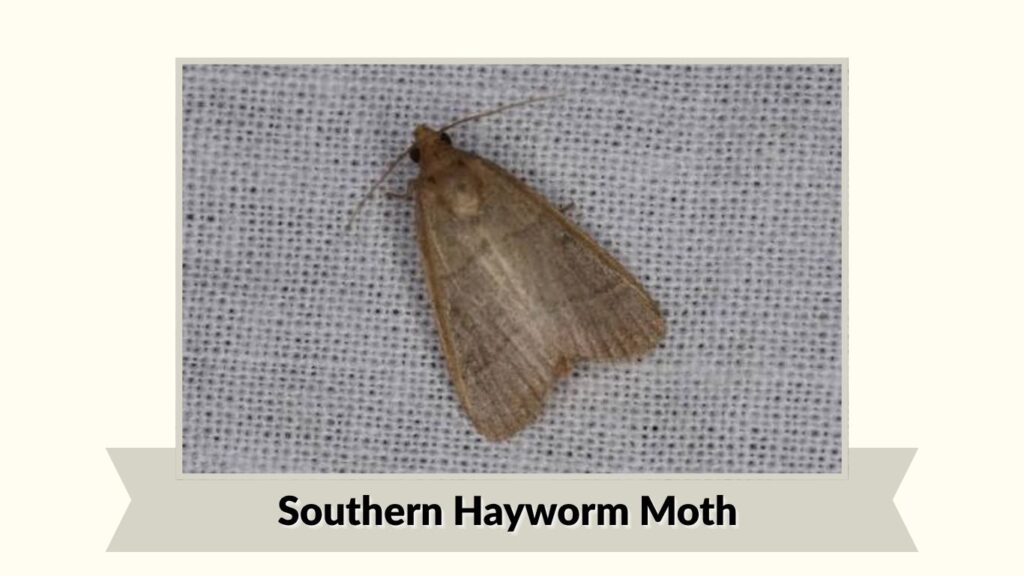
The Southern Hayworm Moth (Hypsopygia nostralis) is a widespread pyralid whose caterpillars specialize in dried or decaying plant material. It has attracted attention in Florida because larvae can inhabit palm-thatch roofs as well as agricultural hay. The species has previously been placed in the genus Ocrasa, so older references may list it as Ocrasa nostralis.
Identification
- Scientific name: Hypsopygia nostralis
- Former name: Ocrasa nostralis
- Family: Pyralidae
- Common name: Southern Hayworm Moth
- Caterpillar: Dark brown with a dark reddish-brown head
- Larval size: About 20 mm when mature
- Larval covering: Noticeable long hairs
- Feeding habit: Primarily consumes dried or decaying plant material.
Habitat and Distribution
The Southern Hayworm Moth ranges from the southeastern United States through parts of Central and South America, with records extending as far south as Uruguay. It has also been documented on several islands and other tropical regions. Suitable habitats include farms, hay-storage areas, sites containing fallen plant debris, and structures roofed with dried palm leaves.
Behavior and Diet
Caterpillars feed on dried organic material rather than healthy green foliage. Documented foods include perennial peanut hay, bermudagrass hay, alfalfa hay, dried fallen leaves, and palm thatch. This scavenging lifestyle allows the larvae to thrive in unusual human-made environments, including thatched roofs.
Lifespan and Life Cycle
Eggs hatch into caterpillars that feed within or near dried plant material. Once mature, larvae create a silken cocoon near their feeding site and pupate inside it. Adults later emerge and reproduce. Seasonal development varies greatly across the species’ broad range because populations occur from warm southeastern U.S. habitats into tropical South America.
17. Meal Moth
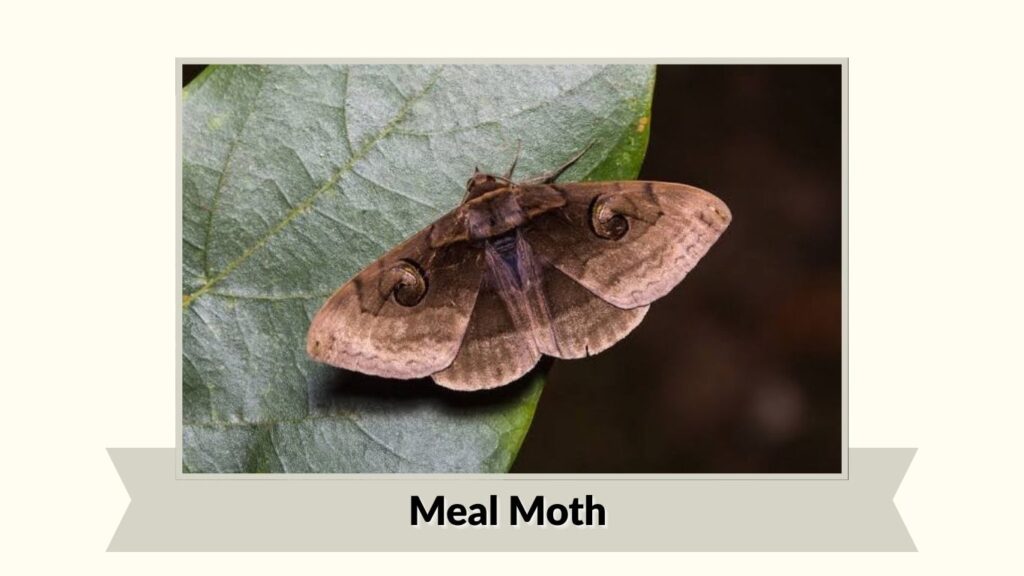
The Meal Moth (Pyralis farinalis) is a widespread stored-product snout moth and one of the classic members of the Pyralidae family. Its caterpillars infest grain, flour, cereals, animal feed, and other stored plant products. Adults have distinctive patterned wings and an unusual resting posture, often holding the end of the abdomen raised at an angle.
Identification
- Scientific name: Pyralis farinalis
- Family: Pyralidae
- Wingspan: Approximately 18–30 mm
- Forewings: Light yellow-brown center bordered by darker areas
- Wing lines: Two conspicuous whitish cross-lines
- Hindwings: Pale brown with wavy markings
- Larvae: Creamy white with a brown head
- Resting posture: Tip of abdomen is often held noticeably upward.
Habitat and Distribution
Meal Moths occur worldwide, particularly in temperate regions. They commonly inhabit grain elevators, flour mills, warehouses, processing facilities, barns, homes, and other buildings where cereals or grain products are stored. They can even survive in unheated granaries under suitable conditions.
Behavior and Diet
The caterpillars feed on wheat, barley, oats, corn, flour, processed cereals, peas, beans, dried fruit, animal feeds, clover hay, and alfalfa hay. While feeding, they produce silk webbing that binds food particles together and contaminates stored products with frass and shed skins.
Lifespan and Life Cycle
Females deposit eggs among suitable stored foods. Caterpillars hatch and begin feeding while producing protective silk. Mature larvae leave the food and seek sheltered locations where they construct silken cocoons and pupate. Outdoors, adults are mainly seen from approximately May through August, while heated indoor facilities may support activity at other times of year.
FAQs
1. What are snout moths?
Snout moths commonly include members of the Pyralidae and related Pyraloidea. Their name comes from projecting mouthparts, particularly the labial palps, that can make the head look as though it has a small snout. Pyralidae includes species ranging from plant feeders to stored-food pests and detritus feeders.
2. What do snout moth caterpillars eat?
Their diets vary enormously by species. Some feed on living plants, flowers, seeds, or fruits, while others consume grain and stored foods. Species such as the Large Tabby and Southern Hayworm specialize largely in dead, dried, or decaying organic material.
3. Are snout moths harmful to humans?
Snout moths generally do not bite or sting people. However, some species are important household or agricultural pests because their caterpillars contaminate stored foods or damage crops. Meal Moths and Indian-Meal Moths, for example, can infest grain and other pantry products.
4. Why are snout moths found inside houses?
Indoor snout moths are often attracted by suitable larval food. Flour, cereals, nuts, dried fruit, pet food, grain, and other stored products can support some species. Others may occur around accumulated organic debris. Finding repeated adults indoors can therefore indicate that larvae have access to a nearby food source.
5. What is the life cycle of a snout moth?
Snout moths undergo complete metamorphosis: egg, caterpillar, pupa, and adult. The caterpillar is normally the main feeding and growing stage. When mature, it pupates in a sheltered location or silken cocoon, after which the winged adult emerges to mate and reproduce. The exact duration ranges widely according to species, temperature, food quality, and climate.