
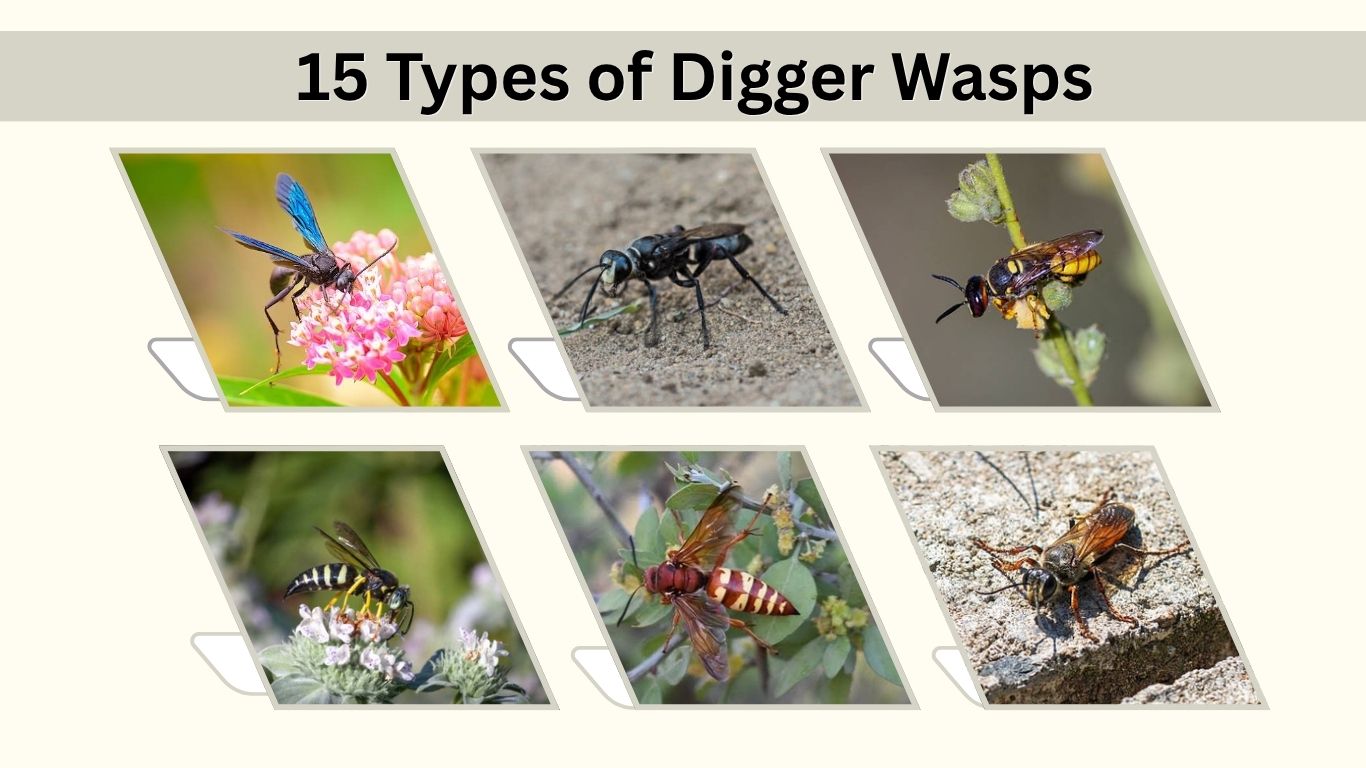
Digger wasps are fascinating solitary insects known for their underground nests, distinctive appearances, and impressive hunting abilities. But how can you identify the different types of digger wasps? From the Great Golden Digger Wasp to the Steel-blue Cricket Hunter, each species has unique characteristics and behaviors. This guide explores 15 types of digger wasps, including their identification features, habitats, feeding habits, and whether they are dangerous to humans.
1. Great Golden Digger Wasp (Sphex ichneumoneus)
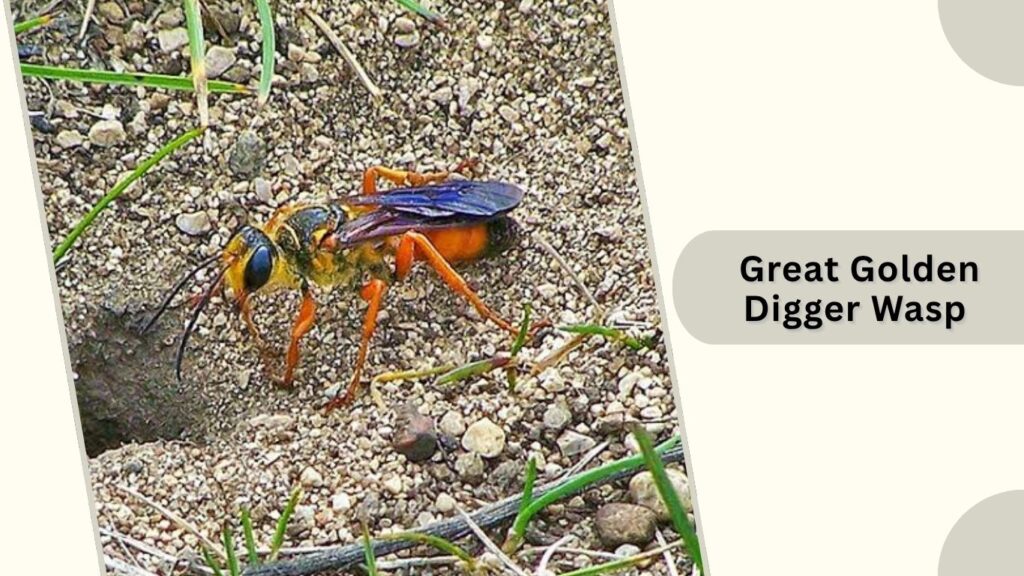
The Great Golden Digger Wasp is a large, solitary wasp recognized by its golden body hairs, reddish-orange legs, and striking black-and-orange abdomen. Native to the Americas, this beneficial insect commonly inhabits gardens, grasslands, and open fields. Unlike social wasps, it builds individual underground nests and rarely displays aggression toward humans.
Identification
- Scientific Name: Sphex ichneumoneus
- Size: Approximately 15–27 mm long.
- Body Color: Black with reddish-orange abdominal segments.
- Head and Thorax: Covered with short, golden-yellow hairs.
- Wings: Smoky brown or amber-colored.
- Legs: Long, predominantly reddish-orange.
- Distinctive Features: Narrow waist, golden hairs, and a black-tipped abdomen.
Habitat and Distribution
Great Golden Digger Wasps are widespread across North America and extend into Central and South America. They prefer sunny environments, including meadows, gardens, roadsides, and grasslands.
Females construct underground nests in loose, sandy, or well-drained soil. Although each female maintains her own nest, several may establish burrows close together when suitable nesting conditions are available.
Feeding and Hunting Behavior
Adult Great Golden Digger Wasps primarily consume flower nectar, making them useful pollinators. Females hunt katydids and related insects to provide food for their developing larvae.
The female paralyzes captured prey with her sting and transports it into an underground nesting chamber. She lays an egg on the stored prey, which provides nourishment when the larva hatches.
Are Great Golden Digger Wasps Dangerous?
Great Golden Digger Wasps are generally nonaggressive and rarely sting humans unless handled or threatened. They do not defend large communal colonies like yellowjackets.
Their hunting activities help regulate insect populations, while their flower visits contribute to pollination. Leaving their nests undisturbed allows these beneficial wasps to support the surrounding ecosystem.
2. Great Black Digger Wasp (Sphex pensylvanicus)
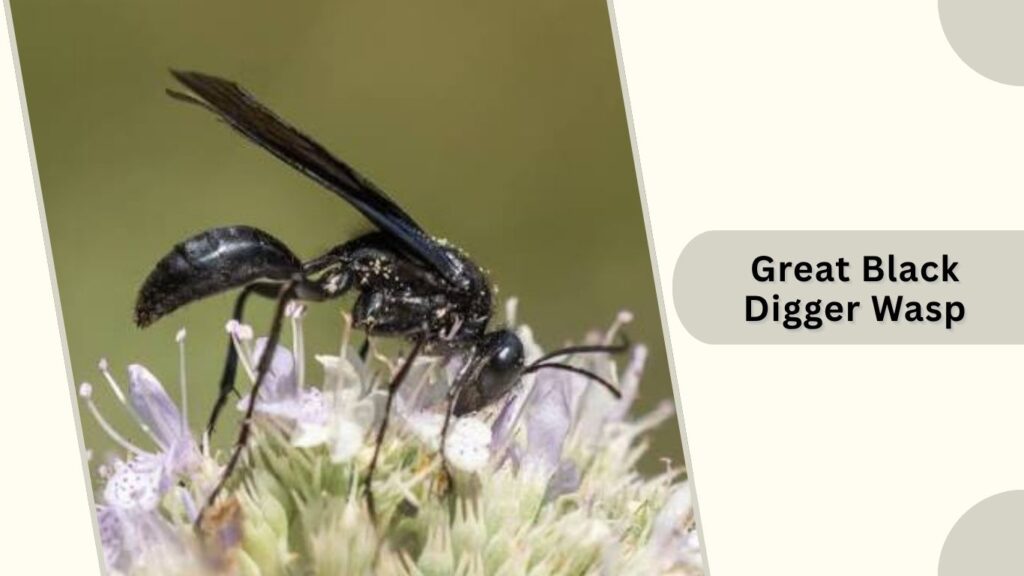
The Great Black Digger Wasp is a large, solitary wasp known for its completely black body and dark wings with a metallic blue sheen. Commonly found throughout North America, this species prefers sunny gardens, grasslands, and open landscapes. Despite its intimidating appearance, it is generally nonaggressive and plays an important role in controlling insect populations.
Identification
- Scientific Name: Sphex pensylvanicus
- Size: Approximately 20–35 mm long.
- Body Color: Entirely black with a glossy appearance.
- Wings: Smoky black with a bluish iridescent sheen.
- Legs: Long, slender, and black.
- Antennae: Dark, elongated, and segmented.
- Distinctive Features: Large black body, narrow waist, and metallic-looking wings.
Habitat and Distribution
Great Black Digger Wasps are widely distributed across the United States, parts of Canada, and northern Mexico. They frequently inhabit gardens, meadows, woodland edges, and open fields where flowering plants are abundant.
Females prefer well-drained soil for constructing underground nests. These burrows contain individual chambers where developing larvae receive food and protection.
Feeding and Hunting Behavior
Adult Great Black Digger Wasps primarily feed on nectar from flowering plants, including milkweed and mountain mint. Their frequent flower visits contribute to pollination.
Females hunt katydids and related insects, paralyzing them with venom before transporting them into underground chambers. Each chamber contains an egg and sufficient prey for the developing larva.
Are Great Black Digger Wasps Dangerous?
Great Black Digger Wasps are generally harmless when left undisturbed. Females can sting if handled or threatened, but they do not aggressively defend communal colonies.
Their ability to capture plant-feeding insects makes them valuable natural predators in gardens and agricultural landscapes.
3. Golden Digger Wasp (Sphex funerarius)
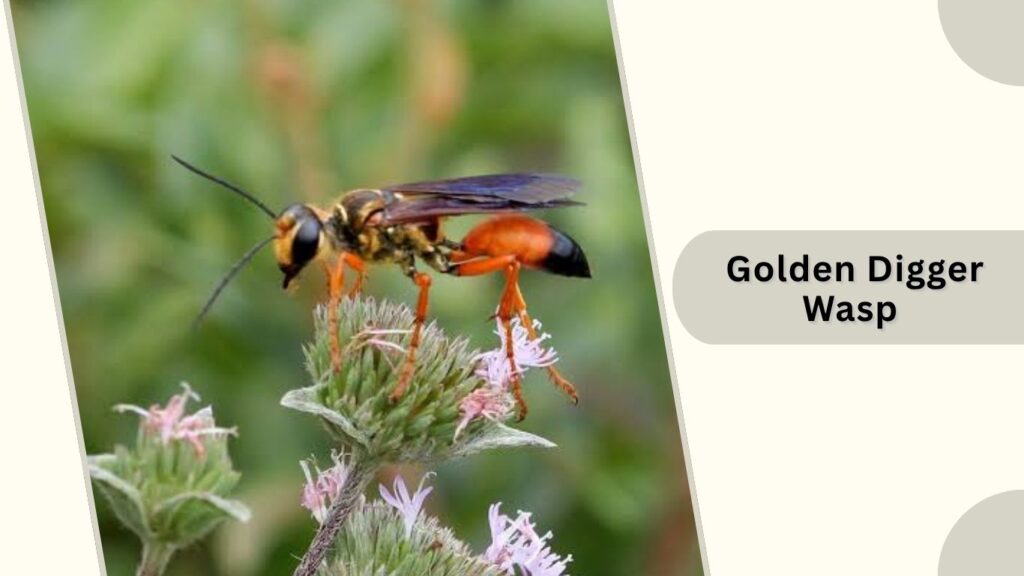
The Golden Digger Wasp is a solitary, ground-nesting species recognized by its black body, reddish-orange abdominal markings, and slightly yellowish wings. Found primarily across Europe and parts of Asia, this wasp prefers warm, sunny environments with suitable nesting soil. It is an efficient hunter of grasshoppers and related insects, making it beneficial to natural ecosystems.
Identification
- Scientific Name: Sphex funerarius
- Size: Approximately 15–26 mm long.
- Body Color: Black with prominent reddish-orange abdominal segments.
- Wings: Yellowish or translucent with darker tips.
- Head and Thorax: Black with fine, pale body hairs.
- Legs: Long and slender, predominantly black with some reddish markings.
- Distinctive Features: Narrow waist, orange-red abdomen, and dark-tipped wings.
Habitat and Distribution
Golden Digger Wasps inhabit southern and central Europe, with populations extending into parts of western and central Asia. They commonly occupy dry grasslands, sandy fields, coastal habitats, and open countryside.
Females construct underground nests in loose, well-drained soil. Their nesting tunnels lead to individual brood chambers where eggs and captured prey are stored.
Feeding and Hunting Behavior
Adult Golden Digger Wasps mainly consume nectar from flowering plants. Females hunt grasshoppers, katydids, and similar insects to provide nourishment for their offspring.
After capturing prey, the female delivers a paralyzing sting and transports the insect into her burrow. The developing larvae feed on the stored prey until they mature.
Are Golden Digger Wasps Dangerous?
Golden Digger Wasps are generally peaceful toward humans and rarely sting unless physically threatened.
Their predatory behavior helps regulate populations of grasshoppers and other plant-feeding insects, while adult nectar feeding contributes to flower pollination.
4. Golden-reined Digger Wasp (Sphex habenus)
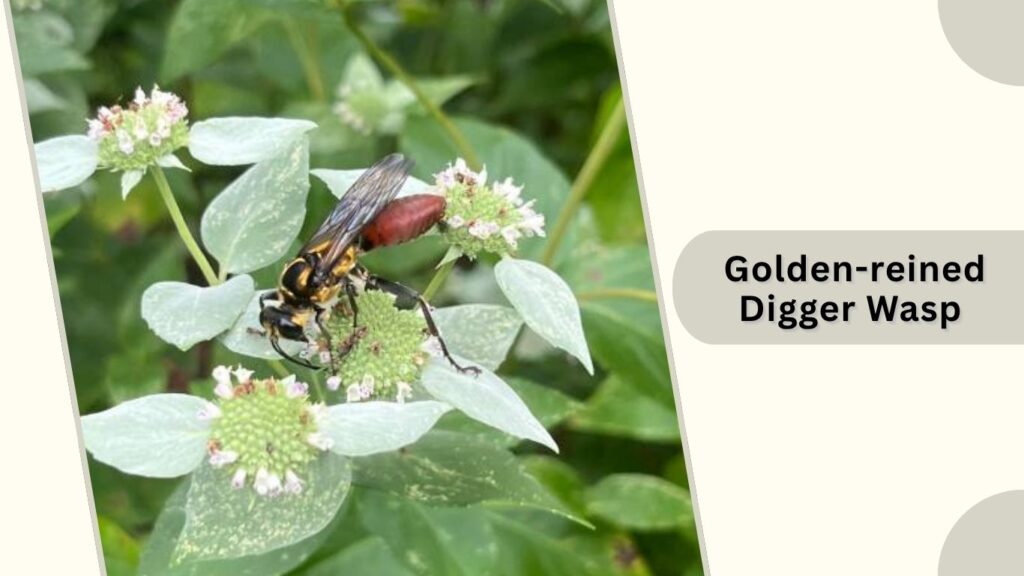
The Golden-reined Digger Wasp is a striking solitary species distinguished by golden hairs covering portions of its dark head and thorax. This North American wasp belongs to the thread-waisted wasp family and is closely related to other large digger wasps. Its underground nesting habits and specialized hunting behavior make it an interesting insect in grassland ecosystems.
Identification
- Scientific Name: Sphex habenus
- Size: Approximately 25–30 mm long.
- Body Color: Predominantly black with golden body hairs.
- Head and Thorax: Decorated with noticeable golden-yellow hair patterns.
- Wings: Dark, smoky, and somewhat translucent.
- Legs: Long, slender, and black.
- Distinctive Features: Golden markings on the thorax, dark legs, and an elongated abdomen.
Habitat and Distribution
Golden-reined Digger Wasps occur in portions of the eastern and central United States, with their range extending into northern Mexico. They are associated with warm, open habitats that provide suitable nesting ground and access to prey.
Females establish underground burrows where they prepare individual chambers for their offspring. Flowering vegetation nearby provides an important food source for adults.
Feeding and Hunting Behavior
Adult Golden-reined Digger Wasps visit flowers to consume nectar. Females are specialized predators that capture katydids, including meadow katydids, for their developing larvae.
After locating prey, the female uses her sting to immobilize it before carrying it into an underground nesting chamber. An egg is deposited with the stored food.
Are Golden-reined Digger Wasps Dangerous?
Golden-reined Digger Wasps are solitary and generally avoid confrontations with humans. Females possess functional stingers but typically use them for hunting rather than aggression.
Their hunting activities help control katydid populations, supporting ecological balance in open habitats.
5. Field Digger Wasp (Mellinus arvensis)
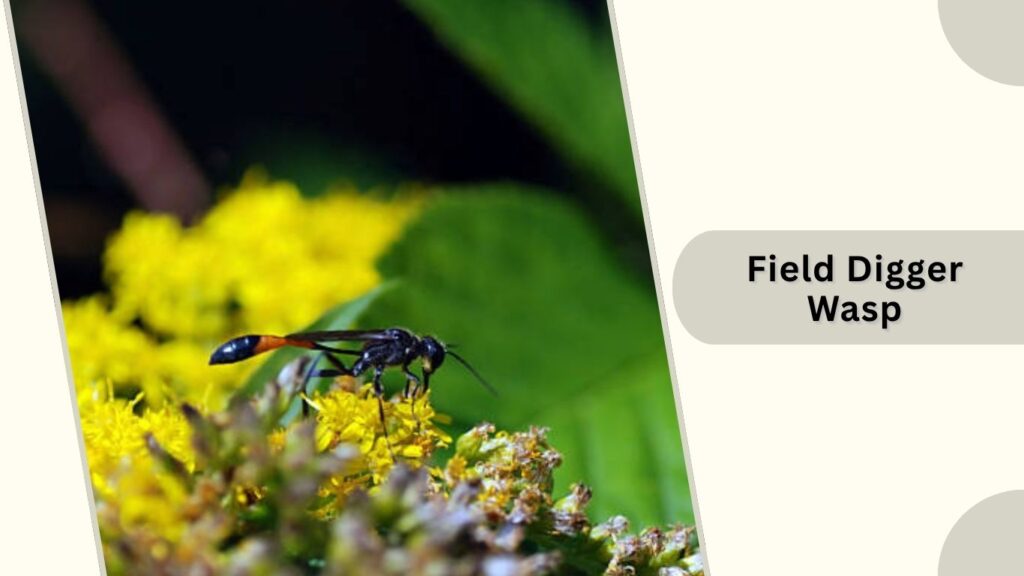
The Field Digger Wasp is a small to medium-sized solitary wasp recognized by its glossy black-and-yellow body and noticeably narrow waist. Common throughout Britain and much of Europe, this species is frequently encountered in sandy habitats, woodland edges, and open countryside. Unlike larger digger wasps that hunt grasshoppers, Field Digger Wasps primarily capture flies to feed their larvae.
Identification
- Scientific Name: Mellinus arvensis
- Size: Approximately 7–14 mm long.
- Body Color: Glossy black with contrasting yellow markings.
- Abdomen: Narrow and elongated with yellow bands.
- Wings: Transparent with slightly darkened veins.
- Legs: Slender with dark and yellowish coloration.
- Distinctive Features: Thin waist, shiny abdomen, and black-and-yellow pattern.
Habitat and Distribution
Field Digger Wasps are widely distributed throughout Britain, Ireland, and other European regions. They prefer sandy soils, woodland clearings, coastal areas, and open habitats with exposed ground.
Females excavate underground burrows containing several nesting chambers. Loose soil allows easier excavation and provides suitable conditions for developing larvae.
Feeding and Hunting Behavior
Adult Field Digger Wasps consume nectar and other available sugary food sources. Females specialize in hunting flies, often searching around animal dung or other locations where flies gather.
Captured flies are paralyzed and transported into underground brood chambers. The female provides several prey insects to support the growth of each developing larva.
Are Field Digger Wasps Dangerous?
Field Digger Wasps are not considered aggressive toward humans. Although females can sting, they generally avoid confrontation and concentrate on hunting.
Their ability to capture flies makes them beneficial predators, particularly in habitats where fly populations are abundant.
6. Ornate-tailed Digger Wasp (Cerceris rybyensis)
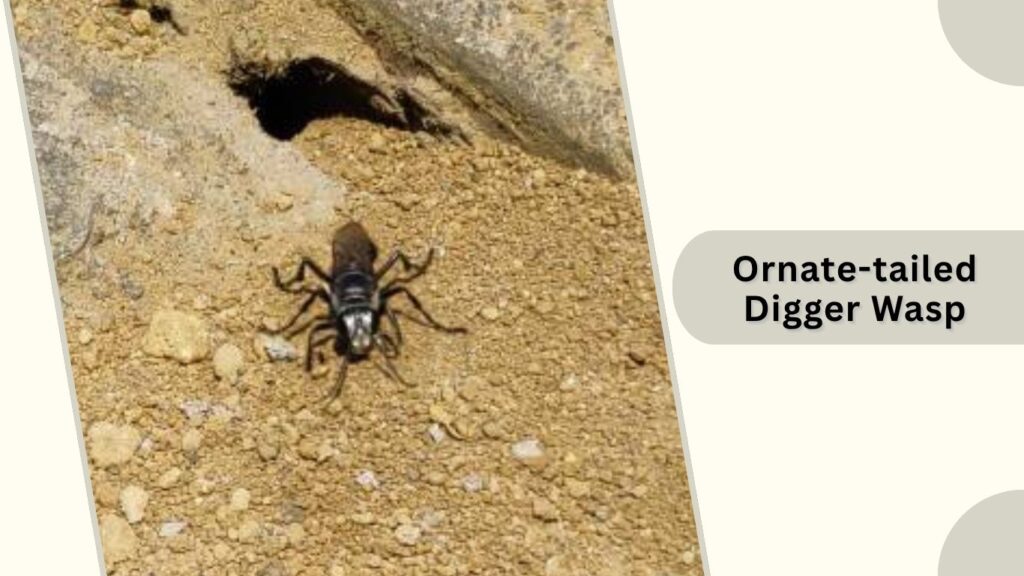
The Ornate-tailed Digger Wasp is a small, solitary species recognized by its distinctive black-and-yellow abdominal bands and compact body structure. Native to the Palearctic region, this wasp frequently inhabits sandy grasslands, coastal areas, and open fields. Unlike many digger wasps that hunt grasshoppers or flies, this species primarily captures small bees to provide food for its offspring.
Identification
- Scientific Name: Cerceris rybyensis
- Size: Approximately 6–12 mm long.
- Body Color: Black with prominent yellow markings.
- Abdomen: Distinctively ribbed with irregular black-and-yellow bands.
- Wings: Transparent with slightly smoky coloration.
- Legs: Slender, with yellow markings on portions of the legs.
- Distinctive Features: Compact body, patterned abdomen, and characteristic ribbed abdominal segments.
Habitat and Distribution
Ornate-tailed Digger Wasps occur across much of Europe and other parts of the Palearctic region. They prefer sandy ground, chalk grasslands, coastal environments, and open landscapes with suitable nesting locations.
Females excavate underground nests in exposed soil. Although they nest independently, multiple females may construct burrows close together, forming noticeable nesting aggregations.
Feeding and Hunting Behavior
Adult Ornate-tailed Digger Wasps visit flowers for nectar. Females actively hunt small and medium-sized bees, especially sweat bees, to supply their larvae with food.
Captured bees are paralyzed with a sting and carried into underground chambers. The female deposits an egg alongside several stored bees, providing nourishment for larval development.
Are Ornate-tailed Digger Wasps Dangerous?
Ornate-tailed Digger Wasps are generally nonaggressive toward humans. Females use their stingers primarily to immobilize prey rather than defend communal nests.
They form part of natural insect food webs and contribute to the ecological balance of grassland and coastal habitats.
7. Sand-tailed Digger Wasp (Cerceris arenaria)
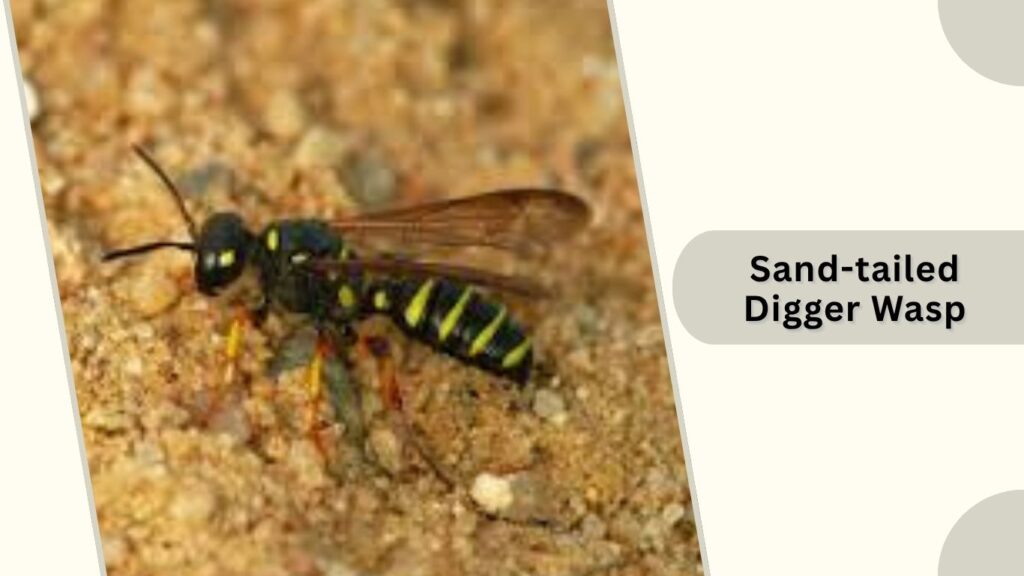
The Sand-tailed Digger Wasp is a solitary, ground-nesting species recognized by its distinctive black-and-yellow body and strongly constricted abdominal segments. Common in parts of Europe, particularly southern Britain, this wasp prefers sandy environments where females can excavate underground nests. It is an effective predator of weevils and contributes to the natural regulation of beetle populations.
Identification
- Scientific Name: Cerceris arenaria
- Size: Medium-sized to relatively large for its genus.
- Body Color: Predominantly black with yellow markings.
- Abdomen: Distinctive yellow bands and deeply constricted segments.
- Wings: Transparent with slightly darkened veins.
- Legs: Slender with black and yellowish coloration.
- Distinctive Features: Narrow waist, patterned abdomen, and relatively broad head.
Habitat and Distribution
Sand-tailed Digger Wasps occur across parts of Europe and are particularly widespread in southern Britain. They favor sandy grasslands, coastal dunes, heathlands, and other open habitats with loose soil.
Females excavate deep underground burrows containing several individual brood chambers. Suitable sandy locations may support large nesting aggregations, although each female maintains her own nest.
Feeding and Hunting Behavior
Adult Sand-tailed Digger Wasps visit flowers for nectar and moisture. Females specialize in hunting weevils, particularly beetles belonging to the family Curculionidae.
Captured weevils are paralyzed and transported into underground chambers. Each chamber may contain several prey insects, providing sufficient nourishment for developing larvae.
Are Sand-tailed Digger Wasps Dangerous?
Sand-tailed Digger Wasps are generally nonaggressive and rarely pose a threat to humans. Females can sting when handled or threatened but primarily use their venom to immobilize prey.
Their hunting activities help regulate weevil populations in grasslands and other natural environments.
8. Katydid Wasp (Sphex nudus)
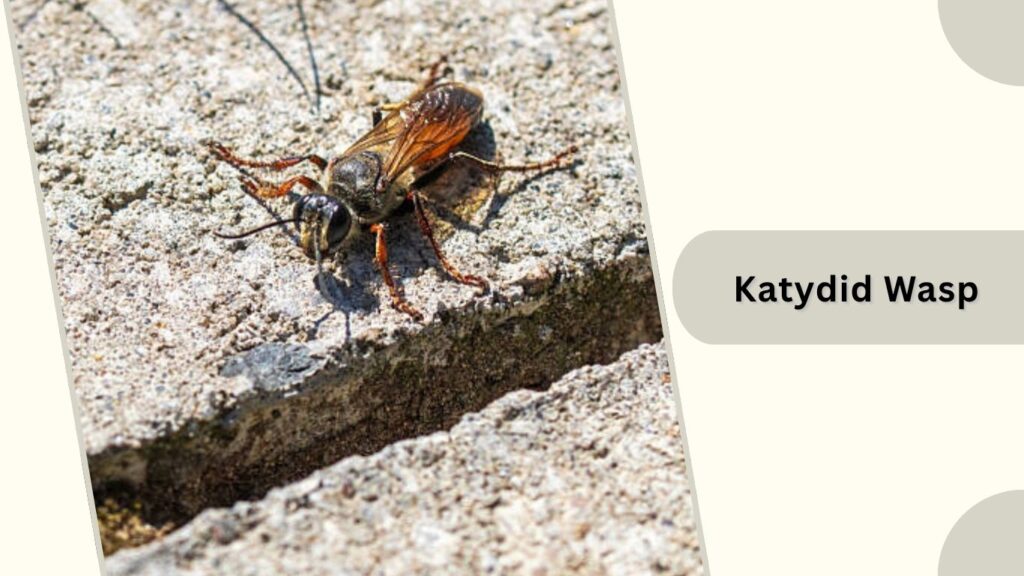
The Katydid Wasp is a solitary digger wasp recognized by its dark body, reddish-orange legs, and elongated waist. Found throughout much of the eastern United States, this species is commonly observed around flowering plants during warmer months. Its specialized hunting behavior helps regulate populations of katydids and related insects, making it an important predator in natural ecosystems.
Identification
- Scientific Name: Sphex nudus
- Size: Approximately 20–25 mm long.
- Body Color: Predominantly black with contrasting orange markings.
- Head and Thorax: Dark with fine, pale body hairs.
- Wings: Smoky brown with a slightly translucent appearance.
- Legs: Long and slender with reddish-orange sections.
- Distinctive Features: Narrow waist, dark abdomen, and contrasting leg coloration.
Habitat and Distribution
Katydid Wasps inhabit the eastern United States, ranging from parts of New York and Wisconsin southward toward Florida and Texas. They prefer woodland edges, gardens, meadows, and open areas with suitable nesting soil.
Females construct underground nests in well-drained ground. These burrows provide protected chambers where eggs and captured prey remain during larval development.
Feeding and Hunting Behavior
Adult Katydid Wasps primarily consume nectar from flowering plants. Females hunt katydids and related insects, particularly the Carolina leaf-roller cricket, to provision their underground nests.
After capturing prey, the female delivers a paralyzing sting and transports the immobilized insect into a nesting chamber. The developing larva feeds on the stored prey until it reaches maturity.
Are Katydid Wasps Dangerous?
Katydid Wasps are generally peaceful and rarely display aggressive behavior toward humans. Females may sting when physically restrained, but they do not defend large communal colonies.
Their predatory habits help maintain natural insect populations, while nectar-feeding adults contribute to pollination in gardens and wild habitats.
9. American Sand Wasp (Bembix americana)
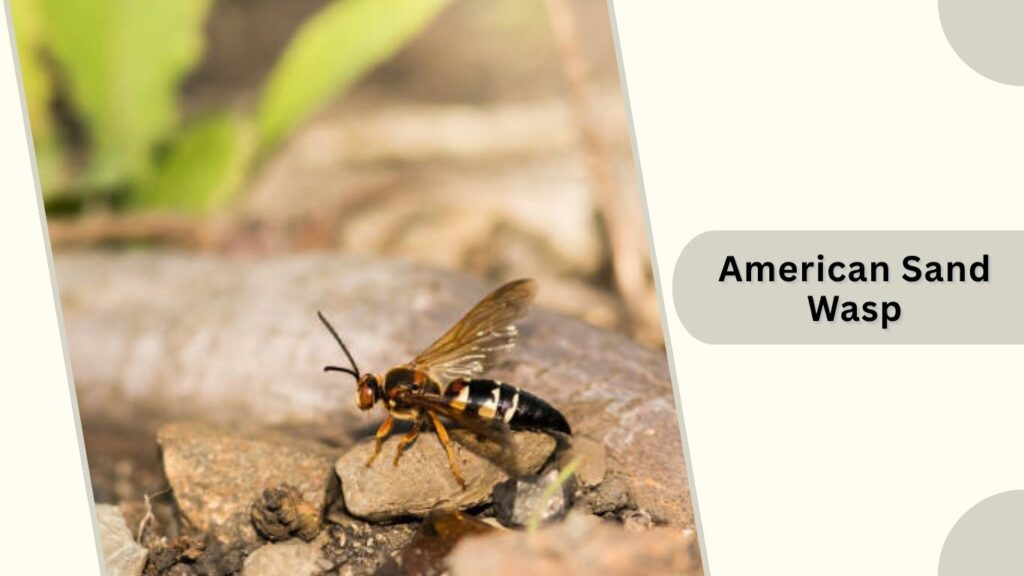
The American Sand Wasp is a medium-sized solitary digger wasp recognized by its black-and-white abdominal markings, greenish eyes, and yellow legs. Widely distributed across North America, this species commonly inhabits sandy environments with exposed soil. Unlike many other ground-nesting wasps, females continuously provide fresh prey to their developing larvae, making them effective natural predators of flies.
Identification
- Scientific Name: Bembix americana
- Size: Approximately 16–20 mm long.
- Body Color: Predominantly black with white abdominal markings.
- Abdomen: Five pairs of white spots forming interrupted bands.
- Wings: Transparent with brownish veins.
- Legs: Mostly yellow with darker markings.
- Distinctive Features: Green compound eyes, triangular upper lip, and patterned abdomen.
Habitat and Distribution
American Sand Wasps occur throughout much of the United States, southern Canada, Mexico, and parts of the Caribbean. They prefer sandy fields, beaches, playgrounds, gardens, and other locations with exposed ground.
Females excavate underground burrows in loose soil. Although each female independently cares for her offspring, numerous nests may occur close together in suitable habitats.
Feeding and Hunting Behavior
Adult American Sand Wasps feed primarily on nectar from flowering plants. Females are skilled aerial hunters that capture various species of flies to feed their larvae.
Unlike species that store all prey before egg laying, females repeatedly deliver fresh flies to developing larvae. This feeding process continues until the larvae are ready to pupate.
Are American Sand Wasps Dangerous?
American Sand Wasps are generally harmless to humans and rarely sting unless handled or threatened. Their presence near sandy recreational areas may appear alarming, but they are not naturally aggressive.
These beneficial wasps help reduce nuisance fly populations while contributing to flower pollination.
10. Eastern Cicada Killer Wasp (Sphecius speciosus)
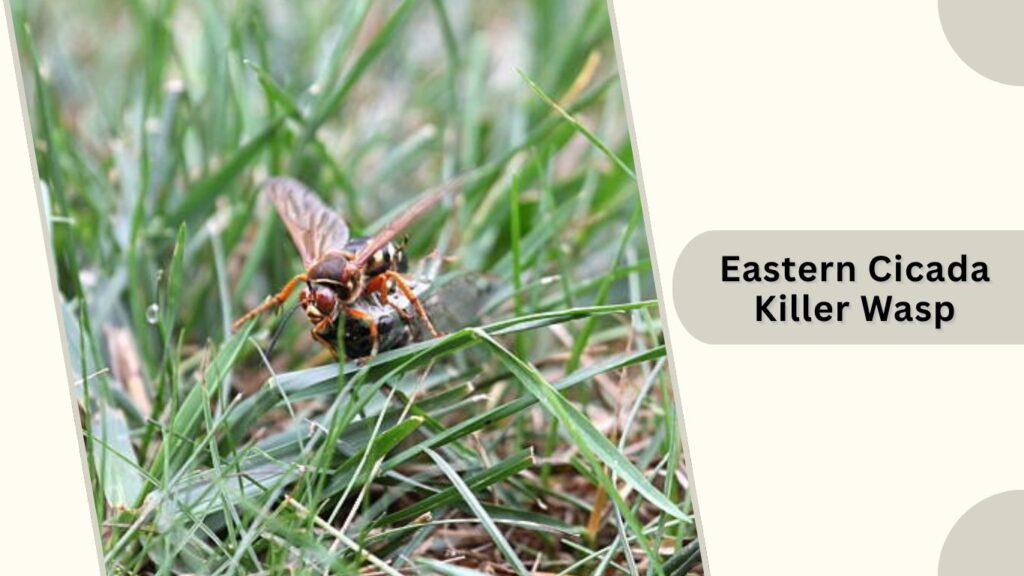
The Eastern Cicada Killer Wasp is one of the largest solitary wasps found in North America. Recognized by its black-and-yellow abdomen, reddish-brown thorax, and impressive body size, this species is often mistaken for a hornet. Despite its intimidating appearance, it is generally nonaggressive and specializes in hunting cicadas to provide food for its developing larvae.
Identification
- Scientific Name: Sphecius speciosus
- Size: Approximately 25–50 mm long.
- Body Color: Black and reddish-brown with yellow markings.
- Head and Thorax: Broad, reddish-brown, and covered with fine hairs.
- Abdomen: Large, dark, and decorated with irregular yellow bands.
- Wings: Amber-brown with prominent veins.
- Legs: Strong and reddish-brown.
- Distinctive Features: Large body, powerful jaws, and yellow abdominal markings.
Habitat and Distribution
Eastern Cicada Killer Wasps are widespread across the eastern and central United States, with populations extending into parts of Canada, Mexico, and Central America.
They prefer sunny environments, including lawns, gardens, sandy fields, woodland edges, and open spaces. Females excavate underground burrows in well-drained soil, creating separate chambers for their offspring.
Feeding and Hunting Behavior
Adult Eastern Cicada Killer Wasps consume nectar from flowering plants. Females hunt adult cicadas, using their powerful sting to paralyze prey before transporting it to underground nests.
Once the cicada is placed inside a brood chamber, the female lays an egg on the prey. The emerging larva feeds on the immobilized cicada as it develops.
Are Eastern Cicada Killer Wasps Dangerous?
Eastern Cicada Killer Wasps are generally nonaggressive despite their considerable size. Males may aggressively patrol nesting territories, but they cannot sting.
Females possess functional stingers and may sting if handled roughly. Their hunting behavior helps regulate cicada populations naturally.
11. Western Cicada Killer Wasp (Sphecius grandis)
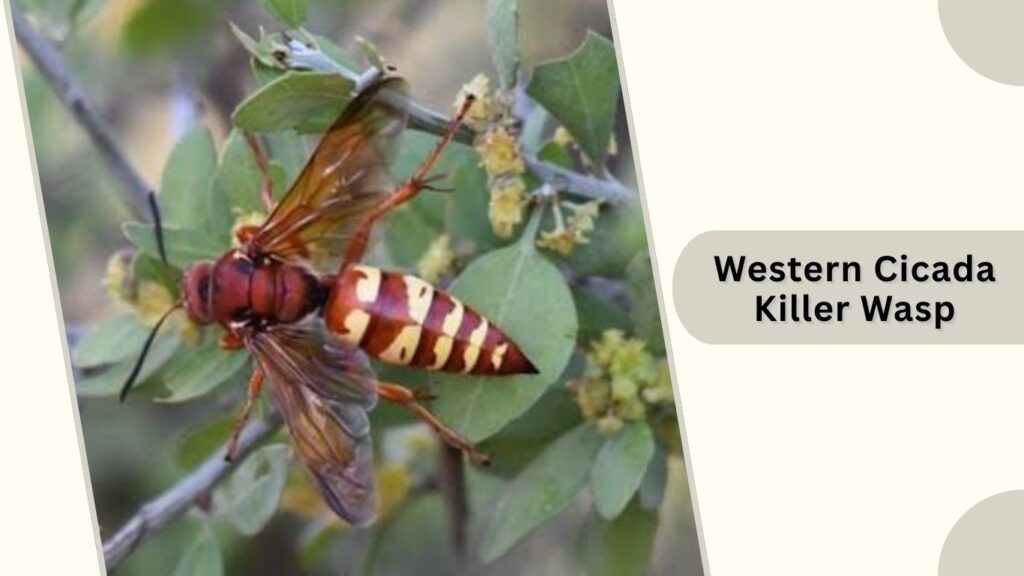
The Western Cicada Killer Wasp is a large, solitary ground-nesting species known for its reddish-brown body, yellow abdominal markings, and powerful hunting abilities. Primarily found in western North America, this species closely resembles the Eastern Cicada Killer but often displays lighter coloration. It is a specialized predator that captures cicadas to feed its developing larvae.
Identification
- Scientific Name: Sphecius grandis
- Size: Approximately 30–50 mm long.
- Body Color: Reddish-brown with yellow abdominal markings.
- Head and Thorax: Broad, reddish-brown, and slightly hairy.
- Abdomen: Large with prominent yellow bands.
- Wings: Amber-colored with darker veins.
- Legs: Strong, reddish-brown, and adapted for digging.
- Distinctive Features: Large body, amber coloration, and contrasting abdominal bands.
Habitat and Distribution
Western Cicada Killer Wasps inhabit the western United States, Mexico, and portions of Central America. They are commonly associated with dry, sunny environments, including grasslands, desert margins, open fields, and sandy landscapes.
Females construct underground burrows in suitable soil. Multiple females may establish nests near one another, creating noticeable nesting aggregations without forming cooperative colonies.
Feeding and Hunting Behavior
Adult Western Cicada Killer Wasps feed on flower nectar and other natural sugar sources. Females specialize in hunting cicadas, locating them on trees and vegetation during warmer months.
After paralyzing a cicada with her sting, the female transports it into an underground brood chamber. She deposits an egg with the captured prey, which supplies nourishment for the developing larva.
Are Western Cicada Killer Wasps Dangerous?
Western Cicada Killer Wasps are generally nonaggressive toward humans. Males may display territorial behavior around nesting sites, but they lack functional stingers.
Females can sting if physically threatened, although they usually concentrate on hunting and nesting activities. Their presence contributes to natural cicada population control in western ecosystems.
12. Four-banded Stink Bug Wasp (Bicyrtes quadrifasciatus)
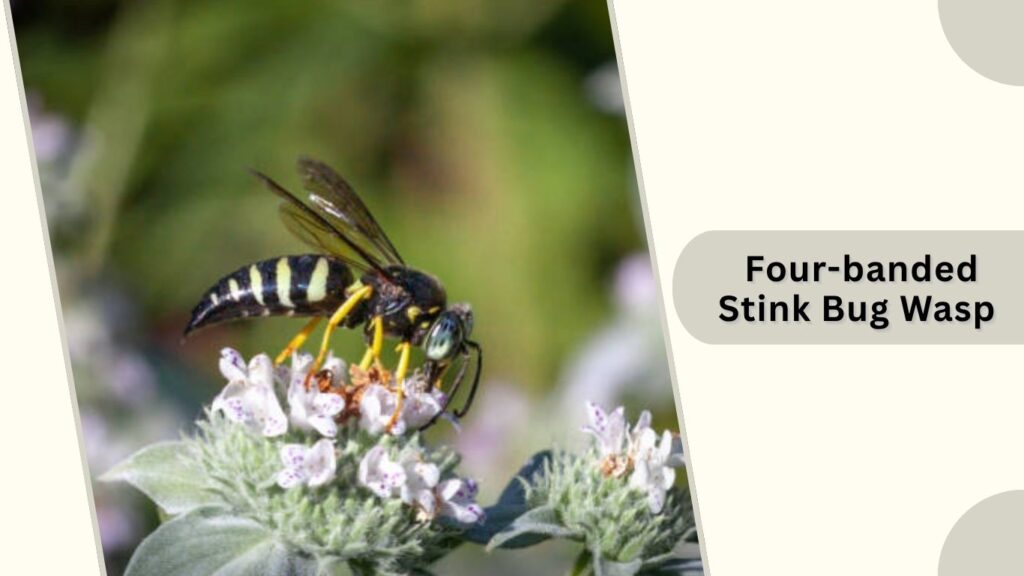
The Four-banded Stink Bug Wasp is a solitary, ground-nesting species recognized by its black body and distinctive pale abdominal markings. Native to North America, this medium-sized wasp commonly inhabits gardens, meadows, and open sandy environments. Its specialized hunting behavior helps regulate stink bugs and other true bugs, making it a beneficial predator in natural ecosystems.
Identification
- Scientific Name: Bicyrtes quadrifasciatus
- Size: Approximately 17–19 mm long.
- Body Color: Predominantly black with white or pale-yellow markings.
- Abdomen: Four pairs of pale bands in females; males may have five.
- Wings: Transparent to slightly smoky.
- Legs: Slender with pale and dark coloration.
- Distinctive Features: Four-banded abdominal pattern, relatively large head, and narrow waist.
Habitat and Distribution
Four-banded Stink Bug Wasps occur primarily across eastern North America. They prefer open grasslands, sandy fields, gardens, and other sunny environments where the soil is suitable for nesting.
Females excavate underground burrows containing individual brood chambers. These nesting sites provide protection for developing larvae and allow the females to store captured insects.
Feeding and Hunting Behavior
Adult Four-banded Stink Bug Wasps visit flowers to consume nectar. Females hunt stink bugs and other true bugs, which they use to supply food for their developing offspring.
After locating suitable prey, the female delivers a paralyzing sting and transports the immobilized insect into an underground chamber. The stored prey provides nourishment for the larva after hatching.
Are Four-banded Stink Bug Wasps Dangerous?
Four-banded Stink Bug Wasps are generally nonaggressive toward humans. Females possess functional stingers but primarily use them for hunting rather than defensive attacks.
Their ability to capture stink bugs makes them valuable natural predators in gardens and surrounding landscapes.
13. European Beewolf (Philanthus triangulum)
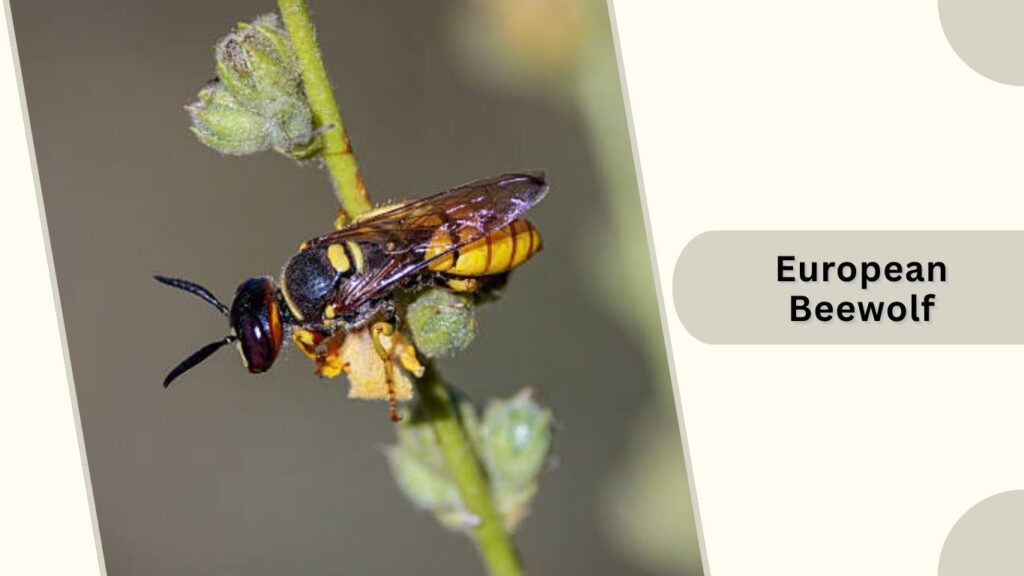
The European Beewolf is a distinctive solitary digger wasp recognized by its yellow-and-black body, broad head, and specialized hunting behavior. Widely distributed across Europe and parts of Africa and western Asia, this species primarily captures honey bees to feed its larvae. Despite its aggressive hunting abilities, it rarely poses a danger to humans.
Identification
- Scientific Name: Philanthus triangulum
- Size: Approximately 10–17 mm long.
- Body Color: Black with prominent yellow markings.
- Head: Broad with yellow facial markings and darker areas.
- Abdomen: Distinctive yellow-and-black bands.
- Wings: Transparent with slightly darkened tips.
- Legs: Yellowish with darker sections.
- Distinctive Features: Thick antennae, broad head, and trident-shaped facial markings in males.
Habitat and Distribution
European Beewolves inhabit much of Europe, with their distribution extending into parts of western Asia and Africa. They prefer warm, sandy environments, including coastal dunes, heathlands, grasslands, and open fields.
Females construct underground nests in loose soil. Multiple females may establish burrows close together, creating large nesting aggregations without forming cooperative colonies.
Feeding and Hunting Behavior
Adult European Beewolves consume nectar from flowering plants. Females specialize in capturing honey bees, which they paralyze using their venomous stingers.
After capturing a bee, the female carries it beneath her body and transports it into an underground brood chamber. Several immobilized honey bees may be stored to provide food for each developing larva.
Are European Beewolves Dangerous?
European Beewolves are generally nonaggressive toward humans. Females can sting when physically threatened, but they rarely attack people.
Although they are natural predators, concentrated populations may affect honey bees around nearby apiaries. Their hunting behavior is part of the natural relationship between predator and prey.
14. Humped Beewolf (Philanthus gibbosus)
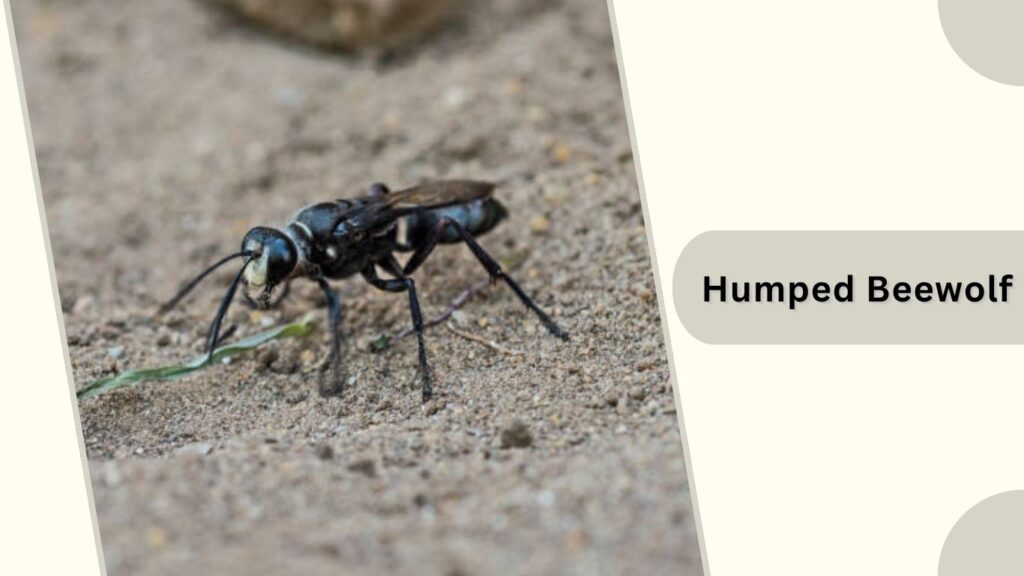
The Humped Beewolf is a small, solitary ground-nesting wasp recognized by its black-and-yellow markings and compact body structure. Native to North America, this species commonly inhabits open fields, meadows, and woodland edges. Like other beewolves, it specializes in capturing bees to provide food for its developing larvae.
Identification
- Scientific Name: Philanthus gibbosus
- Size: Approximately 8–10 mm long.
- Body Color: Predominantly black with contrasting yellow markings.
- Head: Broad with noticeable yellow facial patterns.
- Abdomen: Compact with yellow bands and markings.
- Wings: Transparent with slightly brownish veins.
- Legs: Slender with yellow and dark sections.
- Distinctive Features: Compact body, patterned abdomen, and relatively broad head.
Habitat and Distribution
Humped Beewolves occur across North America, particularly in meadows, woodland edges, gardens, and other open habitats. They can inhabit a variety of soil types where underground burrows can be constructed.
Females excavate tunnels containing several brood chambers. Although each female usually provisions her own offspring, two females may occasionally share a tunnel entrance while maintaining separate nesting chambers.
Feeding and Hunting Behavior
Adult Humped Beewolves primarily consume nectar from flowering plants. Females hunt small bees, including sweat bees and other solitary bee species, to provide food for their developing larvae.
Captured bees are paralyzed and carried into underground nesting chambers. Each chamber may contain several prey insects, ensuring the developing larva has enough nourishment.
Are Humped Beewolves Dangerous?
Humped Beewolves are generally harmless when left undisturbed. Females possess stingers, but their primary function is to immobilize prey rather than attack humans.
These solitary wasps contribute to insect food webs while visiting flowers for nectar. Their predatory activities are a natural part of the surrounding ecosystem.
15. Steel-blue Cricket Hunter (Chlorion aerarium)
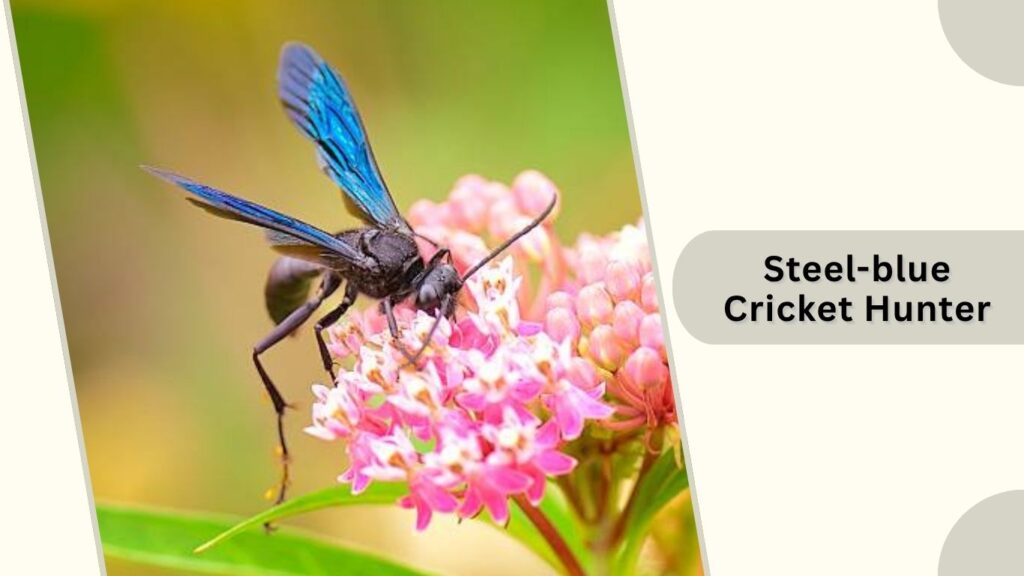
The Steel-blue Cricket Hunter is a striking solitary digger wasp recognized by its brilliant metallic-blue body and dark, iridescent wings. Native to North America, this species commonly inhabits open grasslands, meadows, and sandy landscapes. Its specialized hunting behavior focuses on capturing crickets, which provide essential nourishment for its developing larvae.
Identification
- Scientific Name: Chlorion aerarium
- Size: Approximately 25–30 mm long.
- Body Color: Metallic steel-blue to violet-blue.
- Head and Thorax: Smooth, shiny, and relatively hairless.
- Abdomen: Elongated with a narrow waist.
- Wings: Dark with blue or violet iridescence.
- Legs: Long, slender, and dark-colored.
- Distinctive Features: Brilliant metallic coloration, large body, and glossy wings.
Habitat and Distribution
Steel-blue Cricket Hunters occur throughout much of North America, from southern Canada into Mexico. They prefer open landscapes, including meadows, sandy fields, coastal areas, and grasslands.
Females excavate underground burrows in suitable soil. Some use the entrances of existing cicada killer burrows to establish their own nesting chambers.
Feeding and Hunting Behavior
Adult Steel-blue Cricket Hunters often consume fermenting plant sap and occasionally visit flowers. Females specialize in hunting field crickets, particularly species belonging to the genus Gryllus.
After locating a cricket, the female delivers a paralyzing sting and transports the immobilized insect into an underground chamber. Several crickets may be stored inside each chamber to provide nourishment for the developing larva.
Are Steel-blue Cricket Hunters Dangerous?
Steel-blue Cricket Hunters are generally nonaggressive toward humans. Females can sting when handled or threatened but usually avoid unnecessary confrontation.
Their hunting activities help regulate field cricket populations, making them beneficial predators in grasslands, gardens, and natural landscapes.
FAQs
1. Are all 15 types of digger wasps dangerous to humans?
No. These digger wasps are generally solitary and nonaggressive. Females can sting when threatened or handled, but they rarely attack humans without provocation.
2. Where do digger wasps usually build their nests?
Most digger wasps excavate underground nests in loose, sandy, or well-drained soil. Common nesting locations include gardens, grasslands, coastal dunes, and open fields.
3. What insects do different types of digger wasps hunt?
Different species specialize in different prey. Great Golden Digger Wasps hunt katydids, cicada killers capture cicadas, beewolves hunt bees, and Steel-blue Cricket Hunters capture field crickets.
4. Do digger wasps live in colonies?
Most digger wasps are solitary, meaning each female independently constructs and provisions her nest. However, several females may establish nests close together when suitable nesting conditions are available.
5. Are digger wasps beneficial for gardens?
Yes. Many digger wasps help regulate populations of insects such as stink bugs, grasshoppers, crickets, and katydids. Adult wasps may also contribute to pollination while visiting flowers.
