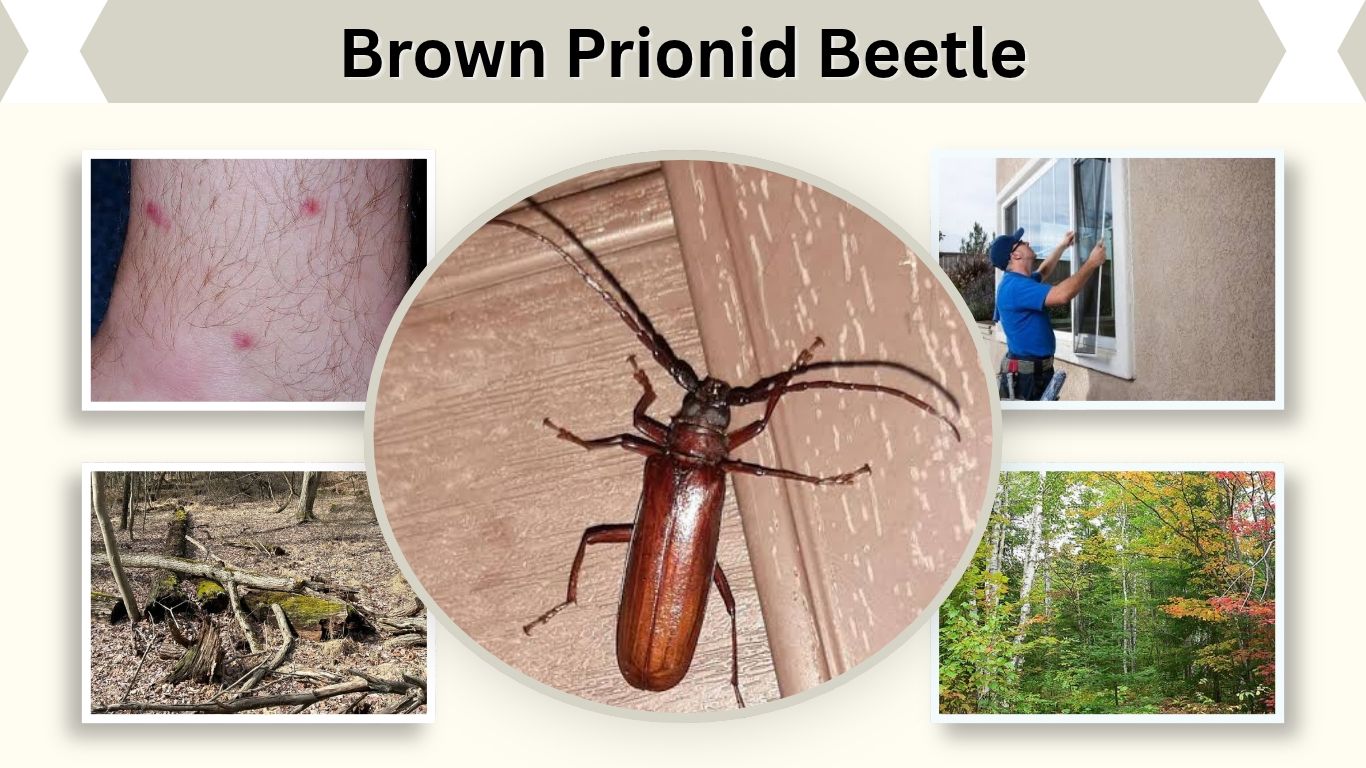
The brown prionid beetle is a large, reddish-brown insect commonly found in forests, gardens, and wooded residential areas across eastern North America. Its long antennae, strong jaws, and impressive size often make people wonder whether it is dangerous or harmful to their homes. Although brown prionid beetles can bite when threatened, they are generally harmless and play an important role in breaking down decaying wood. Understanding their appearance, habitat, behavior, and feeding habits helps homeowners identify these beetles and manage unwanted indoor encounters safely.
What Is a Brown Prionid Beetle?
The brown prionid beetle (Orthosoma brunneum) is a native North American insect belonging to the longhorn beetle family Cerambycidae. It is commonly found in wooded environments where dead trees, fallen logs, and decaying roots provide suitable habitats for developing larvae.
Unlike many household pests, brown prionid beetles do not normally infest living spaces. Adults are frequently encountered during summer evenings when they fly toward artificial lights. Their intimidating appearance often leads to confusion with cockroaches and other large beetles.
Brown Prionid Beetle Identification
Brown prionid beetles have distinctive physical features that make them relatively easy to recognize. Their elongated bodies, reddish-brown coloring, and prominent antennae distinguish them from many other insects.
Adults are generally about 1 to 2 inches long, although individual sizes vary. Their hard wing covers protect the delicate wings used for flying.
Physical Characteristics of Brown Prionid Beetles
Common identifying characteristics include:
- Body color: Reddish-brown to dark chestnut-brown, usually with a fairly uniform appearance.
- Body shape: Long, sturdy, and somewhat flattened, with nearly parallel sides.
- Antennae: Long, segmented antennae extending outward from the head.
- Thorax: Broad pronotum with small pointed projections along its sides.
- Wings: Hard outer wing covers that protect functional hindwings.
- Legs: Six strong legs that help the beetle grip bark and other rough surfaces.
Brown Prionid Beetle Larvae Appearance
Brown prionid larvae look considerably different from adults. They have elongated, creamy-white bodies, darker heads, and powerful chewing mouthparts.
The larvae develop inside decaying wood, where they create tunnels while feeding. Because they remain hidden within rotting logs, roots, and stumps, they are rarely noticed unless the wood is disturbed.
Do Brown Prionid Beetles Bite?
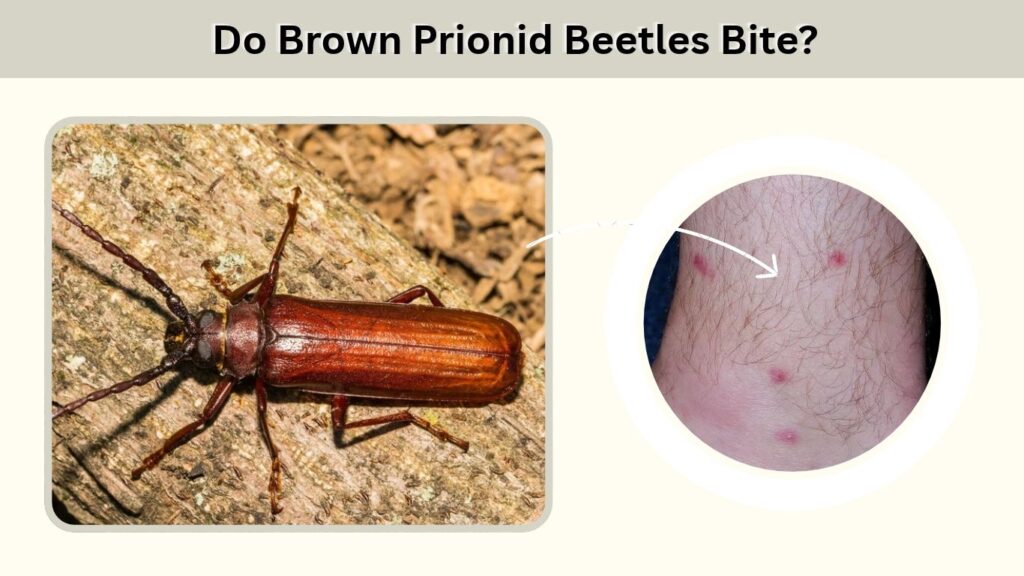
Yes, brown prionid beetles can bite humans, but they are not aggressive insects. Their powerful mandibles may deliver a painful pinch when they are handled roughly, trapped against the skin, or threatened.
Brown prionid beetles do not possess stingers or venom glands. Their bites are defensive rather than an attempt to attack people.
What Happens If a Brown Prionid Beetle Bites You?
A brown prionid beetle bite may cause temporary pain, redness, or mild swelling. Occasionally, a strong pinch can break the skin.
Most minor bites can be managed with basic first aid.
- Clean the area: Wash the affected skin thoroughly with soap and water.
- Apply a cold compress: Use a wrapped cold pack to reduce discomfort and swelling.
- Protect broken skin: Cover any small wound with a clean dressing.
- Monitor symptoms: Seek medical attention if swelling worsens or signs of infection appear.
Severe allergic symptoms, including breathing difficulty or swelling of the face or throat, require emergency medical care.
Are Brown Prionid Beetles Dangerous or Poisonous?
Brown prionid beetles are generally harmless to humans and pets. They are not poisonous, do not inject venom, and are not known to transmit diseases to people.
Their large bodies and strong mouthparts can make them appear threatening, particularly when encountered indoors.
However, these beetles typically try to escape rather than confront potential threats.
They also play a beneficial ecological role. Their larvae help decompose dead wood, contributing to nutrient recycling in forest environments.
Avoiding direct handling is usually enough to prevent uncomfortable defensive bites.
Why Is a Brown Prionid Beetle in My House?
A brown prionid beetle inside a house is usually an accidental visitor rather than evidence of an infestation. Adults are attracted to artificial lighting and may enter buildings through open doors, windows, or damaged screens.
They are especially noticeable during warm summer nights when outdoor beetle activity increases.
How to Get Rid of Brown Prionid Beetles in Your House
Removing brown prionid beetles typically requires simple exclusion and careful relocation rather than chemical treatments.
Effective removal methods include:
- Capture the beetle safely: Place a container over the insect and gently slide a piece of cardboard underneath.
- Release it outdoors: Move the beetle away from entrances without touching it directly.
- Reduce outdoor lighting: Turn off unnecessary lights or use less attractive outdoor lighting.
- Seal entry points: Repair damaged window screens and close gaps around exterior doors.
- Check moisture-damaged wood: Investigate deteriorating timber if beetles repeatedly emerge from the same indoor location.
Occasional sightings rarely require professional pest control. However, repeated emergence from structural wood may justify an inspection to identify moisture problems or other wood-boring insects.
Brown Prionid Beetle vs. Cockroach
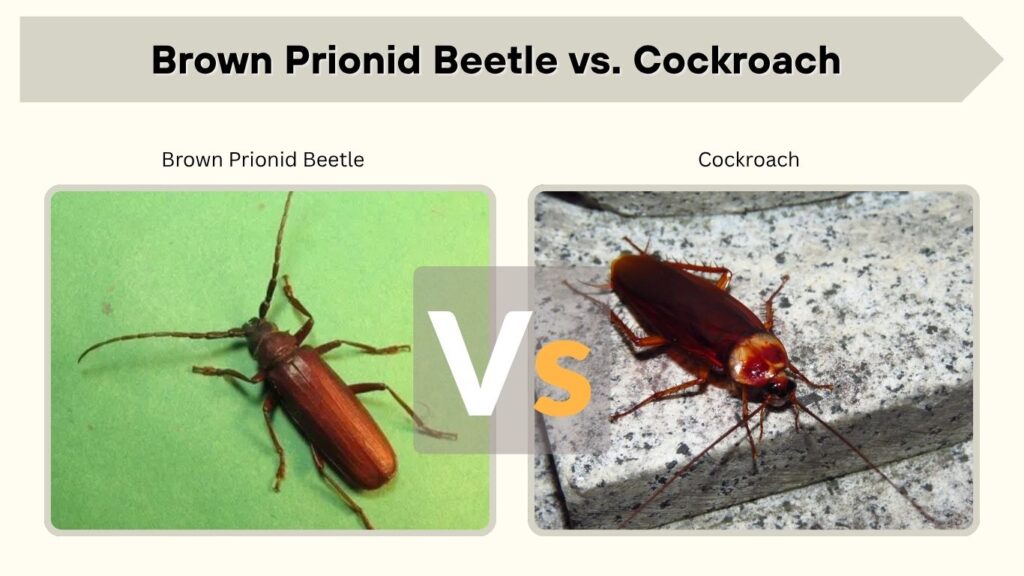
Brown prionid beetles are sometimes mistaken for cockroaches because both insects may have brown bodies, long antennae, and functional wings.
However, their body structures and behaviors are noticeably different.
Appearance and Body Differences
Brown prionid beetles have elongated, sturdy bodies covered by hard wing cases. These wing covers meet along a straight line down the back, creating a recognizable central seam.
Cockroaches generally have flatter, more oval-shaped bodies. Their antennae are usually thinner and more threadlike, while their front wings are leathery rather than hard beetle wing covers.
Behavior and Habitat Differences
Brown prionid larvae develop mainly in decaying wood, while adults are commonly encountered around trees and outdoor lights.
Cockroaches have more varied feeding habits, and certain species establish populations indoors where food, moisture, and shelter are available.
A single brown prionid beetle entering through a window does not indicate the same household pest problem as a cockroach infestation.
Brown Prionid Beetle Habitat and Range
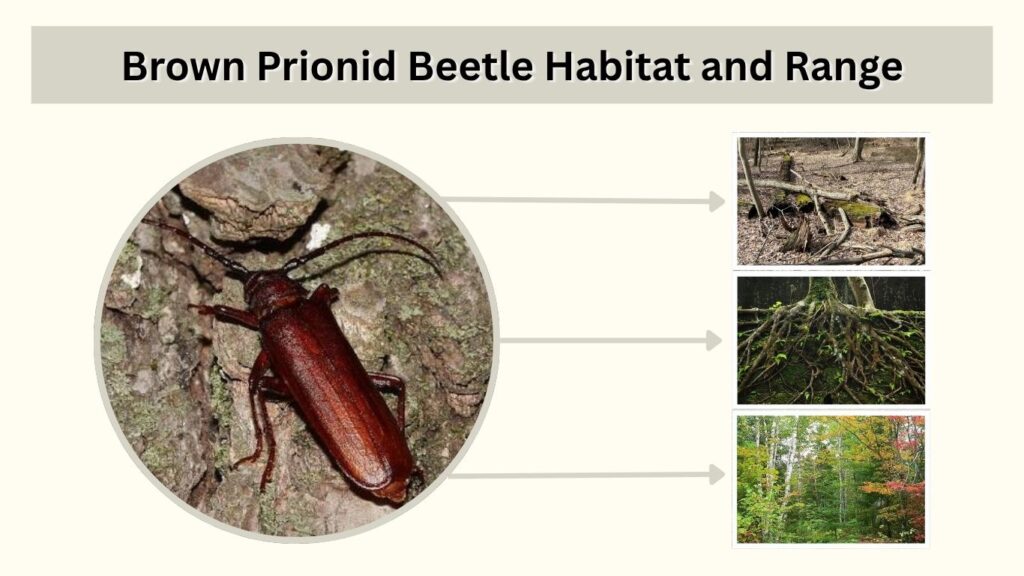
Brown prionid beetles are native to North America and are widely distributed throughout the eastern United States and parts of southeastern Canada.
They occur in states including Pennsylvania, Michigan, Indiana, Massachusetts, and North Carolina.
Their natural habitats include deciduous forests, mixed woodlands, parks, and residential neighborhoods containing mature trees.
Where Do Brown Prionid Beetles Live?
Brown prionid larvae typically develop inside decaying wood, including fallen logs, underground roots, and old tree stumps.
These sheltered environments provide moisture and food during their extended development.
Adults are more mobile and may be found resting on tree trunks, walking across the ground, or flying near illuminated buildings.
They are most commonly noticed during warmer months, particularly from summer into early fall.
What Do Brown Prionid Beetles Eat?
Brown prionid beetles have different feeding requirements depending on their development stage. Their larvae rely on deteriorating woody material, while adult feeding habits are less clearly documented.
Brown Prionid Larvae Diet
Brown prionid larvae feed on dead and decaying wood, often within moist logs, stumps, and buried roots.
Their strong mouthparts allow them to tunnel through deteriorating woody tissues while developing.
This feeding activity contributes to the natural decomposition process and helps recycle organic matter within forest ecosystems.
What Do Adult Brown Prionid Beetles Eat?
Adult brown prionid beetles are not commonly observed feeding, and their exact diet is not well documented.
Their adult stage focuses largely on dispersal and reproduction. Unlike household pantry pests, they do not normally search for stored food or establish feeding populations inside kitchens.
Brown Prionid Beetle Life Cycle
Brown prionid beetles undergo complete metamorphosis, developing through egg, larval, pupal, and adult stages.
Females lay eggs in suitable decaying wood, where newly hatched larvae can begin feeding.
Egg and Larval Development
After hatching, larvae tunnel deeper into deteriorating wood and gradually increase in size.
This stage may last several years, depending on available food, temperature, and moisture conditions.
Because larvae remain hidden inside wood, their development usually goes unnoticed.
Pupal and Adult Stages
Once fully developed, larvae transform into pupae within protected chambers.
Adult beetles eventually emerge and search for mates. Their adult lives are relatively short compared with their extended larval development.
Do Brown Prionid Beetles Fly or Make Sounds?
Yes, brown prionid beetles can fly. They possess functional hindwings beneath their hard wing covers and frequently fly during warm evenings.
Their heavy bodies may make flight appear somewhat awkward, but adults can travel between wooded habitats and nearby residential areas.
Brown prionid beetles can also produce squeaking sounds when disturbed.
These sounds result from stridulation, which occurs when specialized body surfaces rub against one another. The noise is generally a defensive response rather than evidence of aggressive behavior.
How to Prevent Brown Prionid Beetles Around Your Home
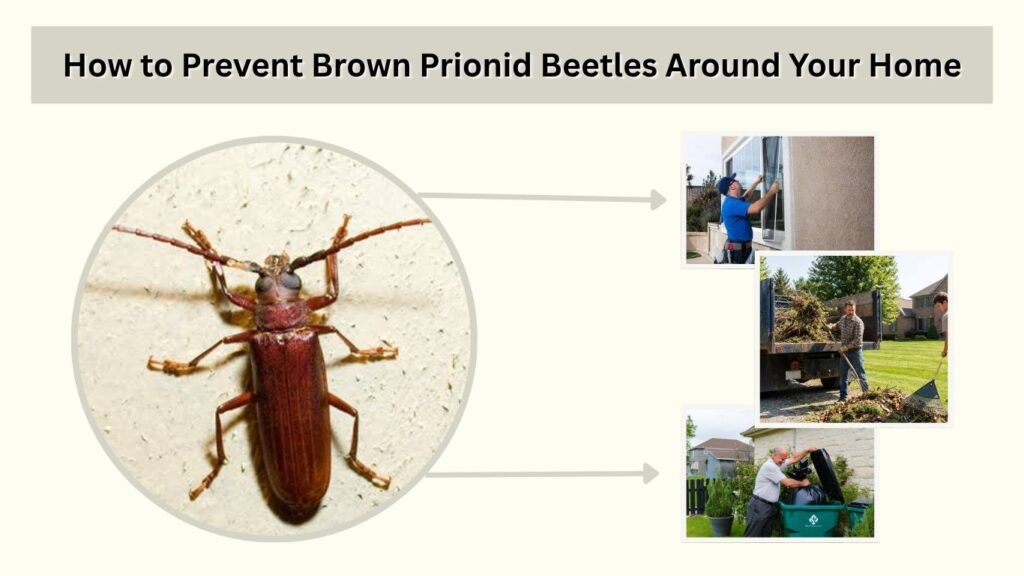
Preventing brown prionid beetles from entering houses mainly involves reducing nighttime attraction and maintaining suitable outdoor conditions.
Because larvae develop in decaying wood, removing unnecessary rotting material near buildings may reduce nearby breeding habitats.
Brown Prionid Prevention Tips
Practical prevention methods include:
- Maintain window screens: Repair tears and ensure screens fit securely.
- Reduce nighttime lighting: Switch off unnecessary exterior lights during summer.
- Remove decaying wood: Clear unwanted rotting logs and stumps close to the house.
- Address moisture problems: Repair leaks and replace severely deteriorated wooden materials.
- Inspect entry points: Seal accessible gaps around doors, windows, and utility openings.
These measures help discourage accidental indoor entry without unnecessarily eliminating beneficial insects.
FAQs
1. Are Brown Prionid Beetles Native to North America?
Yes, brown prionid beetles are native to North America. They naturally occur in eastern forests and wooded environments and are not considered introduced invasive pests.
2. Can Brown Prionid Beetles Damage Your House?
Brown prionid beetles rarely damage sound, dry structural wood. Their larvae primarily develop in dead, deteriorating wood, although moisture-damaged timber may occasionally provide suitable habitat.
3. How Big Can Brown Prionid Beetles Get?
Adult brown prionid beetles generally measure approximately 1 to 2 inches long. Their elongated bodies and prominent antennae can make them appear larger.
4. When Are Brown Prionid Beetles Most Active?
Adult brown prionid beetles are most noticeable during summer and early fall. They often fly at night and are frequently attracted to outdoor lights.
5. Should You Kill a Brown Prionid Beetle?
Killing brown prionid beetles is usually unnecessary. They are generally harmless, beneficial decomposers that can be safely captured and released outdoors without direct handling.