
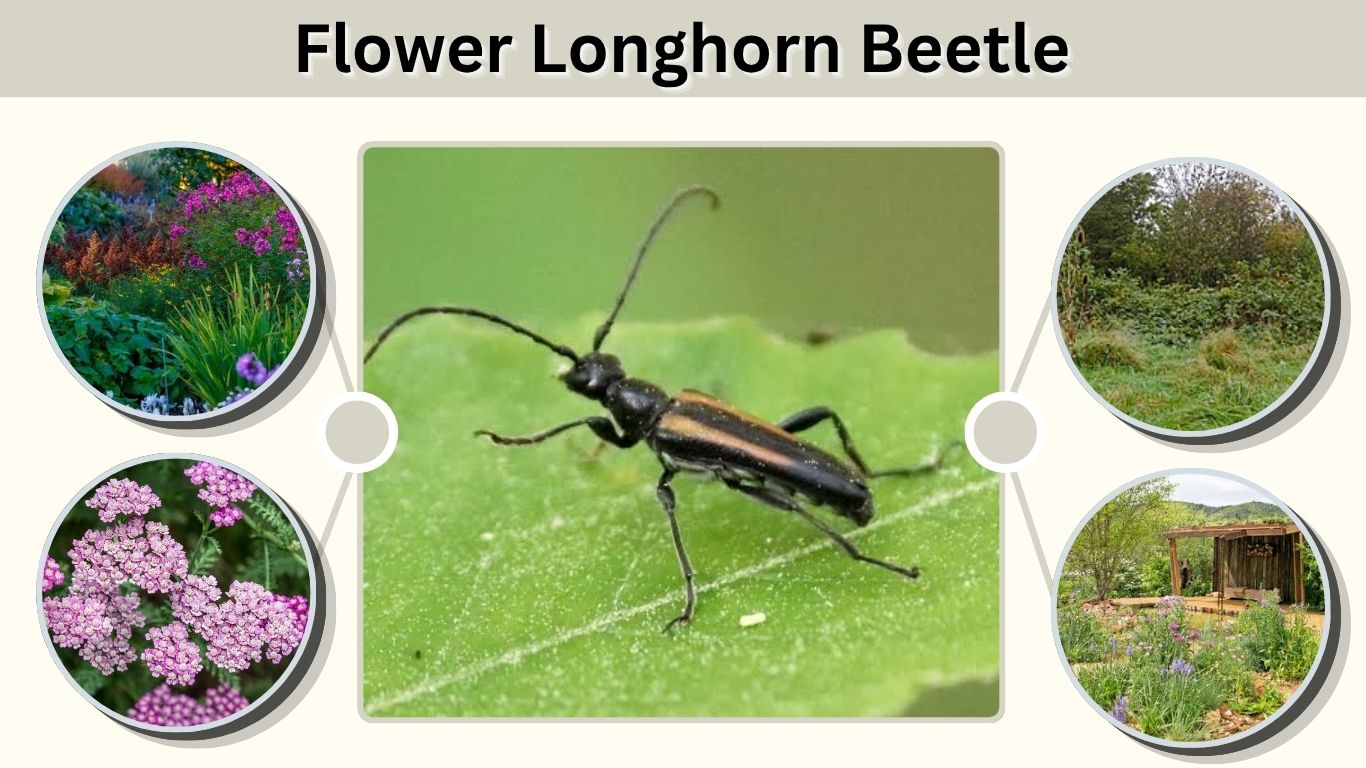
Flower longhorn beetles are fascinating insects commonly found visiting wildflowers, gardens, and woodland edges. Recognized by their long antennae, slender bodies, and colorful markings, these beetles belong to the longhorn beetle family Cerambycidae. Many species resemble wasps or bees, but they are generally harmless and play useful roles in pollination. While adult beetles feed mainly on nectar and pollen, their larvae often develop inside decaying wood. This guide explores flower longhorn beetle identification, common species, habitat, diet, life cycle, bites, and ecological benefits.
What Is a Flower Longhorn Beetle?
Flower longhorn beetles are a diverse group of longhorn beetles that commonly visit flowers as adults. Most of the species referred to by this name belong to the subfamily Lepturinae, although the common name is also applied to other flower-visiting longhorns.
In North America, the genus Typocerus includes several familiar flower longhorn beetles. Adults are generally most noticeable during warm, sunny weather when flowers are abundant.
Flower Longhorn Beetle Scientific Classification
- Common name: Flower Longhorn Beetle
- Order: Coleoptera
- Family: Cerambycidae
- Common subfamily: Lepturinae
- Example genera: Typocerus, Strangalia, Leptura
- Adult diet: Pollen and nectar
- Larval habitat: Decaying wood and woody plant material
The name covers multiple species rather than one scientific species.
How to Identify a Flower Longhorn Beetle
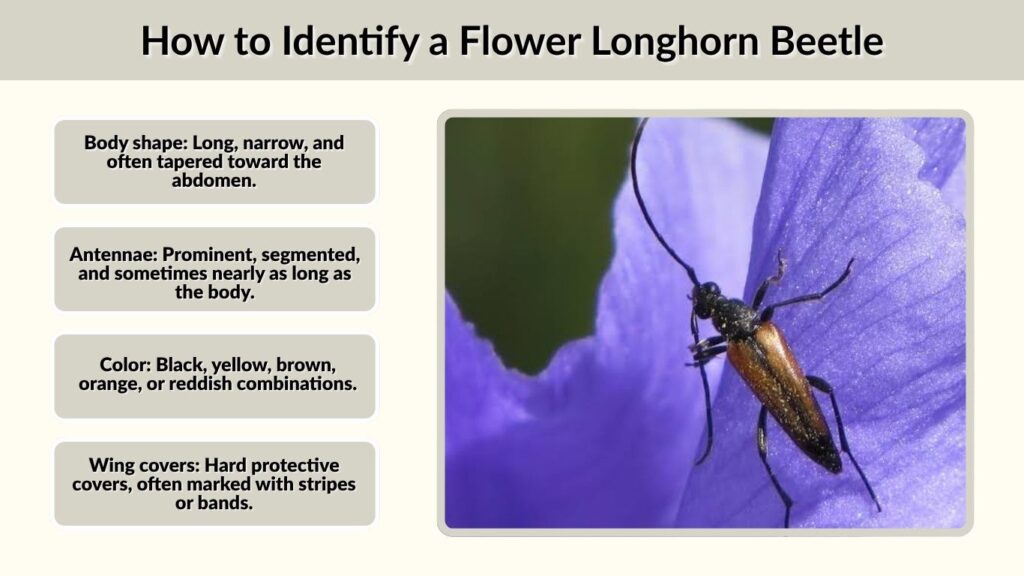
Flower longhorn beetles usually have narrow bodies, long legs, and flexible-looking antennae. Many have yellow, black, orange, or reddish markings that resemble the warning colors of stinging insects.
Their appearance varies among species, but several shared characteristics help distinguish them from other beetles.
Physical Appearance and Size
Common identification features include:
- Body shape: Long, narrow, and often tapered toward the abdomen.
- Antennae: Prominent, segmented, and sometimes nearly as long as the body.
- Color: Black, yellow, brown, orange, or reddish combinations.
- Wing covers: Hard protective covers, often marked with stripes or bands.
- Legs: Long and slender, allowing movement across flower surfaces.
Many species measure approximately 8–20 mm long, although sizes vary considerably.
Common Types of Flower Longhorn Beetles
Several flower longhorn species are found throughout North America and other regions. They differ in their body markings, geographical distribution, and preferred habitats.
Identifying individual species usually requires examining antennae, wing patterns, and body proportions.
1. Notch-Tipped Flower Longhorn Beetle
The notch-tipped flower longhorn beetle (Typocerus sinuatus) is a small species recognized by its black-and-yellow wing coverings and distinctive wing tips.
Adults are generally about 9–14 mm long. They visit flowers during warmer months and may resemble small wasps because of their contrasting colors.
2. Bicolored Flower Longhorn Beetle
The bicolored flower longhorn beetle (Strangalia bicolor) has a slender body with orange and black coloration. It typically measures around 10–14 mm.
Adults visit flowers for pollen and nectar, while larvae develop in decaying hardwood, including maple and oak.
3. Slender Flower Longhorn Beetle
The slender flower longhorn (Strangalia famelica) has an elongated body, thin antennae, and contrasting markings.
Adults frequently appear on flowers during late spring and summer. Their narrow body shape distinguishes them from many broader longhorn beetles.
4. Yellow-Horned Flower Longhorn Beetle
The yellow-horned flower longhorn beetle (Strangalia luteicornis) is another North American species.
Its scientific name refers to its yellowish antennae. Like many flower longhorns, it belongs to the subfamily Lepturinae.
5. Banded Flower Longhorn Beetle
The banded longhorn beetle (Typocerus velutinus) features a reddish-brown body with prominent yellow bands.
Adults visit flowers and may also appear around lights. Its larvae develop in decaying oak and hickory wood.
6. Zebra Flower Longhorn Beetle
The zebra longhorn beetle (Typocerus zebra) has distinctive contrasting markings, including yellow triangular patches near the bases of its wing covers.
It occurs in parts of the eastern United States. Its larvae develop in decaying pine wood.
Where Do Flower Longhorn Beetles Live?
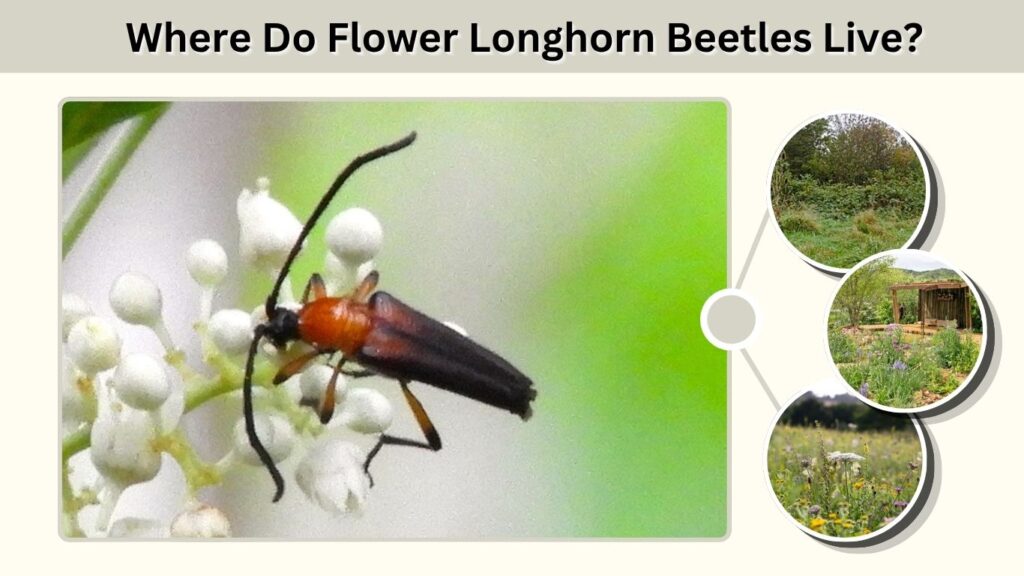
Flower longhorn beetles inhabit forests, meadows, woodland edges, gardens, and open fields. Their preferred environments generally contain flowering plants for adults and suitable woody material for developing larvae.
They occur in many regions worldwide, although individual species have different geographic ranges.
Flower Longhorn Beetles in the United States
Different species occur in states such as Louisiana, South Carolina, Utah, and Oregon. However, a beetle found in one state may belong to a completely different species from one observed elsewhere.
Habitats with native flowers and nearby deadwood are particularly suitable for many flower longhorns.
Flower Longhorn Beetles in New Zealand
In New Zealand, the name flower longhorn beetle is commonly associated with the endemic genus Zorion.
These are small, often brightly colored beetles that visit flowers for nectar and pollen. Unlike most northern flower longhorns, Zorion belongs to the subfamily Cerambycinae, making it a distinct group within the same family.
What Do Flower Longhorn Beetles Eat?
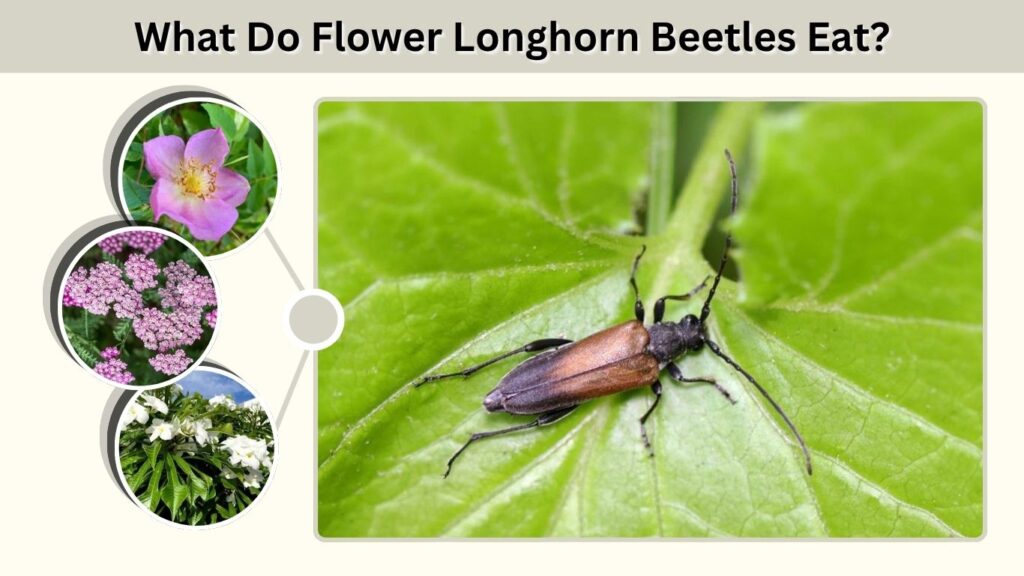
Flower longhorn beetles have different diets during their adult and larval stages. Adult beetles generally depend on flowering plants, while immature beetles develop inside woody material.
This separation allows them to use different food sources throughout their lives.
Adult Flower Longhorn Beetle Diet
Adults feed primarily on pollen and nectar. Depending on the species and region, they may visit wild roses, flowering shrubs, and plants with accessible clusters of small flowers.
Some adults consume pollen directly, while others obtain energy from nectar.
Flower Longhorn Beetle Larvae Diet
Larvae typically feed inside dead, dying, or decomposing wood. They chew through woody tissues as they develop.
Some species use hardwoods such as oak and maple, while others develop in coniferous wood.
Many are associated with already-dead material rather than attacking healthy living trees.
Are Flower Longhorn Beetles Beneficial?
Yes, many flower longhorn beetles provide ecological benefits, particularly through pollination and decomposition.
Their feeding habits connect flowering plants with the breakdown of dead woody material, making them useful members of woodland ecosystems.
Flower Longhorn Beetles as Pollinators
As adults move between blossoms, pollen can attach to their bodies and transfer to other flowers.
Flower longhorns are often associated with plants in the carrot family, including species with broad clusters of small flowers. Although their feeding can occasionally damage delicate floral structures, they can still contribute to pollination.
Their Role in Decomposition
Larvae help break down decaying woody material. Their tunnels expose additional wood surfaces to fungi and other decomposers.
This process contributes to nutrient recycling and the gradual decomposition of fallen branches, logs, and tree stumps.
Flower Longhorn Beetle Life Cycle
Flower longhorn beetles undergo complete metamorphosis, passing through egg, larva, pupa, and adult stages.
Their development depends on the species, temperature, and availability of suitable decaying wood.
Four Stages of Development
- Egg: Females deposit eggs in suitable woody material, often near cracks or damaged bark.
- Larva: The young larvae tunnel into wood and feed while growing through successive molts.
- Pupa: Mature larvae transform inside protected chambers within the wood.
- Adult: Beetles emerge and begin searching for food and mates.
In some species, larval development takes two or three years. Adult beetles generally live much shorter lives.
Do Flower Longhorn Beetles Bite?
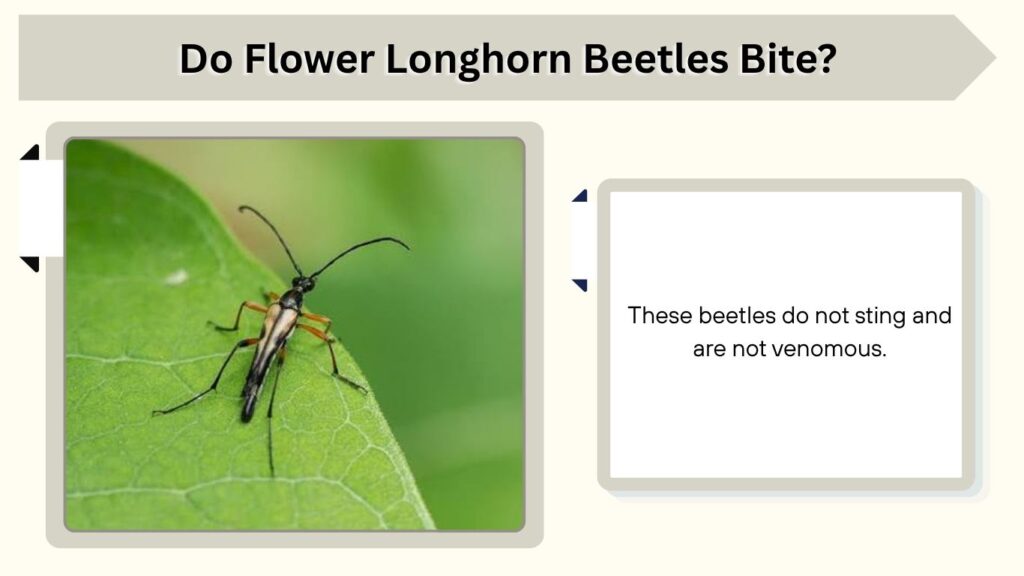
Flower longhorn beetles are not aggressive toward humans. They spend most of their adult lives visiting flowers, mating, and locating suitable breeding habitats.
Although they possess chewing mouthparts, biting people is not part of their normal behavior.
Is a Flower Longhorn Beetle Bite Dangerous?
A flower longhorn beetle may occasionally pinch or bite defensively when handled roughly.
These beetles do not sting and are not venomous. Any defensive bite is generally minor, although washing broken skin and monitoring for irritation is sensible.
The simplest way to avoid being bitten is to observe them without squeezing or restraining them.
Male vs. Female Flower Longhorn Beetles
Male and female flower longhorn beetles may differ in body size, antenna length, and coloration. However, these differences depend on the species.
For example, the red longhorn beetle (Stictoleptura rubra) displays noticeable differences between males and females.
How to Tell Males and Females Apart
Females of Stictoleptura rubra have reddish wing covers and a reddish thorax. Males have a darker head and thorax with paler wing covers.
In some other species, males have relatively longer antennae, while females may have broader abdomens.
Accurate identification should therefore use characteristics specific to the species rather than a single universal rule.
How to Attract Flower Longhorn Beetles to Your Garden
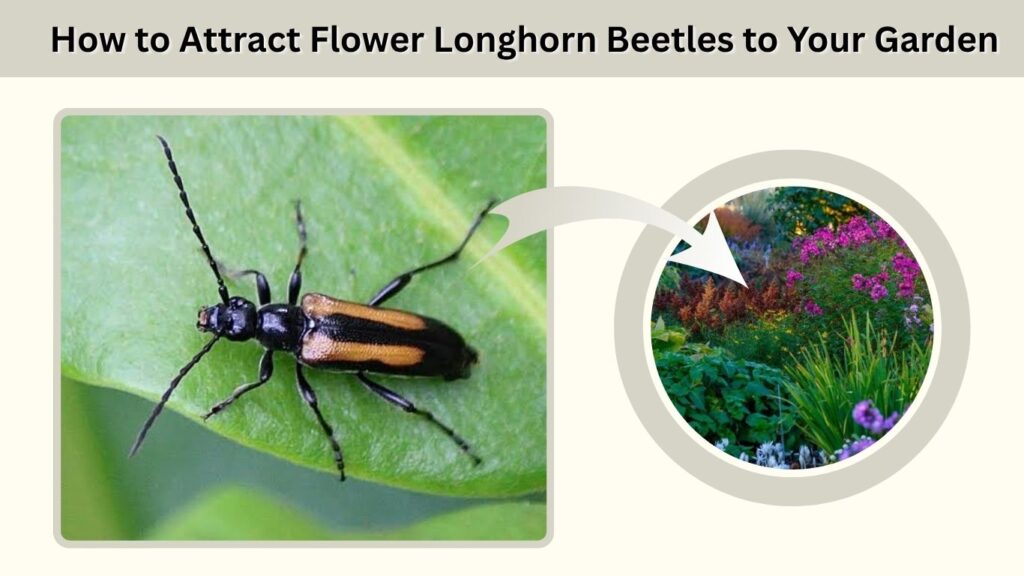
Attracting flower longhorn beetles can help support local insect diversity. Gardens with continuous flowering and nearby natural habitats provide useful resources for adult beetles.
Native flowering plants are generally preferable because they also support other locally adapted pollinators.
Best Ways to Support Flower Longhorn Beetles
Consider these gardening practices:
- Grow a variety of native flowering plants.
- Choose flowers that bloom at different times.
- Preserve safe amounts of fallen wood or old branches.
- Avoid unnecessary insecticide applications.
- Maintain natural woodland edges where practical.
Leaving some decaying wood in suitable outdoor areas can provide larval habitat without affecting healthy garden plants.
FAQs
1. Are Flower Longhorn Beetles Harmful?
Most flower longhorn beetles are harmless to people and beneficial to ecosystems. Adults visit flowers, while many larvae feed in dead wood. They rarely require pest control.
2. Can Flower Longhorn Beetles Fly?
Yes. Adult flower longhorn beetles have functional wings beneath their hardened wing covers. Many fly between flowers during warm daylight hours.
3. What Flowers Do Longhorn Beetles Pollinate?
Flower longhorns visit many flowering plants, particularly species with accessible pollen and nectar. Their visits may contribute to pollination of wildflowers, shrubs, and certain plants in the carrot family.
4. Are Red Flower Longhorn Beetles Poisonous?
Red-colored flower longhorn beetles are not generally poisonous or venomous to humans. Their coloration varies by species and does not necessarily indicate danger.
5. Do Flower Longhorn Beetles Damage Trees?
Many flower longhorn larvae develop in wood that is already dead or decaying. They usually do not damage healthy trees, although other members of the broader longhorn beetle family can be serious tree pests.
