
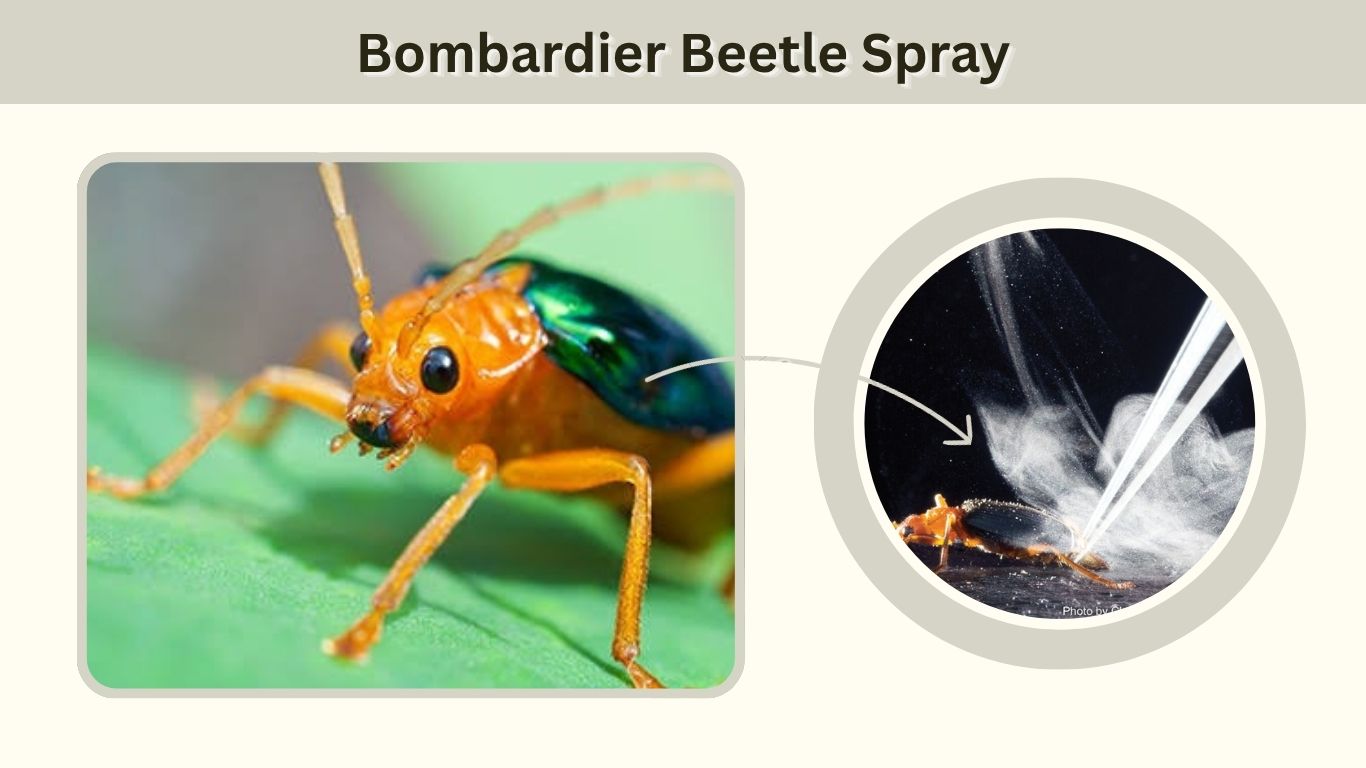
Imagine a tiny beetle defending itself by releasing a chemical spray almost as hot as boiling water. The bombardier beetle uses an extraordinary defense mechanism that combines reactive chemicals to produce a hot, irritating discharge. But how does bombardier beetle spray work, and can it hurt humans? Understanding its chemical composition, temperature, defensive purpose, and potential effects on skin reveals how this remarkable insect protects itself from predators.
What Is Bombardier Beetle Spray?
Bombardier beetle spray is a specialized chemical defense used by certain ground beetles to escape predators. Instead of relying on venomous bites or physical strength, these beetles release hot, irritating liquid from glands near the end of their abdomen. The discharge can produce audible popping sounds and is particularly effective against attacking ants and other small animals.
What Chemicals Do Bombardier Beetles Spray?
The chemical system of explosive-spraying bombardier beetles involves several important substances:
- Hydrogen peroxide: A reactive compound involved in generating heat and oxygen.
- Hydroquinones: Organic compounds converted into irritating quinones.
- Catalase: An enzyme that helps break down hydrogen peroxide.
- Peroxidase: An enzyme involved in the oxidation reactions.
- Benzoquinones: Irritating chemicals produced during the reaction and released in the spray.
The beetle keeps the reactants and reaction-triggering enzymes separated until it needs to defend itself. This arrangement prevents the reaction from occurring prematurely.
Do Bombardier Beetles Spray Acid or Fire?
Bombardier beetles do not spray actual fire. Their defensive liquid contains irritating quinones and becomes extremely hot through a rapid chemical reaction.
Although the discharge is sometimes described as boiling acid, that description is scientifically misleading. The best-known true bombardier beetles produce a hot, quinone-rich mixture rather than a simple stream of acid.
How Does a Bombardier Beetle Spray Work?
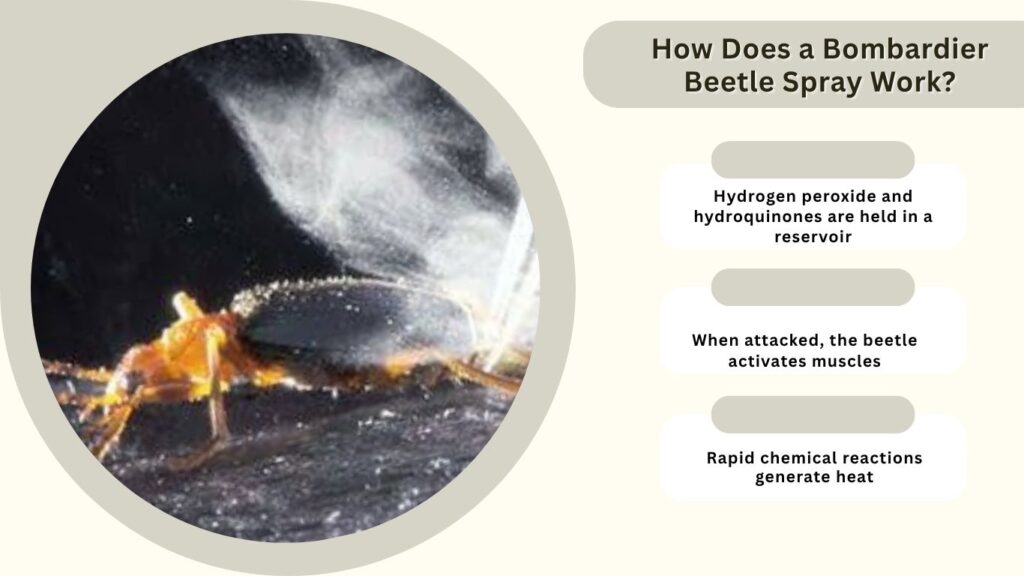
The bombardier beetle spraying mechanism operates like a miniature chemical reactor. Its abdomen contains specialized structures that store reactants, control their movement, and release the resulting mixture under pressure. The entire process happens extremely quickly, allowing the beetle to produce repeated defensive bursts while responding to an approaching predator.
Step-by-Step Bombardier Beetle Spray Mechanism
- Chemical storage: Hydrogen peroxide and hydroquinones are held in a reservoir, away from the reaction chamber’s enzymes.
- Threat detection: When attacked, the beetle activates muscles that help move the stored chemicals.
- Chemical mixing: The reactants enter the reaction chamber and encounter catalase and peroxidase.
- Heat production: Rapid chemical reactions generate heat, oxygen, and irritating quinones.
- Pressure buildup: Expanding gas and vapor create pressure inside the chamber.
- Defensive discharge: The hot mixture exits through an opening near the abdominal tip.
Research using high-speed X-ray imaging has shown how specialized internal structures help regulate this pulsed discharge.
Why Does the Beetle Spray in Repeated Bursts?
The beetle does not simply release one continuous stream. In well-studied species, the pressure generated inside the reaction chamber causes a valve-like structure to open and close rapidly.
This creates a succession of tiny pulses, allowing the beetle to deliver its chemical defense with remarkable speed and control.
How Hot Is Bombardier Beetle Spray?
One extraordinary feature of bombardier beetle spray is its temperature. Studies of explosive-spraying species have measured discharge temperatures near 100°C (212°F), approximately the boiling point of water at sea level. However, the beetle releases only a very small quantity of liquid, so an exposure is not equivalent to being splashed with a large amount of boiling water.
Bombardier Beetle Spray Temperature and Characteristics
| Characteristic | Research findings |
| Maximum reported temperature | Approximately 100°C (212°F) |
| Primary irritants | Benzoquinones |
| Discharge form | Hot liquid droplets and vapor |
| Pulse frequency | Around 500 per second in a studied species |
| Spray velocity | Approximately 10 m/s in studied species |
| Typical range | Several centimeters |
These figures describe studied explosive-spraying bombardier beetles. Actual performance varies among species and conditions.
Why Is Bombardier Beetle Spray So Hot?
The chemical reaction inside the beetle’s abdominal chamber is exothermic, meaning it releases heat.
As the reactants interact, the temperature rises rapidly. Oxygen and water vapor also contribute to increased pressure.
The heat, chemical irritants, and sudden discharge work together to discourage predators.
Does Bombardier Beetle Spray Hurt Humans?
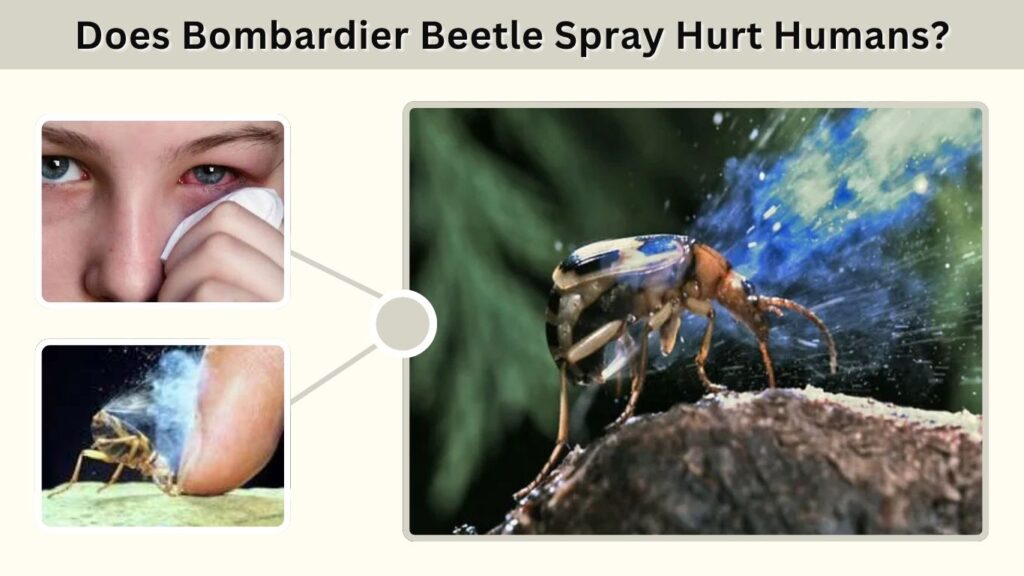
Bombardier beetles generally avoid confrontation with humans and use their chemical defense when physically threatened. Although they are not aggressive insects, direct exposure to their spray can cause discomfort. The severity depends on factors such as the beetle species, the amount released, and whether the fluid reaches skin, eyes, or another sensitive area.
Bombardier Beetle Spray on Skin
Contact with bombardier beetle spray may cause a burning sensation, redness, or irritation. Some exposures may result in localized burns or contact dermatitis.
Research and university extension publications recognize the potential for these effects, although the severity of individual exposures can vary considerably.
What Happens If the Spray Gets in Your Eyes?
Eye exposure is particularly concerning because the discharged chemicals are irritating and may be hot.
Symptoms can include pain, redness, excessive tearing, and blurred vision. Prompt rinsing is important to reduce further irritation or injury.
Direct exposure to the eyes should be treated seriously rather than waiting to see whether symptoms disappear.
Do Bombardier Beetles Spray Humans Intentionally?
Bombardier beetles do not actively seek out people to spray. However, picking up, squeezing, trapping, or disturbing one may trigger its defensive response.
The beetle reacts to a perceived threat, and humans may accidentally become targets when handling it.
What to Do If Sprayed by a Bombardier Beetle
Accidental exposure requires immediate attention, particularly if the spray contacts your face or eyes. Since the liquid combines heat with irritating chemicals, rinsing the affected area is the most important initial step. Do not attempt to neutralize the secretion using other chemicals or household remedies, as these can worsen irritation.
First Aid After Bombardier Beetle Spray Exposure
- Avoid further contact: Move away from the beetle and avoid touching or rubbing the affected area.
- Rinse exposed skin: Flush the skin with room-temperature running water for at least 15 minutes.
- Flush exposed eyes: Immediately rinse with clean running water for 15–20 minutes. Remove contact lenses if possible.
- Avoid home remedies: Do not apply vinegar, baking soda, or other substances to neutralize the chemicals.
- Get medical advice: Seek prompt medical assessment for eye exposure, blistering, significant burns, persistent pain, or worsening symptoms.
Severe eye pain, vision changes, or extensive skin injuries require urgent medical attention. These precautions follow general chemical exposure first-aid guidance from Poison Control.
How Far and How Often Can Bombardier Beetles Spray?
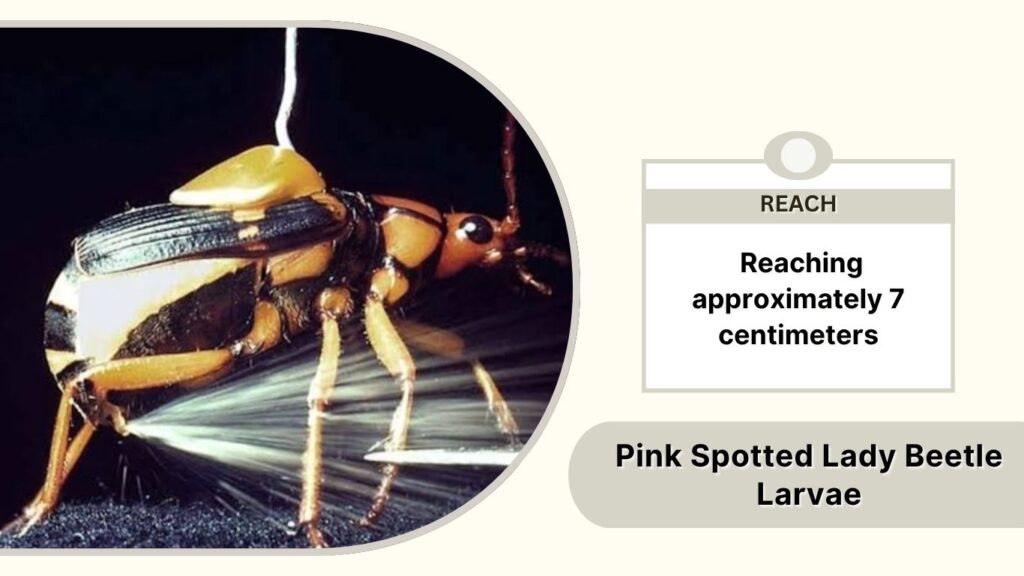
Despite their small size, some bombardier beetles can accurately direct their defensive discharge toward attackers. Their specialized abdominal structures provide considerable flexibility, allowing them to defend against predators approaching from different directions. Researchers have examined both the distance traveled by the spray and the number of discharges a beetle can produce.
How Far Can a Bombardier Beetle Spray?
The spray typically travels several centimeters. Research discussing the African bombardier beetle, Stenaptinus insignis, reports distances reaching approximately 7 centimeters under studied conditions.
Some species can aim their spray backward, sideways, or even toward their own upper body by adjusting the abdominal tip.
How Many Times Can a Bombardier Beetle Spray?
A bombardier beetle can produce multiple discharges before its chemical reserves become depleted.
Research on Stenaptinus insignis describes individuals releasing more than 20 discharges before exhausting their supply.
However, the number varies by species, individual chemical reserves, and defensive circumstances. A repeated pulse within one discharge should not be confused with a separate spraying event.
False Bombardier Beetle Spray vs. True Bombardier Beetle Spray
False bombardier beetles resemble true bombardier beetles, but their chemical defenses differ. Members of the genus Galerita release an acidic secretion without the rapid heat-generating reaction characteristic of explosive-spraying true bombardier beetles. Both defenses can irritate predators, but they rely on different chemical compositions and delivery systems.
Key Differences in Their Defensive Chemicals
| Feature | True Bombardier Beetle | False Bombardier Beetle |
| Main irritating compounds | Benzoquinones | Mainly formic acid |
| Spray temperature | Can reach approximately 100°C | No comparable explosive heating mechanism |
| Chemical process | Rapid exothermic reaction | Release of stored acidic secretion |
| Defense purpose | Repel predators | Repel predators |
| Human exposure | May cause irritation or burns | May cause chemical irritation |
Research on Galerita lecontei found that formic acid accounted for approximately 80% of its defensive secretion. This is fundamentally different from the hot quinone-based mixture of true bombardier beetles.
FAQs
1. Does bombardier beetle spray smell bad?
Yes. The defensive secretion has a noticeable, unpleasant chemical odor caused by its irritating compounds. The exact smell may vary among beetle species.
2. Can bombardier beetle spray burn human skin?
Yes. Exposure may cause burning sensations, redness, irritation, and sometimes skin injury. The effects depend on the quantity of spray and the area exposed.
3. How hot can bombardier beetle spray get?
In well-studied explosive-spraying species, the defensive liquid can reach approximately 100°C (212°F) when discharged.
4. Can a bombardier beetle spray itself?
Some species can direct their spray toward areas of their own body while defending against predators. Their specialized abdominal structures help contain and direct the chemical reaction without ordinarily harming the beetle.
5. Why do bombardier beetles spray chemicals?
Bombardier beetles spray chemicals primarily to defend themselves against predators, including ants, spiders, and other animals. The hot, irritating discharge helps discourage attacks.
