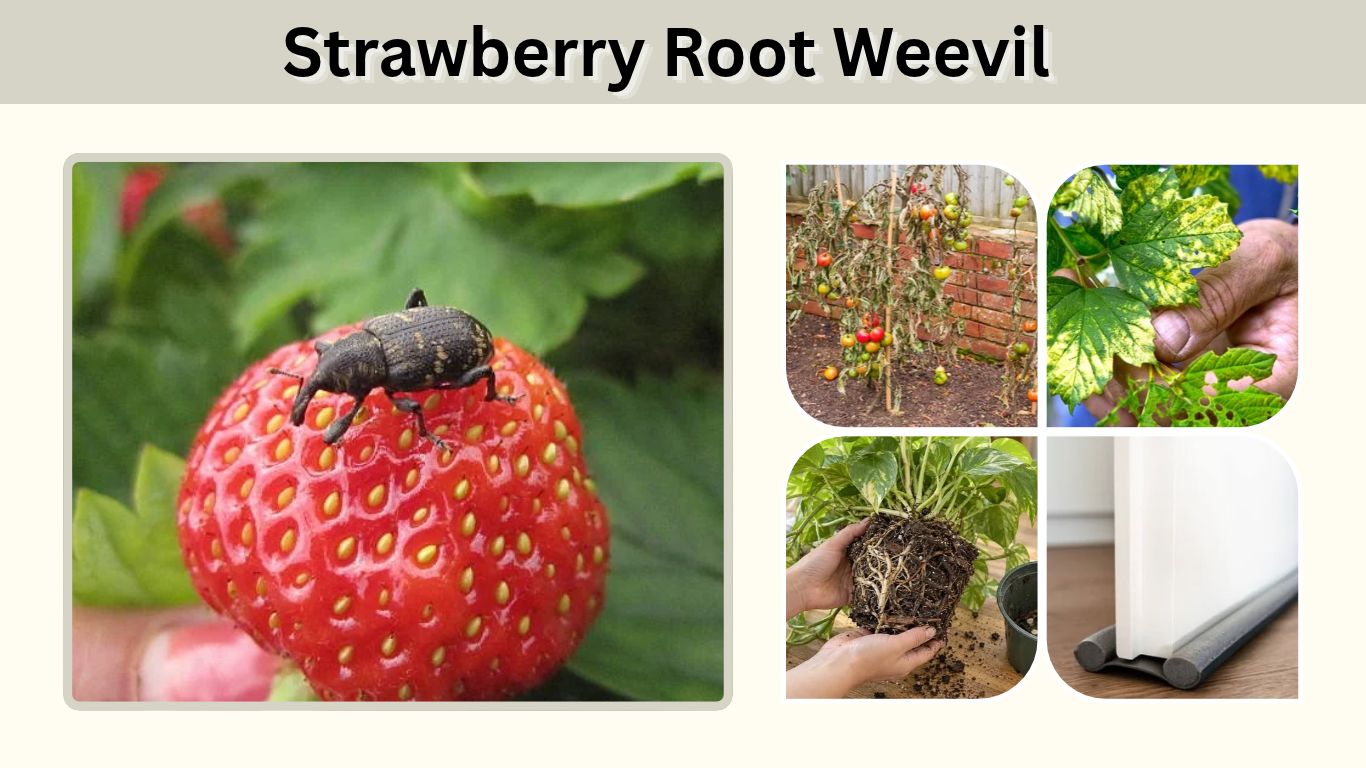
Strawberry root weevils are small, flightless beetles that feed on strawberry plants and many other garden favorites. Adults leave distinctive notches along leaf edges, while underground larvae may damage roots and cause plants to wilt. These dark beetles also sometimes wander indoors, where homeowners mistake them for ticks or household pests. Fortunately, they do not bite people or reproduce inside houses. This guide explains strawberry root weevil identification, their life cycle, the damage they cause, and practical methods for controlling infestations in gardens and homes.
What Is a Strawberry Root Weevil?
The strawberry root weevil (Otiorhynchus ovatus) is a small beetle in the family Curculionidae. Although named after strawberries, it also feeds on raspberries, ornamental shrubs, and various garden plants. Adults generally hide during the day and climb plants to feed after dark. Their larvae live in soil, chewing on roots and occasionally plant crowns. The species occurs in North America and Europe.
Strawberry Root Weevil Identification
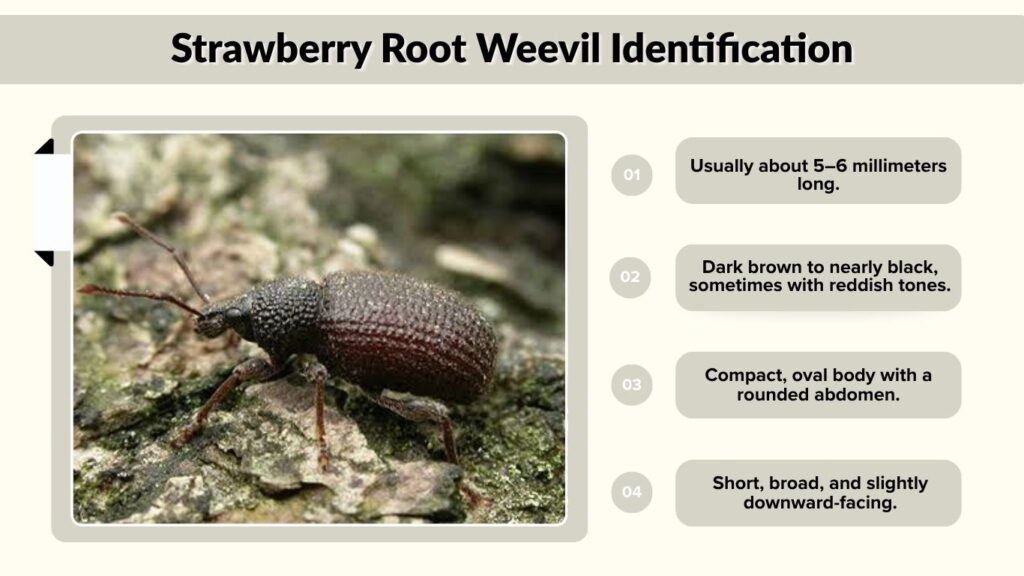
Recognizing a strawberry root weevil helps prevent confusion with ticks and other garden insects. Adults have hardened wing covers and a short, broad snout, while immature weevils look entirely different. Examine body shape and legs before deciding on treatment.
What Does an Adult Strawberry Root Weevil Look Like?
- Size: Usually about 5–6 millimeters long.
- Color: Dark brown to nearly black, sometimes with reddish tones.
- Shape: Compact, oval body with a rounded abdomen.
- Snout: Short, broad, and slightly downward-facing.
- Antennae: Elbowed antennae, unlike those of ticks.
- Legs: Six legs; adults cannot fly because their wing covers are fused.
Strawberry Root Weevil Larvae and Eggs
Larvae are creamy-white, legless grubs with brownish heads and curved bodies. They remain underground, often near roots. Females deposit tiny eggs in soil close to host plants. Other beetle larvae can look similar.
Strawberry Root Weevil Life Cycle
Strawberry root weevils develop through four stages: egg, larva, pupa, and adult. They commonly complete one generation per year, but timing depends on climate. Their development stage determines the best control approach.
From Egg to Adult
Females lay eggs near suitable plants during the growing season. Newly hatched larvae feed on fine roots, grow through several stages, and typically overwinter in soil. In spring, mature larvae pupate underground. Adults generally emerge in late spring or summer and begin eating foliage at night. Many populations reproduce without mating, a process called parthenogenesis.
Strawberry Root Weevil Damage and Food Sources
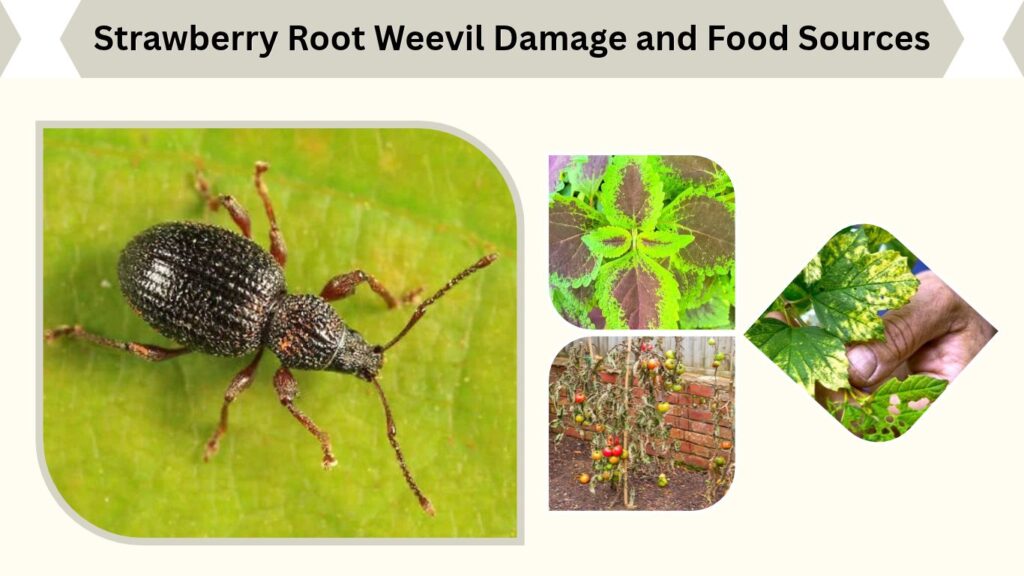
Adults chew small, rounded notches in leaf margins. That feeding is often cosmetic, but larvae can weaken plants by consuming roots and damaging crowns. Strawberries are familiar hosts, yet raspberries, rhododendrons, and other ornamental plants may also be affected. Young plants are especially vulnerable.
Signs of a Strawberry Root Weevil Infestation
- Scalloped leaf edges: Adults create characteristic notches.
- Wilting plants: Damaged roots absorb water poorly.
- Slow growth: Root loss reduces nutrient uptake.
- Yellowing foliage: Plants may show general stress.
- White grubs in soil: Larvae may be visible around damaged roots.
Other weevils create similar leaf notches, so confirm identification.
Strawberry Root Weevil vs Tick and Other Weevils
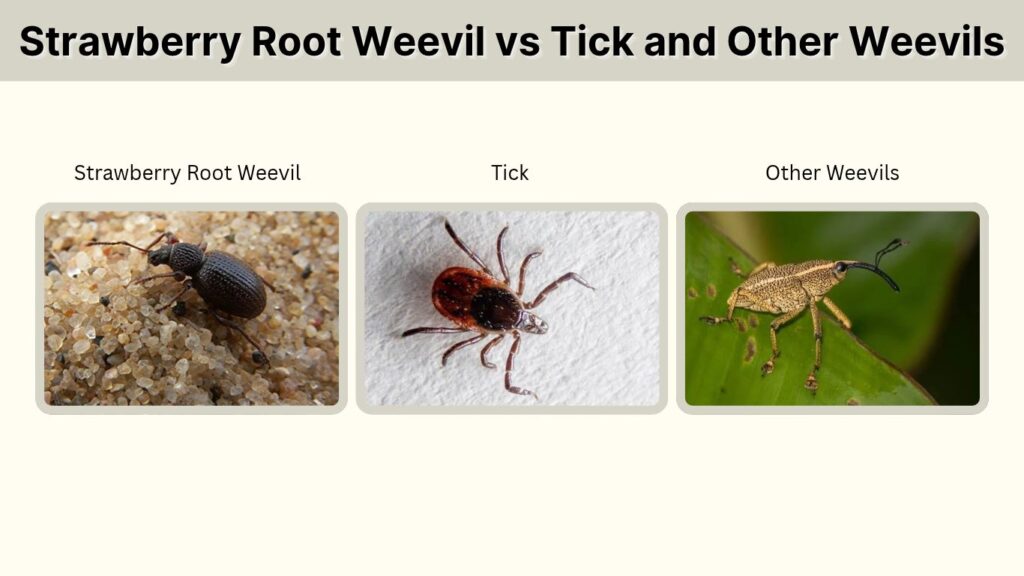
Strawberry root weevils are sometimes mistaken for ticks because both can look like small, dark specks. However, an adult weevil has six legs, antennae, a hard beetle body, and a visible snout. Nymphal and adult ticks have eight legs and lack antennae. Ticks feed on blood; strawberry root weevils feed only on plants.
Black Vine and Rough Strawberry Root Weevils
The black vine weevil (Otiorhynchus sulcatus) is generally larger, often around 10 millimeters, with a dark body and pale markings. The rough strawberry root weevil (Otiorhynchus rugostriatus) is a separate, closely related species with noticeably textured wing covers. All three may cause similar leaf notching and underground root damage.
Strawberry Root Weevils in the House
Adults sometimes wander into homes through gaps beneath doors, window frames, or foundation openings. They may appear on bathroom floors, walls, or windowsills, especially near landscaped areas. They neither bite nor establish indoor breeding populations.
How to Get Rid of Strawberry Root Weevils Indoors
- Vacuum or sweep up any beetles you find.
- Seal cracks around doors, windows, and foundations.
- Repair screens and install tight-fitting door sweeps.
- Check outdoor plants near entrances for adult activity.
- Avoid routine indoor insecticide spraying; physical removal is usually enough.
How to Get Rid of Strawberry Root Weevils Outdoors
Controlling strawberry root weevils means addressing both aboveground adults and root-feeding larvae. Start by confirming that weevils are causing the damage rather than treating every notched leaf. Serious root infestations may require targeted treatment.
Natural Control and Beneficial Nematodes
Inspect plants after dark and handpick feeding adults. For soil-dwelling larvae, beneficial nematodes such as Heterorhabditis bacteriophora may help when soil temperatures and moisture are suitable. Apply them according to the product instructions and keep the soil adequately moist during establishment. Results vary with application timing and larval stage.
Chemical Control
If damage continues, consult local extension recommendations for registered root-weevil products. Some treatments target adults before they lay eggs, while others target larvae in soil. Use only products labeled for the specific plant, particularly edible strawberries, and follow all safety and pollinator-protection directions. Spraying visible adults will not automatically eliminate hidden larvae.
How to Prevent Strawberry Root Weevils
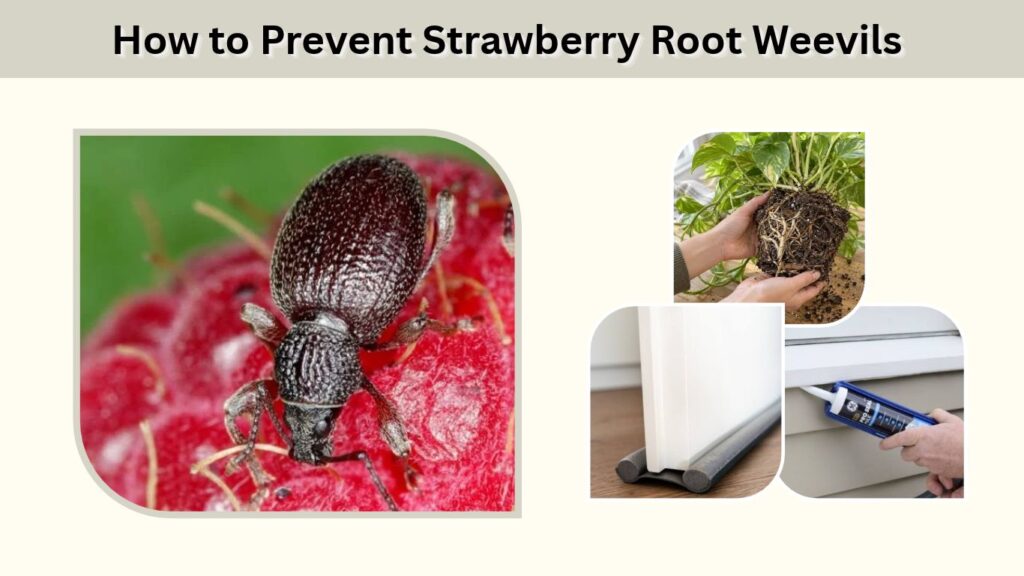
Prevention begins with checking plants regularly and avoiding the introduction of infested nursery stock. Healthy strawberries tolerate light feeding better. Monitor both leaf edges and root health throughout the growing season, especially in beds with a history of root-weevil problems.
Prevention Checklist
- Inspect new plants and their root balls before planting.
- Check leaf edges for fresh notches during the growing season.
- Examine roots when plants wilt despite adequate watering.
- Remove unnecessary debris that shelters adults near beds.
- Keep door gaps sealed to reduce indoor visitors.
FAQs
Do Strawberry Root Weevils Bite Humans?
No. Strawberry root weevils do not bite or sting people. Their mouthparts are adapted for feeding on plants, not skin or blood. They pose no direct health risk to humans or pets.
Can Strawberry Root Weevils Infest My House?
Adults may enter homes in noticeable numbers, particularly where host plants grow near the foundation. However, they cannot maintain an indoor population without suitable outdoor growing conditions. Vacuuming visitors and sealing openings generally resolves the problem without pesticide applications.
What Do Strawberry Root Weevil Larvae Eat?
Larvae feed mainly on living plant roots and sometimes crowns. Their feeding can reduce water and nutrient absorption, causing wilting, yellowing, or stunted growth. Young plants and heavily infested beds may suffer more serious damage than established, healthy plantings.
Are Strawberry Root Weevils Harmful to Strawberries?
Yes, mainly in the larval stage. Adults leave minor leaf notches, but larvae may damage roots enough to weaken plants or reduce productivity. Examine the roots of struggling strawberries before assuming that adult feeding alone explains the damage.
When Is the Best Time to Control Strawberry Root Weevils?
Target adults when they emerge and begin feeding, before substantial egg laying occurs. Target larvae when they are young and soil conditions suit the chosen treatment. Exact dates vary by region, so monitoring plants is more reliable than following a fixed calendar.