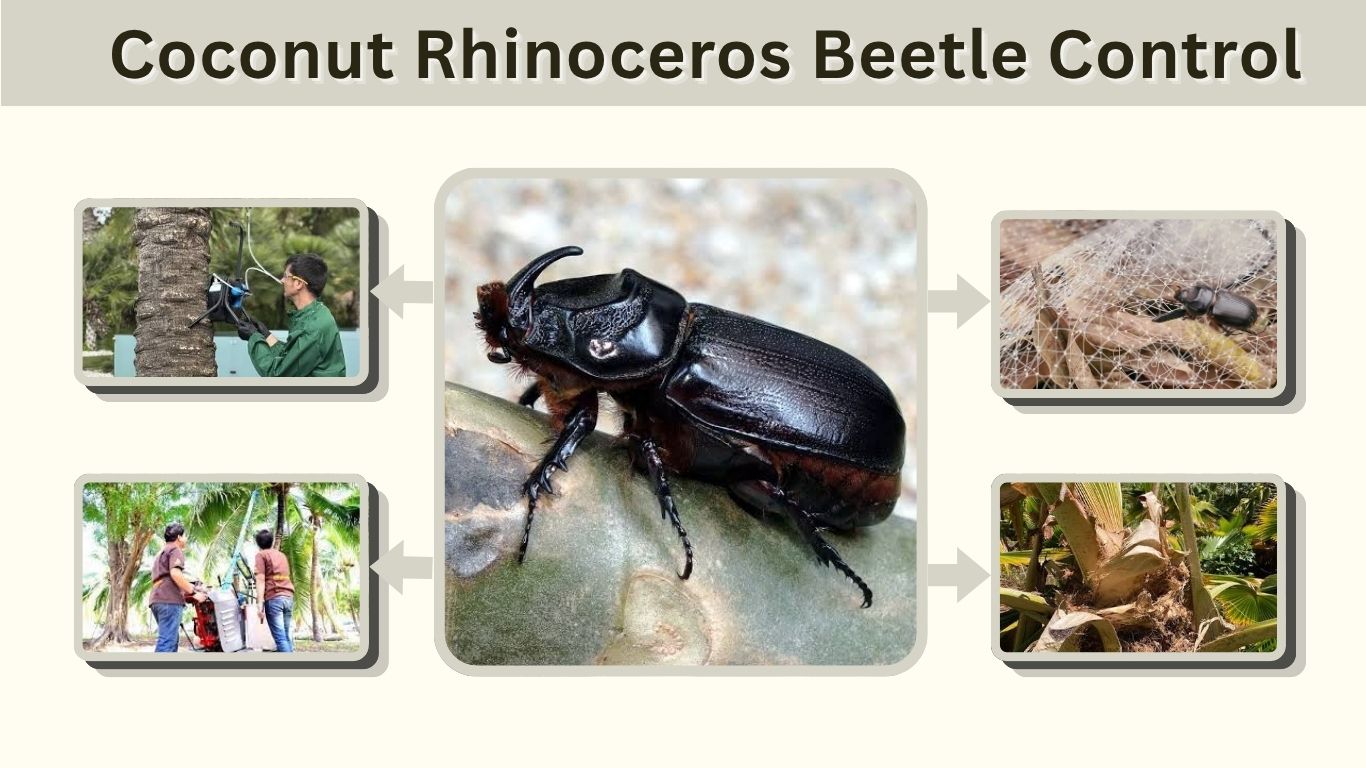
Coconut rhinoceros beetles are destructive palm pests that can weaken coconut trees, damage developing leaves, and reduce fruit production. These large, horned insects bore into palm crowns, while their larvae develop in decomposing wood, mulch, and other organic materials. Effective coconut rhinoceros beetle control requires eliminating breeding sites, monitoring adult activity, and protecting vulnerable palms. Relying on a single treatment rarely provides lasting results. This guide explains practical control methods, biological treatments, chemical options, and preventive measures to protect coconut plantations and home gardens from infestations.
How to Identify Coconut Rhinoceros Beetle Damage
Identifying damage early is essential for controlling coconut rhinoceros beetles before they cause serious harm. Adult beetles bore into the crowns of coconut palms, feeding on developing tissues and sap. Their injuries often become visible only after new leaves unfold. Repeated attacks can weaken growing palms and sometimes damage the central growing point.
Common Signs of Rhinoceros Beetle Infestation
- V-shaped leaf cuts: Emerging fronds develop distinctive triangular notches.
- Holes in leaves: Feeding damage creates openings through developing fronds.
- Damaged palm crowns: Adults bore into the central growing area.
- Fibrous debris: Shredded plant fibers may accumulate near feeding holes.
- Poor growth: Repeated attacks can delay healthy leaf development.
Can Damaged Coconut Trees Recover?
Coconut palms may recover if their central growing points remain healthy.
However, severely damaged crowns can result in permanent injury or death. Early monitoring and appropriate treatment improve the chances of saving affected trees.
How to Control Coconut Rhinoceros Beetles Effectively
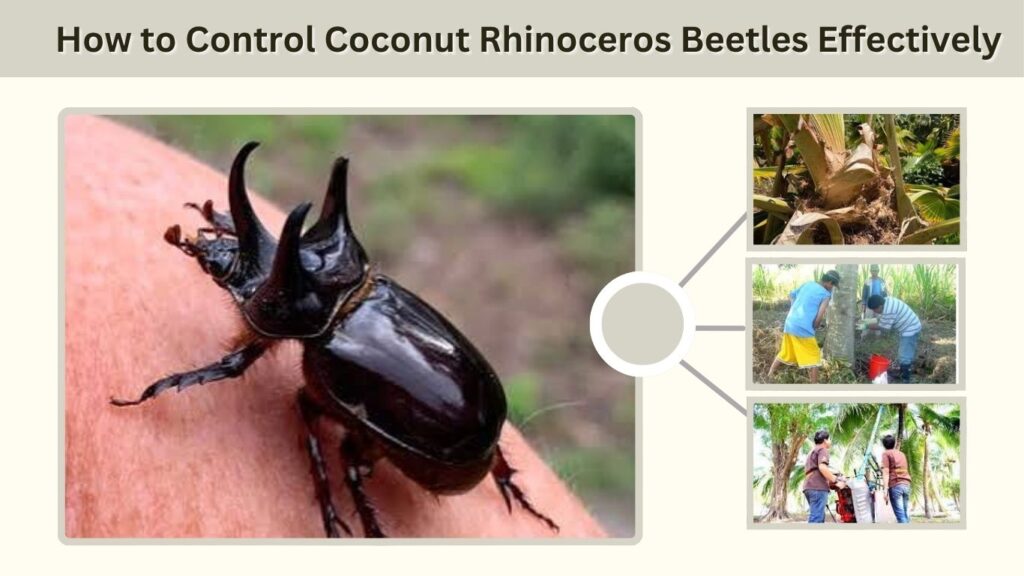
Successful control combines several methods rather than depending entirely on insecticides or traps. Adult beetles can fly between palms, while larvae remain hidden in breeding materials. Addressing both life stages is necessary for long-term management. Regular inspection, breeding-site sanitation, and approved palm treatments provide a practical integrated approach.
Step-by-Step Coconut Rhinoceros Beetle Control
- Inspect coconut palms: Look for V-shaped cuts, crown damage, and fresh feeding holes.
- Identify breeding sites: Examine rotting logs, mulch piles, compost, and dead palm stumps.
- Manage infested materials: Follow local biosecurity guidance for treatment and disposal.
- Monitor adult beetles: Use approved pheromone traps where recommended.
- Protect vulnerable palms: Consider suitable netting or other professional treatments.
- Apply registered treatments: Use pesticides only where legally approved and appropriate.
- Continue monitoring: Inspect palms and breeding materials regularly for renewed activity.
Why Is Integrated Pest Management Important?
Integrated pest management, or IPM, combines sanitation, monitoring, physical protection, biological methods, and targeted pesticides.
This approach reduces dependence on repeated chemical applications while addressing the environmental conditions that allow beetle populations to grow.
How to Eliminate Coconut Rhinoceros Beetle Breeding Sites
Managing breeding materials is one of the most important coconut rhinoceros beetle control methods. Female beetles lay eggs in decomposing organic matter, where larvae feed and develop. Large piles of mulch, decaying wood, and green waste can support repeated generations. Removing or properly treating these materials helps reduce future adult populations.
Common Coconut Rhinoceros Beetle Breeding Sites
- Rotting coconut trunks and fallen logs
- Decomposing palm stumps
- Large mulch and wood-chip piles
- Accumulated green waste
- Poorly managed compost heaps
- Moist decomposing plant material
How to Manage Infested Organic Materials
Inspect breeding materials before handling them. If larvae are present, contact local agricultural or biosecurity authorities for approved treatment instructions.
Properly managed hot composting can destroy developing beetles when required temperatures are maintained. In Hawaii, official guidance specifies temperatures of at least 131°F (55°C).
Never transport untreated infested materials, particularly in areas with quarantine or movement restrictions.
Physical Control and Coconut Rhinoceros Beetle Traps
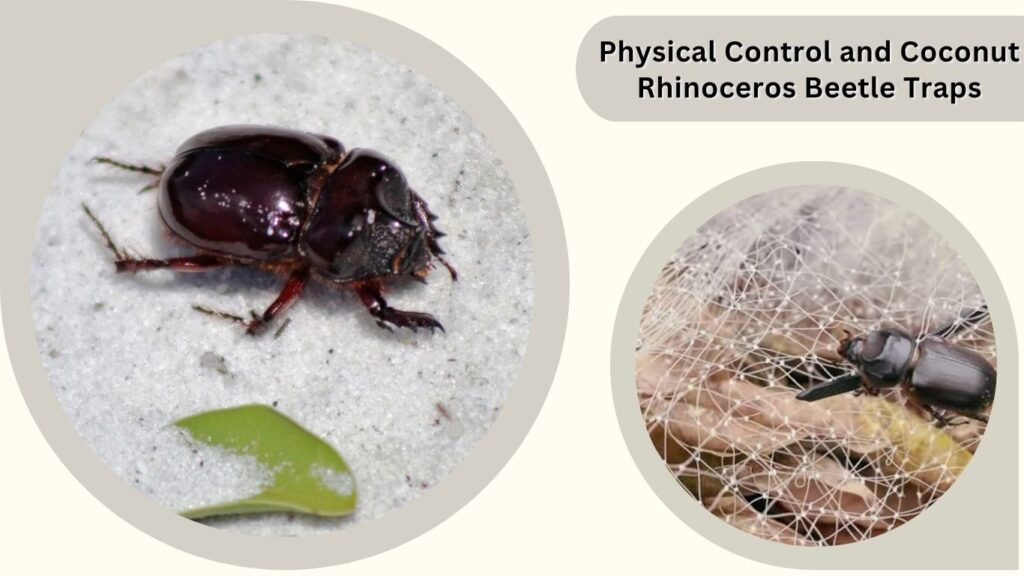
Physical control methods can help protect vulnerable trees and monitor adult beetle activity. Pheromone traps attract beetles using synthetic chemical signals, while protective barriers may limit access to palm crowns. However, these techniques have limitations and work best alongside breeding-site management.
Do Coconut Rhinoceros Beetle Traps Work?
Pheromone traps are useful for detecting beetles and monitoring population activity.
However, traps generally do not capture enough adults to prevent palm damage on their own. They should support broader control efforts rather than replace sanitation or protective treatments.
How to Protect Coconut Palm Crowns
Specialized protective netting may help prevent beetles from entering the crowns of smaller palms.
Netting must be installed correctly to avoid damaging growing leaves or interfering with palm development. Consult experienced agricultural specialists for suitable materials and installation methods.
Biological Control of Coconut Rhinoceros Beetles
Biological control uses naturally occurring organisms to reduce pest populations. Researchers have investigated viruses, fungi, and natural enemies that affect coconut rhinoceros beetles. These approaches can provide longer-term management benefits, although effectiveness varies among regions and beetle populations. Biological agents should only be used where approved by agricultural authorities.
Oryctes Rhinoceros Nudivirus
Oryctes rhinoceros nudivirus, commonly called OrNV, has been used to suppress coconut rhinoceros beetle populations in parts of Asia and the Pacific.
Its effectiveness varies, and introduction into new regions requires scientific evaluation and regulatory approval. It is not a household treatment.
Fungal Biological Control
Certain Metarhizium fungi can infect rhinoceros beetle larvae and adults.
These fungi have been investigated as biological control agents, but product availability and legal approval vary by location. Growers should use only locally registered biological treatments.
Chemical Control of Coconut Rhinoceros Beetles
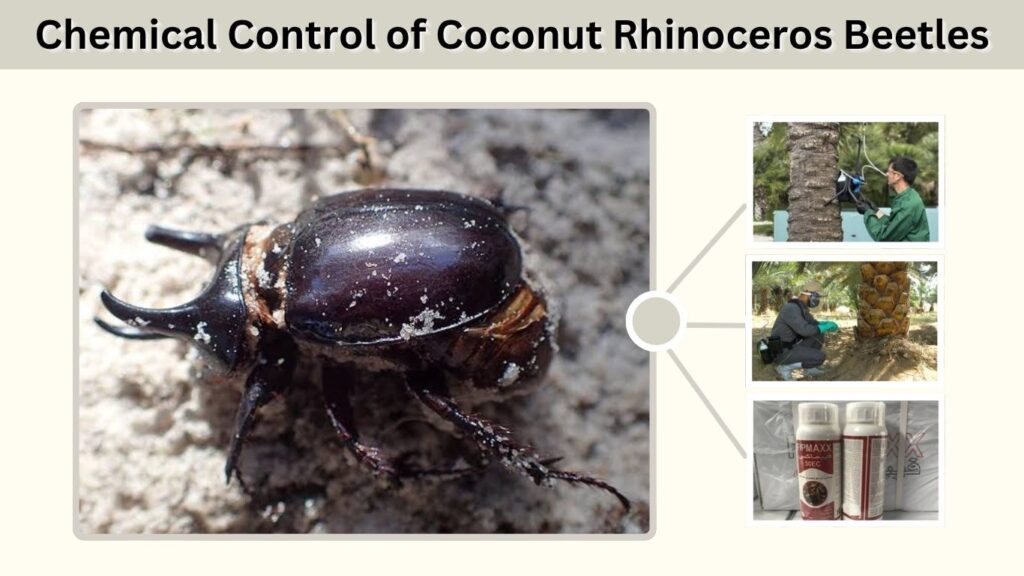
Chemical treatments can help protect palms when infestation pressure is high. Different products may target adult feeding activity or provide systemic protection through the palm’s tissues. However, chemical control alone cannot eliminate beetles developing in nearby organic materials. Professional guidance is important because application methods, product registration, and environmental risks vary.
Common Chemical Treatment Methods
- Crown sprays: Approved insecticides may be directed toward vulnerable palm crown areas.
- Trunk injections: Certain systemic products protect palms through internal uptake.
- Root-zone treatments: Some registered products can be absorbed through roots.
- Targeted breeding-site treatments: Approved materials may be used where larvae develop.
Are Chemical Treatments Safe for Coconut Trees?
Safety depends on the pesticide, application method, and label instructions.
Some systemic treatments can restrict harvesting or consumption of coconuts. Chemical applications may also affect pollinators or nearby water sources. Always consult a licensed professional and follow local pesticide regulations.
Coconut Rhinoceros Beetle Control in Hawaii
Coconut rhinoceros beetles are invasive pests in Hawaii, threatening coconut palms and other culturally or ecologically important plants. Control programs emphasize reducing breeding habitats, treating vulnerable palms, and preventing the movement of infested organic materials. Community participation is important because beetles can fly between properties and breeding sites may exist outside affected gardens.
Recommended Control Practices in Hawaii
- Inspect palms and green waste for beetles or larvae.
- Follow official composting and mulch-management guidance.
- Avoid moving untreated potentially infested materials.
- Use approved professional treatments when necessary.
- Report suspected beetles or damage according to current island-specific instructions.
How to Prevent Future Infestations
Regularly inspect palm crowns and nearby organic materials. Avoid maintaining large, unmanaged piles of decomposing vegetation, and check incoming mulch for signs of infestation.
Continue monitoring after treatment because adult beetles may arrive from surrounding properties.
FAQs
1. What is the best method for coconut rhinoceros beetle control?
The most effective approach combines breeding-site management, palm monitoring, and appropriate protective treatments. Removing suitable breeding habitats reduces developing populations, while professional palm treatments can limit adult feeding damage. Pheromone traps are helpful for monitoring but should not be the only control method.
2. Can neem oil control coconut rhinoceros beetles?
Neem oil is not a reliably proven treatment for coconut rhinoceros beetles. Research reported by Hawaii’s invasive species authorities found neem-based treatment ineffective in their testing. Growers should rely on validated control methods and locally registered products rather than unverified household remedies.
3. How can I protect young coconut trees from rhinoceros beetles?
Inspect young palms frequently and look for fresh crown damage. Keep nearby breeding materials properly managed and consider professionally recommended protective netting. Where infestations are established, locally approved treatments may provide additional protection. Avoid damaging the developing crown during inspection.
4. Can coconut rhinoceros beetle infestations be eliminated permanently?
Complete elimination can be difficult in established populations because adults fly between properties and larvae develop in hidden organic materials. Continued breeding-site management, monitoring, and coordinated community control can substantially reduce infestations and prevent recurring damage.
5. Does biological control work against coconut rhinoceros beetles?
Biological control can reduce coconut rhinoceros beetle populations under suitable conditions. OrNV has been used successfully in some regions, while certain fungal pathogens show potential. However, effectiveness varies, and biological agents require appropriate regulatory approval before use.