
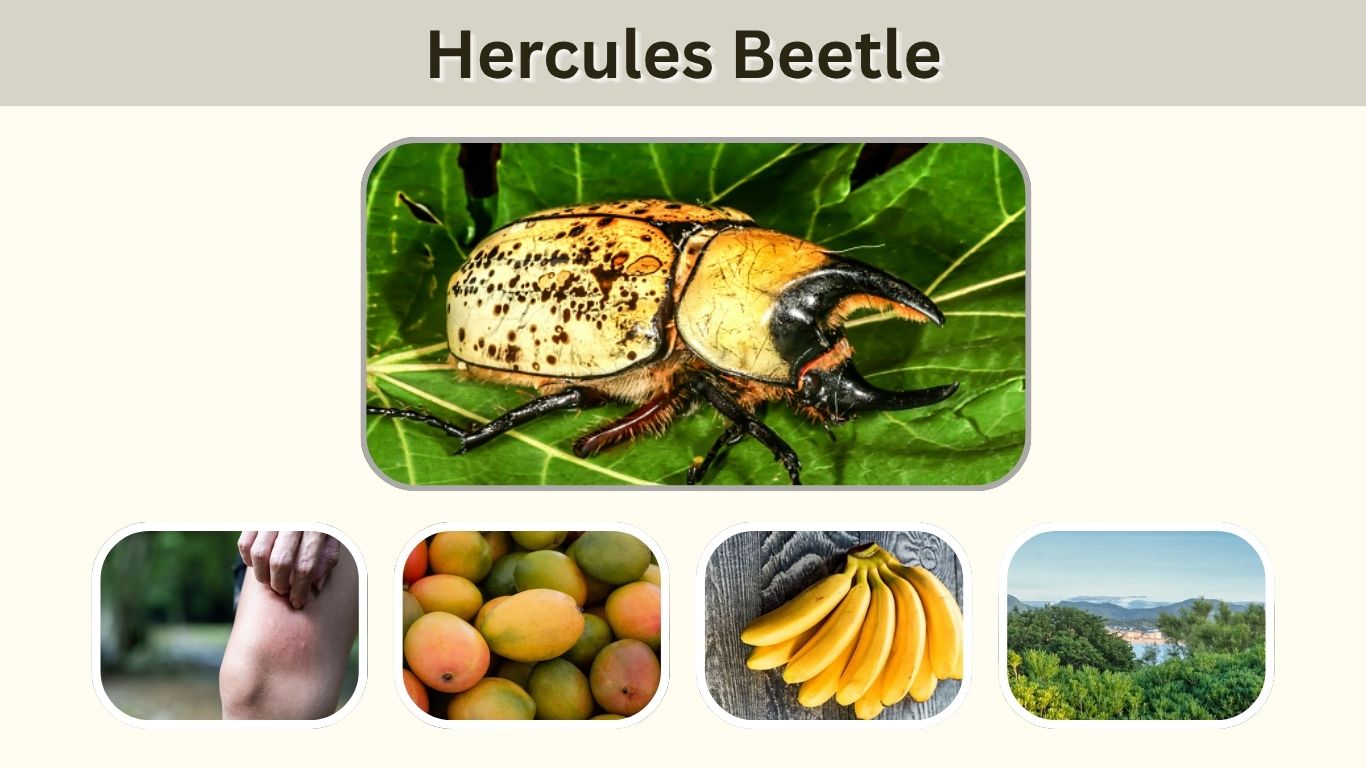
The Hercules beetle (Dynastes hercules) is one of the largest and most powerful-looking insects in the world. Famous for its enormous horns, remarkable strength, and unusual appearance, this giant rhinoceros beetle inhabits tropical forests across Central and South America. Male Hercules beetles have impressive horn-like structures, while females have rounded bodies without large horns. Despite their intimidating appearance, these insects are generally harmless to humans. Understanding their size, strength, habitat, diet, life cycle, lifespan, and behavior reveals why Hercules beetles are among the most fascinating insects on Earth.
What Is a Hercules Beetle?
The Hercules beetle is a large scarab beetle belonging to the family Scarabaeidae and the rhinoceros beetle subfamily Dynastinae. Its scientific name is Dynastes hercules. Named after Hercules, the legendary Greek hero famous for extraordinary strength, this beetle is recognized for its enormous size and powerful horns.
Hercules Beetle Identification
Hercules beetles have several distinctive physical characteristics that make them easy to recognize, particularly when observing mature males.
- Scientific name: Dynastes hercules
- Family: Scarabaeidae
- Subfamily: Dynastinae
- Body color: Black with olive-green, yellowish, or brown wing covers in males
- Male appearance: Two large, curved horns
- Female appearance: Dark, rounded body without prominent horns
- Legs: Six powerful legs with gripping claws
- Activity: Primarily nocturnal
- Habitat: Tropical rainforests
Mature male beetles have particularly distinctive appearances because their horns can account for a substantial portion of their overall length.
Hercules Beetle Size and Appearance
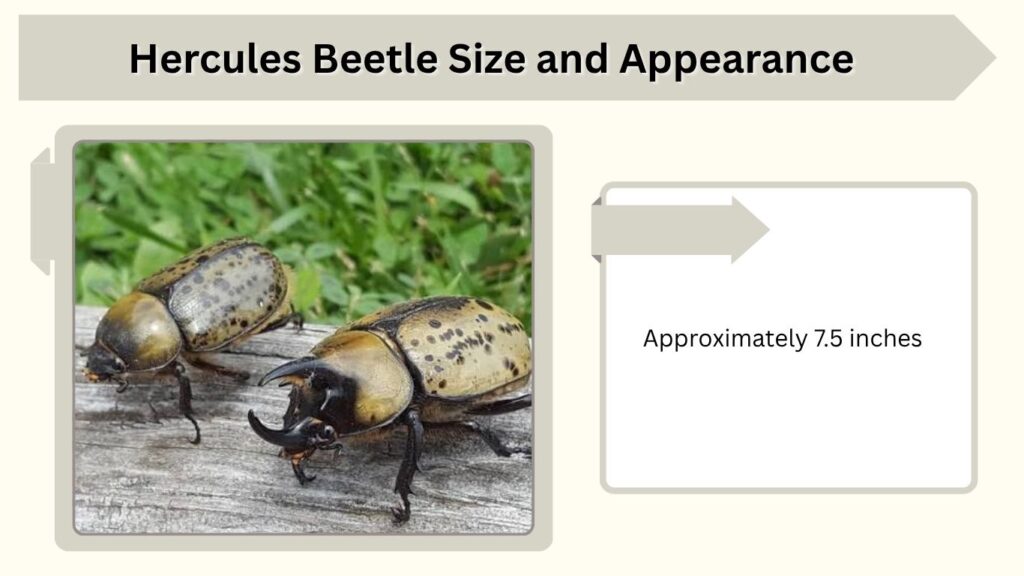
Hercules beetles rank among the world’s longest beetles when their horns are included in body measurements. Their enormous size, powerful legs, and hardened outer skeleton make them impressive insects. However, their appearance varies considerably between males and females, particularly in horn development, coloration, and overall proportions.
Male Hercules Beetle Size
Male Hercules beetles can reach approximately 7.5 inches (19 cm) in total length, including their horns. Their actual body length is considerably shorter.
The upper horn extends forward from the thorax, while the lower horn projects from the head. Together, these structures form a powerful gripping mechanism.
Males use their horns to lift and throw competing males during contests for mating opportunities.
Female Hercules Beetle Appearance
Female Hercules beetles lack the prominent horns found on males. They generally have shorter, broader bodies with dark brown or black wing covers.
Females can measure approximately 2–3 inches long, although individual size varies. Their rounded appearance makes them noticeably different from the horned males.
How Strong Is a Hercules Beetle?
Hercules beetles are famous for their extraordinary strength relative to their body size. Their powerful muscles, rigid exoskeletons, and strong legs allow them to move across challenging surfaces and engage in physical competition. Male beetles demonstrate this strength when fighting rivals using their impressive horns.
Why Are Hercules Beetles So Strong?
Hercules beetles possess powerful muscles connected to their hardened external skeleton. Their six legs provide stability and grip, allowing them to move heavy objects and resist opposing forces.
Male beetles use their horns like pincers to grasp and lift competitors. Their strength is particularly important during mating competitions, when larger males may gain an advantage.
How Much Weight Can a Hercules Beetle Lift?
Hercules beetles are frequently described as being able to lift hundreds of times their body weight, sometimes with claims reaching 850 times.
However, that specific figure is not well established by scientific experiments on Dynastes hercules.
Research on another rhinoceros beetle species demonstrated sustained movement while carrying loads exceeding 30 times its body mass. This confirms impressive relative strength in rhinoceros beetles without establishing the same measurement for Hercules beetles.
Where Do Hercules Beetles Live?
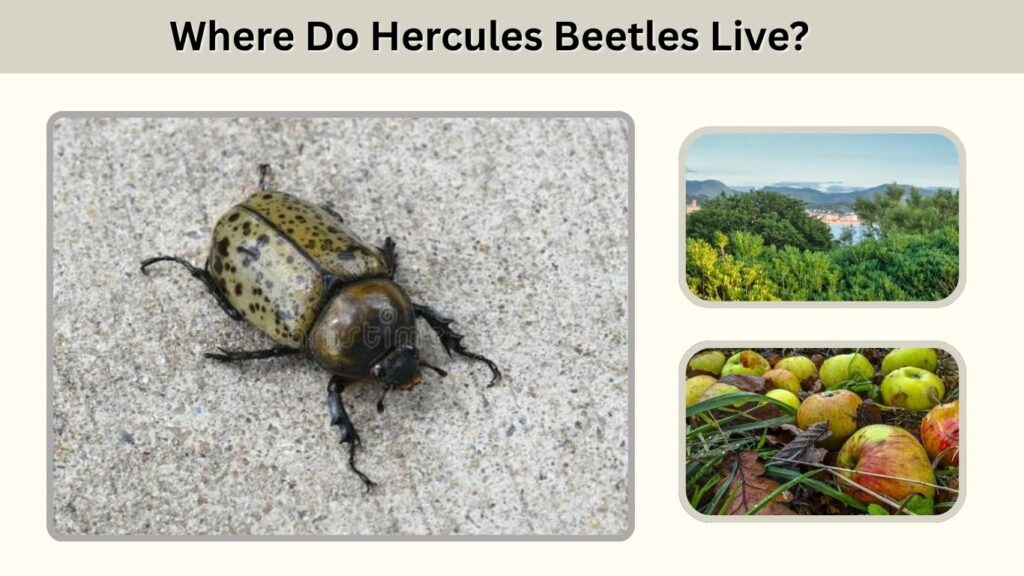
Hercules beetles naturally inhabit tropical regions of Central and South America and several Caribbean islands. They prefer forests containing abundant vegetation, fallen fruit, and decaying trees. These environmental features provide essential food sources for adults and development sites for larvae.
Hercules Beetle Habitat and Range
Hercules beetles occur in tropical regions including:
- Mexico: Southern tropical forest regions
- Costa Rica: Humid tropical forests
- Panama: Lowland and mountainous rainforests
- Colombia: Suitable tropical forest habitats
- Ecuador: Tropical forests
- Peru: Humid rainforest environments
- Caribbean islands: Certain island populations
Adults frequently inhabit forest understories, while larvae develop inside decomposing tree trunks.
Eastern and Western Hercules Beetles
North America also has closely related Hercules beetles. The Eastern Hercules beetle (Dynastes tityus) inhabits much of the eastern United States, while the Western Hercules beetle (Dynastes grantii) occurs in the southwestern United States and nearby Mexico.
Although these species share similar characteristics, they are distinct from the tropical Dynastes hercules.
What Do Hercules Beetles Eat?
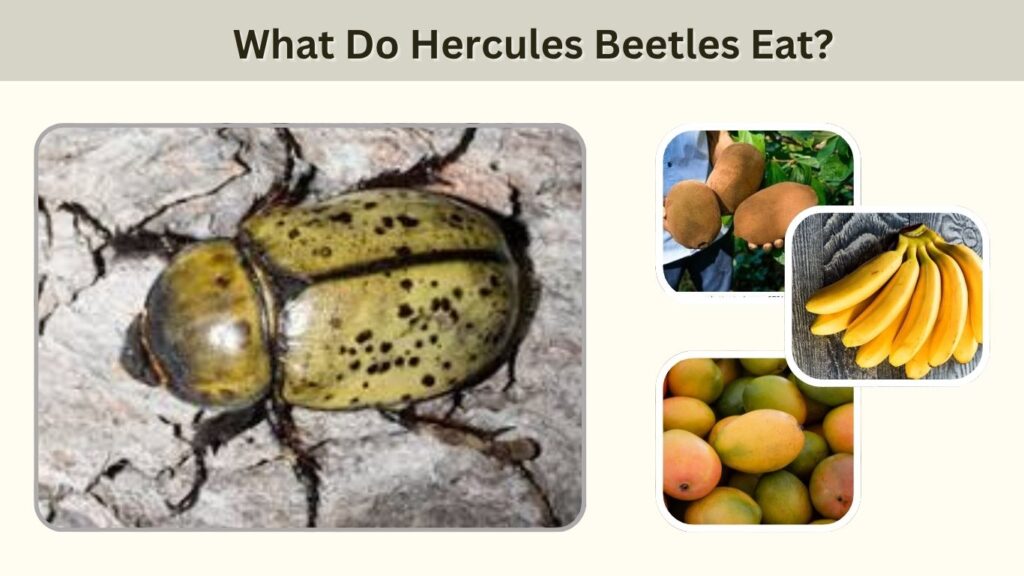
Hercules beetles consume different foods during their adult and larval stages. Adult beetles primarily feed on sugary fruits, while larvae depend on decomposing wood. Their feeding activities contribute to natural forest processes by helping break down organic material and recycle nutrients.
Adult Hercules Beetle Diet
Adult Hercules beetles primarily feed on fallen, overripe, or decaying fruits.
Common food sources include:
- Bananas: Soft, sugary fruit eaten in captivity
- Mangoes: Nutrient-rich tropical fruit
- Other fallen fruits: Naturally available food in rainforest habitats
- Beetle jelly: Specially formulated food used in captivity
Adults use their mouthparts to break down soft fruit and obtain nutrients from the pulp.
Hercules Beetle Larvae Diet
Hercules beetle larvae feed mainly on decomposing wood found inside fallen trees and rotting logs.
Their large bodies and powerful mouthparts allow them to consume softened wood material. As they feed, they contribute to decomposition and nutrient cycling.
Unlike adults, larvae require specialized wood-based food sources for healthy growth.
Hercules Beetle Life Cycle and Lifespan
Hercules beetles undergo complete metamorphosis, progressing through four developmental stages: egg, larva, pupa, and adult. Their life cycle is relatively long compared with many smaller insects. Much of this time is spent hidden inside decomposing wood, where larvae feed and develop before transforming into adults.
Four Stages of the Hercules Beetle Life Cycle
- Egg: Females deposit eggs in suitable decaying wood or organic material. Eggs hatch after approximately four weeks under favorable conditions.
- Larva: Large, cream-colored grubs feed on decomposing wood. This is the longest developmental stage and can last well over a year.
- Pupa: Mature larvae form protective chambers and transform into adults. Pupation generally takes several weeks.
- Adult: Fully developed beetles emerge, feed, search for mates, and reproduce.
How Long Do Hercules Beetles Live?
The complete lifespan of Dynastes hercules can approach two years, although developmental conditions affect the total duration.
Research under controlled conditions found that development may require approximately 19–21 months. Adults can survive around three to six months in captivity.
Their prolonged larval development accounts for most of their lifetime.
Can Hercules Beetles Fly and Bite?
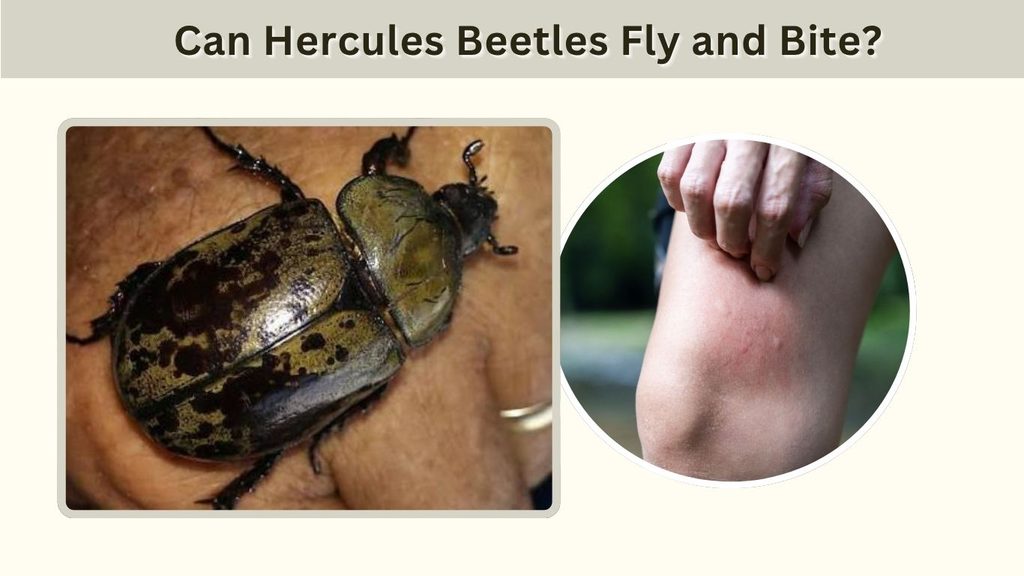
Despite their enormous size and heavy appearance, Hercules beetles are capable of flight. Their bodies contain specialized wings protected beneath hardened wing covers. Although their horns and powerful legs may look threatening, these beetles are generally harmless to humans and do not possess venom or stingers.
Can Hercules Beetles Fly?
Yes, Hercules beetles can fly using their large, membranous hindwings.
When preparing to fly, they lift their hardened wing covers, allowing their functional wings to unfold. Their flight may appear heavy compared with smaller insects, but it helps adults locate food, mates, and suitable habitats.
Do Hercules Beetles Bite Humans?
Hercules beetles have chewing mouthparts but are not generally known for dangerous bites.
Their powerful claws may grip human skin firmly, which can feel uncomfortable. However, their horns are primarily used against competing males rather than humans.
They are not poisonous or venomous and should be handled gently.
Hercules Beetle Care as a Pet
Hercules beetles are popular among some insect enthusiasts because of their unusual size, impressive appearance, and fascinating behavior. However, caring for these insects requires appropriate housing, suitable food, and careful environmental management. Adults and larvae have different needs, making species-specific care important.
Hercules Beetle Enclosure Setup
A suitable enclosure should provide:
- Adequate space: Room for walking and natural movement
- Ventilation: Good airflow without excessive drying
- Substrate: Appropriate moisture-retaining organic material
- Hiding places: Bark, logs, and sheltered areas
- Temperature: Stable tropical conditions without extreme heat
- Humidity: Sufficient moisture without waterlogging
Larvae require deep, suitable decomposed-wood substrate rather than ordinary garden soil.
Feeding and Maintenance
Adult Hercules beetles can be fed soft fruits or commercially prepared beetle jelly. Uneaten food should be removed regularly to reduce mold growth.
Larvae require properly prepared decomposing hardwood material or suitable fermented beetle substrate.
Choose captive-bred beetles where legally available, verify local ownership regulations, and never release nonnative specimens into the environment.
FAQs
1. Are Hercules Beetles Dangerous?
Hercules beetles are generally harmless to humans. They do not possess venom or stingers, and their horns are mainly used during competition between males. Although their claws may grip firmly, these insects are not considered dangerous when handled carefully.
2. Are Hercules Beetles Rare?
Hercules beetles may be difficult to observe because they inhabit tropical forests and are primarily active at night. Their local abundance varies depending on habitat conditions, available decaying wood, and environmental changes. They are not equally rare throughout their geographic range.
3. What Is the Biggest Hercules Beetle?
The tropical Hercules beetle, Dynastes hercules, is among the longest beetles in the world. Exceptionally large males can measure approximately 19 centimeters (7.5 inches), including their horns. The horns account for a substantial portion of that impressive length.
4. Can Hercules Beetles Be Kept as Pets?
Yes, Hercules beetles are sometimes kept as pets by experienced insect enthusiasts. They require secure enclosures, appropriate temperatures, suitable humidity, and specialized food. Captive-bred specimens are preferable, and owners should check regulations before obtaining or transporting living beetles.
5. What Is the Difference Between Hercules and Rhinoceros Beetles?
Hercules beetles are rhinoceros beetles belonging to the subfamily Dynastinae. Therefore, every Hercules beetle is a rhinoceros beetle, but not every rhinoceros beetle is a Hercules beetle. The larger group includes many species with different sizes, horns, habitats, and behaviors.
