
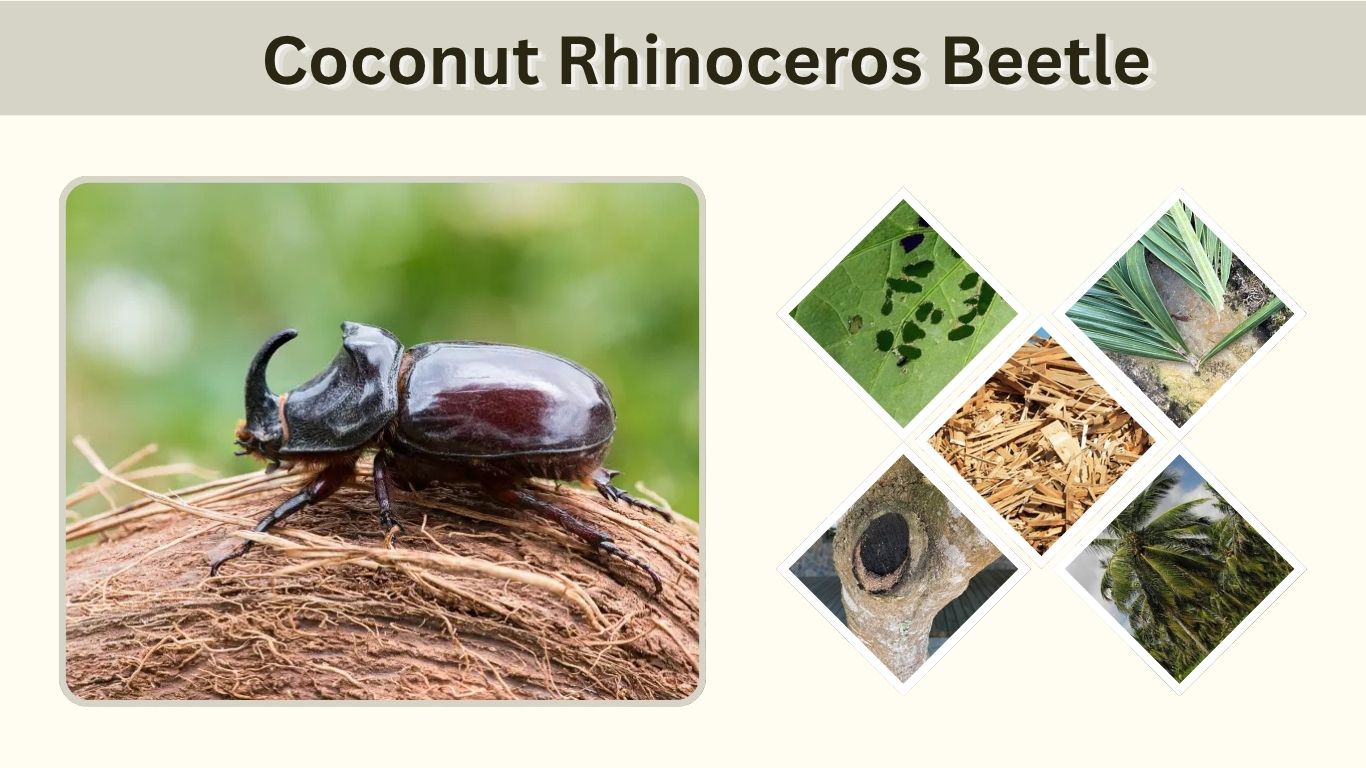
The coconut rhinoceros beetle is a serious palm pest known for its dark body, curved horn, and destructive feeding habits. Scientifically called Oryctes rhinoceros, this large beetle attacks the growing crowns of coconut palms and several other palm species. Its larvae develop in decomposing wood, compost, and green waste, allowing infestations to spread through poorly managed organic materials. The beetle has become a major concern in Hawaii and other Pacific islands. This guide explains coconut rhinoceros beetle identification, habitat, life cycle, palm damage, and effective control methods.
What Is a Coconut Rhinoceros Beetle?
The coconut rhinoceros beetle (Oryctes rhinoceros) belongs to the family Scarabaeidae and subfamily Dynastinae. It is a large, horned beetle native to tropical Asia. Although its appearance resembles other rhinoceros beetles, this species is particularly important because adults bore into developing palm crowns, causing significant agricultural and environmental damage.
Coconut Rhinoceros Beetle Identification
Adult coconut rhinoceros beetles have several distinctive physical characteristics that make them relatively easy to recognize.
- Body size: Approximately 1.5–2.5 inches (4–6.4 cm) long.
- Body color: Dark brown to black, often with a glossy appearance.
- Body shape: Broad, oval, and heavily built.
- Horn: A curved projection extending from the head.
- Legs: Six strong legs with spines and claws.
- Wings: Hardened wing covers protecting functional flight wings.
Male vs. Female Coconut Rhinoceros Beetle
Male coconut rhinoceros beetles usually have longer, more prominent horns, while females possess shorter horns.
Both sexes are capable of damaging palm trees. Females also search for decomposing organic materials where they can lay their eggs.
Where Do Coconut Rhinoceros Beetles Live?
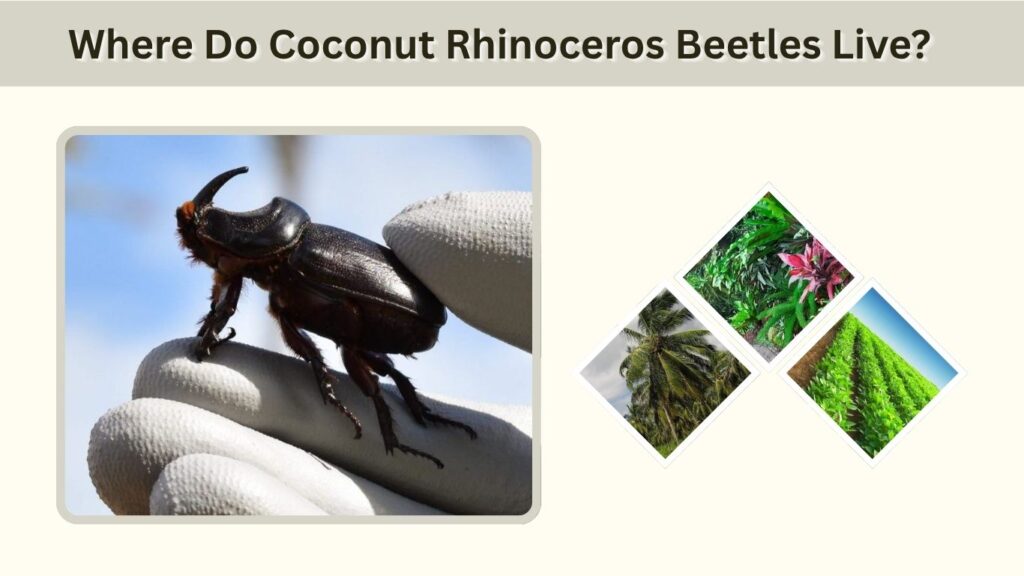
Coconut rhinoceros beetles naturally occur in tropical environments where coconut palms and suitable breeding materials are available. They have spread beyond their native range through human activities and the movement of infested plant materials. Their populations can become especially damaging where large quantities of decomposing vegetation are available.
Coconut Rhinoceros Beetle Habitat
This species is native to tropical Asia and has become established in numerous Pacific islands.
It commonly occurs in coconut plantations, tropical gardens, agricultural landscapes, and coastal areas containing palms.
Adults feed in palm crowns, while larvae develop in rotting logs, compost heaps, decomposing stumps, and other organic materials.
Where Do Coconut Rhinoceros Beetles Lay Eggs?
Females lay eggs in moist, decomposing plant materials rather than healthy palm leaves.
Suitable breeding locations include decayed coconut logs, accumulated green waste, wood chips, compost, and rotting tree stumps. These materials provide food and shelter for developing larvae.
How Do Coconut Rhinoceros Beetles Damage Coconut Trees?
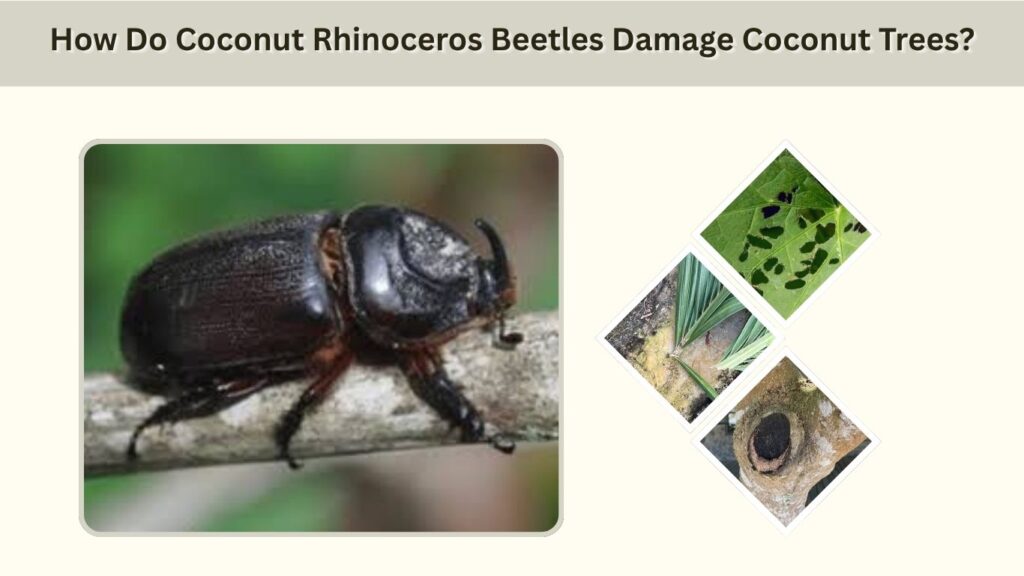
Adult coconut rhinoceros beetles damage palms by boring into their growing crowns. They feed on developing tissues and plant sap, injuring leaves before they fully emerge. As new fronds unfold, the damaged sections become visible. Severe or repeated feeding can weaken trees, reduce coconut production, and sometimes destroy the growing point.
Signs of Coconut Rhinoceros Beetle Damage
Common symptoms of coconut rhinoceros beetle infestation include:
- V-shaped cuts: Distinctive notches appear when damaged palm leaves unfold.
- Holes in fronds: Beetles create holes while boring through developing leaves.
- Damaged crowns: Feeding injuries affect the central growing area.
- Fibrous debris: Shredded plant fibers may accumulate around feeding openings.
- Poor growth: Repeated attacks can weaken emerging leaves.
- Palm death: Severe damage to the growing point may eventually kill the tree.
Can Coconut Trees Recover From Beetle Damage?
Coconut palms can recover when their central growing points remain healthy. Damaged fronds will not repair themselves, but the palm may produce new, healthy leaves.
Repeated attacks or serious injuries to the growing point can cause permanent damage. Early detection improves the chances of protecting affected palms.
Coconut Rhinoceros Beetle Life Cycle and Larvae
The coconut rhinoceros beetle undergoes complete metamorphosis, developing through egg, larva, pupa, and adult stages. Its life cycle depends on temperature, moisture, and food availability. Larvae develop in decomposing plant materials, while adults leave their breeding sites to feed on palms, mate, and reproduce.
Coconut Rhinoceros Beetle Larvae
Coconut rhinoceros beetle larvae are large, whitish, C-shaped grubs with brown head capsules.
They have three pairs of short legs and feed on decomposing organic materials. Mature larvae can reach approximately 3–4 inches in length under favorable conditions.
Four Stages of Development
- Egg: Females deposit eggs inside suitable decomposing plant material.
- Larva: Grubs feed and grow through three larval stages.
- Pupa: Mature larvae develop within protected chambers before transforming into adults.
- Adult: Beetles emerge, fly to suitable palms, and reproduce.
How Long Do Coconut Rhinoceros Beetles Live?
Development from egg to adult can take several months, depending on environmental conditions.
Adult beetles may survive for several additional months. Warm temperatures and abundant breeding materials can support continuous reproduction in tropical environments.
How to Control Coconut Rhinoceros Beetles
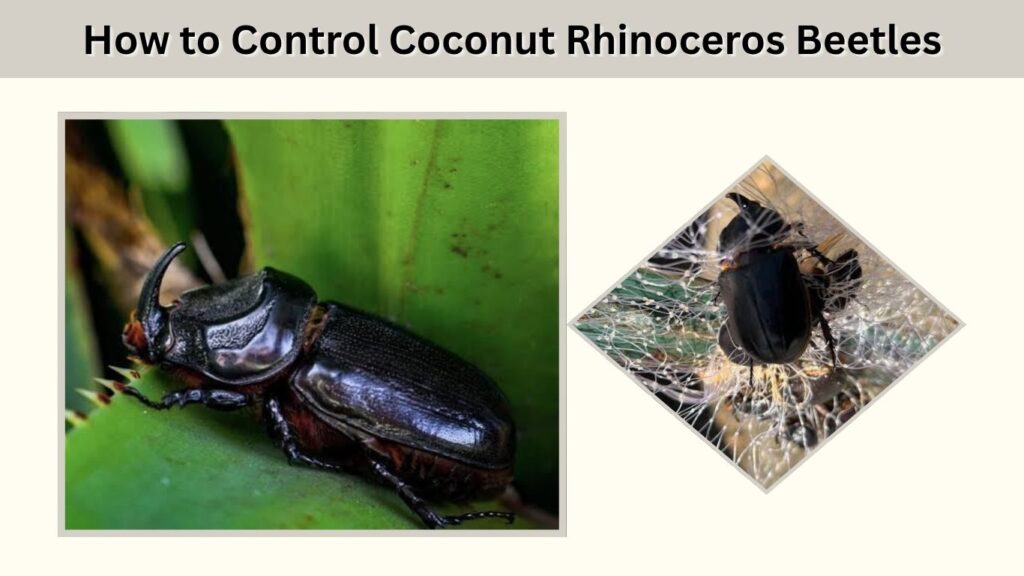
Effective coconut rhinoceros beetle control requires managing both adult feeding damage and larval breeding sites. Eliminating visible beetles alone is usually insufficient because larvae may remain hidden in compost, mulch, or decomposing wood. Integrated pest management combines sanitation, monitoring, palm protection, and approved treatments to reduce populations.
Effective Coconut Rhinoceros Beetle Control Methods
- Manage breeding materials: Inspect compost, mulch, fallen logs, and green waste for larvae.
- Treat infested debris: Follow local biosecurity instructions before removing or transporting contaminated materials.
- Protect young palms: Use appropriate physical barriers or professionally installed protective netting where recommended.
- Monitor adult activity: Use approved pheromone traps to detect beetles and track their distribution.
- Inspect palm crowns: Look regularly for fresh holes, damaged fronds, and feeding debris.
- Use approved pesticides: Follow local agricultural recommendations and product labels when chemical treatment is necessary.
Do Coconut Rhinoceros Beetle Traps Work?
Pheromone traps attract adult beetles using synthetic chemical lures.
They are useful for monitoring beetle activity and detecting new populations, but trapping alone rarely provides adequate control. Effective management also requires addressing breeding sites and protecting vulnerable palms.
Coconut Rhinoceros Beetles in Hawaii and Kauai
Coconut rhinoceros beetles are considered invasive pests in Hawaii because they threaten coconut palms, native palms, agricultural landscapes, and culturally important trees. The species was first detected on Oahu in December 2013 and has subsequently been discovered on other Hawaiian islands. Preventing further movement remains a major biosecurity priority.
Coconut Rhinoceros Beetles on Kauai
Coconut rhinoceros beetles were detected on Kauai in May 2023.
By 2026, populations were established in parts of the island, prompting coordinated trapping, monitoring, treatment, and community education programs.
Residents are encouraged to inspect palms and report suspected beetles or damage to local invasive species authorities.
How Did Coconut Rhinoceros Beetles Reach Hawaii?
The exact introduction pathway is unknown. International movement of goods and infested organic materials is a recognized pathway for spreading this pest.
Moving contaminated mulch, compost, or plant debris between locations can introduce beetles into previously unaffected areas.
How to Prevent Coconut Rhinoceros Beetle Infestations
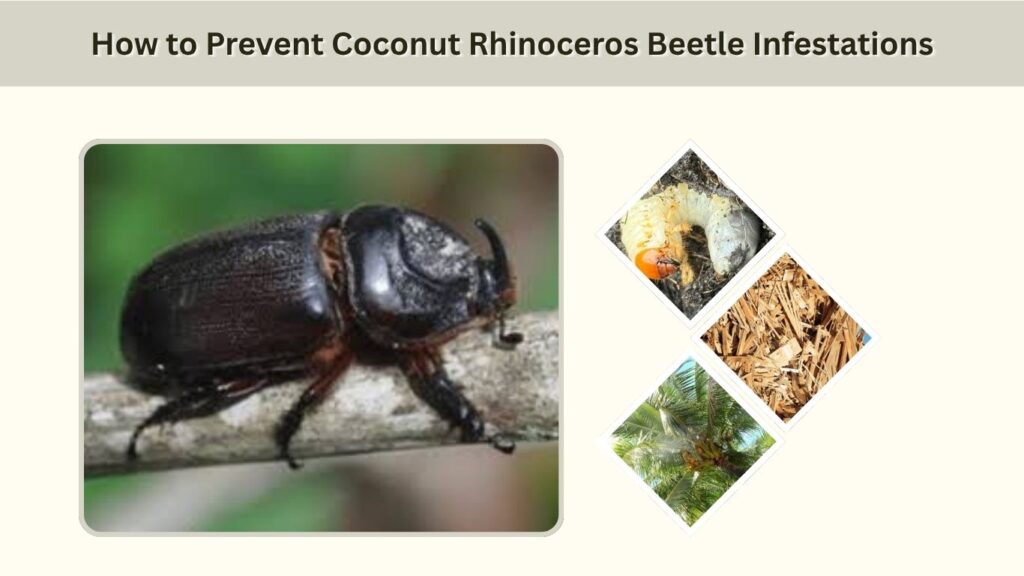
Preventing infestations is especially important in regions where coconut palms have agricultural, ecological, or cultural value. Reducing breeding materials and detecting damage early can limit beetle populations. Property owners should follow local biosecurity requirements when handling green waste or transporting potentially infested materials.
Coconut Rhinoceros Beetle Prevention Tips
- Inspect coconut palms regularly for fresh feeding damage.
- Avoid accumulating unmanaged green waste and rotting wood.
- Check mulch and compost for large C-shaped grubs.
- Keep breeding materials properly managed or treated.
- Avoid transporting potentially infested organic materials.
- Report suspected infestations in areas under official monitoring.
- Consult agricultural specialists when palms show repeated damage.
FAQs
1. Are coconut rhinoceros beetles dangerous to humans?
Coconut rhinoceros beetles are not venomous and are not considered dangerous to humans. They do not normally attack people. Their main threat comes from damaging coconut palms and other susceptible plants. Their strong claws may cause minor scratches if handled carelessly.
2. What do coconut rhinoceros beetles eat?
Adult coconut rhinoceros beetles feed inside palm crowns, consuming developing plant tissue and sap. Their larvae have a different diet, feeding primarily on decomposing wood and other organic plant materials. Adult feeding causes most of the direct damage to healthy palms.
3. Can coconut rhinoceros beetles fly?
Yes, adult coconut rhinoceros beetles possess functional wings beneath their hardened wing covers. They are primarily active at night and can fly between feeding and breeding locations. Their ability to fly helps them spread among coconut plantations and surrounding palm-growing areas.
4. Can coconut rhinoceros beetles kill coconut trees?
Yes. Repeated feeding can severely damage emerging leaves and the central growing point. Young palms are particularly vulnerable. Trees may recover from limited damage, but extensive injuries or repeated attacks can weaken or eventually kill affected palms.
5. How can I protect a coconut tree from rhinoceros beetles?
Protect coconut palms by inspecting crowns regularly, managing nearby decomposing vegetation, and following locally recommended pest-control practices. Physical barriers and approved treatments may help protect vulnerable trees. Contact agricultural or pest-management specialists if you find fresh feeding damage or suspect an active infestation.
