
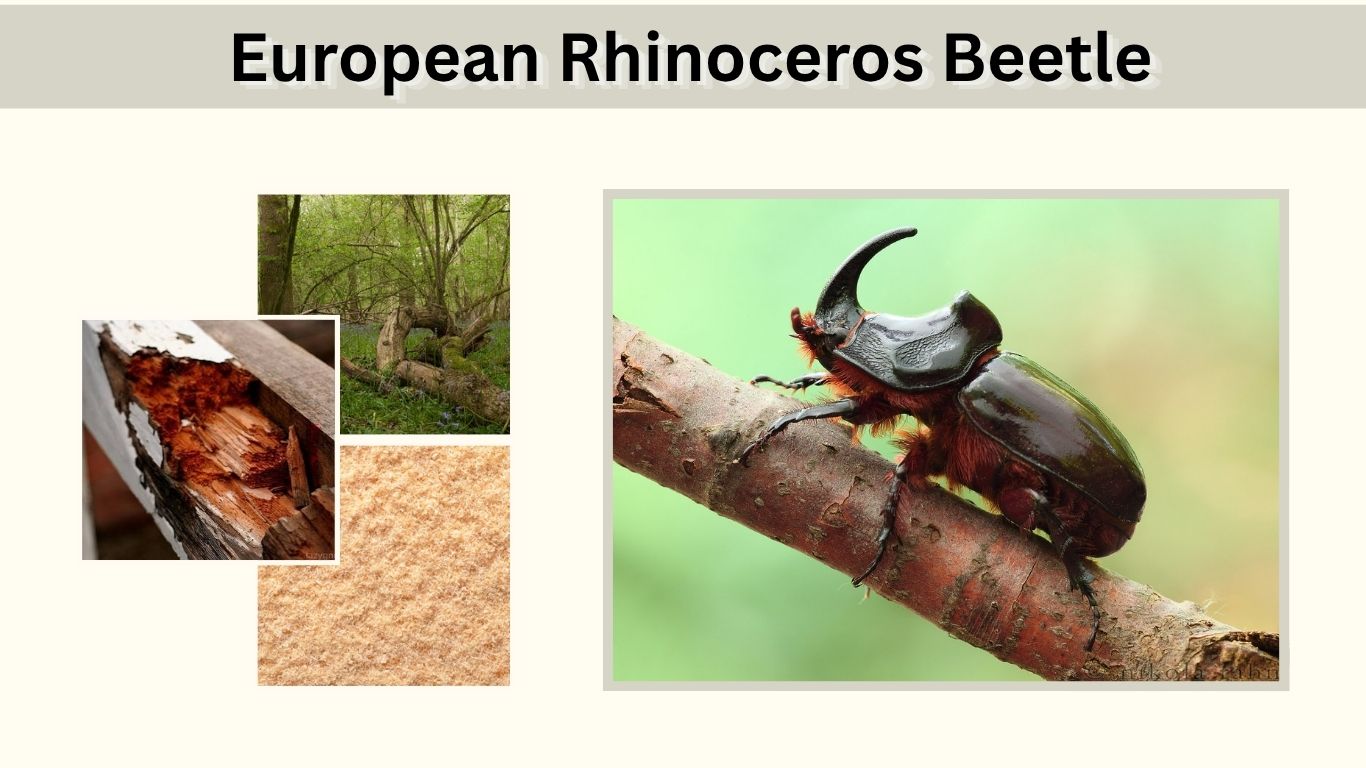
The European rhinoceros beetle is one of Europe’s most impressive horned insects, recognized by its glossy brown body and the curved horn of adult males. Scientifically known as Oryctes nasicornis, this large beetle lives in woodlands, gardens, and places with decomposing plant material. Its larvae spend years feeding inside rotting wood, while the adult stage is surprisingly short. Despite its intimidating appearance, the beetle is generally harmless to people and helps recycle organic matter. This guide covers its identification, size, distribution, diet, life cycle, and conservation.
What Is a European Rhinoceros Beetle?
The European rhinoceros beetle (Oryctes nasicornis) belongs to the scarab beetle family Scarabaeidae and the rhinoceros beetle subfamily Dynastinae. It is named after the distinctive curved horn found on adult males. These beetles are among Europe’s larger insects and are especially recognizable for their strong bodies, glossy wing covers, and impressive appearance.
European Rhinoceros Beetle Identification
European rhinoceros beetles have several distinctive physical characteristics that make identification relatively straightforward.
- Body shape: Large, oval, and heavily built.
- Color: Glossy reddish brown to dark brown or nearly black.
- Body length: Usually 20–40 millimeters.
- Horns: Males possess a prominent curved head horn.
- Legs: Six strong legs with small claws for gripping surfaces.
- Wings: Hardened wing covers protect the flight wings underneath.
Male vs. Female European Rhinoceros Beetle
Male European rhinoceros beetles have a long, upward-curving horn on their heads. They use this structure during competition with other males.
Females lack the large horn and instead have a small bump or reduced projection. Their bodies are similarly robust, although males are often more visually distinctive.
European Rhinoceros Beetle Size and Habitat
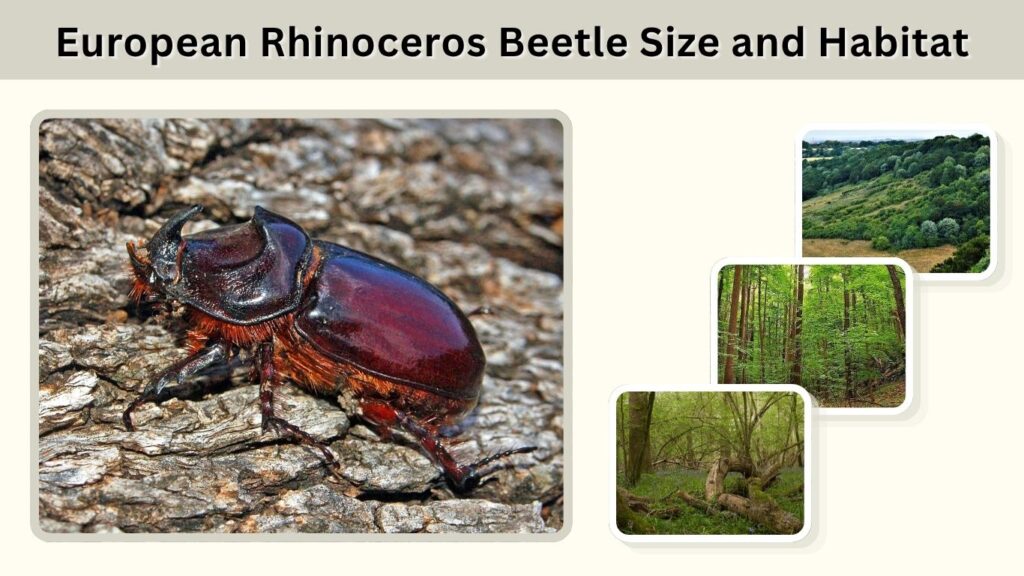
European rhinoceros beetles occupy environments containing dead wood, decomposing vegetation, and suitable breeding materials. They are often associated with mature deciduous forests but can also survive in human-modified landscapes. Their size varies depending on sex and developmental conditions, with larger individuals generally developing from well-nourished larvae.
How Big Is a European Rhinoceros Beetle?
Most adult European rhinoceros beetles measure approximately 20–40 millimeters (0.8–1.6 inches) long.
Exceptionally large individuals may reach nearly 60 millimeters. Their broad bodies and prominent male horns make them appear particularly impressive compared with many other European beetles.
Where Do European Rhinoceros Beetles Live?
These beetles occur across much of mainland Europe, extending into parts of western Asia and North Africa.
Their preferred habitats include:
- Deciduous forests containing rotting wood
- Old tree stumps and fallen trunks
- Compost heaps with woody materials
- Gardens containing bark mulch
- Sawmills with accumulated sawdust
- Parks and woodlands with decomposing vegetation
Are European Rhinoceros Beetles Found in the UK?
Oryctes nasicornis is not considered an established native species in the United Kingdom.
Occasional individuals have been discovered, but there is no confirmed self-sustaining wild population. The UK also has a smaller beetle called the rhinoceros beetle, Sinodendron cylindricum, which belongs to the stag beetle family.
What Do European Rhinoceros Beetles Eat?
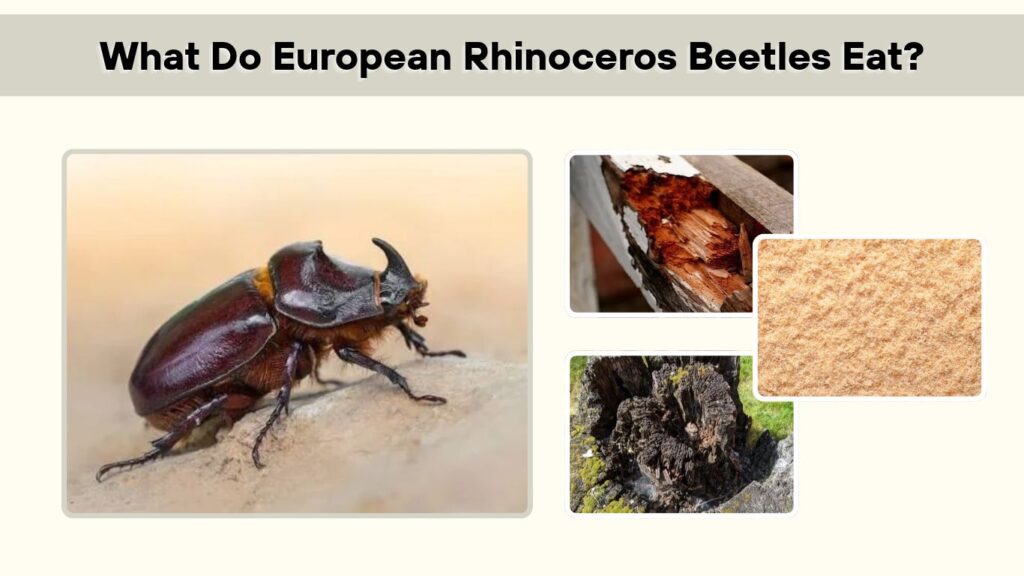
The European rhinoceros beetle has different nutritional requirements during its larval and adult stages. Larvae depend on decomposing plant materials for growth, while adults rely largely on energy accumulated during development. This feeding pattern allows the species to contribute to the natural decomposition of woody material without seriously damaging healthy living trees.
European Rhinoceros Beetle Larvae Diet
Larvae feed on decaying wood and organic plant fibers. They break down softened materials inside old logs, compost heaps, and decomposing vegetation.
Common larval food sources include:
- Rotten hardwood
- Decomposing tree stumps
- Old sawdust
- Decayed bark and wood chips
- Woody compost materials
Their feeding activity contributes to nutrient recycling and the breakdown of dead plant material.
What Do Adult European Rhinoceros Beetles Eat?
Adult European rhinoceros beetles are generally thought to feed very little or not at all.
They depend largely on energy reserves accumulated during their larval development. Unlike their larvae, adults spend their relatively short lives primarily searching for mates and reproducing.
European Rhinoceros Beetle Life Cycle and Lifespan
European rhinoceros beetles undergo complete metamorphosis, passing through four developmental stages. Most of their lifespan is spent underground or inside decomposing organic materials as larvae. Development usually takes several years, depending on temperature, food quality, and environmental conditions. Adults emerge during warmer months and survive for a comparatively short period.
Four Stages of the European Rhinoceros Beetle
- Egg Stage: Female beetles lay their eggs in suitable decaying wood or organic substrates where larvae can develop.
- Larval Stage: White, C-shaped grubs hatch and feed on decomposing materials. This stage commonly lasts two to four years, sometimes longer under certain conditions.
- Pupal Stage: Mature larvae create protected chambers and transform into pupae. Their bodies gradually develop adult legs, wings, and reproductive structures.
- Adult Stage: Fully formed beetles emerge during warmer weather. Adults search for mates, reproduce, and complete the reproductive cycle.
European Rhinoceros Beetle Larvae Appearance
European rhinoceros beetle larvae are large, whitish grubs with curved bodies and brown heads.
They have three pairs of small legs near the front of their bodies. Fully developed larvae can grow considerably larger than adults before pupation.
How Long Do European Rhinoceros Beetles Live?
The complete life cycle commonly takes approximately two to four years, although development can be longer under unfavorable conditions.
Adults generally survive for several weeks to a few months. Their relatively short adult stage is devoted primarily to reproduction rather than continued growth.
European Rhinoceros Beetle Behavior and Safety
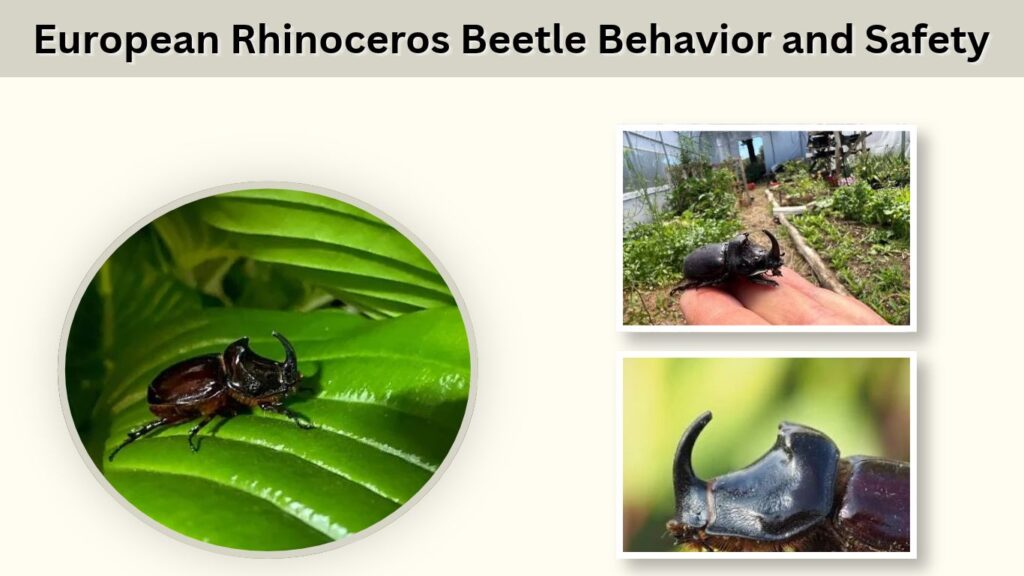
European rhinoceros beetles are generally peaceful insects that spend much of their adult lives hidden from view. They become more active during warmer evenings and may be attracted to artificial lighting. Although their horns and strong legs appear intimidating, they are not dangerous predators and rarely threaten humans or domestic animals.
Are European Rhinoceros Beetles Dangerous?
European rhinoceros beetles are not venomous and do not possess stingers. They are not aggressive toward humans.
Their strong claws may cause minor scratches when handled roughly, but they are generally harmless. Observing them without unnecessary handling is the best approach.
Can European Rhinoceros Beetles Fly?
Yes, European rhinoceros beetles can fly despite their heavy bodies.
They possess functional flight wings beneath their hardened wing covers. Adults commonly fly at dusk or during nighttime, particularly in warmer months.
Why Are European Rhinoceros Beetles Important?
These beetles play an important ecological role by helping break down decaying plant materials during their larval stage.
They also support forest biodiversity. Preserving suitable deadwood habitats helps maintain their populations and benefits other organisms that depend on decomposing vegetation.
FAQs
1. Are European rhinoceros beetles rare?
European rhinoceros beetles occur across a broad geographic range, but their local abundance varies. They may be uncommon in areas where suitable decaying wood is scarce. The species receives legal protection in certain European regions, so local conservation regulations should be respected.
2. Do European rhinoceros beetles bite humans?
European rhinoceros beetles are not aggressive biting insects. They possess chewing mouthparts but do not normally attack humans. Their horns are primarily used during competition between males. Handling them roughly may cause minor scratches from their claws rather than serious injuries.
3. What is the difference between male and female rhinoceros beetles?
Male European rhinoceros beetles have a prominent curved horn extending from the head. Females have a much smaller projection and appear less heavily armed. Both sexes possess glossy brown bodies, strong legs, and hardened wing covers.
4. How long do European rhinoceros beetle larvae live?
European rhinoceros beetle larvae commonly spend two to four years developing inside decomposing wood or organic materials. Environmental conditions can extend this period. During development, the larvae consume decayed plant fibers and accumulate the nutrients required for pupation and adult emergence.
5. Can European rhinoceros beetles be kept as pets?
European rhinoceros beetles are sometimes kept by beetle enthusiasts, but their long larval development requires specialized care and suitable decomposing substrates. Collection, possession, and trade may be restricted in certain regions. Check applicable wildlife regulations before obtaining or keeping these insects.
