
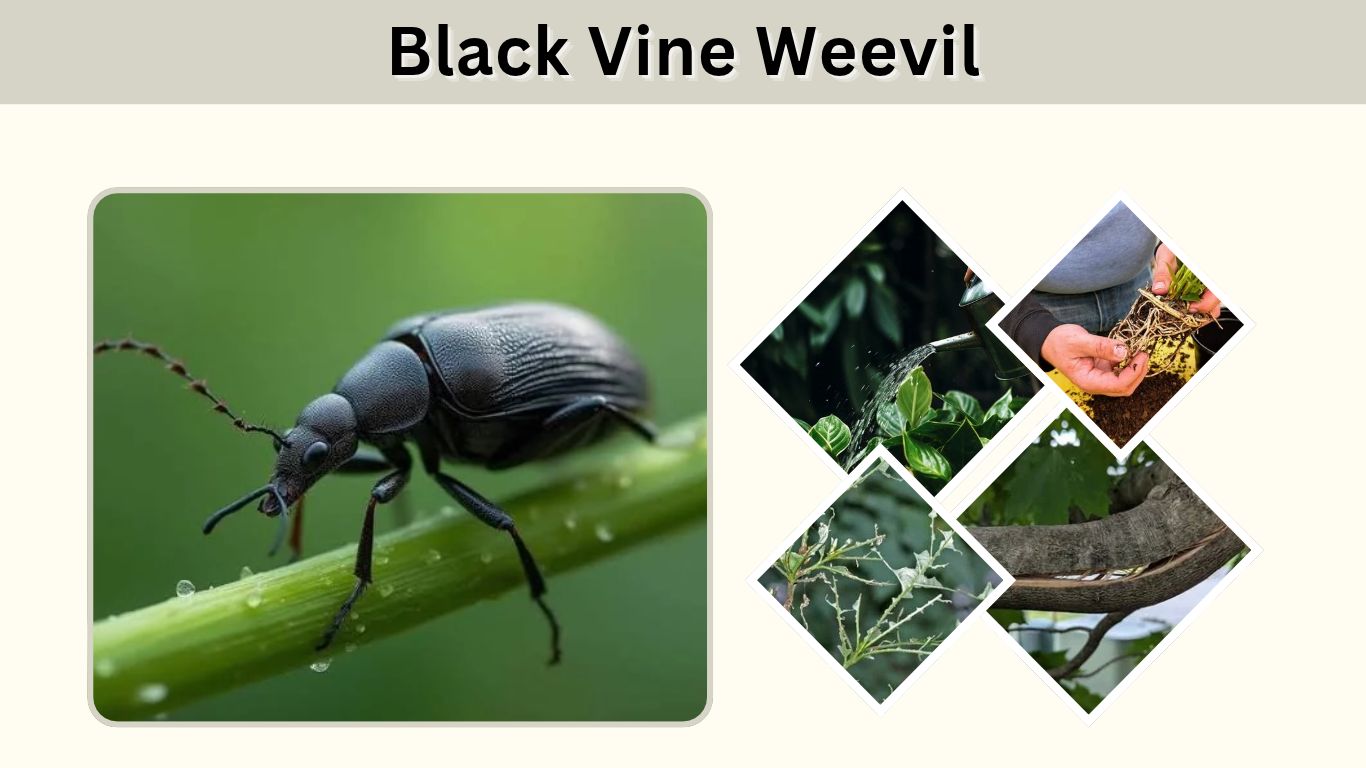
The black vine weevil is a destructive garden pest known for damaging ornamental plants, shrubs, and container-grown flowers. Scientifically called Otiorhynchus sulcatus, this small, dark beetle feeds on plant leaves while its larvae attack roots underground. Black vine weevils commonly infest rhododendrons, yews, azaleas, and several other garden plants, sometimes causing severe damage before gardeners notice their presence. Although these insects are harmless to humans, controlling infestations is essential for protecting vulnerable plants. Understanding black vine weevil identification, life cycle, damage symptoms, and effective control methods can help maintain healthier gardens.
What Is a Black Vine Weevil?
The black vine weevil (Otiorhynchus sulcatus) is a flightless beetle belonging to the family Curculionidae. It is also known as the black vine root weevil and is a common pest of ornamental plants.
Originally native to Europe, this species has spread to North America and other regions through the movement of plants and nursery materials.
Adult beetles feed mainly on foliage at night, while their larvae remain underground, consuming plant roots. Larval feeding is generally responsible for the most serious damage.
Black Vine Weevil Identification
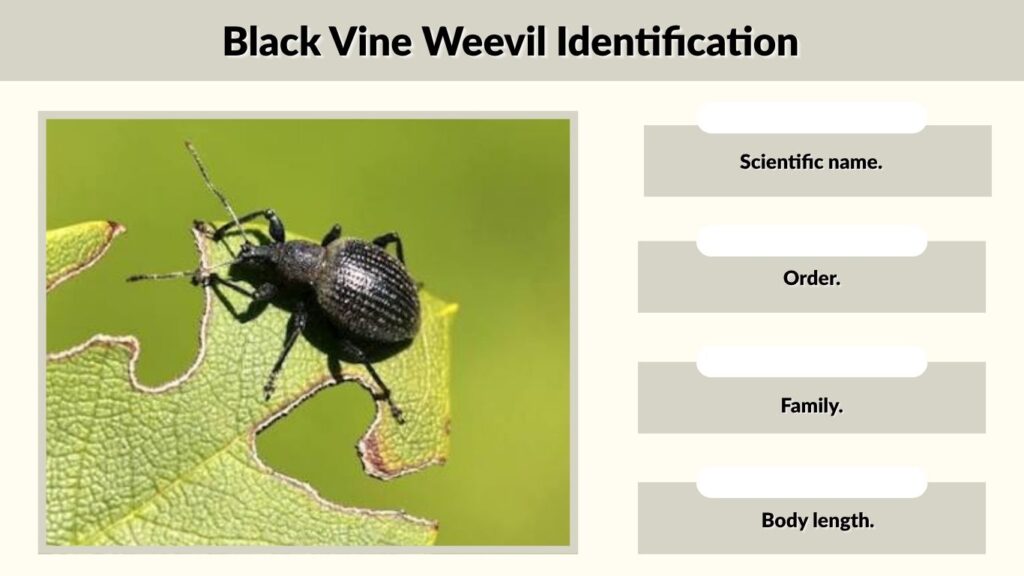
Identifying a black vine weevil requires examining its dark coloration, broad snout, and textured wing covers. Unlike many grain weevils, this species has a relatively short, wide snout and a sturdy, pear-shaped body. Adults are usually active after sunset and hide beneath leaves, mulch, or plant containers during daylight hours.
Key Physical Characteristics
- Scientific name: Otiorhynchus sulcatus
- Order: Coleoptera
- Family: Curculionidae
- Body length: Approximately 8–12 millimeters
- Body color: Dull black to dark brown
- Wing covers: Rough, ridged, and often marked with yellowish flecks
- Snout: Short, broad, and slightly curved downward
- Antennae: Elbowed with club-shaped tips
- Flight ability: Flightless because the wing covers are fused
What Do Black Vine Weevil Larvae Look Like?
Black vine weevil larvae are creamy-white, C-shaped grubs with brown heads and no legs.
Mature larvae may reach approximately 10–12 millimeters long.
They live in soil and feed on fine roots, larger roots, and the lower stems of susceptible plants.
Unlike adults, larvae remain hidden underground, making them difficult to detect before visible plant damage develops.
Black Vine Weevil Life Cycle
The black vine weevil undergoes complete metamorphosis through four developmental stages: egg, larva, pupa, and adult. Most outdoor populations complete one generation annually, although development varies according to temperature and growing conditions. An unusual characteristic is that females can reproduce without mating, producing offspring through parthenogenesis.
Four Stages of Development
- Egg: Adult females lay small, rounded eggs in soil near host plants during warmer months.
- Larva: Newly hatched grubs move toward plant roots and feed underground for several months.
- Pupa: Mature larvae form pupal chambers in the soil, usually during spring.
- Adult: Fully developed beetles emerge and begin feeding on foliage, primarily at night.
How Long Do Black Vine Weevils Live?
Black vine weevils generally complete their life cycle in approximately one year under typical outdoor conditions.
Most overwinter as developing larvae in the soil, although some adults may survive in sheltered environments.
Adult females can live for several months and may produce hundreds of eggs during their reproductive lives.
What Damage Do Black Vine Weevils Cause?
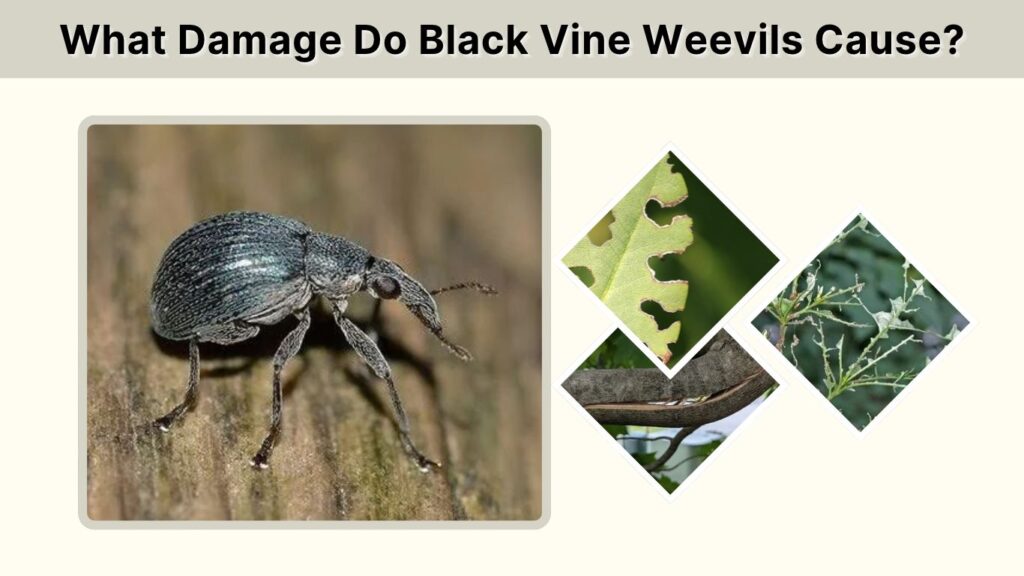
Black vine weevils damage plants during both their adult and larval stages. However, the type and severity of injury differ considerably. Adults primarily cause visible leaf damage, while larvae attack roots and underground stems. Severe larval infestations can weaken or kill vulnerable plants, particularly those growing in containers.
Adult Black Vine Weevil Leaf Damage
Adult black vine weevils feed on leaves and occasionally flowers during nighttime activity.
They chew characteristic U-shaped or semicircular notches along leaf margins.
Common signs include:
- Irregular notches along leaf edges.
- Missing sections of foliage.
- Damage concentrated on lower branches.
- Repeated feeding on rhododendron leaves.
- Adult beetles hiding beneath plants during daylight.
Although adult feeding may look unattractive, it rarely causes serious plant injury by itself.
Black Vine Weevil Larvae Root Damage
Larval feeding presents a much greater threat because grubs consume underground roots.
Young larvae initially feed on fine roots, while older larvae may damage larger roots and plant crowns.
Affected plants may exhibit wilting, yellowing leaves, poor growth, and eventual collapse.
Container-grown plants are particularly vulnerable because their limited root systems can be destroyed relatively quickly.
Which Plants Do Black Vine Weevils Attack?
Black vine weevils feed on numerous ornamental shrubs, herbaceous plants, and certain fruit crops. They are particularly troublesome in nurseries, greenhouses, gardens, and container plantings. Their broad host range means infestations can spread across different plant species growing close together.
Common Host Plants
- Rhododendrons and azaleas.
- Yews and hemlocks.
- Laurel and euonymus.
- Hellebores and hostas.
- Hydrangeas and primroses.
- Heuchera and sedum.
- Strawberries and certain berry plants.
- Various container-grown ornamentals.
Black Vine Weevil Damage on Rhododendrons
Rhododendrons are among the most commonly affected ornamental shrubs.
Adult beetles create distinctive rounded notches along leaf margins, often on lower or interior branches.
Meanwhile, larvae feed on underground roots and may damage the root crown.
Severely infested rhododendrons can develop poor growth, persistent wilting, or branch dieback.
How to Get Rid of Black Vine Weevils
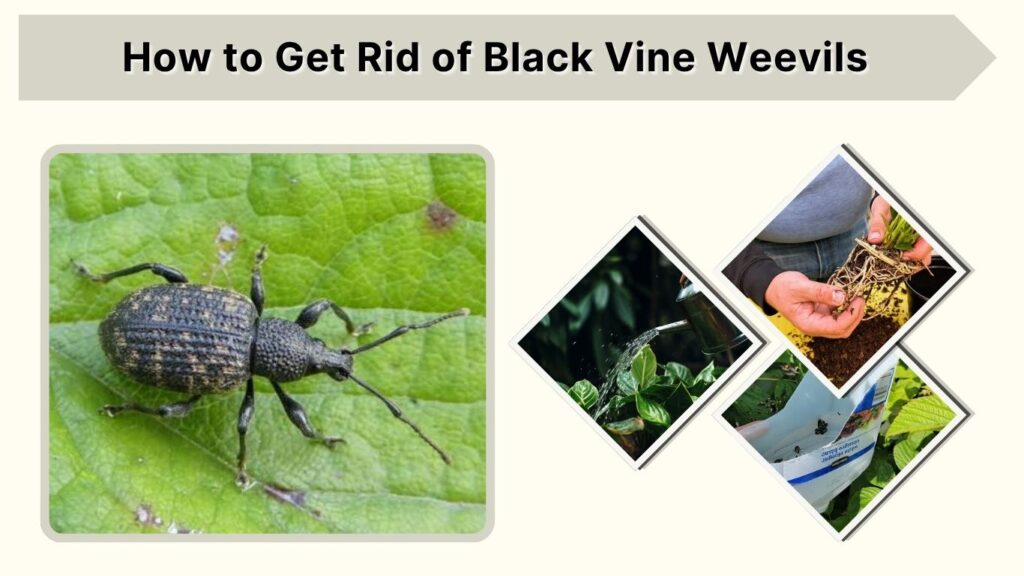
Effective black vine weevil control requires addressing both adult beetles and underground larvae. Eliminating visible adults alone may not prevent plant damage because immature insects can remain concealed in the soil. Combining monitoring, manual removal, biological treatments, and appropriate plant care generally provides better results.
Step-by-Step Black Vine Weevil Control
- Inspect plants at night: Use a flashlight to locate feeding adults on leaves and branches.
- Remove visible beetles: Collect adults by hand or shake them onto a sheet for disposal.
- Check plant roots: Examine the soil around wilting plants for creamy-white grubs.
- Remove affected potting soil: Repot severely affected container plants after removing visible larvae and damaged roots.
- Apply beneficial nematodes: Use a suitable biological treatment when soil conditions are appropriate.
- Monitor new damage: Continue inspecting leaf margins and plant growth throughout the active season.
Biological Control Using Nematodes
Beneficial nematodes are microscopic organisms that can infect and kill black vine weevil larvae.
Species such as Heterorhabditis bacteriophora, Heterorhabditis megidis, and Steinernema kraussei are used in biological control.
They are applied to moist soil or potting compost where developing larvae are present.
Treatment effectiveness depends on the nematode species, soil temperature, moisture, and application timing. Follow the product instructions carefully, because some nematodes require warmer soil than others.
Black Vine Weevil Chemical Control
Chemical control may be necessary when infestations cause substantial plant damage and other methods are insufficient. However, selecting the correct treatment depends on whether the target is an adult beetle or an underground larva.
Foliar insecticides registered for black vine weevil control may help reduce adult feeding and egg laying when applied at the appropriate time.
Certain registered soil treatments may also control developing larvae.
Always follow local regulations and product labels, especially around edible plants, children, pets, and pollinators.
Unnecessary pesticide applications should be avoided.
Why Are Black Vine Weevils in My House?
Black vine weevils occasionally enter homes while searching for shelter or moving between nearby plants. They may also arrive inside infested potted plants or potting soil.
Because adults cannot fly, indoor movement occurs through crawling.
How to Remove Black Vine Weevils Indoors
Finding an individual black vine weevil in a kitchen, bathroom, or living room does not necessarily indicate a household infestation.
To prevent repeated appearances:
- Inspect indoor and outdoor potted plants.
- Check plant soil for hidden larvae.
- Vacuum or collect wandering adults.
- Seal gaps around windows and doors.
- Remove fallen leaves near entrances.
- Keep susceptible plants under observation.
Black vine weevils do not normally infest stored rice, flour, or other pantry grains. Finding weevils inside food packages more likely indicates a different species.
Are Black Vine Weevils Harmful to Humans?
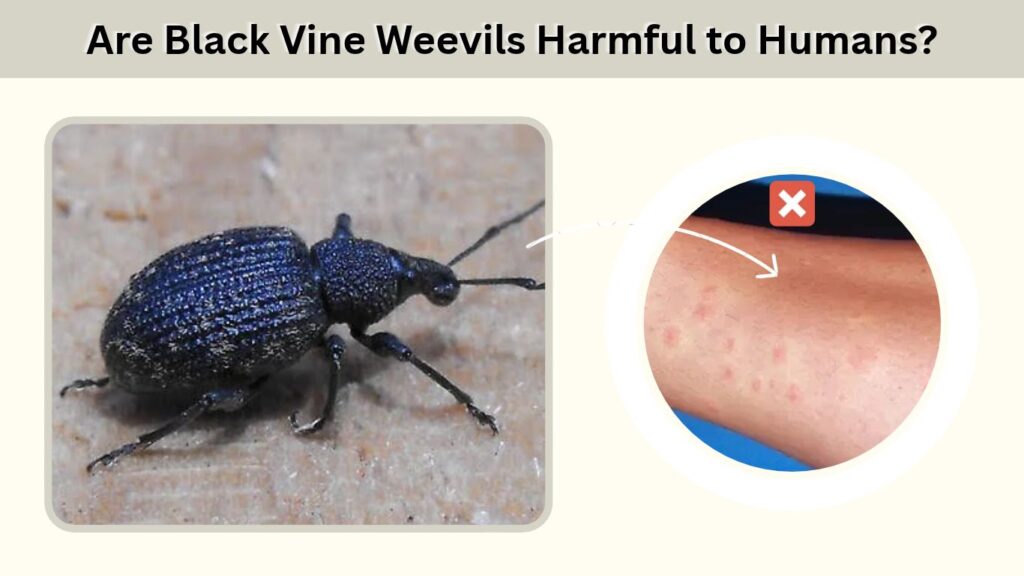
Black vine weevils are not considered dangerous to humans or pets.
They do not possess venomous stingers and are not known for biting people.
Their mouthparts are adapted for chewing plant material rather than attacking human skin.
They also do not damage furniture or structural wood.
Their primary significance is horticultural, particularly their ability to destroy plant roots and weaken valuable ornamental plants.
How to Prevent Black Vine Weevil Infestations
Preventing black vine weevils requires regular monitoring and careful inspection of newly purchased plants. Since these beetles reproduce without mating, even a single female can establish a population under suitable conditions. Early detection is especially important for protecting susceptible container plants and ornamental shrubs.
Effective Prevention Tips
- Inspect nursery plants before purchasing them.
- Check leaves for distinctive semicircular notches.
- Examine roots and soil before repotting.
- Avoid transferring infested potting soil between containers.
- Monitor susceptible plants after sunset.
- Remove visible adults before extensive egg laying.
- Encourage natural predators such as ground beetles and birds.
- Maintain healthy growing conditions to improve plant resilience.
FAQs
1. Do Black Vine Weevils Bite Humans?
Black vine weevils do not normally bite humans and cannot sting. Their mouthparts are designed for feeding on plant leaves. Although they may occasionally crawl indoors, they do not feed on human blood or deliberately attack people.
2. Can Black Vine Weevils Fly?
No, black vine weevils are flightless because their hardened wing covers are fused together. They spread primarily by crawling or through transported nursery plants and potting soil. Despite lacking flight ability, adults are capable climbers.
3. What Is the Best Time to Apply Nematodes?
Beneficial nematodes are generally most effective when young black vine weevil larvae are present and soil temperatures are suitable. Late summer to early autumn is often recommended, although application timing depends on climate, nematode species, and product instructions.
4. Are Black Vine Weevils Dangerous to Rhododendrons?
Yes, black vine weevils can seriously damage rhododendrons. Adults chew rounded notches along leaf edges, while larvae feed on roots and underground stems. Severe larval infestations may cause wilting, reduced growth, and eventual plant death.
5. Can Black Vine Weevils Infest Indoor Plants?
Yes, black vine weevils can infest indoor plants, particularly when contaminated potting soil or previously outdoor-grown containers are brought inside. Their larvae feed on roots, while adults damage leaves. Inspecting soil and foliage helps identify infestations early.
