
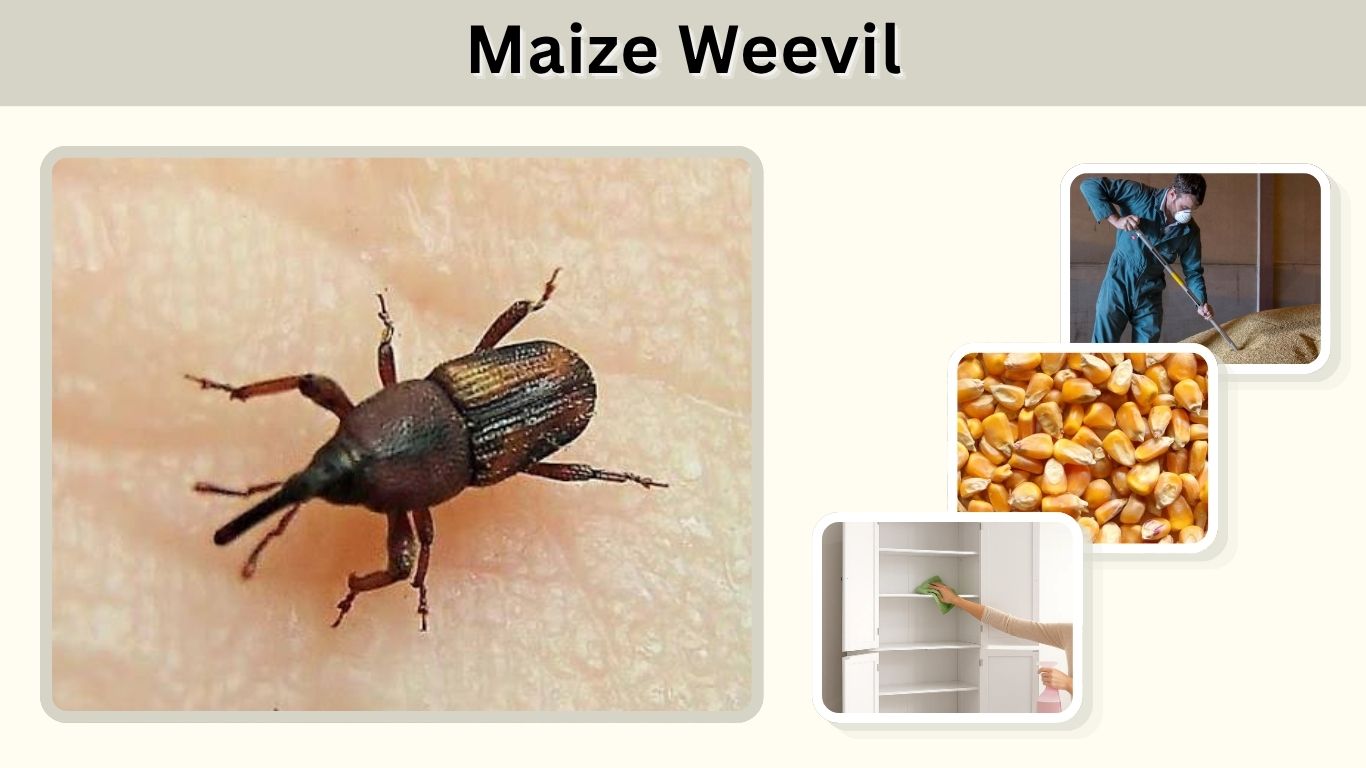
The maize weevil is a destructive stored-grain pest that commonly infests corn, rice, wheat, and other cereal products. Scientifically known as Sitophilus zeamais, this tiny beetle can cause significant agricultural losses by feeding on grains and laying eggs inside individual kernels. Maize weevils reproduce rapidly under warm conditions, making infestations difficult to control once established. Although they are not generally harmful to humans, they can reduce grain quality and encourage food deterioration. Understanding maize weevil identification, larvae, life cycle, damage, and effective control methods is essential for protecting stored food.
What Is a Maize Weevil?
The maize weevil (Sitophilus zeamais) is a small grain-feeding beetle belonging to the family Curculionidae. It is also called the greater grain weevil and is one of the most economically important pests of stored maize worldwide.
Unlike insects that feed only on grain surfaces, maize weevils develop inside individual kernels. Females deposit eggs within grains, where larvae remain concealed until adulthood.
These insects thrive in warm, humid environments and can infest maize before harvesting or during storage.
Maize Weevil Identification
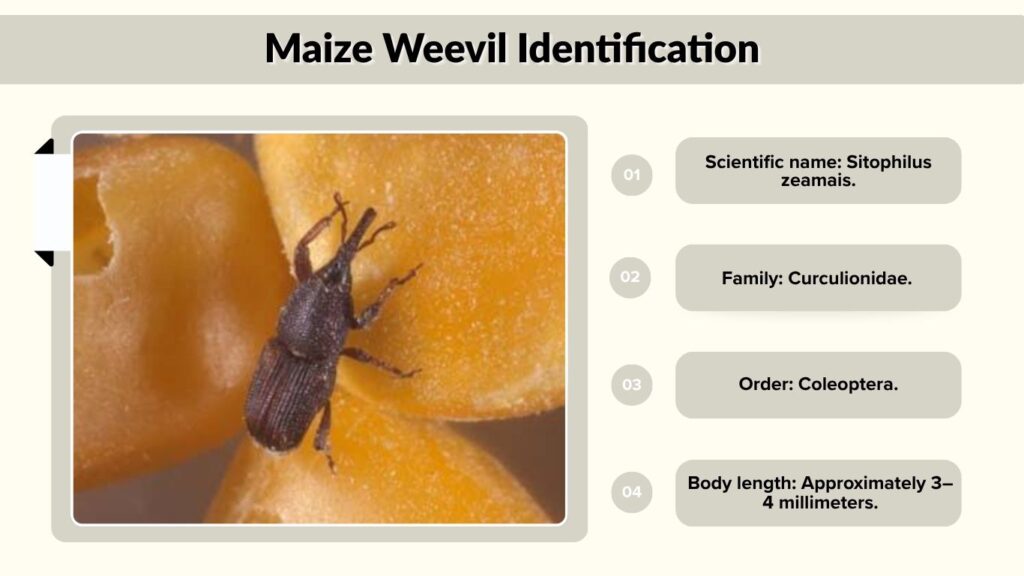
Maize weevils are small, reddish-brown to nearly black beetles characterized by elongated snouts and distinctive wing markings. Their appearance closely resembles rice weevils, making accurate identification difficult without specialized examination. Adults can crawl and fly, allowing them to move between grain storage areas and agricultural fields.
Key Physical Characteristics
- Scientific name: Sitophilus zeamais
- Family: Curculionidae
- Order: Coleoptera
- Body length: Approximately 3–4 millimeters
- Body color: Reddish-brown to nearly black
- Snout: Long, narrow, and slightly curved
- Wing covers: Four faint reddish-yellow spots
- Antennae: Elbowed with club-shaped tips
- Flight ability: Fully developed wings allow adults to fly
Male vs. Female Maize Weevils
Male and female maize weevils look extremely similar, although subtle differences exist in their snouts.
Males generally have shorter, wider, and more roughly textured snouts. Females possess relatively longer, narrower, and smoother snouts.
Females use their mouthparts to create small cavities in grain kernels before depositing eggs. Both sexes feed on stored grains and contribute to grain damage.
Maize Weevil Life Cycle
Maize weevils undergo complete metamorphosis through four developmental stages: egg, larva, pupa, and adult. Most immature development occurs inside individual grains, protecting the insects from environmental conditions and making early detection difficult. Under favorable warm conditions, the life cycle may be completed in approximately 30–40 days.
1. Egg Stage
Female maize weevils chew small openings into suitable grain kernels and deposit eggs inside.
They seal the openings with a protective secretion, concealing the eggs from external observation.
Eggs typically hatch within several days under favorable environmental conditions.
2. Larval Stage
Newly hatched maize weevil larvae are creamy-white, legless grubs with small brown heads.
They feed on the internal contents of grain kernels while gradually increasing in size.
Their feeding creates hollow spaces inside the grains, reducing weight and nutritional quality.
3. Pupal Stage
After completing larval development, maize weevils enter the pupal stage inside the damaged kernels.
During this period, their bodies transform into recognizable adult beetles.
The pupal stage usually lasts several days, although temperature influences developmental speed.
4. Adult Stage
Fully developed adults chew exit holes through the grain surface and emerge.
They begin feeding, mating, and locating suitable grains for reproduction.
Adult maize weevils may live for several months, allowing females to lay numerous eggs and establish overlapping generations.
What Do Maize Weevils Eat?
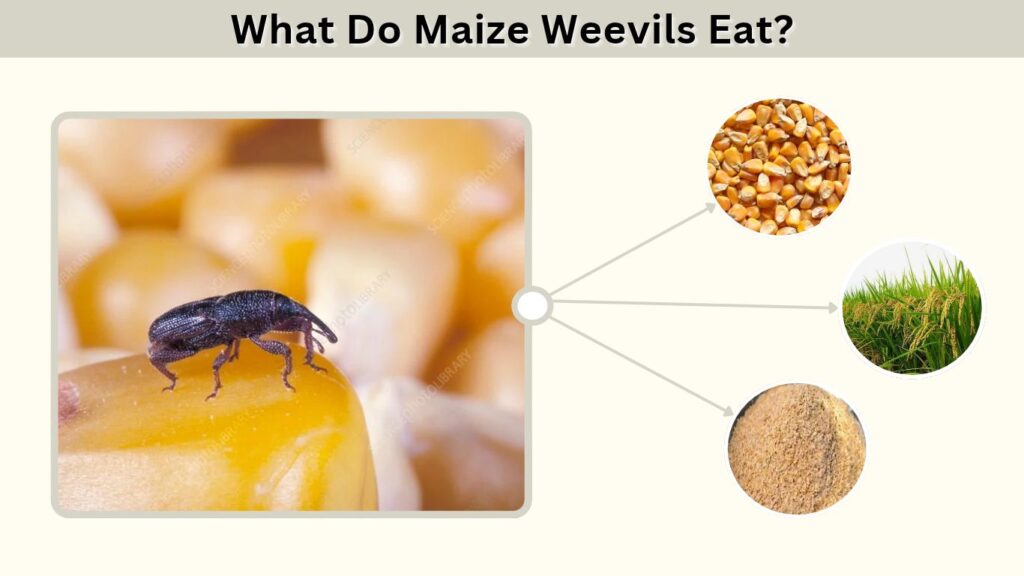
Maize weevils primarily consume cereal grains. Both larvae and adults damage stored food, although their feeding patterns differ. Larvae consume internal grain tissues, while adults feed on grain surfaces and exposed contents.
Common food sources include:
- Whole maize and dried corn kernels.
- Rice and wheat.
- Barley and oats.
- Sorghum and rye.
- Buckwheat and other cereal grains.
- Grain-based animal feed.
- Birdseed and certain stored cereal products.
Whole grains are especially suitable for reproduction because they provide protected chambers where larvae can develop.
What Damage Do Maize Weevils Cause?
Maize weevils are serious agricultural pests because they reduce both the quantity and quality of stored grain. Their larvae destroy internal grain tissues, while adults create additional feeding damage. Heavy infestations can also increase heat and moisture within grain storage facilities.
Common Signs of Maize Weevil Damage
- Small circular or irregular exit holes in kernels.
- Hollowed grains with reduced weight.
- Adult beetles crawling through stored maize.
- Fine grain powder and feeding debris.
- Increased moisture in heavily infested grain.
- Mold development is associated with poor storage conditions.
- Reduced seed germination and grain quality.
Economic Importance of Maize Weevils
Maize weevils can cause substantial economic losses in agricultural storage systems, especially in tropical and subtropical regions.
Severe infestations may reduce marketable grain weight, seed viability, and overall storage quality.
Their feeding can also create favorable conditions for secondary pests and fungal growth, increasing the risk of food deterioration.
How to Get Rid of Maize Weevils
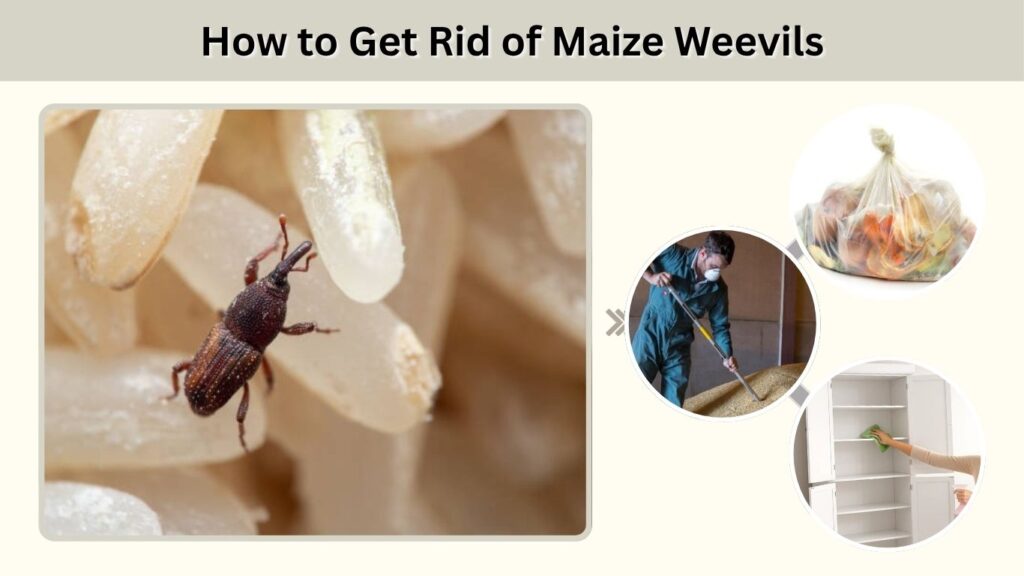
Effective maize weevil control requires eliminating infested food sources and preventing surviving insects from reproducing. Because eggs and larvae remain hidden inside kernels, removing visible adults alone is insufficient. Household control usually involves sanitation, disposal, freezing, and pest-resistant storage.
Step-by-Step Maize Weevil Control
- Inspect stored grains: Check maize, rice, wheat, birdseed, and other susceptible products for insects or damaged kernels.
- Remove infested food: Seal heavily contaminated products in bags and dispose of them outside.
- Clean storage areas: Empty shelves and vacuum spilled grain, dust, and hidden insects.
- Wash surfaces: Clean cabinets with warm soapy water and allow them to dry completely.
- Freeze suitable products: Place small packages in a freezer at approximately 0°F (-18°C) for at least four days to kill hidden insects.
- Use airtight containers: Store unaffected grain in tightly sealed glass, metal, or sturdy plastic containers.
- Monitor regularly: Inspect stored products over the following weeks for newly emerging adults.
Natural Maize Weevil Control Methods
Nonchemical management is especially important when maize is intended for human consumption. Several practical methods can reduce infestations without applying insecticides directly to food. However, effectiveness depends on grain condition, storage temperature, and the severity of the infestation.
Proper Grain Drying
Drying maize to a safe moisture content before storage reduces conditions favorable for insect development and fungal growth.
However, drying alone does not reliably kill all established insects.
Clean, dry grain should be stored in suitable containers or properly sealed grain-storage bags.
Hermetic Grain Storage
Hermetic storage bags and containers create low-oxygen conditions that can suppress insect activity when correctly sealed.
These systems are particularly useful for protecting stored maize in agricultural settings.
Grain must be properly dried before sealing to reduce the risk of moisture-related spoilage.
Maize Weevil Control Using Insecticides
Insecticides may be used in commercial grain-storage systems, but treatment must follow local regulations and approved product labels.
Professional storage facilities may use registered grain protectants or fumigation methods.
Fumigation requires specially trained and authorized personnel because fumigants can be extremely hazardous.
Ordinary household insecticide sprays should never be applied directly to maize, rice, or other food products.
For home infestations, sanitation, disposal, freezing, and airtight storage are generally safer and more practical.
Maize Weevil vs. Rice Weevil
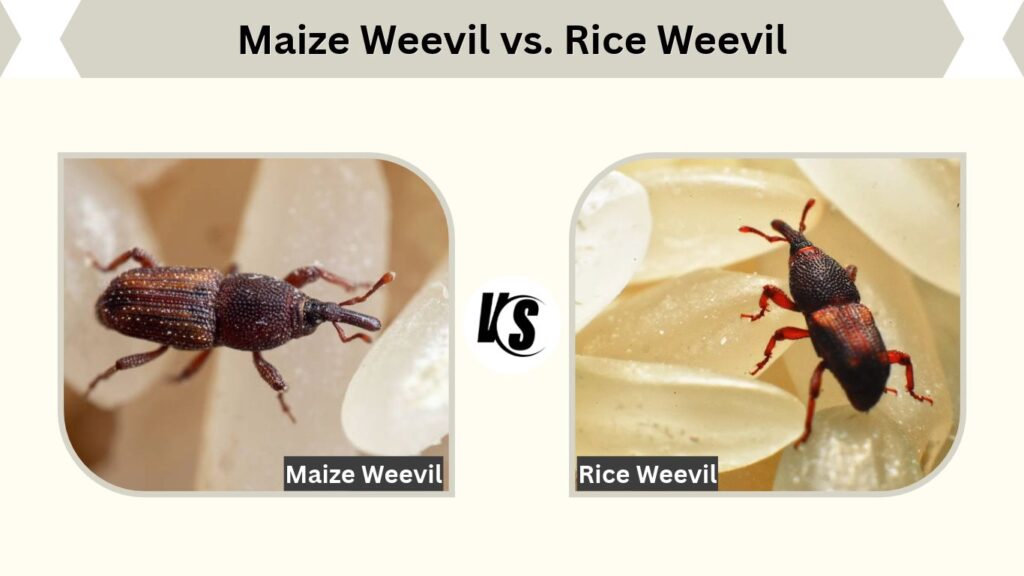
Maize weevils and rice weevils belong to the genus Sitophilus and have similar feeding habits. Both reproduce inside grain kernels and can cause significant storage damage. Although maize weevils are often slightly larger, their external appearance overlaps considerably.
| Characteristic | Maize Weevil | Rice Weevil |
| Scientific name | Sitophilus zeamais | Sitophilus oryzae |
| Typical size | 3–4 mm | 2.5–4 mm |
| Body color | Dark reddish-brown | Reddish-brown to black |
| Wing markings | Four pale spots | Four pale spots |
| Flight ability | Strong flyer | Can fly |
| Major association | Maize and stored cereals | Rice and stored cereals |
| Larval development | Inside grains | Inside grains |
Reliable separation of these species generally requires microscopic examination of reproductive structures or molecular identification.
Are Maize Weevils Harmful to Humans?
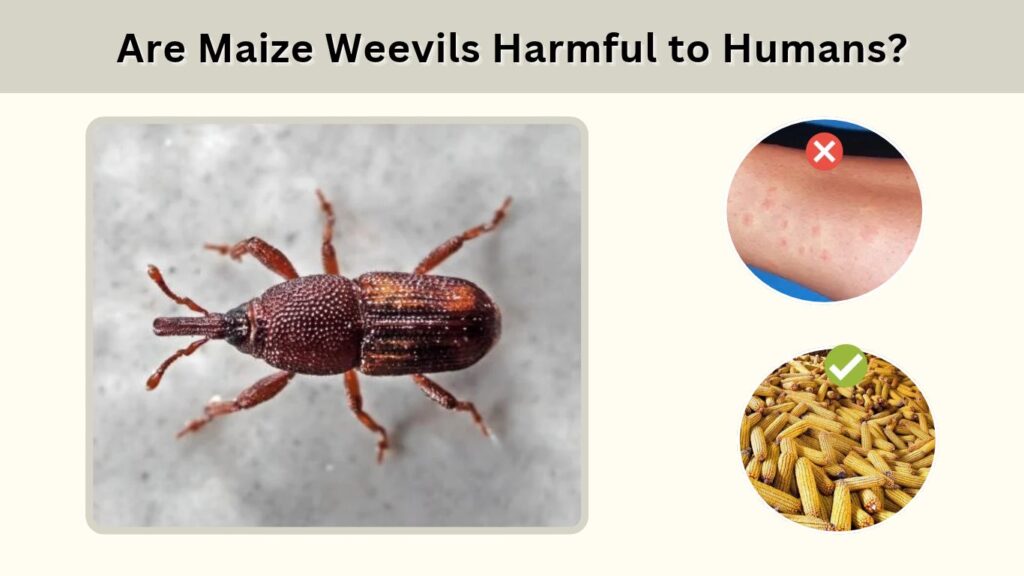
Maize weevils are not generally dangerous to humans. They do not possess venomous stingers and are not known for biting people. Their primary significance involves food damage rather than direct physical injury.
Is Maize Containing Weevils Safe to Eat?
Accidentally swallowing a maize weevil is unlikely to cause poisoning in most healthy individuals.
However, heavily infested grain should be discarded because it may contain insect fragments, waste, and damaged kernels.
Grain showing mold, unusual odors, or moisture damage should not be consumed. Cooking kills insects but does not reliably eliminate all food-safety hazards associated with spoiled grain.
How to Prevent Maize Weevil Infestations
Preventing maize weevils depends on proper grain handling, moisture management, and regular storage inspection. Because adults can fly and immature insects develop inside grains, infestations may begin before or after harvesting. Combining preventive measures reduces the risk of repeated damage.
Effective Maize Weevil Prevention Tips
- Dry maize properly before long-term storage.
- Use airtight or appropriate hermetic grain-storage containers.
- Inspect newly harvested or purchased grains.
- Clean storage bins before adding new supplies.
- Remove old grain residues and spills.
- Keep storage environments cool and dry.
- Separate infested products from unaffected grain.
- Rotate stored grain supplies regularly.
- Monitor grain for insects, moisture, and damage.
FAQs
1. Can Maize Weevils Fly?
Yes, adult maize weevils possess functional wings and can fly. They may travel between agricultural fields and grain-storage facilities, spreading infestations. This ability distinguishes them from granary weevils, which cannot fly because they lack functional flight wings.
2. Do Maize Weevils Bite Humans?
Maize weevils do not normally bite humans and cannot sting. Their elongated mouthparts are designed for chewing grains rather than attacking people. Although they are harmless during ordinary contact, their presence in stored food can create contamination and quality concerns.
3. How Long Does the Maize Weevil Life Cycle Take?
Under favorable warm conditions, maize weevils can complete their life cycle in approximately 30–40 days. Cooler temperatures may significantly extend development. Most immature stages occur inside grain kernels, allowing infestations to remain hidden until adults emerge.
4. What Is the Best Natural Way to Control Maize Weevils?
The most effective nonchemical methods include removing infested grains, cleaning storage areas, freezing suitable small packages, and using airtight containers. Proper grain drying and hermetic storage are also valuable for agricultural maize storage and long-term prevention.
5. What Is the Difference Between Maize and Rice Weevils?
Maize and rice weevils look extremely similar, with elongated snouts and four pale wing markings. Maize weevils are often slightly larger and stronger flyers, but these traits overlap. Reliable identification generally requires specialized examination of reproductive structures.
