
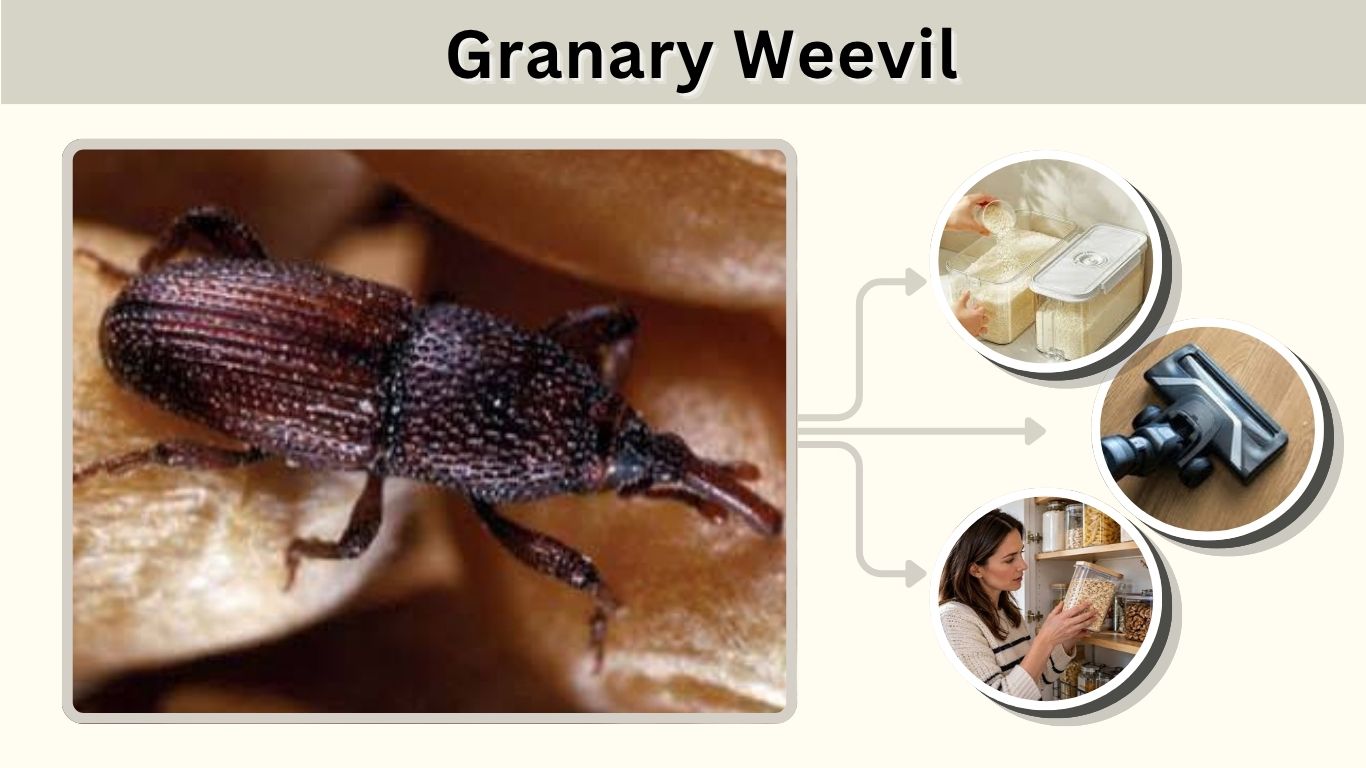
The granary weevil is a common stored-grain pest that damages wheat, rice, oats, barley, and other cereal products. Scientifically known as Sitophilus granarius, this small reddish-brown beetle is recognized by its elongated snout and inability to fly. Granary weevils often enter homes through contaminated grain packages, where their larvae develop hidden inside individual kernels. Although these insects are harmless to humans, they can cause significant food contamination and storage losses. Understanding granary weevil identification, life cycle, feeding habits, infestation signs, and effective control methods can help protect household pantries and agricultural grain supplies.
What Is a Granary Weevil?
The granary weevil (Sitophilus granarius), also called the grain weevil, is a small beetle belonging to the family Curculionidae. It is one of the oldest known pests of stored cereal grains and has spread worldwide through agricultural trade.
Unlike many household beetles, granary weevils spend their entire development associated with stored grain products.
Both adults and larvae damage grains through feeding. However, larvae cause particularly serious damage because they consume the internal contents of individual kernels before emerging as adults.
Granary Weevil Identification
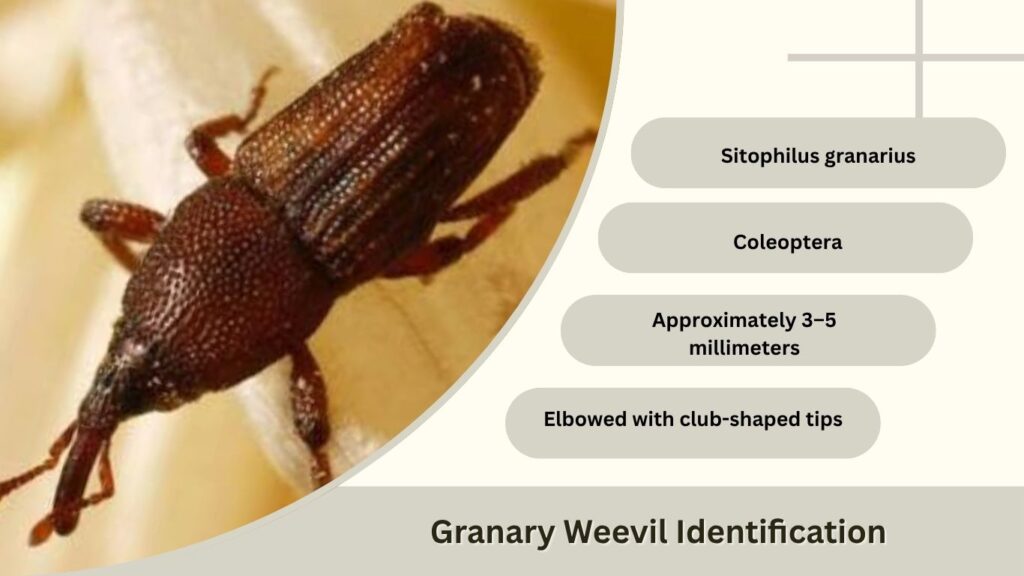
Identifying a granary weevil is relatively straightforward because of its elongated snout, compact body, and dark coloration. Adults resemble rice and maize weevils but lack the distinctive lighter spots commonly visible on those species. Their inability to fly is another important identifying characteristic.
Key Physical Characteristics
- Scientific name: Sitophilus granarius
- Order: Coleoptera
- Family: Curculionidae
- Body length: Approximately 3–5 millimeters
- Body color: Reddish-brown to nearly black
- Snout: Long, narrow, and slightly curved
- Antennae: Elbowed with club-shaped tips
- Wing covers: Dark, with longitudinal grooves and no prominent pale spots
- Flight ability: Flightless, with fused wing covers and no functional flight wings
What Do Adult Granary Weevils Look Like?
Adult granary weevils have cylindrical, slightly elongated bodies and distinctive snouts extending forward from their heads.
Their thoraxes feature elongated oval punctures, while their wing covers have rows of grooves.
When disturbed, adults may tuck in their legs and remain motionless, making them resemble tiny pieces of grain debris.
Granary Weevil Life Cycle
Granary weevils undergo complete metamorphosis through four stages: egg, larva, pupa, and adult. Their development occurs largely inside grain kernels, making early infestations difficult to detect. Under favorable warm conditions, the life cycle may be completed in approximately four to six weeks, although cooler temperatures can substantially extend development.
Four Stages of Development
- Egg Stage: Female granary weevils chew small holes into grain kernels and deposit individual eggs inside. They then seal the openings with a protective secretion.
- Larval Stage: After hatching, the larvae feed internally on the grain. They remain concealed while consuming the kernel’s nutritional contents.
- Pupal Stage: Mature larvae pupate inside hollowed grains. During this stage, their bodies transform into adult beetles.
- Adult Stage: Fully developed weevils chew exit holes and emerge from the grains. Adults feed, mate, and begin another reproductive cycle.
How Long Do Granary Weevils Live?
Adult granary weevils commonly live approximately seven to eight months, although lifespan varies with environmental conditions.
Females may lay around 150 eggs during their reproductive lives.
Warm temperatures and favorable humidity encourage faster development, allowing multiple generations to establish in stored grain.
What Do Granary Weevil Larvae Look Like?
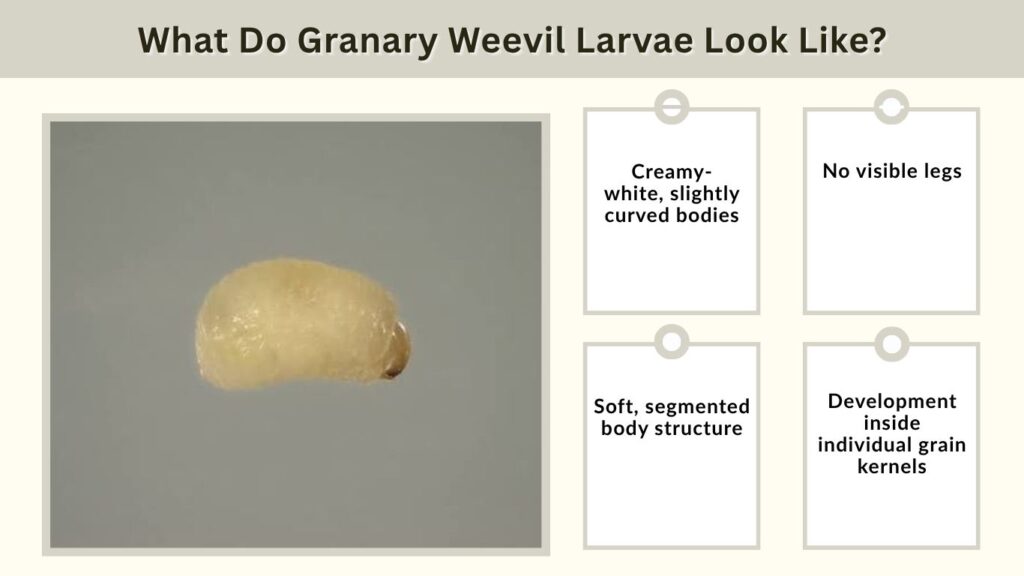
Granary weevil larvae are small, creamy-white grubs that develop inside cereal kernels. They have soft, curved bodies, brown head capsules, and no legs. Their appearance differs considerably from the elongated, dark-colored adults.
Because larvae remain concealed inside grains, they are rarely visible during ordinary food inspection.
Granary Weevil Larvae Identification
Typical larval characteristics include:
- Creamy-white, slightly curved bodies.
- Small brown or yellowish-brown heads.
- No visible legs.
- Soft, segmented body structure.
- Development inside individual grain kernels.
- Feeding that gradually hollows out the grain.
After completing development, adults emerge through visible openings in the grain surface.
What Do Granary Weevils Eat?
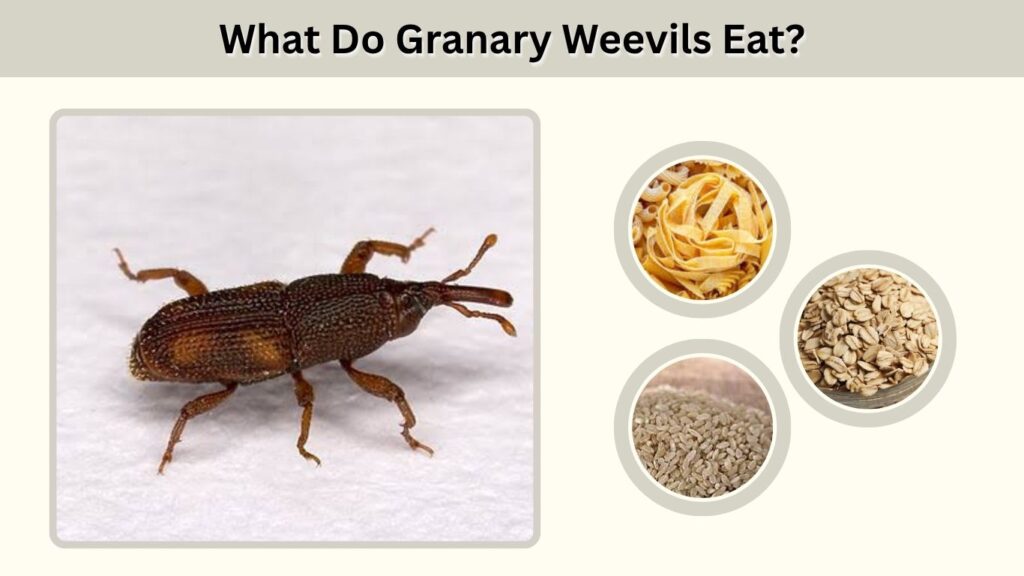
Granary weevils primarily feed on stored cereal grains. Adults consume grain surfaces and damaged kernels, while larvae develop inside whole grains or sufficiently large grain fragments. Their feeding can reduce grain weight, quality, and commercial value.
Common food sources include:
- Wheat and barley.
- Rice and oats.
- Corn and rye.
- Sorghum and other cereal grains.
- Grain-based birdseed.
- Whole-grain animal feed.
- Certain dried seeds and stored cereal products.
Granary weevils may occasionally appear in pasta, flour, or processed cereals, but these products are generally less suitable for reproduction than intact kernels.
Signs of a Granary Weevil Infestation
Granary weevil infestations often begin when contaminated food enters a home or grain storage facility. Because immature beetles develop inside kernels, infestation may remain unnoticed until adults emerge. Recognizing early warning signs helps prevent insects from spreading to additional stored products.
Common Infestation Signs
- Small dark beetles crawling through stored grains.
- Circular or oval exit holes in grain kernels.
- Hollowed, weakened, or damaged seeds.
- Fine grain dust and feeding debris.
- Beetles gathering around pantry shelves.
- Unexpected moisture or heating in heavily infested bulk grain.
- Insects appearing inside previously unopened packages.
Why Are Granary Weevils in My House?
Granary weevils usually enter homes inside infested rice, wheat, oats, birdseed, or other stored grains.
Unlike rice weevils, they cannot fly. Their spread occurs mainly through crawling and the transportation of contaminated products.
Finding granary weevils in a bathroom or another room does not necessarily indicate that they are feeding there. They may simply have wandered away from an infested grain package.
How to Get Rid of Granary Weevils
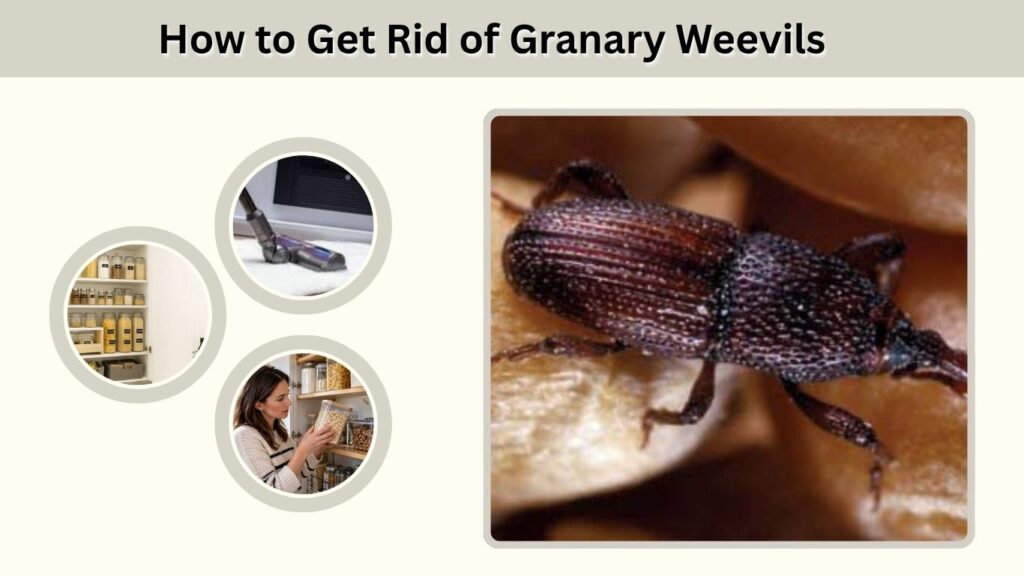
Eliminating granary weevils requires locating contaminated grain, removing infestation sources, and cleaning storage areas thoroughly. Since larvae develop inside kernels, killing visible adults alone will not solve the problem. Effective control combines inspection, sanitation, freezing when appropriate, and proper food storage.
Step-by-Step Granary Weevil Control
- Inspect stored grains: Examine rice, wheat, oats, cereals, birdseed, and grain-based pet food.
- Discard infested products: Seal heavily contaminated food in bags and dispose of it outside the home.
- Empty pantry shelves: Remove containers and inspect cracks, corners, and shelf joints.
- Vacuum thoroughly: Eliminate spilled grains, dust, and adult beetles. Dispose of the vacuum contents promptly.
- Clean storage surfaces: Wash cabinets using warm water and soap, then allow them to dry completely.
- Freeze suitable products: Small grain packages can be frozen at approximately 0°F (-18°C) for three to seven days to kill hidden developmental stages.
- Use airtight containers: Store unaffected grains in tightly sealed glass, metal, or sturdy plastic containers.
Do Granary Weevil Traps Work?
Commercial stored-product insect traps can help detect and monitor granary weevil activity.
However, traps alone rarely eliminate established infestations because eggs, larvae, and pupae remain protected inside kernels.
Their primary value is monitoring adult populations and determining whether control efforts have reduced pest activity.
Granary Weevil vs. Rice Weevil
Granary weevils and rice weevils are closely related stored-grain pests belonging to the genus Sitophilus. Their feeding habits and life cycles are similar, but several physical characteristics distinguish them.
| Feature | Granary Weevil | Rice Weevil |
| Scientific name | Sitophilus granarius | Sitophilus oryzae |
| Body length | 3–5 mm | 2.5–4 mm |
| Body color | Brown to nearly black | Brown to nearly black |
| Wing spots | No distinct pale spots | Usually four pale spots |
| Flight ability | Cannot fly | Can fly |
| Preferred climate | More common in temperate conditions | Favors warmer conditions |
| Larval habitat | Inside grain kernels | Inside grain kernels |
Both species can damage stored grains, but rice weevils may spread through flight, while granary weevils primarily spread through crawling and infested food shipments.
Are Granary Weevils Harmful to Humans?
Granary weevils are not generally dangerous to humans or pets. They do not sting, are not known to bite people, and do not normally transmit diseases.
Their main significance involves food contamination and damage to stored grains.
Is Food Containing Granary Weevils Safe to Eat?
Accidentally swallowing a granary weevil is unlikely to cause illness in most healthy individuals.
However, visibly infested food should generally be discarded because it may contain insect fragments, larvae, waste, and damaged grain.
Freezing or cooking can kill insects but cannot restore grain that has deteriorated or become moldy.
How to Prevent Granary Weevil Infestations
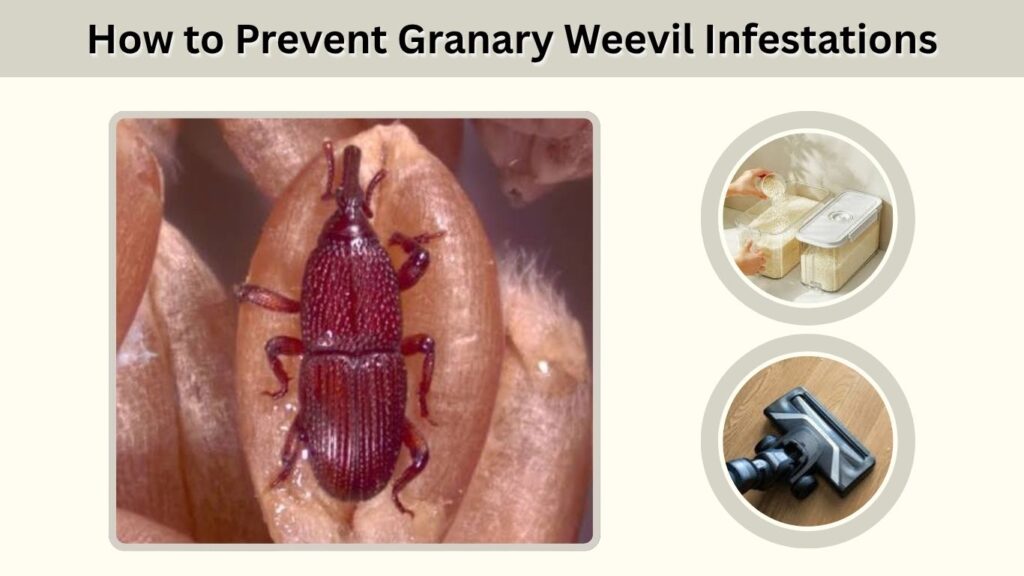
Preventing granary weevils depends on proper storage conditions and regular inspection of susceptible food products. Even apparently sealed packages can contain hidden eggs or larvae introduced before purchase. Maintaining clean, dry storage areas reduces opportunities for infestation and reproduction.
Effective Prevention Tips
- Store grains in airtight, pest-resistant containers.
- Inspect newly purchased cereal products.
- Rotate older food supplies regularly.
- Keep storage areas cool and dry.
- Clean spilled grains immediately.
- Avoid storing large quantities longer than necessary.
- Inspect birdseed and grain-based pet food.
- Freeze susceptible small packages before extended storage when appropriate.
Avoid spraying insecticides directly onto stored food or inside food containers. Household infestations are usually best managed through sanitation and removal of contaminated products.
FAQs
1. Can Granary Weevils Fly?
No, granary weevils cannot fly because they lack functional flight wings. Unlike rice weevils, they spread mainly by crawling or through contaminated grain products. Their presence in different rooms usually indicates movement from an infested food source.
2. Do Granary Weevils Bite Humans?
Granary weevils do not normally bite humans and cannot sting. Their mouthparts are designed for chewing grains rather than attacking people. They are considered harmless during ordinary contact, although their presence in food creates contamination concerns.
3. Can Granary Weevils Live in Wood?
Granary weevils do not normally infest structural wood or furniture. They primarily survive and reproduce in stored cereal grains. If small beetles are emerging from wooden structures, another wood-associated beetle species may be responsible.
4. Are Granary Weevils Common in Oats?
Granary weevils can infest whole oats and other suitable cereal grains. Their larvae develop inside individual kernels, allowing infestations to remain hidden. Processed oat products are generally less suitable for reproduction, although adult beetles may occasionally appear in them.
5. What Is the Best Way to Control Granary Weevils?
The most effective approach combines identifying infested grains, discarding heavily contaminated products, thoroughly cleaning storage areas, and using airtight containers. Freezing suitable grain packages can kill hidden insects. Insecticide sprays are generally unnecessary for household pantry infestations.
