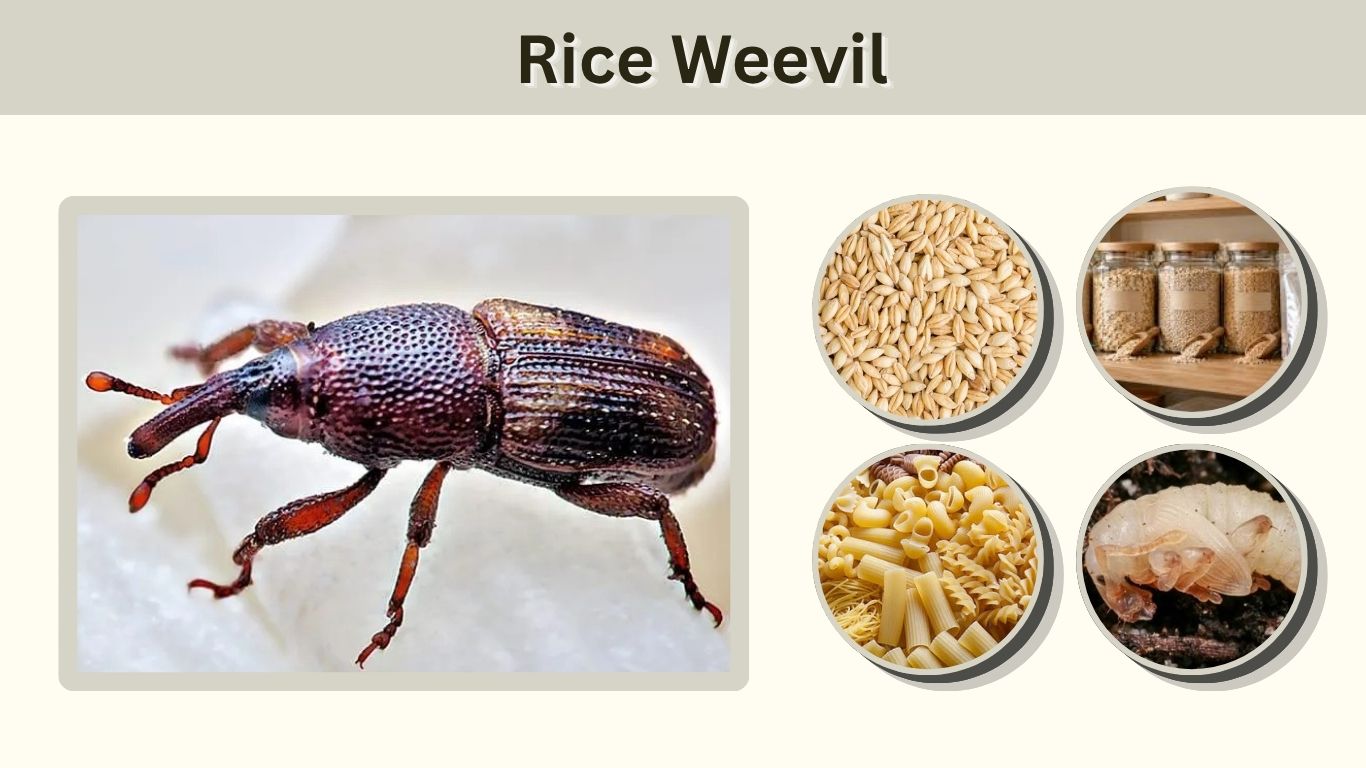
The rice weevil is a small, destructive beetle commonly found in stored rice, grains, cereals, and other dry food products. Recognized by its long snout and reddish-brown body, this insect can quickly multiply inside kitchen cabinets and grain storage facilities. Both adults and larvae damage stored grains, often remaining unnoticed until an infestation becomes severe. Although rice weevils are not dangerous to humans, they can contaminate food and cause significant losses. Understanding their identification, life cycle, feeding habits, and control methods helps prevent infestations effectively.
What Is a Rice Weevil?
The rice weevil (Sitophilus oryzae) is a small beetle belonging to the family Curculionidae. It is one of the most widespread pests of stored grains worldwide. Despite its name, this insect feeds on several cereal grains, including rice, wheat, corn, and barley.
Rice weevils are particularly problematic in warm environments where populations can reproduce rapidly. They commonly infest household pantries, warehouses, and agricultural storage facilities.
Rice Weevil Size and Appearance
Adult rice weevils generally measure 2–4 millimeters long. Their bodies range from reddish-brown to nearly black.
Their most recognizable feature is an elongated snout, known as a rostrum, which they use to chew into grain kernels.
How to Identify a Rice Weevil
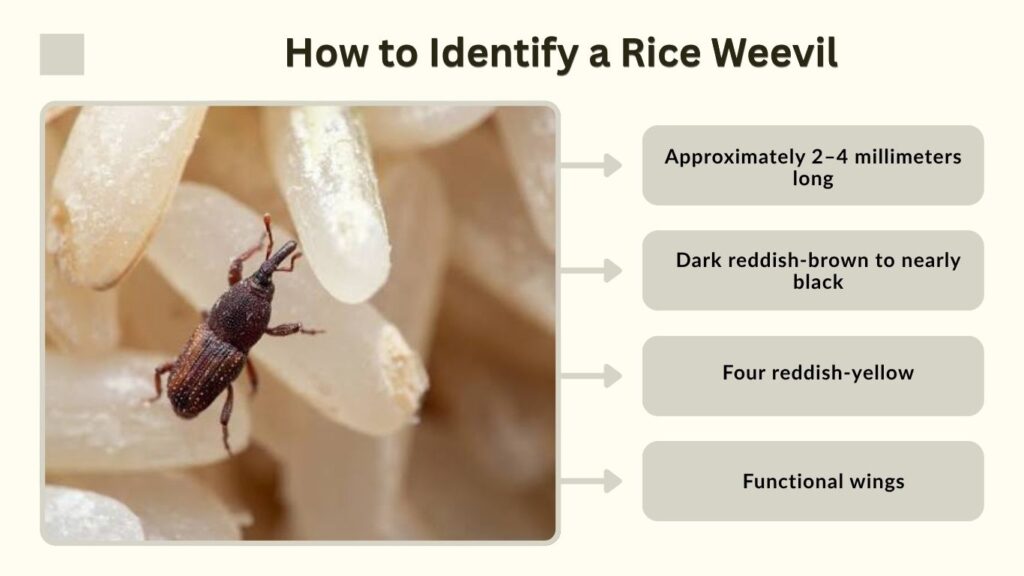
Rice weevils have distinctive characteristics that separate them from many other household beetles. Their small bodies, prominent snouts, and pale wing markings are useful identification clues.
However, they closely resemble maize weevils, making accurate identification difficult without magnification or professional examination.
Key Identification Features
- Body size: Approximately 2–4 millimeters long.
- Body color: Dark reddish-brown to nearly black.
- Snout: Long, curved mouthpart extending from the head.
- Wing markings: Four reddish-yellow or lighter spots on the wing covers.
- Antennae: Elbowed antennae attached to the snout.
- Wings: Functional wings that allow adults to fly.
- Body shape: Compact, cylindrical, and slightly elongated.
Black Rice Weevil Identification
Some adult rice weevils appear almost completely black, particularly older individuals with darker coloration.
However, color alone cannot confirm identification. Other grain weevils may look similar, so examining the snout, wing markings, and body structure is important.
Rice Weevil Eggs and Larvae
Rice weevils develop inside individual grain kernels, making early infestations difficult to detect. Female beetles create small holes in grains, deposit eggs, and seal the openings with protective material.
The larvae remain hidden inside the kernels while feeding, often escaping notice until adult beetles emerge.
What Do Rice Weevil Eggs Look Like?
Rice weevil eggs are extremely small, whitish, and oval-shaped.
Females usually deposit individual eggs inside rice or other grains. Because each opening is sealed, the eggs are rarely visible without carefully examining or dissecting the kernels.
Rice Weevil Larvae Identification
Rice weevil larvae are creamy-white, legless grubs with small brown heads.
They have soft, curved bodies and develop entirely inside grain kernels. Unlike caterpillars, they do not crawl around pantry shelves during normal development.
Rice Weevil Life Cycle
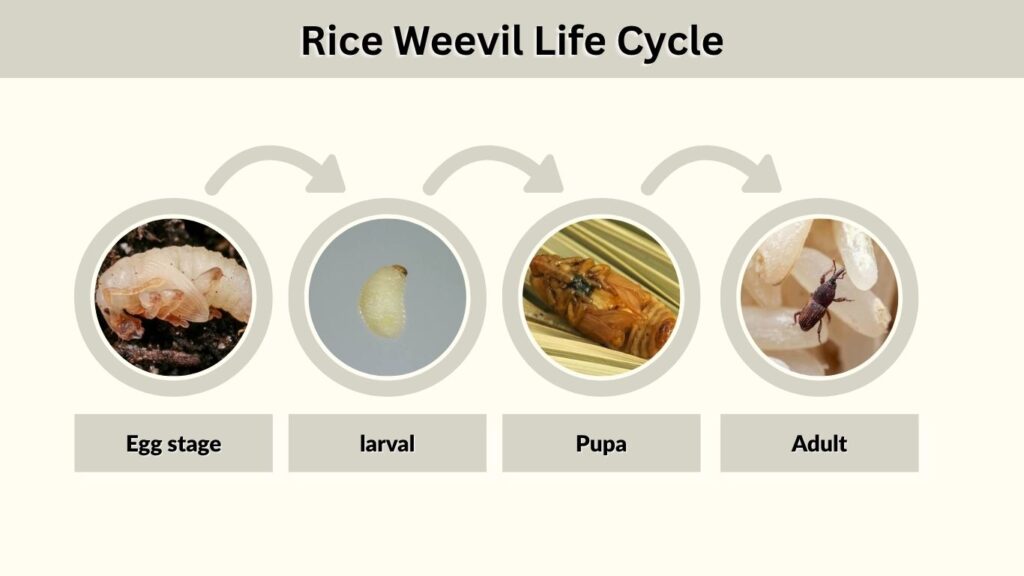
Rice weevils undergo complete metamorphosis through four stages: egg, larva, pupa, and adult. Their development depends on temperature, humidity, and food availability.
Under favorable warm conditions, one generation can develop in approximately 26–35 days. Cooler temperatures can substantially extend the development period.
Four Stages of the Life Cycle
- Egg stage: Females drill small holes into grains and deposit eggs. Hatching may occur after approximately three days in warm conditions.
- Larval stage: Newly hatched larvae feed inside kernels, gradually consuming their internal tissues.
- Pupal stage: Mature larvae transform into pupae while remaining inside the grain.
- Adult stage: Fully developed beetles chew circular exit holes and emerge to feed, mate, and reproduce.
How Long Do Rice Weevils Live?
Adult rice weevils commonly survive for four to five months, depending on environmental conditions.
A female may produce approximately 250–400 eggs during her lifetime, allowing populations to increase rapidly when suitable grains remain available.
What Do Rice Weevils Eat?
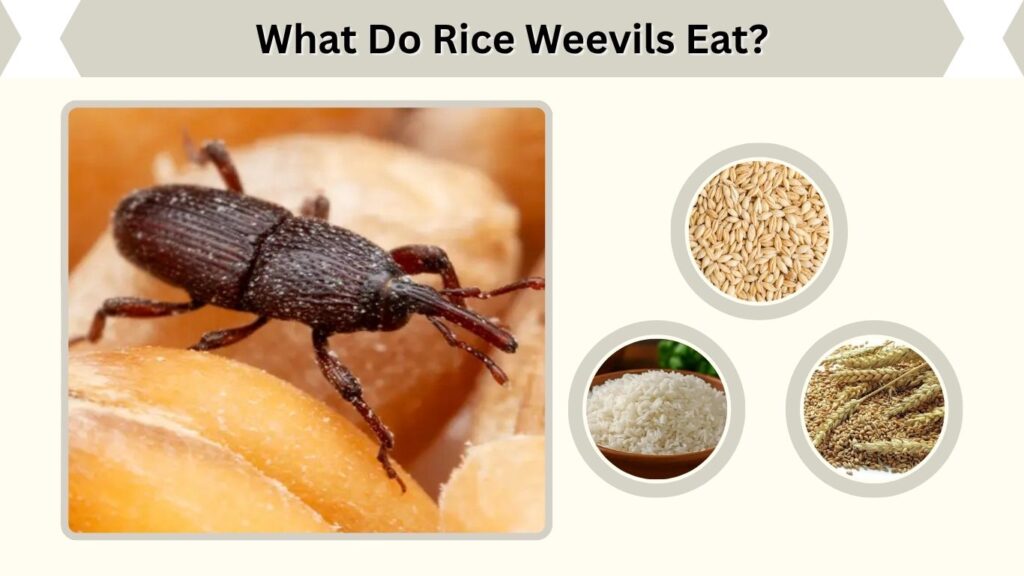
Rice weevils primarily consume stored cereal grains and other dry plant products. Both adults and larvae feed on grain material, although larvae require suitable kernels for development.
Common food sources include rice, wheat, barley, corn, oats, and rye. They may also infest birdseed, dried beans, pasta, and certain grain-based pet foods.
Can Rice Weevils Live in Flour?
Rice weevils primarily reproduce inside intact or sufficiently large grain pieces. They generally cannot complete normal larval development in loose, finely milled flour.
However, adults may occasionally be found among flour and other processed foods. Beetles discovered in flour may also belong to different pantry pest species.
What Damage Do Rice Weevils Cause?
Rice weevils damage stored grains by feeding internally and externally. Larvae consume grain tissues, while emerging adults leave small, circular holes.
Heavy infestations can reduce food quality, increase grain moisture, and create conditions favorable for further deterioration.
Signs of Rice Weevil Infestation
Infested rice may contain small beetles crawling between grains. Some kernels develop tiny holes where adult weevils have emerged.
Other warning signs include damaged grains, powdery debris, increased moisture, and insects appearing around storage containers.
In severe cases, stored food may develop unpleasant odors or show signs of mold growth.
How to Get Rid of Rice Weevils
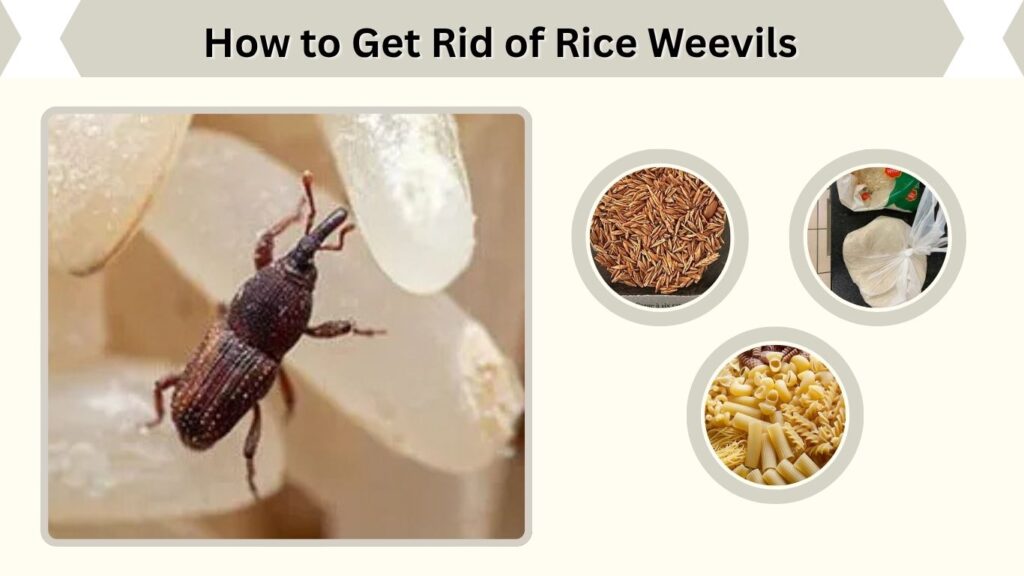
Eliminating rice weevils requires locating their food source and removing infested materials. Killing visible adults alone is insufficient because eggs and developing larvae remain hidden inside grains.
Proper cleaning, food inspection, and secure storage are the most effective household control methods.
Effective Rice Weevil Control Methods
- Identify infested food: Inspect rice, cereals, pasta, beans, and other stored products.
- Discard contaminated grains: Seal heavily infested food in a bag and dispose of it outside.
- Vacuum storage areas: Clean shelves, corners, and cracks where insects or spilled grains accumulate.
- Clean containers: Wash and thoroughly dry reusable food containers.
- Freeze questionable products: Place potentially infested dry foods in a freezer at 0°F (-18°C) for at least four days.
- Store food securely: Transfer unaffected grains into airtight glass, metal, or sturdy plastic containers.
- Monitor regularly: Continue checking pantry products for newly emerging beetles.
Do Rice Weevil Traps Work?
Some commercially available stored-product insect traps use pheromones or food attractants to capture adult weevils.
These traps can help monitor insect activity, but they cannot eliminate eggs and larvae developing inside grain kernels.
Removing infested food remains essential for successful control.
Are Rice Weevils Harmful to Humans?
Rice weevils do not normally bite humans and are not known to transmit human diseases. They do not infest human hair, skin, or clothing.
Their main concern is food contamination rather than direct injury.
Is Rice With Weevils Safe to Eat?
Accidentally consuming a small rice weevil is unlikely to cause harm. However, visibly infested rice should generally be discarded.
Infested grains may contain insects, eggs, waste, and damaged kernels. Cooking or freezing can kill insects but cannot reverse spoilage or remove contamination.
How to Prevent Rice Weevil Infestations
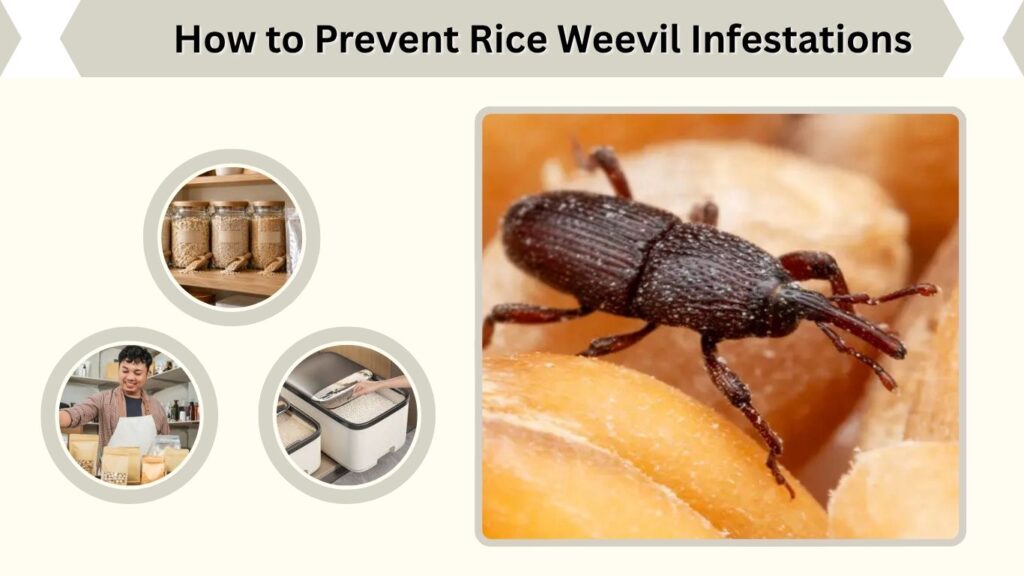
Preventing rice weevils requires proper grain storage and consistent pantry hygiene. Infestations often begin when eggs or larvae are already present in purchased products.
Warm temperatures and prolonged storage can allow hidden populations to develop into noticeable infestations.
Rice Weevil Prevention Tips
- Store rice and grains in airtight, pest-resistant containers.
- Inspect food packages before purchasing and storing them.
- Keep pantry shelves clean and free from spilled grains.
- Avoid storing large quantities of food unnecessarily.
- Use older food products before opening newer purchases.
- Freeze susceptible dry foods before long-term storage when appropriate.
- Regularly examine birdseed and dry pet food for insects.
Rice Weevil vs. Granary Weevil vs. Maize Weevil
Rice, granary, and maize weevils belong to the genus Sitophilus. All three damage stored grains, but they differ in appearance and certain biological characteristics.
Main Differences Between These Weevils
Rice weevils (Sitophilus oryzae) are small, reddish-brown beetles with four lighter wing markings and functional wings.
Granary weevils (Sitophilus granarius) are generally larger, lack the four pale wing spots, and cannot fly.
Maize weevils (Sitophilus zeamais) closely resemble rice weevils and can also fly. Distinguishing these two species reliably may require microscopic examination.
FAQs
1. Can Rice Weevils Bite Humans?
Rice weevils do not normally bite humans. Their elongated mouthparts are adapted for feeding on grains rather than human skin. They are not venomous and do not transmit known human diseases, although their presence can make stored food unsuitable for consumption.
2. Can Rice Weevils Fly?
Yes, adult rice weevils have functional wings and can fly. They may travel between food storage areas and are sometimes attracted to lights. Their ability to fly helps explain why adults occasionally appear in rooms away from infested grain containers.
3. What Kills Rice Weevils Naturally?
Freezing susceptible dry food at 0°F (-18°C) for at least four days can kill rice weevils and their developing stages. Discarding infested products, vacuuming shelves, and using airtight containers are also effective nonchemical management methods for household infestations.
4. Why Are Rice Weevils All Over My House?
Rice weevils usually spread from infested rice, grains, birdseed, or dry pet food. Adults can crawl or fly away from these sources and appear in surrounding rooms. Locating and removing the original infestation usually resolves the problem.
5. Are Rice Weevils and Rice Water Weevils the Same?
No, rice weevils (Sitophilus oryzae) are stored-grain pests that develop inside kernels. Rice water weevils (Lissorhoptrus oryzophilus) primarily damage growing rice plants in flooded fields, especially through larval feeding on roots. They require different control approaches.