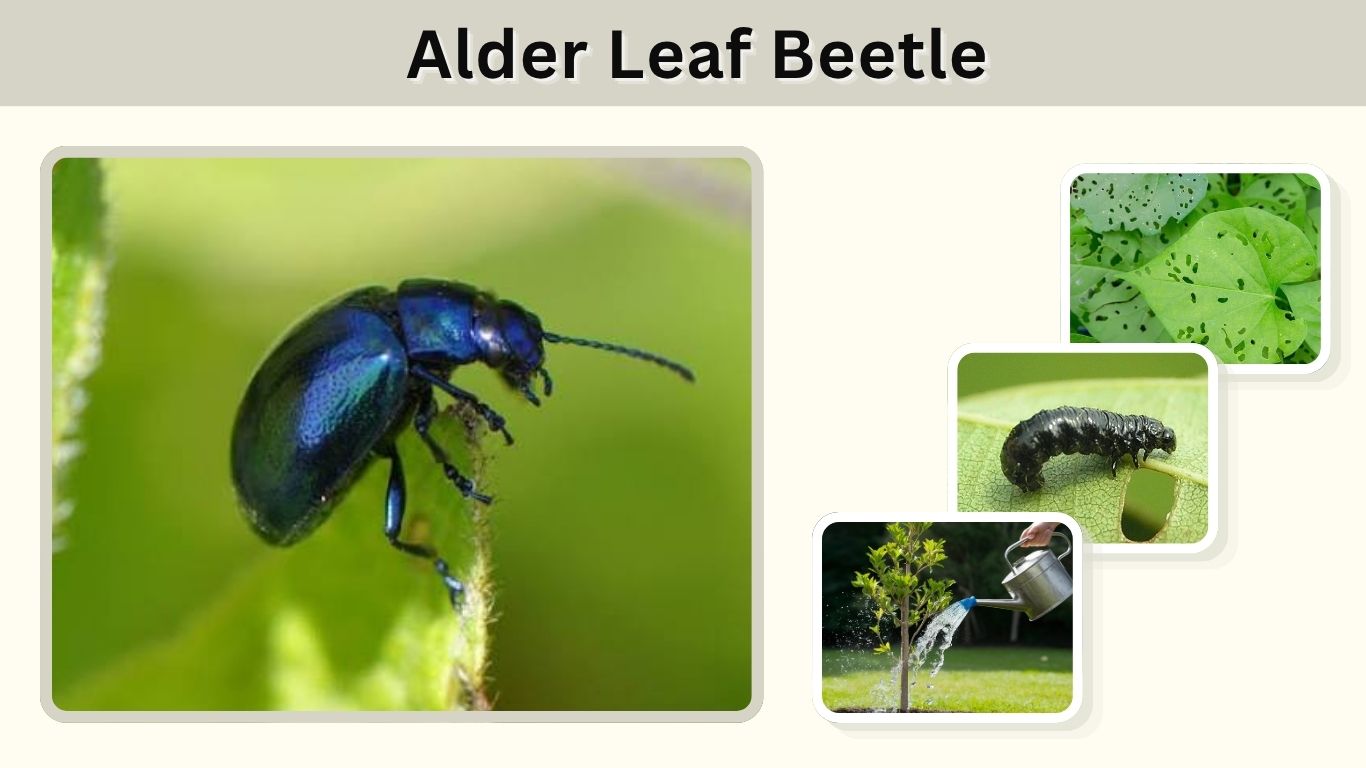
The alder leaf beetle is a small, metallic-blue insect that feeds primarily on alder tree leaves. Scientifically known as Agelastica alni, this beetle belongs to the leaf beetle family and is commonly found in European woodlands, gardens, and wetlands. Both adults and larvae consume foliage, sometimes causing extensive leaf damage during large infestations. Although its striking blue appearance attracts attention, the insect is generally harmless to humans. Understanding alder leaf beetle identification, habitat, life cycle, feeding behavior, and control methods can help you manage infestations and protect affected trees.
What Is an Alder Leaf Beetle?
The alder leaf beetle (Agelastica alni) is a leaf-eating insect belonging to the family Chrysomelidae and order Coleoptera. It is also called the blue alder leaf beetle because of its shiny, metallic-blue appearance. The species primarily feeds on alder trees but occasionally consumes foliage from other deciduous trees.
Alder Leaf Beetle Scientific Classification
The scientific name Agelastica alni refers to the European alder leaf beetle. It is a member of the Chrysomelidae family, which includes thousands of plant-feeding beetle species.
Adults generally measure 6–8 millimeters long and have oval bodies protected by hardened wing covers. Their metallic coloration varies from deep blue to bluish-purple, sometimes appearing nearly black under certain lighting conditions.
Unlike predatory ladybugs, alder leaf beetles are herbivores that feed directly on leaves.
How to Identify Alder Leaf Beetles
Alder leaf beetles are relatively easy to recognize because of their glossy blue bodies and feeding habits. They frequently gather on alder trees during spring and summer, where adults and larvae create noticeable holes in the foliage. Identifying their physical characteristics helps distinguish them from similar beetles.
Adult Alder Leaf Beetle Identification
Common identifying characteristics include:
- Size: Approximately 6–8 mm long.
- Color: Metallic blue, dark blue, or bluish-purple.
- Body shape: Oval, rounded, and slightly elongated.
- Wing covers: Smooth-looking, shiny protective coverings with fine punctures.
- Antennae: Dark, segmented antennae.
- Legs: Six dark-colored jointed legs.
- Habitat: Alder trees, wet woodland, and riverside vegetation.
Alder Leaf Beetle Larvae Identification
Alder leaf beetle larvae look different from adults. They have elongated, caterpillar-like bodies that are usually black or dark gray.
Mature larvae can reach approximately 11 millimeters long. They possess three pairs of jointed legs near the front of the body and feed directly on leaf tissue.
Unlike true caterpillars, beetle larvae lack fleshy abdominal prolegs.
Young larvae often feed together, causing concentrated damage before spreading across neighboring leaves.
Where Do Alder Leaf Beetles Live?
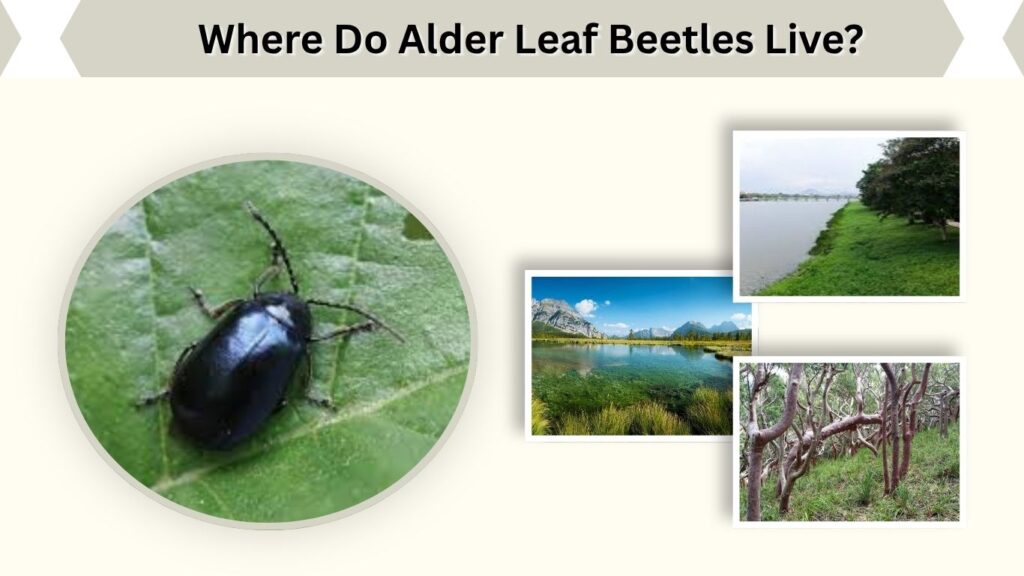
Alder leaf beetles occur naturally throughout parts of Europe and Asia. They prefer habitats containing alder trees, especially damp woodlands, riverbanks, lakesides, and other areas with moist soil. Their distribution depends largely on host plant availability and suitable seasonal temperatures.
Alder Leaf Beetle in the UK
The alder leaf beetle was once considered extinct in Britain after becoming extremely uncommon during the twentieth century.
However, adults and larvae were rediscovered near Manchester in 2004. Since then, the species has expanded across northern England, Wales, and several southern regions.
Today, it can be locally abundant, sometimes causing noticeable defoliation of alder trees.
Alder Leaf Beetle in Hampshire
Alder leaf beetles were recorded in Hampshire in 2014. Subsequent observations confirmed their presence in additional parts of southern England.
The beetles are typically encountered during warmer months, particularly between April and July, although adults may also appear later in summer.
The Royal Horticultural Society reports that the species has become widespread in parts of England and Wales.
What Do Alder Leaf Beetles Eat?
Alder leaf beetles primarily consume leaves from alder trees belonging to the genus Alnus. Both adults and larvae chew through leaf tissue, creating irregular holes and damaged margins. Although alder is their preferred food, they can occasionally feed on several other deciduous tree species.
Common Alder Leaf Beetle Host Plants
Their recorded host plants include:
- Common alder: One of their primary food sources.
- Grey alder: Another suitable host species.
- Hazel: Occasionally supports beetle feeding and larval development.
- Beech: Adults may feed on its foliage.
- Hornbeam: Sometimes attacked when beetles are abundant.
- Goat willow: A recorded alternative host.
- Birch: Certain birch species can support larval development.
The beetles primarily consume green foliage rather than wood, roots, or tree bark.
Alder Leaf Beetle Life Cycle
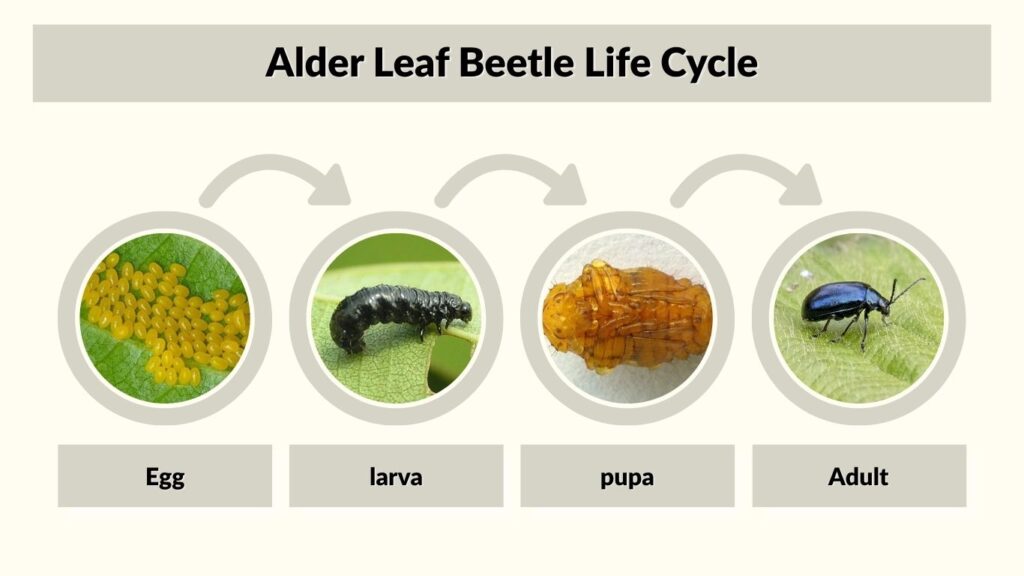
The alder leaf beetle undergoes complete metamorphosis, passing through four developmental stages: egg, larva, pupa, and adult. The species generally produces one generation annually. Adults survive winter in protected locations and become active again during spring when temperatures rise and new leaves develop.
Egg and Larval Stages
Female alder leaf beetles lay clusters of small yellowish or orange-yellow eggs on host plant leaves, often on the undersides.
After hatching, the black larvae begin consuming leaf tissue. They grow through several developmental stages and may feed together during early development.
As larvae mature, their appetite increases, potentially causing substantial foliage damage.
Pupal and Adult Stages
Mature larvae leave the foliage and pupate in soil or leaf litter near the host tree.
After completing metamorphosis, adults emerge during summer and may feed briefly before entering dormancy.
Adult beetles overwinter in sheltered ground-level locations and become active the following spring.
Unlike many insects that produce several generations annually, Agelastica alni generally completes only one generation each year.
What Damage Do Alder Leaf Beetles Cause?
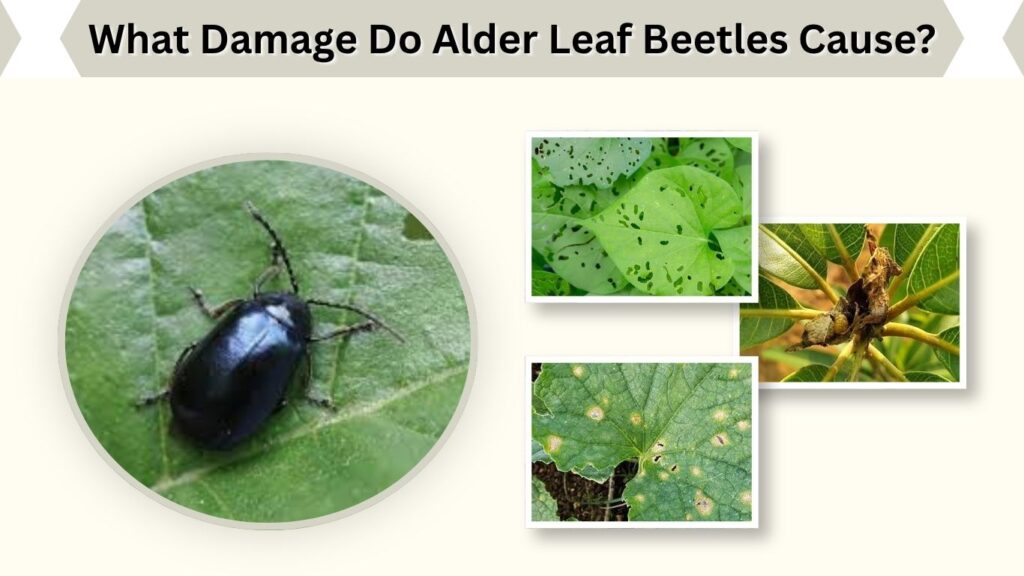
Alder leaf beetle damage occurs when adults and larvae chew foliage. Small populations usually cause limited damage, but large infestations can produce extensive holes and skeletonized leaves. Heavy feeding reduces the amount of healthy leaf tissue available for photosynthesis, making affected trees appear unhealthy.
Common Signs of Alder Leaf Beetle Damage
Symptoms of an infestation include:
- Irregular leaf holes: Small openings caused by adult feeding.
- Skeletonized leaves: Sections of tissue removed while major veins remain.
- Damaged leaf margins: Uneven edges created by chewing.
- Black larvae: Groups of immature beetles feeding on leaves.
- Premature leaf loss: Severely damaged foliage falling early.
- Visible adult beetles: Numerous metallic-blue insects gathering on branches.
Can Alder Leaf Beetles Kill Trees?
Healthy, established alder trees generally tolerate beetle feeding without serious long-term consequences.
Even when foliage damage appears severe, mature trees often recover during subsequent growing seasons.
However, repeated heavy infestations may weaken young or already stressed trees. Maintaining suitable growing conditions helps affected trees recover.
Are Alder Leaf Beetles Dangerous to Humans?
Alder leaf beetles are generally harmless to humans and pets. They are herbivorous insects and do not have venomous stingers. Their main impact comes from feeding on leaves rather than posing a health risk.
Do Alder Leaf Beetles Bite?
Alder leaf beetles are not known to bite humans under normal circumstances.
Although they possess chewing mouthparts, these structures are adapted for consuming plant tissue. The beetles generally attempt to escape or remain motionless when disturbed.
Are Alder Leaf Beetles Poisonous?
Alder leaf beetles are not considered poisonous to humans during ordinary encounters.
Their metallic-blue appearance does not indicate venom or toxicity. Nevertheless, avoiding unnecessary handling of unfamiliar insects is a sensible precaution.
How to Get Rid of Alder Leaf Beetles Naturally
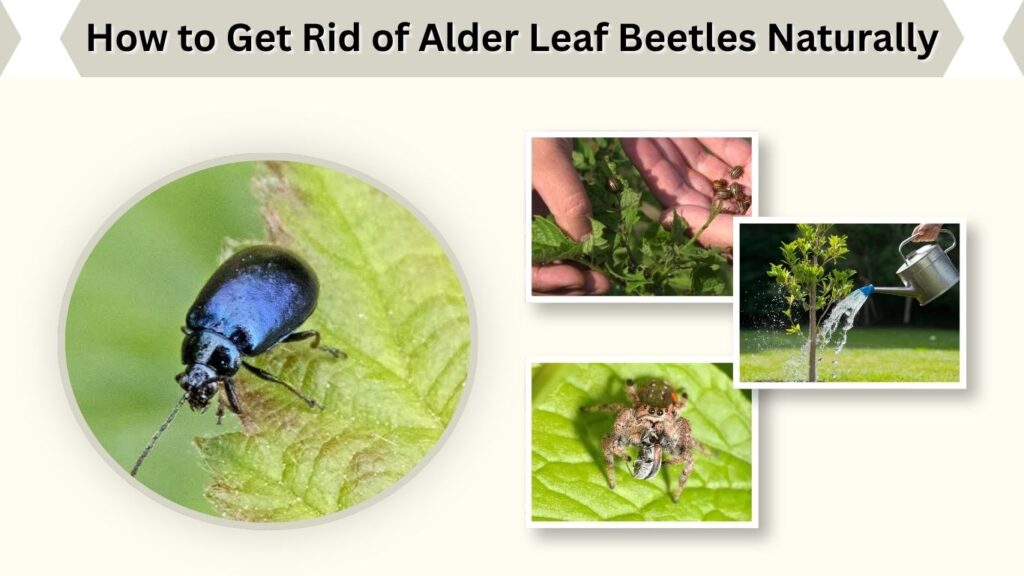
Natural alder leaf beetle control is usually sufficient for small trees and garden plants. Most mature alders do not require treatment because they can tolerate seasonal feeding. When beetle populations become particularly noticeable, simple management methods can reduce damage without disturbing beneficial wildlife.
Natural Alder Leaf Beetle Control Methods
- Handpick adult beetles: Remove accessible beetles from small trees when practical.
- Inspect leaves regularly: Check for eggs, larvae, and early feeding damage.
- Remove egg clusters: Carefully remove reachable egg masses when intervention is necessary.
- Protect natural predators: Encourage birds, ground beetles, and other beneficial wildlife.
- Maintain tree health: Provide appropriate moisture during prolonged dry periods.
- Avoid unnecessary pesticides: Preserve beneficial insects that naturally regulate pest populations.
Chemical Treatment Options
Chemical treatment is rarely necessary for alder leaf beetles.
Large established trees generally recover naturally, and spraying tall trees can expose beneficial wildlife to unnecessary pesticides.
If severe feeding threatens a valuable young tree, consult a qualified tree-care professional about locally approved management options.
Natural Predators of Alder Leaf Beetles
Alder leaf beetles form part of woodland food webs and serve as prey for various insect-eating animals. Their eggs, larvae, and adults may be consumed by predators inhabiting alder woodlands and garden environments.
Birds, ground beetles, frogs, and social wasps can contribute to natural population control.
Maintaining diverse vegetation and avoiding unnecessary pesticide applications helps protect these beneficial species.
Natural predation does not always prevent outbreaks, but it supports ecological balance and can reduce pest populations over time.
Alder Leaf Beetles in British Columbia
The European alder leaf beetle, Agelastica alni, should not be confused with metallic-blue beetles found on alder trees in British Columbia.
One similar North American species is the alder flea beetle (Altica ambiens), which feeds on alder foliage and jumps when disturbed.
This species can also cause leaf damage, but it is biologically distinct from the European alder leaf beetle.
Correct identification matters because beetles found on red alder trees in Canada may belong to different species with different life cycles and distributions.
FAQs
1. Are Alder Leaf Beetles Dangerous?
Alder leaf beetles are generally not dangerous to humans or pets. They do not possess stingers and are not known to spread human diseases. However, large populations can damage alder tree foliage and occasionally cause significant defoliation.
2. What Do Alder Leaf Beetles Eat?
Alder leaf beetles primarily feed on alder leaves. They may also consume foliage from hazel, beech, hornbeam, willow, and certain birch species. Both adults and larvae chew leaf tissue, producing irregular holes and sometimes extensive damage.
3. How Long Do Alder Leaf Beetles Live?
Alder leaf beetles generally produce one generation annually. Adults emerge during summer and may enter dormancy before overwintering. They become active the following spring, reproduce, and complete their life cycle as seasonal temperatures become favorable.
4. Are Alder Leaf Beetles Rare in the UK?
Alder leaf beetles were once considered extremely rare or extinct in Britain. However, they were rediscovered in Manchester in 2004 and have since spread across numerous regions, becoming locally common in suitable habitats.
5. How Do You Control Alder Leaf Beetles?
Alder leaf beetles can be managed by removing accessible beetles, inspecting foliage, and protecting natural predators. Chemical treatment is usually unnecessary because healthy, mature alder trees can tolerate significant seasonal leaf damage without lasting harm.