
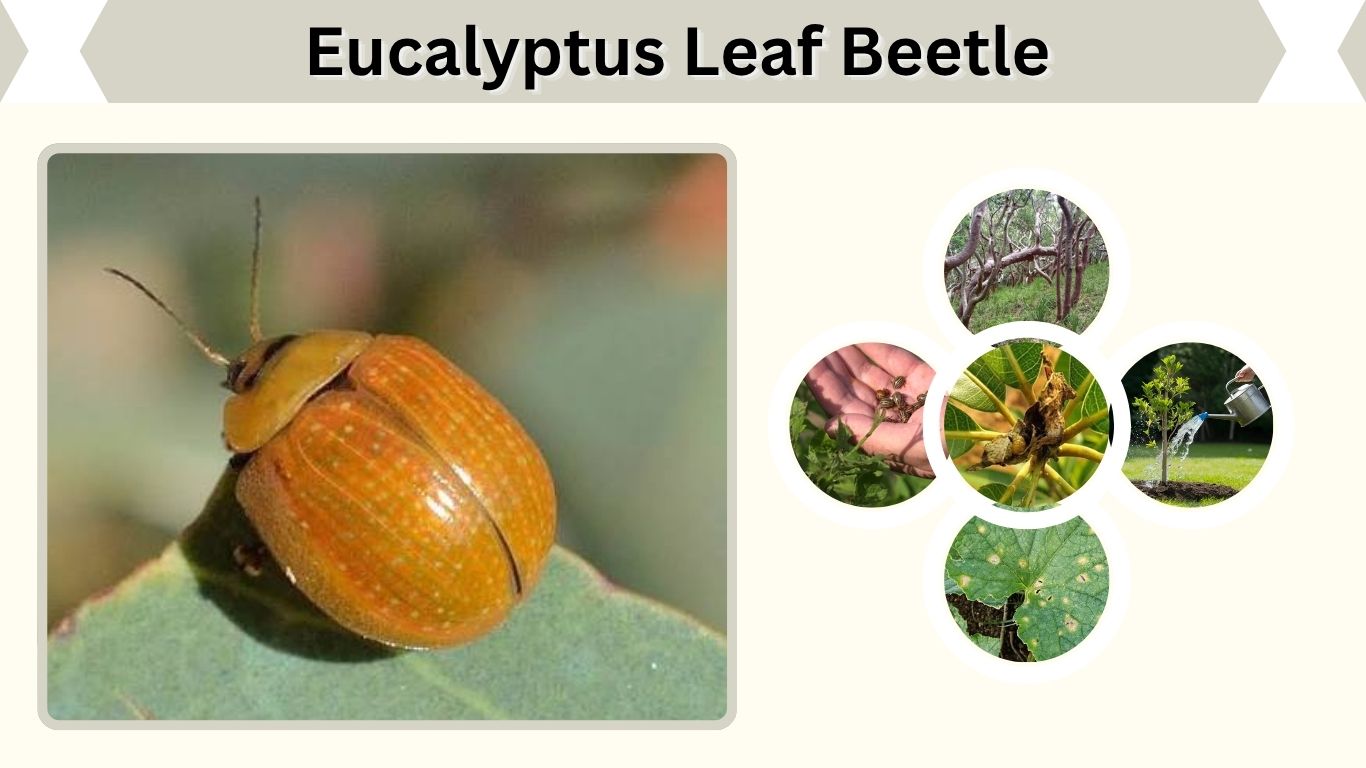
Eucalyptus leaf beetles are small, rounded insects that feed on the leaves of eucalyptus trees. Native to Australia, several species have become established in places such as California, where they can damage ornamental trees and commercial foliage crops. Adults and larvae chew characteristic notches into leaves, sometimes causing extensive defoliation during large outbreaks. Despite their destructive feeding habits, these beetles are not generally dangerous to people. This guide explains how to identify eucalyptus leaf beetles, recognize their eggs and larvae, understand their life cycle, and manage infestations safely.
What Is a Eucalyptus Leaf Beetle?
The eucalyptus leaf beetle is a plant-feeding insect belonging to the family Chrysomelidae and order Coleoptera. These beetles primarily feed on eucalyptus foliage and are sometimes called eucalyptus tortoise beetles because of their rounded, shell-like appearance. Several related species share this common name, although their appearance and distribution differ.
Eucalyptus Leaf Beetle Scientific Name
The southern eucalyptus leaf beetle is scientifically known as Paropsisterna m-fuscum, formerly classified as Chrysophtharta m-fuscum. It is native to Australia and has become an introduced pest in California.
Other eucalyptus-feeding leaf beetles include Paropsisterna cloelia, Trachymela sloanei, and Paropsis atomaria. These species belong to the same insect family but differ in their coloration, feeding patterns, and geographic distribution.
How to Identify Eucalyptus Leaf Beetles
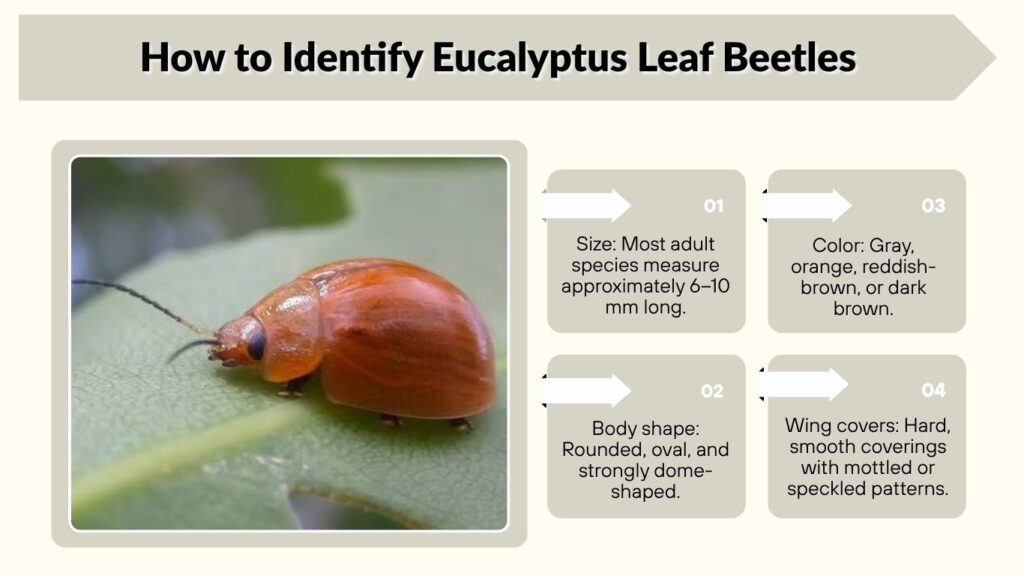
Eucalyptus leaf beetles have compact bodies, protective wing covers, and chewing mouthparts. Their colors vary from reddish-brown to gray, orange, and dark brown. Adults frequently resemble oversized ladybugs, making identification confusing for gardeners. Examining body shape, markings, and the host plant helps distinguish them from other insects.
Physical Characteristics
Common eucalyptus leaf beetle identification features include:
- Size: Most adult species measure approximately 6–10 mm long.
- Body shape: Rounded, oval, and strongly dome-shaped.
- Color: Gray, orange, reddish-brown, or dark brown.
- Wing covers: Hard, smooth coverings with mottled or speckled patterns.
- Antennae: Relatively short, segmented antennae.
- Legs: Six jointed legs underneath the body.
- Habitat: Eucalyptus leaves, branches, and loose bark.
Unlike beneficial ladybugs that consume aphids, eucalyptus leaf beetles primarily feed on plant material.
Different Types of Eucalyptus Leaf Beetles
Several eucalyptus leaf beetle species occur throughout Australia and other eucalyptus-growing regions. Although they share similar feeding habits, their coloration and potential damage vary. Identifying the particular species is important because some populations cause substantially more damage than others.
Southern Eucalyptus Leaf Beetle
The southern eucalyptus leaf beetle (Paropsisterna m-fuscum) has a gray to reddish-brown body. Its larvae are greenish-gray with black heads.
This species feeds on ornamental eucalyptus trees and is particularly troublesome for commercially grown baby blue eucalyptus.
Speckled and Tasmanian Eucalyptus Leaf Beetles
Some eucalyptus beetles have speckled wing covers, including Paropsis atomaria, commonly called the dotted paropsine leaf beetle.
Tasmanian eucalyptus leaf beetles include species native to Tasmania and mainland Australia. Their larvae feed on foliage and may cause extensive damage to young eucalyptus trees.
Common names such as speckled, noble, and Tasmanian eucalyptus leaf beetle can refer to different species, so scientific identification is important.
Where Do Eucalyptus Leaf Beetles Live?
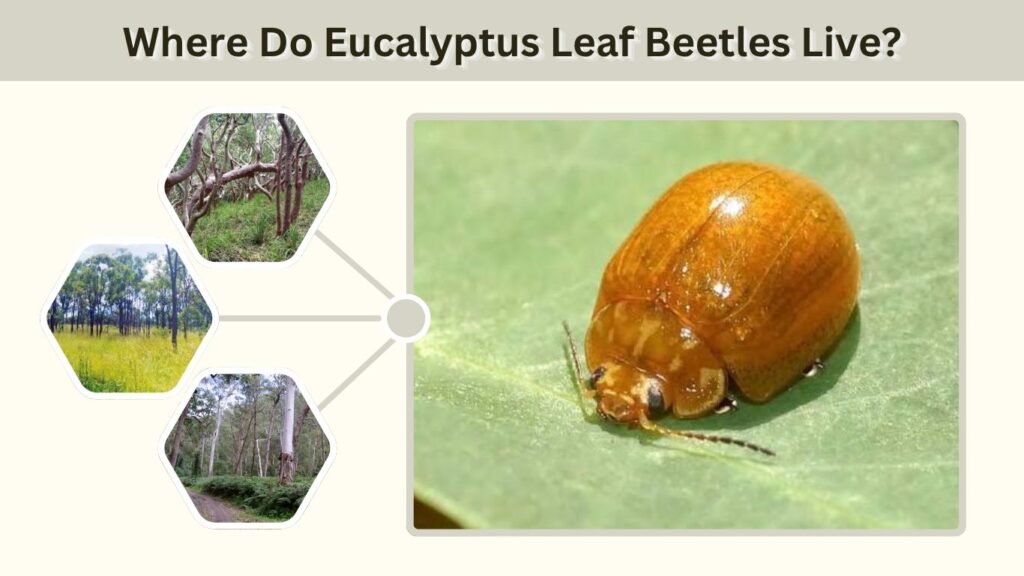
Eucalyptus leaf beetles naturally inhabit Australian forests and woodlands where eucalyptus trees grow. They spend much of their lives feeding on foliage or sheltering beneath loose bark. Several species have spread beyond Australia, particularly into regions where eucalyptus trees are planted for landscaping, timber production, and ornamental foliage.
Eucalyptus Leaf Beetles in California
California has several introduced eucalyptus-feeding beetle species.
Trachymela sloanei was first detected in Riverside County in 1998. The southern eucalyptus leaf beetle, Paropsisterna m-fuscum, was discovered in Orange County in 2003.
Another species, Paropsis atomaria, was first detected in California in 2022. These beetles can damage eucalyptus trees in residential landscapes and commercial growing operations.
Eucalyptus Leaf Beetle Life Cycle
Eucalyptus leaf beetles undergo complete metamorphosis, developing through four stages: egg, larva, pupa, and adult. Their development depends on temperature, host plants, and species. Under favorable conditions, some eucalyptus leaf beetles can complete development within approximately five weeks and produce several generations annually.
Egg and Larval Stages
Female beetles deposit clusters of eggs on eucalyptus leaves or beneath loose bark.
Egg colors vary by species, ranging from bright orange to pinkish-brown. As the eggs mature, they often become darker.
After hatching, the larvae begin feeding on foliage. Young larvae frequently remain together before dispersing as they grow.
Pupal and Adult Stages
Mature larvae generally pupate beneath loose bark or in soil and leaf litter near eucalyptus trees.
During pupation, they transform into adult beetles with developed wings and reproductive organs.
Adults emerge, feed on eucalyptus foliage, and eventually reproduce. Some species remain active during warm weather, while others survive cooler periods in protected locations.
Eucalyptus Leaf Beetle Larvae Identification
Eucalyptus leaf beetle larvae resemble small caterpillars but lack the fleshy abdominal prolegs typical of caterpillars. Their elongated bodies may be greenish-gray, yellowish, or reddish-brown depending on the species. Larvae usually feed on tender eucalyptus foliage and can cause significant damage when their populations increase.
How Larvae Differ From Adults
Adult eucalyptus leaf beetles have rounded bodies and hardened wing covers. Larvae have soft, elongated bodies with three pairs of jointed legs.
Southern eucalyptus leaf beetle larvae are generally greenish-gray with dark heads. In comparison, Trachymela sloanei larvae are darker green to reddish-brown.
Both adults and larvae consume foliage, but young larvae often feed together, concentrating damage on individual leaves.
What Damage Do Eucalyptus Leaf Beetles Cause?
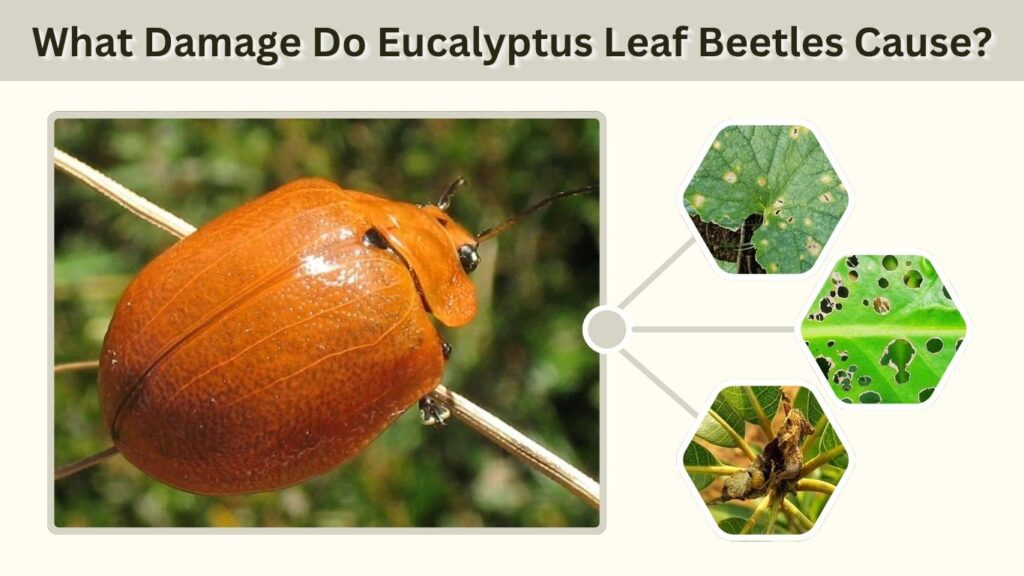
Eucalyptus leaf beetle damage occurs when adults and larvae chew leaf tissue. Feeding usually begins along leaf margins, creating semicircular notches and irregular holes. Severe infestations can remove much of the foliage, reducing photosynthesis and increasing stress on affected trees, particularly young eucalyptus plants.
Common Signs of Eucalyptus Leaf Beetle Damage
The most recognizable symptoms include:
- Scalloped leaf edges: Semicircular notches along leaf margins.
- Irregular holes: Missing sections of leaf tissue.
- Damaged new growth: Feeding on tender leaves and shoots.
- Visible larvae: Groups of immature beetles feeding on foliage.
- Premature leaf loss: Leaves dropping after extensive damage.
- Reduced foliage density: Sparse branches following repeated feeding.
Can Eucalyptus Leaf Beetles Kill Trees?
Healthy, mature eucalyptus trees generally tolerate moderate feeding damage.
However, repeated severe defoliation can weaken young trees, restrict growth, and increase vulnerability to drought or other pests.
Some species, particularly the dotted paropsine leaf beetle, can cause substantial damage to susceptible eucalyptus trees during heavy infestations.
Are Eucalyptus Leaf Beetles Dangerous to Humans?
Eucalyptus leaf beetles are not generally dangerous to humans. They are herbivorous insects that feed on eucalyptus foliage rather than human blood or skin. Their main significance is their potential to damage trees, not their ability to harm people.
Do Eucalyptus Leaf Beetles Bite?
Eucalyptus leaf beetles have chewing mouthparts, but they are not known to bite humans under normal circumstances.
They do not actively attack people and generally attempt to escape when disturbed. They are also not known to transmit diseases to humans.
Are Eucalyptus Leaf Beetles Poisonous?
Eucalyptus leaf beetles are not considered poisonous to humans during ordinary encounters.
Some leaf beetle larvae produce defensive secretions that discourage predators, but these insects are not regarded as significant human health threats.
Avoid unnecessary handling and wash your hands after contact with unfamiliar insects.
How to Get Rid of Eucalyptus Leaf Beetles Naturally
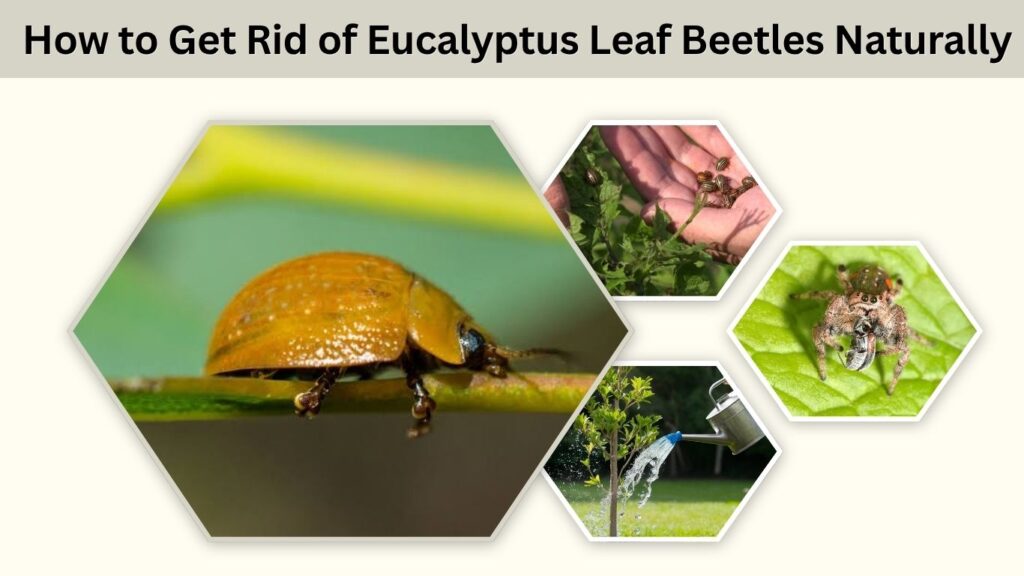
Natural eucalyptus leaf beetle control focuses on reducing beetle populations while maintaining healthy trees. Many infestations do not require treatment because established eucalyptus trees often tolerate limited leaf damage. However, young trees and ornamental foliage crops may benefit from regular monitoring and early intervention.
Natural Control Methods
- Handpick beetles: Remove accessible adult beetles and larvae from small trees.
- Inspect leaves: Examine foliage regularly for feeding damage and egg clusters.
- Remove egg masses: Carefully remove accessible eggs before hatching.
- Maintain tree health: Provide appropriate watering and growing conditions.
- Protect natural predators: Encourage spiders, predatory insects, and parasitoids.
- Monitor new growth: Inspect tender leaves where young larvae commonly feed.
Avoid unnecessary broad-spectrum insecticides because they may eliminate beneficial insects that naturally suppress other eucalyptus pests.
Eucalyptus Leaf Beetle Treatment and Prevention
Eucalyptus leaf beetle treatment depends on infestation severity, tree age, and the species involved. Most established trees recover from moderate feeding without chemical intervention. However, commercial eucalyptus plantations and severely affected young trees sometimes require professional management to prevent repeated defoliation.
Chemical Treatment Options
Certain registered insecticides may suppress eucalyptus leaf beetles, but chemical control is not always appropriate.
Broad-spectrum sprays can harm beneficial insects and disrupt the natural management of other eucalyptus pests.
For significant infestations, consult a qualified pest management professional and use only products approved for the particular plant and application.
How to Prevent Future Infestations
Preventive eucalyptus leaf beetle management includes:
- Regular inspections: Monitor foliage for eggs, larvae, and feeding damage.
- Proper irrigation: Avoid drought stress while preventing excessive watering.
- Beneficial insect protection: Preserve natural enemies by limiting pesticide use.
- Early management: Address damaging infestations before extensive defoliation occurs.
FAQs
1. Are Eucalyptus Leaf Beetles Harmful to Humans?
Eucalyptus leaf beetles are generally harmless to humans. They do not possess venomous stingers and are not known to spread human diseases. Their primary impact involves feeding on eucalyptus leaves, which can damage ornamental trees and commercial plantations.
2. Do Eucalyptus Leaf Beetles Bite?
Eucalyptus leaf beetles are not known to bite humans during normal encounters. Their chewing mouthparts are adapted for consuming eucalyptus foliage rather than human skin. They typically remain motionless, hide, or move away when disturbed.
3. What Do Eucalyptus Leaf Beetles Eat?
Eucalyptus leaf beetles primarily consume eucalyptus leaves. Adults often feed on mature foliage, while larvae commonly prefer tender new growth. Their feeding produces semicircular notches, irregular holes, and damaged leaves that may eventually fall from heavily infested trees.
4. How Long Do Eucalyptus Leaf Beetles Live?
The eucalyptus leaf beetle’s lifespan depends on the species and environmental conditions. Some species complete development from egg to adult in approximately five weeks during warm weather. Adults may survive longer, with certain species overwintering in protected locations.
5. How Do You Control Eucalyptus Leaf Beetles?
Eucalyptus leaf beetles can be managed through regular inspections, maintaining tree health, removing accessible beetles, and protecting beneficial insects. Most mature trees do not need chemical treatment, but severe infestations affecting young trees may require professional pest management.
