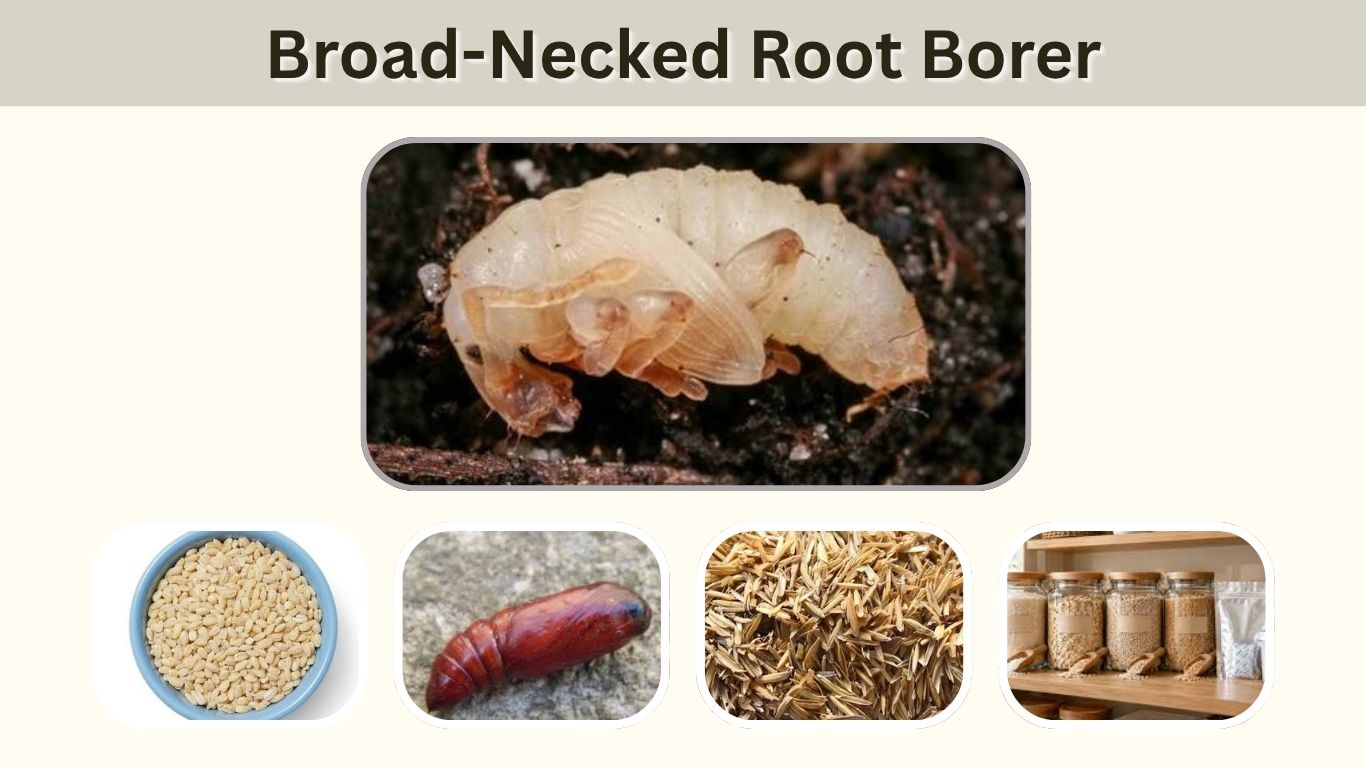
Rice weevil larvae are tiny, creamy-white grubs that develop inside stored rice and other cereal grains. Unlike adult rice weevils, these immature insects remain hidden within individual kernels, making infestations difficult to detect. They gradually consume the grain’s interior, reducing food quality and allowing infestations to spread unnoticed. Although rice weevil larvae are not directly harmful to humans, discovering them in stored food raises concerns about contamination. Understanding their appearance, development, feeding habits, and effective control methods can help protect your pantry from unwanted insects.
What Are Rice Weevil Larvae?
Rice weevil larvae are the immature stage of the rice weevil (Sitophilus oryzae), a small beetle belonging to the family Curculionidae. These insects are major pests of stored grains worldwide.
Unlike adults, which move freely between food products, larvae develop inside individual grain kernels. Their hidden feeding behavior allows infestations to remain unnoticed until adult beetles emerge.
Rice Weevil Larvae Size
Rice weevil larvae are extremely small, usually measuring only a few millimeters when fully developed.
Their bodies are soft, curved, and creamy-white, with small brownish heads. Their size depends on their developmental stage and the grain containing them.
What Do Rice Weevil Larvae Look Like?
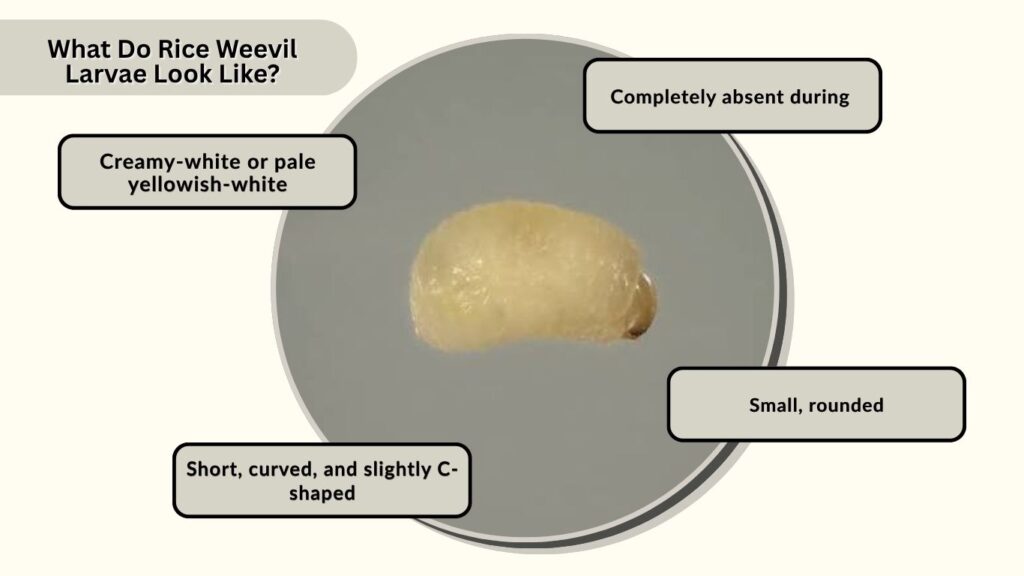
Rice weevil larvae have distinctive physical characteristics that separate them from many other pantry pests. They resemble tiny white grubs rather than fully developed beetles.
Because they spend nearly their entire immature development inside grains, identifying them usually requires opening an infested kernel.
Key Identification Features
- Body color: Creamy-white or pale yellowish-white.
- Body shape: Short, curved, and slightly C-shaped.
- Head: Small, rounded, and light brown.
- Legs: Completely absent during the larval stage.
- Body texture: Soft with visible segmentation.
- Movement: Limited movement within the grain cavity.
- Location: Usually concealed inside rice, wheat, or other suitable grains.
Rice Weevil Larvae vs. White Worms in Rice
Rice weevil larvae are sometimes described as tiny white worms because of their pale bodies.
However, they are beetle larvae rather than true worms. They remain inside grain kernels during normal development.
Visible worms crawling through rice may instead be pantry moth larvae or other insect species.
How Do Rice Weevil Larvae Get Inside Rice?
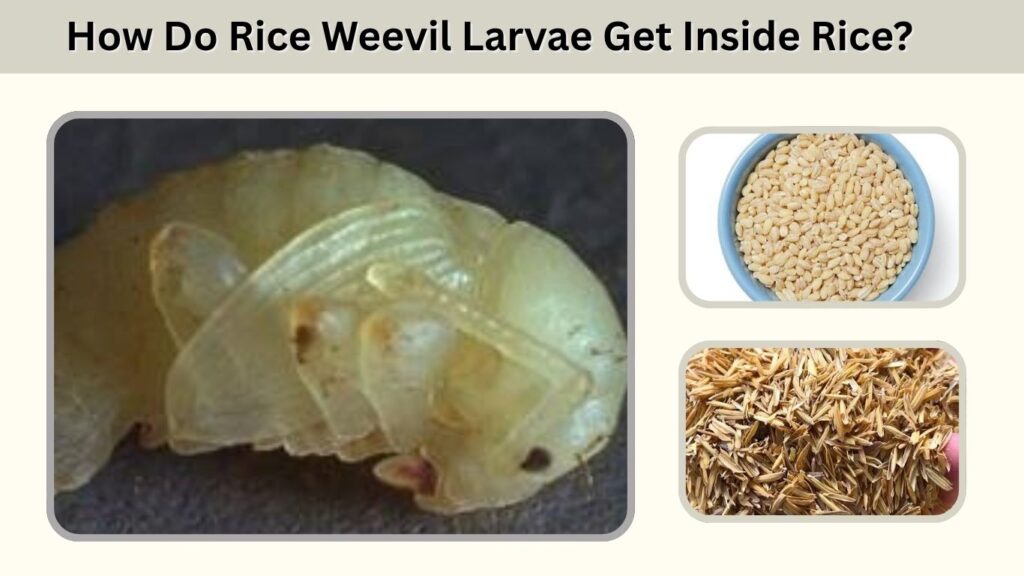
Rice weevil infestations often begin before grains reach household kitchens. Adult females deposit eggs inside individual kernels during storage or processing.
The eggs are protected within the grains, making them difficult to detect through ordinary visual inspection.
How Rice Weevils Lay Eggs
Female rice weevils use their elongated snouts to chew small openings into grain kernels. They deposit eggs inside these cavities and seal the openings with a protective secretion.
Once the eggs hatch, the developing larvae begin feeding on the internal grain tissue.
How to Spot Hidden Weevil Larvae
Several signs may indicate larvae developing inside stored rice:
- Small, rounded holes in individual grains.
- Dark adult beetles moving between kernels.
- Hollow or weakened rice grains.
- Fine powder or damaged grain fragments.
- Increasing numbers of adult weevils over time.
- Tiny white grubs revealed when damaged kernels are opened.
A normal-looking grain may still contain a developing larva, so visual inspection cannot always rule out infestation.
Rice Weevil Larvae Life Cycle
Rice weevils undergo complete metamorphosis through four developmental stages. Their reproductive cycle can progress quickly in warm storage environments.
Understanding this development explains why new adult beetles may continue appearing even after visible insects have been removed.
Four Stages of Rice Weevil Development
- Egg stage: Females deposit eggs inside grain kernels. Under warm conditions, eggs may hatch within approximately three days.
- Larval stage: The larvae consume internal grain tissues for approximately two to three weeks.
- Pupal stage: Mature larvae transform into pupae inside the grain, typically remaining there for several days.
- Adult stage: Newly developed beetles mature before chewing circular exit holes through the grain surface.
How Long Do Rice Weevil Larvae Take to Develop?
Under favorable warm conditions, the entire rice weevil life cycle can take approximately 25–35 days.
Cooler temperatures slow development considerably. Because adults reproduce repeatedly, overlapping generations may occur inside stored rice.
Are Rice Weevil Larvae Harmful to Humans?
Rice weevil larvae are not venomous and do not bite or sting humans. They are not known to transmit human diseases through direct contact.
However, their presence indicates an infestation that may reduce food quality.
Can You Eat Rice With Weevil Larvae?
Accidentally eating a small rice weevil larva is unlikely to cause illness in an otherwise healthy person.
Nevertheless, visibly infested rice should generally be discarded. Damaged grains may contain insects, waste material, and other contamination.
Heating food can kill insects, but it does not necessarily restore the quality of heavily infested or spoiled rice.
Can Rice Weevil Larvae Live in Your Body?
Rice weevil larvae cannot normally survive or reproduce inside the human body.
They depend on suitable grain material for development and do not parasitize humans or pets.
Finding small insects in hair, bedding, or clothing does not usually indicate rice weevil larvae.
How to Kill Rice Weevil Larvae in Rice
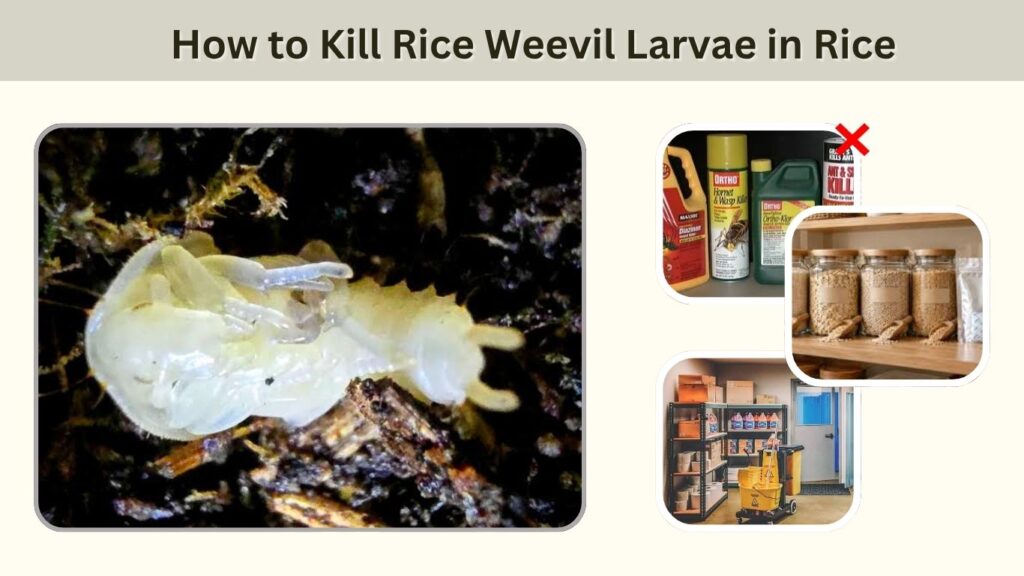
Controlling rice weevil larvae is challenging because they remain protected inside grain kernels. Removing visible adult beetles does not eliminate the eggs, larvae, or pupae already developing within the rice.
Successful control requires dealing with the infested food source.
Freezing Rice to Kill Weevil Larvae
Freezing can kill rice weevil larvae and other developmental stages.
For small quantities, place rice in a sealed freezer-safe container or bag and freeze at 0°F (-18°C) for at least four days after the contents have thoroughly cooled.
Large packages may require additional time for the center to reach the necessary temperature.
Freezing kills insects but does not remove contamination or repair damaged grains.
Should You Use Insecticides?
Never apply household insecticides directly to rice or other food products.
Chemical treatments intended for household surfaces may contaminate food and create unnecessary health risks.
For household infestations, removing infested products and cleaning storage areas is usually the safest approach.
How to Prevent Rice Weevil Larvae in Your House
Rice weevil larvae generally remain inside stored food rather than wandering around the house. Adult beetles, however, can crawl or fly into nearby rooms.
Preventing infestations depends on proper food storage and consistent pantry hygiene.
Effective Prevention Methods
- Store rice in airtight glass, metal, or sturdy plastic containers.
- Inspect newly purchased grains before storage.
- Avoid keeping excessive quantities of rice for extended periods.
- Clean spilled grains from shelves and cabinet corners.
- Check birdseed, cereals, and dry pet food for insects.
- Freeze susceptible dry foods before long-term storage when appropriate.
- Rotate stored food regularly to prevent prolonged storage.
Rice Weevil Larvae vs. Rice Water Weevil Larvae
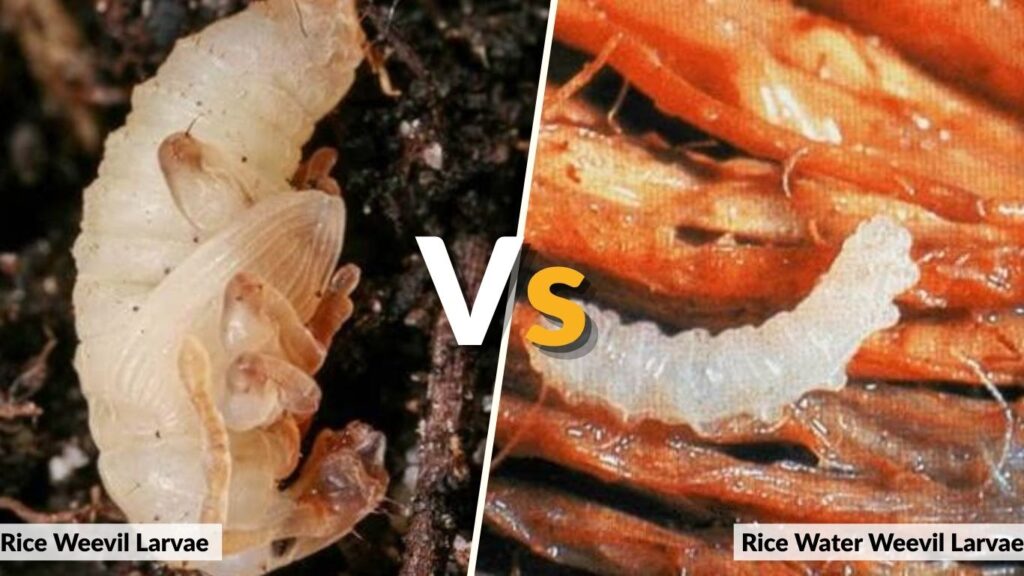
Rice weevil larvae and rice water weevil larvae belong to different beetle species and occupy completely different habitats.
Rice weevil larvae (Sitophilus oryzae) develop inside stored grains. They consume the internal tissues of rice, wheat, and other cereal kernels.
Rice water weevil larvae (Lissorhoptrus oryzophilus) develop around the roots of growing rice plants in flooded agricultural fields.
Unlike stored-grain weevils, rice water weevils damage living rice crops rather than pantry products.
FAQs
1. What Do Rice Weevil Larvae Look Like?
Rice weevil larvae are tiny, creamy-white, legless grubs with brownish heads. Their bodies are slightly curved and segmented. They usually remain hidden inside individual grain kernels, making them difficult to detect without opening the affected rice.
2. Are Rice Weevil Larvae Dangerous to Humans?
Rice weevil larvae are not considered dangerous to humans. They do not bite, sting, or reproduce inside the human body. However, heavily infested rice may contain insect waste and damaged grains, making disposal preferable to consumption.
3. How Do You Kill Rice Weevil Larvae?
Freezing small quantities of rice at 0°F (-18°C) for at least four days after the grain reaches freezer temperature can kill rice weevil larvae. Heavily infested food should be discarded, and surrounding storage areas should be cleaned thoroughly.
4. Can You See Rice Weevil Larvae in Rice?
Rice weevil larvae are rarely visible because they develop inside individual grains. Signs of infestation include damaged kernels, small exit holes, and adult beetles. Carefully opening suspicious grains may reveal small, creamy-white larvae hidden within the kernels.
5. Why Are Rice Weevil Larvae Found in Stored Rice?
Rice weevil larvae develop in stored rice because adult females deposit eggs inside grain kernels. These eggs may already be present when rice is purchased. Warm storage conditions allow larvae to develop and eventually emerge as adult beetles.