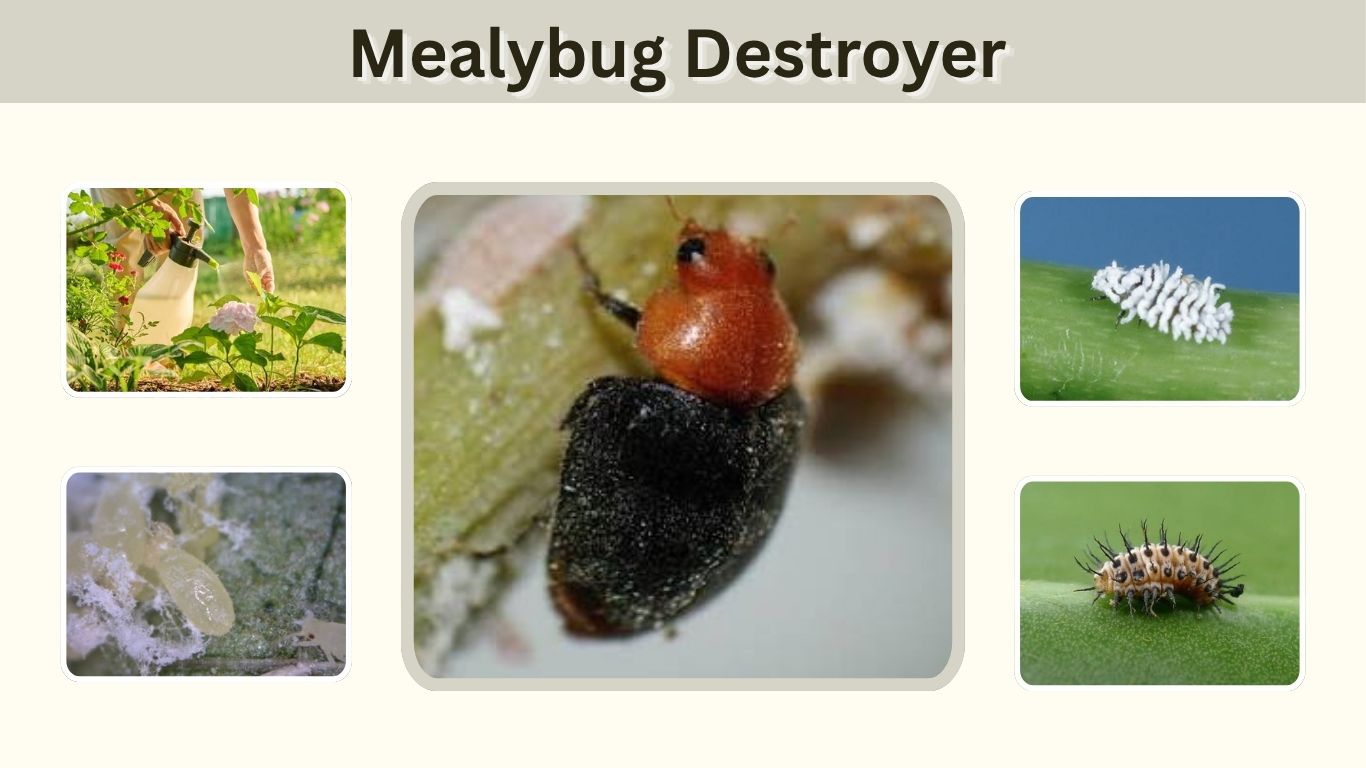
Have you noticed tiny white, fuzzy insects crawling around your plants? Some might actually be beneficial predators rather than harmful pests. The mealybug destroyer (Cryptolaemus montrouzieri) is a small lady beetle that naturally controls mealybug populations. Both adults and larvae feed on these destructive plant pests, making them useful in gardens, greenhouses, and indoor growing environments. Understanding their appearance, life cycle, and feeding habits can help you protect your plants without unnecessary pesticide applications.
What Is a Mealybug Destroyer?
The mealybug destroyer is a beneficial predatory beetle belonging to the ladybird family, Coccinellidae. Originally native to Australia, this insect has been introduced into different regions for biological pest control. Unlike destructive plant-feeding insects, it helps protect vegetation by consuming mealybugs and certain other soft-bodied pests.
Scientific Classification and Habitat
- Scientific Name: Cryptolaemus montrouzieri
- Common Name: Mealybug Destroyer
- Family: Coccinellidae
- Order: Coleoptera
- Native Region: Australia
- Diet: Mealybugs, certain soft scales, and occasionally aphids
- Preferred Habitat: Greenhouses, citrus orchards, gardens, and indoor plant collections
These beetles prefer warm environments where mealybugs are abundant. They are particularly valuable in greenhouses because favorable conditions allow them to remain active and reproduce.
What Does a Mealybug Destroyer Look Like?
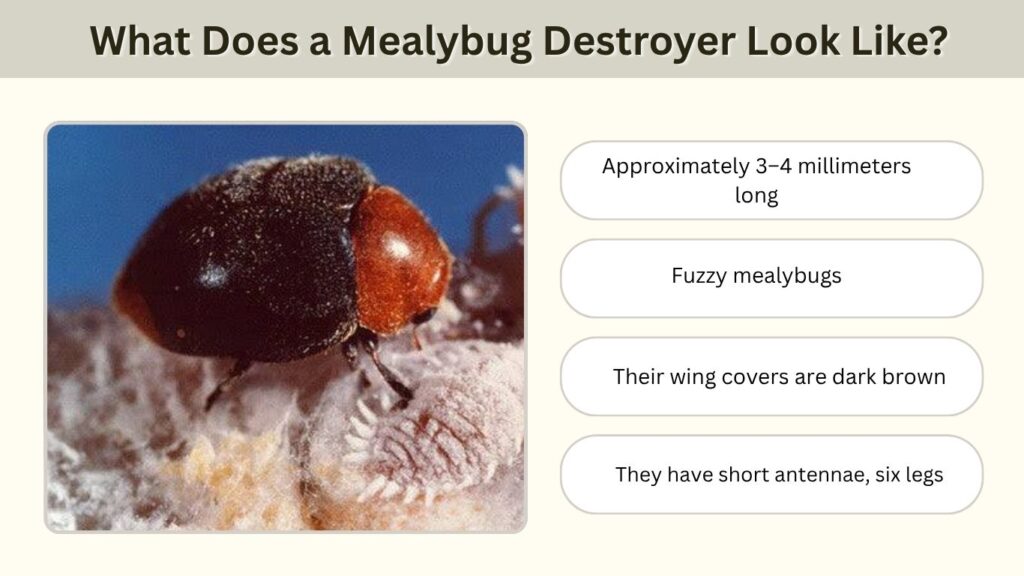
Mealybug destroyers have noticeably different appearances during their adult and larval stages. Adults resemble miniature ladybugs, while larvae look like large, fuzzy mealybugs. Recognizing both forms is important because gardeners sometimes accidentally remove beneficial larvae while treating an infestation.
Adult Mealybug Destroyer Identification
Adult beetles have compact, oval bodies measuring approximately 3–4 millimeters long. Their wing covers are dark brown or nearly black, while their heads and the ends of their bodies appear reddish-brown or orange.
They have short antennae, six legs, and a slightly dome-shaped appearance. Adults can fly between plants while searching for mealybug colonies.
Mealybug Destroyer Larvae Identification
Mealybug destroyer larvae are elongated insects covered in white, waxy filaments. Mature larvae can reach approximately 12 millimeters long, making them considerably larger than many adult mealybugs.
Their fluffy appearance provides camouflage among mealybug colonies. However, they are active predators that move across leaves and stems searching for prey.
Mealybug Destroyer Larvae vs. Mealybug
Although these insects may look similar, several characteristics help distinguish them:
- Body Shape: Destroyer larvae are generally longer, while mealybugs have oval bodies.
- Movement: Destroyer larvae usually move more quickly than mealybugs.
- Waxy Covering: Destroyer larvae have prominent waxy projections extending from their backs and sides.
- Size: Mature destroyer larvae can be more than twice the size of adult female mealybugs.
- Feeding Behavior: Mealybugs suck plant sap, while destroyer larvae actively consume other insects.
Observing movement and feeding behavior is often the easiest way to identify these beneficial predators.
Mealybug Destroyer Life Cycle
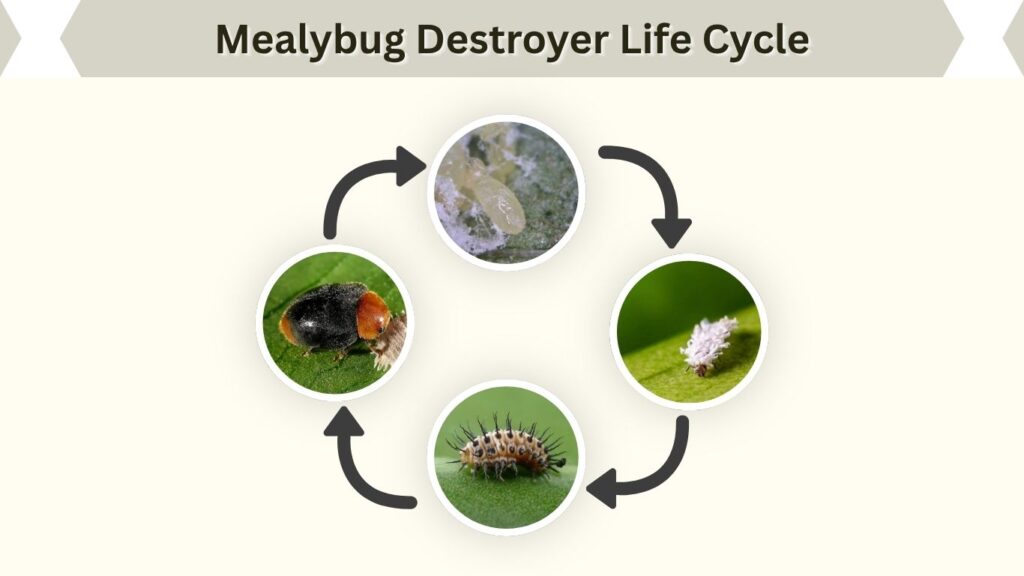
The mealybug destroyer undergoes complete metamorphosis, developing through four main life stages: egg, larva, pupa, and adult. Development generally takes approximately four to six weeks under favorable warm conditions, although temperature, humidity, and food availability influence the process.
Four Stages of Development
- Egg: Female beetles deposit small, yellowish eggs among the cottony egg sacs produced by mealybugs. Eggs may hatch in approximately five days under warm conditions.
- Larva: Newly hatched larvae begin feeding on mealybug eggs and young insects. Older larvae consume larger mealybugs as they develop.
- Pupa: Mature larvae attach themselves to sheltered surfaces and enter the pupal stage, where they transform into adults.
- Adult: Newly emerged beetles begin searching for food and eventually reproduce, continuing the biological control cycle.
An adult female may produce approximately 200–400 eggs throughout her lifetime when suitable food and environmental conditions are available.
What Do Mealybug Destroyers Eat?
Both adults and larvae consume mealybugs. Young larvae prefer eggs and small nymphs, while older larvae can attack larger individuals.
One larva may consume more than 250 mealybug nymphs or over 1,000 eggs during its development. These predators also occasionally feed on certain soft scales and aphids, although mealybugs remain their preferred prey.
How to Use Mealybug Destroyers for Natural Pest Control
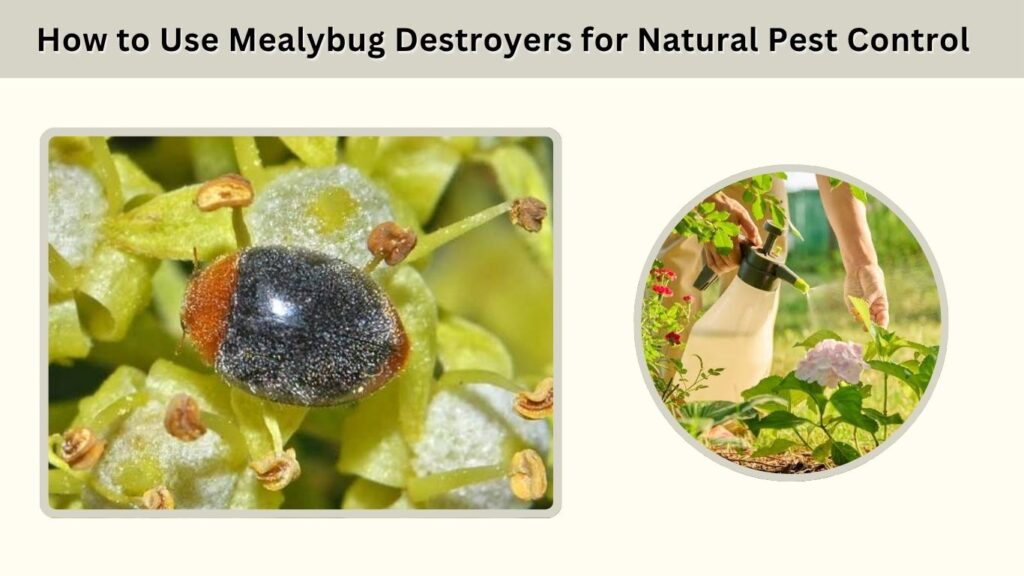
Mealybug destroyers provide a biological alternative to relying exclusively on insecticides. However, successful releases depend on proper timing, suitable temperatures, and sufficient mealybug populations. They work particularly well when mealybugs are actively reproducing and producing cottony egg masses.
Steps for Releasing Mealybug Destroyers
- Identify the infestation: Confirm that mealybugs are present and check for egg sacs.
- Purchase beneficial beetles: Obtain healthy adults or larvae from a reputable biological control supplier.
- Choose suitable conditions: Warm environments around 72–77°F (22–25°C) favor their development.
- Release near affected plants: Introduce beetles directly onto infested foliage, preferably during the evening.
- Avoid harmful pesticides: Broad-spectrum insecticides can kill these beneficial predators.
- Monitor the plants: Check mealybug populations regularly and follow supplier guidance regarding additional releases.
Controlling ants is also important because some ants protect mealybugs to collect their sugary honeydew.
Can You Use Mealybug Destroyers Indoors?
Yes, mealybug destroyers can help control infestations on indoor plants, particularly in enclosed growing rooms, conservatories, and greenhouses.
However, adults can fly toward windows or lights and may leave the affected plants. They are therefore less convenient for treating a single houseplant in an ordinary living room.
For small infestations, manually removing mealybugs may be easier. For larger indoor collections, carefully managed biological control can provide longer-term benefits.
Are Mealybug Destroyers Effective?
Mealybug destroyers are effective natural predators when environmental conditions support their survival. Their greatest advantage is their ability to locate mealybug colonies and consume large numbers of pests without damaging plant tissue.
Benefits of Mealybug Destroyers
- Naturally reduce mealybug populations.
- Feed on pests during both adult and larval stages.
- Help reduce dependence on chemical insecticides.
- Work in greenhouses, orchards, and suitable indoor growing spaces.
- Support integrated pest management programs.
Limitations and Challenges
Mealybug destroyers are not an instant solution. Their populations need time to develop, and they become less effective under cool conditions.
They also reproduce poorly when mealybug egg sacs are unavailable. Consequently, they are generally unsuitable for controlling longtailed mealybugs, which do not produce external cottony egg sacs.
Adult beetles may also disperse when prey populations decline. Successful biological control requires monitoring, patience, and appropriate pest identification.
FAQs
1. Are Mealybug Destroyers Harmful to Humans?
Mealybug destroyers are beneficial predatory insects and are not considered a significant threat to humans. They do not feed on people and are generally safe to observe around plants.
2. How Long Do Mealybug Destroyers Live?
Adult mealybug destroyers typically live for around two months, although lifespan varies with temperature, food availability, and other environmental conditions.
3. Do Mealybug Destroyers Eat Aphids?
Yes. Mealybug destroyers occasionally consume aphids and certain other soft-bodied insects. However, mealybugs are their primary prey and provide better conditions for reproduction.
4. How Do You Attract Mealybug Destroyers?
Avoid broad-spectrum pesticides, control ants, and provide flowering plants that support beneficial insects. Their presence is most likely where suitable mealybug prey is available.
5. Where Can You Buy Mealybug Destroyers?
Mealybug destroyers are available from biological pest control suppliers and specialist insectaries. They are typically supplied as live adults or larvae for release onto infested plants.