
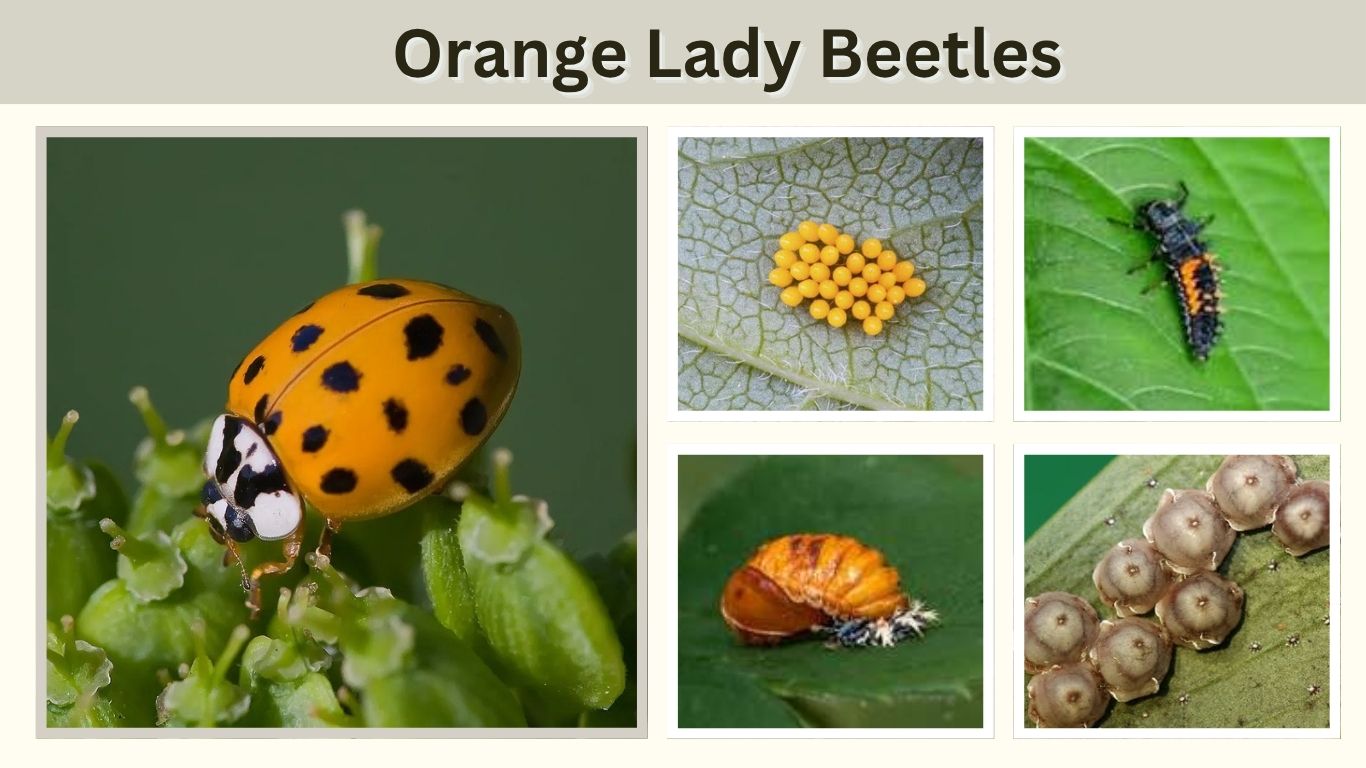
Orange lady beetles are small, colorful insects commonly found in gardens, agricultural fields, and sometimes inside homes. Although they resemble traditional red ladybugs, their bright orange bodies and varying black spot patterns often cause confusion. Some species are beneficial garden predators, while others can become household nuisances during colder months. Understanding orange lady beetle identification, feeding habits, larvae, and behavior can help you recognize these insects and decide whether removal is necessary.
What Are Orange Lady Beetles?
Orange lady beetles are members of the family Coccinellidae, commonly known as ladybugs or ladybird beetles. Their orange coloring does not indicate a single species. Several different lady beetles have orange bodies, including the multicolored Asian lady beetle and the convergent lady beetle. Most are beneficial predators that help control aphids and other plant-damaging insects.
Scientific Classification
- Common Name: Orange Lady Beetle
- Family: Coccinellidae
- Order: Coleoptera
- Common Species: Harmonia axyridis (Multicolored Asian Lady Beetle)
- Other Orange Species: Hippodamia convergens (Convergent Lady Beetle)
- Color: Yellow-orange, bright orange, or reddish-orange
- Habitat: Gardens, forests, farmland, and vegetation
- Diet: Aphids, scale insects, and other small arthropods
Where Do Orange Lady Beetles Live?
Orange lady beetles inhabit gardens, orchards, fields, and wooded areas. They are especially common where aphids and other soft-bodied insects are abundant.
During autumn, multicolored Asian lady beetles frequently gather on sunlit walls and buildings. They may enter through small cracks around windows, doors, and rooflines while searching for protected overwintering locations.
How to Identify Orange Lady Beetles
Orange lady beetles usually have rounded, dome-shaped bodies with hard wing covers. Their appearance varies depending on species, age, and individual color patterns. Some have numerous black spots, while others display few or none. Examining their head markings, body shape, and spot arrangements can help distinguish different species.
Orange Lady Beetles With Black Spots
Many orange lady beetles have black spots scattered across their wing covers. The number, shape, and arrangement of these spots vary between species.
The multicolored Asian lady beetle often displays numerous spots, sometimes as many as 19. Its body measures approximately 6–8 millimeters long, although individual sizes vary.
Typical identification features include:
- Bright orange or reddish-orange wing covers.
- Small, rounded, dome-shaped body.
- Black spots that vary in size and number.
- Short antennae and six legs.
- A pale area directly behind the head, sometimes containing dark markings.
Orange Lady Beetles Without Spots
Not every orange lady beetle has visible black spots. Some multicolored Asian lady beetles are almost completely orange, with faint markings or none at all.
These spotless individuals belong to the same species as heavily spotted beetles. Their coloring does not necessarily indicate a different species, age, or sex.
Therefore, identification should involve examining the entire insect rather than relying exclusively on its spots.
Orange Asian Lady Beetle Identification
The multicolored Asian lady beetle (Harmonia axyridis) is one of the most recognizable orange lady beetles.
A useful identifying feature is the black M-shaped or W-shaped marking on the pale pronotum immediately behind its head. However, this marking may appear broken, faint, or irregular.
These beetles range from yellowish-orange to dark red. Their coloring alone cannot reliably distinguish them from native lady beetles.
Orange Lady Beetle vs. Ladybug: What’s the Difference?
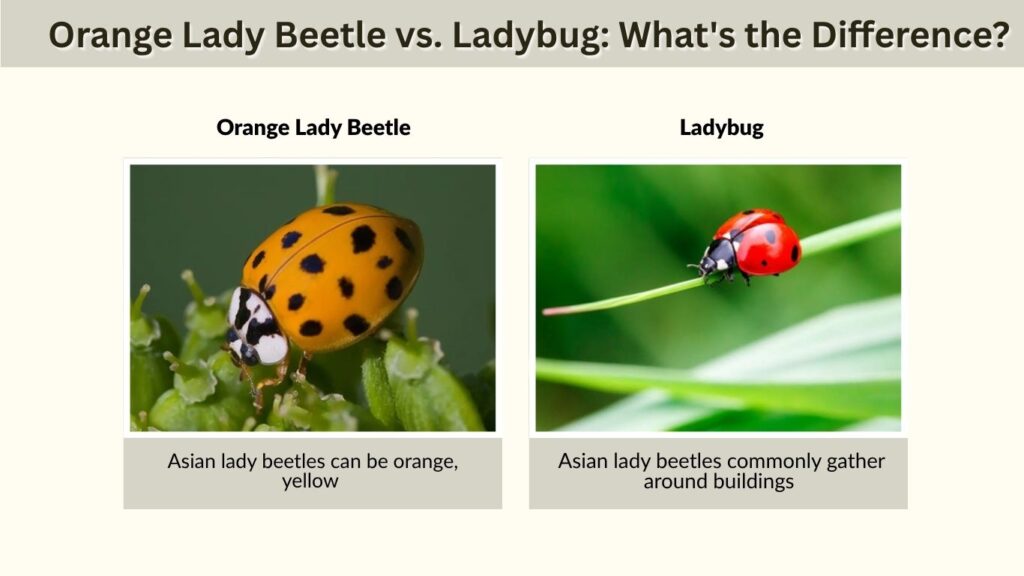
The terms lady beetle, ladybug, and ladybird generally refer to insects belonging to the same beetle family. Therefore, an orange lady beetle is a ladybug rather than a completely separate type of insect.
However, orange Asian lady beetles are frequently confused with other ladybug species.
Key Differences Between Species
- Color: Asian lady beetles can be orange, yellow, or red, while many native ladybug species also display orange or reddish coloring.
- Black Spots: Asian lady beetles may have numerous spots or none, depending on the individual.
- Head Markings: The dark M-shaped marking behind the head is characteristic of many Asian lady beetles.
- Winter Behavior: Asian lady beetles commonly gather around buildings and enter homes for shelter.
- Defensive Behavior: Asian lady beetles may release a yellowish defensive fluid and occasionally bite when handled.
Color alone is not enough to determine whether an orange lady beetle is native or introduced.
Orange Lady Beetle Larvae and Life Cycle
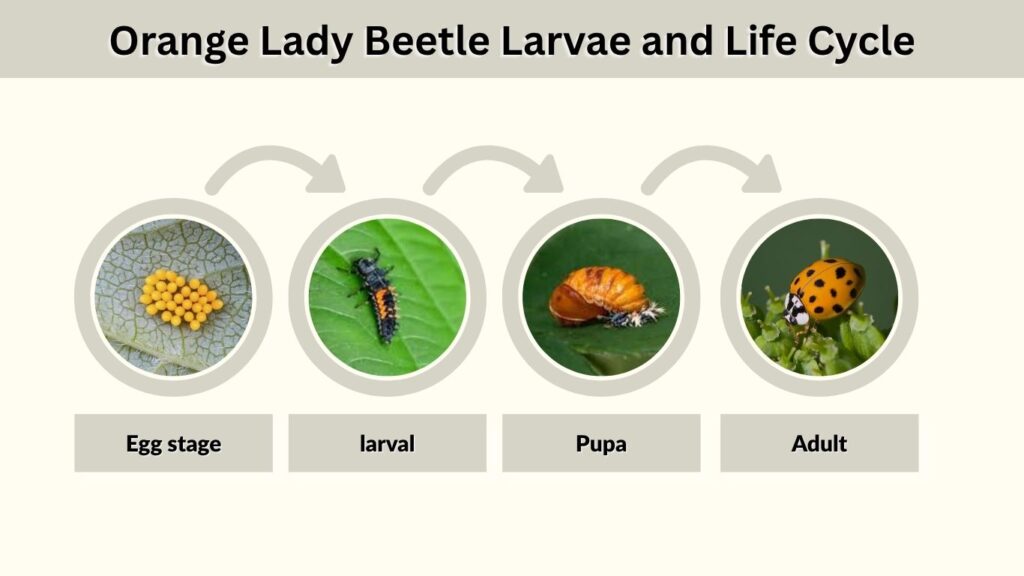
Orange lady beetles undergo complete metamorphosis, passing through egg, larval, pupal, and adult stages. Their larvae look dramatically different from adult beetles, which sometimes leads people to mistake them for harmful garden insects. In reality, many lady beetle larvae are active predators that provide valuable natural pest control.
Black and Orange Lady Beetle Larvae Identification
Lady beetle larvae typically have elongated bodies covered in small projections or spines.
Asian lady beetle larvae are especially recognizable because of their dark coloring and contrasting orange markings.
Their main characteristics include:
- Black or dark gray segmented bodies.
- Bright orange patches along the sides.
- Small, flexible spines covering the body.
- Six well-developed legs.
- An elongated, alligator-like appearance.
These larvae actively hunt aphids and other small insects on plant leaves and stems.
Orange Lady Beetle Life Cycle
The life cycle begins when adult females deposit clusters of yellowish eggs on plants containing suitable prey.
After hatching, larvae feed and grow through several developmental stages. Mature larvae then attach themselves to vegetation and develop into pupae.
Adult beetles eventually emerge and continue feeding on soft-bodied insects.
Under favorable warm conditions, multicolored Asian lady beetles can complete development from egg to adult in approximately one month.
What Do Orange Lady Beetles Eat?
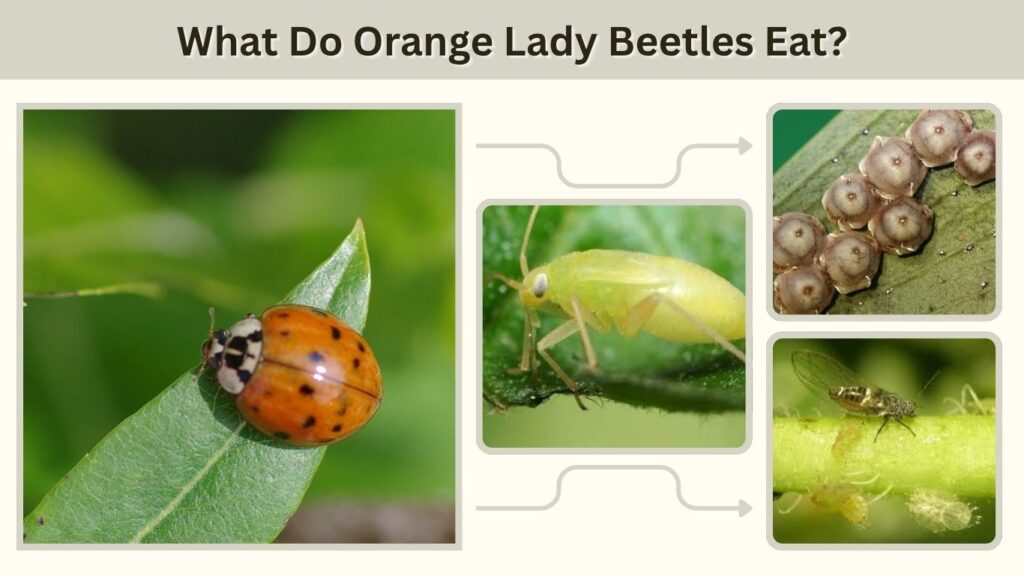
Most orange lady beetles are beneficial predators that feed on insects damaging ornamental plants, vegetables, and agricultural crops.
Common Food Sources
Their diet may include:
- Aphids
- Scale insects
- Psyllids
- Mites and other small arthropods
- Insect eggs and soft-bodied larvae
Some species also consume pollen, nectar, or plant material when their preferred prey is scarce.
Because of their appetite for aphids, lady beetles play an important role in natural pest management.
Do Orange Lady Beetles Bite Humans?
Yes, some orange lady beetles, particularly multicolored Asian lady beetles, can occasionally bite humans. However, their bites are generally minor and rarely cause significant injury.
They do not feed on human blood or transmit diseases through biting.
Are Orange Lady Beetles Poisonous?
Orange lady beetles are not considered dangerously poisonous to humans through ordinary contact. However, many species produce defensive chemicals that make them unpleasant to predators.
Asian lady beetles may release a yellow-orange fluid from their leg joints when disturbed. This behavior is known as reflex bleeding.
The fluid has an unpleasant odor and may stain fabrics, furniture, or painted surfaces. Sensitive individuals can also experience allergic reactions to accumulated beetles or their secretions.
How to Get Rid of Orange Lady Beetles in Your House
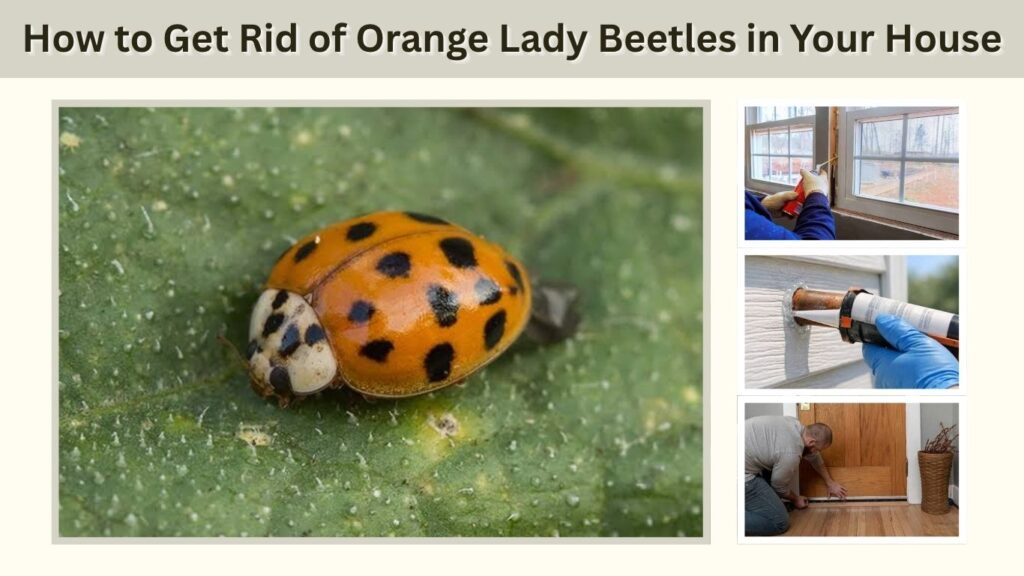
Orange lady beetles generally do not damage buildings or reproduce inside homes during winter. However, large groups can become annoying when they gather around windows, ceilings, and light fixtures. Preventing entry is usually more effective than attempting to eliminate beetles after they have settled indoors.
Safe Removal Methods
- Seal Entry Points: Close cracks around windows, doors, siding, and utility openings.
- Repair Window Screens: Replace damaged screens and cover openings where beetles might enter.
- Use a Vacuum: Carefully collect beetles using a vacuum cleaner and promptly empty or secure the contents.
- Avoid Crushing Them: Squashing Asian lady beetles can release unpleasant-smelling defensive fluids.
- Limit Indoor Insecticides: Routine indoor pesticide spraying is generally unnecessary and may not prevent seasonal invasions.
Should You Kill Orange Lady Beetles?
In most situations, killing orange lady beetles is unnecessary. They provide valuable pest control outdoors and generally do not damage household structures.
When possible, prevent their entry or remove them without crushing them. Their presence in large numbers can still justify household management, particularly for people sensitive to beetle allergens.
Orange Lady Beetle Meaning and Symbolism
In some cultural traditions, orange ladybugs are associated with happiness, creativity, good fortune, and positive changes.
Their bright coloring often inspires symbolic interpretations related to warmth and optimism. However, these associations are folklore rather than scientifically established meanings.
From a biological perspective, orange coloration is simply one of the natural color variations found among lady beetle species.
FAQs
1. Are Orange Lady Beetles Harmful to Plants?
Most orange lady beetles are beneficial predators that eat aphids and other plant pests. They generally help protect gardens rather than damage healthy vegetation.
2. Why Are There Orange Lady Beetles in My House?
Multicolored Asian lady beetles enter buildings during autumn to find protected places for overwintering. They often gather around sunny windows and exterior walls.
3. Are Orange Lady Beetles Invasive?
Some orange lady beetle species, particularly the multicolored Asian lady beetle, are introduced outside their native ranges. They can compete with native species, although their ecological impacts vary by region.
4. Can Orange Lady Beetles Have No Spots?
Yes. Some Asian lady beetles have completely orange wing covers without visible black spots. Spotless coloring is a natural variation within the species.
5. What Is the Difference Between Orange and Red Ladybugs?
Orange and red ladybugs can belong to the same species or different species. Color alone does not determine their identity, behavior, or whether they are native.
