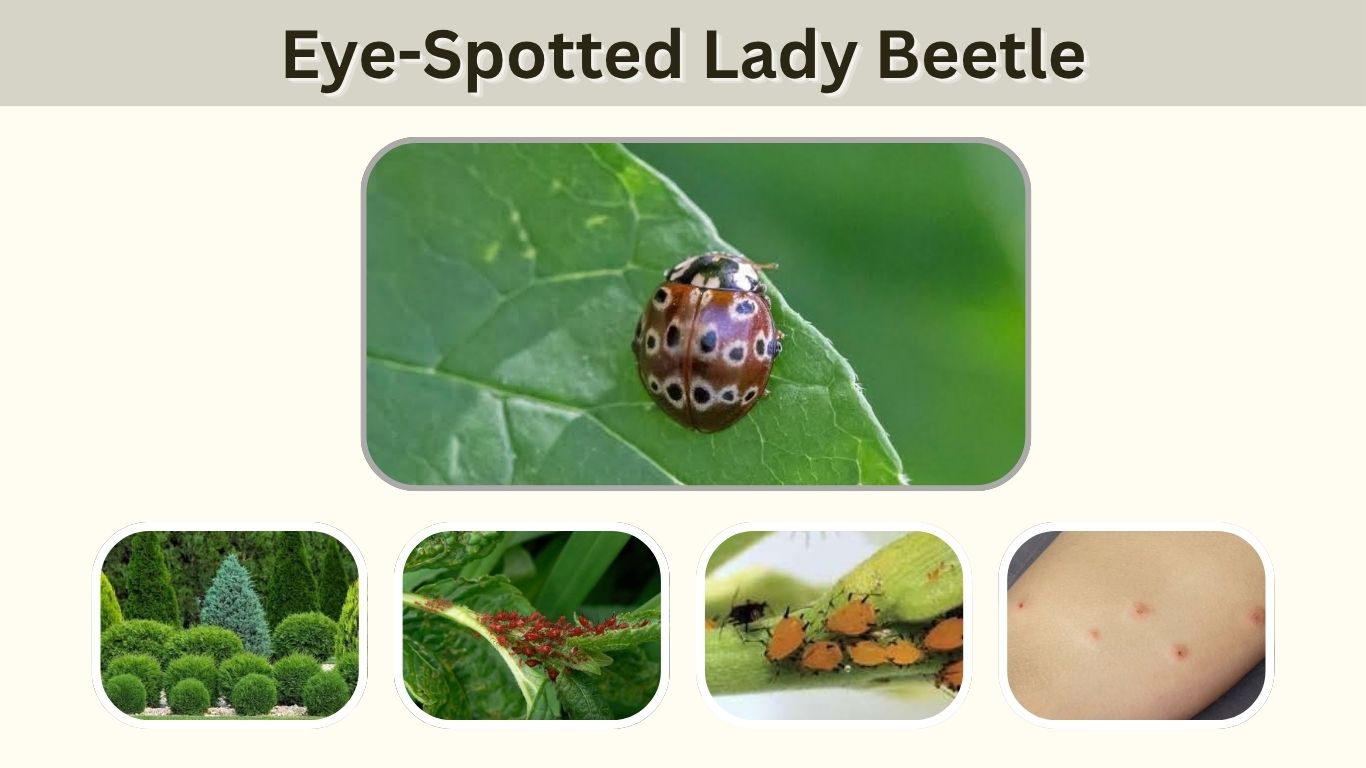
The eye-spotted lady beetle (Anatis mali) is a striking North American ladybug recognized by dark wing spots surrounded by pale rings, giving each marking an eye-like appearance. Often found on conifer trees, this native beetle feeds on aphids and supports natural pest control in forests and gardens. Despite its unusual appearance, it is generally harmless to people and plants. This guide explains how to identify the eye-spotted lady beetle, where it lives in Alberta and Ontario, what its larvae eat, and how it differs from Asian lady beetles.
What Is an Eye-Spotted Lady Beetle?
The eye-spotted lady beetle is a native North American species belonging to the lady beetle family Coccinellidae. Its scientific name is Anatis mali, and it is sometimes called the American eyespot ladybug. The species is particularly recognizable because its black spots have pale yellow or whitish outlines, creating patterns resembling tiny eyes on its wing covers.
Eye-Spotted Lady Beetle Identification
Adult eye-spotted lady beetles have a rounded, dome-shaped body with distinctive markings. Common identification characteristics include:
- Size: Approximately 7.3–10 millimeters long.
- Body color: Yellow-orange to brownish-red, sometimes darkening with age.
- Wing markings: Multiple black spots surrounded by pale yellow or white rings.
- Head: Dark-colored with relatively short antennae.
- Pronotum: Dark with complex pale markings behind the head.
- Body shape: Broad, rounded, and slightly flattened along the outer edges.
The pale rings surrounding the spots are among the most useful identification features.
Scientific Name and Classification
The scientific name of the eye-spotted lady beetle is Anatis mali. It belongs to the order Coleoptera, family Coccinellidae, and genus Anatis.
This genus contains relatively large lady beetles that are primarily associated with trees. The eye-spotted species is closely related to the fifteen-spotted lady beetle and other members of the genus.
Eye-Spotted Lady Beetle Habitat and Distribution
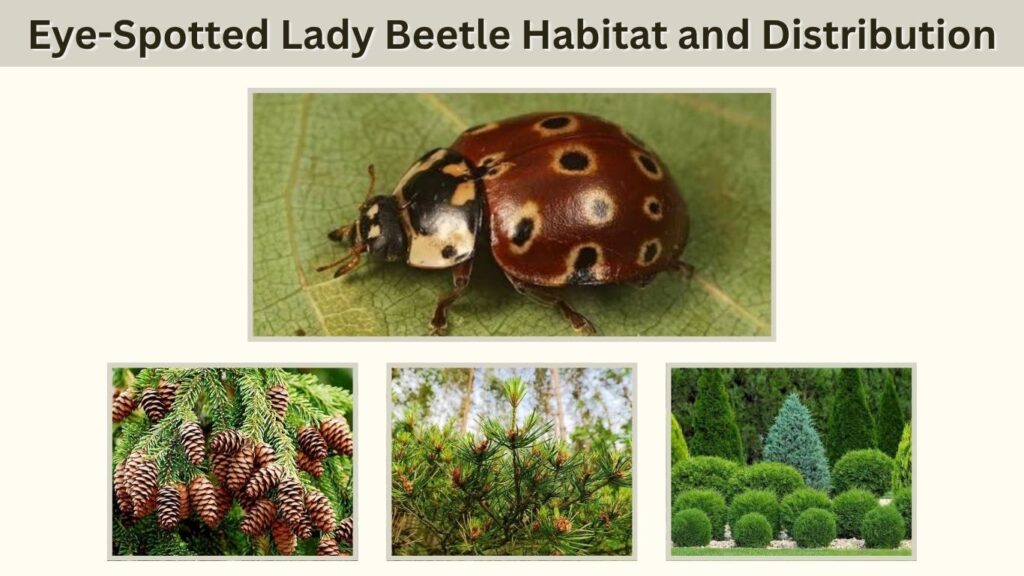
Eye-spotted lady beetles inhabit wooded environments across North America, especially forests containing coniferous trees. They typically spend much of their time in tree canopies, searching for aphids and other suitable prey. However, adults may occasionally appear on shrubs, garden plants, or nearby buildings. Their geographic distribution includes several Canadian provinces and parts of the northern United States.
Eye-Spotted Lady Beetle in Alberta
In Alberta, eye-spotted lady beetles occur in forested habitats, including areas containing spruce, pine, and other conifers.
They are native to the province and have been documented in locations such as Cold Lake.
Adults may be encountered on trees during warmer months when prey is available. Their presence generally indicates a functioning woodland insect community rather than a pest problem.
Eye-Spotted Lady Beetle in Ontario
Eye-spotted lady beetles also occur naturally in Ontario, where they inhabit coniferous and mixed forests.
They have been observed around pine trees and other woodland vegetation. Adults are often difficult to notice because they spend considerable time above ground level in tree canopies.
Their appearance in gardens near wooded areas is normal and usually beneficial.
What Do Eye-Spotted Lady Beetles Eat?
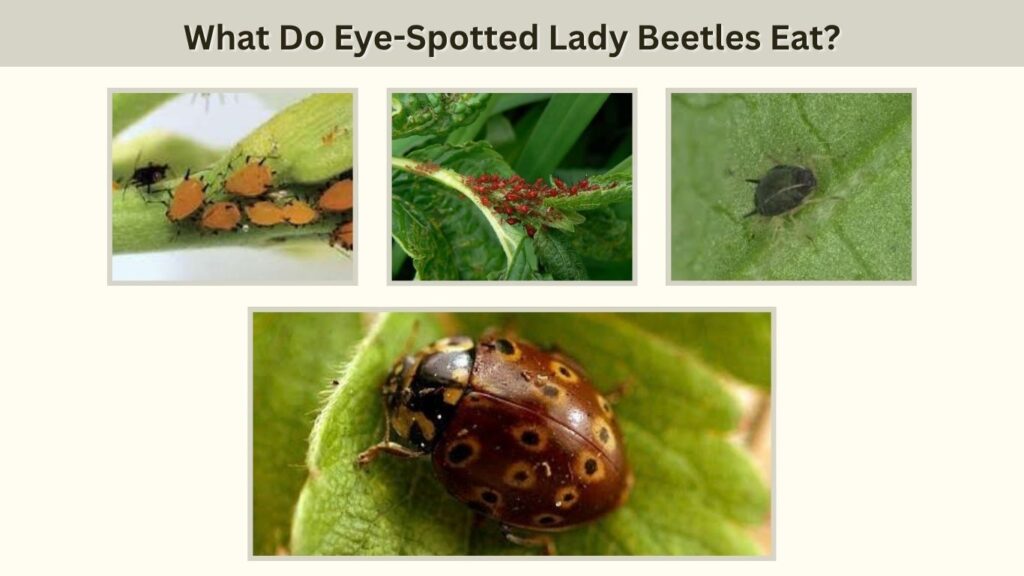
Eye-spotted lady beetles are carnivorous insects that primarily feed on aphids, particularly species living on trees. Both adults and larvae actively hunt soft-bodied prey, helping regulate insect populations in forest ecosystems. Unlike plant-feeding beetles, they generally do not damage healthy foliage. Their feeding behavior makes them useful natural predators in woodland environments and certain agricultural settings.
Eye-Spotted Lady Beetle Diet
Aphids are their principal food source. Research has documented the species feeding on balsam twig aphids, which can damage new growth on balsam fir trees.
Adults search branches and needles for prey, while larvae feed actively during development.
This feeding activity may help reduce aphid populations without requiring additional pest-control measures.
Eye-Spotted Lady Beetle Life Cycle
Like other lady beetles, this species undergoes complete metamorphosis through four developmental stages:
- Egg: Females deposit clusters of small, elongated eggs on vegetation, often near aphid colonies.
- Larva: Young larvae hatch and begin hunting prey. Their dark, spiny bodies look very different from adults.
- Pupa: Mature larvae attach themselves to vegetation and transform into pupae.
- Adult: Fully developed beetles emerge, feed, mate, and reproduce when conditions are suitable.
Development time varies with temperature and food availability. Adults can survive unfavorable seasons in protected environments.
Eye-Spotted Lady Beetle vs. Asian Lady Beetle
Eye-spotted lady beetles and Asian lady beetles sometimes look similar because both have rounded bodies and spotted wing covers. However, they differ in their geographic origins, markings, and ecological behavior. The eye-spotted lady beetle is native to North America, while the multicolored Asian lady beetle originated in Asia and has become established across much of North America.
Key Differences Between the Species
Several identification features help distinguish them:
- Eye-spotted lady beetle: Black spots have distinctive pale rings around them.
- Asian lady beetle: Spots vary considerably but usually lack the characteristic pale halos.
- Eye-spotted lady beetle: Often associated with forest trees and conifer aphids.
- Asian lady beetle: Common in agricultural areas, gardens, and seasonal building aggregations.
Asian lady beetles also frequently display a dark M-shaped marking on a pale pronotum, although this feature varies.
Eye-Spotted Lady Beetle vs. Ladybug
The eye-spotted lady beetle is itself a ladybug. The word ladybug is a general name for beetles belonging to the family Coccinellidae.
One additional distinction matters: the European eyed ladybug, Anatis ocellata, is a different species from the North American eye-spotted lady beetle, Anatis mali.
Are Eye-Spotted Lady Beetles Good or Bad?
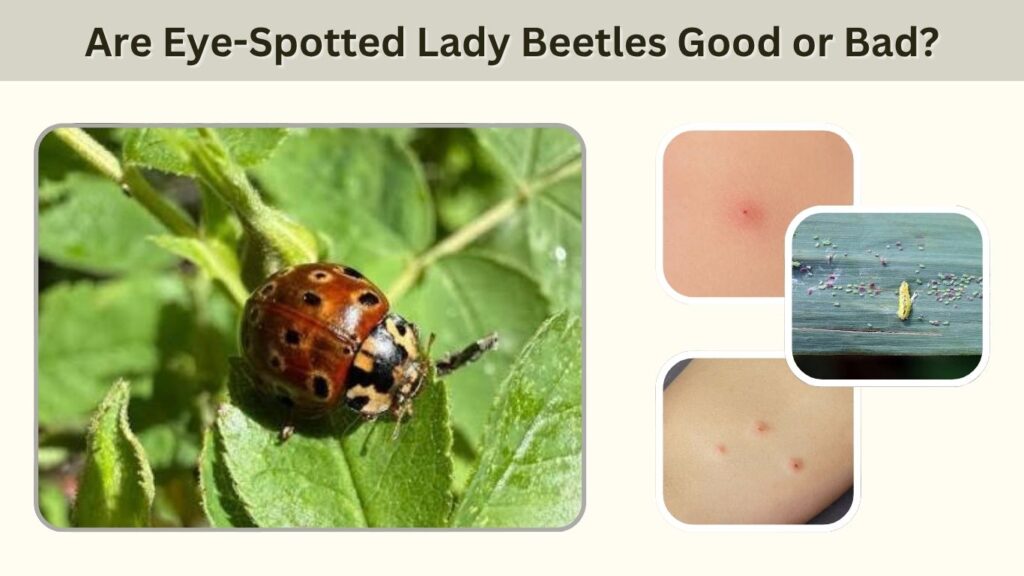
Eye-spotted lady beetles are generally considered beneficial because they prey on aphids and other small insects. They do not normally destroy crops, consume household materials, or cause structural damage. Although their colorful appearance sometimes raises concerns about toxicity, these beetles are not regarded as significant threats to people. Their ecological benefits generally outweigh any minor inconvenience from an occasional indoor encounter.
Do Eye-Spotted Lady Beetles Bite?
Eye-spotted lady beetles possess chewing mouthparts, but biting humans is not typical behavior.
A beetle that is trapped or roughly handled might pinch defensively. Such incidents are generally minor and uncommon.
These insects do not have stingers and do not seek out people as food.
Are Eye-Spotted Lady Beetles Poisonous?
Eye-spotted lady beetles are not venomous and are not considered dangerous to humans during ordinary contact.
Like many lady beetles, they possess defensive chemicals that can discourage predators. Their secretions may have an unpleasant taste or cause irritation.
Avoid deliberately swallowing beetles, crushing them against your skin, or allowing pets to eat them.
Are Eye-Spotted Lady Beetles Invasive?
No. Anatis mali is native to North America and is not considered an invasive species within its natural range.
Unlike the introduced Asian lady beetle, it naturally belongs to North American forest ecosystems.
Its predation on aphids contributes to ecological balance rather than creating a typical invasive-pest problem.
Eye-Spotted Lady Beetle Spiritual Meaning and Garden Care
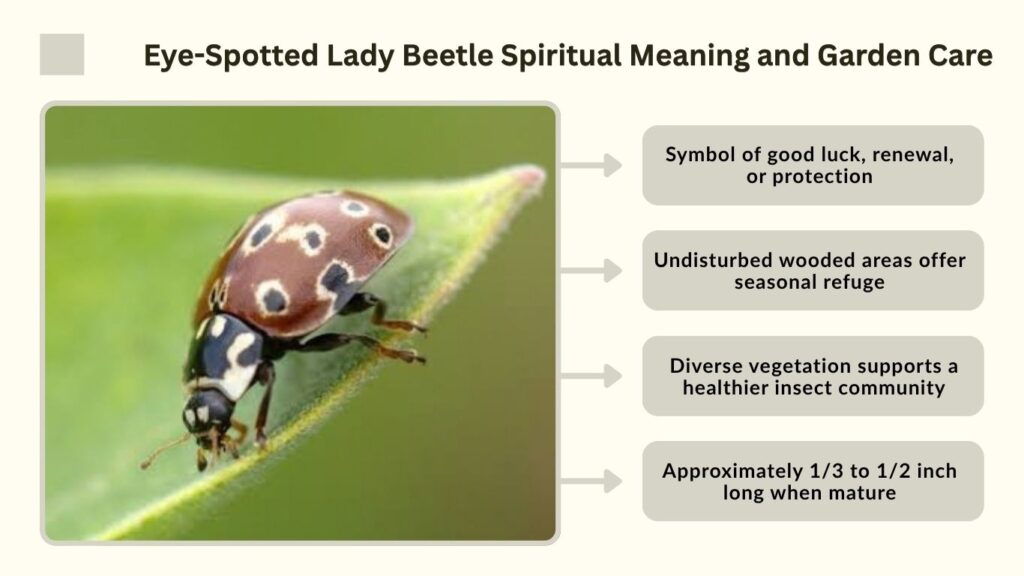
Ladybugs have long attracted symbolic interpretations because of their colors, rounded appearance, and associations with gardens. Some people connect unusual ladybug sightings with good fortune, protection, or positive changes. However, these meanings belong to personal and cultural beliefs rather than scientific evidence. From an ecological perspective, eye-spotted lady beetles are beneficial predators that deserve protection in suitable habitats.
What Does an Eye-Spotted Lady Beetle Mean Spiritually?
Some people interpret seeing an eye-spotted lady beetle as a symbol of good luck, renewal, or protection.
Its eye-like markings may inspire associations with awareness or observation.
However, there is no scientifically established spiritual meaning specific to Anatis mali. Finding one usually means that appropriate habitat and insect prey are available nearby.
How to Encourage Eye-Spotted Lady Beetles
You can support native lady beetles by maintaining suitable habitats and protecting beneficial insects.
- Preserve native trees: Conifers and mixed woodland vegetation provide important habitats.
- Avoid unnecessary insecticides: Broad-spectrum treatments can kill beneficial beetles.
- Maintain plant diversity: Diverse vegetation supports a healthier insect community.
- Protect natural shelter: Undisturbed wooded areas offer seasonal refuge.
Encouraging existing populations is generally preferable to introducing unfamiliar beetles into the environment.
FAQs
Eye-spotted lady beetles are sometimes mistaken for invasive or harmful insects because of their unusual markings. Their size, coloring, and resemblance to other ladybugs also generate questions about identification and safety. Understanding their natural behavior helps homeowners and gardeners distinguish these beneficial predators from species more commonly associated with household infestations.
1. Are eye-spotted lady beetles rare?
They are native to a broad North American range, but sightings may be uncommon in some locations because they frequently inhabit tree canopies.
2. Can eye-spotted lady beetles fly?
Yes. Adults have functional flight wings beneath their hardened wing covers and can fly between trees while searching for food or mates.
3. Do eye-spotted lady beetles damage plants?
No. They primarily feed on aphids and other small insects rather than healthy plant tissues.
4. What should I do if I find one in my house?
Gently capture it using a container and release it in a suitable sheltered outdoor location when conditions permit. Avoid crushing or spraying it.
5. How can I identify eye-spotted lady beetle larvae?
Their larvae are elongated and dark with spines and yellowish markings. They look different from adults and usually hunt small insects on vegetation.