
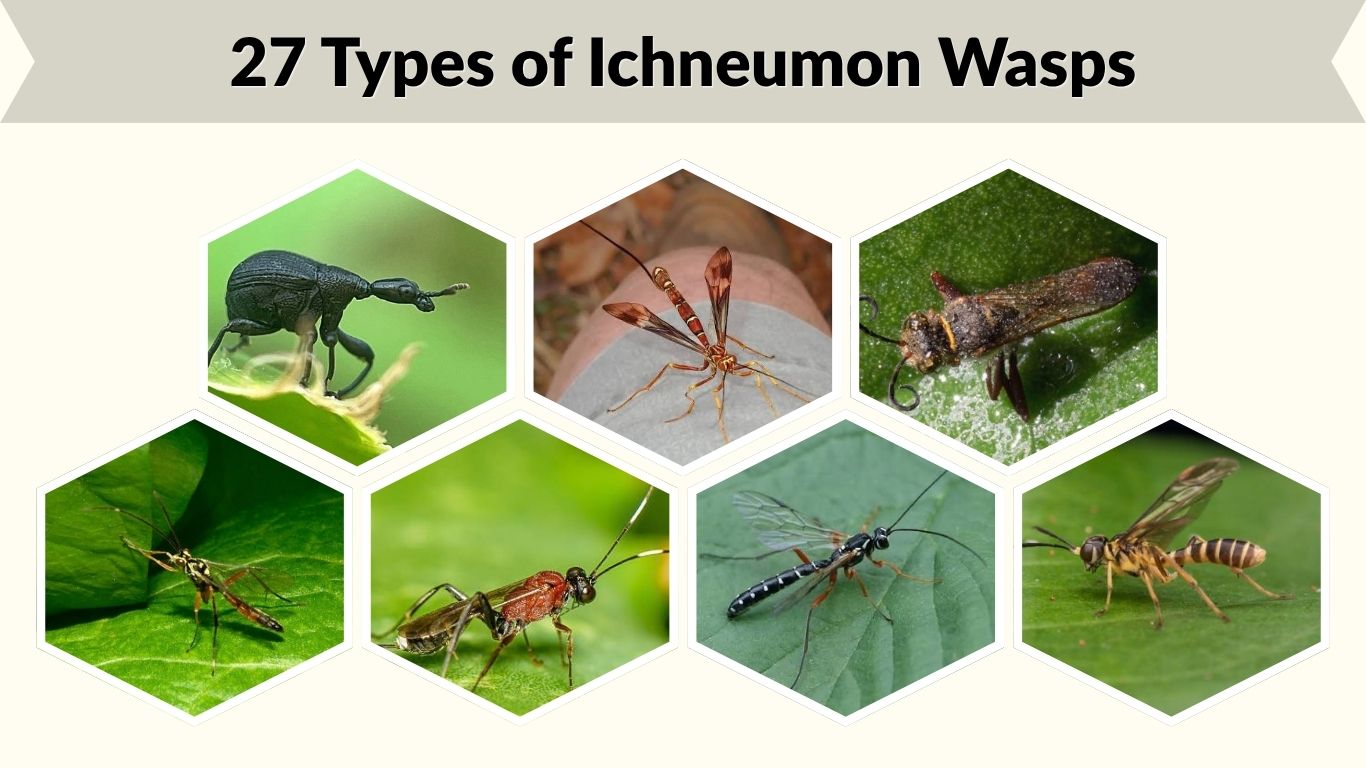
Ichneumon wasps are fascinating parasitic insects known for their slender bodies, long antennae, and remarkable hunting behaviors. Found in forests, gardens, grasslands, and agricultural areas worldwide, these wasps help control populations of caterpillars, beetles, and other insects. Some species have extremely long ovipositors, while others display striking colors and patterns. Most are harmless to humans and play an important role in maintaining ecological balance. In this guide, we’ll explore 27 types of ichneumon wasps, including their identification, habitats, behavior, and life cycles.
1. Black Giant Ichneumon Wasp (Megarhyssa atrata)
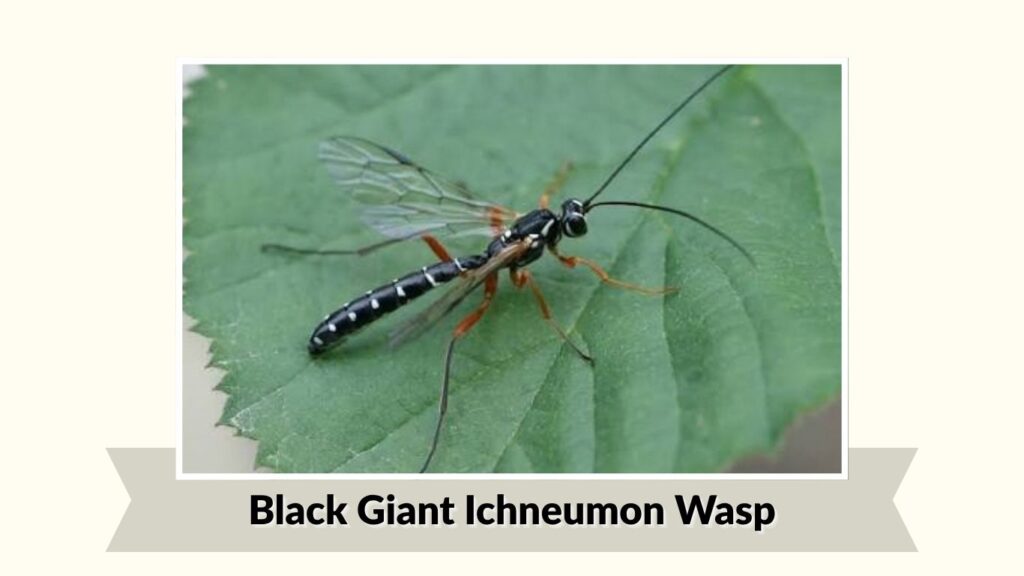
The Black Giant Ichneumon Wasp (Megarhyssa atrata) is one of the most remarkable parasitic wasps in North America. It belongs to the family Ichneumonidae and is recognized by its glossy black body, yellowish-orange head, and exceptionally long ovipositor. Although its appearance may seem intimidating, this wasp is generally harmless to humans. It plays an important ecological role by controlling wood-boring insects.
Identification
- Scientific Name: Megarhyssa atrata
- Family: Ichneumonidae
- Body Size: Approximately 35–40 mm long
- Body Color: Predominantly glossy black
- Head Color: Yellow to orange-yellow
- Wing Color: Dark, smoky black in females
- Ovipositor Length: Up to 130 mm in large females
- Distinctive Feature: Extremely long, thread-like ovipositor extending from the female’s abdomen
Habitat and Distribution
Black Giant Ichneumon Wasps are primarily distributed across eastern North America, including parts of the United States and southern Canada.
They inhabit deciduous forests, wooded parks, and gardens containing mature hardwood trees. They are particularly associated with declining or recently dead trees, including oak, maple, elm, and birch.
These wasps are most commonly observed during late spring and summer.
Behavior and Diet
Black Giant Ichneumon Wasps are solitary parasitoids that target the larvae of wood-boring horntail wasps, particularly the pigeon tremex.
Females use their extremely long ovipositors to penetrate wood and deposit eggs near or on concealed host larvae.
After hatching, the developing larvae feed on their hosts, eventually killing them. This natural behavior helps regulate populations of wood-boring insects. Adult wasps do not normally attack humans and are generally nonaggressive.
Lifespan and Life Cycle
The Black Giant Ichneumon Wasp undergoes complete metamorphosis, including egg, larval, pupal, and adult stages. Females locate suitable host larvae inside decaying hardwood and insert their eggs using specialized ovipositors. The developing wasp larvae consume their hosts and eventually pupate inside the wood.
After completing development, adult wasps emerge from the trees, usually during warmer months. Adults primarily focus on reproduction, while the immature stages spend their development protected inside the wood.
2. Long-Tailed Giant Ichneumon Wasp (Megarhyssa macrurus)
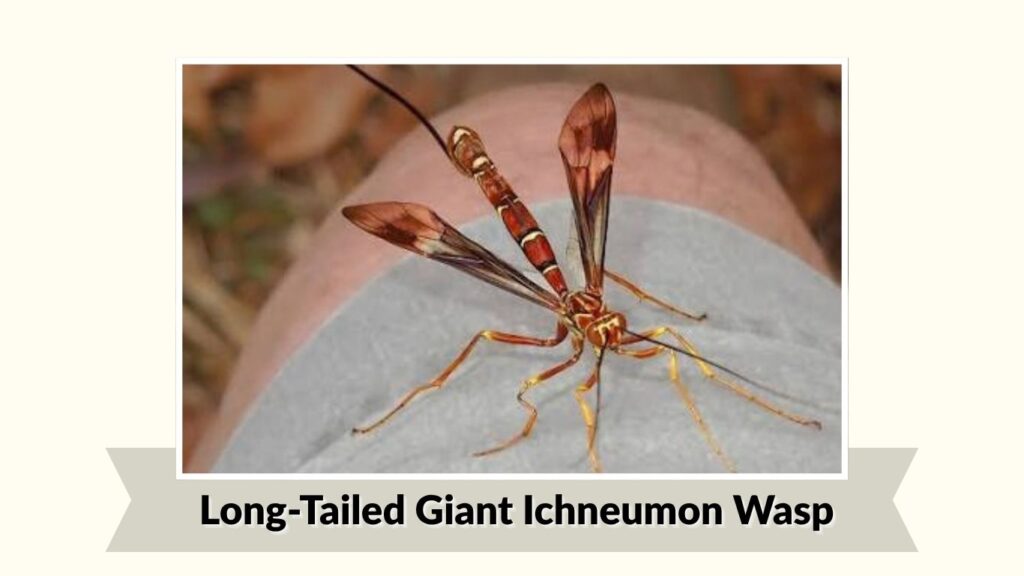
The Long-Tailed Giant Ichneumon Wasp (Megarhyssa macrurus) is a remarkable parasitoid wasp belonging to the family Ichneumonidae. It is recognized by its slender body, reddish-brown and yellow markings, and exceptionally long ovipositor. Despite its intimidating appearance, this insect is generally harmless to humans. It plays an important ecological role by controlling populations of wood-boring horntail wasps.
Identification
- Scientific Name: Megarhyssa macrurus
- Family: Ichneumonidae
- Body Size: Approximately 35–50 mm
- Body Color: Reddish-brown with yellow and black markings
- Wing Color: Transparent with dark patches
- Antennae: Long, slender, and dark
- Ovipositor: Approximately twice the female’s body length
- Distinctive Feature: Extremely long, thread-like ovipositor and dark vertical facial stripes
Habitat and Distribution
Long-Tailed Giant Ichneumon Wasps are widely distributed throughout eastern and central North America, including parts of the United States and Canada.
They inhabit deciduous forests, woodland edges, wooded parks, and gardens containing mature hardwood trees. Their preferred environments include declining or recently dead trees where wood-boring horntail larvae develop.
These wasps are particularly associated with trees such as maple, elm, beech, and other hardwood species. Adults are most commonly observed during late spring and summer.
Behavior and Diet
Long-Tailed Giant Ichneumon Wasps are solitary parasitoids that primarily attack the larvae of pigeon horntails (Tremex columba).
Females locate concealed larvae beneath tree bark and inside wood. They use their exceptionally long ovipositors to penetrate the wood and deposit eggs near or directly on the host.
After hatching, the wasp larvae feed on the horntail larvae, eventually killing them. Adult wasps do not normally attack humans, and females use their ovipositors for egg-laying rather than defense.
Lifespan and Life Cycle
The Long-Tailed Giant Ichneumon Wasp undergoes complete metamorphosis through egg, larval, pupal, and adult stages. Females deposit eggs near suitable wood-boring hosts. The developing larvae consume their hosts while remaining protected inside the wood. Once feeding is complete, the larvae pupate and eventually emerge as adult wasps. Development commonly follows a seasonal cycle, although timing depends on environmental conditions and host availability.
3. Greene’s Giant Ichneumon Wasp (Megarhyssa greenei)
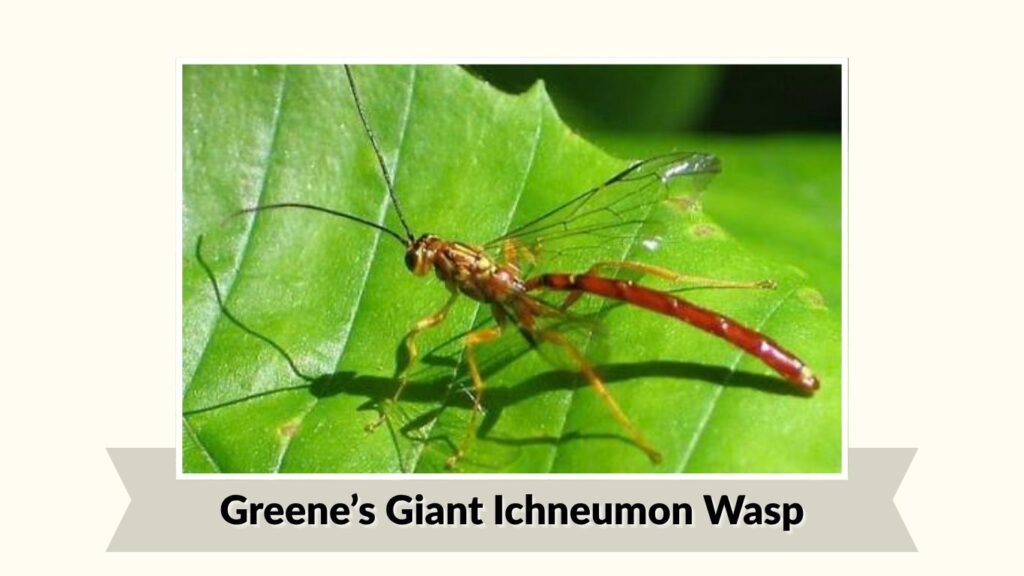
Greene’s Giant Ichneumon Wasp (Megarhyssa greenei) is a large parasitic wasp native to North America. It belongs to the family Ichneumonidae and closely resembles the Long-Tailed Giant Ichneumon Wasp. However, it generally has a shorter ovipositor and different wing markings. This beneficial insect specializes in attacking wood-boring horntail larvae and helps maintain natural population balance in forest ecosystems.
Identification
- Scientific Name: Megarhyssa greenei
- Family: Ichneumonidae
- Body Size: A large, slender ichneumon wasp
- Body Color: Reddish-brown with yellow and black markings
- Head Color: Predominantly yellow
- Wing Appearance: Usually transparent with a distinct dark patch
- Ovipositor: Approximately 1.5 times the female’s body length
- Distinctive Feature: Shorter ovipositor and fewer dark wing markings than Megarhyssa macrurus
Habitat and Distribution
Greene’s Giant Ichneumon Wasps occur throughout eastern North America, including the eastern United States and parts of southern Canada. They are commonly associated with deciduous forests, wooded parks, and woodland edges containing suitable host insects. The species prefers areas with declining hardwood trees where pigeon horntail larvae tunnel beneath the bark. Adult wasps are generally observed from late spring through early autumn, particularly between May and September.
Behavior and Diet
Greene’s Giant Ichneumon Wasps are solitary parasitoids specializing in the larvae of pigeon horntails (Tremex columba). Females locate wood-boring larvae by exploring tree trunks and detecting suitable egg-laying sites. Using their long ovipositors, they drill through the wood and deposit eggs on or near concealed host larvae.
After hatching, their offspring consume the hosts while developing inside the wood. Adults are generally nonaggressive toward people and do not construct defensive colonies.
Lifespan and Life Cycle
The life cycle of Greene’s Giant Ichneumon Wasp includes four developmental stages: egg, larva, pupa, and adult. Females lay eggs near suitable horntail larvae inside hardwood trees. The developing parasitoid larvae consume their hosts, obtaining the nutrients required for growth.
After completing larval development, they pupate beneath the bark or within the wood. Adults eventually emerge through openings in the tree and begin searching for mates and suitable reproductive sites. Development may take approximately a year, depending on host conditions and seasonal temperatures.
4. Norton’s Giant Ichneumon Wasp (Megarhyssa nortoni)
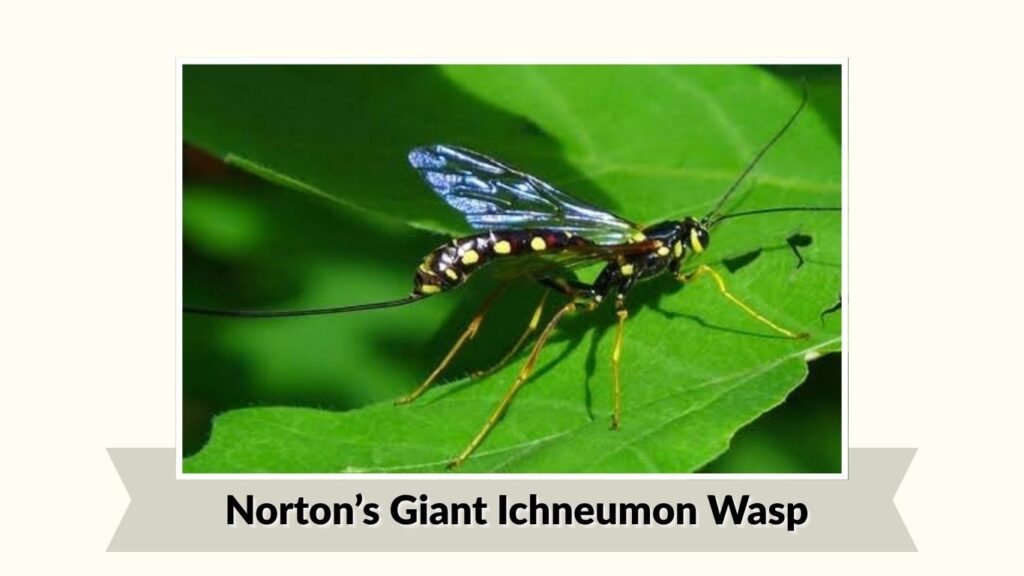
Norton’s Giant Ichneumon Wasp (Megarhyssa nortoni) is a large parasitoid species recognized by its elongated body and impressive egg-laying organ. It belongs to the family Ichneumonidae and is particularly associated with coniferous forests. Unlike some related species that target horntails in hardwood trees, this wasp attacks wood-boring larvae living inside conifers. Its natural ability to suppress horntail populations makes it beneficial to forest ecosystems.
Identification
- Scientific Name: Megarhyssa nortoni
- Family: Ichneumonidae
- Body Size: Approximately 25–38 mm
- Body Color: Black and reddish-brown with yellow markings
- Wing Color: Mostly transparent
- Leg Color: Predominantly yellow
- Ovipositor Length: Approximately 50–76 mm in females
- Distinctive Feature: Rounded yellow spots along the sides of the abdomen
Habitat and Distribution
Norton’s Giant Ichneumon Wasps are native to North America, where they occur across parts of the United States and Canada. Their natural habitat includes coniferous forests, mountain woodlands, and wooded landscapes containing pine, fir, and other suitable trees.
The species has also been introduced into Australia and New Zealand for biological control of wood-boring horntail wasps.Adult wasps are most frequently encountered during warmer months when suitable host insects are active.
Behavior and Diet
Norton’s Giant Ichneumon Wasps are solitary parasitoids of wood-boring horntail larvae. Their known hosts include species belonging to Sirex, Urocerus, and Xeris.
Females explore tree trunks using their antennae to detect signs of host activity beneath the bark. Once a suitable location is found, they use their long ovipositors to drill into the wood and deposit eggs near the concealed larvae. The developing offspring consume their hosts, contributing to the natural control of wood-boring insects.
Lifespan and Life Cycle
Norton’s Giant Ichneumon Wasps undergo complete metamorphosis. Females begin reproduction by locating suitable horntail larvae inside coniferous trees and depositing eggs. After hatching, the parasitoid larvae feed on the host insects, gradually completing their development.
They eventually enter the pupal stage inside the wood before emerging as adults. The developmental period depends on seasonal conditions and host availability. Adult males do not possess the long ovipositor found in females, and their primary reproductive role is locating suitable mates.
5. Sabre Wasp (Rhyssa persuasoria)
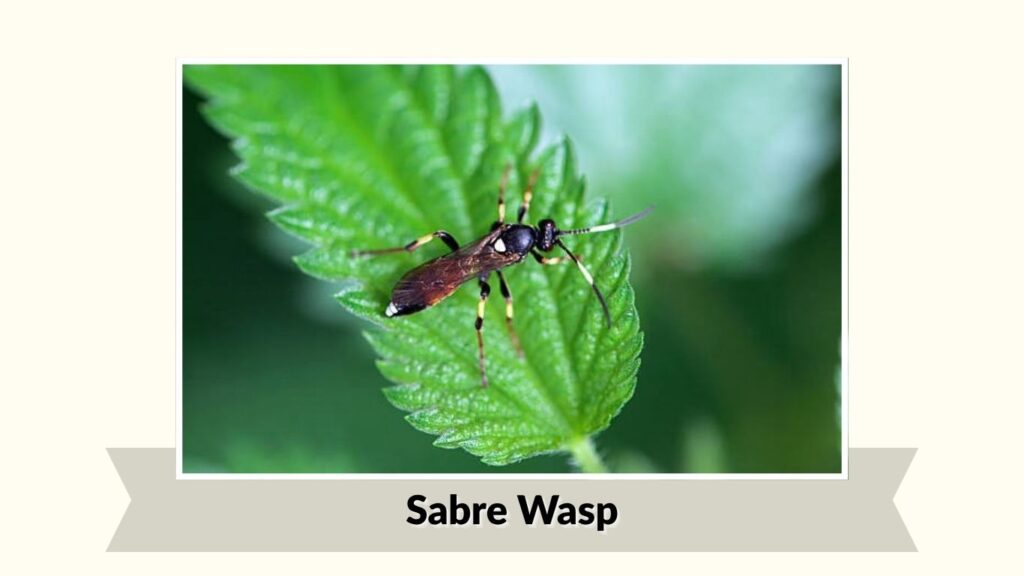
The Sabre Wasp (Rhyssa persuasoria) is one of Europe’s largest and most recognizable ichneumon wasps. It belongs to the family Ichneumonidae and is distinguished by its black body, white markings, reddish legs, and long ovipositor. Although the female’s sword-like egg-laying organ may appear threatening, it is designed for reaching wood-boring insects rather than attacking humans. The species helps regulate populations of woodwasps within forest ecosystems.
Identification
- Scientific Name: Rhyssa persuasoria
- Family: Ichneumonidae
- Body Size: Approximately 20–40 mm in larger adults
- Body Color: Black with white spots and patches
- Leg Color: Reddish-orange
- Wing Appearance: Mostly transparent with visible veins
- Antennae: Long, slender, and dark
- Distinctive Feature: Long, sword-like ovipositor extending beyond the female’s abdomen
Habitat and Distribution
Sabre Wasps are widely distributed throughout Europe and also occur in parts of Asia, North Africa, and North America. They prefer coniferous and mixed forests where suitable wood-boring host insects are present.
Pine, spruce, and other coniferous trees provide important habitats for their development. Adult wasps are commonly observed during summer, particularly around fallen logs, damaged trees, and forest clearings.
Behavior and Diet
Sabre Wasps are solitary parasitoids that primarily target the larvae of woodwasps, especially members of the family Siricidae. Females carefully explore tree bark, using their antennae to detect signs of larvae hidden deep within the wood.
Once a suitable host is located, the female inserts her long ovipositor through the bark and deposits an egg near or on the larva. The developing parasitoid consumes its host, eventually causing its death. Adults obtain energy from available carbohydrate sources, including honeydew.
Lifespan and Life Cycle
The Sabre Wasp generally completes one generation per year.
Females lay eggs inside wood containing suitable host larvae. After hatching, the young wasps feed on their hosts while remaining protected within the tree.
The larvae develop through several stages and eventually prepare for pupation. They generally overwinter inside the wood before pupating and emerging as adults during the following warmer season. The newly emerged adults mate and begin another reproductive cycle.
6. Black Slip Wasp (Pimpla rufipes)
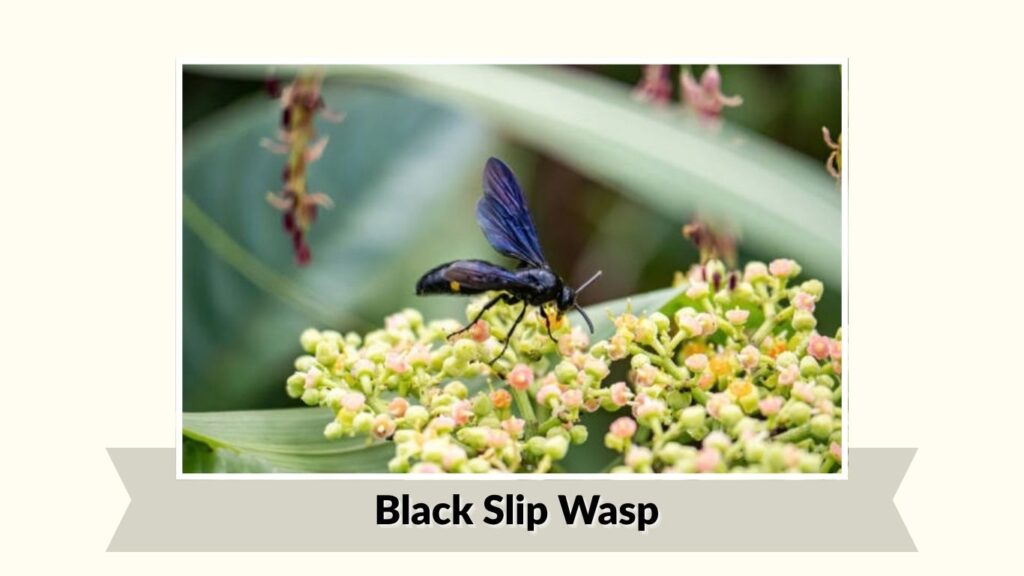
The Black Slip Wasp (Pimpla rufipes) is a medium-sized parasitic wasp belonging to the family Ichneumonidae. It is easily recognized by its glossy black body, bright orange legs, and relatively short ovipositor. Unlike giant ichneumon wasps that attack wood-boring insects, this species primarily parasitizes the immature stages of moths and butterflies. It plays a useful ecological role by helping regulate caterpillar and moth populations.
Identification
- Scientific Name: Pimpla rufipes
- Family: Ichneumonidae
- Body Size: Approximately 10–15 mm
- Body Color: Glossy black
- Leg Color: Bright orange or reddish-orange
- Wing Appearance: Transparent with dark veins
- Antennae: Long, slender, and dark
- Ovipositor: Short, thick, and straight
- Distinctive Feature: Black body with orange legs and a short, straight ovipositor in females
Habitat and Distribution
Black Slip Wasps occur across Europe, parts of Asia, and northern Africa. They inhabit woodlands, hedgerows, gardens, parks, meadows, and other areas containing abundant vegetation.
These wasps are frequently associated with environments supporting caterpillars, moth pupae, and suitable flowering plants. In Britain, adults can be observed throughout warmer months and are particularly noticeable during late summer and autumn.
Behavior and Diet
Black Slip Wasps are solitary parasitoids that primarily attack moth and butterfly pupae. Females locate suitable hosts and use their short ovipositors to deposit eggs into them.
The developing wasp larvae feed on the host tissues, preventing the moth or butterfly from completing development. Adult wasps may visit flowers to obtain nectar and other energy-rich resources. Unlike social wasps, Black Slip Wasps do not establish large colonies or aggressively defend communal nests.
Lifespan and Life Cycle
The Black Slip Wasp undergoes complete metamorphosis, progressing through egg, larval, pupal, and adult stages. Females deposit eggs inside suitable moth or butterfly pupae, where the developing offspring remain protected.
After hatching, the larvae consume their hosts and eventually pupate. Once development is complete, adult wasps emerge and begin searching for mates and reproductive opportunities. The timing of development varies according to temperature, host availability, and seasonal conditions.
7. Banded Caterpillar Parasite Wasp (Ichneumon promissorius)
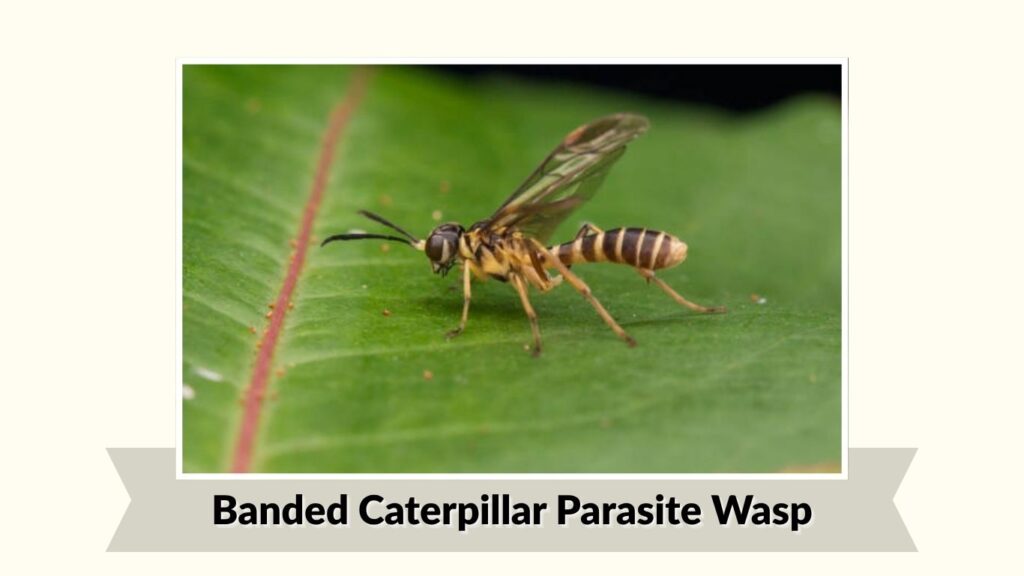
The Banded Caterpillar Parasite Wasp (Ichneumon promissorius) is a medium-sized parasitic wasp belonging to the family Ichneumonidae. It is recognized by its black body, distinctive white markings, and orange-brown legs. This species is particularly valuable in agricultural environments because it attacks the pupae of several destructive moth species. Its natural pest-control abilities help regulate caterpillar populations in Australian farming landscapes.
Identification
- Scientific Name: Ichneumon promissorius
- Family: Ichneumonidae
- Body Size: Approximately 14 mm
- Body Color: Predominantly black with white markings
- Leg Color: Orange-brown
- Wing Appearance: Transparent with dark veins
- Antennae: Females have a distinctive white band
- Distinctive Feature: White spots on the thorax and a white-banded abdomen
Habitat and Distribution
Banded Caterpillar Parasite Wasps are native to Australia and commonly occur in agricultural landscapes, grasslands, and areas containing suitable moth hosts.
They are particularly associated with cotton fields, chickpea crops, and other farming environments where Helicoverpa caterpillars develop.
These wasps can also inhabit field margins and nearby vegetation. Adults often search close to the soil surface because their preferred hosts pupate underground.
Behavior and Diet
Banded Caterpillar Parasite Wasps are solitary parasitoids that attack the pupae of Helicoverpa moths and certain armyworms. Females search the soil for concealed pupal chambers. After finding a suitable host, they enter the chamber and insert an egg into the pupa.
The developing wasp larva consumes the host’s tissues, eventually killing it. This feeding behavior helps suppress agricultural pest populations without directly damaging crops.
Lifespan and Life Cycle
The Banded Caterpillar Parasite Wasp undergoes complete metamorphosis through four stages: egg, larva, pupa, and adult. Females deposit eggs inside suitable moth pupae hidden beneath the soil.
After hatching, the wasp larvae consume their hosts and continue developing within the pupal cases. Once mature, the wasps emerge as adults and leave the underground chambers.
Their reproductive activity depends on host availability and environmental conditions, and adults may remain active during relatively mild Australian winters.
8. Bent-Shielded Besieger Wasp (Gnamptopelta obsidianator)
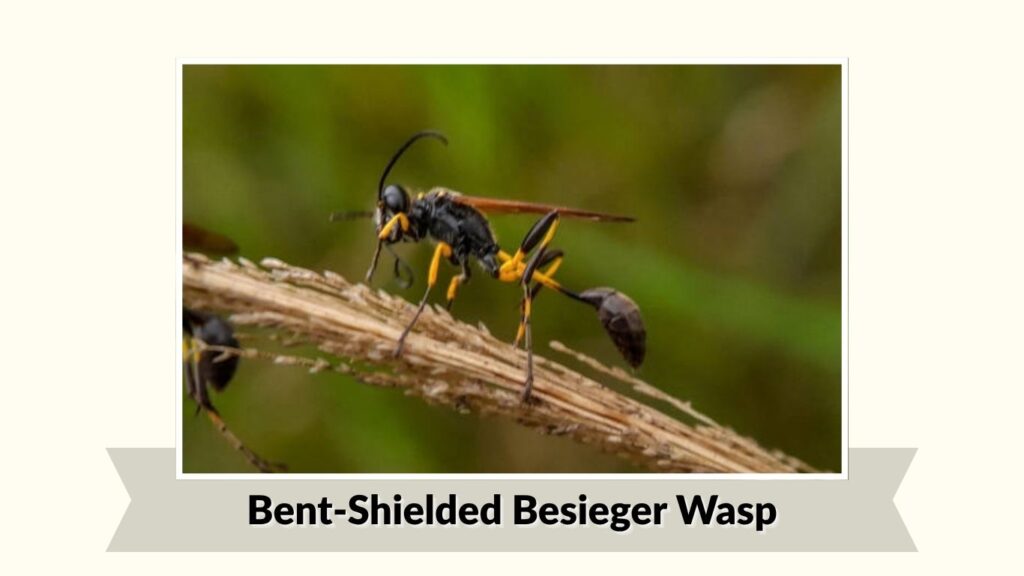
The Bent-Shielded Besieger Wasp (Gnamptopelta obsidianator) is a distinctive North American ichneumon wasp recognized by its glossy blue-black body and bright orange antennae. It belongs to the family Ichneumonidae and is an internal parasitoid of certain hawk moth caterpillars. Although its large size and dark appearance may seem intimidating, this species is generally nonaggressive toward humans and plays an important role in forest ecosystems.
Identification
- Scientific Name: Gnamptopelta obsidianator
- Family: Ichneumonidae
- Body Size: Approximately 20–25 mm
- Body Color: Glossy black with a bluish sheen
- Antenna Color: Bright orange or orange-yellow
- Wing Color: Dark, sometimes with a purple-blue reflection
- Leg Color: Mostly black
- Distinctive Feature: Large blue-black body contrasting with long orange antennae
Habitat and Distribution
Bent-Shielded Besieger Wasps occur throughout eastern North America, from southern Canada to parts of the southern United States. They inhabit deciduous forests, woodland edges, gardens, and natural areas containing suitable caterpillar hosts.
The species is particularly associated with grapevines and nearby vegetation where hawk moth caterpillars feed. Adults are often encountered during spring, although observation periods vary across their geographic range.
Behavior and Diet
Bent-Shielded Besieger Wasps are solitary parasitoids that specialize in certain hawk moth caterpillars. Recorded hosts include the Virginia creeper sphinx, achemon sphinx, and nessus sphinx moths.
Females locate suitable caterpillars and deposit eggs inside their bodies using specialized ovipositors. The developing larvae obtain nourishment from their hosts and eventually cause their death. Adults may visit flowers for nectar, while the immature stages depend on host insects for development.
Lifespan and Life Cycle
The Bent-Shielded Besieger Wasp undergoes complete metamorphosis. Adult females search for suitable hawk moth caterpillars, particularly those feeding on grapevines.
After selecting a host, a female inserts an egg into its body. The emerging parasitoid larva develops internally while obtaining nutrients from the caterpillar. The parasitoid eventually kills its host and completes development before emerging as an adult. The duration of development varies according to host species, temperature, and environmental conditions.
9. Common Hover Fly Parasitoid Wasp (Diplazon laetatorius)
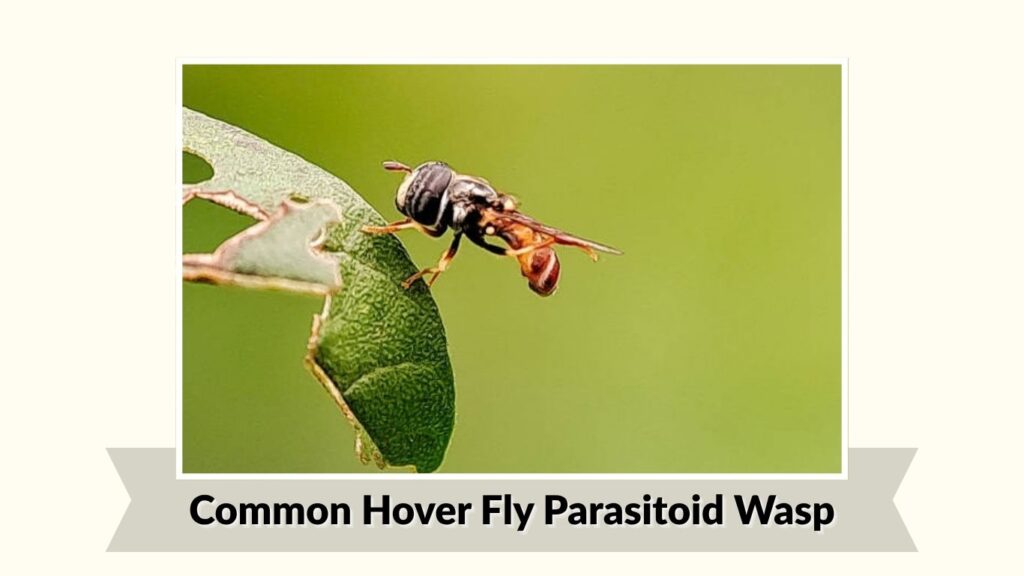
The Common Hover Fly Parasitoid Wasp (Diplazon laetatorius) is a small parasitic insect belonging to the family Ichneumonidae. It is recognized by its dark body, reddish abdominal markings, and distinctive multicolored hind legs. Unlike many ichneumon wasps that attack caterpillars, this species primarily parasitizes hoverflies. Its unusual reproductive behavior and exceptionally wide geographic distribution make it an interesting member of the parasitoid wasp community.
Identification
- Scientific Name: Diplazon laetatorius
- Family: Ichneumonidae
- Body Size: Approximately 4–10 mm
- Body Color: Black with reddish-orange abdominal markings
- Wing Appearance: Transparent with dark veins
- Antennae: Slender and dark
- Leg Color: Reddish with distinctly banded hind tibiae
- Distinctive Feature: Hind tibiae marked black, white, black, and reddish-orange
Habitat and Distribution
Common Hover Fly Parasitoid Wasps have an exceptionally broad distribution, occurring across Europe, Asia, Africa, Australia, and the Americas. They inhabit meadows, gardens, agricultural fields, woodland edges, and hedgerows.
These wasps are frequently associated with vegetation containing aphids because their hoverfly hosts often feed on aphid colonies. Adults can be observed visiting flowering plants, particularly those providing accessible nectar.
Behavior and Diet
Common Hover Fly Parasitoid Wasps primarily attack aphid-feeding hoverflies belonging to the family Syrphidae. Females locate suitable hoverfly larvae and deposit eggs inside their bodies.
The parasitoid larvae develop internally, eventually killing the host before completing their development. Adult wasps may feed on nectar, and observations also indicate feeding on hoverfly eggs. Because many hoverfly larvae are beneficial aphid predators, this parasitoid can indirectly reduce natural aphid control.
Lifespan and Life Cycle
The Common Hover Fly Parasitoid Wasp undergoes four developmental stages: egg, larva, pupa, and adult.
Females insert eggs into suitable hoverfly larvae. The developing parasitoids feed within their hosts and eventually complete development in the host’s puparium. Adult wasps emerge and continue the reproductive cycle.
An unusual characteristic of this species is its ability to reproduce through thelytokous parthenogenesis, meaning females can produce female offspring without mating. Males are extremely rare throughout much of its distribution.
10. Cream-Spotted Ichneumon Wasp (Echthromorpha intricatoria)
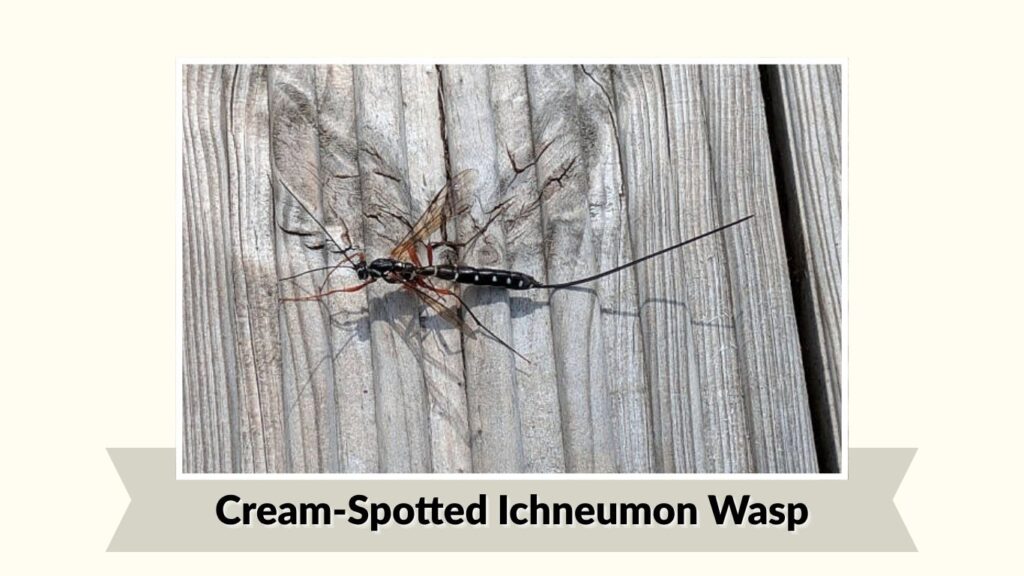
The Cream-Spotted Ichneumon Wasp (Echthromorpha intricatoria) is an attractive parasitoid species known for its black body, pale cream-colored markings, and bright orange legs. It belongs to the family Ichneumonidae and commonly occurs in Australia and New Zealand. Unlike social wasps, it does not construct communal nests. Instead, females lay their eggs inside moth and butterfly pupae, making this species an important part of natural insect population regulation.
Identification
- Scientific Name: Echthromorpha intricatoria
- Family: Ichneumonidae
- Body Size: Approximately 6–16 mm
- Body Color: Predominantly black
- Abdominal Markings: Distinctive cream-colored spots or plates
- Leg Color: Orange to reddish-orange
- Antennae: Long, slender, and orange
- Wing Appearance: Transparent, with a wingspan around 30 mm
- Distinctive Feature: Contrasting cream markings along the sides of the dark abdomen
Habitat and Distribution
Cream-Spotted Ichneumon Wasps occur in Australia and New Zealand, where they inhabit woodlands, gardens, parks, and other vegetated environments. They prefer habitats containing abundant moths and butterflies because these insects provide suitable hosts for their developing larvae.
Adults may be encountered around shrubs, flowering plants, and foliage where potential host pupae are present. Their occurrence varies according to local environmental conditions and host availability.
Behavior and Diet
Cream-Spotted Ichneumon Wasps are solitary parasitoids that primarily attack moth and butterfly pupae. Females search vegetation for suitable pupae, using their ovipositors to deposit eggs inside them.
After hatching, the developing wasp larvae feed on the host’s tissues, eventually causing its death. Recorded hosts include certain nymphalid butterflies and moth species. Adult wasps do not establish defensive colonies and generally avoid human contact.
Lifespan and Life Cycle
The Cream-Spotted Ichneumon Wasp undergoes complete metamorphosis involving egg, larval, pupal, and adult stages. Female wasps locate suitable moth or butterfly pupae and deposit eggs inside them.
The larvae develop internally, obtaining nutrients from the host until they complete feeding. They then pupate within the host remains before emerging as adults.
The duration of development depends on temperature, humidity, and the availability of suitable hosts. After emergence, adults begin searching for mates and reproductive opportunities.
11. Diamondback Moth Pupal Parasite Wasp (Diadromus collaris)
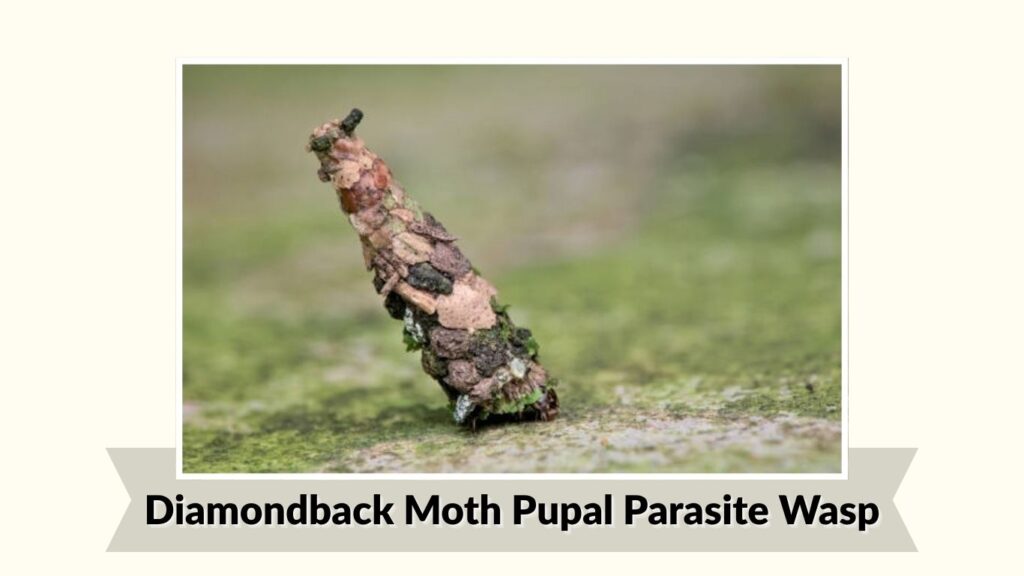
The Diamondback Moth Pupal Parasite Wasp (Diadromus collaris) is a small ichneumon wasp recognized for its ability to parasitize diamondback moth pupae. It belongs to the family Ichneumonidae and is particularly important in agricultural pest management. Because diamondback moth larvae can severely damage cabbage, broccoli, cauliflower, and other cruciferous vegetables, this parasitoid has attracted considerable attention as a potential biological control agent.
Identification
- Scientific Name: Diadromus collaris
- Family: Ichneumonidae
- Body Size: Approximately 5–7 mm
- Body Appearance: Small and slender
- Body Color: Combination of black and reddish-orange markings
- Wing Appearance: Transparent with visible veins
- Antennae: Long and segmented
- Distinctive Feature: Small parasitoid wasp associated with diamondback moth pupae
Habitat and Distribution
Diamondback Moth Pupal Parasite Wasps occur throughout parts of Europe, Asia, and Africa. They have also been introduced into several regions for biological control.
They are particularly associated with agricultural environments containing cruciferous vegetables, including cabbage, kale, broccoli, and cauliflower.
Adults frequently search crop foliage for diamondback moth pupae. Their populations are influenced by host abundance, temperature, pesticide use, and seasonal farming conditions.
Behavior and Diet
Diamondback Moth Pupal Parasite Wasps are solitary internal parasitoids that attack the pupal stage of the diamondback moth (Plutella xylostella).
Females locate suitable host pupae and insert eggs into them using their ovipositors. The emerging parasitoid larvae feed on the internal tissues of the pupae, preventing the moths from reaching adulthood. Adult wasps can obtain energy from carbohydrate sources such as nectar or honeydew. Their host-parasitizing behavior contributes to the natural suppression of diamondback moth populations in agricultural systems.
Lifespan and Life Cycle
The Diamondback Moth Pupal Parasite Wasp undergoes complete metamorphosis through egg, larva, pupa, and adult stages. Females deposit eggs inside suitable diamondback moth pupae. The larvae feed internally and eventually kill their hosts.
The developing wasps complete their immature stages inside the host pupae before emerging as adults. Under laboratory conditions near 25°C, immature development may be completed in approximately 11–12 days.
Adult females can begin laying eggs within a few days after emergence, allowing populations to increase rapidly when suitable hosts are abundant.
12. Dusky-Winged Ichneumon Wasp (Lissopimpla excelsa)
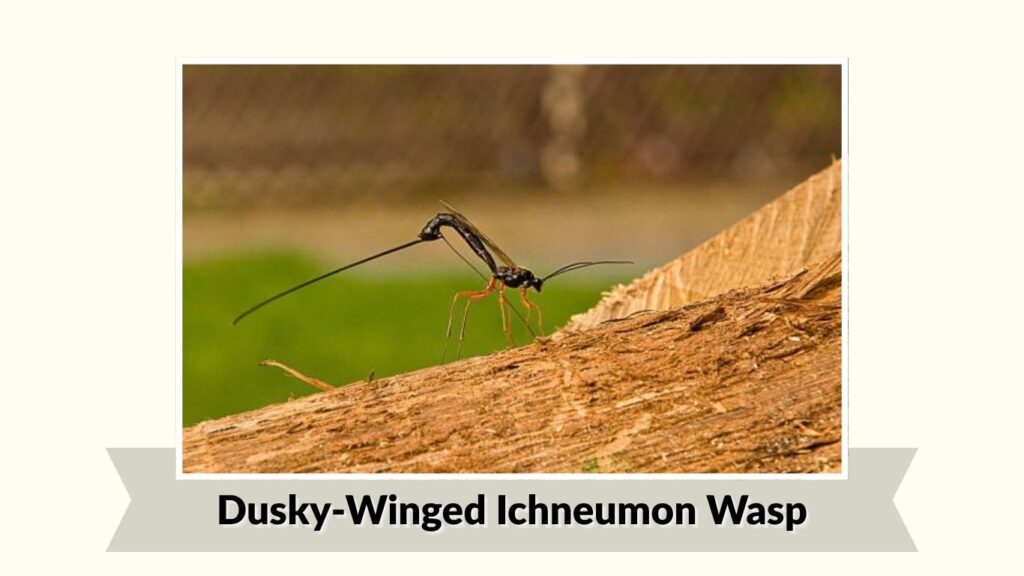
The Dusky-Winged Ichneumon Wasp (Lissopimpla excelsa), also known as the Orchid Dupe Wasp, is a distinctive parasitoid belonging to the family Ichneumonidae. It is recognized by its reddish-brown body, dark wings, and contrasting white abdominal markings. This species is particularly fascinating because males pollinate certain Australian orchids through sexual deception. It also helps regulate moth populations through its parasitic development.
Identification
- Scientific Name: Lissopimpla excelsa
- Family: Ichneumonidae
- Body Size: Approximately 11–17 mm
- Body Color: Reddish-brown with black and white markings
- Wing Color: Dark, smoky brown
- Antennae: Long and slender
- Female Ovipositor: Approximately 8 mm long
- Distinctive Feature: Dark wings, white abdominal spots, and reddish legs
Habitat and Distribution
Dusky-Winged Ichneumon Wasps are native to Australia and are also found in New Zealand.
They inhabit woodlands, gardens, grasslands, and areas containing suitable moth hosts. Adults are often observed among flowering plants and shrubs, particularly during warmer months.
The species has a special association with native Australian tongue orchids belonging to the genus Cryptostylis. These orchids attract male wasps by imitating the appearance and chemical signals of females.
Behavior and Diet
Dusky-Winged Ichneumon Wasps are solitary parasitoids associated with moth hosts, including agricultural pest species. Females use their ovipositors to deposit eggs in suitable hosts. The developing larvae obtain nutrients from the host, eventually causing its death.
Adult males are especially interesting because they are attracted to sexually deceptive orchids. When males attempt to mate with the flowers, they inadvertently transfer pollen between orchids. This unusual relationship makes the species important both as a natural enemy of moths and as an orchid pollinator.
Lifespan and Life Cycle
The Dusky-Winged Ichneumon Wasp undergoes complete metamorphosis through egg, larval, pupal, and adult stages. Females locate suitable moth hosts and deposit eggs for their offspring. After hatching, the developing parasitoid larvae feed on host tissues before pupating.
Adults eventually emerge and begin searching for mates and reproductive opportunities. Developmental timing depends on host availability and environmental conditions.
13. Greenheaded Leafroller Parasite Wasp (Xanthopimpla rhopaloceros)
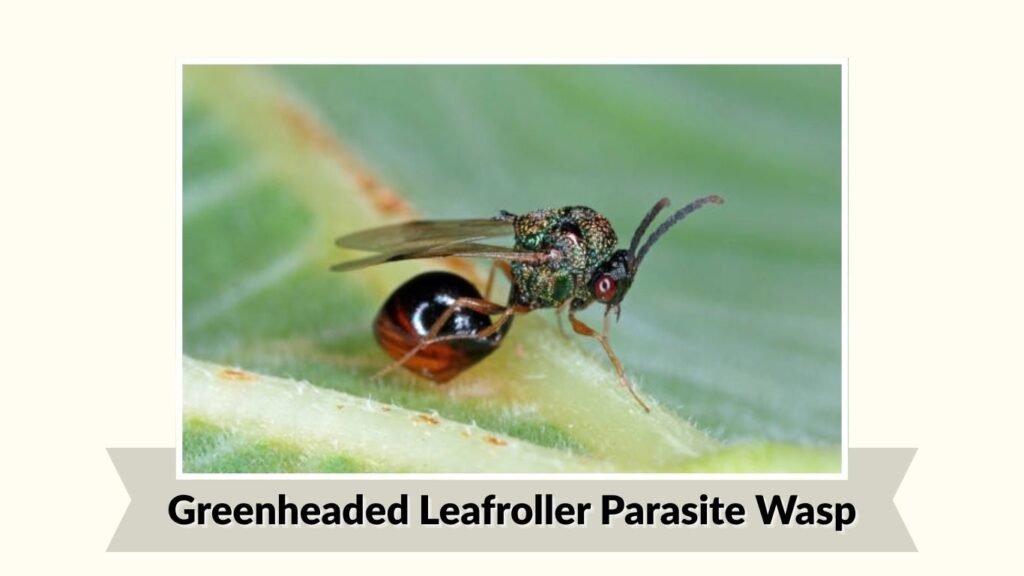
The Greenheaded Leafroller Parasite Wasp (Xanthopimpla rhopaloceros), more commonly called the Yellow-Banded Leafroller Parasitoid Wasp, is a small insect belonging to the family Ichneumonidae. It is recognized by its bright yellow body, contrasting black markings, and transparent wings. This species is particularly valuable in agricultural environments because it attacks leafroller moth pupae, helping reduce populations of insects that damage fruit trees and other crops.
Identification
- Scientific Name: Xanthopimpla rhopaloceros
- Family: Ichneumonidae
- Body Appearance: Slender with a relatively elongated abdomen
- Body Color: Bright yellow with black markings
- Head Color: Predominantly yellow with dark markings
- Wing Appearance: Transparent with visible veins
- Antennae: Long, slender, and dark
- Distinctive Feature: Yellow abdomen decorated with contrasting black spots and bands
Habitat and Distribution
Greenheaded Leafroller Parasite Wasps are native to Australia and have become established in New Zealand following their introduction for biological control.
They inhabit orchards, gardens, woodland edges, agricultural fields, and other environments containing leafroller moths. The species is especially associated with fruit-growing regions where the light brown apple moth (Epiphyas postvittana) occurs. Adults search among leaves and other plant surfaces for suitable host pupae.
Behavior and Diet
Greenheaded Leafroller Parasite Wasps are solitary pupal parasitoids. Females locate suitable leafroller moth pupae and use their ovipositors to deposit eggs inside them.
The developing parasitoid larvae feed within the host, preventing the moth from reaching adulthood. Their hosts include the light brown apple moth, an important pest of fruit crops. Adult wasps may obtain energy from plant-derived carbohydrate sources.
Their natural parasitic behavior helps suppress certain agricultural pests and contributes to biological pest management.
Lifespan and Life Cycle
The Greenheaded Leafroller Parasite Wasp undergoes complete metamorphosis through egg, larval, pupal, and adult stages. Females deposit eggs inside suitable moth pupae, where the parasitoid larvae develop.
As the larvae consume host tissues, the moth pupae gradually lose their ability to develop normally. The wasps eventually pupate and emerge as adults.
The duration of development depends on temperature, host availability, and environmental conditions. This species can produce successive generations when suitable hosts remain available.
14. Lemon Tree Borer Parasite Wasp (Xanthocryptus novozealandicus)
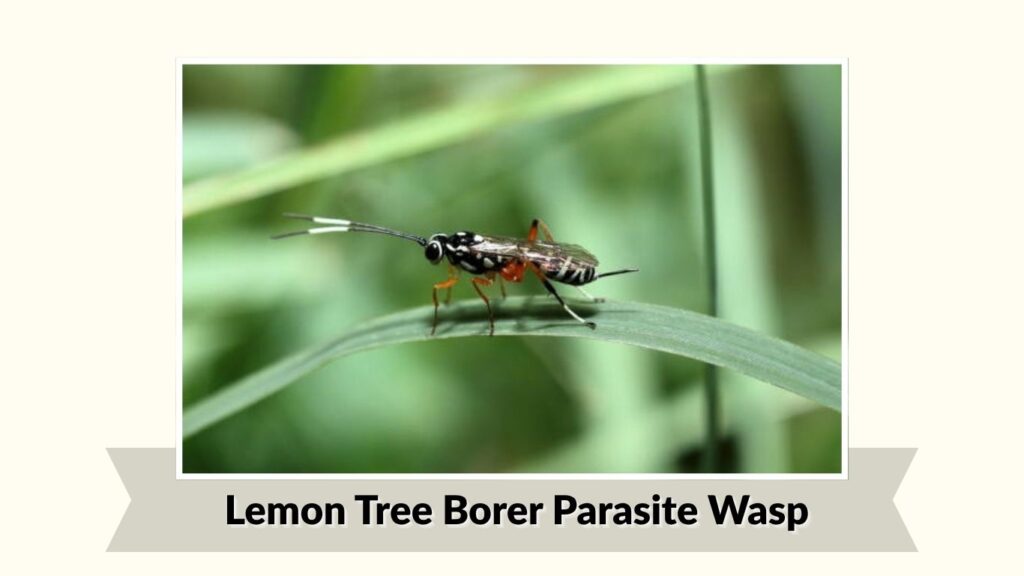
The Lemon Tree Borer Parasite Wasp (Xanthocryptus novozealandicus) is a beneficial parasitoid native to New Zealand. It belongs to the family Ichneumonidae and is particularly associated with wood-boring beetle larvae. This species is recognized by its black body, white markings, and long ovipositor. Unlike social wasps, it does not build large communal nests and instead spends much of its reproductive activity searching for concealed beetle grubs.
Identification
- Scientific Name: Xanthocryptus novozealandicus
- Family: Ichneumonidae
- Body Size: Approximately 5–15 mm, with females generally larger
- Body Color: Black with white spots and bands
- Leg Color: Reddish-brown and black with pale markings
- Wing Appearance: Transparent to slightly smoky
- Antennae: Long and dark with a distinctive white band
- Distinctive Feature: Female’s elongated ovipositor used to reach beetle larvae inside wood
Habitat and Distribution
Lemon Tree Borer Parasite Wasps are widely distributed throughout New Zealand. They have also been recorded in Australia and New Guinea.
They inhabit native forests, gardens, orchards, and areas containing trees or shrubs affected by wood-boring beetles.
The species is particularly associated with the lemon tree borer (Oemona hirta), a native longhorn beetle whose larvae tunnel into branches and stems. Adults can often be observed exploring tree trunks, branches, and damaged bark.
Behavior and Diet
Lemon Tree Borer Parasite Wasps are solitary parasitoids that attack wood-boring beetle larvae. Females locate suitable hosts by investigating signs of beetle activity within tree branches.
After identifying a potential host, a female inserts her ovipositor through the wood and deposits an egg into the concealed beetle larva.
The developing parasitoid obtains nutrients from its host and eventually kills it. This behavior helps regulate populations of lemon tree borers and other susceptible wood-boring beetles.
Lifespan and Life Cycle
The Lemon Tree Borer Parasite Wasp undergoes four developmental stages: egg, larva, pupa, and adult.
Females deposit eggs inside suitable beetle grubs living within woody stems. After hatching, the parasitoid larvae develop inside their hosts while consuming host tissues. Once feeding is complete, they pupate and eventually emerge as adult wasps.
The exact duration of the complete life cycle is not well established and may vary with host development and environmental conditions.
15. Orange Caterpillar Parasite Wasp (Netelia producta)
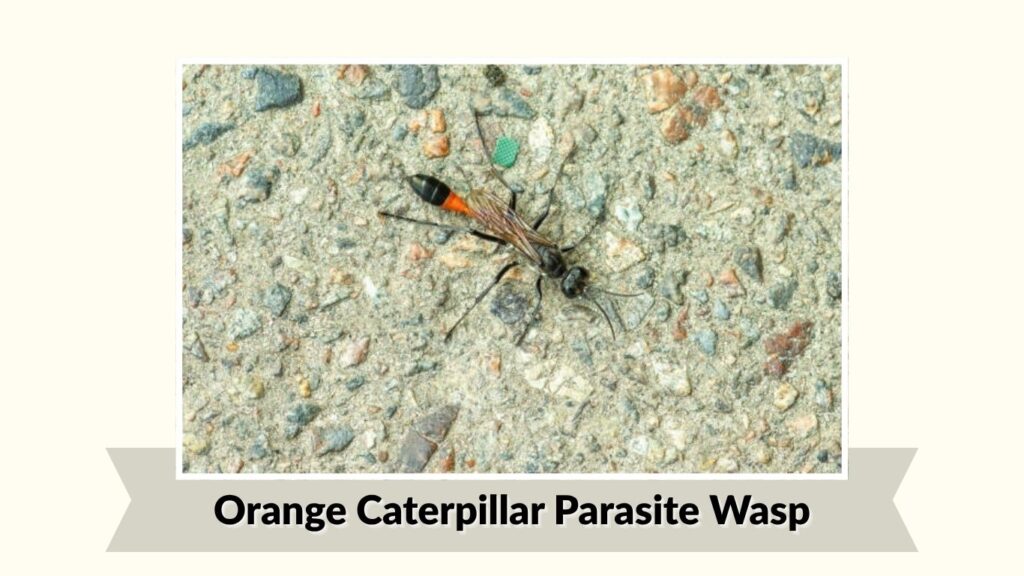
The Orange Caterpillar Parasite Wasp (Netelia producta) is a striking parasitoid insect belonging to the family Ichneumonidae. It is easily recognized by its slender reddish-orange body, long antennae, and transparent wings. Unlike parasitoids that develop entirely inside their hosts, this species has larvae that develop externally on caterpillars. Its ability to attack large moth caterpillars makes it an important component of natural insect population control.
Identification
- Scientific Name: Netelia producta
- Family: Ichneumonidae
- Body Size: Approximately 20 mm
- Body Color: Reddish-orange
- Head Color: Orange to yellowish-orange
- Wing Appearance: Mostly transparent
- Antennae: Long, slender, and orange-brown
- Body Shape: Narrow and elongated
- Distinctive Feature: Nearly uniform orange coloration and relatively large body size
Habitat and Distribution
Orange Caterpillar Parasite Wasps occur in Australia and are recorded in other parts of the Australasian region.
They inhabit woodlands, forests, grasslands, gardens, and natural areas containing suitable moth caterpillars. Adults may be observed resting on leaves, flying around vegetation, or searching among plants for host insects. The species is particularly associated with habitats supporting large moth caterpillars.
Behavior and Diet
Orange Caterpillar Parasite Wasps are solitary external parasitoids that attack moth caterpillars.
Females locate suitable caterpillars and temporarily immobilize them before attaching eggs to their bodies, often near the head. The emerging wasp larvae develop externally while remaining attached to their hosts.
These parasitoids delay most of their feeding until their hosts have prepared pupation chambers. They eventually consume and kill the caterpillars before forming their own protective cocoons. Although these wasps are generally not aggressive, females possess a functional stinging apparatus and should not be handled.
Lifespan and Life Cycle
The Orange Caterpillar Parasite Wasp undergoes complete metamorphosis through egg, larval, pupal, and adult stages. Females attach eggs to suitable moth caterpillars. After hatching, the parasitoid larvae remain associated with their hosts.
When the caterpillars enter suitable locations for pupation, the wasp larvae complete their feeding. The mature parasitoids then spin dark, protective cocoons in which pupation occurs.
Adult wasps eventually emerge, mate, and search for additional hosts.
16. Oriental Fruit Moth Parasite Wasp (Glabridorsum stokesii)
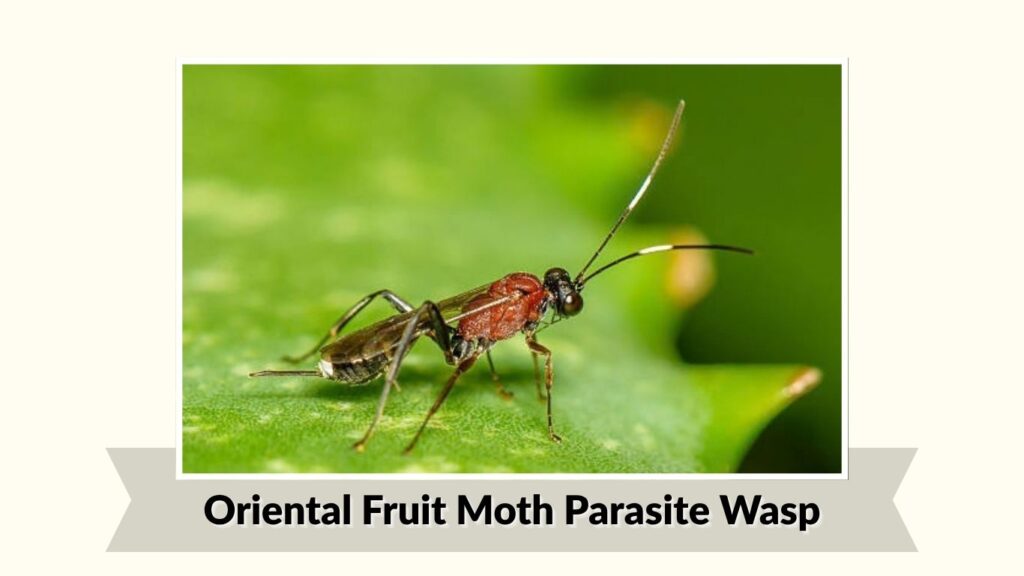
The Oriental Fruit Moth Parasite Wasp (Glabridorsum stokesii) is a beneficial parasitoid belonging to the family Ichneumonidae. This species is particularly important in fruit-growing regions because it attacks moths that damage peaches, nectarines, and other orchard crops. It has a dark body with contrasting pale markings and plays a valuable role in regulating agricultural pest populations through natural parasitism.
Identification
- Scientific Name: Glabridorsum stokesii
- Family: Ichneumonidae
- Body Appearance: Small to medium-sized, slender wasp
- Body Color: Predominantly black with white markings
- Leg Color: Reddish-orange and dark brown with pale bands
- Wing Appearance: Mostly transparent
- Antennae: Long and slender, sometimes displaying pale bands
- Distinctive Feature: Complete pale ring around each eye, useful for distinguishing it from similar species
Habitat and Distribution
Oriental Fruit Moth Parasite Wasps are native to southeastern Australia and have been introduced into New Zealand for biological pest control. They inhabit orchards, gardens, woodlands, and areas containing suitable moth hosts.
The species is particularly associated with stone-fruit orchards, including peach and nectarine plantations.
It can also occur in environments containing apple trees and other vegetation supporting moth populations.
Behavior and Diet
Oriental Fruit Moth Parasite Wasps are solitary parasitoids that attack several moth species.
Their known hosts include the oriental fruit moth (Grapholita molesta) and the codling moth (Cydia pomonella).
Females search for suitable host pupae and deposit eggs using their ovipositors.
After hatching, the parasitoid larvae obtain nutrients from their hosts, eventually preventing the moths from reaching adulthood.
Their parasitic activity can help reduce populations of economically important orchard pests.
Lifespan and Life Cycle
The Oriental Fruit Moth Parasite Wasp undergoes complete metamorphosis through egg, larval, pupal, and adult stages.
Females locate suitable moth hosts and deposit eggs for their developing offspring.
The larvae consume host tissues and complete their immature development within the host’s protective surroundings.
After pupation, adult wasps emerge and begin searching for mates and new hosts.
The developmental period varies according to temperature, seasonal conditions, and host availability.
This species has been studied for its potential contribution to integrated pest management in fruit orchards.
17. Two-Toned Caterpillar Parasite Wasp (Heteropelma scaposum)
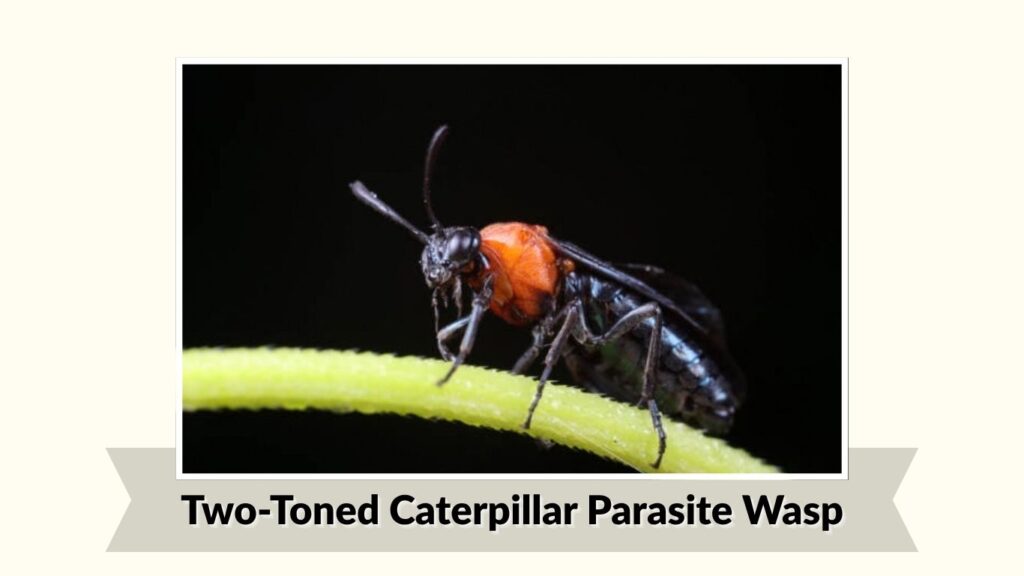
The Two-Toned Caterpillar Parasite Wasp (Heteropelma scaposum) is a fascinating parasitic insect belonging to the family Ichneumonidae. It is recognized by its contrasting black and orange body, slender appearance, and transparent wings. This beneficial wasp attacks caterpillars of several agricultural moth pests, including budworms and armyworms. Its natural pest-control abilities make it an important insect in Australian gardens and agricultural environments.
Identification
- Scientific Name: Heteropelma scaposum
- Family: Ichneumonidae
- Body Size: Approximately 20 mm
- Head Color: Predominantly black
- Thorax Color: Glossy black
- Abdominal Color: Bright orange
- Leg Color: Yellow to yellowish-orange
- Wing Appearance: Clear and transparent
- Distinctive Feature: Strong contrast between the black head and thorax and the orange abdomen
Habitat and Distribution
Two-Toned Caterpillar Parasite Wasps are native to Australia, where they occur in grasslands, woodland edges, gardens, and agricultural landscapes.
They are particularly associated with cotton fields, sorghum crops, and other environments containing suitable caterpillar hosts.
Adults can often be observed flying around low vegetation while searching for caterpillars. Their presence is especially noticeable during warmer months when moth populations increase.
Behavior and Diet
Two-Toned Caterpillar Parasite Wasps are solitary parasitoids that attack caterpillars of moths belonging to genera such as Helicoverpa and Spodoptera.
Females locate suitable caterpillars and use their ovipositors to introduce eggs into their bodies. The parasitoid larvae develop internally while the host caterpillars continue feeding and growing.
Unlike many other parasitoids, the developing wasps generally do not kill their hosts until after the caterpillars have pupated.
Their behavior provides natural control of several economically important crop pests.
Lifespan and Life Cycle
The Two-Toned Caterpillar Parasite Wasp undergoes complete metamorphosis involving egg, larval, pupal, and adult stages.
Females parasitize developing caterpillars, particularly those in their third and fourth larval stages. The host caterpillars continue developing and eventually enter the soil to pupate. Inside the host’s pupal case, the parasitoid larva completes feeding, killing its host.
After pupation, the adult wasp emerges by chewing through the host’s pupal covering and begins searching for mates and suitable hosts.
18. Yellow-Banded Ichneumon Wasp (Xanthopimpla rhopaloceros)
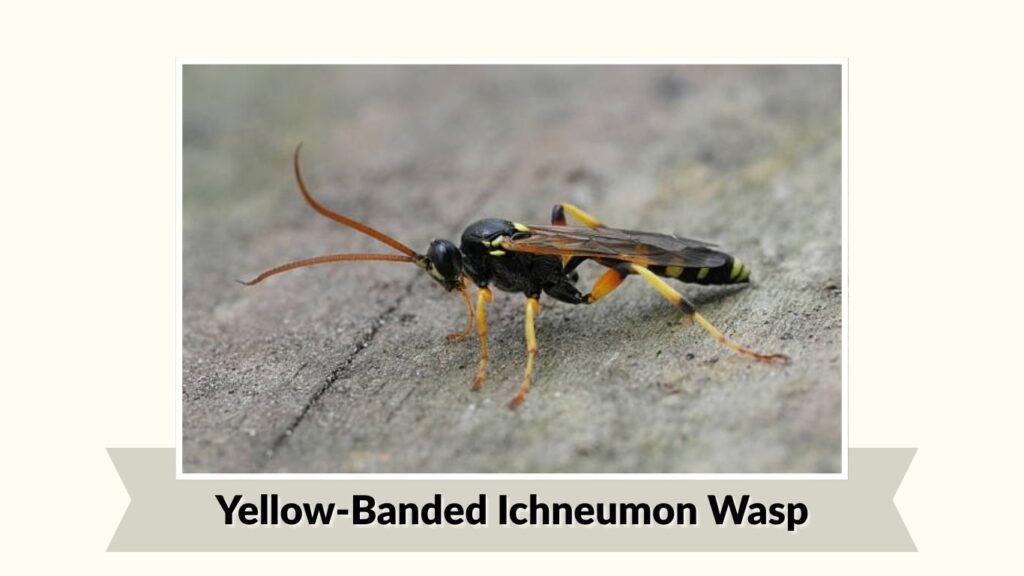
The Yellow-Banded Ichneumon Wasp (Xanthopimpla rhopaloceros) is a brightly colored parasitoid belonging to the family Ichneumonidae. It is recognized by its yellow body, contrasting dark markings, and slender antennae. This species is particularly valuable in orchard ecosystems because it attacks leafroller moth pupae. Its effectiveness against the light brown apple moth has led to its introduction into New Zealand as a biological control agent.
Identification
- Scientific Name: Xanthopimpla rhopaloceros
- Family: Ichneumonidae
- Body Appearance: Slender, with an elongated abdomen
- Body Color: Predominantly yellow
- Abdominal Markings: Contrasting dark spots and bands
- Leg Color: Yellow to orange-yellow
- Wing Appearance: Transparent with visible veins
- Antennae: Long, slender, and dark
- Distinctive Feature: Bright yellow coloration with contrasting dark markings
Habitat and Distribution
Yellow-Banded Ichneumon Wasps are native to Australia and have become established in parts of New Zealand following intentional introductions for biological pest control.
They commonly inhabit orchards, gardens, woodland margins, and agricultural landscapes containing suitable moth hosts. This species is particularly associated with environments supporting leafroller moths.
Adults may be encountered among fruit trees, shrubs, and other vegetation where moth pupae are present.
Behavior and Diet
Yellow-Banded Ichneumon Wasps are solitary internal parasitoids that attack moth pupae. Females locate suitable hosts and use their ovipositors to deposit eggs inside them.
One important host is the light brown apple moth (Epiphyas postvittana), which damages numerous fruit and ornamental plants.
After hatching, the parasitoid larvae consume the internal tissues of their hosts, preventing the moths from reaching adulthood.
This natural relationship has made the wasp valuable in research on biological control and integrated pest management.
Lifespan and Life Cycle
The Yellow-Banded Ichneumon Wasp undergoes complete metamorphosis through egg, larval, pupal, and adult stages.
Females search vegetation for suitable leafroller pupae and deposit eggs inside them.
The developing larvae obtain nutrients from the host tissues and eventually complete their immature development.
After pupation within the host remains, adult wasps emerge and begin searching for mates and new hosts. Developmental timing depends on environmental conditions and the availability of suitable moth pupae.
19. Yellow Ophion Wasp (Ophion luteus)
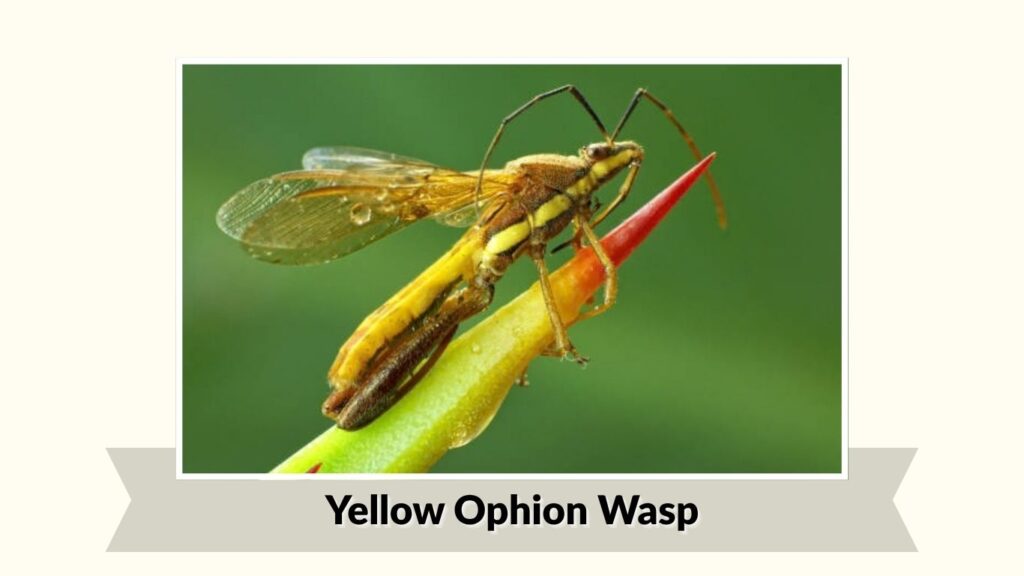
The Yellow Ophion Wasp (Ophion luteus) is a slender, orange-yellow ichneumon wasp widely distributed across Europe. It belongs to the family Ichneumonidae and is particularly recognized for its nocturnal activity and attraction to artificial lights. Unlike many daytime parasitoid wasps, this species searches for suitable moth caterpillars after dark. Its larvae develop inside the bodies of their hosts, helping regulate moth populations naturally.
Identification
- Scientific Name: Ophion luteus
- Family: Ichneumonidae
- Body Size: Approximately 15–20 mm
- Body Color: Pale orange to yellowish-brown
- Head Color: Yellow-orange
- Wing Appearance: Transparent with visible veins
- Antennae: Long, slender, and orange-brown
- Body Shape: Narrow with an elongated abdomen
- Distinctive Feature: Uniform orange-yellow appearance and strong attraction to lights at night
Habitat and Distribution
Yellow Ophion Wasps occur throughout much of Europe, including Britain and Ireland.
They inhabit grasslands, woodlands, gardens, agricultural fields, and other environments supporting nocturnal moth populations.
Adults are particularly active during late summer and early autumn, especially in August and September.
They are frequently attracted to porch lights, illuminated windows, and moth traps because of their nocturnal behavior.
Behavior and Diet
Yellow Ophion Wasps are solitary internal parasitoids that attack caterpillars belonging primarily to the moth family Noctuidae.
Confirmed hosts include the heart-and-dart moth (Agrotis exclamationis) and the turnip moth (Agrotis segetum).
Females search for suitable caterpillars and deposit eggs inside their bodies using specialized ovipositors.
The developing parasitoid larvae obtain nourishment from their hosts, eventually causing their death.
Adult Yellow Ophion Wasps do not construct communal nests. However, they can defend themselves with a sting if handled carelessly.
Lifespan and Life Cycle
The Yellow Ophion Wasp undergoes complete metamorphosis through egg, larval, pupal, and adult stages. Females usually deposit eggs into relatively mature moth caterpillars during late summer.
The developing parasitoid larvae remain inside their hosts, feeding gradually while the caterpillars continue their development.
Eventually, the parasitoid larvae emerge and produce protective cocoons, often in soil or nearby sheltered locations.
Adults generally emerge during the following warmer season, although developmental timing varies according to host biology and environmental conditions.
20. Toothed Tiger Ichneumon Wasp (Amblyteles armatorius)
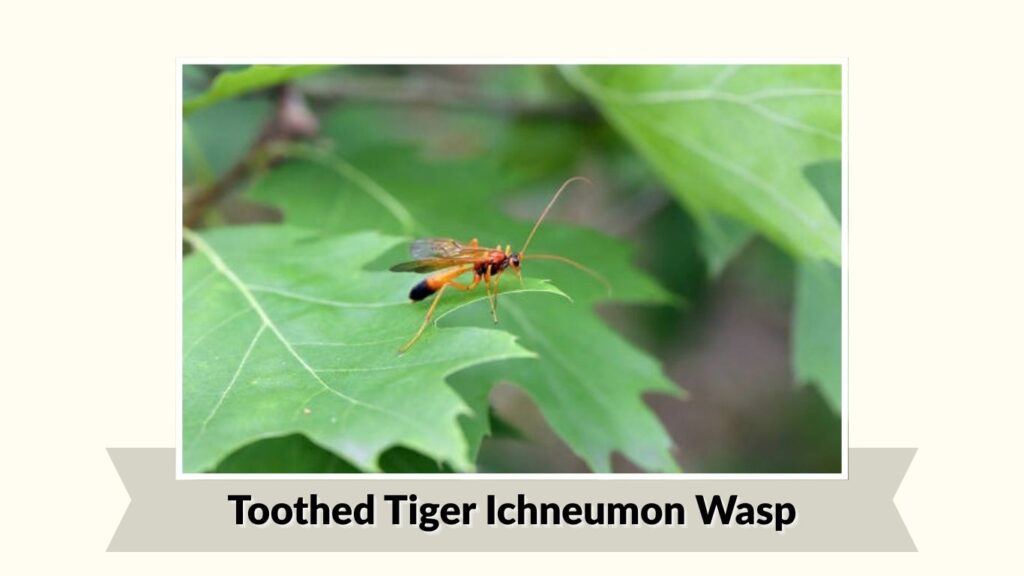
The Toothed Tiger Ichneumon Wasp (Amblyteles armatorius) is a striking parasitic insect recognized by its bold yellow and black markings. It belongs to the family Ichneumonidae and resembles a social wasp, although it does not form defensive colonies. This species is commonly found in European grasslands, hedgerows, and woodland clearings. Its larvae parasitize moth caterpillars, while adults frequently visit flowers for nectar and other sugary resources.
Identification
- Scientific Name: Amblyteles armatorius
- Family: Ichneumonidae
- Body Size: Approximately 12–16 mm
- Head Color: Predominantly black
- Thorax Color: Black with yellow markings
- Abdominal Color: Yellow with bold black bands
- Leg Color: Yellow with dark markings
- Wing Appearance: Transparent with dark veins
- Distinctive Feature: Prominent thoracic spine and distinctive black-and-yellow abdominal pattern
Habitat and Distribution
Toothed Tiger Ichneumon Wasps occur across much of Europe, including Britain and Ireland.
They inhabit grasslands, woodland edges, hedgerows, roadside verges, meadows, and other open areas containing flowering plants.
Adults are particularly associated with flowering members of the carrot family, including hogweed and wild parsnip.
In Britain, these insects are commonly observed from May through July, with further adult activity during autumn.
Behavior and Diet
Toothed Tiger Ichneumon Wasps are solitary parasitoids that primarily attack moth caterpillars.
An important recorded host is the large yellow underwing moth (Noctua pronuba). Females search for suitable caterpillars and deposit eggs inside them.
The developing wasp larvae feed internally and ultimately kill their hosts, completing development in association with the host’s pupal stage.
Adult wasps frequently visit flowers to obtain energy-rich food, particularly nectar and honeydew.
Their bright black-and-yellow coloration resembles that of stinging social wasps, although they are not aggressive colony defenders.
Lifespan and Life Cycle
The Toothed Tiger Ichneumon Wasp undergoes complete metamorphosis through four stages: egg, larva, pupa, and adult. Females locate suitable moth caterpillars and insert eggs into their bodies. The parasitoid larvae develop internally while obtaining nutrients from the hosts.
The developing wasps eventually complete their growth and emerge from the host pupae as adults. Females can survive for extended periods under suitable conditions, with some remaining active late into autumn.
The timing of reproduction and adult emergence depends on seasonal conditions and host availability.
21. Four-Spotted Cave Ichneumon Wasp (Diphyus quadripunctorius)
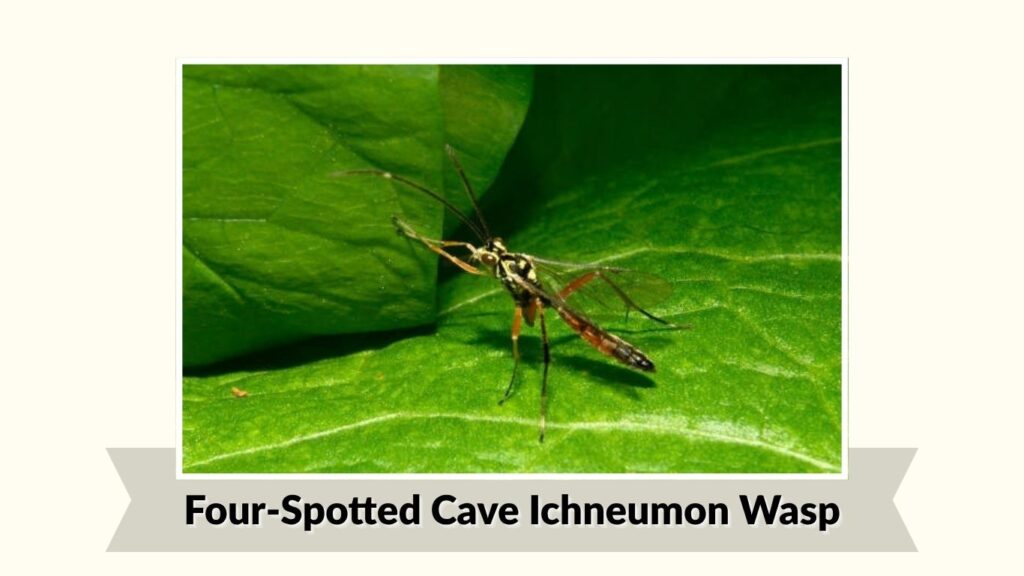
The Four-Spotted Cave Ichneumon Wasp (Diphyus quadripunctorius) is an unusual parasitic wasp belonging to the family Ichneumonidae. It is best known for the behavior of adult females, which spend winter inside caves, mines, and other sheltered underground environments. This species has distinctive dark coloration with pale abdominal markings and orange legs. Its parasitic lifestyle helps regulate populations of moths in European woodland and grassland habitats.
Identification
- Scientific Name: Diphyus quadripunctorius
- Family: Ichneumonidae
- Body Size: Usually around 13–17 mm
- Body Color: Predominantly black with pale markings
- Abdominal Markings: Often four pale spots in females
- Leg Color: Orange or reddish-orange in females
- Wing Appearance: Transparent to slightly smoky
- Antennae: Long and dark, with a white band in females
- Distinctive Feature: Four pale abdominal spots and the habit of overwintering inside caves
Habitat and Distribution
Four-Spotted Cave Ichneumon Wasps occur throughout parts of Europe, including Britain, Central Europe, and regions of southern Europe.
During warmer months, they inhabit woodland edges, meadows, grasslands, gardens, and other environments containing suitable moth hosts. In autumn, adult females seek protected locations where they can survive colder conditions.
These overwintering sites commonly include natural caves, abandoned mines, tunnels, and occasionally cellars or similar sheltered structures.
Behavior and Diet
Four-Spotted Cave Ichneumon Wasps are solitary parasitoids that attack moth caterpillars, particularly members of the families Noctuidae and Geometridae.
Females deposit eggs into suitable caterpillar hosts, allowing their larvae to develop internally. Adult wasps may feed on nectar and other carbohydrate-rich resources.
One of their most remarkable behaviors is seasonal overwintering. Rather than dying before winter, adult females enter sheltered underground environments.
They remain relatively inactive during colder months and become active again when spring temperatures rise.
Lifespan and Life Cycle
The Four-Spotted Cave Ichneumon Wasp generally completes one generation annually.
After surviving winter, adult females emerge from their shelters during spring and search for suitable moth caterpillars.
They deposit eggs inside their hosts, and the developing parasitoid larvae gradually consume host tissues.
The wasps complete development through the host’s pupal stage before emerging as adults during summer.
After mating, males generally die, while females seek suitable underground shelters for overwintering. This seasonal cycle allows the species to survive colder European climates.
22. Short-Tailed Ichneumon Wasp (Ophion spp.)
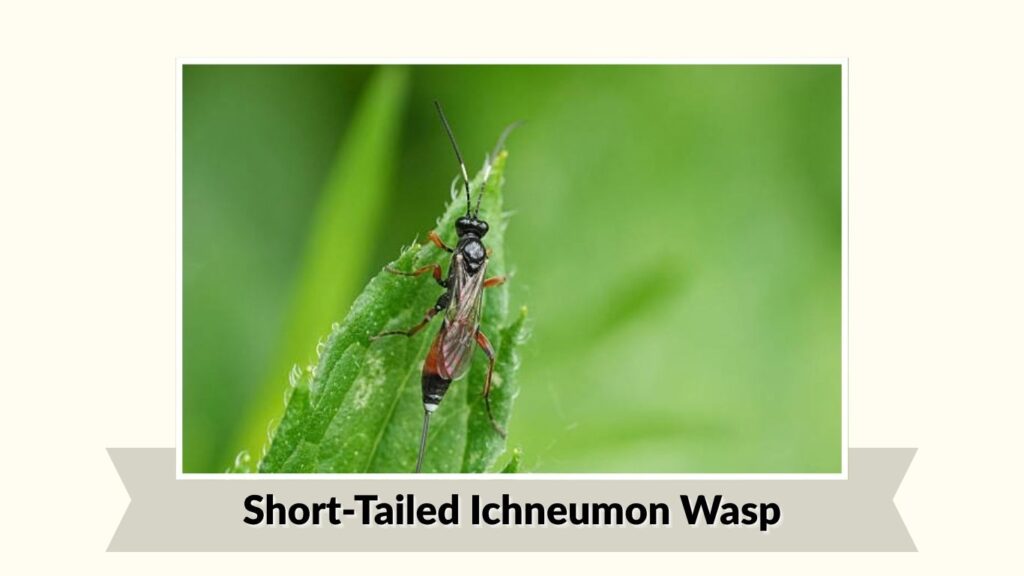
The Short-Tailed Ichneumon Wasp is a slender parasitoid belonging to the family Ichneumonidae and subfamily Ophioninae. This common name is used for several related species, particularly members of the genus Ophion. These wasps are recognized by their orange-brown bodies, long antennae, and relatively short ovipositors. Many are nocturnal and frequently appear around outdoor lights. Their larvae develop inside moth caterpillars, helping naturally regulate insect populations.
Identification
- Scientific Name: Ophion spp.
- Family: Ichneumonidae
- Subfamily: Ophioninae
- Body Size: Commonly 10–20 mm
- Body Color: Pale orange, yellowish-brown, or reddish-brown
- Wing Appearance: Transparent with visible veins
- Antennae: Long, slender, and segmented
- Ovipositor: Short and usually not prominently visible
- Distinctive Feature: Slender orange-brown body and short ovipositor
Habitat and Distribution
Short-Tailed Ichneumon Wasps occur in many regions of the world, including North America, Europe, and Asia.
They inhabit grasslands, deciduous forests, woodland edges, gardens, and agricultural landscapes containing suitable caterpillar hosts.
Many species are nocturnal and can frequently be observed near porch lights, illuminated buildings, and outdoor lamps.
Their abundance depends on seasonal conditions, vegetation, and the availability of suitable moth larvae.
Behavior and Diet
Short-Tailed Ichneumon Wasps are solitary parasitoids that primarily attack moth caterpillars. Females locate suitable hosts and use their short ovipositors to deposit eggs inside the caterpillars.
The developing larvae feed internally, gradually obtaining nutrients from their hosts. Adults may consume nectar or other sugar-rich food sources.
Unlike social wasps, these insects do not form defensive colonies. However, some ophionine wasps can sting when handled or trapped against the skin.
Lifespan and Life Cycle
Short-Tailed Ichneumon Wasps undergo complete metamorphosis through egg, larval, pupal, and adult stages.
Females deposit eggs into suitable caterpillar hosts, allowing their offspring to develop internally.
The caterpillars may continue feeding for some time before the parasitoids complete their development. Eventually, the wasp larvae kill their hosts and pupate, often inside protective cocoons.
Adults emerge when development is complete, with seasonal timing varying among species.
23. Sirex Parasite Wasp (Rhyssa lineolata)
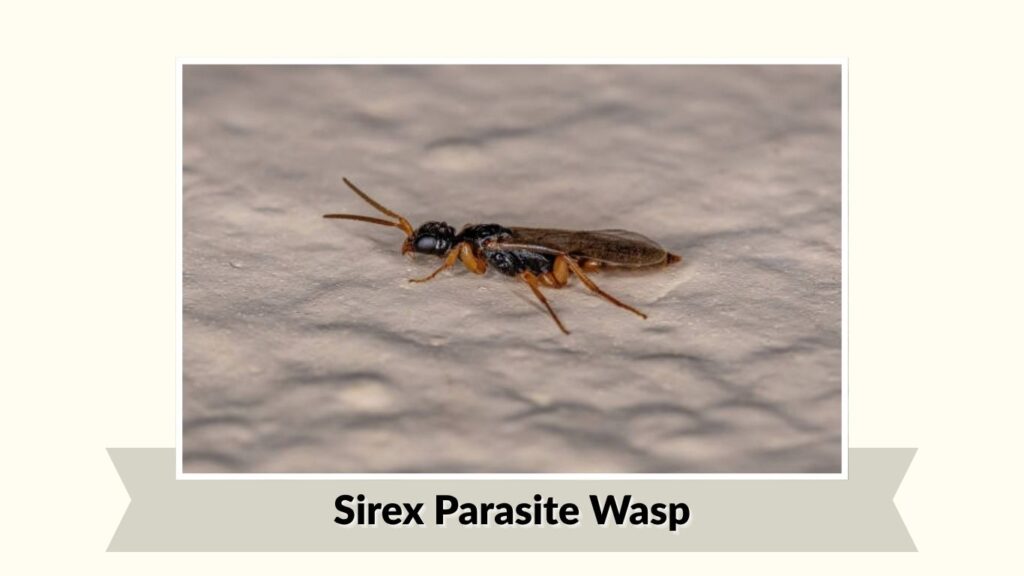
The Sirex Parasite Wasp (Rhyssa lineolata) is a large ichneumon wasp that attacks wood-boring horntail larvae. It belongs to the family Ichneumonidae and is distinguished by its black body, contrasting white markings, and long ovipositor. This North American species is particularly important because it parasitizes the larvae of Sirex noctilio, a woodwasp that can damage pine trees. Its natural parasitoid activity contributes to the regulation of wood-boring insects.
Identification
- Scientific Name: Rhyssa lineolata
- Family: Ichneumonidae
- Body Appearance: Large, slender, and elongated
- Body Color: Predominantly black with white markings
- Abdominal Markings: Distinctive white spots
- Antennae: Dark with a prominent white band
- Wing Appearance: Mostly transparent
- Ovipositor: Long and needle-like in females
- Distinctive Feature: White-banded antennae combined with a long ovipositor and spotted abdomen
Habitat and Distribution
Sirex Parasite Wasps are native to North America, occurring throughout eastern regions and parts of western Canada and the United States. They primarily inhabit coniferous forests where suitable woodwasp hosts develop.
The species has also become established in New Zealand, where it was first recorded during the 1950s. Adult wasps are commonly associated with pine trees containing wood-boring horntail larvae.
Behavior and Diet
Sirex Parasite Wasps are solitary external parasitoids that attack larvae of woodwasps belonging to the genera Sirex and Urocerus.
Females investigate tree trunks to locate larvae concealed inside the wood. Using their long ovipositors, they penetrate the wood and deposit eggs on suitable hosts. The developing parasitoid larvae feed on the horntail larvae and eventually kill them.
This behavior can help reduce populations of wood-boring insects, although natural parasitoids do not always prevent serious infestations.
Lifespan and Life Cycle
The Sirex Parasite Wasp undergoes complete metamorphosis involving egg, larval, pupal, and adult stages.
Females deposit eggs on horntail larvae hidden inside coniferous trees. After hatching, the parasitoid larvae consume their hosts while remaining inside the wood. Many individuals spend an extended period within the host tunnels before pupating. Adults eventually emerge through openings in the wood, generally during warmer seasons.
Development often follows an annual cycle, although timing varies according to environmental conditions.
24. Costa Rican Spider Parasitoid Wasp (Hymenoepimecis argyraphaga)
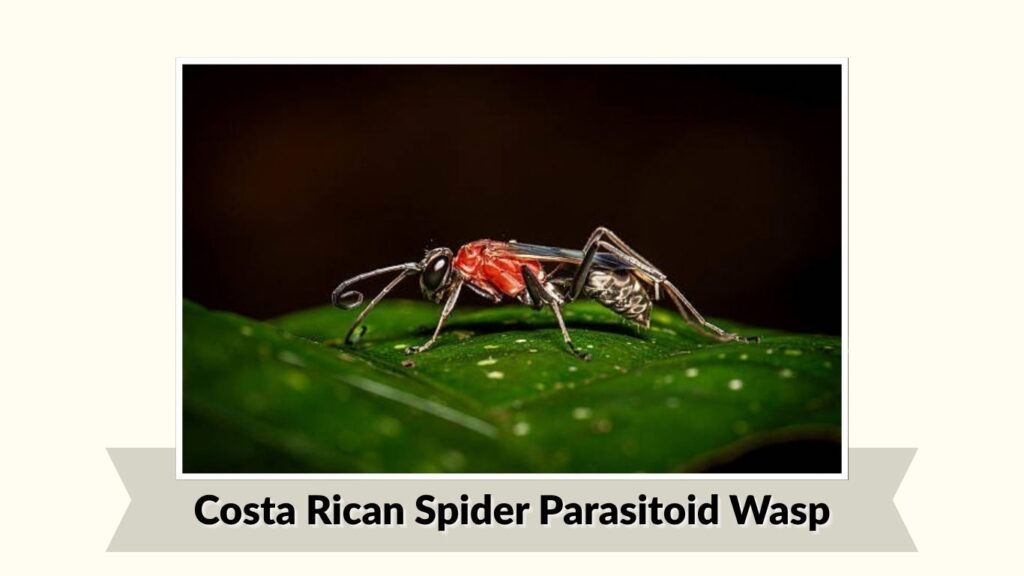
The Costa Rican Spider Parasitoid Wasp (Hymenoepimecis argyraphaga) is one of the most fascinating members of the family Ichneumonidae. Unlike most ichneumon wasps that attack insects, this species parasitizes spiders. It is particularly famous for manipulating the web-building behavior of its host. Before completing development, the wasp larva causes the spider to construct a specialized web that supports the parasitoid’s protective cocoon.
Identification
- Scientific Name: Hymenoepimecis argyraphaga
- Family: Ichneumonidae
- Subfamily: Pimplinae
- Body Appearance: Slender with long legs
- Head Color: Predominantly black
- Wing Appearance: Variable, ranging from dark to translucent
- Antennae: Long, thin, and segmented
- Primary Host: Silver orb-weaver spider (Leucauge argyra)
- Distinctive Feature: Larvae manipulate spider web-building behavior
Habitat and Distribution
Costa Rican Spider Parasitoid Wasps are native to Costa Rica, where they inhabit tropical environments containing suitable spider hosts.
They are particularly associated with dense vegetation, forest understories, and areas where orb-weaving spiders construct their webs.
The species requires habitats containing sufficient spider populations, shelter, and suitable mating locations.
Adults may be encountered around leaves and vegetation, while developing larvae remain attached to host spiders.
Behavior and Diet
Costa Rican Spider Parasitoid Wasps are solitary external parasitoids. Females locate suitable orb-weaving spiders and temporarily immobilize them using venom. They then attach an egg to the spider’s abdomen.
After hatching, the parasitoid larva feeds on the spider’s body fluids while remaining attached externally.
As the larva approaches maturity, it induces the spider to construct a modified web with reinforced supporting threads. The larva then kills the spider and builds its cocoon on the specially constructed web.
Lifespan and Life Cycle
The Costa Rican Spider Parasitoid Wasp undergoes complete metamorphosis through four developmental stages.
Females attach eggs to suitable spiders, and the larvae generally hatch after two to three days. The developing larvae remain attached to their hosts while feeding.
During the final developmental stage, they manipulate the spiders into constructing protective cocoon webs. After killing their hosts, the larvae pupate inside silk cocoons.
Adults can emerge approximately one week later. Adult wasps generally survive for around two to three weeks under suitable conditions.
25. Diamondback Moth Parasitoid Wasp (Diadegma insulare)
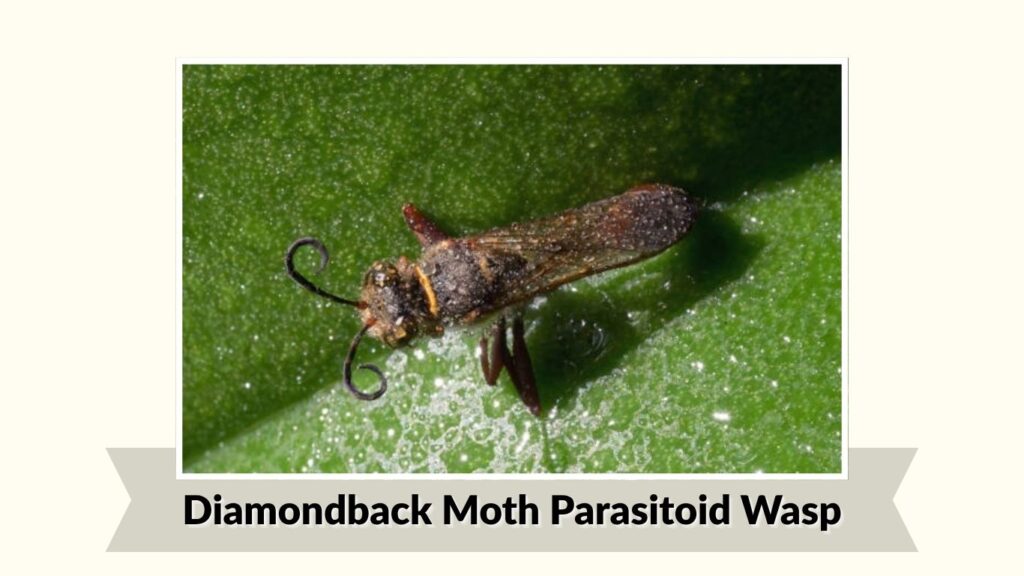
The Diamondback Moth Parasitoid Wasp (Diadegma insulare) is a small, beneficial insect belonging to the family Ichneumonidae. It is particularly important in agricultural environments because it attacks diamondback moth larvae, which damage cabbage, broccoli, cauliflower, and other cruciferous vegetables. This species is considered an important natural enemy of diamondback moths in North America and contributes to biological pest management.
Identification
- Scientific Name: Diadegma insulare
- Family: Ichneumonidae
- Body Size: Approximately 6 mm
- Body Color: Dark with reddish-brown abdominal markings
- Leg Color: Reddish-brown
- Wing Appearance: Transparent with dark veins
- Antennae: Long, slender, and dark
- Host: Diamondback moth (Plutella xylostella)
- Distinctive Feature: Small parasitoid commonly associated with diamondback moth larvae in brassica crops
Habitat and Distribution
Diamondback Moth Parasitoid Wasps occur throughout parts of North America, particularly in regions where diamondback moth populations are established.
They commonly inhabit cabbage fields, broccoli farms, vegetable gardens, and agricultural landscapes containing cruciferous plants.
Adults frequently search plant foliage for suitable caterpillar hosts.
The species is particularly valuable in farming systems where pesticide use is limited and beneficial insects can survive.
Behavior and Diet
Diamondback Moth Parasitoid Wasps are solitary internal parasitoids that specialize in attacking diamondback moth caterpillars.
Females locate suitable larvae by exploring plant foliage with their antennae. Once a host is found, the female inserts a single egg into the caterpillar. The developing wasp larva feeds internally while the host continues growing.
Eventually, the parasitoid kills the host and completes its development within the moth’s cocoon. This behavior naturally reduces diamondback moth populations and can limit crop damage.
Lifespan and Life Cycle
The Diamondback Moth Parasitoid Wasp undergoes complete metamorphosis through egg, larval, pupal, and adult stages. Females deposit eggs inside young or moderately developed diamondback moth larvae.
The developing parasitoids remain inside their hosts until the moth caterpillars spin protective cocoons.
The parasitoid larvae then emerge from the host bodies and construct their own cocoons inside the moth cocoons.
Under favorable conditions, development may take approximately 10–15 days before cocoon formation. The species can complete several generations annually, depending on climate and host availability.
26. Ophionid Wasp (Enicospilus ramidulus)
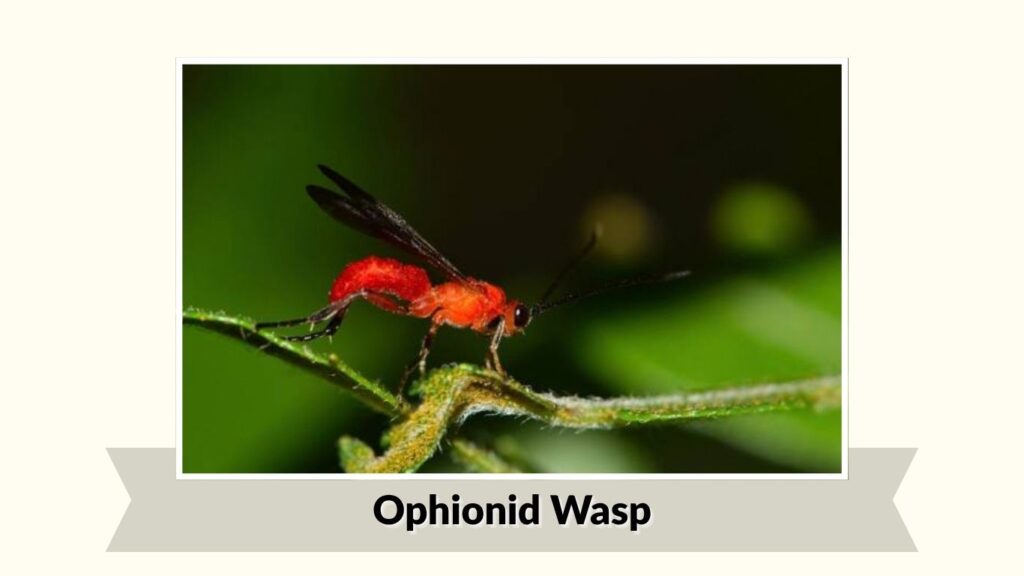
The Ophionid Wasp is a broad name applied to members of the ichneumonid subfamily Ophioninae. One distinctive example is Enicospilus ramidulus, a slender parasitoid known for its orange body and black abdominal tip. This species belongs to the family Ichneumonidae and is particularly active at night. Like other ophionine wasps, it develops inside moth caterpillars, contributing to the natural regulation of insect populations.
Identification
- Scientific Name: Enicospilus ramidulus
- Family: Ichneumonidae
- Subfamily: Ophioninae
- Body Size: Approximately 15–22 mm
- Body Color: Predominantly orange or reddish-orange
- Abdominal Tip: Dark brown to black
- Wing Appearance: Transparent with distinctive pigmented structures
- Antennae: Very long and slender
- Distinctive Feature: Orange body with a contrasting black abdominal tip
Habitat and Distribution
Enicospilus ramidulus is distributed across parts of Europe and Asia, including Britain, Germany, Sweden, Italy, and Japan.
It commonly inhabits woodlands, grasslands, gardens, and landscapes supporting suitable moth caterpillars. Adults are primarily nocturnal and frequently attracted to artificial lights.
The species can be encountered around forest edges, gardens, and illuminated buildings during warmer months.
Behavior and Diet
Enicospilus ramidulus is a solitary internal parasitoid that attacks moth caterpillars, particularly members of the family Noctuidae.
Females locate suitable hosts and use their short ovipositors to deposit eggs inside the caterpillars.
The developing larvae feed internally, obtaining nutrients while the host continues growing.
As development progresses, the parasitoid eventually kills the caterpillar.
Adult wasps are primarily active at night, although males may occasionally fly during daylight.
Their parasitic lifestyle helps regulate moth populations within natural ecosystems.
Lifespan and Life Cycle
Enicospilus ramidulus undergoes complete metamorphosis involving egg, larval, pupal, and adult stages.
Females deposit eggs inside suitable moth caterpillars, allowing the parasitoid offspring to develop internally.
The host caterpillars may continue feeding and growing while supporting the developing wasp larvae.
Eventually, the parasitoids complete feeding, kill their hosts, and pupate. Adults emerge after development and begin searching for mates and suitable hosts. The exact developmental period varies with temperature, host species, and seasonal conditions.
27. Alfalfa Weevil Parasite Wasp (Bathyplectes curculionis)
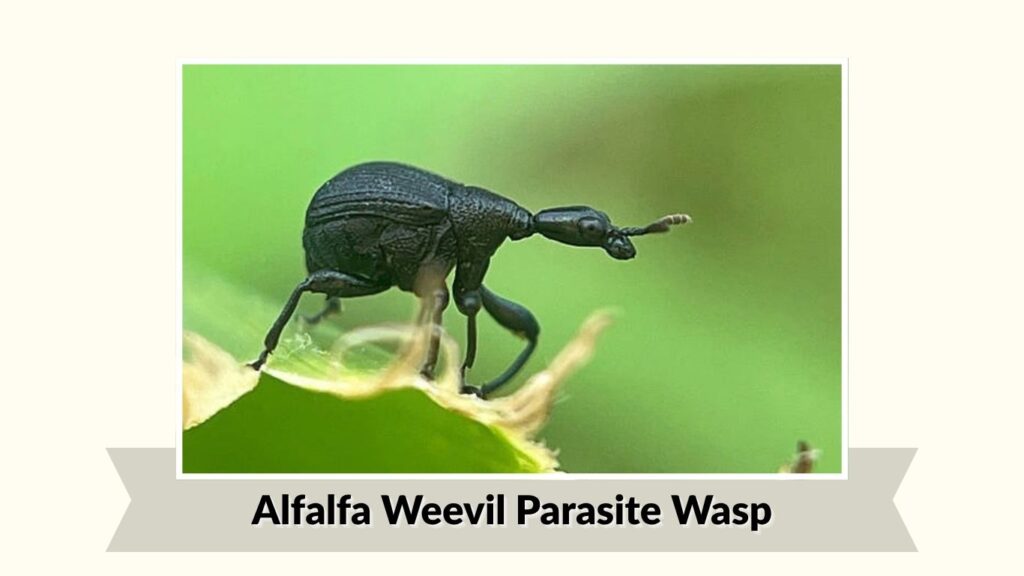
The Alfalfa Weevil Parasite Wasp (Bathyplectes curculionis) is a tiny beneficial parasitoid belonging to the family Ichneumonidae. It is widely recognized for its role in controlling alfalfa weevils, which are important pests of livestock forage crops. This species attacks developing weevil larvae and prevents them from reaching adulthood. Its biological control potential has made it an important insect in North American agricultural ecosystems.
Identification
- Scientific Name: Bathyplectes curculionis
- Family: Ichneumonidae
- Body Size: Approximately 3 mm
- Body Color: Predominantly black
- Leg Color: Dark with yellowish markings
- Wing Appearance: Transparent with fine veins
- Antennae: Long and segmented
- Cocoon Appearance: Small, oval, and brown with a broad white band
- Distinctive Feature: Small parasitoid producing football-shaped cocoons with flattened white bands
Habitat and Distribution
Alfalfa Weevil Parasite Wasps occur throughout many agricultural regions of North America, where they were introduced to control alfalfa weevils.
They are also associated with agricultural habitats in Europe.
Their primary habitats include alfalfa fields, forage crop plantations, and surrounding vegetation where host larvae develop.
The wasps are most active during periods when alfalfa weevil larvae are abundant, particularly during spring and early summer.
Behavior and Diet
Alfalfa Weevil Parasite Wasps are solitary internal parasitoids that specialize in attacking alfalfa weevil larvae.
Females search alfalfa plants for suitable hosts and deposit a single egg inside each selected larva.
After hatching, the parasitoid develops internally while the weevil larva continues feeding.
Eventually, the wasp larva kills its host and spins its own protective cocoon.
Adult wasps may consume nectar or other carbohydrate-rich substances.
Their parasitic activity can contribute significantly to natural alfalfa weevil suppression.
Lifespan and Life Cycle
The Alfalfa Weevil Parasite Wasp undergoes complete metamorphosis involving egg, larval, pupal, and adult stages.
Females deposit eggs inside developing alfalfa weevil larvae during spring.
The parasitoid larvae feed internally, eventually emerging from their hosts to spin small, brown cocoons.
Under favorable conditions, some individuals develop into adults during the same growing season.
Later generations may enter dormancy within their cocoons and overwinter before completing development the following spring.
The species commonly completes one full generation and part of another annually, depending on seasonal conditions.
FAQs
1. What are ichneumon wasps?
Ichneumon wasps are parasitoid insects belonging to the family Ichneumonidae. They are known for their slender bodies, long antennae, and specialized egg-laying organs. Most species develop inside or on other arthropods, including caterpillars, beetle larvae, woodwasps, and spiders.
2. Are ichneumon wasps dangerous to humans?
Most ichneumon wasps are harmless to humans and do not behave aggressively. However, some species, particularly members of the subfamily Ophioninae, can deliver a defensive sting when handled. They generally avoid human contact and do not establish aggressive colonies.
3. What do ichneumon wasps eat?
Ichneumon wasp larvae feed on host arthropods, including caterpillars, beetle larvae, and other insects. Some species also parasitize spiders. Adult wasps may consume nectar, honeydew, or other sugar-rich substances. Feeding habits vary considerably among species.
4. How long do ichneumon wasps live?
Adult ichneumon wasps generally live from several days to several weeks, although some species survive considerably longer. Their complete life cycles depend on host availability, temperature, and seasonal conditions. Some complete several generations annually, while wood-boring parasitoids may require a year or more to finish development.
5. Are ichneumon wasps beneficial for gardens and farms?
Yes. Many ichneumon wasps are beneficial because they naturally suppress populations of crop pests. Species such as Diadegma insulare attack diamondback moth larvae, while Bathyplectes curculionis parasitizes alfalfa weevils. Conserving these insects can support integrated pest management and reduce reliance on chemical insecticides.
