
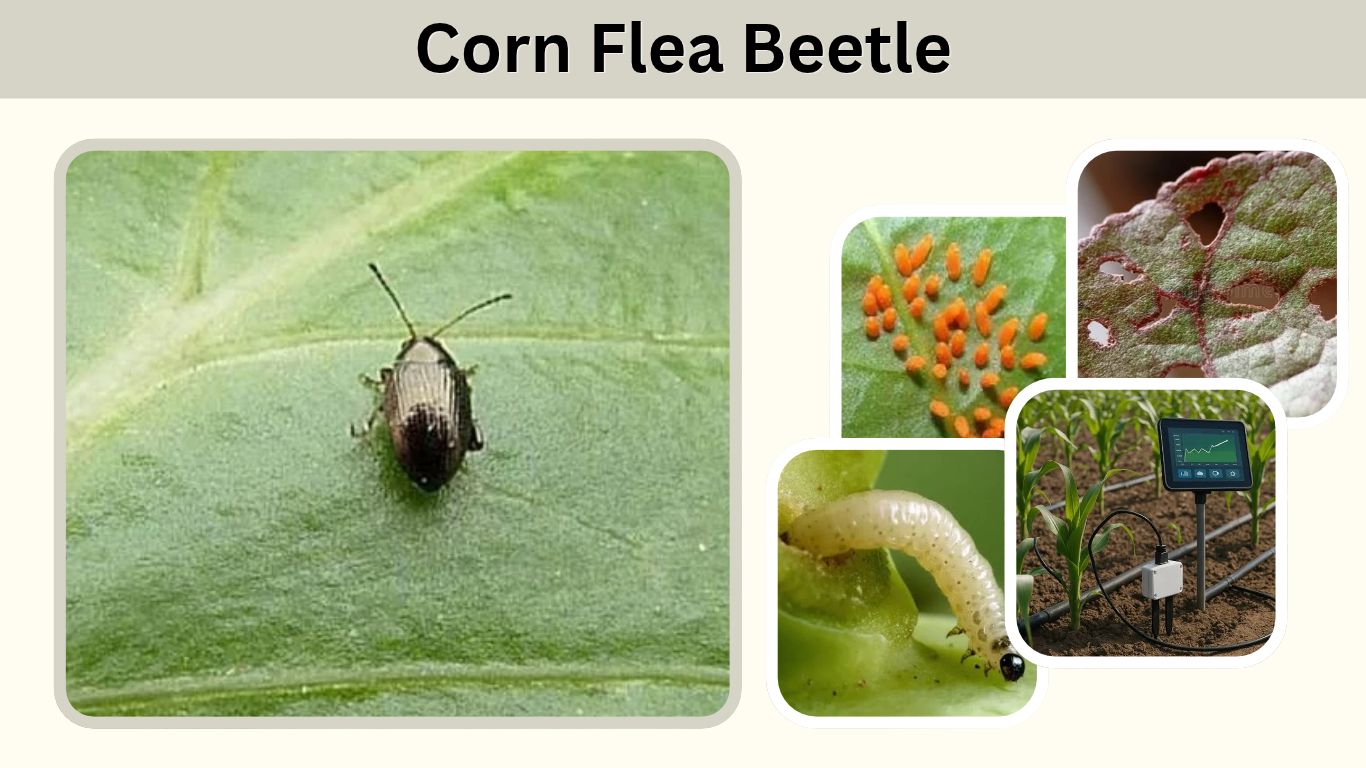
The corn flea beetle (Chaetocnema pulicaria) is a tiny, dark-colored insect that commonly attacks young corn plants across North America. Despite its small size, this beetle can cause noticeable leaf damage and spread Stewart’s wilt, a serious bacterial disease affecting corn crops. These insects are particularly active during spring, especially after mild winters when more adults survive. Although corn flea beetles are generally harmless to humans, they can threaten agricultural production. Understanding their identification, habitat, life cycle, feeding damage, and effective control methods helps farmers and gardeners protect healthy corn plants.
What Is a Corn Flea Beetle?
The corn flea beetle is a small, jumping insect belonging to the leaf beetle family Chrysomelidae. Its scientific name is Chaetocnema pulicaria. Unlike actual fleas, these insects feed on plants rather than animal blood. They are best known for damaging corn seedlings and transmitting the bacterium responsible for Stewart’s wilt disease.
Corn Flea Beetle Scientific Classification
The corn flea beetle belongs to the order Coleoptera and family Chrysomelidae. Adults typically measure approximately 1.6–3 millimeters long. They have dark, shiny bodies with powerful hind legs that allow them to jump quickly.
Their small size and distinctive movement make them relatively easy to recognize on young corn leaves.
Where Are Corn Flea Beetles Found?
Corn flea beetles are widespread across much of North America, particularly east of the Rocky Mountains.
They commonly inhabit cornfields, grassy areas, agricultural margins, and places containing suitable host plants. During winter, adult beetles shelter beneath leaf litter, crop residues, and other protective vegetation.
Corn Flea Beetle Identification: What Does It Look Like?
Corn flea beetles are tiny insects with oval, glossy bodies that may appear black, dark bronze, or bluish-green. They are difficult to observe without close inspection because of their size. However, their powerful jumping ability, dark coloration, and characteristic feeding marks help distinguish them from other agricultural insects.
Physical Characteristics of Corn Flea Beetles
- Body size: Approximately 1.6–3 millimeters long
- Body color: Shiny black, bronze, or dark bluish-green
- Body shape: Small, oval, and slightly elongated
- Antennae: Thin and segmented
- Hind legs: Enlarged for jumping
- Wings: Hardened wing covers protecting functional flight wings
Why Are They Called Flea Beetles?
Corn flea beetles receive their common name from their ability to jump suddenly when disturbed.
Their enlarged hind legs allow them to escape predators and move between nearby plants. Although their movements resemble those of fleas, they are true beetles and are unrelated to the blood-feeding fleas found on animals.
Corn Flea Beetle Life Cycle
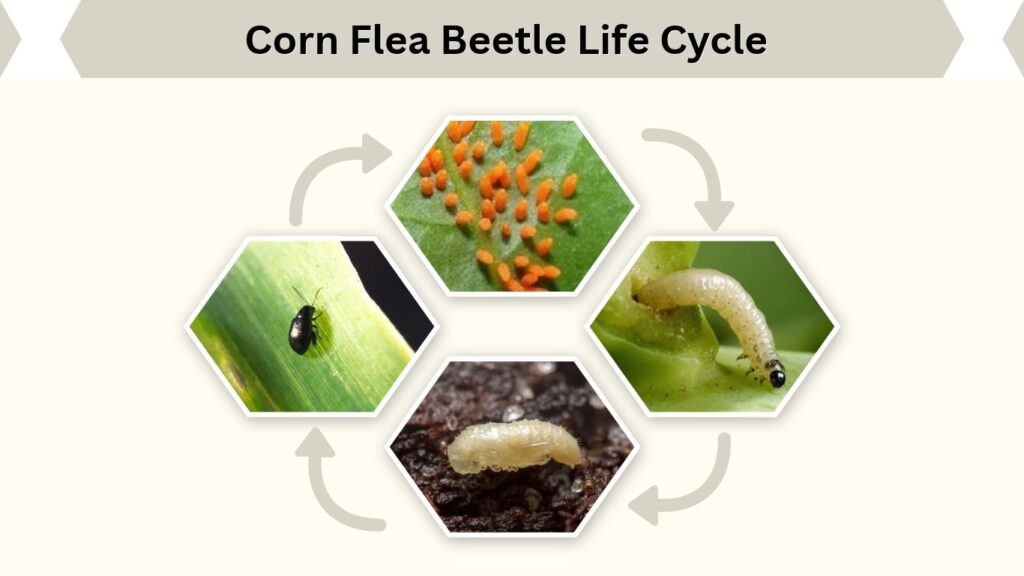
Corn flea beetles undergo complete metamorphosis, developing through four distinct stages. Their life cycle begins with eggs laid near suitable host plants and continues underground before adults emerge. Seasonal temperatures influence their reproduction, development, and survival. Mild winters generally increase the number of beetles available to attack emerging corn seedlings.
Four Stages of the Corn Flea Beetle Life Cycle
- Egg: Females lay tiny eggs in the soil near host plants during spring and summer.
- Larva: Newly hatched larvae feed on underground roots and plant tissues.
- Pupa: Mature larvae pupate in the soil and develop into adults.
- Adult: Beetles emerge, feed on foliage, reproduce, and eventually produce another generation.
How Do Corn Flea Beetles Survive Winter?
Corn flea beetles overwinter as adults in protected habitats near agricultural fields.
When temperatures rise during spring, they become active and begin feeding on grasses and emerging corn plants. Two or more generations may develop during the growing season, depending on regional climatic conditions.
Corn Flea Beetle Damage: Signs and Symptoms
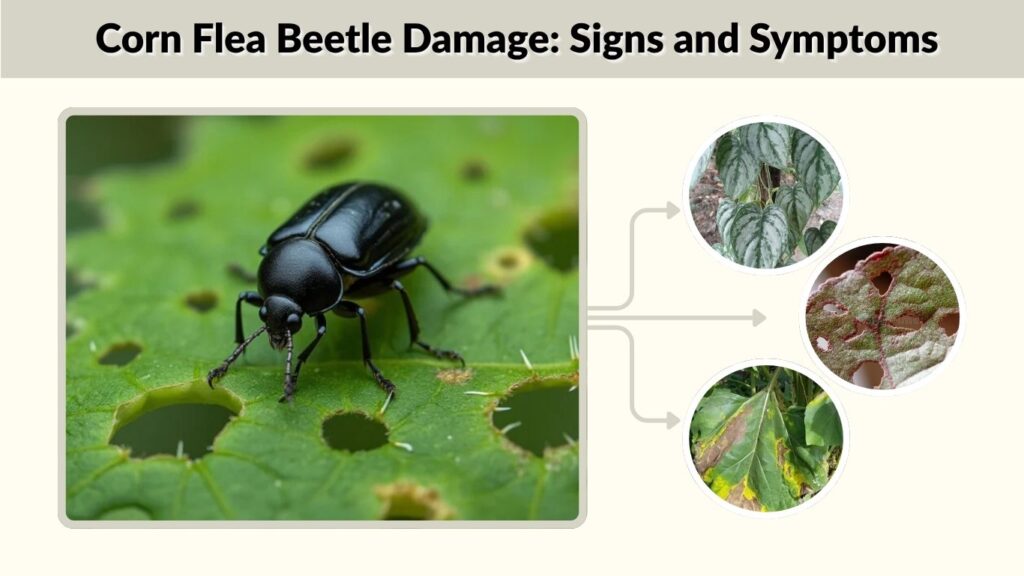
Corn flea beetle damage primarily occurs when adult insects scrape the surface of young corn leaves. Their feeding removes the outer leaf tissue, leaving pale streaks that may resemble scratches. Healthy plants often recover from moderate feeding, but heavy infestations can weaken seedlings, especially during unfavorable growing conditions.
Common Signs of Corn Flea Beetle Damage
- Long, narrow, whitish feeding streaks
- Silver or gray markings along leaf veins
- Small holes or damaged leaf surfaces
- Yellowing or drying leaf tissue
- Reduced growth in heavily affected seedlings
- Shriveling leaves during severe infestations
Why Are Young Corn Plants More Vulnerable?
Corn seedlings are particularly vulnerable during the two- to four-leaf stage.
When cool temperatures slow plant growth, beetles may continue feeding faster than plants can replace damaged tissue. Healthy, rapidly growing corn often tolerates moderate injury without significant yield loss.
However, young plants may also become infected with Stewart’s wilt through beetle feeding.
Corn Flea Beetles and Stewart’s Wilt Disease
One of the most important concerns associated with corn flea beetles is their ability to spread Stewart’s wilt. This bacterial disease can cause significant losses in susceptible sweet corn and certain seed corn varieties. The disease is often more damaging than direct beetle feeding, making early monitoring particularly important.
How Do Corn Flea Beetles Spread Stewart’s Wilt?
Corn flea beetles transmit the bacterium Pantoea stewartii subsp. stewartii.
Beetles acquire the pathogen while feeding on infected corn plants. The bacteria can survive inside their digestive systems during winter and spread to healthy plants when infected beetles feed again.
Symptoms of Stewart’s Wilt in Corn
Infected corn plants may develop pale green or yellow streaks with irregular margins along the leaves.
Young plants can become stunted, wilt, or die from severe infections. Older plants may develop leaf blight, reducing their ability to photosynthesize.
Planting resistant sweet corn varieties provides important protection against this disease.
How to Get Rid of Corn Flea Beetles Naturally
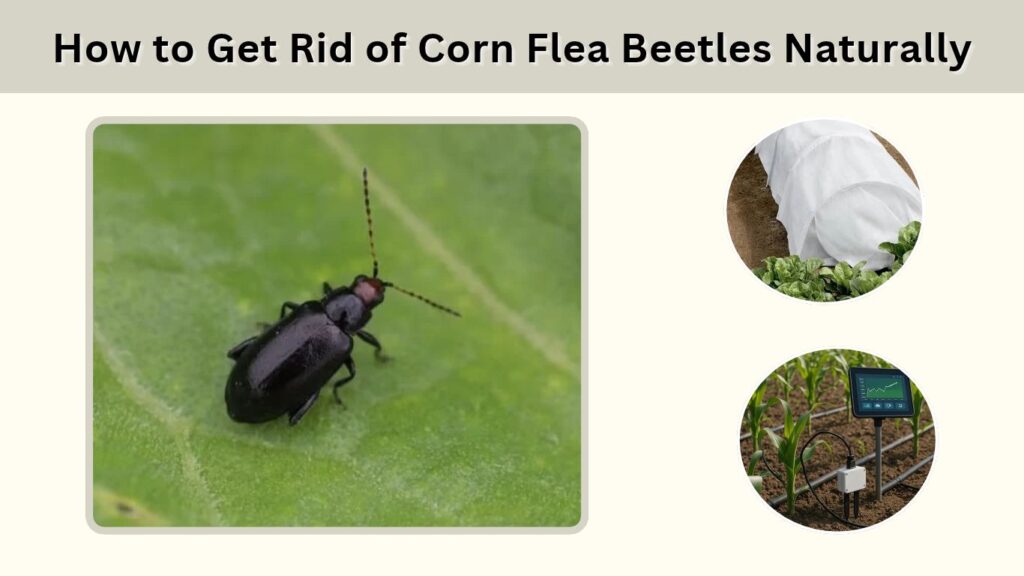
Natural corn flea beetle control focuses on prevention, monitoring, and protecting vulnerable seedlings. Small populations rarely require treatment because corn plants can tolerate some feeding. However, when beetles become abundant, early intervention can help prevent significant damage and reduce disease exposure in susceptible varieties.
Natural and Organic Control Methods
- Install row covers: Protect small sweet corn plantings before beetles arrive.
- Manage grassy weeds: Reduce alternative host plants and nearby beetle habitat.
- Use resistant varieties: Select sweet corn varieties resistant to Stewart’s wilt.
- Inspect seedlings: Monitor young leaves regularly for beetles and feeding damage.
- Support healthy growth: Maintain adequate soil moisture and suitable growing conditions.
How to Monitor Corn Flea Beetle Infestations
Inspect corn seedlings shortly after emergence, especially along field edges.
Examine leaves for feeding streaks and count beetles on affected plants. Because beetles jump rapidly when disturbed, approach plants carefully.
Compare observed populations and damage with local agricultural extension treatment recommendations before choosing a control method.
Corn Flea Beetle Chemical Control and Treatment
Chemical treatment may be necessary when severe feeding threatens young corn plants or when susceptible varieties face a substantial Stewart’s wilt risk. However, unnecessary insecticide applications increase costs and may harm beneficial insects. Effective management requires evaluating crop growth stage, beetle populations, and the potential for economic damage.
When Should Corn Flea Beetles Be Treated?
Kansas State University indicates that treatment of two-leaf corn is seldom necessary unless populations exceed approximately four to five beetles per plant.
However, thresholds differ for highly susceptible sweet corn and seed corn because disease transmission is a separate concern.
Local extension guidance should determine treatment decisions.
Which Insecticides Control Corn Flea Beetles?
Some registered systemic seed treatments and foliar insecticides can suppress corn flea beetle populations.
Seed treatments may protect vulnerable plants during early growth, while foliar products can be considered when scouting identifies damaging populations.
Choose products specifically registered for corn and corn flea beetles. Follow label instructions, application restrictions, and local agricultural recommendations. Insecticides cannot cure plants already infected with Stewart’s wilt.
Are Corn Flea Beetles Harmful to Humans?
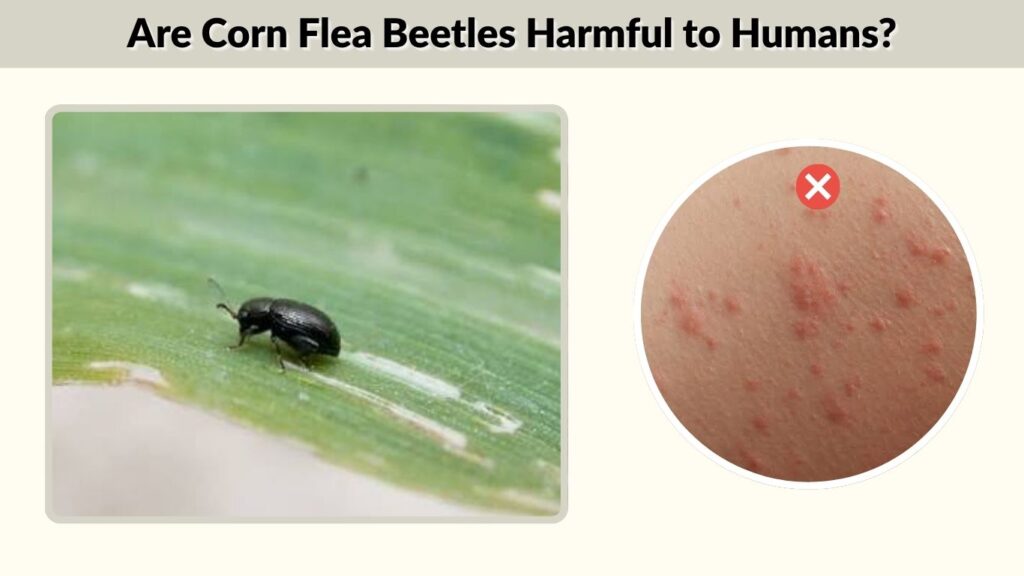
Corn flea beetles primarily affect agricultural plants rather than people. Despite their name, they are not the same as parasitic fleas that bite humans and pets. Their mouthparts are adapted for plant feeding, and they are not considered a significant human health concern.
Do Corn Flea Beetles Bite Humans?
Corn flea beetles are not known to bite humans under normal circumstances.
They do not sting, feed on human blood, or establish themselves as parasites. When disturbed, these insects usually jump or fly away rather than defend themselves aggressively.
Can Corn Flea Beetles Live Inside Houses?
Corn flea beetles may occasionally enter houses accidentally through windows, doors, or nearby vegetation.
However, they do not normally reproduce indoors because their development depends on suitable outdoor plants and soil. An occasional beetle can be safely collected and released outside.
FAQs
1. Are Corn Flea Beetles Dangerous to Humans?
No. Corn flea beetles are not considered dangerous to humans. They do not feed on blood or transmit human diseases. Their main economic importance comes from corn leaf damage and their ability to spread Stewart’s wilt.
2. What Do Corn Flea Beetles Eat?
Adult corn flea beetles feed primarily on corn leaves and other grasses. Their larvae consume underground roots and plant tissues. Adult feeding creates pale streaks on corn leaves, particularly during early plant growth.
3. How Do You Get Rid of Corn Flea Beetles?
Manage corn flea beetles by monitoring young plants, removing nearby grassy weeds where practical, and protecting small plantings with row covers. Insecticides may be appropriate when locally recommended treatment thresholds are reached.
4. Can Corn Flea Beetles Fly?
Yes. Corn flea beetles possess functional wings and can fly between plants. However, they are especially recognized for their ability to jump quickly using enlarged hind legs when they are disturbed.
5. What Is the Best Way to Prevent Corn Flea Beetle Damage?
The best prevention combines healthy corn growth, early monitoring, and appropriate pest management. Selecting Stewart’s wilt-resistant sweet corn varieties is particularly important because disease transmission can cause greater losses than direct leaf feeding.
