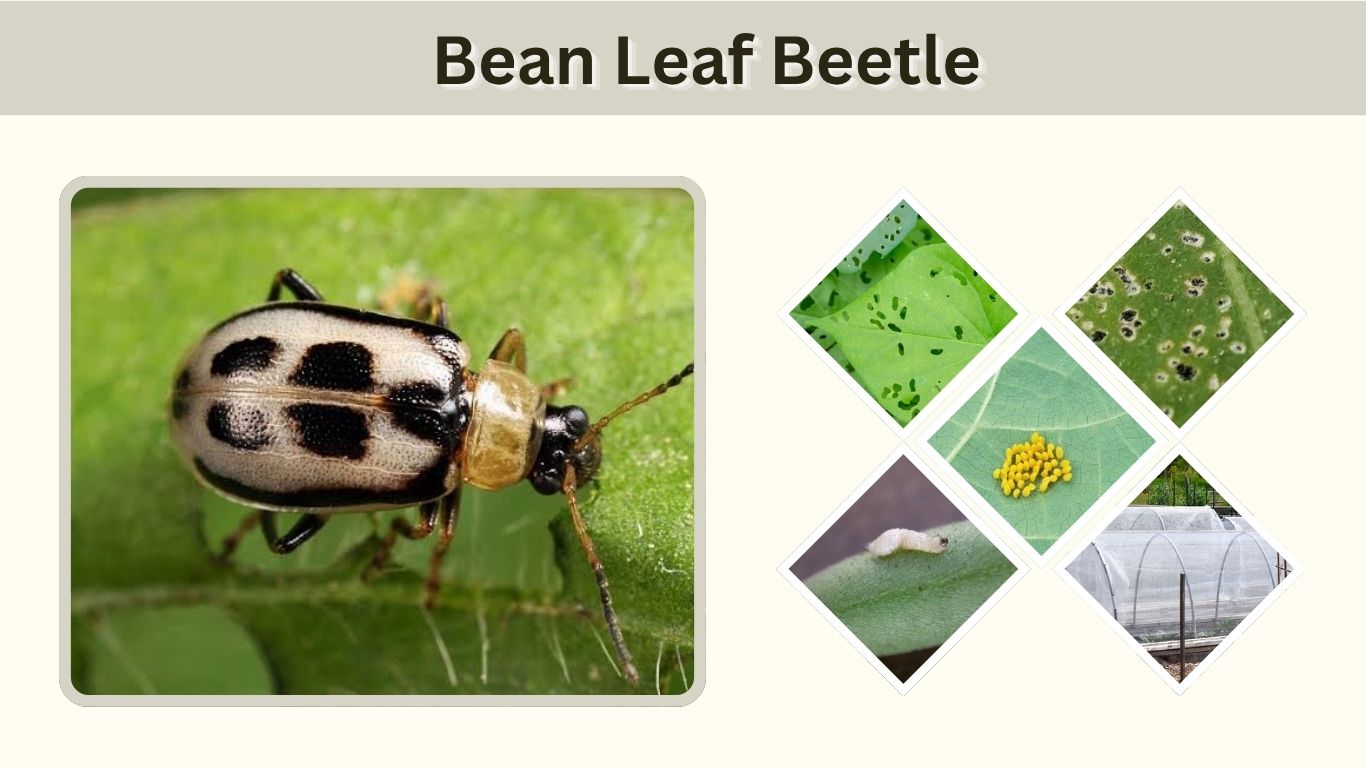
The bean leaf beetle (Cerotoma trifurcata) is a common agricultural pest that feeds on soybean, green bean, and other legume plants. These small beetles are recognized by their yellow, orange, or reddish bodies, often decorated with black spots. Although they are harmless to humans, they can cause significant damage to crops by chewing leaves, feeding on pods, and spreading plant diseases. Understanding bean leaf beetle identification, life cycle, feeding behavior, and control methods is essential for protecting healthy plants and preventing serious infestations in gardens and agricultural fields.
What Is a Bean Leaf Beetle?
The bean leaf beetle is a small, plant-feeding insect belonging to the family Chrysomelidae. Its scientific name is Cerotoma trifurcata. This beetle is native to North America and is particularly associated with soybean production. Adults consume leaves and developing pods, while larvae feed underground on plant roots.
Bean Leaf Beetle Scientific Classification
- Common name: Bean leaf beetle
- Scientific name: Cerotoma trifurcata
- Order: Coleoptera
- Family: Chrysomelidae
- Size: Approximately 6 millimeters
- Color: Yellow, orange, tan, reddish-brown, or greenish-yellow
- Primary hosts: Soybeans, green beans, and other legumes
Where Are Bean Leaf Beetles Found?
Bean leaf beetles occur across much of the United States and parts of Canada. They are particularly common in agricultural regions where soybeans and other legumes are cultivated.
They inhabit soybean fields, vegetable gardens, grasslands, and areas containing suitable host plants.
Bean Leaf Beetle Identification: What Does It Look Like?
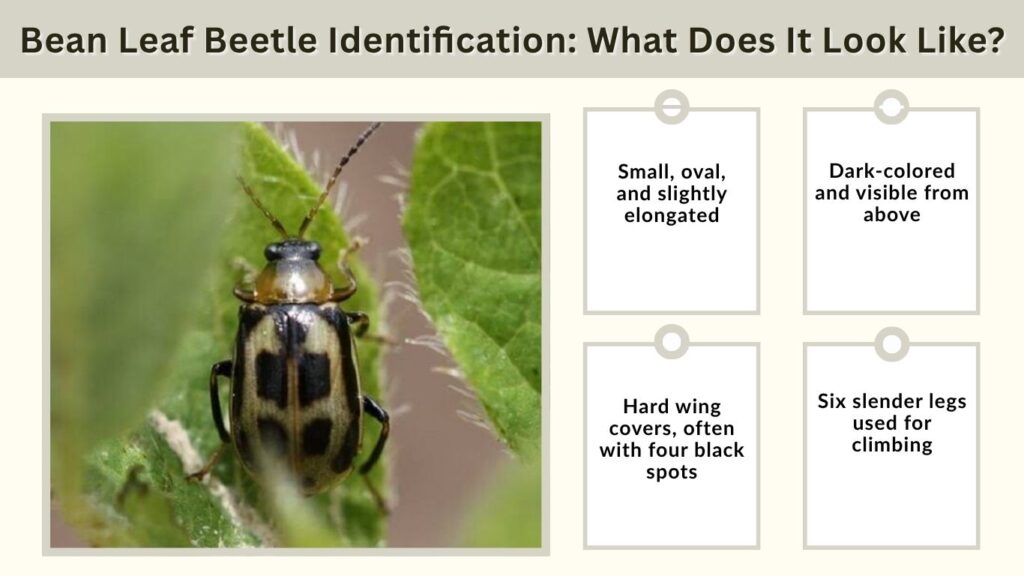
Bean leaf beetles are small, oval-shaped insects with distinctive body markings. Their coloration varies considerably, making identification slightly challenging. However, a characteristic black triangular marking behind the thorax helps distinguish them from similar species. Adults are most noticeable during warm weather when they actively feed on bean foliage.
Physical Characteristics
- Body shape: Small, oval, and slightly elongated
- Head: Dark-colored and visible from above
- Wings: Hard wing covers, often with four black spots
- Antennae: Long, thin, and segmented
- Legs: Six slender legs used for climbing
- Distinctive marking: Black triangle near the base of the wing covers
Bean Leaf Beetle vs. Mexican Bean Beetle
Bean leaf beetles are sometimes confused with Mexican bean beetles because both feed on legumes.
However, Mexican bean beetles have rounded, ladybug-like bodies with 16 black spots. Bean leaf beetles are more elongated and typically have fewer spots.
Mexican bean beetle larvae are yellow and spiny, while bean leaf beetle larvae are whitish and live underground.
Bean Leaf Beetle Habitat and Life Cycle
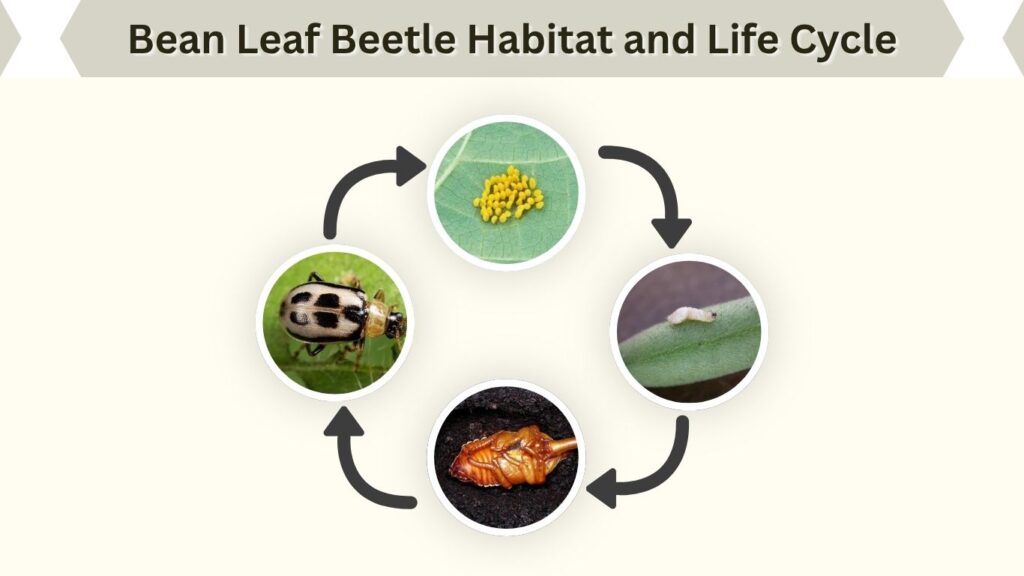
Bean leaf beetles spend different parts of their lives above and below the ground. Adults remain near host plants, while eggs, larvae, and pupae develop in the soil. Their seasonal activity depends on temperature, plant availability, and geographic location. Understanding their development helps gardeners and farmers identify vulnerable crop stages.
Bean Leaf Beetle Habitat
Adults are commonly found on soybean plants, bean leaves, and nearby legumes.
During winter, they shelter beneath fallen leaves, plant debris, and other protective ground coverings.
When spring temperatures rise, surviving adults emerge and begin feeding on available plants before moving into newly developing crops.
Four Stages of the Bean Leaf Beetle Life Cycle
- Egg: Females deposit small, orange eggs in the soil near host plants.
- Larva: Whitish larvae hatch and feed on roots and underground plant tissues.
- Pupa: Mature larvae transform into pupae inside earthen chambers.
- Adult: Fully developed beetles emerge, feed on foliage, mate, and reproduce.
How Many Generations Occur Each Year?
Bean leaf beetles typically produce two generations annually in many northern soybean-growing regions.
However, warmer southern areas may support additional generations. Adults from the final generation overwinter and become active again the following spring.
Bean Leaf Beetle Damage: Signs and Symptoms
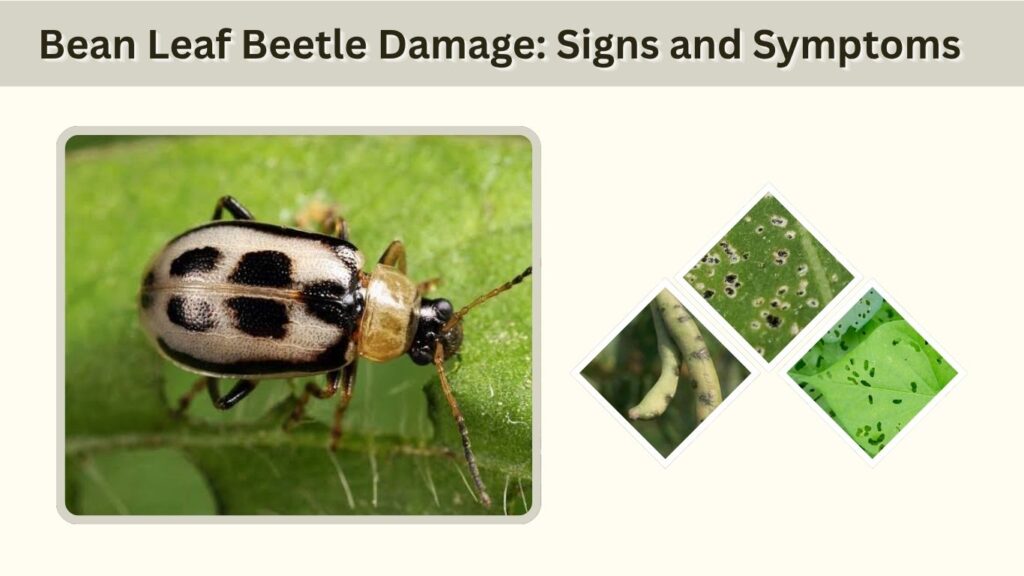
Bean leaf beetle damage occurs mainly when adults feed on leaves, stems, and developing pods. Young seedlings are particularly vulnerable because they have limited foliage. Older soybean plants usually tolerate moderate leaf feeding, but severe infestations may reduce productivity and damage harvested seeds.
Common Signs of Bean Leaf Beetle Damage
- Small, rounded holes between leaf veins
- Irregular feeding marks on leaf surfaces
- Damaged cotyledons and young seedlings
- Scarring or discoloration on developing bean pods
- Reduced plant growth during heavy infestations
- Exposed seeds or damaged pod tissue
Bean Leaf Beetle Damage in Soybeans
Soybeans are among the preferred hosts of bean leaf beetles. Adults frequently feed on emerging seedlings and later attack developing pods.
Significant defoliation can interfere with photosynthesis and reduce crop yields.
Pod feeding may also expose seeds to moisture and pathogens, increasing the risk of seed deterioration.
Can Bean Leaf Beetles Spread Plant Diseases?
Yes. Bean leaf beetles can transmit bean pod mottle virus (BPMV), an important soybean disease.
Infected plants may develop mottled leaves, reduced growth, and discolored seeds.
Because the virus can spread through beetle feeding, managing infestations involves more than preventing visible leaf damage. However, insecticide treatments do not reliably prevent all virus transmission.
How to Get Rid of Bean Leaf Beetles Naturally
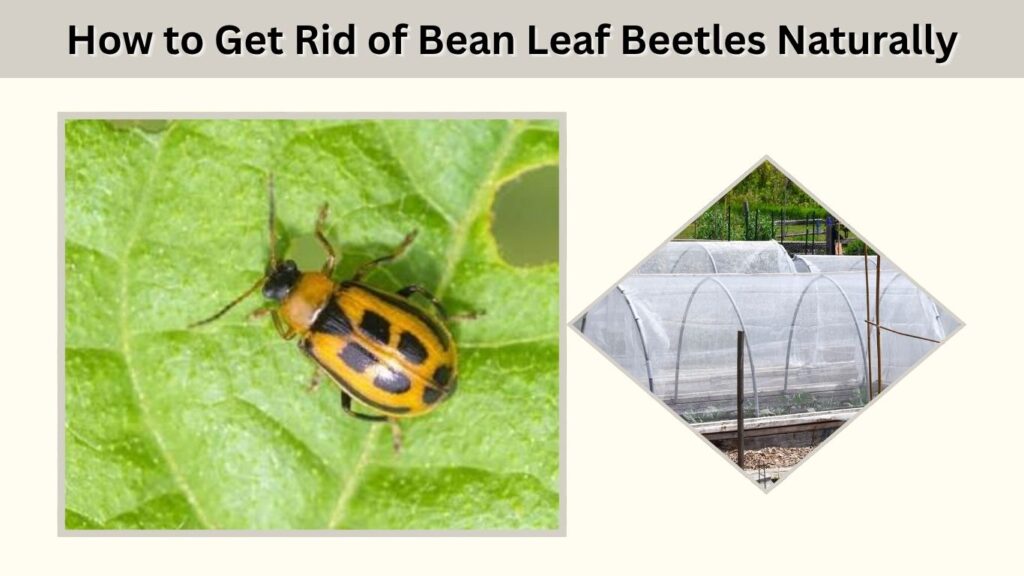
Natural bean leaf beetle control focuses on reducing adult populations and protecting vulnerable plants. Gardeners can often manage small infestations without chemical insecticides. Regular monitoring is especially important because adult beetles can quickly move between host plants and may drop to the ground when disturbed.
Handpicking Bean Leaf Beetles
In small gardens, inspect bean plants regularly, particularly the undersides of leaves.
Place a container of soapy water beneath affected foliage and gently disturb the beetles. Many will fall into the container.
This method is most useful when beetle populations are relatively small.
Organic Prevention Methods
- Install row covers: Protect young plants before beetles arrive.
- Inspect plants: Check leaves, stems, and pods regularly.
- Manage debris: Reduce suitable overwintering shelter near susceptible crops.
- Adjust planting dates: Where practical, avoid peak emergence periods.
- Protect beneficial insects: Avoid unnecessary broad-spectrum insecticide applications.
Can Neem Oil Control Bean Leaf Beetles?
Some neem-based products may discourage feeding or suppress beetle activity, but effectiveness varies.
Neem oil should not be considered a guaranteed solution for established infestations. Use only products labeled for the crop and pest, and follow application directions carefully.
Bean Leaf Beetle Control in Soybeans
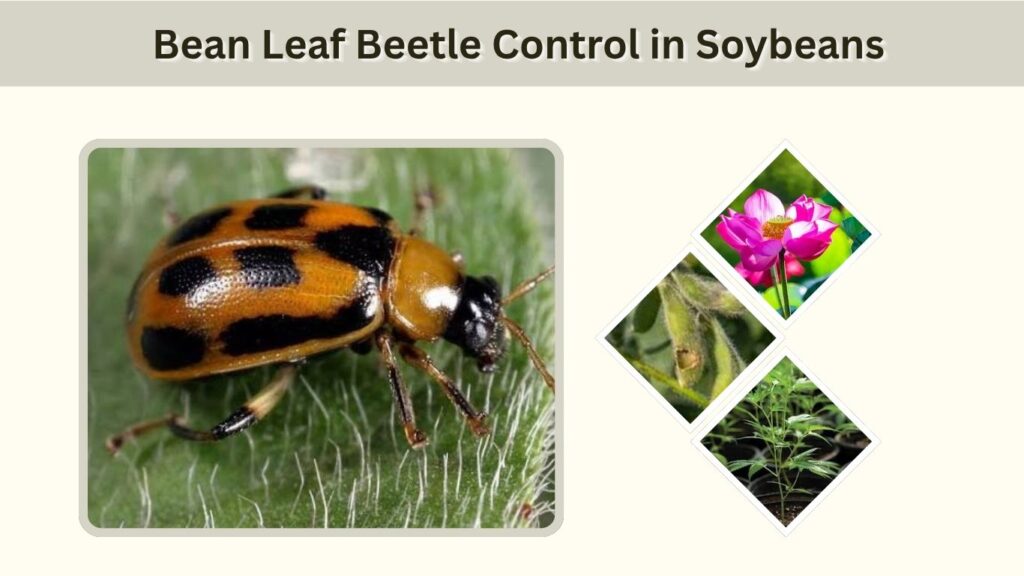
Commercial soybean management requires a different approach from home gardening. Farmers should evaluate beetle populations, crop development, and the percentage of damaged foliage before applying insecticides. Integrated pest management helps prevent unnecessary spraying while protecting crops from economically significant losses.
Bean Leaf Beetle Economic Thresholds
University of Minnesota Extension recommends the following soybean treatment guidelines when beetles remain present:
- Vegetative stages: Approximately 30% defoliation
- Flowering through pod fill: Approximately 20% defoliation
- Pod damage: Approximately 10% of pods injured by feeding insects
Thresholds may vary by region, crop stage, and local extension recommendations.
Bean Leaf Beetle Insecticide Treatment
Foliar insecticides may help control economically damaging populations.
However, product selection depends on the crop, insect pressure, local registration, and growth stage.
Always follow the pesticide label, observe preharvest intervals, and protect pollinators during flowering. Continue scouting after treatment because adult beetles may reinvade fields.
Are Bean Leaf Beetles Harmful to Humans?
Bean leaf beetles are agricultural pests rather than insects that threaten human health. Their chewing mouthparts are adapted for consuming plant tissues. Although their appearance may concern gardeners, they are not considered dangerous during normal encounters.
Do Bean Leaf Beetles Bite or Sting?
Bean leaf beetles do not have stingers and are not known for biting people.
They generally escape or drop from plants when disturbed. Their primary importance comes from crop feeding and their ability to transmit certain plant diseases.
Can Bean Leaf Beetles Live Inside Houses?
Bean leaf beetles may occasionally enter houses accidentally, particularly near agricultural areas.
However, they do not normally establish indoor infestations because they depend on suitable outdoor host plants.
An occasional beetle can be gently collected and released outside.
FAQs
1. Are Bean Leaf Beetles Harmful to Humans?
No. Bean leaf beetles are not considered dangerous to humans. They do not sting and rarely interact with people. Their main impact involves feeding on bean plants and potentially transmitting soybean diseases.
2. What Is the Best Way to Control Bean Leaf Beetles?
The best approach combines regular inspection, early protection with row covers, and handpicking in small gardens. Commercial growers should monitor plant damage and use locally recommended treatment thresholds before applying registered insecticides.
3. What Do Bean Leaf Beetle Larvae Eat?
Bean leaf beetle larvae feed on the roots and underground tissues of soybean and other host plants. They remain beneath the soil during development, while adults primarily feed on leaves and pods.
4. What Are the Natural Predators of Bean Leaf Beetles?
Predatory insects, spiders, and other insect-eating animals may consume bean leaf beetles. However, natural enemies alone may not prevent damaging infestations, especially in large soybean fields.
5. How Do You Prevent Bean Leaf Beetles?
Prevent infestations by inspecting young plants, using secured row covers, and managing overwintering habitat near bean crops. Adjusting planting dates may also help, depending on local growing conditions and beetle activity.