
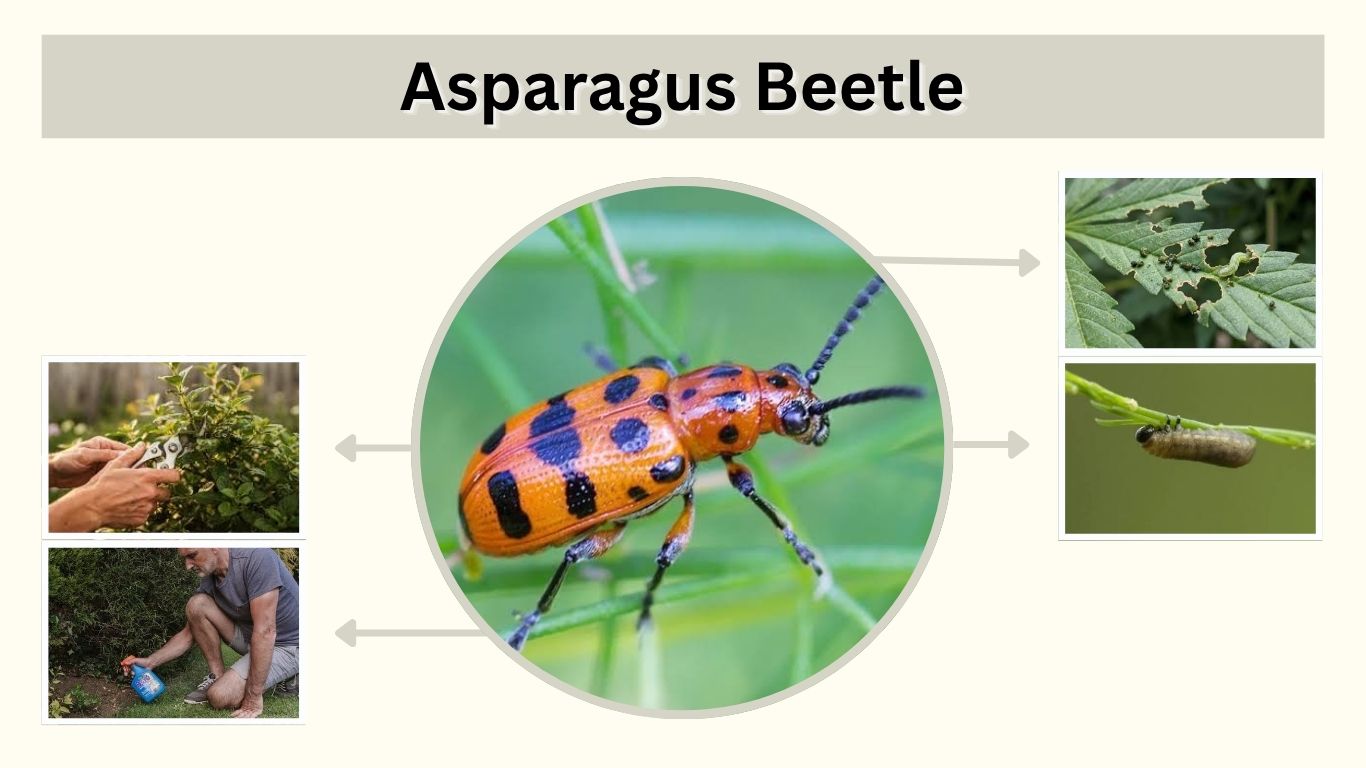
The asparagus beetle is a common garden pest that feeds on asparagus plants, damaging tender spears and delicate foliage. These small, colorful insects appear during spring and summer, often leaving brown scars, distorted shoots, and weakened plants. Two main species affect asparagus: the common asparagus beetle and the spotted asparagus beetle. Although they look different, both can damage growing plants. Fortunately, gardeners can manage most infestations using regular inspection, natural predators, and appropriate treatments. This guide covers asparagus beetle identification, eggs, larvae, life cycle, damage, and effective control methods.
What Is an Asparagus Beetle?
Asparagus beetles are small, plant-feeding insects belonging to the leaf beetle family Chrysomelidae. They primarily attack cultivated asparagus and can occasionally become serious garden pests. Adult beetles feed on emerging spears and foliage, while developing larvae consume different plant parts depending on the species. They are particularly troublesome when populations increase during the growing season.
Asparagus Beetle Scientific Classification
The common asparagus beetle is scientifically known as Crioceris asparagi. It belongs to the order Coleoptera and family Chrysomelidae.
Adult beetles measure approximately 6 millimeters long. Their elongated bodies, distinct markings, and association with asparagus plants make them recognizable during garden inspections.
Where Are Asparagus Beetles Found?
Asparagus beetles occur throughout many temperate regions, including North America and Europe.
They commonly inhabit vegetable gardens, commercial asparagus fields, and areas containing wild asparagus. Adults overwinter in sheltered locations, including plant debris, hollow stems, and nearby vegetation.
Asparagus Beetle Identification: What Do They Look Like?
Asparagus beetles have elongated, oval bodies with hard wing covers and relatively long antennae. Their appearance depends on the species, with different colors and spot patterns. Identifying the correct species is important because common asparagus beetles usually cause greater damage, while spotted asparagus beetles primarily affect asparagus berries during their larval stage.
Common Asparagus Beetle
The common asparagus beetle (Crioceris asparagi) is the species most frequently associated with serious asparagus damage.
Its identifying characteristics include:
- Body color: Metallic blue-black with reddish-orange markings
- Wing covers: Six cream-colored spots
- Body length: Approximately 6 millimeters
- Antennae: Dark and moderately long
- Legs: Six slender legs
- Host plant: Primarily asparagus
Spotted Asparagus Beetle
The spotted asparagus beetle (Crioceris duodecimpunctata) has reddish-orange wing covers decorated with 12 distinct black spots.
Unlike the common asparagus beetle, its larvae feed mainly inside asparagus berries. As a result, it generally causes less damage to plants grown for edible spears.
Asparagus Beetle Eggs, Larvae, and Life Cycle
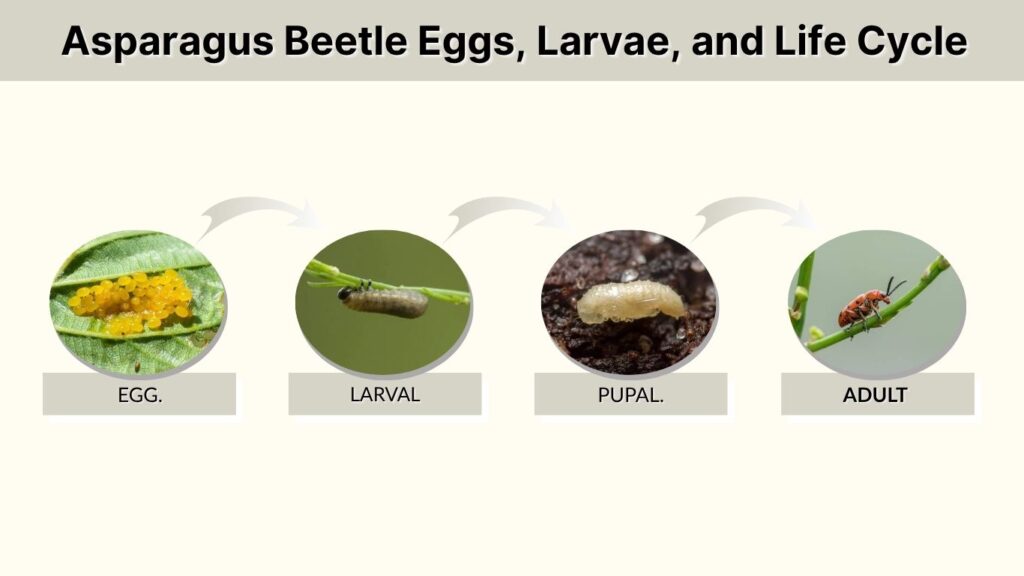
Asparagus beetles undergo complete metamorphosis, developing through egg, larval, pupal, and adult stages. Their life cycle is closely connected to asparagus growth and seasonal temperatures. Overwintering adults emerge during spring, feed on young spears, and reproduce. Several generations may develop during a growing season, allowing populations to increase when conditions are favorable.
What Do Asparagus Beetle Eggs Look Like?
Common asparagus beetle eggs are small, elongated, and dark brown to black. Females attach them to asparagus spears, stems, or foliage, often in rows.
Spotted asparagus beetles usually lay greenish eggs individually on developing asparagus foliage.
Eggs generally hatch within approximately one week under suitable conditions.
Asparagus Beetle Larvae Identification
Common asparagus beetle larvae are soft-bodied, grayish, and slug-like, with dark heads and visible legs.
They feed on asparagus shoots and fern-like foliage before dropping to the soil to pupate.
Spotted asparagus beetle larvae are orange and develop primarily inside asparagus berries.
How Long Is the Asparagus Beetle Life Cycle?
Larvae generally feed for about two weeks before entering the soil to pupate. Adults may emerge roughly one week later.
Depending on climate and species, asparagus beetles commonly produce two or three generations annually, although the number can vary geographically.
Asparagus Beetle Damage: Signs and Symptoms
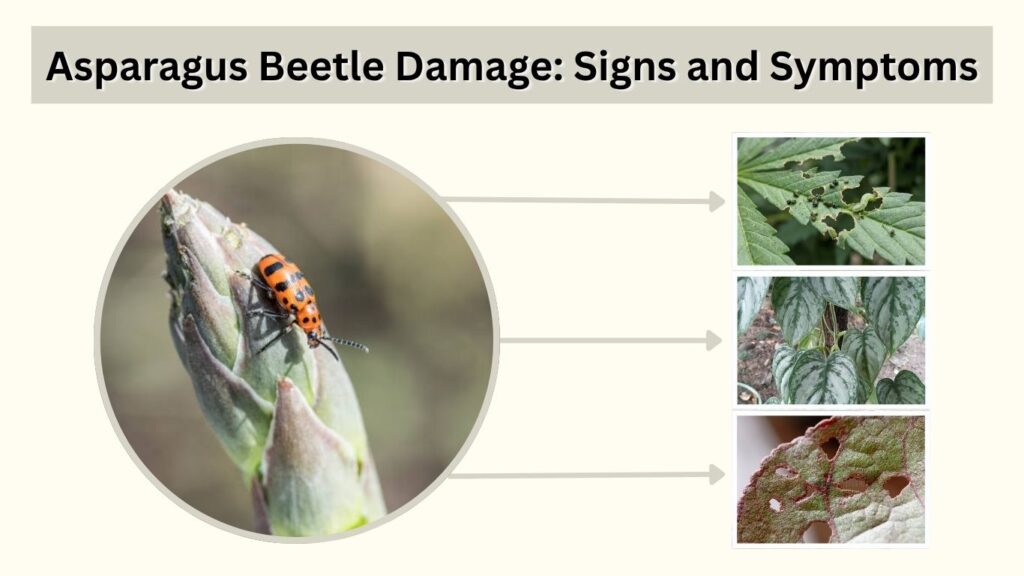
Asparagus beetle damage can affect both young edible spears and mature fern-like foliage. Adult feeding creates scars and distorted shoots, while larvae may consume large amounts of foliage. Severe infestations reduce plant vigor and can affect spear production in subsequent seasons because healthy asparagus foliage is essential for storing energy in underground crowns.
Common Signs of Asparagus Beetle Damage
- Brown scars or irregular marks on young spears
- Curved or hook-shaped asparagus shoots
- Chewed stems and damaged foliage
- Yellowing or browning fern-like leaves
- Small dark eggs attached to spears
- Black insect droppings on growing shoots
Can Asparagus Beetles Kill Plants?
Established asparagus plants usually tolerate minor beetle feeding without permanent damage.
However, severe or repeated defoliation can weaken crowns and reduce future harvests. Newly established asparagus beds are particularly vulnerable because young plants have fewer stored energy reserves.
How to Get Rid of Asparagus Beetles Naturally
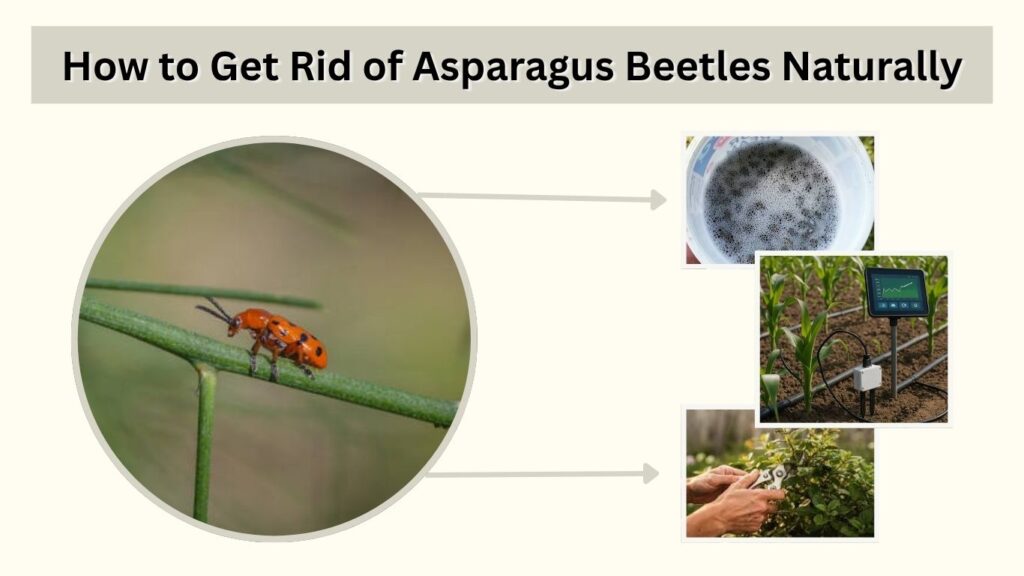
Natural asparagus beetle control works best when infestations are detected early. Gardeners can remove adults, eggs, and larvae before their populations become difficult to manage. Regular inspections, proper harvesting, and protection of beneficial insects often provide effective results without broad-spectrum pesticides. Small vegetable gardens are especially suitable for hands-on control methods.
Natural Asparagus Beetle Control Methods
- Handpick adults: Drop visible beetles into a container of soapy water.
- Remove eggs: Gently rub or scrape eggs from infested spears.
- Remove larvae: Collect larvae from foliage before they mature.
- Harvest regularly: Cut edible spears promptly to reduce feeding and egg-laying opportunities.
- Use row covers: Protect emerging spears where practical.
- Encourage predators: Preserve beneficial insects that naturally attack beetles.
What Are the Natural Predators of Asparagus Beetles?
A tiny parasitic wasp called Tetrastichus asparagi attacks common asparagus beetle eggs.
Lady beetle larvae and other predatory insects also consume eggs and young larvae.
Avoiding unnecessary pesticide applications helps preserve these natural enemies and supports long-term pest control.
Homemade Spray and Insecticide for Asparagus Beetles
Gardeners often search for homemade sprays or organic products to control asparagus beetles. However, not every commonly suggested remedy is effective or suitable for edible crops. Some registered botanical insecticides can suppress beetle populations, especially when larvae are young. Treatment should depend on infestation severity, asparagus growth stage, and harvest timing.
Does Neem Oil Kill Asparagus Beetles?
Neem-based insecticides can help suppress asparagus beetle larvae when applied according to product directions.
Their effectiveness depends on formulation, coverage, insect development, and application timing. Neem products should be specifically labeled for use on asparagus.
Best Spray Options for Asparagus Beetles
Potential treatment options include:
- Neem-based insecticides: Can help suppress young larvae.
- Insecticidal soap: May control exposed larvae through direct contact.
- Pyrethrins: Can provide short-term beetle control.
- Spinosad: Effective in certain registered products, but some formulations have long preharvest intervals.
- Conventional insecticides: May be appropriate for severe infestations when specifically registered for asparagus.
Avoid using concentrated household dish soap as a homemade pesticide because it may damage foliage. Commercial insecticidal soaps have more predictable formulations.
When Should You Spray Asparagus Beetles?
Treatment may be justified when beetle populations exceed established monitoring thresholds.
University of Wisconsin–Madison Extension lists thresholds including 5–10% of plants infested with adults or 2% of spears carrying eggs.
Always follow local recommendations and pesticide labels, particularly the required waiting period before harvesting edible spears.
How to Prevent Asparagus Beetle Infestations
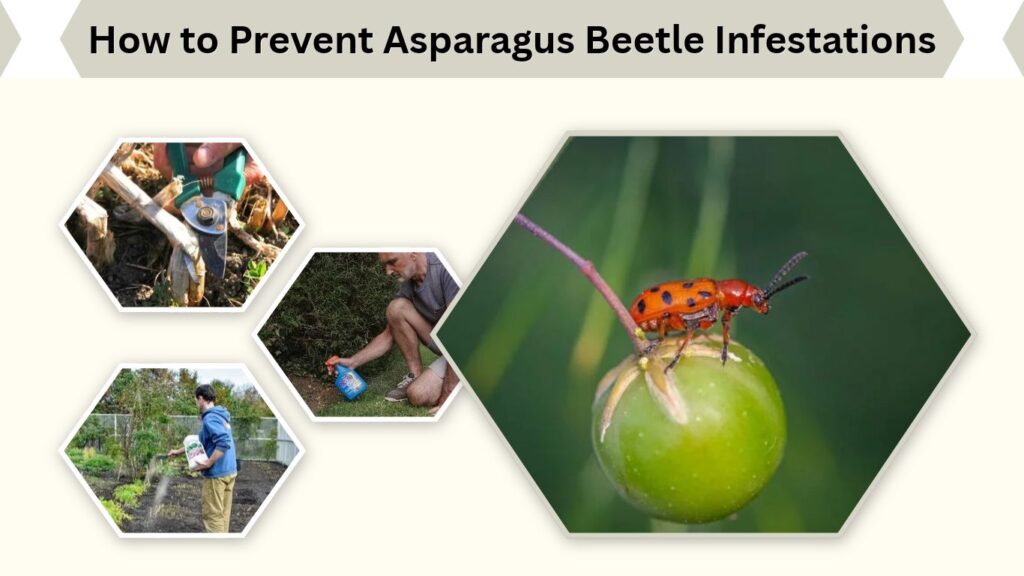
Preventing asparagus beetles requires consistent garden management throughout the growing season. Although adults can fly into healthy asparagus beds, removing overwintering sites and monitoring emerging spears can reduce infestation pressure. Maintaining strong asparagus plants also helps minimize damage and supports reliable harvests in future growing seasons.
Clean Up Asparagus Beds
Remove dead asparagus ferns after they turn completely brown in autumn.
Clearing infested plant debris and reducing unnecessary weeds near the bed can limit sheltered overwintering locations. Avoid removing healthy green ferns prematurely because they help replenish energy reserves.
Protect New Asparagus Growth
Inspect emerging asparagus spears regularly during spring, particularly on warm, sunny afternoons.
Remove visible beetles and eggs promptly. Maintain adequate moisture and soil fertility to encourage healthy growth.
Floating row covers can provide additional protection during early growth when installed before beetles arrive.
FAQs
1. Are Asparagus Beetles Harmful to Humans?
Asparagus beetles are not considered dangerous to humans. They do not sting and are not known for biting people. Their main impact involves feeding on asparagus plants and reducing the quality of harvested spears.
2. Are Asparagus Beetle Eggs Safe to Eat?
Asparagus beetle eggs are not normally considered a poisoning hazard, but they are undesirable on food. Wash harvested spears thoroughly and remove visible eggs, damaged areas, and insect debris before cooking.
3. Does Diatomaceous Earth Kill Asparagus Beetles?
Diatomaceous earth may affect beetles through direct contact, but results can be inconsistent outdoors. Moisture reduces its effectiveness, and dust can affect beneficial insects. Use only products labeled for appropriate garden applications.
4. Does Neem Oil Work Against Asparagus Beetles?
Yes, registered neem-based products can help suppress asparagus beetle populations, especially young larvae. Effectiveness varies, so combine treatments with monitoring, hand removal, and other preventive gardening practices.
5. How Do You Prevent Asparagus Beetles Naturally?
Prevent asparagus beetles by cleaning up dead plant debris, inspecting spears during spring, removing eggs and adults, and encouraging natural predators. Regular harvesting also reduces opportunities for beetles to feed and reproduce on tender spears.
