
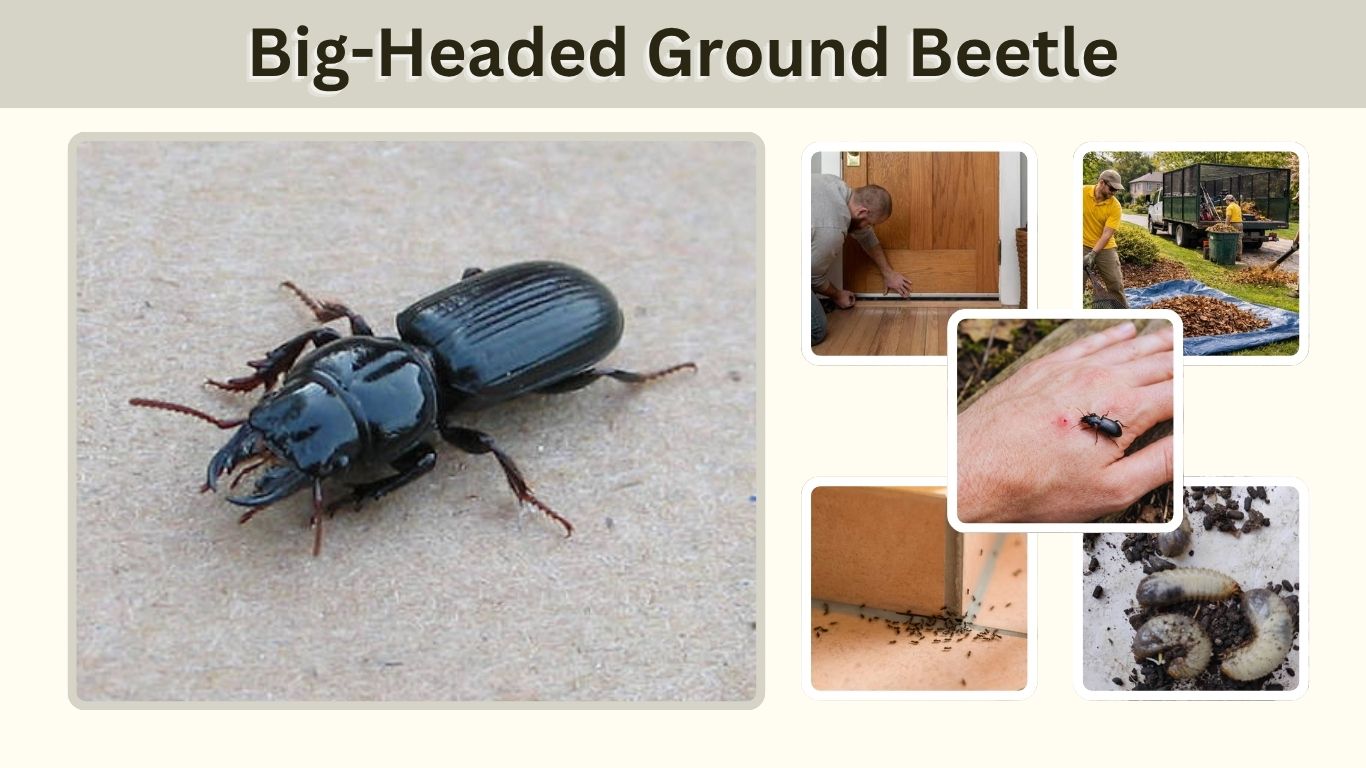
The big-headed ground beetle (Scarites subterraneus) is a fascinating black beetle known for its oversized head, powerful jaws, and shiny body. Commonly found in gardens, woodlands, and soil across North America, this insect is a beneficial predator that feeds on smaller insects and invertebrates. However, its intimidating appearance often raises questions about whether it bites or poses a danger to humans. Occasionally, these beetles enter houses, particularly during warmer months. Understanding their identification, diet, habitat, life cycle, and safe removal methods can help homeowners manage unexpected encounters.
What Is a Big-Headed Ground Beetle?
The big-headed ground beetle is a predatory insect belonging to the family Carabidae. Its scientific name is Scarites subterraneus, and it is sometimes called the pedunculate ground beetle.
Unlike household pests that damage wood, furniture, or stored food, this species primarily hunts other small invertebrates. Its strong jaws and digging-adapted front legs help it capture prey and move through soil.
Big-Headed Ground Beetle Scientific Classification
The species belongs to the order Coleoptera, family Carabidae, subfamily Scaritinae, and genus Scarites.
The scientific name Scarites subterraneus reflects its association with soil and underground habitats. It belongs to a group of ground beetles recognized for their powerful mandibles and distinctive body structure.
Big-Headed Ground Beetle Identification
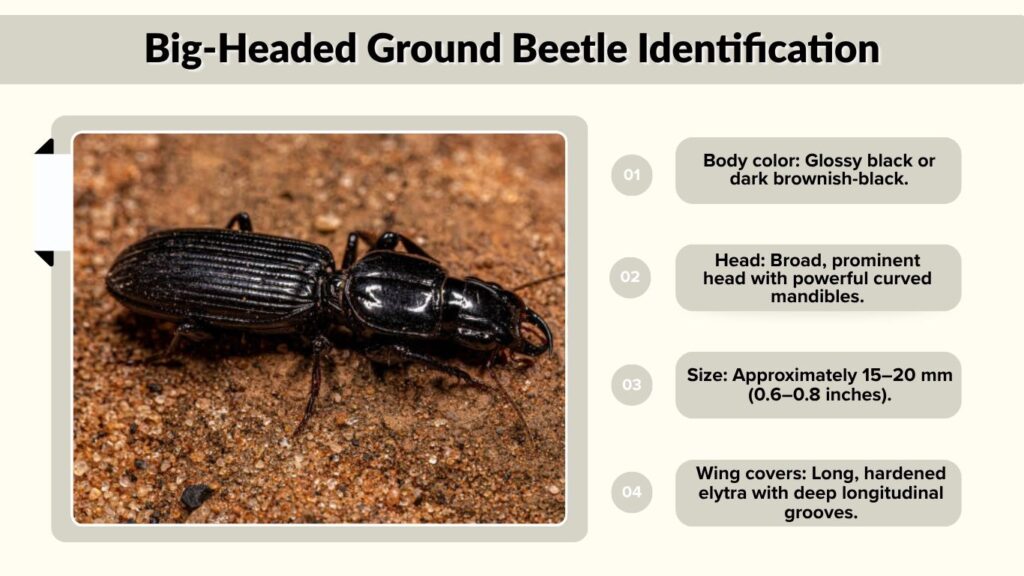
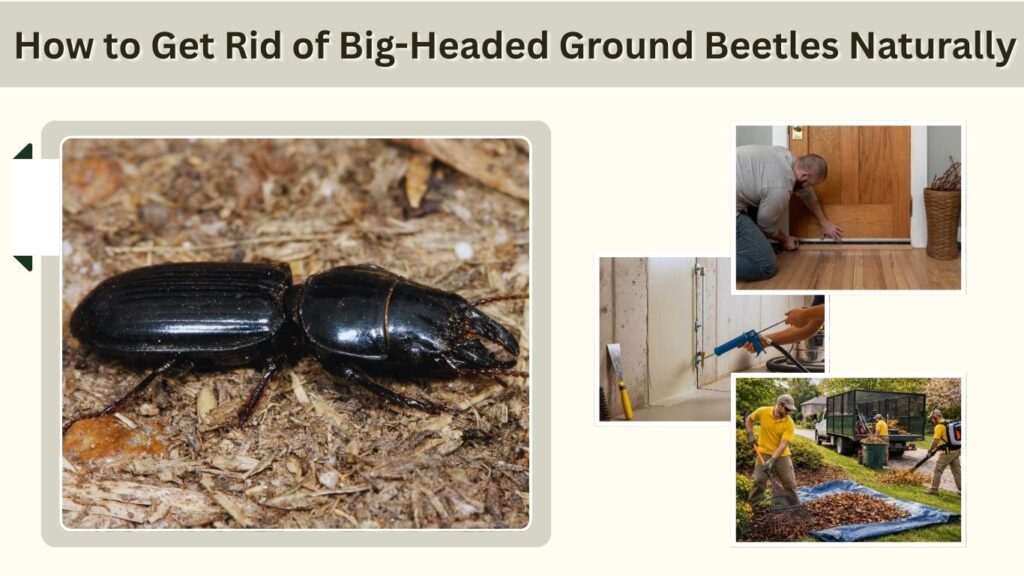
Big-headed ground beetles have a distinctive appearance that makes them relatively easy to recognize. Their shiny black bodies, large jaws, and narrow waist-like connection between body sections create an intimidating appearance.
Adults generally measure 15–20 millimeters long, although similar Scarites species may be larger.
Physical Appearance and Identification
Look for the following characteristics:
- Body color: Glossy black or dark brownish-black.
- Head: Broad, prominent head with powerful curved mandibles.
- Size: Approximately 15–20 mm (0.6–0.8 inches).
- Wing covers: Long, hardened elytra with deep longitudinal grooves.
- Legs: Six strong legs, including enlarged front legs adapted for digging.
- Antennae: A pair of segmented, brownish or dark antennae.
- Body shape: Narrow connection between the thorax and abdomen, creating a waist-like appearance.
These characteristics distinguish big-headed ground beetles from many other black beetles found around homes.
Big-Headed Ground Beetle Male vs. Female
Male and female big-headed ground beetles look remarkably similar. Both sexes possess enlarged heads, strong jaws, and dark, grooved wing covers.
Some males may have proportionally broader heads or more prominent mandibles, but these differences are not reliable for every individual.
Specialists may examine tiny structures on the underside of the abdomen or use precise body measurements to determine sex.
For most homeowners, distinguishing males from females by appearance alone is difficult.
Big-Headed Ground Beetle Habitat and Distribution
Big-headed ground beetles are widely distributed across the United States and occur in parts of southern Canada, including Ontario.
They prefer environments with loose soil, ground cover, and suitable prey. Gardens, forests, grassy areas, and agricultural landscapes may provide favorable conditions.
Where Do Big-Headed Ground Beetles Live?
These beetles commonly shelter beneath stones, logs, fallen leaves, and other objects resting on the ground.
They also burrow into soil, using their powerful front legs to move through loose material.
Big-headed ground beetles have been recorded in states including Pennsylvania, Michigan, Ohio, and Wisconsin.
They are primarily ground-dwelling insects and are usually more active at night.
What Do Big-Headed Ground Beetles Eat?
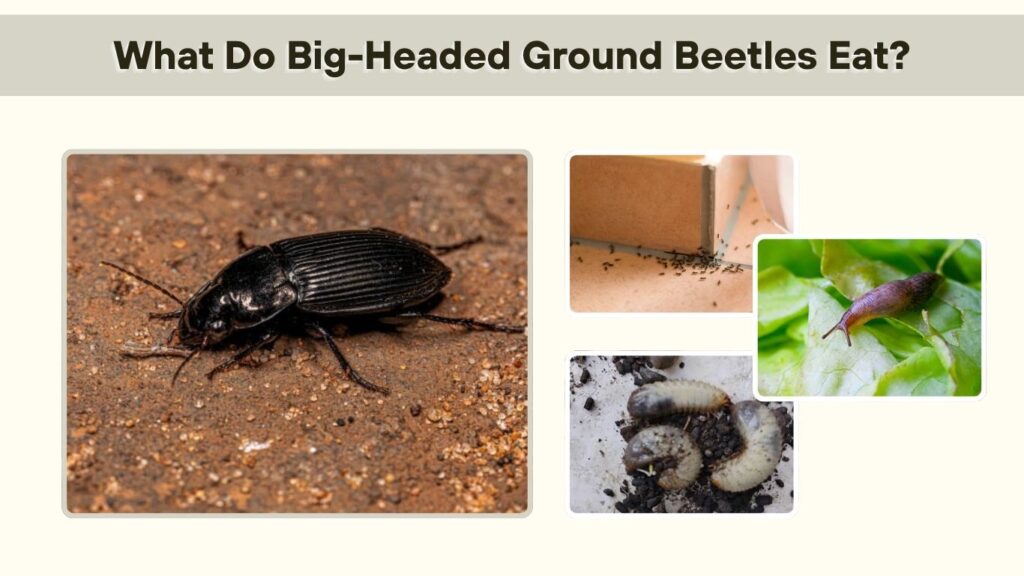
Big-headed ground beetles are carnivorous predators. Their diet consists mainly of insects and other small invertebrates found on or near the soil surface.
Their powerful mandibles allow them to grasp, subdue, and consume various types of prey.
Big-Headed Ground Beetle Diet
Common prey includes:
- Ants: Small ants encountered while searching for food.
- Caterpillars: Soft-bodied larvae found on or near the ground.
- Insect larvae: Developing insects living in soil or leaf litter.
- Slugs: Small soft-bodied mollusks encountered in moist habitats.
- Snails: Small snails that can be captured and consumed.
- Other arthropods: Various suitable ground-dwelling invertebrates.
These beetles contribute to natural pest control by feeding on insects that may damage garden plants.
How Do Big-Headed Ground Beetles Hunt?
Big-headed ground beetles use their large mandibles to seize prey.
They frequently search beneath leaves, stones, and soil debris, where smaller invertebrates hide.
Their digging-adapted front legs help them navigate soil and reach potential prey.
Unlike insects that feed on human blood, these beetles have no interest in attacking people for food.
Do Big-Headed Ground Beetles Bite Humans?
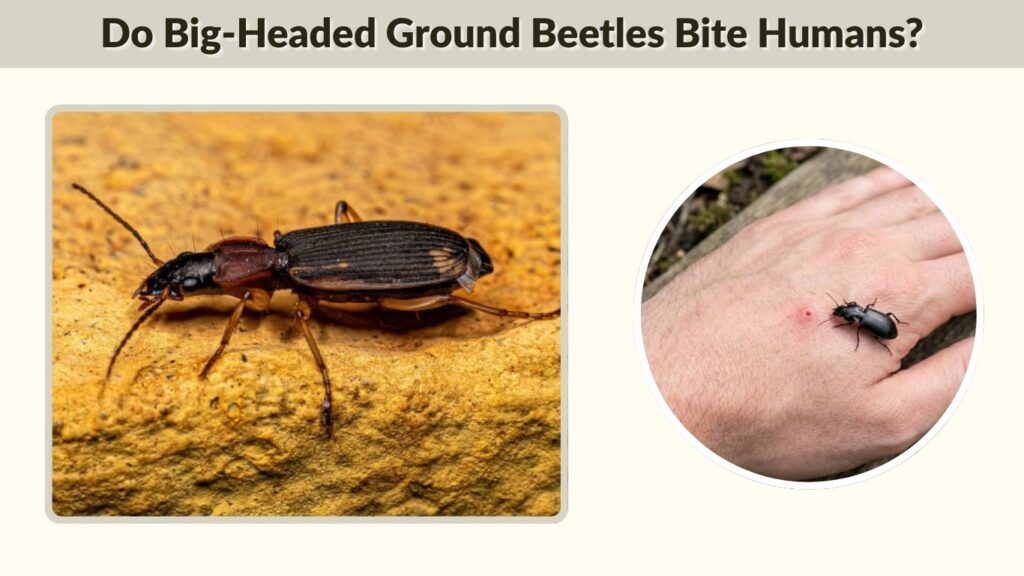
Yes, big-headed ground beetles can bite humans. However, biting usually occurs when a beetle is picked up, squeezed, or otherwise restrained.
Their enlarged mandibles are strong enough to pinch human skin, potentially causing brief pain or discomfort.
What Does a Big-Headed Ground Beetle Bite Feel Like?
A bite may feel like a sharp pinch. Depending on the pressure applied, it could cause temporary redness, tenderness, or minor skin damage.
The beetle does not actively seek humans to bite. Its jaws are primarily used for capturing prey and defending itself.
If bitten, wash the area with soap and water and monitor it for signs of infection.
Seek medical advice if pain, redness, or swelling becomes severe or continues to worsen.
Are Big-Headed Ground Beetles Poisonous or Dangerous?
Big-headed ground beetles are not considered poisonous or medically dangerous to humans.
They do not possess venomous stingers, and their bites are generally of little medical significance.
Their large mandibles may look threatening, but they are primarily defensive and predatory structures.
Avoid handling the beetles directly, particularly if you are unfamiliar with their behavior.
Why Are Big-Headed Ground Beetles in My House?
Finding a big-headed ground beetle inside your house can be surprising. However, these insects generally enter buildings accidentally rather than intentionally establishing indoor populations.
Outdoor lighting, accessible openings, and nearby ground cover can increase the chances of an encounter.
Common Reasons They Enter Homes
Big-headed ground beetles may wander indoors through foundation cracks, gaps around doors, or poorly sealed basement windows.
They are often associated with outdoor soil and vegetation, so properties near gardens, woodlands, or heavily mulched areas may occasionally experience indoor sightings.
Ground beetles are particularly likely to enter houses during warmer months when they are active outdoors.
A single beetle indoors does not indicate a household infestation.
Do Big-Headed Ground Beetles Infest Houses?
No. These beetles are not typical household infestation pests.
They do not normally reproduce indoors, damage furniture, consume stored food, or attack wooden structures.
Most individuals found inside houses are accidental visitors that cannot maintain an established indoor population.
How to Get Rid of Big-Headed Ground Beetles Naturally
Removing big-headed ground beetles usually does not require chemical insecticides.
Because they are beneficial predators, safely relocating them outdoors is preferable whenever practical.
How to Remove a Big-Headed Ground Beetle From Your House
Follow these steps:
- Locate the beetle: Check basement floors, doorways, garages, and other ground-level areas.
- Prepare a container: Use a cup, jar, or similar container to cover the beetle.
- Slide paper underneath: Carefully move a stiff piece of paper beneath the container.
- Carry it outdoors: Release the beetle in a sheltered location with suitable ground cover.
- Inspect the entry point: Check nearby doors, windows, and cracks to identify how it entered.
Avoid grabbing the beetle with bare hands because its mandibles can produce a painful pinch.
How to Prevent Big-Headed Ground Beetles From Returning
Preventive measures include:
- Seal cracks: Close openings around foundations, windows, and doorframes.
- Install door sweeps: Reduce gaps beneath exterior doors.
- Adjust outdoor lighting: Minimize unnecessary nighttime lighting near entrances.
- Remove excess debris: Keep large piles of leaves, boards, and firewood away from foundations.
- Maintain vegetation: Trim tall grass and dense plants immediately beside the house.
- Reduce moisture: Address unnecessary dampness in basements and around entry points.
These measures help discourage occasional indoor visitors without harming beneficial beetles in the garden.
Big-Headed Ground Beetle Larvae and Life Cycle
Big-headed ground beetles undergo complete metamorphosis, developing through egg, larval, pupal, and adult stages.
Their immature stages generally remain associated with soil, where they can develop and hunt small invertebrates.
What Do Big-Headed Ground Beetle Larvae Look Like?
Like other ground beetle larvae, young Scarites are elongated rather than rounded like typical white grubs.
They have distinct heads, three pairs of legs, and well-developed jaws used for capturing prey.
Larvae generally remain hidden beneath soil or debris, making them less noticeable than adults.
After completing larval development, they pupate before emerging as adult beetles.
How Long Do Big-Headed Ground Beetles Live?
A reliable, universally applicable lifespan for Scarites subterraneus is not well established.
Longevity depends on environmental conditions, food availability, and developmental timing.
Like many ground beetles, this species spends important parts of its life cycle in soil or protected ground-level habitats.
FAQs
1. Can Big-Headed Ground Beetles Hurt People?
Yes. They can pinch or bite when handled, but they are generally harmless during ordinary encounters and do not actively attack humans.
2. Are Big-Headed Ground Beetles Beneficial?
Yes. They help control populations of insects, larvae, and other small invertebrates, making them useful predators in gardens and natural habitats.
3. Can Big-Headed Ground Beetles Fly?
Yes. Scarites subterraneus has developed flight wings, although it is primarily encountered walking or burrowing at ground level.
4. Do Big-Headed Ground Beetles Damage Homes?
No. They do not normally feed on building materials, furniture, clothing, or stored household food.
5. Should You Kill a Big-Headed Ground Beetle?
Usually not. These insects are beneficial outdoor predators. If one enters your home, capture it in a container and release it outside.
