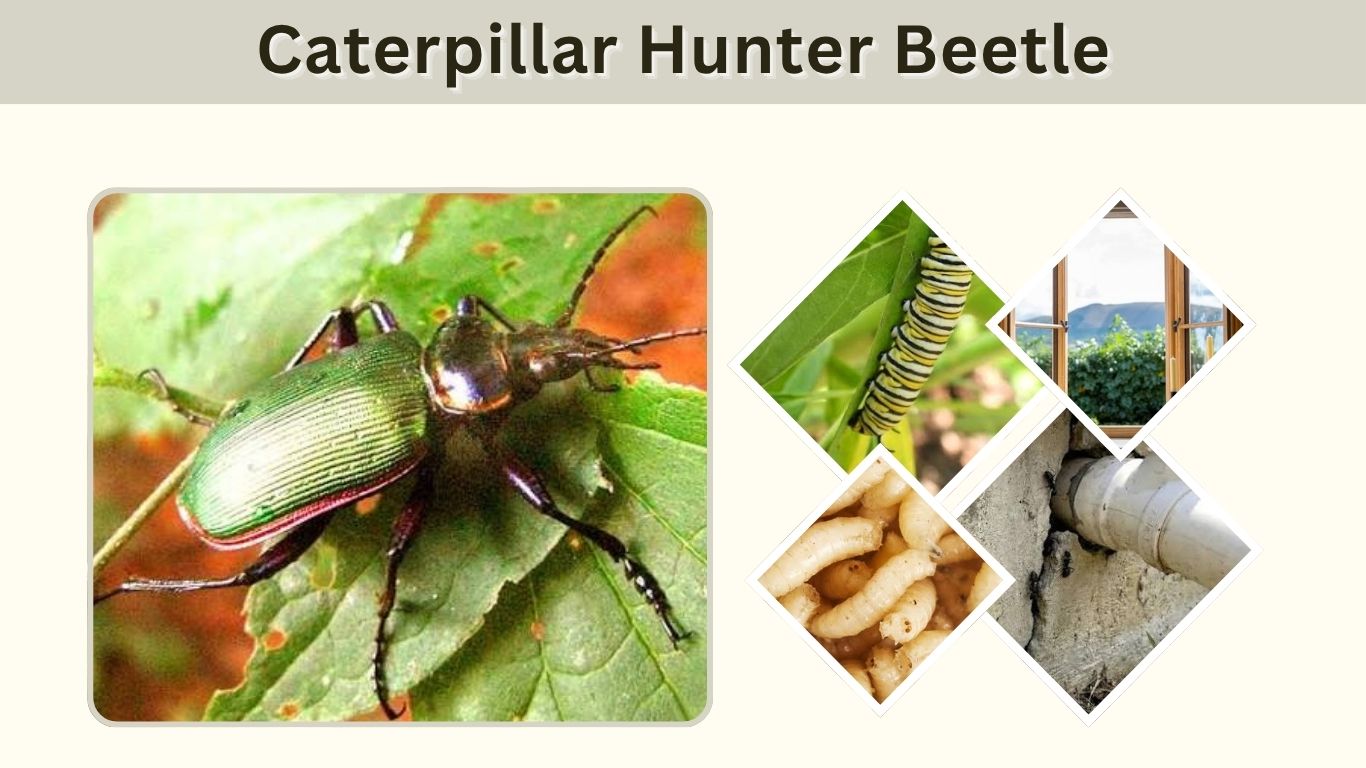
The caterpillar hunter beetle is a fast-moving predator that helps control leaf-eating insects in gardens, forests, and fields. These ground beetles belong to the genus Calosoma and are especially known for chasing caterpillars. Some species are glossy black, while others shine with metallic green and copper colors. Although their strong jaws and large size can look intimidating, they are usually beneficial rather than harmful. This guide explains how to identify caterpillar hunter beetles, recognize their larvae, understand their life cycle, and handle an unexpected encounter safely.
What Is a Caterpillar Hunter Beetle?
Caterpillar hunters are predatory ground beetles in the family Carabidae. Rather than eating leaves or wood, they hunt other insects, particularly the larvae of moths and butterflies. Both adults and immature beetles feed on prey, making these insects important natural enemies of some foliage-damaging pests.
The name “caterpillar hunter” refers to several species, not one single beetle. Two well-known North American examples are the black caterpillar hunter (Calosoma sayi) and the fiery searcher (Calosoma scrutator).
How to Identify a Caterpillar Hunter Beetle
Caterpillar hunters have sturdy bodies and long legs suited to active hunting. Their appearance differs between species, so color alone cannot confirm an identification.
Key Identification Features
- Body: Elongated, somewhat flattened, and protected by hard wing covers.
- Size: Many familiar species are approximately 25–35 mm long.
- Legs: Six strong legs used for running and climbing.
- Head: Noticeable mandibles for gripping insect prey.
- Antennae: Long, segmented antennae that help explore surroundings.
- Color: Black, dark metallic, green, or copper tones, depending on species.
Caterpillar Hunter Beetle Size
A black caterpillar hunter usually measures 25–28 mm, approximately one inch. The fiery searcher is commonly 25–35 mm long and may appear larger because of its broad, brightly colored wing covers. Smaller ground beetles can look similar, so examine body shape and markings together.
Black Caterpillar Hunter vs. Fiery Searcher
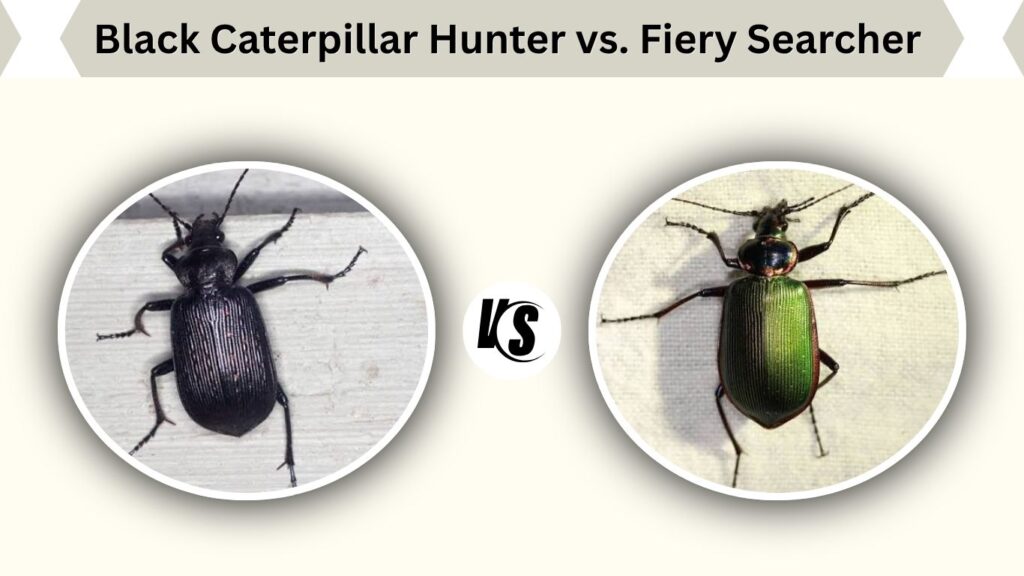
These two beetles belong to the same genus, but their coloring makes them relatively easy to distinguish.
Black Caterpillar Hunter Beetle
The black caterpillar hunter (Calosoma sayi) has a mostly black, glossy body with fine grooves across its wing covers. Small metallic or reddish-looking pits may be visible under good lighting. It occurs in parts of the United States and farther south, occupying woodlands, grasslands, and cultivated areas. This species hunts insects, especially caterpillars, and may occasionally appear near outdoor lights.
Fiery Searcher Caterpillar Hunter
The fiery searcher (Calosoma scrutator) is famous for its metallic green wing covers edged with coppery red or gold. Its shield-like pronotum often has a purple sheen. This species climbs trees as well as runs on the ground, searching for caterpillars among branches and foliage. Although strikingly colorful, it is also a working predator rather than a plant pest.
Where Do Caterpillar Hunter Beetles Live?
Caterpillar hunters live wherever suitable shelter and insect prey occur. Their exact ranges and preferred conditions vary by species. Many are most noticeable during warmer months.
Common Caterpillar Hunter Habitats
- Forests: Leaf litter, fallen branches, and areas beneath trees provide cover.
- Gardens: Flower beds and shrubs attract caterpillars and other potential prey.
- Grasslands: Vegetation and soil crevices offer places to hide.
- Fields and orchards: Crop-feeding caterpillars provide hunting opportunities.
Some species rest beneath debris or in soil during inactive periods. They can be active after dark, although individuals may also be seen hunting in daylight.
What Do Caterpillar Hunter Beetles Eat?
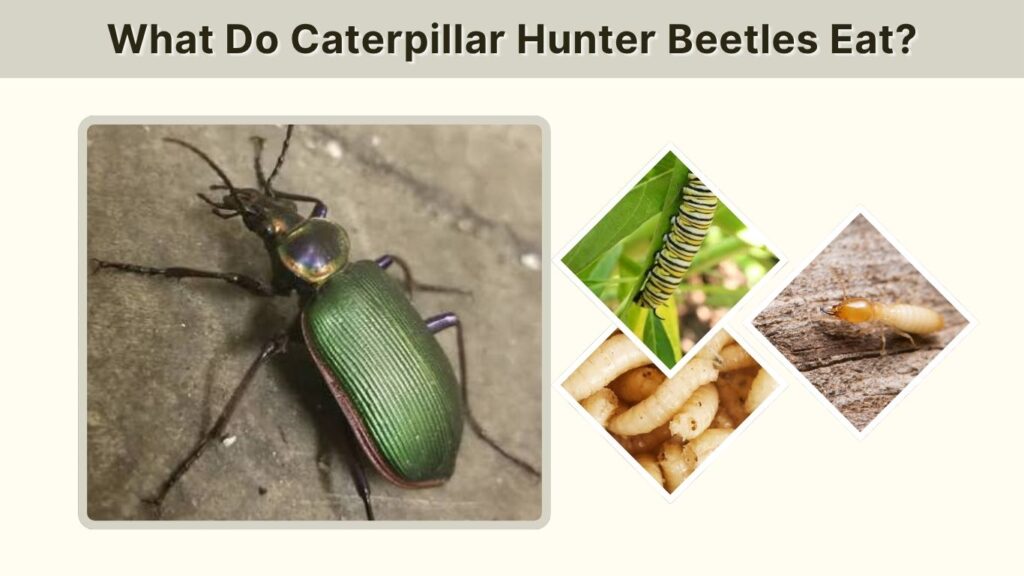
Despite their name, caterpillar hunters are not limited to a single prey species. They attack insects they can overpower with their strong jaws. Adults may hunt on leaves, tree trunks, or the ground, depending on species.
Common Caterpillar Hunter Prey
- Moth caterpillars, including some serious leaf-feeding pests
- Butterfly caterpillars
- Other suitably sized insect larvae
- Occasionally other small insects
How They Hunt Caterpillars
A hunter locates prey while actively exploring its surroundings, grabs it with its mandibles, and feeds on it. Larvae also hunt, so predation continues through more than one life stage. Their activity can reduce local caterpillar numbers, although they cannot guarantee complete pest control.
Caterpillar Hunter Larvae and Life Cycle
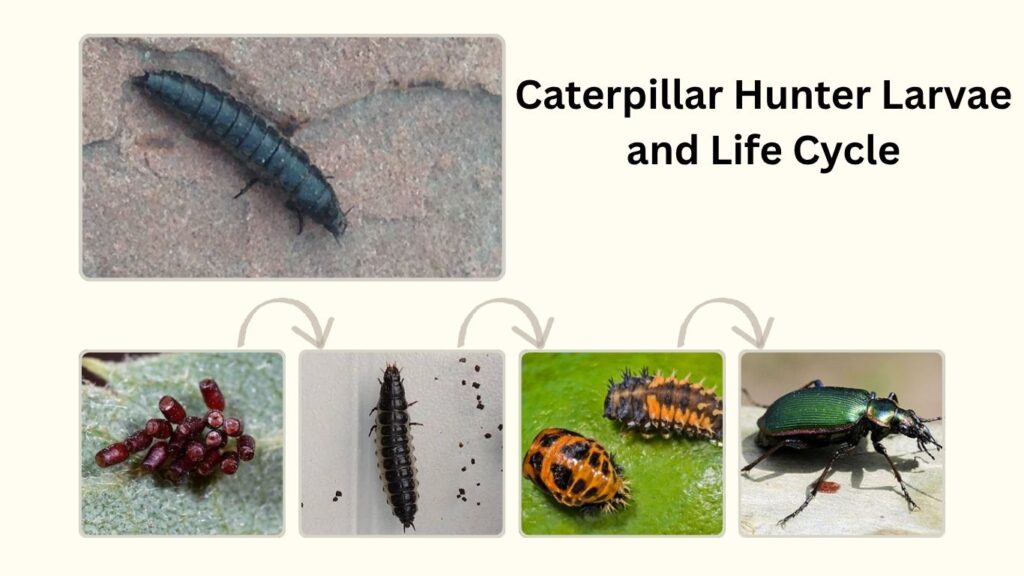
The caterpillar hunter beetle undergoes complete metamorphosis. Its immature stages look quite different from the colorful or black adults.
What Do Caterpillar Hunter Larvae Look Like?
Larvae are elongated, segmented, and usually dark after their bodies harden. They have a distinct head, prominent jaws, and three pairs of legs near the front. Unlike moth caterpillars, they lack fleshy abdominal prolegs. They often remain near or within soil while searching for food.
Four Stages of the Life Cycle
- Egg: Females deposit eggs in soil, where developing larvae are sheltered.
- Larva: Young beetles grow through successive molts while hunting prey.
- Pupa: Mature larvae transform inside protected chambers in the soil.
- Adult: Fully developed beetles emerge to feed and reproduce.
Development depends on species and environmental conditions. In the black caterpillar hunter, larvae may overwinter in soil, while adults can survive for two to three years.
Are Caterpillar Hunter Beetles Dangerous?
These beetles are not aggressive toward people and do not seek human food. However, defensive biting and chemical secretions make bare-handed handling a poor idea.
Do Caterpillar Hunter Beetles Bite?
Yes. A beetle may pinch or bite if trapped or squeezed. Its jaws can cause brief pain, but caterpillar hunters are not venomous. Wash a bite with soap and water. Seek medical attention for severe pain, increasing redness, or signs of an allergic reaction.
Why Do Caterpillar Hunter Beetles Smell?
Some species discharge unpleasant-smelling defensive chemicals when threatened. These secretions help deter predators and may irritate skin or eyes. Avoid touching your face after contact, and wash exposed skin thoroughly.
Black Caterpillar Hunter Beetle in the House
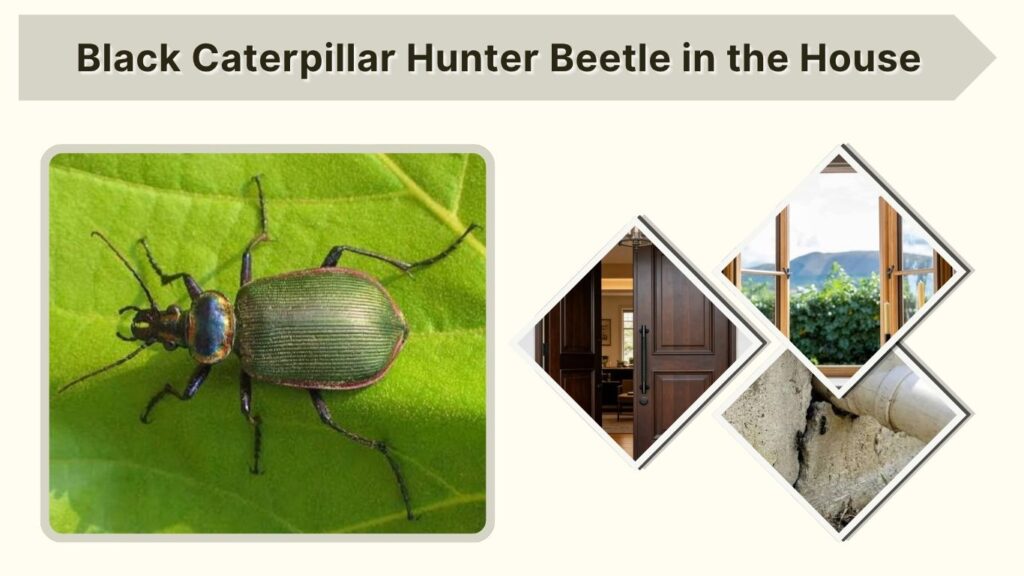
A caterpillar hunter found indoors is usually an accidental visitor, not evidence of an infestation. It may have entered through a door, window, or small opening. These outdoor predators do not breed in furniture or feed on stored household products.
To move one safely, place a container over it, slide stiff paper underneath, and release it outside. Sealing obvious entry gaps may prevent repeat encounters.
Are Caterpillar Hunter Beetles Good for Gardens?
Yes. Their appetite for caterpillars makes them useful members of garden and woodland food webs. They can help limit leaf damage without requiring chemical treatments. Leaving some undisturbed ground cover, reducing unnecessary insecticide use, and protecting diverse vegetation can support these natural predators.
FAQs
Can Caterpillar Hunter Beetles Fly?
Some species can fly, although they are often noticed running or climbing while hunting.
Are Black Caterpillar Hunters Poisonous?
They are not considered poisonous through ordinary contact, but their defensive secretions may irritate skin.
Are Caterpillar Hunter Larvae Harmful to Plants?
No. The larvae are predators and do not normally feed on living plant tissues.
What Attracts Caterpillar Hunter Beetles?
Abundant insect prey, suitable shelter, and sometimes outdoor lights can draw them into an area.
Should You Kill a Caterpillar Hunter Beetle?
Usually not. Relocate one found indoors and leave outdoor individuals alone whenever practical.