
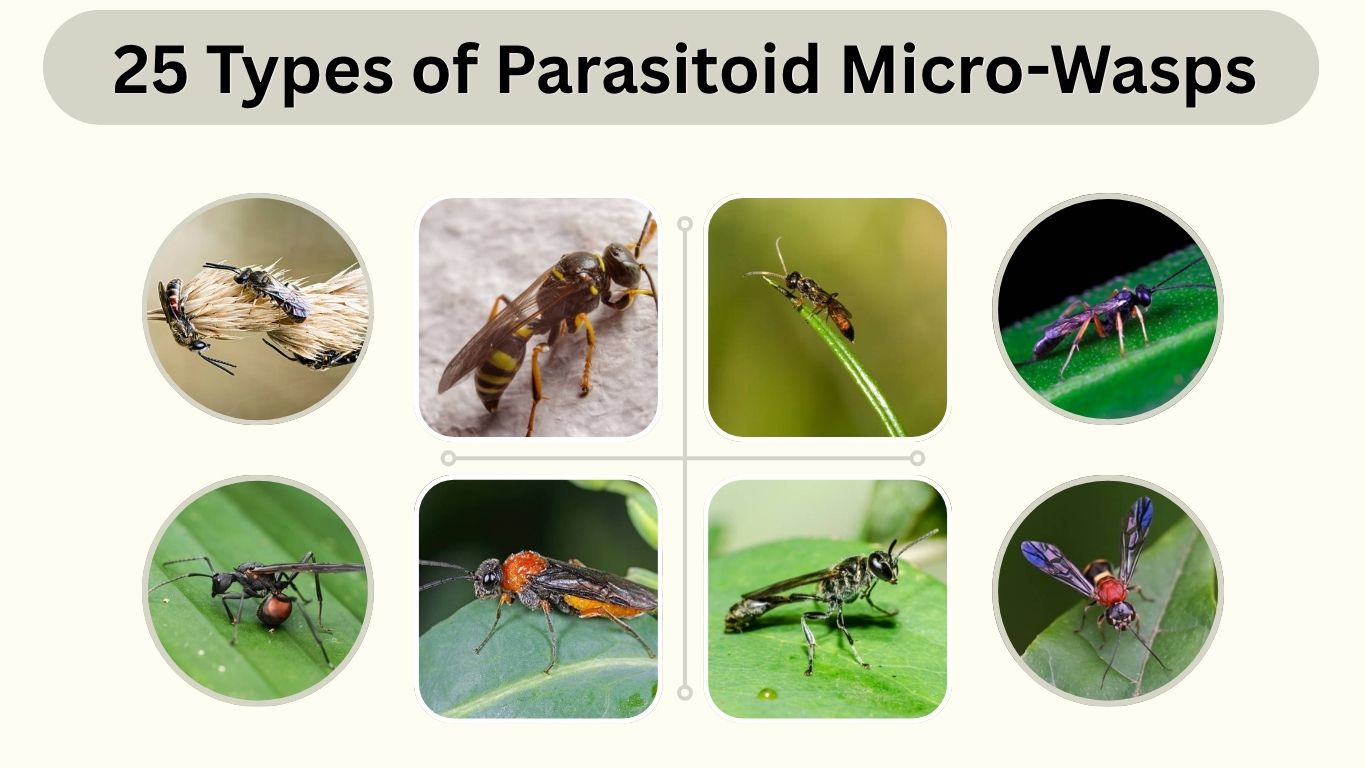
Parasitoid micro-wasps are tiny insects that play an important role in controlling pest populations naturally. These fascinating wasps come in different shapes, colors, and sizes, with many species measuring only a few millimeters long. Unlike ordinary wasps, they lay their eggs in or on other insects, allowing their larvae to develop using the host as food. From fairy wasps to calesid wasps, each group has unique characteristics. Here are 25 types of parasitoid micro-wasps, including their identification, habitats, life cycles, and roles in natural pest control.
1. Fairy Wasps
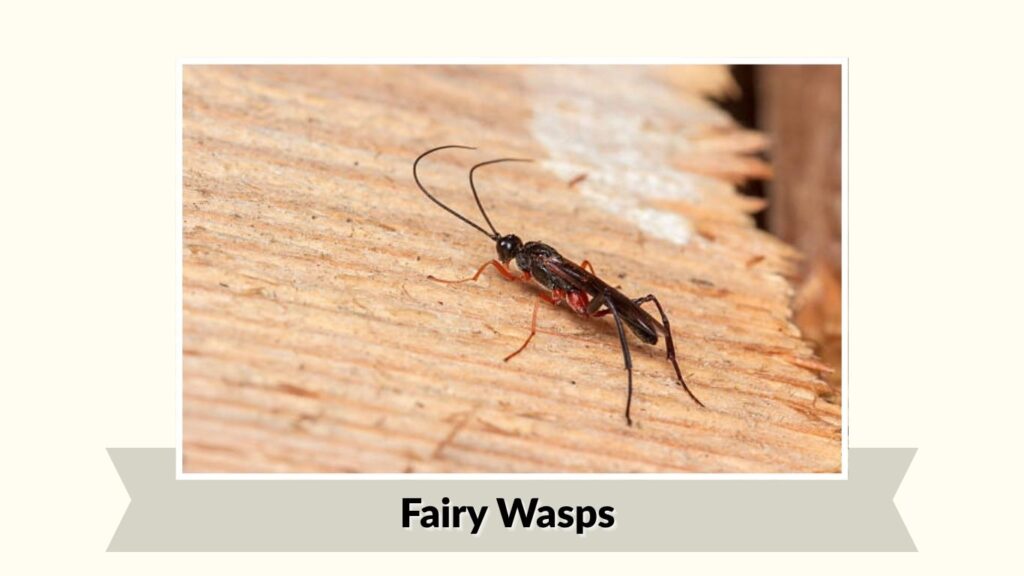
Fairy wasps, also known as fairyflies, are extremely tiny parasitoid wasps belonging to the family Mymaridae. These microscopic insects are among the smallest known insects in the world. Despite their delicate appearance, fairy wasps play an important role in natural pest control by attacking the eggs of other insects. They are commonly found in gardens, agricultural fields, forests, and other vegetated habitats.
Identification
- Scientific Family: Mymaridae
- Size: Usually 0.2–1 mm long.
- Body Color: Yellowish, brown, or black, depending on the species.
- Wings: Narrow, transparent wings often bordered with long, delicate hairs.
- Antennae: Long, segmented antennae, often club-shaped in females.
- Body Shape: Slender, delicate body with six thin legs.
- Distinctive Features: Extremely small size and feather-like wing fringes.
Habitat and Distribution
Fairy wasps occur across many regions of the world, particularly in habitats where their host insects reproduce. They are frequently associated with gardens, grasslands, forests, orchards, and agricultural crops. Adult females search plant leaves, stems, and other surfaces for suitable insect eggs. Their tiny size allows them to reach eggs hidden in narrow spaces or embedded in plant tissues.
Life Cycle and Reproduction
Female fairy wasps use a specialized egg-laying organ called an ovipositor to deposit eggs inside host insect eggs. After hatching, the developing larvae feed on the host embryos, preventing the host insects from emerging. The parasitoids complete their immature development inside the host eggs before emerging as adults. Their development time varies according to species and environmental conditions.
Role in Natural Pest Control
Fairy wasps are beneficial insects because they naturally reduce populations of agricultural pests, particularly leafhoppers, planthoppers, and certain beetles. Some species are valuable biological control agents in vineyards, orchards, and crop fields. By destroying pest eggs before they hatch, these tiny parasitoids help reduce plant damage and support environmentally friendly pest management.
2. Trichogramma Wasps
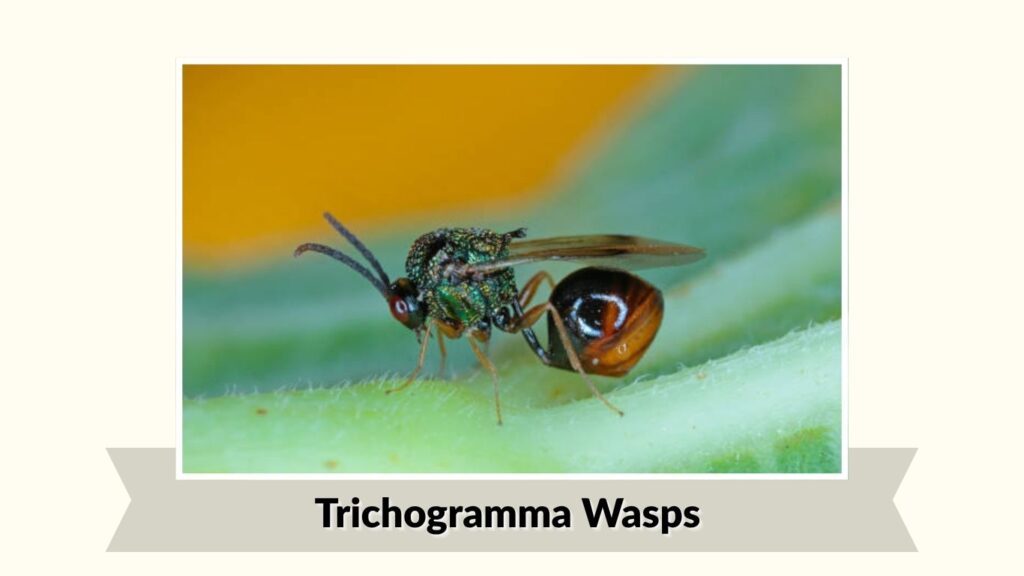
Trichogramma wasps are tiny parasitoid wasps belonging to the family Trichogrammatidae. These microscopic insects are widely recognized for their effectiveness in controlling agricultural pests, particularly moths and butterflies. Unlike larger wasps, Trichogramma species attack insect eggs before harmful caterpillars can hatch. Their ability to suppress pest populations naturally makes them valuable in sustainable farming, greenhouse cultivation, and integrated pest management programs.
Identification
- Scientific Family: Trichogrammatidae
- Size: Approximately 0.25–1 mm long.
- Body Color: Yellowish-brown, orange, or dark brown.
- Wings: Transparent, delicate wings fringed with fine hairs.
- Antennae: Short, segmented antennae, sometimes with noticeable hairs.
- Body Shape: Compact body with a rounded head and slender legs.
- Distinctive Features: Extremely small size, prominent eyes, and specialized egg-parasitizing behavior.
Habitat and Distribution
Trichogramma wasps occur worldwide in agricultural fields, forests, gardens, orchards, and grasslands. They are especially common in environments where moths and butterflies lay eggs. Female wasps search plant surfaces for suitable host eggs, using chemical and environmental signals to locate them. Different species are adapted to particular climates and host insects.
Life Cycle and Reproduction
Female Trichogramma wasps insert their eggs into freshly laid host eggs using a specialized ovipositor. The developing larvae consume the host embryo and complete their development inside the egg. Adult wasps eventually emerge through a small opening. Under favorable conditions, some species complete their life cycle in approximately 7–14 days, allowing populations to increase rapidly.
Role in Natural Pest Control
Trichogramma wasps are widely used to control destructive caterpillar pests, including corn borers, fruitworms, and certain leafrollers. Farmers sometimes release commercially raised wasps into crops to reduce pest populations before damage occurs. Their egg-parasitizing behavior helps limit pesticide use and supports environmentally friendly agricultural practices.
3. Aphelinid Wasps
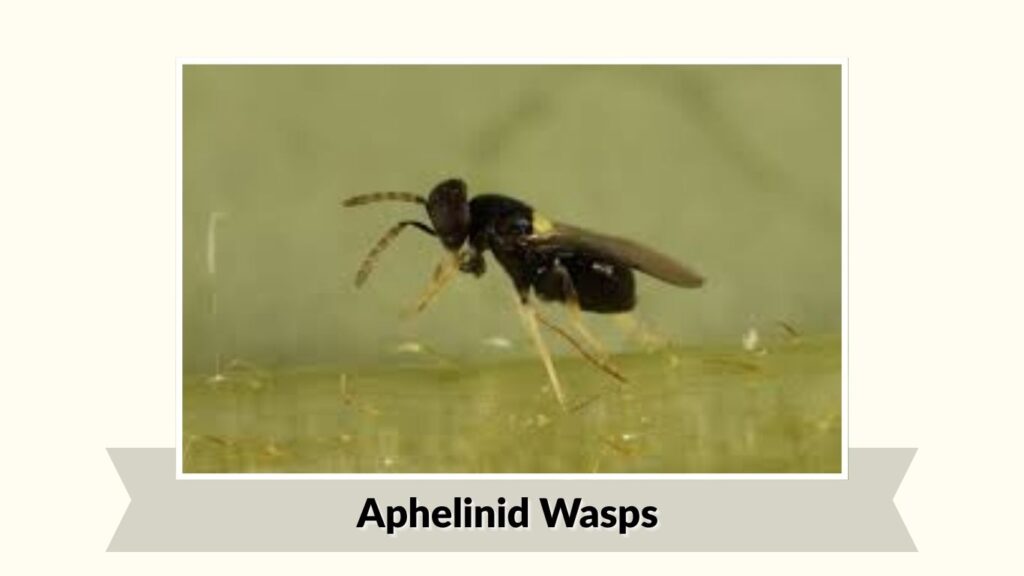
Aphelinid wasps are small parasitoid insects belonging to the family Aphelinidae. These beneficial micro-wasps are particularly important for controlling whiteflies and scale insects, which commonly damage agricultural crops and ornamental plants. Although they are difficult to notice without magnification, aphelinid wasps naturally regulate pest populations. Some species, including those in the genera Encarsia and Aphytis, are commonly associated with biological pest management.
Identification
- Scientific Family: Aphelinidae
- Size: Generally less than 2 mm long.
- Body Color: Yellow, brown, black, or combinations of these colors.
- Wings: Small, transparent wings with relatively simple vein patterns.
- Antennae: Short, segmented antennae with slightly enlarged tips.
- Body Shape: Compact, delicate bodies with slender legs.
- Distinctive Features: Extremely small size and close association with whiteflies and scale insects.
Habitat and Distribution
Aphelinid wasps occur in many regions worldwide, including tropical, subtropical, and temperate environments. They inhabit gardens, forests, orchards, agricultural fields, and greenhouses. These parasitoids are particularly common on plants infested with whiteflies or scale insects. Adult females actively search leaves, stems, and branches for suitable hosts.
Life Cycle and Reproduction
Female aphelinid wasps deposit eggs in or on host insects, depending on the species. After hatching, the larvae feed on the host and eventually kill it. Some develop inside whitefly nymphs, while others attack scale insects. The parasitoids pupate within or near their hosts before emerging as adults. Development time depends on species, host availability, and temperature.
Role in Natural Pest Control
Aphelinid wasps are important natural enemies of whiteflies and scale insects. Species such as Encarsia formosa are widely used in greenhouses to manage whitefly infestations on vegetables and ornamental plants. Other aphelinids help suppress scale insects in citrus orchards and other agricultural systems. Their targeted activity makes them valuable for reducing reliance on broad-spectrum pesticides.
4. Encyrtid Wasps
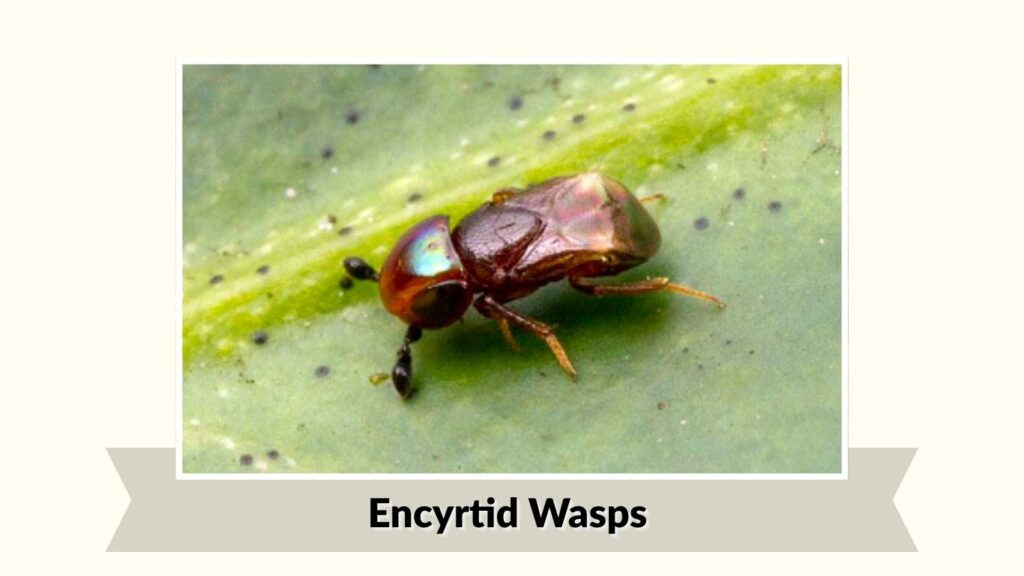
Encyrtid wasps are tiny parasitoid insects belonging to the family Encyrtidae. They are widely recognized as natural enemies of mealybugs, scale insects, and several other agricultural pests. Many species are important for maintaining ecological balance in gardens and crop fields. These wasps usually develop inside their host insects, gradually consuming their tissues. Their specialized parasitic behavior makes them particularly valuable in biological control programs.
Identification
- Scientific Family: Encyrtidae
- Size: Commonly 0.5–3 mm long.
- Body Color: Brown, black, orange, or metallic shades.
- Wings: Transparent or slightly cloudy, sometimes with darker markings.
- Antennae: Segmented, often with an enlarged terminal club.
- Body Shape: Small, compact body with a rounded abdomen.
- Distinctive Features: Reduced wing venation and close association with mealybugs and scale insects.
Habitat and Distribution
Encyrtid wasps are found worldwide in forests, orchards, gardens, greenhouses, and agricultural fields. They commonly inhabit plants affected by sap-feeding insects. Adult females search leaves, stems, and branches to locate suitable hosts. Their distribution largely depends on the availability of host insects and favorable environmental conditions.
Life Cycle and Reproduction
Female encyrtid wasps deposit their eggs inside or, in some species, on host insects. Developing larvae consume the host’s tissues and eventually cause its death. Some species transform mealybugs into hardened, swollen structures known as mummies. The larvae pupate inside the host, and fully developed adults emerge through small openings. Their reproductive rates vary depending on temperature, host species, and food availability.
Role in Natural Pest Control
Encyrtid wasps help suppress populations of mealybugs and scale insects that damage agricultural crops. Species such as Anagyrus pseudococci and Leptomastix dactylopii are important natural enemies of mealybugs. Their use in biological control programs helps protect vineyards, orchards, and greenhouse plants while reducing the need for chemical insecticides.
5. Eulophid Wasps
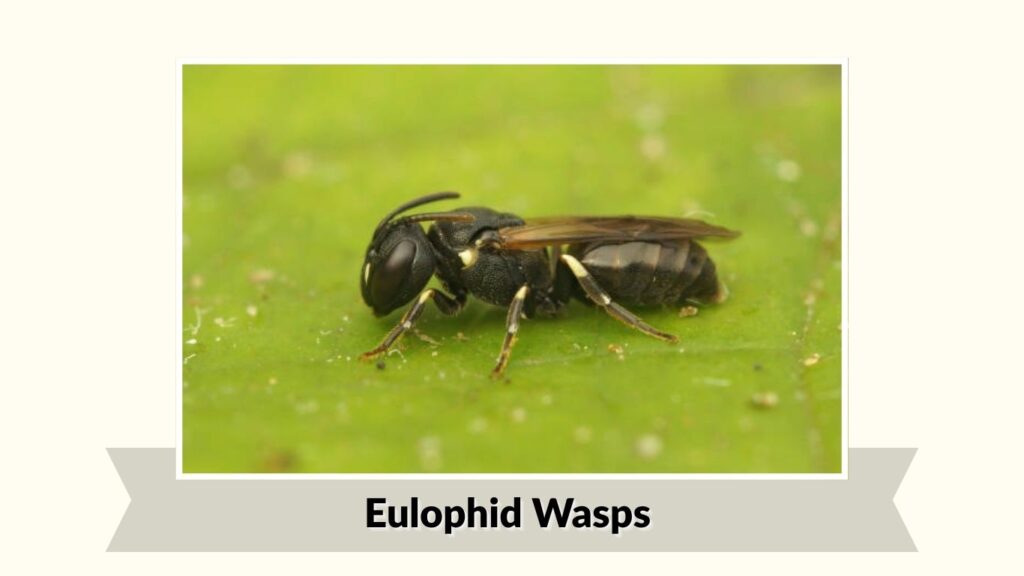
Eulophid wasps are small parasitoid insects belonging to the family Eulophidae. This diverse family contains numerous species that attack insects developing inside leaves, stems, and other plant tissues. Many eulophid wasps are important natural enemies of leafminers, caterpillars, and other agricultural pests. Their small size and specialized host-searching abilities allow them to locate insects hidden within plant structures.
Identification
- Scientific Family: Eulophidae
- Size: Many species measure approximately 1–3 mm long.
- Body Color: Black, brown, yellow, or metallic green and blue.
- Wings: Transparent, delicate wings with reduced venation.
- Antennae: Short to moderately long, segmented antennae.
- Body Shape: Slender or compact body with thin legs.
- Distinctive Features: Four segments in each foot and a small, straight spur on the front tibia.
Habitat and Distribution
Eulophid wasps are distributed worldwide and occur in agricultural fields, forests, grasslands, orchards, and greenhouses. Many species are associated with plants containing leafminer larvae. Adult females actively search damaged leaves and other plant tissues to locate suitable hosts. Their ability to detect hidden insects makes them effective natural enemies in various environments.
Life Cycle and Reproduction
Female eulophid wasps lay eggs either inside or outside their host insects, depending on the species. Some species paralyze host larvae before depositing eggs beside them. After hatching, the developing parasitoid larvae consume the host and eventually kill it. They then pupate and emerge as adults. Their development varies with temperature, host species, and environmental conditions.
Role in Natural Pest Control
Eulophid wasps are particularly valuable for controlling leafminer pests. Species such as Diglyphus isaea attack leafminer larvae that create tunnels inside plant leaves. These parasitoids are used in greenhouse pest management programs to help protect vegetables and ornamental plants. By targeting pests hidden inside leaves, eulophid wasps contribute to sustainable crop protection and integrated pest management.
6. Eupelmid Wasps
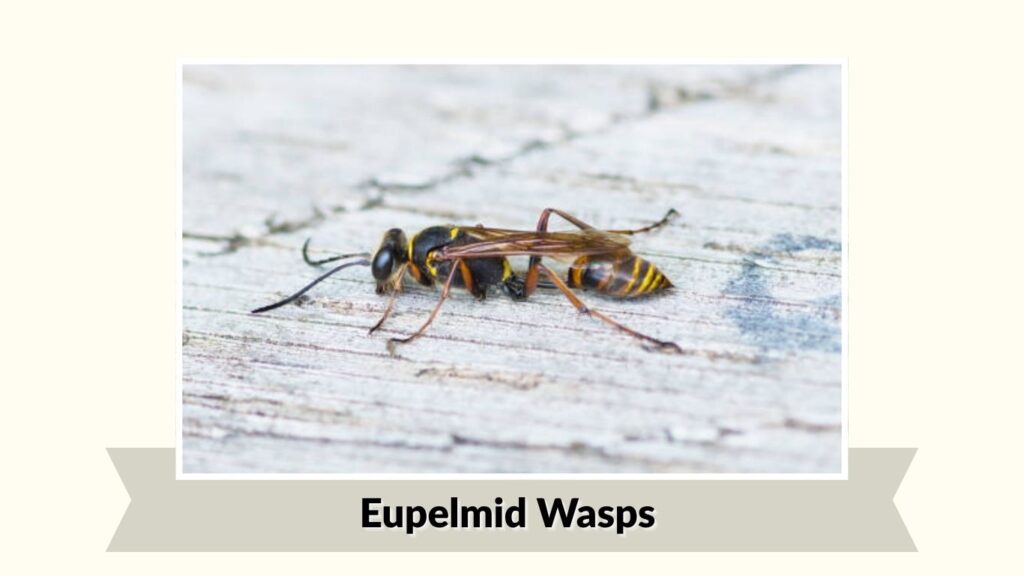
Eupelmid wasps are small parasitoid insects belonging to the family Eupelmidae. These wasps are known for their diverse parasitic behaviors and their ability to attack different insect hosts. Some species develop inside insect eggs, while others parasitize beetle larvae or other insects. Certain eupelmid wasps are also secondary parasitoids, developing at the expense of other parasitoid insects. Their diversity makes them an interesting group within the parasitoid wasps.
Identification
- Scientific Family: Eupelmidae
- Size: Many species measure approximately 2–5 mm long.
- Body Color: Black, brown, metallic green, blue, or bronze.
- Wings: Transparent or patterned, sometimes with darker bands.
- Antennae: Segmented, usually with noticeable terminal clubs.
- Body Shape: Slender to compact body with a distinct thorax and abdomen.
- Distinctive Features: Some species have strongly developed jumping legs or distinctive wing markings.
Habitat and Distribution
Eupelmid wasps are found throughout many regions of the world, including tropical and temperate environments. They inhabit forests, agricultural fields, orchards, grasslands, and gardens. Adult females search vegetation, bark, and insect egg masses to locate suitable hosts. Their habitats vary considerably because different eupelmid species attack different types of insects.
Life Cycle and Reproduction
Female eupelmid wasps deposit eggs in or on suitable hosts. Some species, particularly those belonging to the genus Anastatus, parasitize insect eggs. Other species attack larvae or develop as hyperparasitoids. Once the eggs hatch, the developing larvae feed on the host’s tissues. Pupation occurs after larval development, followed by adult emergence. Their life cycles differ significantly depending on the species and host insect.
Role in Natural Pest Control
Some eupelmid wasps are valuable biological control agents because they parasitize the eggs of agricultural pests. For example, certain Anastatus species attack stink bug eggs, including those of the brown marmorated stink bug. By destroying eggs before the pests hatch, these parasitoids can help reduce crop damage. However, not all eupelmid species are beneficial for pest management, particularly those that parasitize other natural enemies.
7. Pteromalid Wasps
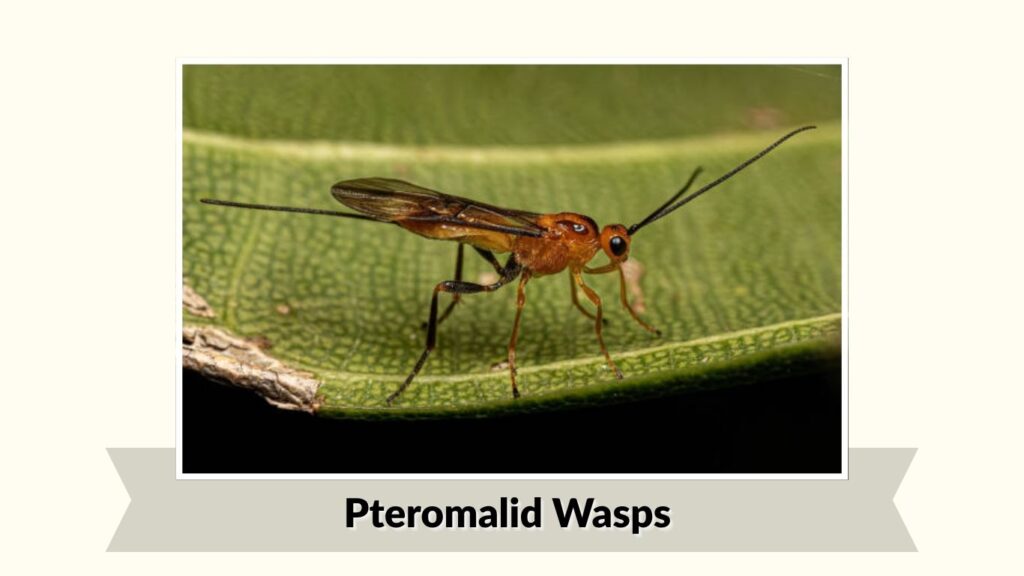
Pteromalid wasps are small parasitoid insects belonging to the family Pteromalidae. These wasps are known for their metallic body colors and their ability to parasitize various insect hosts. Many species attack beetles, flies, and butterfly pupae, making them important natural enemies of agricultural and stored-product pests. Their specialized reproductive behavior helps regulate insect populations in natural and agricultural environments.
Identification
- Scientific Family: Pteromalidae
- Size: Commonly 1–5 mm long.
- Body Color: Metallic green, bronze, blue, or dark brown.
- Wings: Transparent wings with reduced vein patterns.
- Antennae: Short, segmented antennae, often with enlarged tips.
- Body Shape: Compact body with a rounded or oval abdomen.
- Distinctive Features: Shiny metallic appearance and slender legs.
Habitat and Distribution
Pteromalid wasps occur in many parts of the world, including temperate and tropical regions. They inhabit gardens, grasslands, forests, agricultural fields, and grain storage facilities. Adult females search for suitable insect hosts on vegetation, in decaying organic material, and around stored products. Their habitats vary depending on the species and available host insects.
Life Cycle and Reproduction
Female pteromalid wasps lay their eggs inside or on host insects, depending on the species. Developing larvae feed on host tissues and eventually kill their hosts. Some species attack fly pupae, while others parasitize beetle larvae or butterfly pupae. After completing larval development, the parasitoids pupate and emerge as adults. Development time depends on temperature, host species, and environmental conditions.
Role in Natural Pest Control
Pteromalid wasps contribute significantly to biological pest management. Species such as Anisopteromalus calandrae attack beetles associated with stored grains, while Pteromalus puparum parasitizes butterfly pupae. Certain species are used in pest management programs to suppress insect populations without relying entirely on chemical pesticides. Their natural activity helps protect crops and stored agricultural products.
8. Chalcidid Wasps
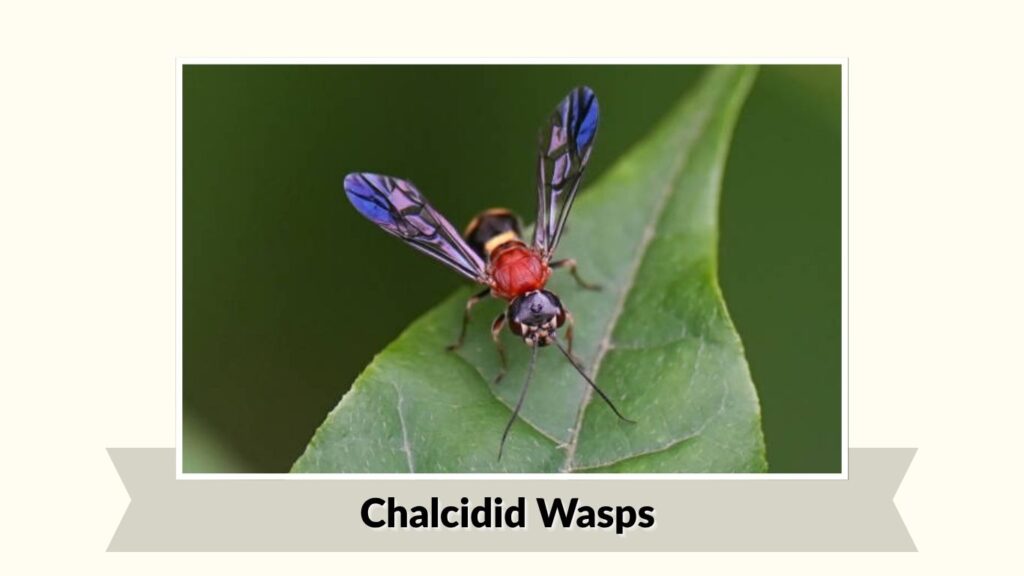
Chalcidid wasps are small parasitoid insects belonging to the family Chalcididae. They are recognized by their distinctive enlarged hind legs and compact body structures. Unlike many extremely tiny parasitoid wasps, some chalcidid species are relatively large and easily visible. These insects commonly attack the immature stages of butterflies, moths, flies, and beetles. Their parasitic behavior makes them important components of natural insect population regulation.
Identification
- Scientific Family: Chalcididae
- Size: Generally 2–8 mm long.
- Body Color: Black, brown, yellow, or combinations of these colors.
- Wings: Transparent or slightly darkened wings with reduced venation.
- Antennae: Short, elbowed antennae with multiple segments.
- Body Shape: Sturdy, compact body with a relatively large thorax.
- Distinctive Features: Enlarged hind femora, often bearing noticeable teeth along their lower edges.
Habitat and Distribution
Chalcidid wasps are distributed across tropical, subtropical, and temperate regions worldwide. They occur in forests, gardens, orchards, grasslands, and agricultural fields. Adult females actively search vegetation and sheltered areas for suitable host insects. Their abundance often depends on the availability of caterpillars, fly larvae, and other potential hosts.
Life Cycle and Reproduction
Female chalcidid wasps use their ovipositors to deposit eggs into suitable hosts, frequently larvae or pupae. After hatching, the developing larvae consume host tissues. Some species develop individually, while others may produce multiple offspring within a single host. The host eventually dies as the parasitoid completes development. Adult wasps emerge after pupation and begin searching for mates and new hosts.
Role in Natural Pest Control
Chalcidid wasps help regulate populations of moths, butterflies, flies, and certain beetles. Some Brachymeria species parasitize the pupae of agricultural pest moths. Their natural activity can reduce the survival of insects responsible for crop damage. However, some chalcidid species also attack beneficial parasitoids, so their ecological effects depend on the particular species and host relationship.
9. Scelionid Wasps
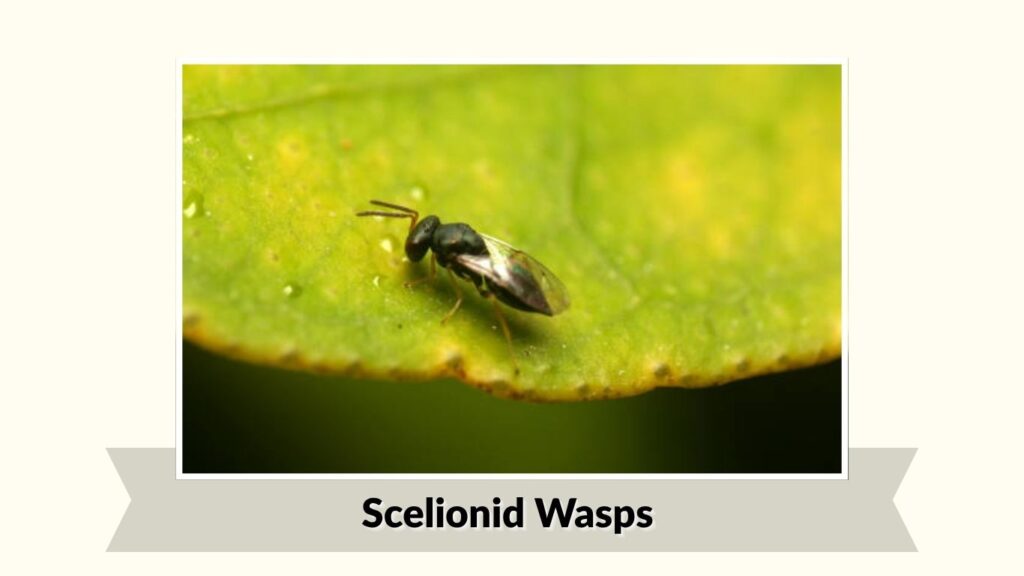
Scelionid wasps are tiny parasitoid insects belonging to the family Scelionidae. These microscopic wasps are particularly important because they attack the eggs of other insects, including stink bugs, grasshoppers, and certain plant-feeding pests. Some species also parasitize spider eggs. Their specialized egg-parasitizing behavior prevents harmful insects from developing into damaging adults, making them valuable natural enemies in agricultural ecosystems.
Identification
- Scientific Family: Scelionidae
- Size: Commonly 0.5–3 mm long.
- Body Color: Black, dark brown, or occasionally yellowish.
- Wings: Transparent wings with reduced venation.
- Antennae: Segmented antennae, often with an enlarged club in females.
- Body Shape: Small, compact body with a relatively broad abdomen.
- Distinctive Features: Extremely small size and specialized egg-parasitizing behavior.
Habitat and Distribution
Scelionid wasps occur worldwide in grasslands, forests, gardens, orchards, and agricultural fields. They are frequently associated with plants where stink bugs and other insects deposit their eggs. Adult females use chemical signals and other environmental cues to locate suitable host eggs. Their distribution depends on host availability, vegetation, and favorable climatic conditions.
Life Cycle and Reproduction
Female scelionid wasps insert their eggs into host insect eggs using a specialized ovipositor. The developing larvae consume the host embryos, preventing them from hatching. After completing development, the parasitoids pupate inside the host eggs. Adult wasps eventually emerge through small openings. Their reproductive success depends on host egg age, temperature, and species-specific characteristics.
Role in Natural Pest Control
Scelionid wasps are important natural enemies of agricultural pests, particularly stink bugs. Species such as Trissolcus japonicus attack the eggs of the brown marmorated stink bug. By destroying pest eggs before they hatch, these parasitoids can reduce crop damage. Their ability to target early developmental stages makes them valuable for biological control and integrated pest management programs.
10. Platygastrid Wasps
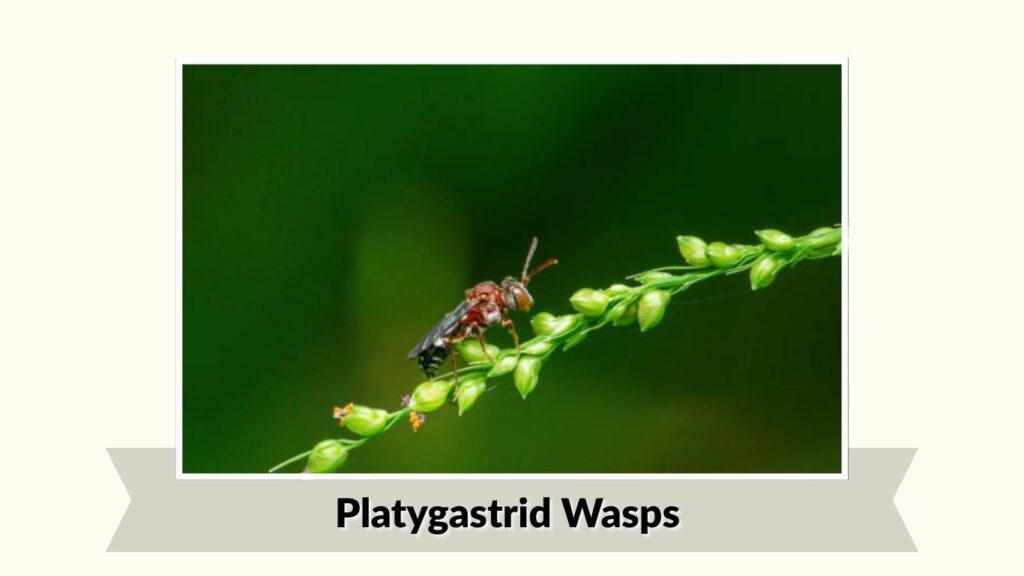
Platygastrid wasps are tiny parasitoid insects belonging to the family Platygastridae. These wasps are especially known for parasitizing gall midges, which are small flies whose larvae sometimes damage plants by feeding inside plant tissues. Platygastrid wasps are usually difficult to observe because of their microscopic size. Their specialized reproductive behavior allows them to regulate populations of certain plant-feeding insects in natural and agricultural environments.
Identification
- Scientific Family: Platygastridae
- Size: Commonly 0.5–2 mm long.
- Body Color: Black, dark brown, or occasionally yellowish-brown.
- Wings: Transparent wings with little or no visible venation.
- Antennae: Short, segmented antennae, sometimes with enlarged terminal segments.
- Body Shape: Compact body with a rounded or slightly flattened abdomen.
- Distinctive Features: Extremely small size and close association with gall midges.
Habitat and Distribution
Platygastrid wasps are found in many regions worldwide, particularly where gall midges and other suitable hosts occur. They inhabit forests, meadows, gardens, orchards, and agricultural fields. Many species are associated with plants that develop insect-induced galls. Adult females search plant surfaces and developing plant tissues for suitable hosts.
Life Cycle and Reproduction
Many platygastrid wasps deposit their eggs into gall midge eggs or very young larvae. The developing parasitoids initially survive inside their hosts without immediately killing them. As the hosts mature, the parasitoid larvae continue developing and eventually consume them. Adult wasps emerge after completing pupation. This specialized development allows them to exploit insects living inside plant tissues.
Role in Natural Pest Control
Platygastrid wasps help regulate gall midge populations in agricultural and natural ecosystems. Some species belonging to the genus Platygaster attack gall midges associated with fruit trees and other cultivated plants. By reducing the survival of damaging gall midges, these wasps can contribute to crop protection. However, their effects vary because different species parasitize different hosts, including some insects that are not agricultural pests.
11. Figitid Wasps
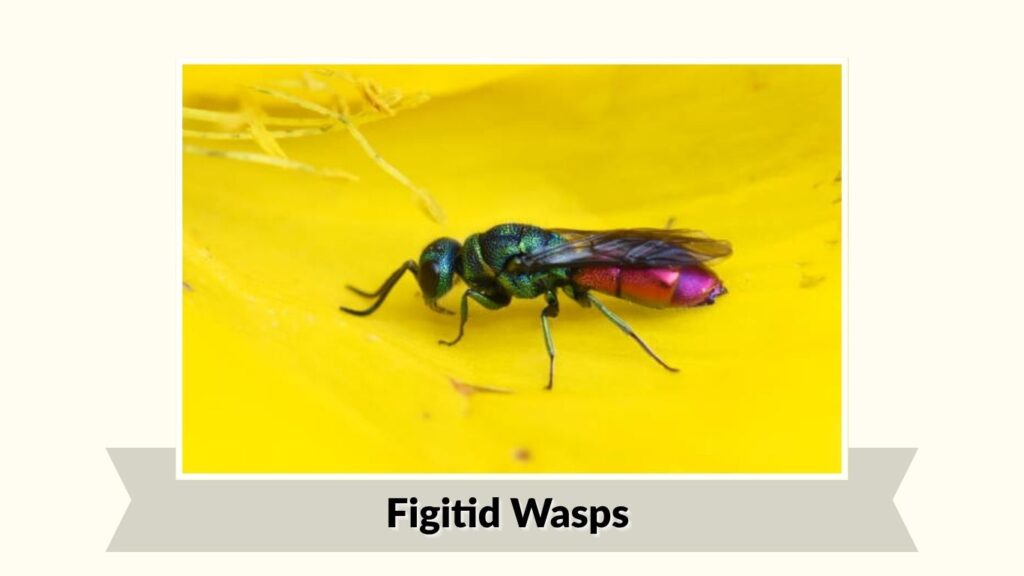
Figitid wasps are small parasitoid insects belonging to the family Figitidae. These wasps are closely related to gall wasps but differ in their reproductive behavior. Instead of producing plant galls, most figitid species develop as parasitoids of other insects, particularly flies. Some species also attack lacewings or other parasitoids. Their diverse host relationships make them important components of insect communities in forests, gardens, and agricultural environments.
Identification
- Scientific Family: Figitidae
- Size: Many species measure approximately 1–4 mm long.
- Body Color: Black, brown, or reddish-brown.
- Wings: Transparent wings with relatively simple vein patterns.
- Antennae: Slender, segmented antennae that vary in length.
- Body Shape: Compact body with a rounded or oval abdomen.
- Distinctive Features: Small, often shiny bodies; some species have specialized raised structures on the thorax.
Habitat and Distribution
Figitid wasps occur in many regions worldwide, including tropical and temperate environments. They inhabit forests, agricultural fields, orchards, grasslands, and gardens. Many species are associated with areas containing fly larvae, such as decaying fruits, vegetation, and organic matter. Others occur around insect galls or plants infested with aphids.
Life Cycle and Reproduction
Female figitid wasps deposit eggs into suitable host insects, often during their larval stages. In many species, the parasitoid develops inside the host as it continues growing. Eventually, the parasitoid consumes enough host tissue to cause death, often completing development during the host’s pupal stage. Some figitid species are hyperparasitoids, meaning they attack other parasitoid insects rather than primary plant pests.
Role in Natural Pest Control
Figitid wasps play varied roles in biological pest regulation. Species belonging to the genera Leptopilina and Ganaspis attack fruit flies, including species associated with fruit damage. Researchers study certain figitid wasps as potential biological control agents against spotted-wing drosophila. However, hyperparasitoid species, such as some members of Alloxysta, may interfere with the natural control of aphids by attacking beneficial primary parasitoids.
12. Diapriid Wasps
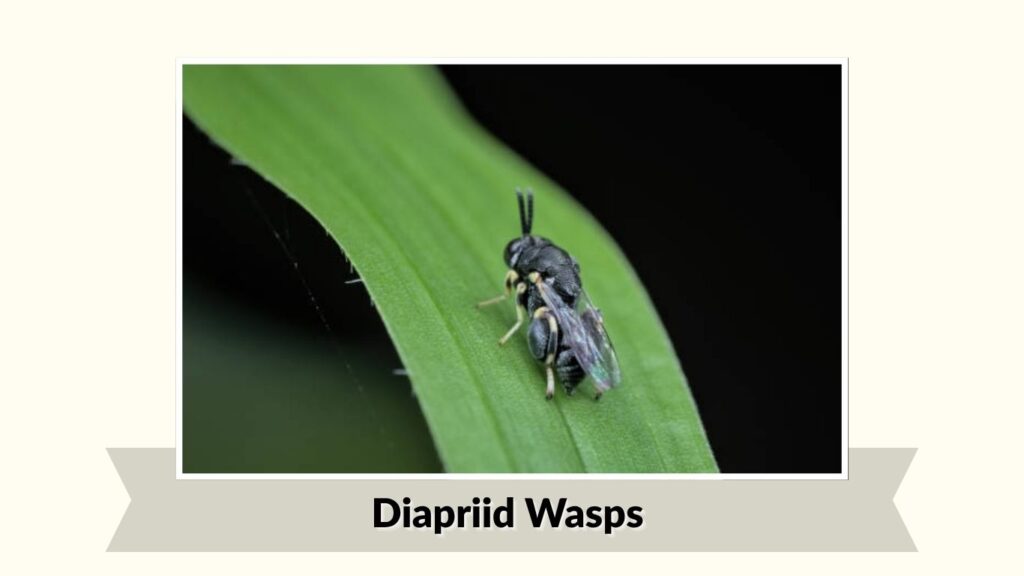
Diapriid wasps are tiny parasitoid insects belonging to the family Diapriidae. These small wasps are particularly known for attacking the immature stages of flies. Many species develop inside fly pupae, making them important natural regulators of fly populations. Their small size and dark coloration often make them difficult to distinguish from tiny ants. Diapriid wasps occur in various habitats, including forests, wetlands, gardens, and agricultural environments.
Identification
- Scientific Family: Diapriidae
- Size: Usually 1–6 mm long.
- Body Color: Black, dark brown, or reddish-brown.
- Wings: Transparent wings, sometimes reduced or absent.
- Antennae: Long, segmented antennae, often with enlarged tips.
- Body Shape: Slender or compact body with an ant-like appearance.
- Distinctive Features: Small heads, narrow body connections, and reduced wing venation.
Habitat and Distribution
Diapriid wasps occur worldwide in forests, grasslands, wetlands, gardens, and agricultural fields. They are frequently associated with moist environments where fly larvae and pupae develop. Some species live around decaying vegetation, leaf litter, and damp soil. Adult females search these environments for suitable hosts, often moving through vegetation or across the ground rather than flying continuously.
Life Cycle and Reproduction
Female diapriid wasps use their ovipositors to deposit eggs inside suitable fly hosts, commonly pupae or prepupae. After hatching, the developing parasitoid larvae consume host tissues. The host eventually dies, and the wasp completes its development before emerging as an adult. Development time varies depending on temperature, host availability, and the particular wasp species.
Role in Natural Pest Control
Diapriid wasps help regulate populations of various fly species. Some species, including members of the genus Trichopria, attack flies that damage agricultural crops or aquatic plants. Their natural parasitic behavior can reduce host populations and contribute to biological pest management. However, their effectiveness depends on the target fly species and surrounding environmental conditions.
13. Ceraphronid Wasps
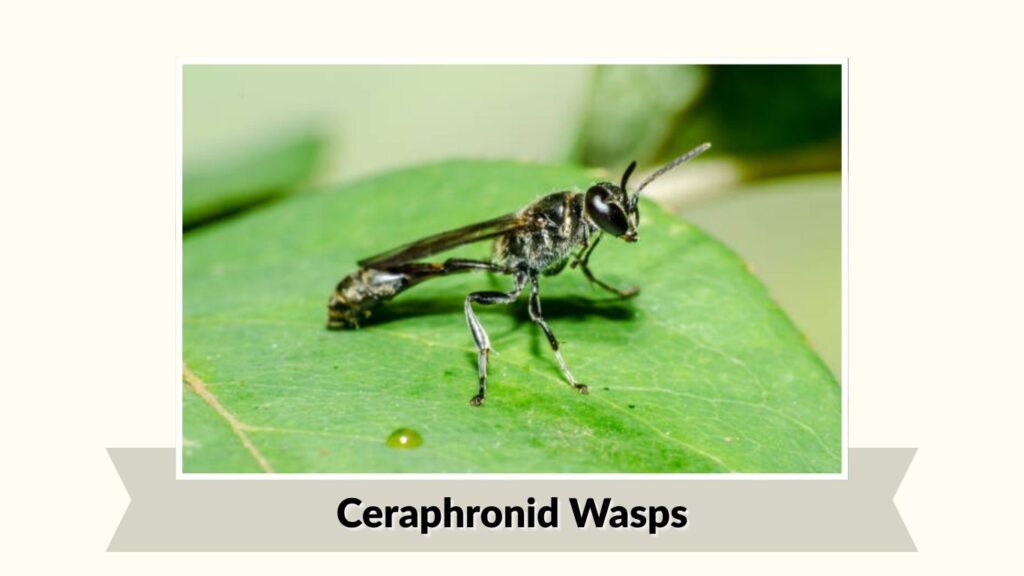
Ceraphronid wasps are extremely small parasitoid insects belonging to the family Ceraphronidae. These microscopic wasps are closely related to megaspilid wasps and are commonly associated with flies and other small insects. Many species remain poorly studied because their tiny bodies make identification difficult. Their parasitic lifestyles allow them to develop using other insects as hosts, contributing to the complex relationships found in natural ecosystems.
Identification
- Scientific Family: Ceraphronidae
- Size: Commonly 0.5–3 mm long.
- Body Color: Black, dark brown, or occasionally yellowish-brown.
- Wings: Transparent wings with reduced venation; some species are wingless.
- Antennae: Short to moderately long, segmented antennae.
- Body Shape: Compact body with a rounded abdomen.
- Distinctive Features: Small wing stigma and a characteristic groove along the upper thorax.
Habitat and Distribution
Ceraphronid wasps occur across many regions worldwide, particularly in forests, grasslands, gardens, and agricultural environments. Some species are frequently associated with soil, leaf litter, and decaying organic matter. Adult females search these habitats for suitable host insects. Their distribution depends largely on host availability, vegetation, and environmental conditions.
Life Cycle and Reproduction
Female ceraphronid wasps deposit eggs in or on suitable hosts, depending on the species. Many attack small flies, including gall midges. After hatching, the larvae develop by feeding on their hosts. Some species develop as hyperparasitoids, meaning they attack other parasitoid insects. The larvae eventually complete development, pupate, and emerge as adults.
Role in Natural Pest Control
Ceraphronid wasps can influence populations of small flies and other insects. Certain Aphanogmus species parasitize plant-feeding gall midges that damage crops. However, other species attack beneficial predatory insects or parasitoids. Therefore, their effects on pest management can be positive or negative depending on their host relationships. Their ecological diversity makes them important subjects for biological control research.
14. Megaspilid Wasps
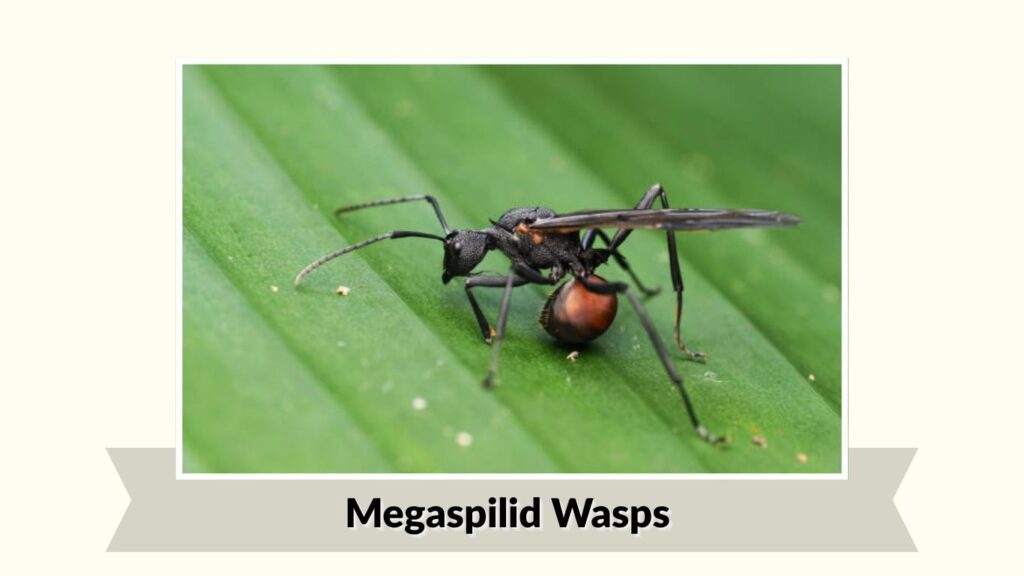
Megaspilid wasps are tiny parasitoid insects belonging to the family Megaspilidae. These wasps are recognized for their unusual wing structures and their diverse relationships with other insects. Many species parasitize flies or other small insects, while some develop as hyperparasitoids of beneficial parasitoid wasps. Their complex reproductive behavior makes them important members of insect food webs, particularly in environments containing aphids and their natural enemies.
Identification
- Scientific Family: Megaspilidae
- Size: Many species measure approximately 1–4 mm long.
- Body Color: Black, dark brown, or reddish-brown.
- Wings: Usually transparent, with a noticeably enlarged wing stigma in winged species.
- Antennae: Segmented antennae, sometimes with enlarged terminal segments.
- Body Shape: Small, compact body with a rounded abdomen.
- Distinctive Features: Large wing stigma and characteristic grooves on the thorax.
Habitat and Distribution
Megaspilid wasps inhabit forests, gardens, grasslands, agricultural fields, and other vegetated environments worldwide. Some species occur in leaf litter and soil, while others are associated with plants inhabited by aphids and their parasitoids. Adult females search host-rich areas to locate suitable insects for reproduction. Their small size allows them to move through dense vegetation and narrow spaces.
Life Cycle and Reproduction
Female megaspilid wasps lay eggs on or near suitable host insects. Depending on the species, they may attack fly larvae, other insects, or developing parasitoids. Certain species belonging to the genus Dendrocerus parasitize primary parasitoids developing inside aphid mummies. Their larvae consume the developing parasitoid and eventually emerge as adults after completing pupation.
Role in Natural Pest Control
Megaspilid wasps have complicated ecological roles. Some species help regulate insect populations through primary parasitism. However, Dendrocerus species can reduce the effectiveness of biological aphid control by attacking beneficial aphid parasitoids. Consequently, megaspilid wasps are not universally beneficial for agricultural pest management. Understanding their host relationships is essential when evaluating their effects on natural pest control.
15. Torymid Wasps
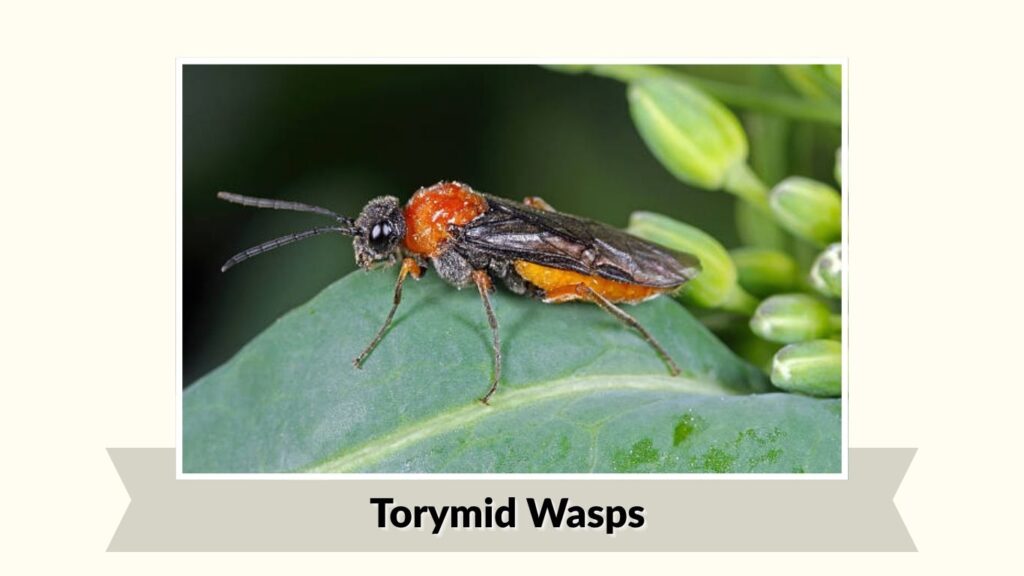
Torymid wasps are small insects belonging to the family Torymidae. Many species are parasitoids that attack insects developing inside plant galls, while some related groups traditionally classified with torymids feed directly on plant seeds. These wasps are often recognized by their metallic body colors and the long ovipositors of many females. Their specialized reproductive behavior allows them to reach insects protected inside plant tissues.
Identification
- Scientific Family: Torymidae
- Size: Commonly 2–6 mm long, although sizes vary.
- Body Color: Metallic green, blue, bronze, or dark brown.
- Wings: Transparent wings with relatively simple venation.
- Antennae: Segmented antennae with slightly enlarged terminal sections.
- Body Shape: Slender or moderately compact body with long legs.
- Distinctive Features: Females of many species possess long, prominent ovipositors.
Habitat and Distribution
Torymid wasps occur worldwide in forests, orchards, gardens, grasslands, and agricultural environments. Many parasitoid species are closely associated with trees and shrubs that support gall-forming insects. Adult females search leaves, stems, branches, and developing galls for suitable hosts. Their presence often depends on the seasonal development of host insects and the availability of particular plant species.
Life Cycle and Reproduction
Female parasitoid torymid wasps use their elongated ovipositors to deposit eggs near or on insects developing within plant galls. After hatching, the larvae feed on their hosts, eventually killing them. The parasitoids may remain inside the gall while completing development. Adult emergence often coincides with the seasonal growth of host plants and the appearance of new galls.
Role in Natural Pest Control
Some torymid wasps are valuable natural enemies of gall-forming agricultural pests. One important example is Torymus sinensis, a parasitoid used to manage the Asian chestnut gall wasp. By attacking larvae inside chestnut galls, this species helps reduce pest populations and associated plant damage. However, not every torymid has the same ecological role, and host specificity should be considered before using any species in biological control programs.
16. Eurytomid Wasps
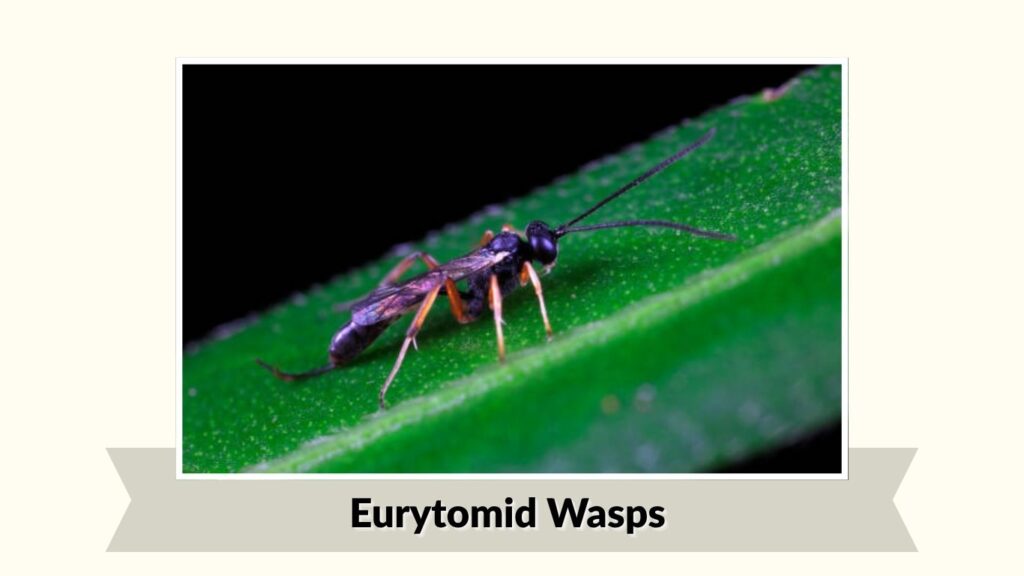
Eurytomid wasps are small insects belonging to the family Eurytomidae. This diverse family contains parasitoids, seed-feeding species, and insects that develop inside plant stems or galls. Many parasitoid eurytomids attack insects concealed within plant tissues, including gall-forming insects and various agricultural pests. Their ecological roles differ considerably, with some species providing natural pest control while others damage cultivated plants.
Identification
- Scientific Family: Eurytomidae
- Size: Commonly 2–6 mm long.
- Body Color: Black, dark brown, or occasionally yellowish.
- Wings: Transparent wings with reduced venation.
- Antennae: Short to moderately long, segmented antennae.
- Body Shape: Compact, relatively sturdy body with a rounded abdomen.
- Distinctive Features: Often heavily sculptured body surfaces and a robust appearance compared with many other micro-wasps.
Habitat and Distribution
Eurytomid wasps occur worldwide in forests, gardens, agricultural fields, grasslands, and orchards. Many species are associated with flowering plants, grasses, and shrubs. Parasitoid species search for insects living inside galls, stems, or other plant tissues. Plant-feeding species may develop directly within seeds or stems. Their distribution depends on the availability of suitable hosts or host plants.
Life Cycle and Reproduction
Female eurytomid wasps use their ovipositors to deposit eggs into suitable locations. Parasitoid species lay eggs in or near host insects, while plant-feeding species may place eggs inside developing seeds or stems. After hatching, the larvae consume either insect tissues or plant material, depending on the species. They eventually pupate within their developmental sites before emerging as adults.
Role in Natural Pest Control
Some eurytomid wasps help control gall-forming insects, beetles, and other agricultural pests through parasitism. However, the family also includes economically harmful species. For example, the alfalfa seed chalcid, Bruchophagus roddi, develops inside alfalfa seeds and can reduce seed production. Therefore, eurytomid wasps cannot all be considered beneficial insects. Their agricultural importance depends on whether individual species attack pest insects or feed directly on cultivated plants.
17. Signiphorid Wasps
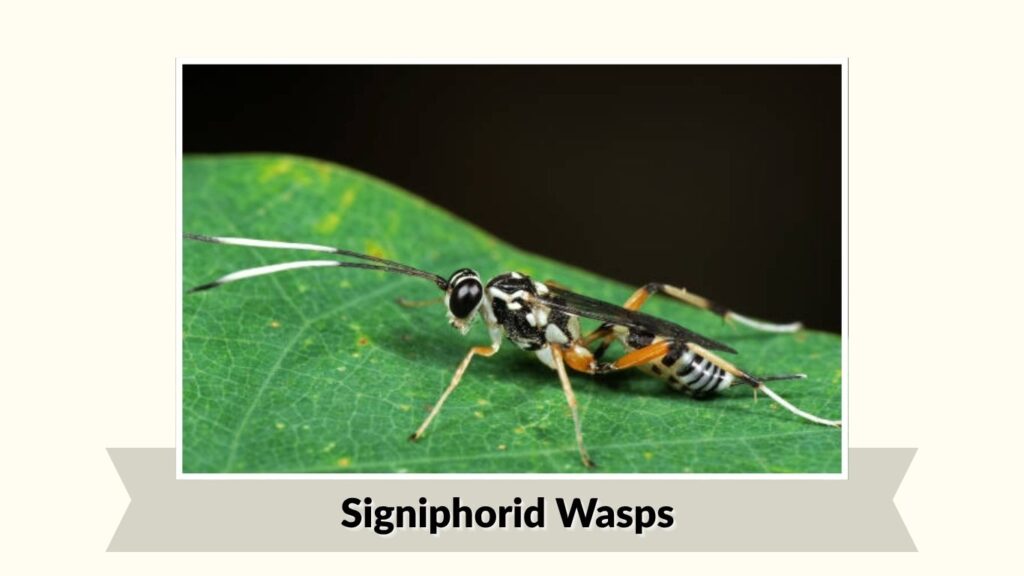
Signiphorid wasps are extremely small parasitoid insects belonging to the family Signiphoridae. These tiny wasps are commonly associated with whiteflies, mealybugs, and scale insects. Some species directly parasitize plant-feeding insects, while others develop as hyperparasitoids by attacking beneficial parasitoids already living inside their hosts. Their small size and complex reproductive behavior make them important members of insect communities in agricultural and natural environments.
Identification
- Scientific Family: Signiphoridae
- Size: Commonly around 0.5–2 mm long.
- Body Color: Dark brown, black, yellowish, or combinations of these colors.
- Wings: Small, transparent wings, sometimes with dark markings and long marginal hairs.
- Antennae: Short, segmented antennae with enlarged terminal segments.
- Body Shape: Compact, delicate body with a relatively small abdomen.
- Distinctive Features: Reduced wing venation and specialized relationships with small sap-feeding insects.
Habitat and Distribution
Signiphorid wasps occur worldwide, particularly in tropical and subtropical environments. They inhabit forests, gardens, orchards, agricultural fields, and greenhouses. Many species are found on plants infested with whiteflies, scale insects, or mealybugs. Adult females search leaves, stems, and other plant surfaces for suitable hosts. Their distribution depends on host availability, climate, and surrounding vegetation.
Life Cycle and Reproduction
Female signiphorid wasps deposit eggs in or on suitable hosts, depending on the species. Primary parasitoids develop by consuming their insect hosts directly. Hyperparasitoid species instead attack other parasitoids developing inside scale insects, whiteflies, or mealybugs. After hatching, the larvae feed on their hosts and eventually complete development before emerging as adults.
Role in Natural Pest Control
Signiphorid wasps have mixed effects on biological pest management. Primary parasitoid species can help suppress populations of whiteflies and scale insects that damage crops. However, hyperparasitoid species may reduce the effectiveness of beneficial encyrtid and aphelinid wasps. Consequently, their overall impact depends on the species involved and its position within the host-parasitoid food web.
18. Perilampid Wasps
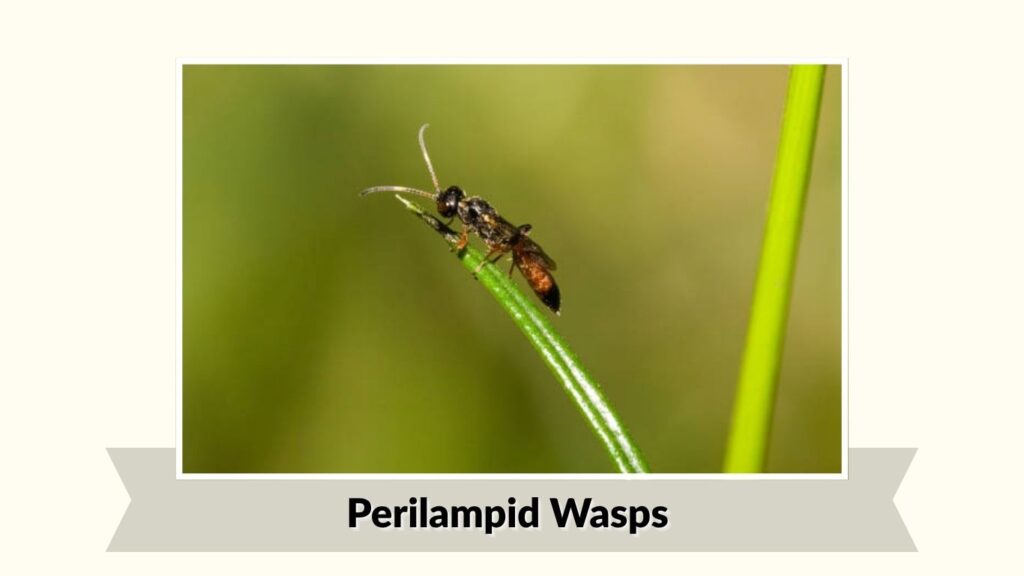
Perilampid wasps are small parasitoid insects belonging to the family Perilampidae. These wasps are known for their shiny metallic bodies and unusual larval development. Many species are hyperparasitoids, meaning they develop by attacking other parasitoid insects. Their larvae possess specialized adaptations that allow them to locate suitable hosts. Although they are less familiar than many other parasitoid wasps, perilampids play important roles in complex insect food webs.
Identification
- Scientific Family: Perilampidae
- Size: Commonly around 2–5 mm long.
- Body Color: Metallic green, blue, bronze, or occasionally dark brown.
- Wings: Transparent wings with reduced venation.
- Antennae: Short to moderately long, segmented antennae.
- Body Shape: Compact, robust body with a relatively small abdomen.
- Distinctive Features: Shiny metallic coloration, strongly sculptured thorax, and specialized mobile first-stage larvae.
Habitat and Distribution
Perilampid wasps occur in various regions worldwide, including forests, grasslands, orchards, and agricultural fields. Adults are often associated with flowering plants and vegetation supporting caterpillars or other host insects. Female wasps deposit eggs in locations where their newly hatched larvae may encounter suitable hosts. Their abundance depends on the presence of insects and the primary parasitoids associated with them.
Life Cycle and Reproduction
Female perilampid wasps lay eggs on vegetation rather than directly inside their eventual hosts. After hatching, the active first-stage larvae, called planidia, seek suitable insects. In hyperparasitoid species, these larvae may enter caterpillars or other insects and locate primary parasitoid larvae developing inside them. The perilampid then develops at the expense of the primary parasitoid before eventually emerging as an adult.
Role in Natural Pest Control
Perilampid wasps influence insect populations through their specialized parasitic relationships. Some species attack beneficial parasitoids that naturally control agricultural pests, potentially reducing their effectiveness. Others act as primary parasitoids. Because many perilampids are hyperparasitoids, their presence does not necessarily improve pest suppression. Understanding their host relationships is important when evaluating their ecological effects in integrated pest management programs.
19. Tetracampid Wasps
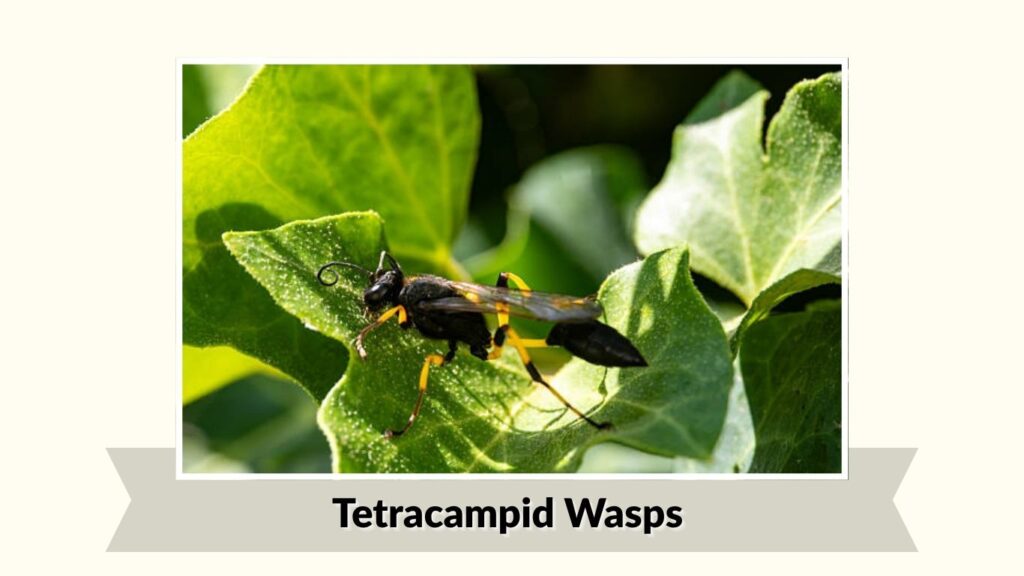
Tetracampid wasps are tiny parasitoid insects belonging to the family Tetracampidae. These insects are known for parasitizing the immature stages of various plant-feeding insects, including leafminers, beetles, and sawflies. Although the family contains relatively few described species compared with other parasitoid wasp families, its members contribute to natural insect population regulation. Many tetracampid species remain poorly studied because of their small size and specialized host relationships.
Identification
- Scientific Family: Tetracampidae
- Size: Usually around 1–3 mm long.
- Body Color: Dark brown, black, or metallic green.
- Wings: Transparent wings with relatively simple venation.
- Antennae: Short, segmented antennae with slightly enlarged tips.
- Body Shape: Small, compact body with slender legs.
- Distinctive Features: Tiny body size and specialized associations with leaf-mining insects.
Habitat and Distribution
Tetracampid wasps occur primarily in parts of Europe, Asia, and Africa, although their distribution varies by species. They inhabit forests, gardens, grasslands, and agricultural environments. Many species are associated with plants attacked by leafminers or other insects that develop inside plant tissues. Adult females search vegetation for suitable host eggs or larvae.
Life Cycle and Reproduction
Female tetracampid wasps deposit their eggs into suitable host insects. Some species attack the eggs of leaf beetles or sawflies, while others parasitize fly larvae developing inside plant leaves. After hatching, parasitoid larvae consume their hosts and eventually cause their death. The developing wasps complete pupation before emerging as adults.
Role in Natural Pest Control
Tetracampid wasps can help regulate populations of plant-feeding insects. Some species attack leaf beetles, sawflies, and leafminer flies that damage cultivated or wild plants. For example, Dipriocampe diprioni parasitizes sawfly eggs and has been investigated for biological control. However, most tetracampid species are not widely used in commercial pest management because their biology and host relationships remain insufficiently understood.
20. Ormyrid Wasps
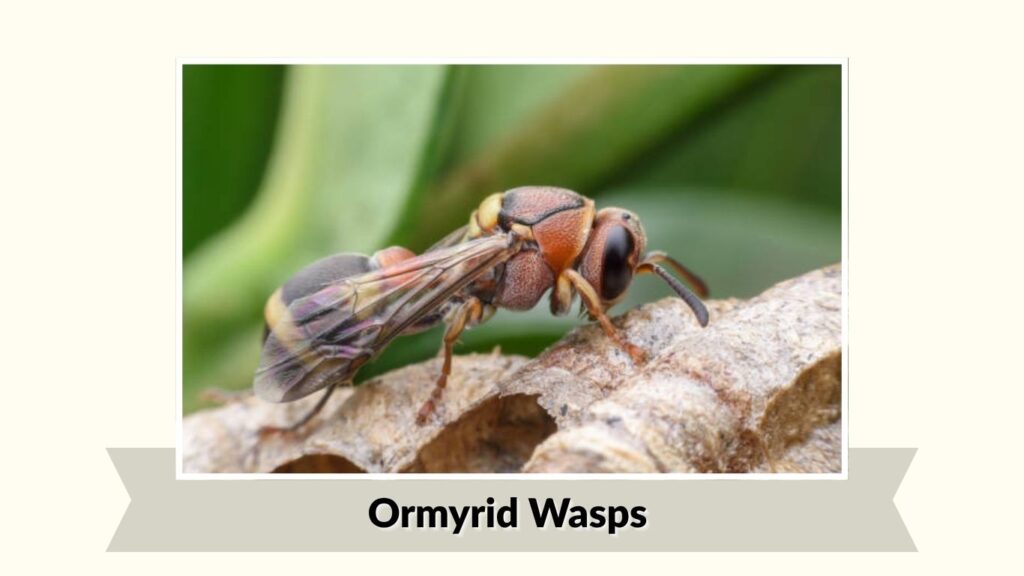
Ormyrid wasps are small insects belonging to the family Ormyridae. Many species are parasitoids of gall-forming insects, particularly gall wasps and certain flies. These tiny wasps are commonly associated with unusual plant growths called galls, which provide shelter and food for developing host insects. Some ormyrids have metallic bodies with distinctive sculptured patterns. Their specialized relationships with gall-forming insects make them important members of natural ecosystems.
Identification
- Scientific Family: Ormyridae
- Size: Commonly around 2–5 mm long.
- Body Color: Metallic green, blue, bronze, or dark brown.
- Wings: Transparent wings with reduced venation.
- Antennae: Short, segmented antennae with slightly enlarged tips.
- Body Shape: Compact body with a rounded or elongated abdomen.
- Distinctive Features: Some species have deeply sculptured abdominal segments with distinctive rows of pits.
Habitat and Distribution
Ormyrid wasps occur in many regions worldwide, including temperate and tropical environments. They inhabit forests, gardens, grasslands, and areas containing gall-forming insects. Many species are associated with oak trees, shrubs, and herbaceous plants where gall wasps develop. Female parasitoids search plant galls for suitable hosts, using their specialized ovipositors to reach insects hidden inside plant tissues.
Life Cycle and Reproduction
Female parasitoid ormyrid wasps lay eggs on or near host larvae developing inside plant galls. After hatching, the parasitoid larvae feed externally on the host insects, eventually killing them. They may remain inside the gall during development and pupation before emerging as adults. The timing of emergence often depends on host development and seasonal environmental conditions.
Role in Natural Pest Control
Ormyrid wasps help regulate populations of gall-forming insects. Species such as Ormyrus pomaceus parasitize insects associated with oak galls. Their activity influences gall insect populations and the ecological balance of plant-associated insect communities. However, some members of the broader family are themselves gall formers, so not all ormyrids act as parasitoids. Their importance in agricultural pest management varies by species and host relationship.
21. Eucharitid Wasps
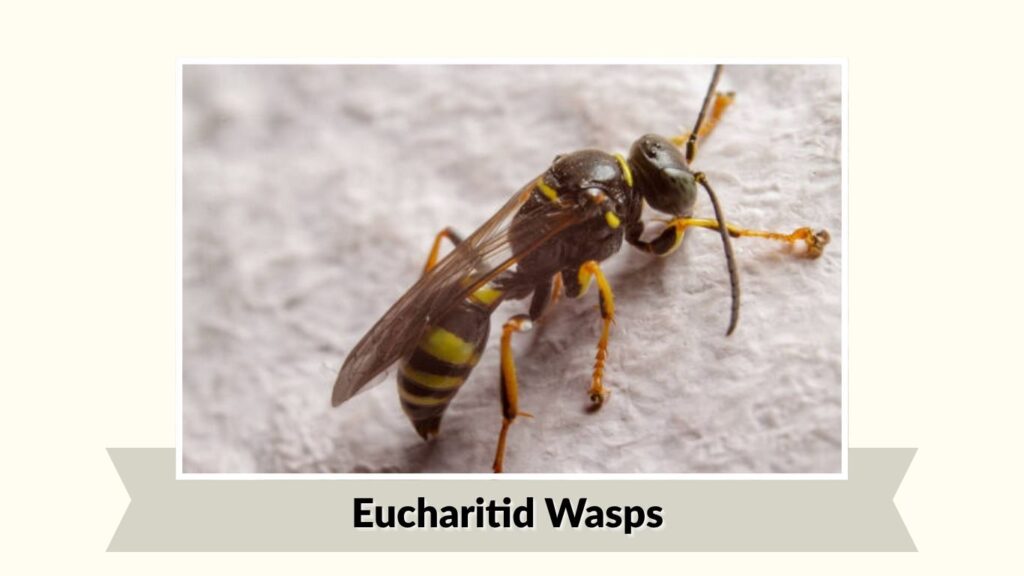
Eucharitid wasps are unusual parasitoid insects belonging to the family Eucharitidae. Unlike most other parasitoid micro-wasps, they specialize in attacking the immature stages of ants. These wasps have highly specialized life cycles that allow their larvae to enter ant colonies without being immediately removed by worker ants. Many species display beautiful metallic coloration and distinctive body shapes, making them particularly interesting among parasitoid wasps.
Identification
- Scientific Family: Eucharitidae
- Size: Many species measure approximately 2–7 mm long.
- Body Color: Metallic green, blue, bronze, black, or combinations of these colors.
- Wings: Transparent or slightly darkened wings.
- Antennae: Segmented antennae, sometimes with unusual comb-like structures.
- Body Shape: Slender to robust body, often with a narrow waist and rounded abdomen.
- Distinctive Features: Metallic coloration, unusual thoracic projections in some species, and specialized ant-parasitizing larvae.
Habitat and Distribution
Eucharitid wasps occur in tropical, subtropical, and temperate regions worldwide. They are commonly found in forests, grasslands, gardens, and other habitats containing suitable ant colonies. Adult females visit vegetation and deposit eggs on or within plant tissues, usually away from ant nests. Their distribution depends on the presence of suitable ant hosts and the plants used for egg laying.
Life Cycle and Reproduction
Female eucharitid wasps lay eggs on plants rather than directly inside ant colonies. After hatching, their highly mobile first-stage larvae, known as planidia, attach themselves to foraging ants or other insects that can transport them into ant nests. Once inside, the larvae attach to immature ants and wait for suitable developmental stages. They eventually feed on their hosts, usually completing development at the expense of ant pupae before emerging as adult wasps.
Role in Natural Pest Control
Eucharitid wasps naturally regulate certain ant populations through their specialized parasitic behavior. Unlike parasitoids that attack aphids, caterpillars, or whiteflies, these wasps target developing ants. Their effects on agricultural pest control are generally indirect because the ants they parasitize may themselves be beneficial predators or ecologically important species. Eucharitid wasps are especially valuable for understanding host specialization, ant-parasitoid interactions, and the ecological relationships within insect communities.
22. Bethylid Wasps
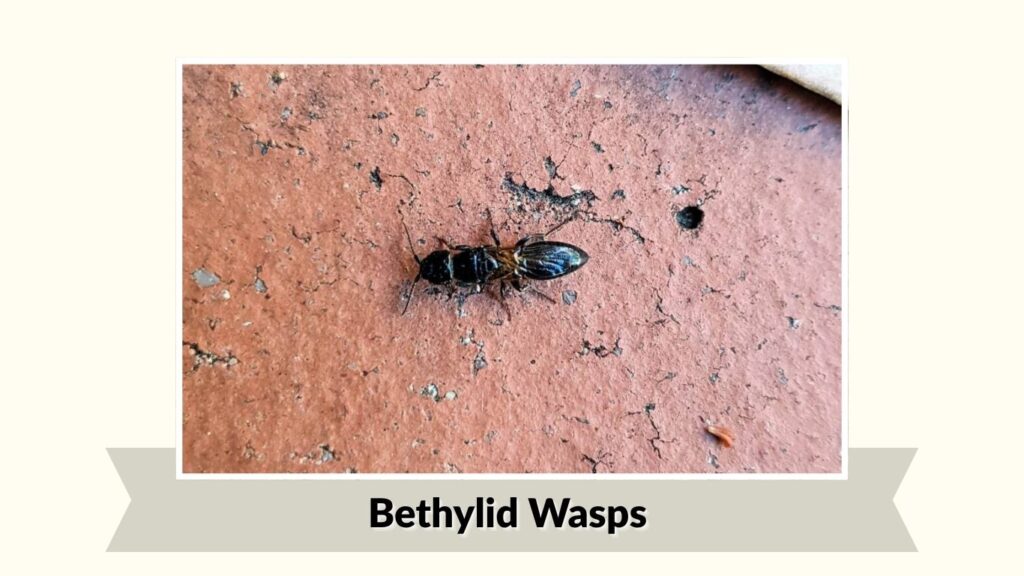
Bethylid wasps are small parasitoid insects belonging to the family Bethylidae. These wasps are known for attacking the larvae of beetles and moths, including species that damage stored food products and agricultural crops. Many female bethylid wasps have an ant-like appearance because their wings are reduced or absent. Their ability to paralyze host insects and lay eggs on them makes them effective natural enemies in various environments.
Identification
- Scientific Family: Bethylidae
- Size: Commonly 2–7 mm long, although some species are larger.
- Body Color: Black, dark brown, or reddish-brown.
- Wings: Transparent wings in winged species; many females are wingless.
- Antennae: Segmented antennae, often slightly curved.
- Body Shape: Slender, elongated body with a narrow waist.
- Distinctive Features: Ant-like appearance in wingless females and strong jaws used during host handling.
Habitat and Distribution
Bethylid wasps occur worldwide in forests, gardens, agricultural fields, grasslands, and stored-product environments. Many species live around decaying wood, grain storage areas, and places where beetle or moth larvae develop. Wingless females often search narrow cracks, tunnels, and concealed spaces to locate suitable hosts. Their distribution depends on host availability, environmental conditions, and suitable shelter.
Life Cycle and Reproduction
Female bethylid wasps locate suitable insect larvae and frequently sting them to cause paralysis. They then deposit eggs directly on their hosts. After hatching, the parasitoid larvae feed externally on the immobilized insects, eventually consuming enough tissue to kill them. The larvae complete their development and form cocoons before emerging as adults. Some species exhibit maternal care, with females remaining near their developing offspring.
Role in Natural Pest Control
Bethylid wasps help regulate populations of beetles and moths that damage crops or stored products. For example, Goniozus legneri has been used against the navel orangeworm, a destructive pest of nut crops. Other bethylid species attack stored-product beetles. Their natural parasitic activity can reduce pest populations and support integrated pest management programs.
23. Dryinid Wasps
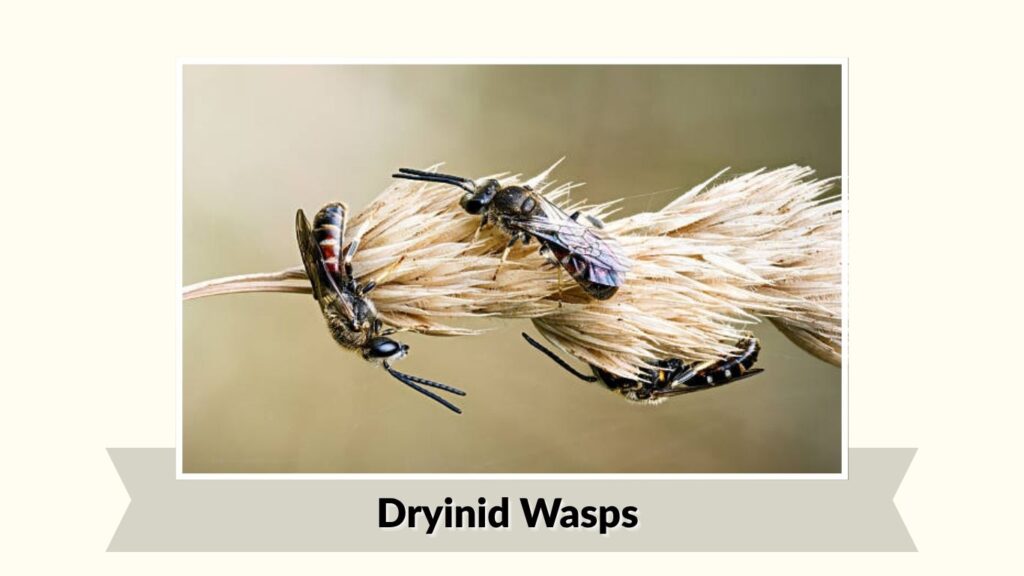
Dryinid wasps, also called pincer wasps, belong to the family Dryinidae. These small parasitoid insects specialize in attacking leafhoppers and planthoppers, which feed on plant sap and sometimes transmit plant diseases. Female dryinid wasps of many species possess unusual pincer-like front legs that help them capture their hosts. Their specialized parasitic behavior makes them important natural enemies in agricultural fields, grasslands, and other vegetated habitats.
Identification
- Scientific Family: Dryinidae
- Size: Many species measure 2–5 mm long, although some are larger.
- Body Color: Black, dark brown, reddish-brown, or yellowish.
- Wings: Males are generally winged, while females may be winged or wingless.
- Antennae: Long, segmented antennae, typically consisting of ten segments.
- Body Shape: Slender body with an ant-like appearance in many females.
- Distinctive Features: Specialized pincer-like front legs in many females, used to hold host insects.
Habitat and Distribution
Dryinid wasps are distributed worldwide, occurring in grasslands, forests, agricultural fields, wetlands, and gardens. They are particularly common in environments containing leafhoppers and planthoppers. Adult females search grasses, shrubs, and crop plants for suitable hosts. Some wingless females move across plant surfaces and vegetation while hunting, making them less noticeable than flying parasitoid wasps.
Life Cycle and Reproduction
Female dryinid wasps capture suitable leafhoppers or planthoppers and deposit eggs into their bodies. The developing larvae initially feed within the host, although in many species part of the larva eventually protrudes from the host’s body inside a protective sac. Once fully developed, the larva leaves the host, which dies, and spins a cocoon nearby. An adult wasp eventually emerges.
Role in Natural Pest Control
Dryinid wasps help suppress leafhopper and planthopper populations that damage crops by feeding on plant sap. Species belonging to genera such as Gonatopus and Anteon are natural enemies of these insects. Their parasitic activity can reduce pest survival and contribute to ecological balance. Although they are not commonly sold for commercial pest control, dryinid wasps are valuable components of naturally occurring biological control systems.
24. Azotid Wasps
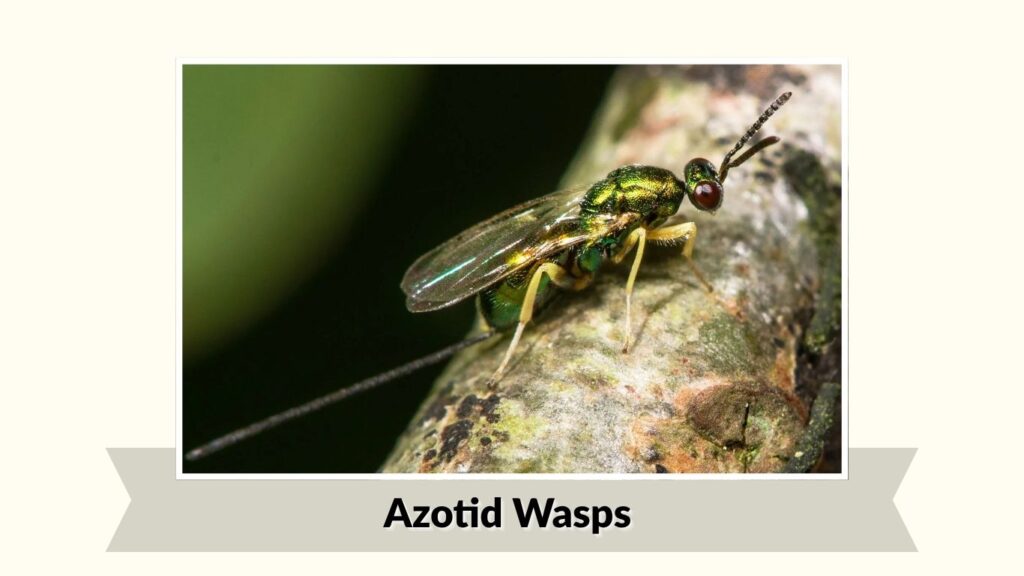
Azotid wasps are extremely small parasitoid insects belonging to the family Azotidae. This family contains the genus Ablerus, whose members are primarily known as hyperparasitoids. Instead of directly attacking agricultural pests, many azotid wasps parasitize other tiny wasps developing inside whiteflies and scale insects. Their complex relationships with other parasitoids make them important members of insect communities, particularly in environments containing sap-feeding pests.
Identification
- Scientific Family: Azotidae
- Size: Usually around 0.5–2 mm long.
- Body Color: Black, dark brown, yellowish, or combinations of contrasting colors.
- Wings: Transparent or slightly darkened wings, sometimes with distinctive patterns.
- Antennae: Short, segmented antennae that vary between species.
- Body Shape: Small, compact body with slender legs.
- Distinctive Features: Extremely small size, reduced wing venation, and specialized hyperparasitoid behavior.
Habitat and Distribution
Azotid wasps occur in many regions worldwide, including tropical, subtropical, and temperate environments. They inhabit forests, orchards, gardens, agricultural fields, and other environments containing suitable hosts. Adult females are commonly associated with plants supporting whiteflies, scale insects, and their natural enemies. Their distribution depends on the availability of suitable host insects and parasitoids.
Life Cycle and Reproduction
Female azotid wasps deposit eggs into suitable hosts, frequently targeting immature parasitoids already developing within whiteflies or scale insects. After hatching, the azotid larvae consume their parasitoid hosts rather than the original plant-feeding insects. They complete their development within this protected environment before emerging as adults. Some species have different host relationships, including primary parasitism of insect eggs.
Role in Natural Pest Control
Azotid wasps influence biological pest management mainly through their relationships with other parasitoids. Because many Ablerus species attack beneficial wasps that control whiteflies and scale insects, they may interfere with natural pest suppression. However, their presence also reflects complex ecological interactions within insect communities. Understanding their host relationships helps researchers evaluate the effectiveness and stability of biological control programs.
25. Calesid Wasps
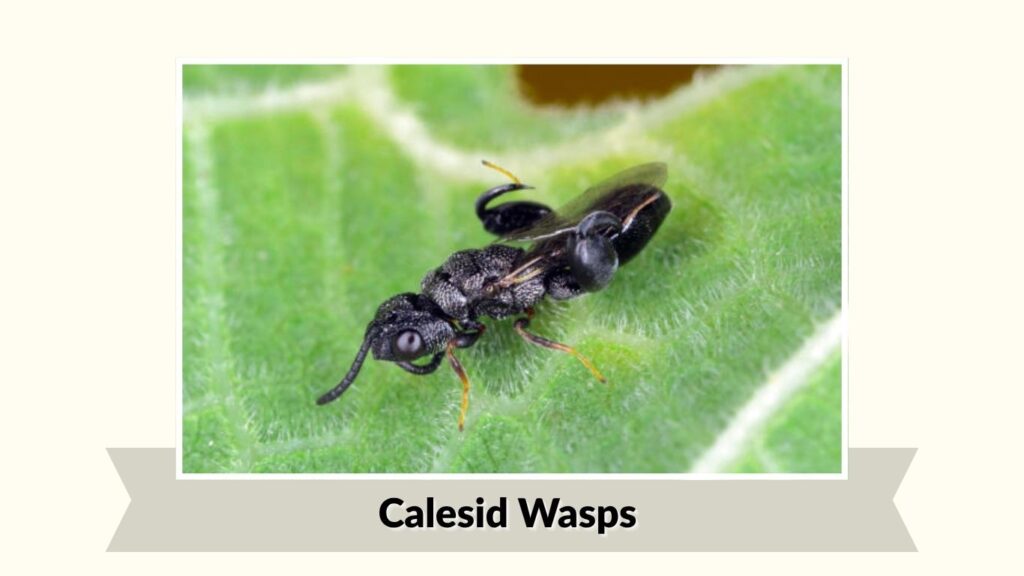
Calesid wasps are minute parasitoid insects belonging to the family Calesidae, which contains the genus Cales. These tiny wasps are particularly important for controlling whiteflies, including species that damage citrus trees and ornamental plants. They were historically classified with aphelinid wasps, but more recent classifications recognize Calesidae as a separate family. Their specialized ability to parasitize immature whiteflies makes them valuable natural enemies in agricultural ecosystems.
Identification
- Scientific Family: Calesidae
- Size: Generally less than 1 mm long.
- Body Color: Pale yellow, yellowish-brown, or orange.
- Wings: Delicate, transparent wings with fine marginal hairs.
- Antennae: Short, segmented antennae with specialized terminal structures.
- Body Shape: Extremely small, compact body with slender legs.
- Distinctive Features: Tiny size, pale coloration, and specialized whitefly-parasitizing behavior.
Habitat and Distribution
Calesid wasps occur in various regions worldwide, particularly where suitable whitefly hosts are present. They inhabit citrus orchards, gardens, forests, and agricultural environments. Some species are native to tropical or subtropical regions, while others have been introduced into new areas for biological pest control. Adult females search the undersides of leaves for developing whitefly nymphs.
Life Cycle and Reproduction
Female calesid wasps lay eggs inside immature whiteflies. For example, Cales noacki commonly attacks first- and second-instar woolly whitefly nymphs. After hatching, the wasp larvae develop inside their hosts and consume their tissues. Parasitized whiteflies eventually become swollen, yellowish mummies. Adult wasps emerge through small, rounded holes after completing development.
Role in Natural Pest Control
Calesid wasps are valuable biological control agents against certain whitefly pests. Cales noacki has been introduced into citrus-growing regions to control the citrus woolly whitefly, Aleurothrixus floccosus. By attacking immature whiteflies, these wasps help reduce infestations, plant sap loss, and honeydew production. Their targeted parasitic behavior supports environmentally friendly pest management and can reduce dependence on chemical insecticides.
FAQs
1. What Are Parasitoid Micro-Wasps?
Parasitoid micro-wasps are very small wasps whose larvae develop in or on other insects, eventually killing their hosts. Many belong to families such as Mymaridae, Trichogrammatidae, Aphelinidae, and Encyrtidae. They are important natural enemies of agricultural pests.
2. Can Parasitoid Micro-Wasps Sting Humans?
Most parasitoid micro-wasps are harmless to humans and rarely interact with people. However, a few groups, such as certain bethylid wasps, can deliver painful stings when disturbed or handled. They generally do not behave aggressively toward humans.
3. Which Parasitoid Micro-Wasps Are Best for Pest Control?
Trichogramma wasps, aphelinid wasps, encyrtid wasps, and certain eulophid wasps are widely recognized for biological pest control. Their effectiveness depends on the target pest. For example, Trichogramma species attack moth eggs, while Encarsia formosa is commonly used against greenhouse whiteflies.
4. Where Do Parasitoid Micro-Wasps Lay Their Eggs?
Parasitoid micro-wasps lay their eggs inside or on suitable host insects. Some attack insect eggs, while others target larvae, pupae, or adults. Female wasps use specialized ovipositors to place eggs where their offspring can develop using the host as a food source.
5. Are All Parasitoid Micro-Wasps Beneficial to Gardens?
Not all parasitoid micro-wasps are directly beneficial for garden pest control. Many attack plant-damaging insects, helping protect vegetation naturally. However, hyperparasitoid species attack other parasitoids, including beneficial wasps. Their presence may reduce the effectiveness of natural pest suppression rather than improve it.
