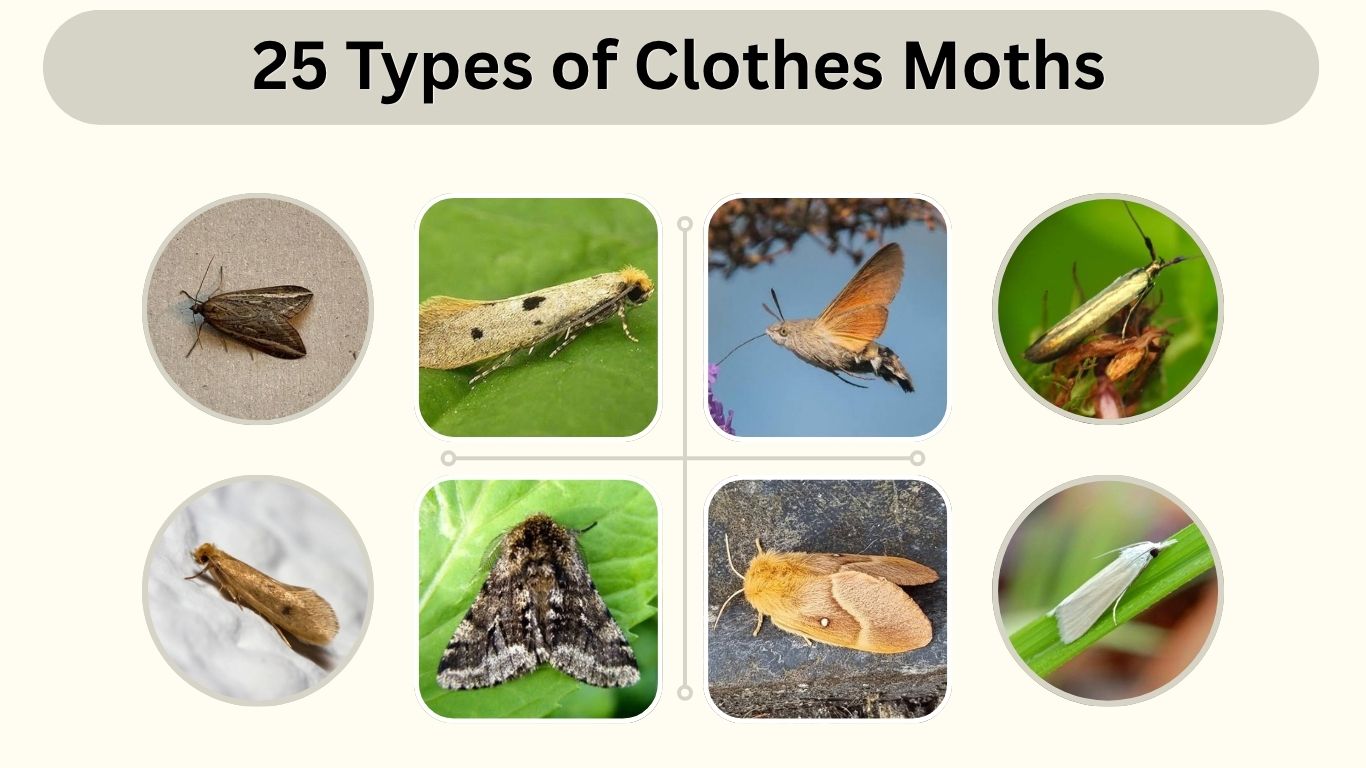
Clothes moths are small moths best known for their larvae, which can feed on wool, fur, feathers, hair, hides, and other natural materials. While some species are genuine household fabric pests, others are mainly scavengers found in bird nests, animal debris, fungi, or stored organic matter. Their habits, appearance, and preferred habitats can vary widely. In this guide, you will discover 25 types of clothes moths, along with their identification features, habitat, behavior, diet, lifespan, and life cycle.
1. Common Clothes Moth
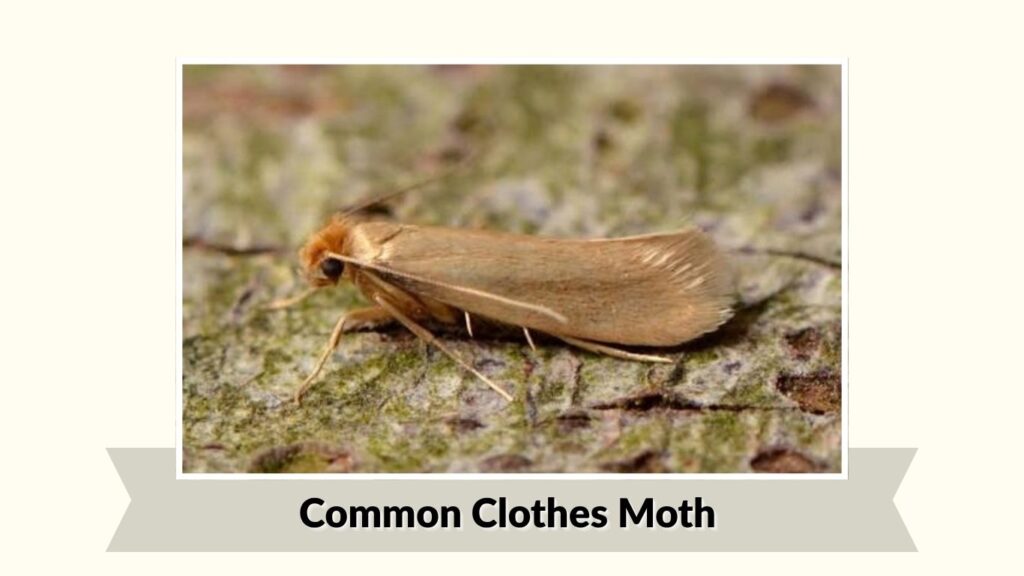
The Common Clothes Moth is one of the best-known fabric-damaging moths found in homes, closets, storage rooms, and other indoor spaces. The adult moth itself causes little damage, but its larvae feed on natural animal-based fibers such as wool, fur, feathers, and hair. Infestations often develop quietly in dark, undisturbed places, making early detection difficult until holes or thinning areas appear in clothing, carpets, or stored fabrics.
Identification
- Adult moths are small and usually pale golden or straw-colored.
- Their wings are narrow and often have a silky appearance.
- Adults typically measure around 6–8 mm in body length.
- Larvae are creamy white with a darker brown head.
- Small silken tubes, webbing, or feeding patches may appear on fabrics.
- Irregular holes can develop in wool clothing, rugs, and upholstery.
- Adults usually avoid bright light and prefer dark areas.
Habitat and Distribution
Common clothes moths are widely found in homes, museums, warehouses, clothing stores, and buildings where natural fabrics are kept. They prefer warm, dark, and relatively undisturbed areas such as closets, drawers, underneath furniture, carpet edges, and storage boxes. Infestations are especially likely where wool or other animal fibers remain unused for long periods.
Behavior and Diet
The larvae are responsible for nearly all fabric damage. They feed on materials containing keratin, including wool, fur, feathers, animal hair, and sometimes blended fabrics containing natural fibers. They are particularly attracted to items contaminated with sweat, food stains, skin oils, or other organic material. Adult moths generally do not feed on clothing.
Lifespan and Life Cycle
The life cycle begins when female moths lay eggs near suitable food sources. The eggs hatch into larvae, which feed for several weeks or months depending on temperature and food availability. Mature larvae create silken cocoons and enter the pupal stage. Adult moths later emerge, mate, and lay eggs. In warm indoor environments, several generations may develop within a year.
2. Case-Bearing Clothes Moth
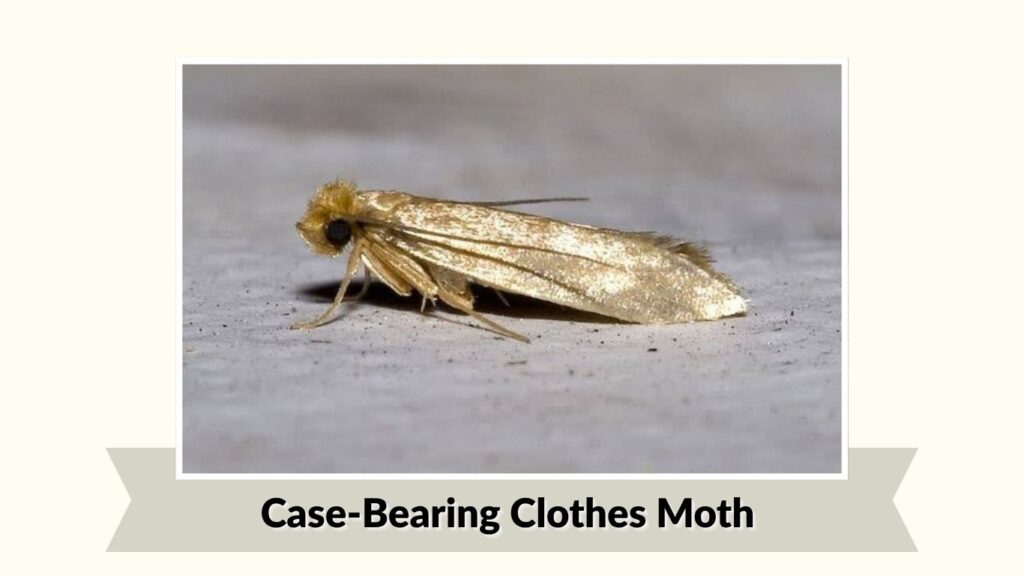
The Case-Bearing Clothes Moth is another important household moth whose larvae can damage wool, fur, feathers, carpets, and other natural materials. Unlike common clothes moth larvae, these caterpillars carry a small silken case around their bodies as they move and feed. This portable case helps protect them from disturbance and makes them easier to recognize when inspecting infested fabrics or storage areas.
Identification
- Adult moths are small and generally brownish or grayish.
- Wings often have several darker spots.
- Larvae are creamy white with a dark head.
- Each larva carries a portable silken case.
- Cases may contain fibers taken from the material being eaten.
- Damage appears as irregular holes or thin patches in fabric.
- Larvae prefer dark and undisturbed locations.
Habitat and Distribution
Case-bearing clothes moths are commonly found indoors in closets, wardrobes, attics, storage rooms, and beneath furniture. They can also occur in museums or warehouses where animal-based fabrics and materials are stored. Warm indoor environments with little disturbance provide favorable conditions for their development.
Behavior and Diet
The larvae feed on keratin-rich materials such as wool, hair, fur, feathers, and animal skins. They usually remain partly enclosed within their silken cases and enlarge them as they grow. Adult moths do not cause fabric damage and are mainly concerned with reproduction.
Lifespan and Life Cycle
Females lay eggs near suitable food. After hatching, larvae construct cases and begin feeding. The larval period can last for several months, depending on temperature and food quality. Mature larvae pupate inside their cases, and adults later emerge to mate and start a new generation.
3. Tapestry Moth
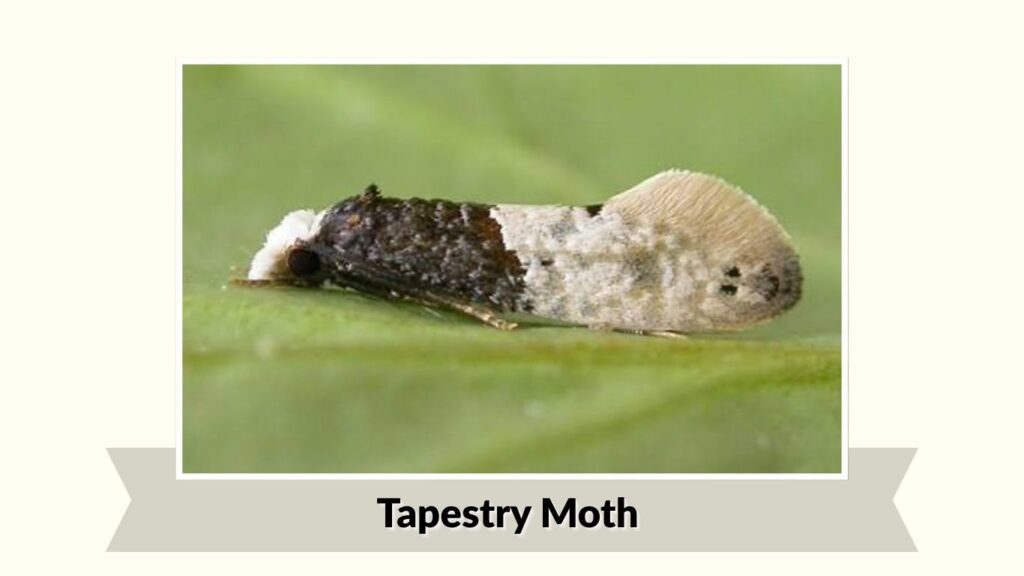
The Tapestry Moth is a fabric-feeding moth traditionally associated with carpets, tapestries, upholstery, stored wool, and other animal-derived materials. Its larvae can also feed on feathers, fur, and natural debris. Although it is less frequently encountered in modern homes than some other clothes moths, infestations can still occur in undisturbed storage spaces containing suitable food.
Identification
- Adults are larger than many common clothes moths.
- Wings are usually brownish with darker markings.
- Larvae are pale with a darker head.
- Silken webbing may occur around feeding sites.
- Fabric surfaces may become thin or ragged.
- Holes may appear in wool, carpets, or upholstery.
- Larvae usually remain hidden in dark areas.
Habitat and Distribution
Tapestry moths may occur in homes, old buildings, museums, storage rooms, barns, and warehouses. They favor quiet areas where natural materials remain untouched for long periods. Old rugs, upholstered furniture, stored wool, and animal-based collections can provide suitable habitat.
Behavior and Diet
Larvae consume natural animal products containing keratin. Wool, fur, feathers, hair, and animal skins are especially attractive. They may also feed on organic debris found in bird or animal nests. Adult moths do not produce the characteristic textile damage.
Lifespan and Life Cycle
Eggs are laid near suitable materials. The larvae hatch and feed for an extended period before spinning protective silk and pupating. Development may slow under cool or dry conditions. Once adults emerge, they reproduce and continue the cycle.
4. Hide Clothes Moth
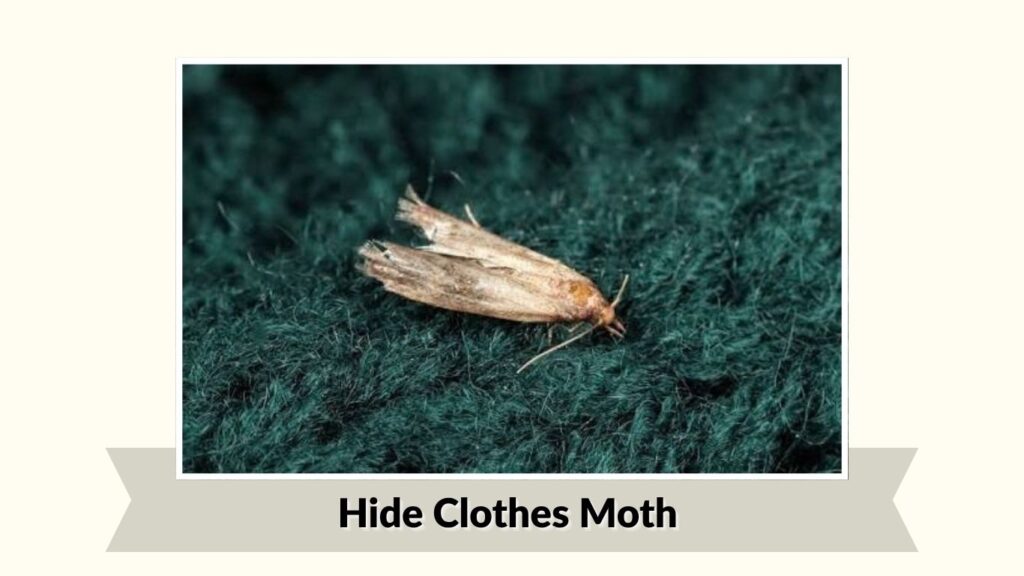
The Hide Clothes Moth is associated with animal-based materials such as hides, fur, feathers, hair, and wool. Its larvae can damage stored natural products and may occasionally appear in homes where suitable materials are available. They are particularly well adapted to feeding on dry animal remains and other keratin-rich substances.
Identification
- Adults are small, narrow-winged moths.
- Coloring is generally brownish or dull gray.
- Larvae are pale and caterpillar-like.
- Feeding damage may appear on hides, fur, or wool.
- Silken material may be present near feeding areas.
- Larvae often hide in seams, cracks, or folds.
- Adults are usually less noticeable than the larvae.
Habitat and Distribution
Hide clothes moths can occur in storage buildings, museums, taxidermy collections, homes, barns, and locations containing animal products. They often favor dark, dry, and protected environments where hides, skins, feathers, or wool remain undisturbed.
Behavior and Diet
The larvae feed primarily on dry animal materials. Hides, fur, feathers, hair, and wool can all serve as food. They may also use remains in bird nests or animal shelters. Adults generally do not feed on these materials and cause no direct textile damage.
Lifespan and Life Cycle
Females place eggs close to an appropriate food source. Larvae emerge and begin feeding, sometimes remaining active for several months. Once fully grown, they create protected pupation sites. Adults later emerge, mate, and lay a new generation of eggs.
5. Wall Clothes Moth
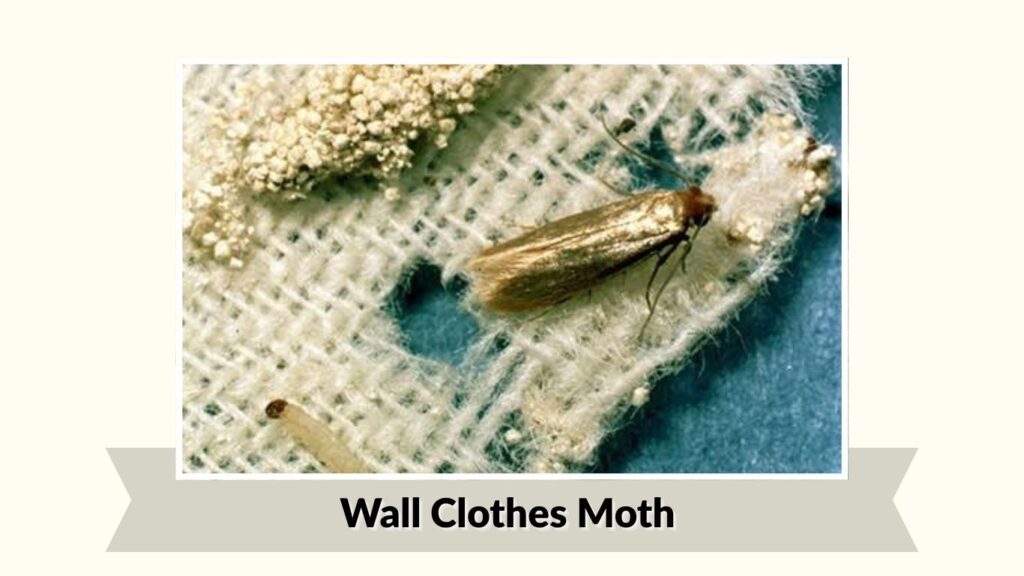
The Wall Clothes Moth is a small moth whose larvae may be found around homes, buildings, wall cavities, and places containing organic materials. Its larvae can feed on animal fibers, old nesting material, hair, feathers, and similar debris. Indoor infestations may begin when moths move from bird nests, roof spaces, or wall voids into living areas.
Identification
- Adults are small with narrow wings.
- Wings are generally brownish or dull in appearance.
- Larvae are pale with darker heads.
- Silk may occur around their feeding areas.
- Small cases or webbing can sometimes be present.
- Damage may appear on natural fabrics nearby.
- Adults usually prefer sheltered locations.
Habitat and Distribution
Wall clothes moths can occur in houses, old buildings, roof spaces, wall cavities, sheds, and areas associated with bird or animal nests. They thrive where organic debris accumulates and remains undisturbed. Indoor populations may persist when natural fibers are also available.
Behavior and Diet
Larvae feed on materials such as feathers, hair, wool, dried animal matter, and nest debris. They usually remain hidden while feeding. In homes, they may move from structural cavities into nearby carpets or stored fabrics if suitable material is present.
Lifespan and Life Cycle
Adults lay eggs near food sources. After hatching, the larvae feed and grow over a period that may last several months. Pupation occurs in a protected silken shelter. New adults then emerge, mate, and begin another generation.
6. Beaked Clothes Moth
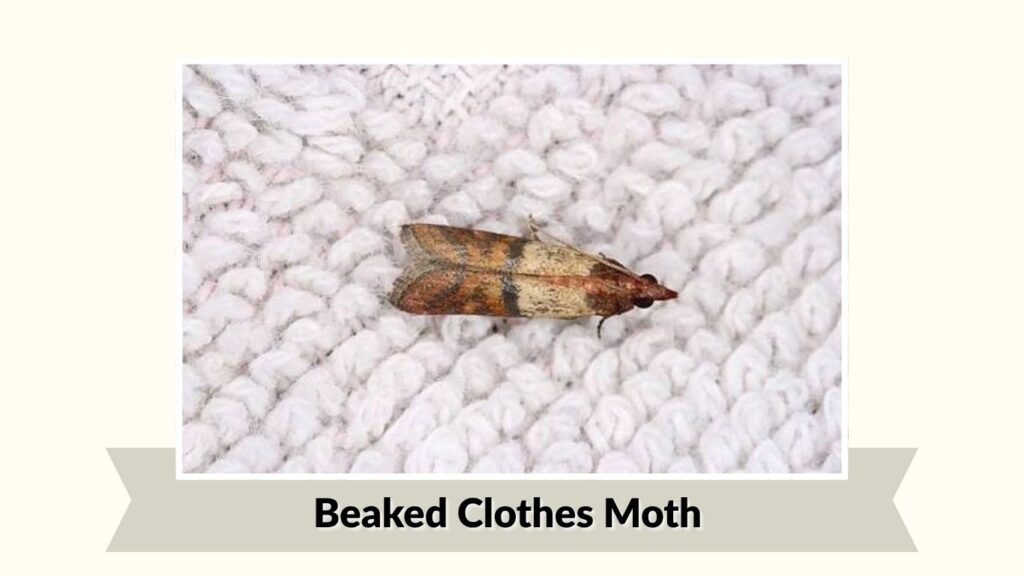
The Beaked Clothes Moth is a small member of the clothes moth group that can be associated with animal-based debris, feathers, wool, and other natural materials. Its name comes from the projecting mouthparts that give the head a beak-like appearance. Like related species, most damage or feeding activity occurs during the larval stage.
Identification
- Adults are small and narrow-bodied.
- The head may appear slightly projecting or beak-like.
- Wings are generally muted brown or gray.
- Larvae are pale with darker heads.
- Larvae may create silk around feeding sites.
- Natural fibers can develop small irregular holes.
- Adults often rest in dark sheltered areas.
Habitat and Distribution
Beaked clothes moths may be found in homes, barns, outbuildings, bird nests, roof spaces, and storage areas. They are more likely to survive where animal fibers or organic debris are available and where the environment remains relatively undisturbed.
Behavior and Diet
The larvae feed on keratin-rich substances including feathers, hair, fur, and wool. They may also consume dry organic debris found in nests or stored materials. Their secretive feeding habits can allow an infestation to remain unnoticed until visible damage develops.
Lifespan and Life Cycle
Eggs are deposited close to an appropriate food source. Larvae hatch and spend most of their development feeding in hidden locations. Once mature, they pupate within protective silk. Adults emerge afterward and reproduce, restarting the life cycle.
7. Pale Clothes Moth
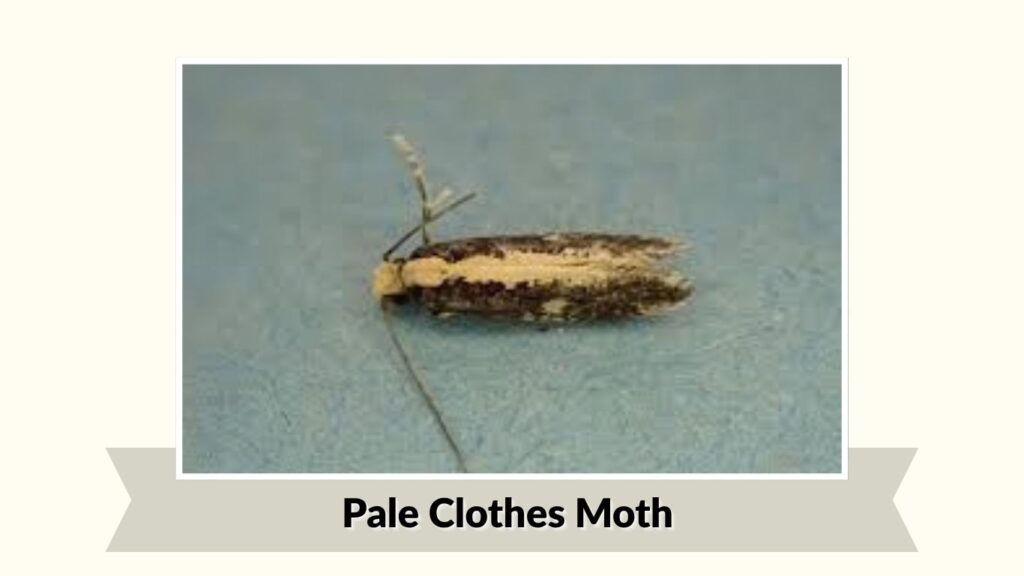
The Pale Clothes Moth is a small moth with light-colored wings and larvae that can feed on animal-derived materials. Like many clothes moths, it prefers quiet, dark areas where natural fibers or organic debris are available. Infestations can remain concealed for long periods, particularly in stored materials that are rarely moved.
Identification
- Adults are generally pale beige or light brown.
- Wings are narrow and relatively plain.
- Larvae are creamy white.
- The larval head is usually darker.
- Feeding may produce holes in natural fabrics.
- Fine silk can appear around feeding areas.
- Adults tend to avoid brightly lit spaces.
Habitat and Distribution
Pale clothes moths can occur in houses, storage rooms, lofts, museums, barns, and other sheltered locations. They prefer places with low disturbance and easy access to natural animal fibers or dried organic remains.
Behavior and Diet
Larvae feed on wool, hair, feathers, fur, and related animal materials. They may also live in old nests or collections containing dried organic matter. Adults are short-lived compared with the larvae and mainly focus on reproduction.
Lifespan and Life Cycle
Females place eggs near food materials. Larvae hatch and continue feeding until they have reached full size. Development may take several weeks or months depending on conditions. The mature larva pupates, and an adult moth eventually emerges.
8. Tapered Clothes Moth
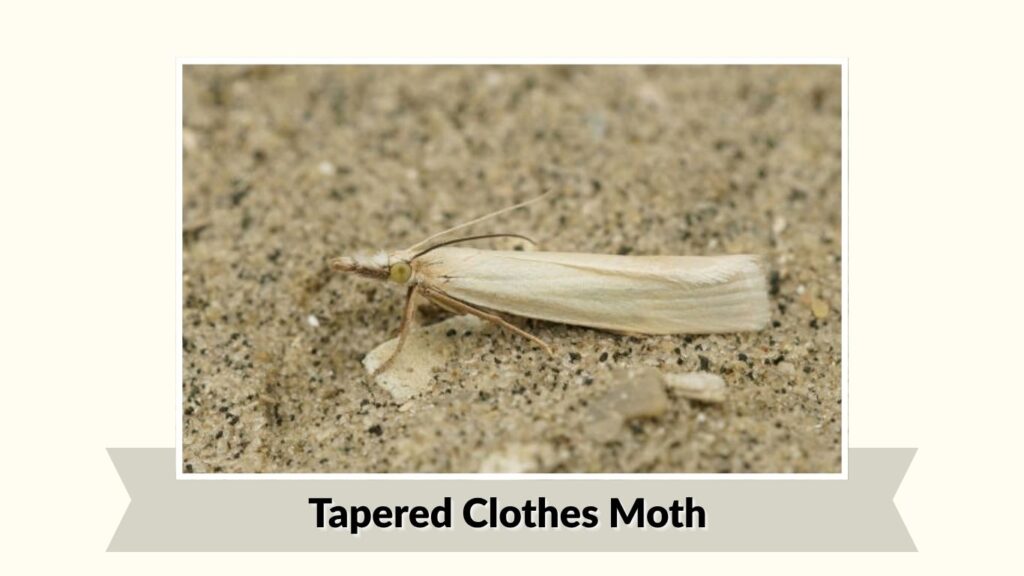
The Tapered Clothes Moth is a small moth associated with natural fibers and animal-derived materials. Its larvae are capable of feeding on wool, feathers, hair, and similar substances. The moth usually remains hidden in quiet indoor or sheltered environments, so infestations may be detected only after fabric damage becomes noticeable.
Identification
- Adults have narrow, tapered wings.
- Their coloring is usually brownish or grayish.
- Larvae are pale and soft-bodied.
- A darker head capsule is visible.
- Silk may occur around larval feeding sites.
- Small holes can appear in wool or fur.
- Larvae prefer protected cracks and folds.
Habitat and Distribution
Tapered clothes moths are generally associated with indoor storage spaces, older buildings, attics, closets, animal nests, and other sheltered areas. They prefer places with natural fibers or organic matter that remain undisturbed for long periods.
Behavior and Diet
The larvae are scavengers that consume animal-based materials containing keratin. Wool, fur, feathers, and hair can all provide food. Because larvae usually remain hidden, physical damage may be the first sign of their presence.
Lifespan and Life Cycle
Adult females lay eggs close to suitable material. Larvae hatch and feed until fully developed. They then form protected pupal chambers or silken shelters. After metamorphosis, adults emerge and mate, allowing another generation to begin.
9. Large Pale Clothes Moth
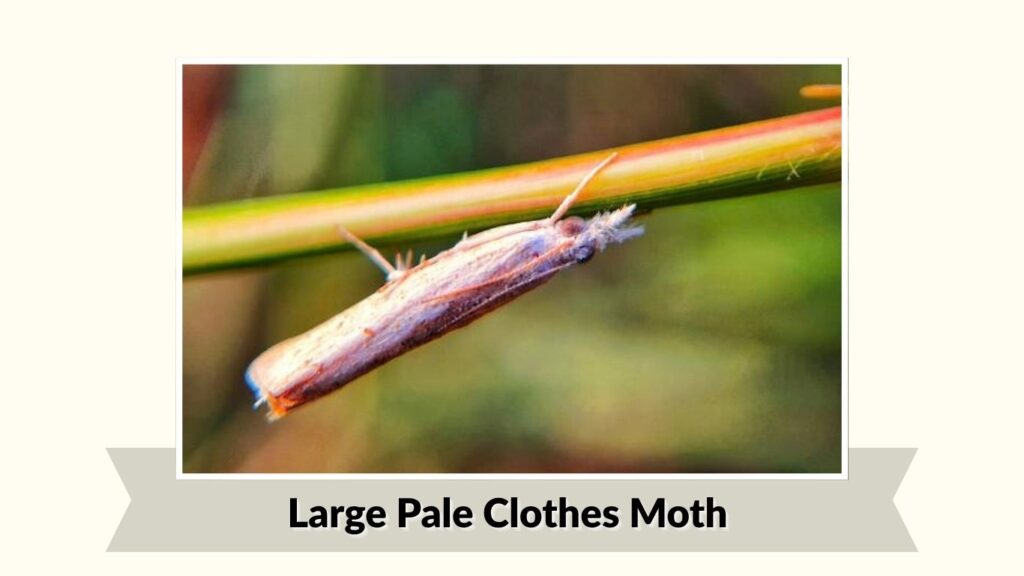
The Large Pale Clothes Moth is a larger pale-colored moth belonging to a group whose larvae feed on natural animal products and organic debris. It may be associated with stored wool, feathers, fur, nesting material, and similar substances. Although adults are harmless to textiles, larval feeding can result in noticeable damage when populations develop unnoticed.
Identification
- Adults are relatively larger than many clothes moths.
- Wings are pale cream, beige, or light brown.
- Larvae are whitish with darker heads.
- Feeding may leave rough or irregular holes.
- Silk or debris may collect around larval sites.
- Larvae usually remain in shaded locations.
- Natural animal fibers are most vulnerable.
Habitat and Distribution
Large pale clothes moths may occur in old houses, storage buildings, lofts, barns, warehouses, and sites containing feathers or other animal products. They are particularly suited to quiet environments where natural materials remain in storage for long periods.
Behavior and Diet
The caterpillars consume wool, fur, feathers, hair, and other keratin-containing materials. They can also live among old animal or bird nesting material. Their hidden feeding behavior provides protection and makes early detection difficult.
Lifespan and Life Cycle
Females lay small eggs near suitable food sources. Larvae hatch and feed through several growth stages. Once mature, they form a protective site and pupate. Adults later emerge, reproduce, and produce another generation when environmental conditions remain favorable.
10. Asian Clothes Moth
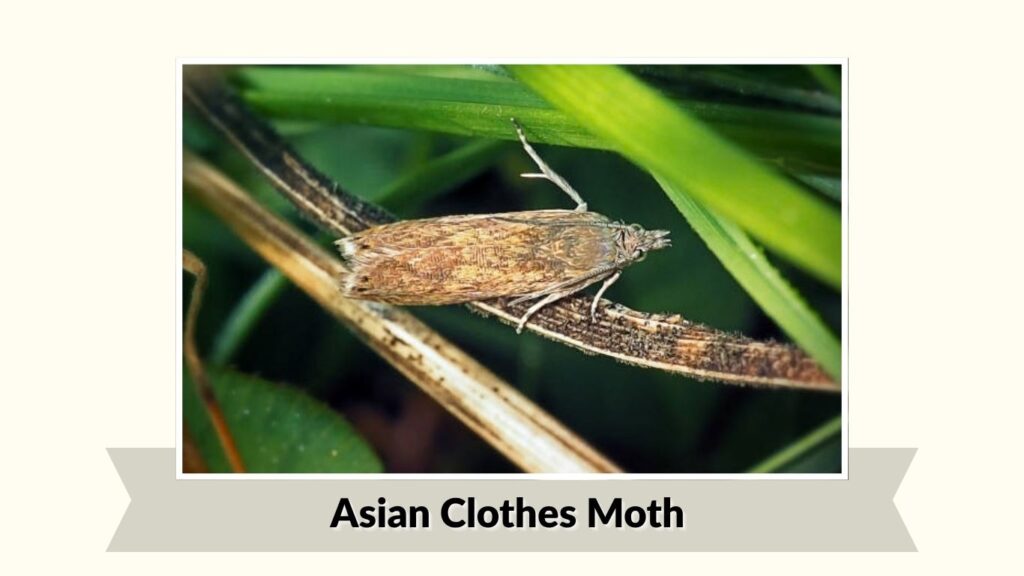
The Asian Clothes Moth is a small moth associated with natural fibers, stored materials, and animal-based debris. Its larvae are the damaging stage and may feed on wool, fur, feathers, hair, and related substances. Like many clothes moths, it prefers dark, quiet places where fabrics remain undisturbed. Infestations may develop slowly and are often discovered only after holes or thinning areas appear.
Identification
- Adults are small and slender.
- Wings are usually pale brown or yellowish.
- Larvae are creamy white with darker heads.
- Fine silk may occur around feeding areas.
- Small holes may develop in natural fabrics.
- Larvae often remain hidden in folds or seams.
- Adults usually avoid strong light.
Habitat and Distribution
Asian clothes moths may occur in homes, warehouses, textile storage areas, museums, and buildings containing natural animal fibers. They prefer warm, sheltered locations such as wardrobes, drawers, carpet edges, and storage containers where disturbance is limited.
Behavior and Diet
The larvae feed mainly on keratin-rich materials, including wool, feathers, fur, and animal hair. Fabrics stained with sweat, body oils, or food residue may be especially attractive. Adults generally do not damage textiles and mainly focus on reproduction.
Lifespan and Life Cycle
Females lay eggs close to suitable food. After hatching, larvae feed for several weeks or months before pupating in protected silken shelters. Adults later emerge, mate, and lay additional eggs. Warm indoor temperatures can allow repeated generations.
11. Brown-Dotted Clothes Moth
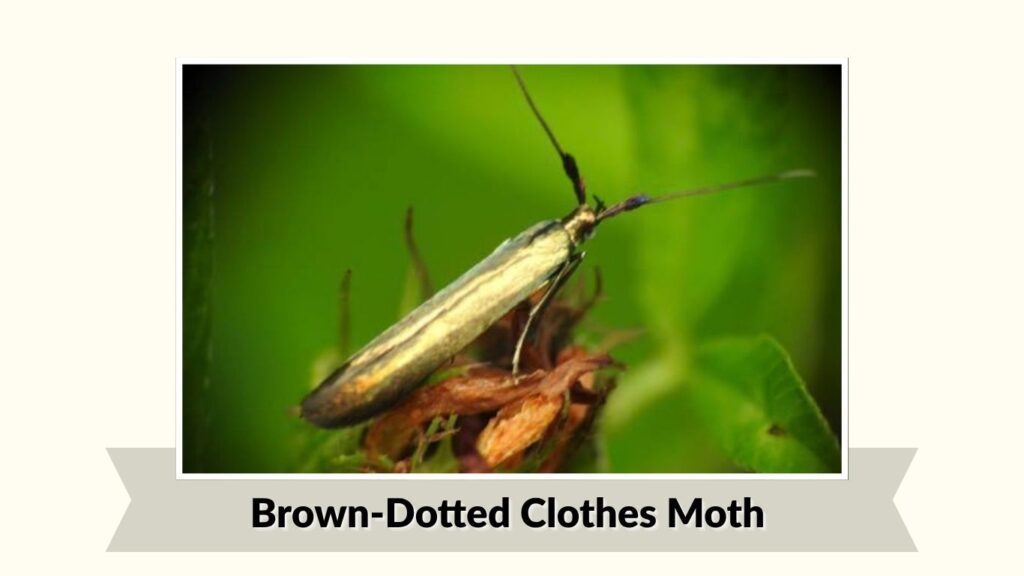
The Brown-Dotted Clothes Moth is named for the darker spotting or markings visible on its wings. Its larvae can feed on natural animal materials and may sometimes occur indoors around stored fabrics. Although adults are small and relatively harmless, the larvae can damage wool, feathers, fur, and similar substances when populations remain unnoticed.
Identification
- Adults are small with narrow wings.
- Wings may show several brown or dark spots.
- Larvae are pale or cream-colored.
- Larval heads are noticeably darker.
- Feeding may leave irregular holes.
- Silken threads may occur near damaged material.
- Adults often remain in sheltered spaces.
Habitat and Distribution
This moth may be found in homes, storage rooms, lofts, museums, barns, and other places where animal-based materials accumulate. It can also occur near bird or mammal nests that provide feathers, hair, and dried organic material.
Behavior and Diet
The larvae feed on substances containing keratin. Wool, fur, feathers, hair, and dried animal remains may provide food. They typically stay hidden within folds, cracks, or debris while feeding, reducing their exposure to predators and disturbance.
Lifespan and Life Cycle
Eggs are placed near suitable food sources. The larvae hatch and begin feeding almost immediately. After reaching maturity, they create a protected pupation site. Adult moths emerge later, reproduce, and begin another generation when conditions are favorable.
12. Mediterranean Clothes Moth
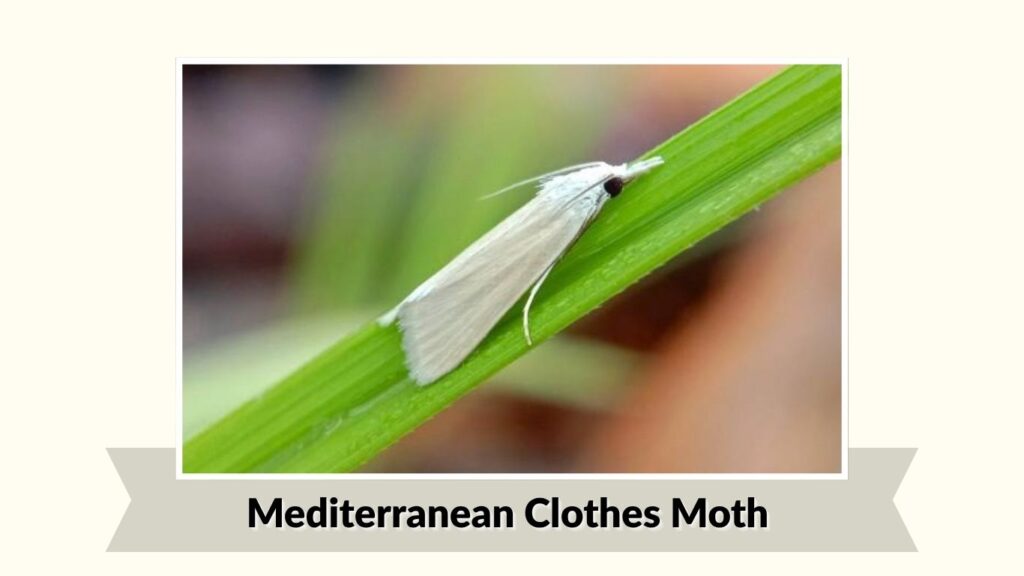
The Mediterranean Clothes Moth is a small fabric-associated moth adapted to relatively warm conditions. Its larvae may damage stored wool, animal hair, fur, feathers, and other natural materials. Heated buildings can provide suitable year-round conditions, allowing infestations to persist when adequate food is available.
Identification
- Adults are small and narrow-winged.
- Wings are generally pale brown or grayish.
- Larvae are whitish with brown heads.
- Small silken tubes may be present.
- Fabric can develop irregular feeding holes.
- Larvae prefer shaded, undisturbed areas.
- Adults may fly short distances indoors.
Habitat and Distribution
Mediterranean clothes moths are most likely to occur in warm indoor environments, warehouses, closets, storage spaces, museums, and textile collections. They may also inhabit buildings where feathers or animal materials are stored.
Behavior and Diet
Larvae consume natural animal fibers and organic debris. They can feed on wool, fur, feathers, and hair. Adult moths cause little direct damage. Larvae are usually responsible for nearly all visible deterioration of fabrics and stored materials.
Lifespan and Life Cycle
Females lay eggs directly on or close to food materials. Larvae hatch and feed through several developmental stages. Once fully grown, they pupate within silk or another sheltered location. Adults later emerge and reproduce.
13. Cellar Clothes Moth
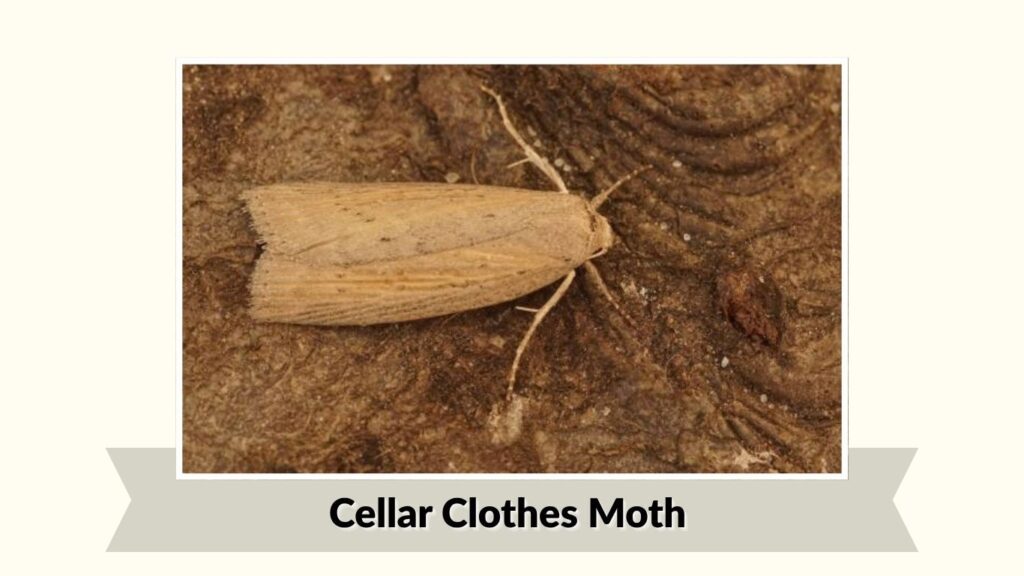
The Cellar Clothes Moth is associated with cool, dark, and sheltered areas such as cellars, basements, outbuildings, and old storage spaces. Its larvae are scavengers that may feed on animal fibers, nesting material, feathers, and other dry organic matter. They are especially suited to places that remain undisturbed for extended periods.
Identification
- Adults are small and dull-colored.
- Wings are usually grayish or brownish.
- Larvae are pale with darker heads.
- Silk may occur around feeding sites.
- Larvae may hide in cracks or debris.
- Natural fabrics may show small holes.
- Adults are usually inconspicuous.
Habitat and Distribution
Cellar clothes moths favor basements, cellars, old buildings, storage rooms, sheds, and similar sheltered locations. They may also occur around abandoned bird or rodent nests where feathers and hair provide food.
Behavior and Diet
Larvae consume wool, feathers, hair, fur, and dried animal material. They may also feed on organic debris that collects in old buildings. Their preference for darkness means infestations can remain unnoticed for long periods.
Lifespan and Life Cycle
Females lay eggs near suitable food. Larvae hatch and feed until mature, sometimes taking several months to complete development. They then pupate in a sheltered area. Adults eventually emerge and reproduce.
14. Large Clothes Moth
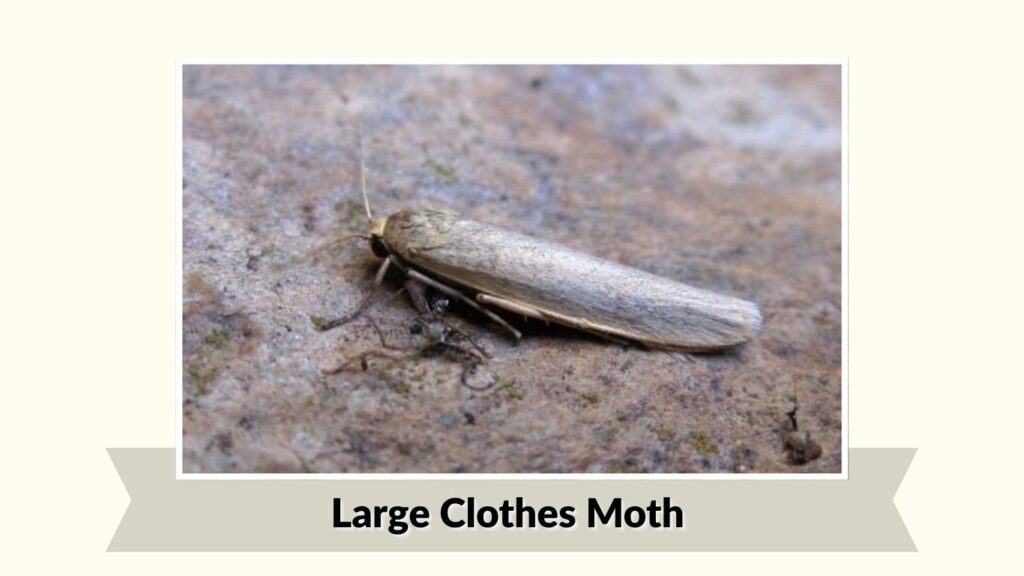
The Large Clothes Moth is noticeably bigger than many other members of the clothes moth group. Its larvae feed on animal-derived materials and may be found around natural textiles, feathers, fur, hides, or nesting debris. Because the larvae prefer secluded areas, damage may become extensive before the insects themselves are seen.
Identification
- Adults are larger than typical clothes moths.
- Wings are usually brownish or muted gray.
- Larvae are creamy white.
- The head is darker than the body.
- Feeding can produce irregular holes in fabrics.
- Silk and debris may accumulate nearby.
- Larvae prefer hidden spaces.
Habitat and Distribution
Large clothes moths may occur in old homes, attics, barns, warehouses, museums, and areas containing animal products. They may also live in nests where feathers, hair, or dried organic remains are plentiful.
Behavior and Diet
The larvae feed primarily on keratin-containing substances. Wool, fur, feathers, hair, and some dried animal materials can serve as food. They generally remain concealed during feeding, while adult moths are mainly concerned with reproduction.
Lifespan and Life Cycle
The life cycle begins with eggs laid near a food source. Larvae hatch and pass through several growth stages while feeding. Mature larvae create protective pupation sites, and adults emerge later to mate and reproduce.
15. Black Clothes Moth
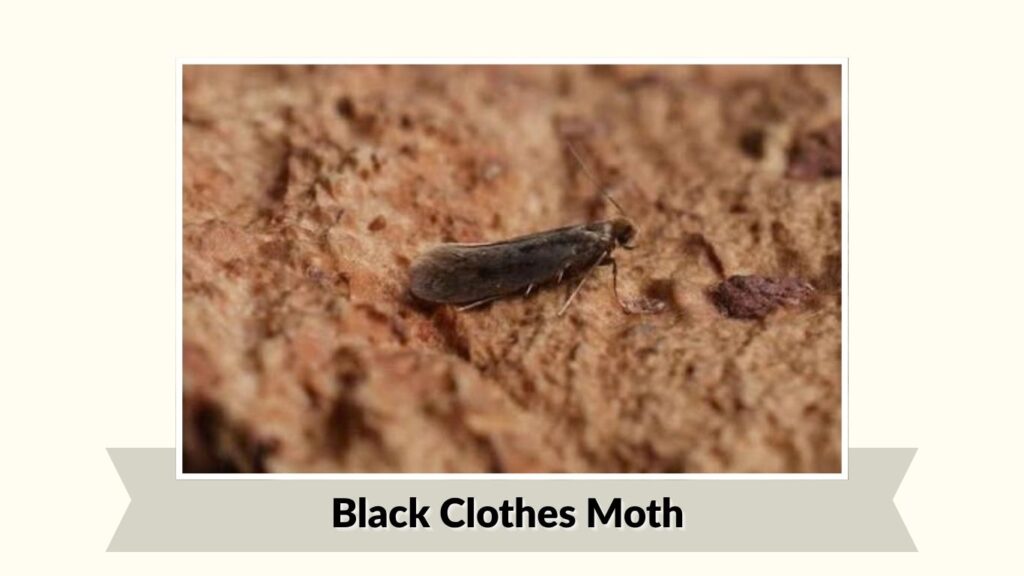
The Black Clothes Moth is a dark-colored member of the clothes moth group whose larvae can feed on natural animal fibers and organic materials. It may occur indoors or around animal nests, stored textiles, or collections containing fur and feathers. Despite its darker adult coloration, its biology is similar to other fabric-associated moths.
Identification
- Adult wings appear dark brown or nearly black.
- Adults have a narrow, elongated shape.
- Larvae are pale or creamy white.
- Larval heads are brown or dark.
- Irregular textile holes may occur.
- Silk may be visible around feeding areas.
- Larvae often hide in folds and crevices.
Habitat and Distribution
Black clothes moths may inhabit homes, storage rooms, lofts, museums, sheds, and areas associated with birds or mammals. They are most likely to establish where animal fibers or organic debris remain available and undisturbed.
Behavior and Diet
Larvae feed on wool, fur, feathers, hair, and similar materials. They may also live among nesting debris. Adults do not normally feed on textiles, making larval activity the main cause of damage.
Lifespan and Life Cycle
Eggs hatch into tiny larvae that immediately search for suitable food. They continue feeding through several stages before pupating. Adult moths later emerge, mate, and lay eggs, allowing the population to continue.
16. Pale Devon Clothes Moth
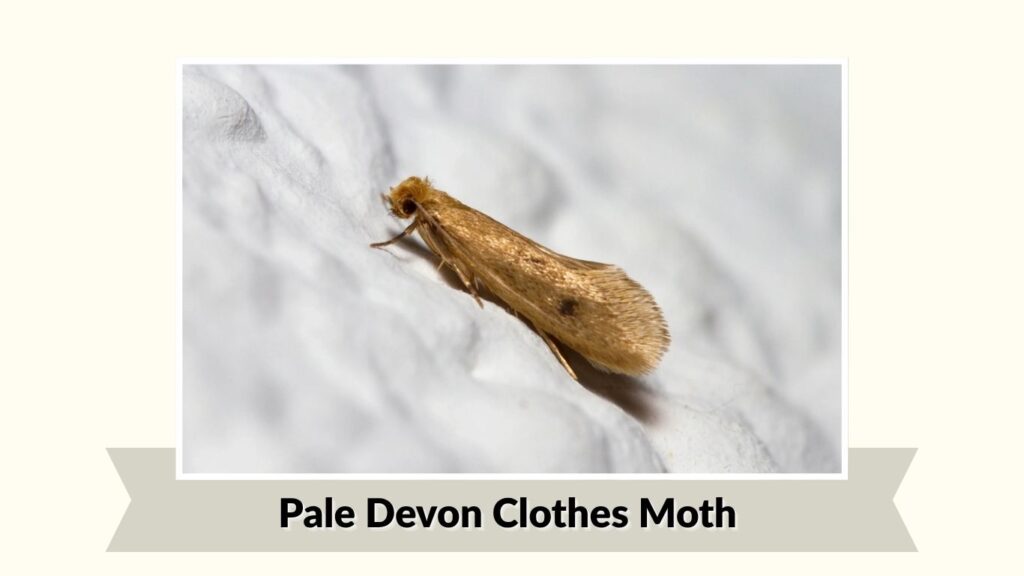
The Pale Devon Clothes Moth is a small, light-colored moth associated with natural materials and sheltered environments. Its larvae may use feathers, hair, wool, or other animal-derived substances as food. Like many related moths, it is most easily overlooked when populations remain hidden in storage areas or natural nesting material.
Identification
- Adults are pale or light brown.
- Wings are narrow and relatively plain.
- Larvae are cream-colored.
- Larval heads are darker brown.
- Feeding may leave small holes or worn patches.
- Fine silk can sometimes be present.
- Adults prefer protected resting places.
Habitat and Distribution
Pale Devon clothes moths can occur in sheltered indoor spaces, older buildings, lofts, storage areas, and locations containing bird or animal nests. They are most likely to thrive where natural fibers remain untouched for long periods.
Behavior and Diet
The larvae feed on animal-based materials such as feathers, wool, fur, and hair. They can also consume dry organic remains associated with nests. Their feeding is usually slow and concealed, making early infestations difficult to notice.
Lifespan and Life Cycle
Females deposit eggs near food sources. Larvae hatch and feed until they reach maturity. They then pupate in a protected silken structure or sheltered crevice. Adults emerge afterward and begin another reproductive cycle.
17. Skin Moth
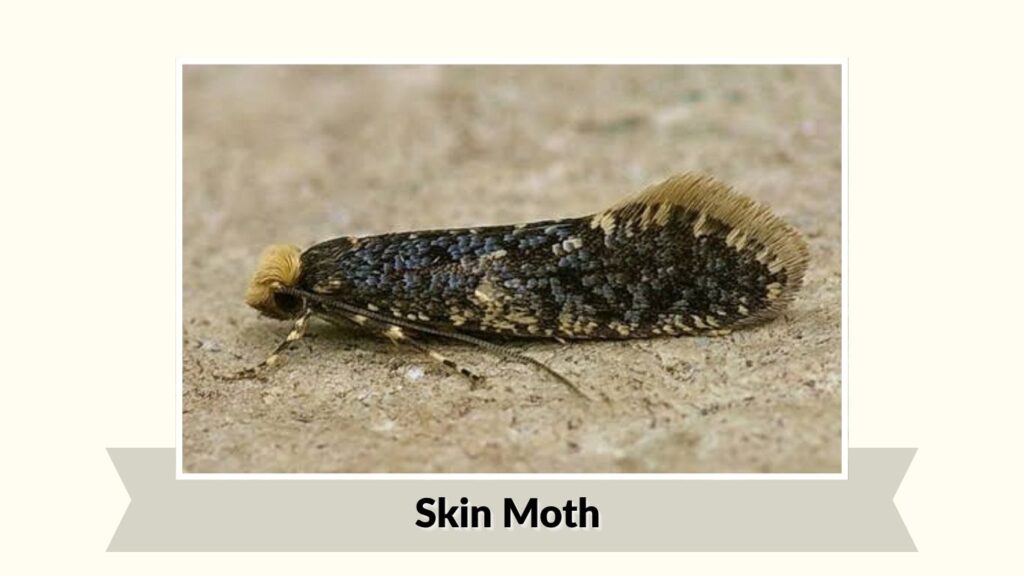
The Skin Moth is associated with animal skins, fur, feathers, wool, and other keratin-rich substances. Its larvae are scavengers and may appear in stored animal products, museums, taxidermy collections, old nests, or buildings containing suitable organic material. In some situations, infestations can damage valuable natural-fiber items.
Identification
- Adults are small to medium-sized moths.
- Wings are generally brown or gray.
- Larvae are pale with darker head capsules.
- Damaged hides may develop scraped or thinned areas.
- Fur or feathers may become loose.
- Silken material may surround feeding sites.
- Larvae often remain hidden beneath materials.
Habitat and Distribution
Skin moths may be found in museums, taxidermy collections, warehouses, barns, homes, storage areas, and animal nests. They prefer dry, sheltered environments where skins, hides, fur, feathers, or hair are readily available.
Behavior and Diet
Larvae primarily consume dry animal materials. Hides, fur, wool, feathers, and hair provide suitable nutrition because they contain keratin and other animal proteins. The larvae remain concealed during much of their development, which can make infestations difficult to detect.
Lifespan and Life Cycle
Adult females lay eggs directly on or close to suitable material. Larvae hatch and feed through several developmental stages before seeking a protected area to pupate. Once metamorphosis is complete, adults emerge and reproduce, beginning another generation.
18. Brindled Nest Moth
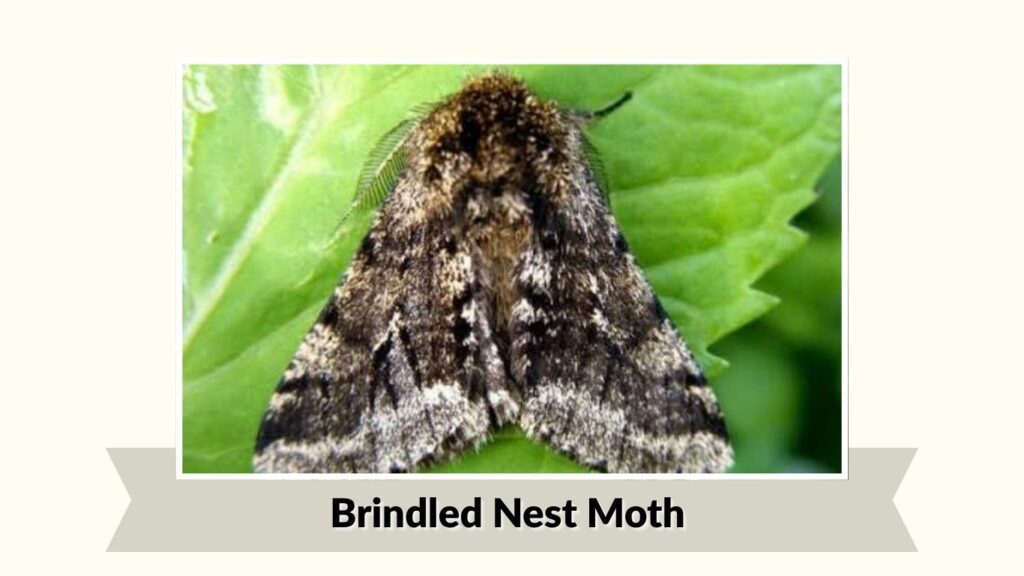
The Brindled Nest Moth is a small moth commonly associated with bird nests, animal nesting material, feathers, hair, and other dry organic debris. Its larvae act mainly as scavengers rather than active predators. They may occasionally move into nearby buildings or storage areas where suitable animal-based materials are available, especially if old nests are present in roofs, lofts, or wall spaces.
Identification
- Adults are small with narrow wings.
- Wings often show mottled or brindled brown markings.
- Larvae are pale or cream-colored.
- Larval heads are usually darker.
- Fine silk may appear around feeding areas.
- Larvae may be found among feathers or nest debris.
- Adults often remain in sheltered locations.
Habitat and Distribution
Brindled nest moths are typically found in bird nests, roof spaces, barns, sheds, lofts, and other places containing accumulated animal material. They may also occur in old buildings where nests remain undisturbed for long periods.
Behavior and Diet
The larvae feed mainly on feathers, hair, dried animal remains, and nest debris. They help break down organic material left behind after birds or mammals abandon a nest. Occasionally, they may move toward stored natural fabrics if suitable conditions exist nearby.
Lifespan and Life Cycle
Females lay eggs close to animal debris or nesting material. Larvae hatch and spend much of their development feeding among dry organic matter. Mature larvae pupate in protected locations before emerging as adults. The adults reproduce and begin another generation.
19. Yellow-Backed Detritus Moth
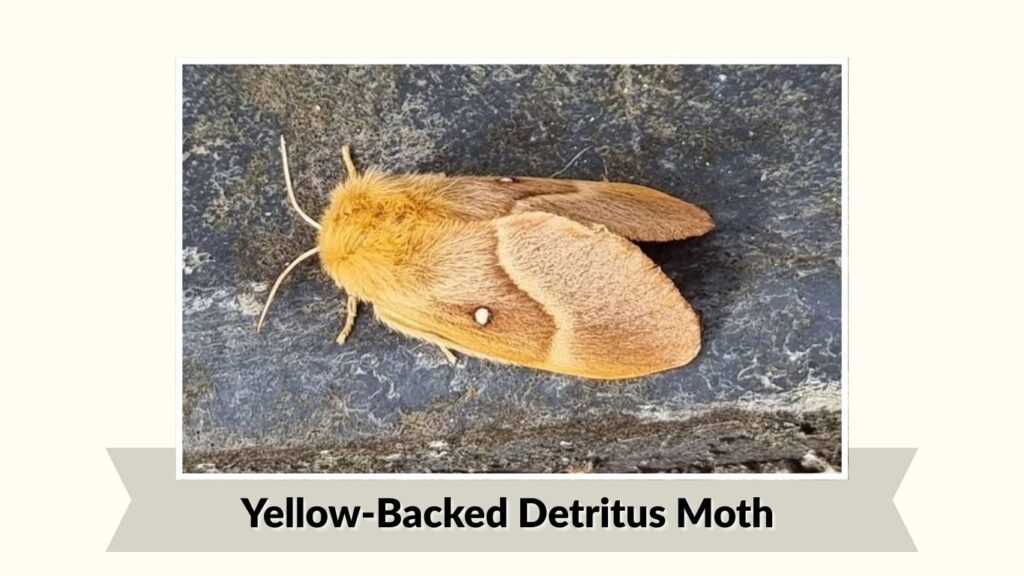
The Yellow-Backed Detritus Moth is a small scavenging moth whose larvae feed on dry organic material. It is usually associated with animal nests, feathers, hair, dead insects, and other debris rather than clean household fabrics. However, it may occasionally be encountered indoors when suitable food sources accumulate in quiet, undisturbed spaces.
Identification
- Adults are small and slender.
- Wings may show yellowish or pale dorsal coloring.
- Darker markings can appear along the wings.
- Larvae are pale with darker heads.
- Larvae may produce fine silk.
- They are often found among dry debris.
- Adults usually rest in shaded places.
Habitat and Distribution
This moth can inhabit nests, lofts, barns, outbuildings, storage rooms, and other areas where organic debris accumulates. It prefers relatively dry and protected locations with little disturbance.
Behavior and Diet
Larvae behave as scavengers and consume feathers, hair, dried animal matter, dead insects, and similar material. They may occasionally feed on natural fibers if these are mixed with organic debris.
Lifespan and Life Cycle
Eggs are deposited near suitable food. The larvae hatch and feed through several stages before forming a protected pupal site. Adults eventually emerge, mate, and lay eggs, allowing the cycle to continue.
20. Coastal Detritus Moth
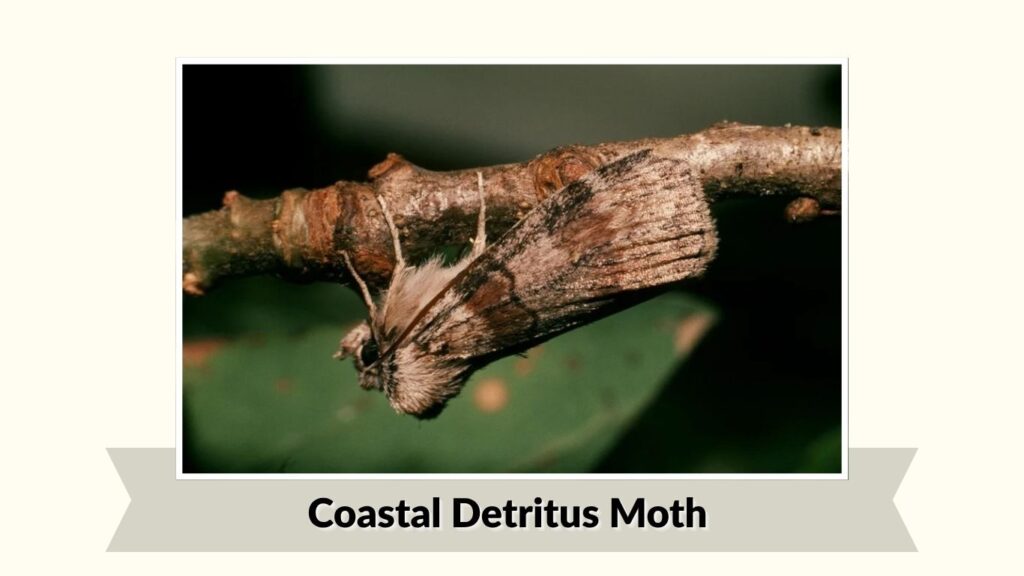
The Coastal Detritus Moth is associated with dry organic matter found in coastal environments. Its larvae feed on decomposing plant or animal material, feathers, hair, and other debris. Although not usually considered a major household fabric pest, it belongs to a group containing many scavenging moths that can exploit a wide variety of natural materials.
Identification
- Adults are small with narrow wings.
- Wings are usually brown, gray, or mottled.
- Larvae are pale-colored.
- The head capsule is generally darker.
- Larvae may be found inside organic debris.
- Small silken shelters can sometimes occur.
- Adults are usually inconspicuous.
Habitat and Distribution
Coastal detritus moths are generally associated with shorelines, coastal grasslands, dunes, animal nests, and places where dried organic material collects. Some individuals may also occur in nearby sheds, buildings, or storage areas.
Behavior and Diet
The larvae feed primarily as scavengers. Their diet can include dried plant remains, feathers, hair, dead insects, and other decaying organic matter. This flexible feeding behavior allows them to survive in habitats where many types of debris accumulate.
Lifespan and Life Cycle
Females lay eggs among suitable organic material. Larvae emerge and feed until they complete their development. They then form a protected pupal chamber or silken structure. Adults emerge later, mate, and produce another generation.
21. Monk Moth
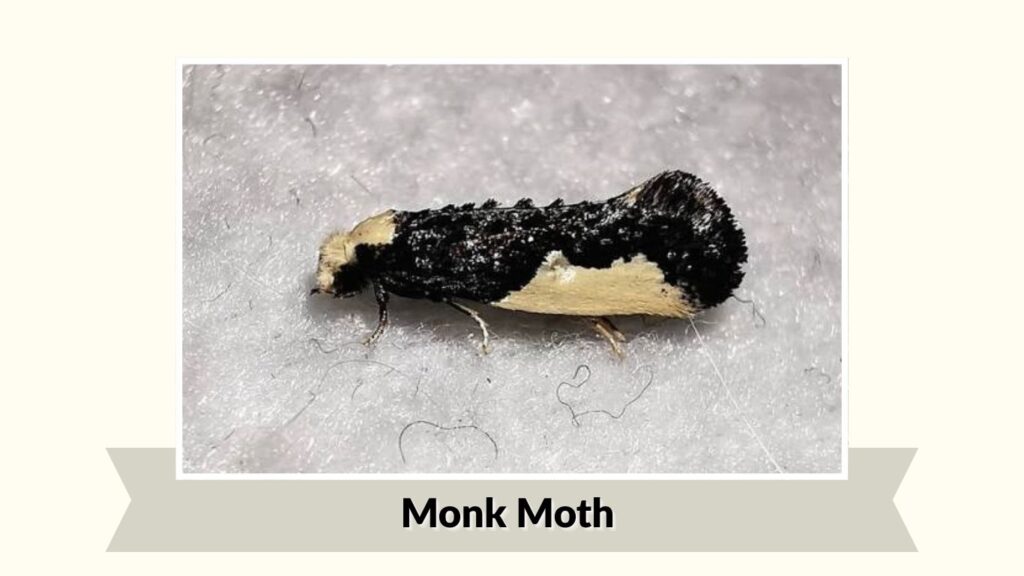
The Monk Moth is a small moth associated with dry organic materials and sheltered environments. Its larvae may develop among animal debris, feathers, hair, and other natural substances. It generally causes less household fabric damage than the common clothes moth but may appear indoors when suitable food and quiet hiding places are available.
Identification
- Adults are relatively small.
- Wings are narrow and usually muted in color.
- Pale and dark markings may create a contrasting pattern.
- Larvae are cream-colored.
- Larval heads are darker brown.
- Fine silk may occur around feeding sites.
- Adults often remain hidden during daylight.
Habitat and Distribution
Monk moths may be found in old buildings, barns, lofts, storage spaces, animal nests, and locations containing dry organic debris. Their presence indoors is often connected with nearby nesting birds or stored natural materials.
Behavior and Diet
The larvae feed on feathers, hair, dried organic remains, and occasionally natural animal fibers. They generally stay hidden within their food source, where they are protected from light and disturbance.
Lifespan and Life Cycle
Females deposit eggs close to suitable organic material. After hatching, larvae feed and grow through several stages. Mature larvae pupate in protected areas. Adults emerge, reproduce, and begin the cycle again.
22. Raptor Nest Moth
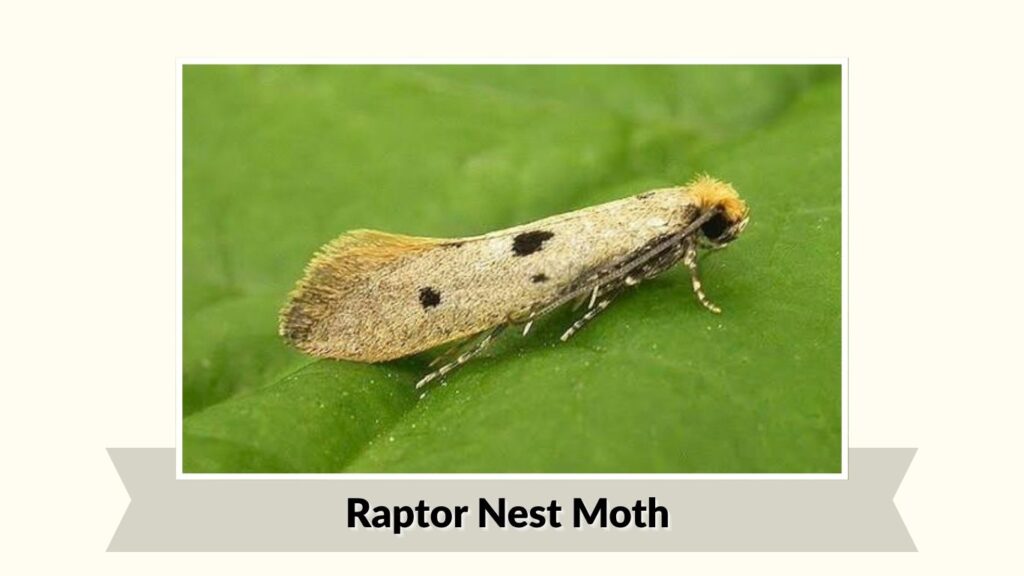
The Raptor Nest Moth is associated with nests used by birds of prey and other large birds. Its larvae consume feathers, fur, pellets, animal remains, and other organic material left inside nests. Rather than harming the birds directly, the larvae primarily function as scavengers within the nest ecosystem.
Identification
- Adults are small to medium-sized moths.
- Wings are generally brown or gray.
- Markings may be mottled or irregular.
- Larvae are pale with darker heads.
- Larvae may live deep within nest material.
- Silken threads can occur around feeding sites.
- Adults are rarely noticed away from nesting areas.
Habitat and Distribution
This moth is mainly associated with raptor nests, tree cavities, cliffs, nesting platforms, and buildings used by birds. It may also occur in abandoned nests or storage areas containing bird material.
Behavior and Diet
Larvae feed on feathers, fur, dried animal tissue, pellets, and other debris accumulated in nests. By consuming these materials, they participate in decomposition and recycling within the nest environment.
Lifespan and Life Cycle
Females lay eggs among suitable nesting debris. Larvae hatch and feed for weeks or months, depending on environmental conditions. When mature, they pupate in sheltered locations. Adults later emerge and reproduce.
23. Red-Headed Bee Moth
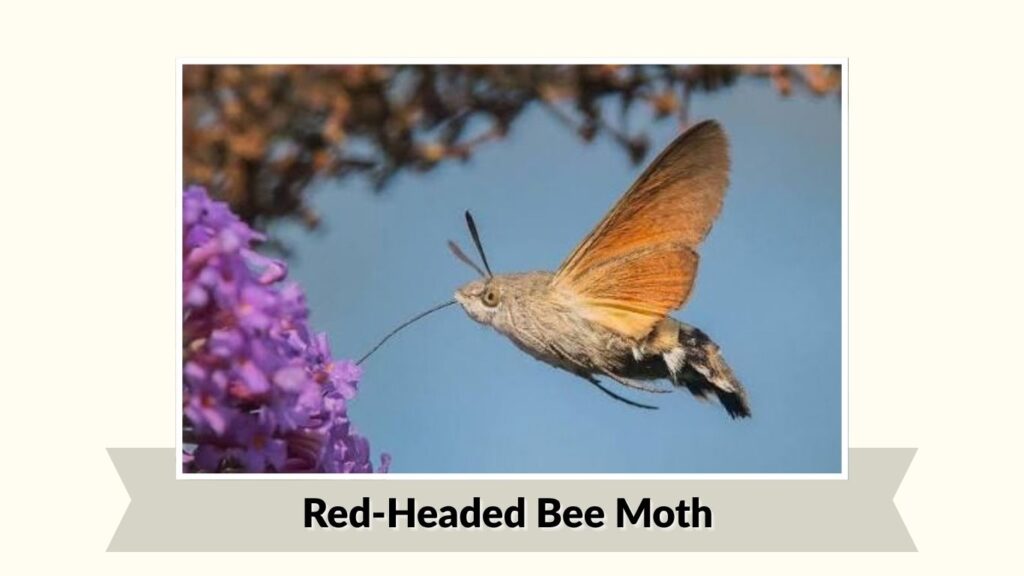
The Red-Headed Bee Moth is a small scavenging moth that may be associated with bee nests, stored comb material, and other organic substances. Its common name comes from the reddish coloration around the head region. The larvae usually feed on debris rather than directly attacking healthy bees.
Identification
- Adults are small with narrow wings.
- The head region may appear reddish or reddish-brown.
- Wings are generally grayish or brown.
- Larvae are pale and caterpillar-like.
- Larval heads are darker.
- Silk may be visible around feeding areas.
- Larvae may occur in old nest debris.
Habitat and Distribution
Red-headed bee moths may be found in bee nests, abandoned hives, old comb, storage areas, sheds, and other protected locations containing animal or insect debris.
Behavior and Diet
The larvae feed on organic material associated with bee colonies, including waxy debris, dead insects, pollen residues, and other nest material. They can also survive on similar dry organic substances outside bee nests.
Lifespan and Life Cycle
Females lay eggs in or near suitable nest material. Larvae hatch and begin feeding before eventually creating a pupal shelter. Adults emerge after metamorphosis, mate, and produce a new generation.
24. White-Headed Detritus Moth
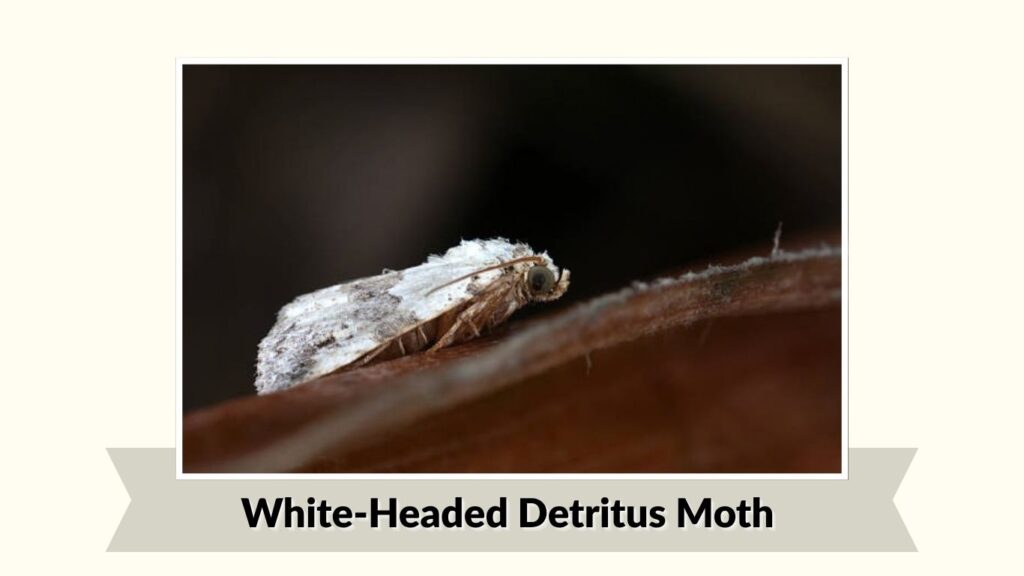
The White-Headed Detritus Moth is a small scavenging species associated with dry plant and animal debris. Its larvae can live among feathers, hair, dead insects, and other decomposing material. It is generally more closely connected with organic waste and natural habitats than with direct damage to clean clothing.
Identification
- Adults are small and narrow-winged.
- The head may appear pale or whitish.
- Wings are usually gray or brown.
- Larvae are light-colored with darker head capsules.
- Feeding sites may contain fine silk.
- Larvae often hide in organic debris.
- Adults are usually inconspicuous.
Habitat and Distribution
The moth may inhabit nests, barns, sheds, old buildings, leaf litter, storage spaces, and other sheltered places where dry organic material collects. It prefers locations that remain undisturbed.
Behavior and Diet
Larvae feed on dead insects, feathers, hair, plant debris, and dried animal material. Their scavenging behavior helps break down organic matter. They may occasionally enter buildings when such material is available indoors.
Lifespan and Life Cycle
Eggs are laid near suitable debris. Larvae hatch and feed through several developmental stages before pupating. Adults emerge later and mate, allowing another generation to develop under favorable conditions.
25. Streaked Fungus Moth
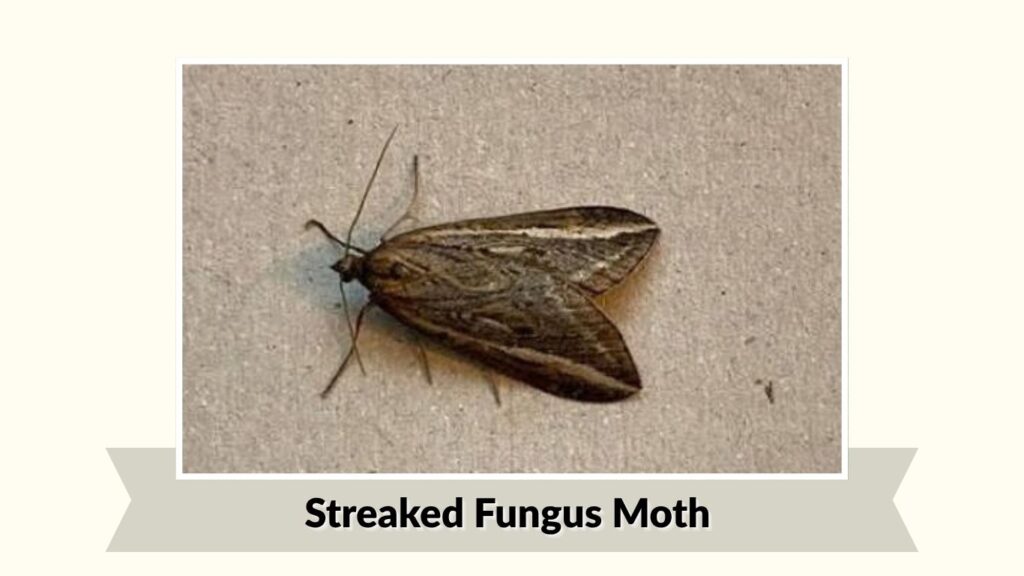
The Streaked Fungus Moth is a small moth associated with fungi, decaying organic material, and sheltered natural environments. Unlike classic clothes moths, its larvae are generally more closely linked with fungal growth and decomposing matter than with clean textiles. It may occasionally occur in buildings where damp organic material or fungal growth provides suitable food.
Identification
- Adults are small and slender.
- Wings often show streaked or lined markings.
- Coloration is usually brownish or grayish.
- Larvae are pale with darker heads.
- Larvae may occur around fungi or decomposing matter.
- Fine silk may be present around feeding sites.
- Adults often rest in dark, sheltered locations.
Habitat and Distribution
Streaked fungus moths are most likely to occur in woodland, old buildings, sheds, cellars, decaying wood, fungal growth, and other moist or sheltered environments. They may also appear indoors where organic material remains damp.
Behavior and Diet
The larvae feed mainly on fungi and decomposing organic matter. They may also consume plant or animal debris mixed with fungal material. This diet separates them from the classic fabric-feeding behavior of common clothes moth larvae.
Lifespan and Life Cycle
Females deposit eggs close to fungal growth or suitable decomposing material. Larvae hatch and feed until they reach maturity. They then pupate in a protected location. Adults emerge, reproduce, and begin another generation when moisture and food remain available.
FAQs
1. What are clothes moths?
Clothes moths are small moths whose larvae feed on natural animal-based materials such as wool, fur, feathers, hair, and hides. Some related species live mainly in bird nests, animal debris, fungi, or other organic materials rather than directly damaging clothing.
2. What clothes do moth larvae eat?
Clothes moth larvae commonly eat materials that contain keratin, including wool, fur, feathers, animal hair, and skins. They may also feed on carpets, upholstery, stored textiles, dead insects, nest debris, or organic material contaminated with sweat and body oils.
3. How can you identify a clothes moth infestation?
Common signs include small irregular holes in wool clothing, thinning fabric, silken webbing, tiny larval cases, shed skins, and cream-colored caterpillars hiding in folds or seams. Adult moths may also be seen flying or crawling in dark closets and storage areas.
4. Where do clothes moths usually hide?
Clothes moths prefer dark, quiet, and undisturbed places. Common hiding areas include closets, drawers, carpet edges, underneath furniture, attics, storage boxes, wall cavities, and spaces containing old bird or animal nests.
5. Do adult clothes moths damage clothing?
Adult clothes moths generally do not cause the fabric damage. The larvae are responsible for feeding on wool and other animal-based fibers. Adults mainly reproduce and lay eggs near suitable food sources so the newly hatched larvae can begin feeding quickly.