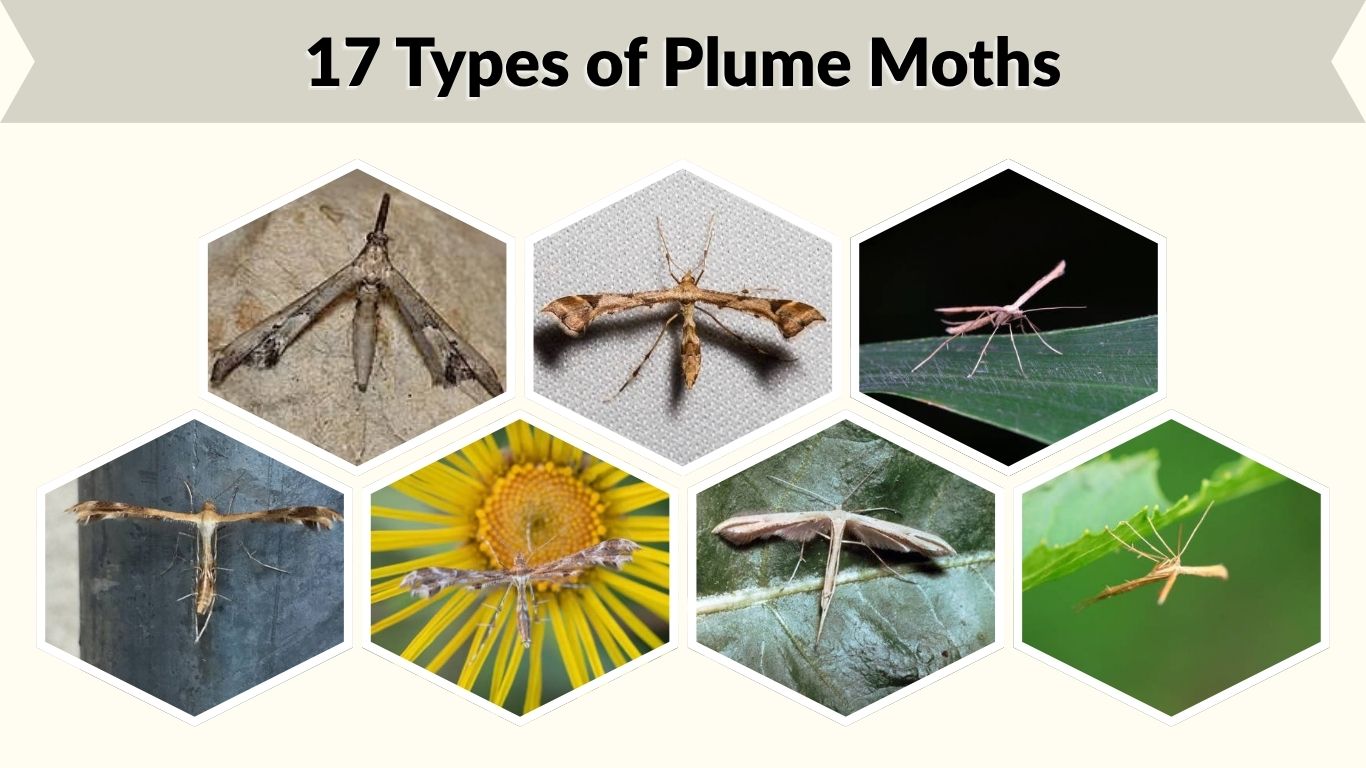
Plume moths are unusual and easily recognizable insects belonging to the family Pterophoridae. Their narrow, deeply divided wings often give them a delicate feather-like appearance, while many species rest in a distinctive T-shaped position. These moths occur in gardens, forests, meadows, wetlands, and agricultural areas around the world. Their caterpillars feed on a wide variety of plants, including grape, goldenrod, morning glory, artichoke, and geranium. In this guide, we explore 17 types of plume moths, along with their identification, habitat, diet, behavior, and lifecycle.
1. Artichoke Plume Moth
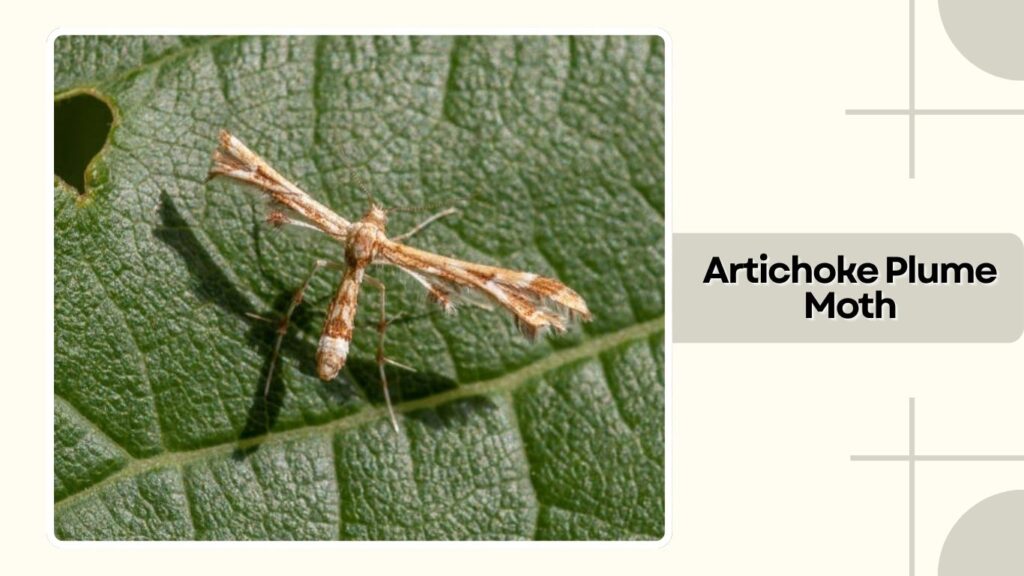
The Artichoke Plume Moth is a distinctive member of the plume moth family, Pterophoridae. Scientifically known as Platyptilia carduidactyla, it is especially associated with artichokes and thistles. Adults have narrow, divided wings that create the characteristic “plumed” appearance of this moth family. Although the adult moth causes little direct damage, the larvae can feed inside leaves, stems, and flower buds, making the species an important pest in artichoke-growing areas.
Identification
- Common Name: Artichoke Plume Moth
- Scientific Name: Platyptilia carduidactyla
- Family: Pterophoridae
- Wingspan: About 18–31 mm
- Adult Color: Buff to brownish-buff
- Forewings: Narrow and divided into lobes
- Hindwings: Fringed and divided, giving a feather-like appearance
- Larvae: Pale yellow when young, becoming off-white, yellowish, or pinkish as they mature
- Distinctive Feature: Slender body with deeply divided plume-like wings
Habitat and Distribution
Artichoke Plume Moths are found across much of North America, with records extending from eastern Canada and the eastern United States westward to British Columbia and California. They are especially common in locations where artichokes, thistles, and related host plants grow. Agricultural fields, gardens, roadsides, open areas, and places containing wild thistles can provide suitable habitat.
Behavior and Diet
The larvae are the main feeding stage. Young caterpillars may begin feeding externally on leaves before tunneling into leaf stalks, veins, or developing artichoke buds. Larvae feeding in buds may gradually move deeper toward the center. Besides cultivated artichokes, they also use various thistles as host plants. Adult moths are capable of flying at night and may be attracted to lights.
Lifespan and Lifecycle
Females generally lay their tiny eggs singly on the undersides of leaves or occasionally on bud stalks. After hatching, larvae pass through about four to five growth stages while feeding on plant tissue. Mature caterpillars leave their feeding sites and usually pupate among dried leaves or other plant debris. The pupae gradually darken before adults emerge. In suitable climates, several overlapping generations may develop as the moth continues reproducing throughout favorable parts of the year.
2. Geranium Plume Moth
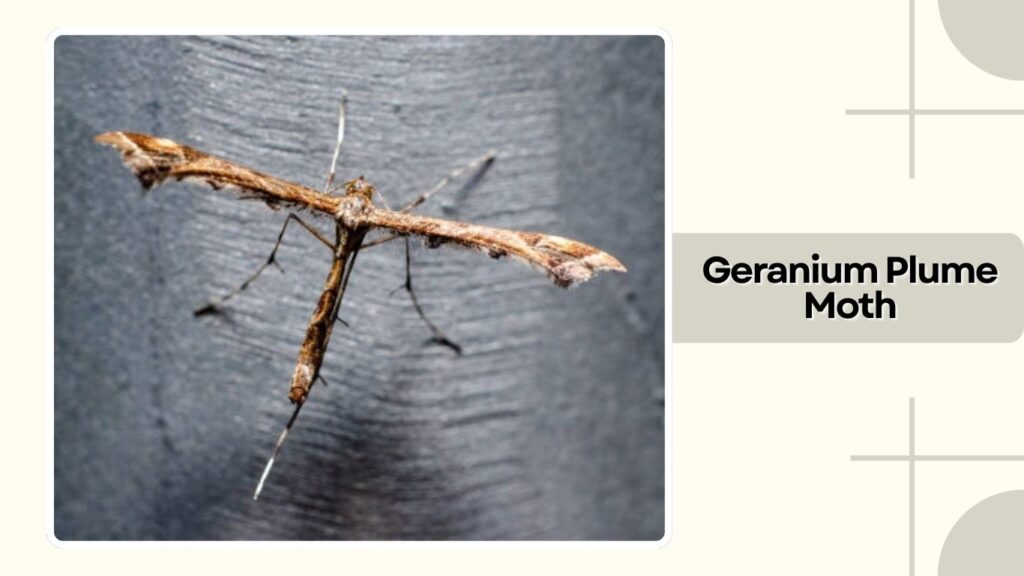
The Geranium Plume Moth (Amblyptilia pica) is a small North American plume moth recognized by its narrow, deeply divided wings and dark mottled coloration. Despite its common name, its caterpillars use several kinds of herbaceous plants in addition to geraniums. Adults typically hold their wings sideways when resting, creating the familiar T-shaped appearance associated with plume moths.
Identification
- Common Name: Geranium Plume Moth
- Scientific Name: Amblyptilia pica
- Family: Pterophoridae
- Wingspan: Roughly 18–25 mm
- Forewing Color: Brown to grayish-brown
- Markings: Dark brown or blackish patches with pale transverse lines
- Wing Shape: Narrow and distinctly divided into plume-like lobes
- Distinctive Feature: Dark costal markings and a stippled appearance along the inner forewing margin
Habitat and Distribution
Geranium Plume Moths occur widely in North America. Their range extends through western regions from Alaska to California and inland toward Alberta and Kansas, with records also occurring in northeastern areas. Fields, meadows, gardens, and commercial greenhouses can provide suitable habitat when larval food plants are present.
Behavior and Diet
The caterpillars feed on several plant families and may attack ornamental geraniums and snapdragons. Other hosts include Indian paintbrush, figwort, lousewort, and related herbaceous plants. Larvae may mine leaves or feed on flower buds and seeds. Adults can visit flowers for nectar, including willow blossoms early in the season.
Lifespan and Lifecycle
Adults may be encountered from spring through fall, with records particularly common during summer. An important feature of this species is that it can overwinter as an adult, allowing surviving moths to become active again when conditions improve. Females lay eggs near suitable host plants, after which larvae feed and eventually pupate before emerging as the next adult generation.
3. Sundew Plume Moth
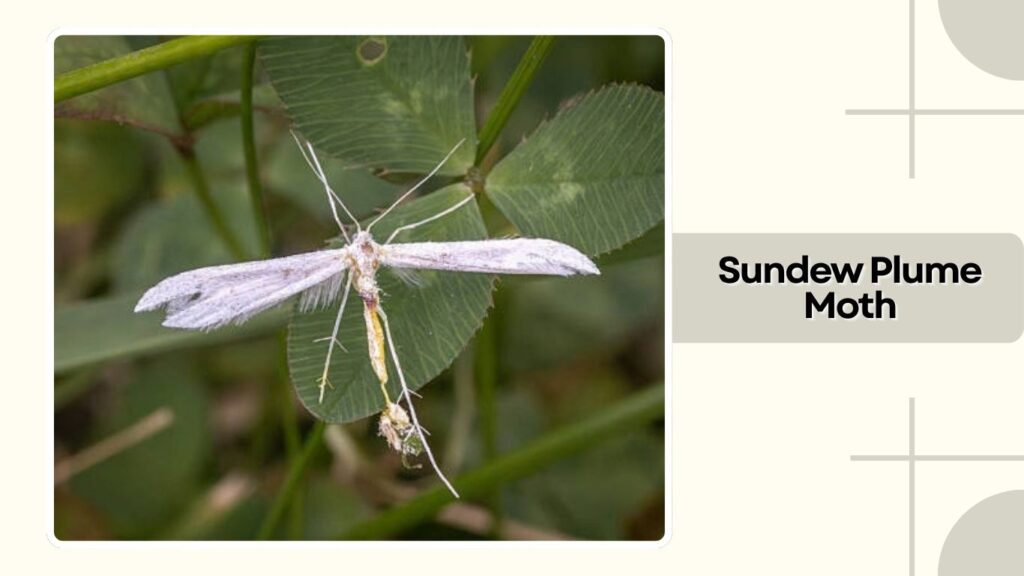
The Sundew Plume Moth (Buckleria parvulus) is a tiny plume moth with an unusually specialized relationship with carnivorous sundew plants. Instead of being trapped and eaten by the sticky plant, its caterpillars successfully live and feed on sundews. This unusual ecological relationship makes it one of the more fascinating members of the Pterophoridae family.
Identification
- Common Name: Sundew Plume Moth
- Scientific Name: Buckleria parvulus
- Family: Pterophoridae
- Wingspan: About 12 mm
- Adult Size: Very small and slender
- Wing Shape: Deeply divided, narrow plume-like wings
- Color: Generally brownish with lighter markings
- Distinctive Feature: Strong association with sundew plants (Drosera)
Habitat and Distribution
This moth occurs primarily in the southeastern United States, including Florida, North Carolina, South Carolina, Georgia, Alabama, Mississippi, Louisiana, and Texas. Because its caterpillars rely on sundews, it is closely associated with moist habitats where these carnivorous plants grow, such as bogs, wet savannas, seepage areas, and other acidic wetlands.
Behavior and Diet
Sundew Plume Moth caterpillars feed directly on several Drosera species, including shortleaf sundew, spoonleaf sundew, and thread-leaved sundew. They consume glandular hairs, leaves, and flowers. This is especially remarkable because sundews normally use sticky glandular structures to capture small insects.
Lifespan and Lifecycle
Females place eggs on or close to suitable sundew plants. Newly hatched larvae begin feeding on the host and progress through several growth stages before pupating. Adults later emerge, mate, and repeat the reproductive cycle. The timing and number of generations depend strongly on regional temperature and the seasonal growth of their sundew hosts.
4. Evans’s Plume Moth
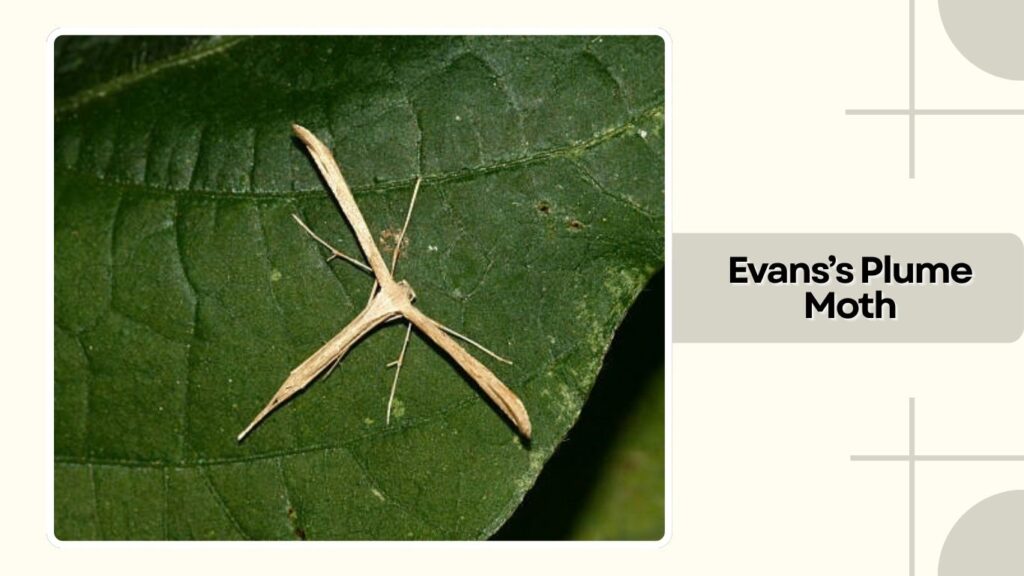
The Evans’s Plume Moth (Capperia evansi) is a small North American plume moth associated particularly with skullcap plants. Its narrow wings, delicate legs, and slender body give it the distinctive shape typical of plume moths. Compared with several widespread members of the family, this species has a more restricted documented range and relatively specific larval host plants.
Identification
- Common Name: Evans’s Plume Moth
- Scientific Name: Capperia evansi
- Family: Pterophoridae
- Wingspan: About 14 mm
- Body: Small and slender
- Wings: Narrow, divided, and fringed
- Resting Position: Typically T-shaped
- Distinctive Feature: Small plume moth closely associated with skullcap plants
Habitat and Distribution
Records of Evans’s Plume Moth extend from Illinois eastward to Maine, with occurrences documented in eastern North America. Because its known caterpillar hosts are skullcaps, the moth is most likely to occur in habitats where these herbaceous plants grow naturally, including moist meadows, woodland edges, wetlands, and vegetated margins.
Behavior and Diet
The caterpillars are associated with plants in the mint family, particularly marsh skullcap (Scutellaria galericulata) and blue skullcap (Scutellaria lateriflora). These plants provide the developing larvae with the vegetation necessary for growth. Adult moths are small and inconspicuous and may remain hidden among vegetation during daylight hours.
Lifespan and Lifecycle
Detailed lifecycle information for Evans’s Plume Moth is limited compared with better-studied plume moths. Like other members of Pterophoridae, it develops through egg, caterpillar, pupa, and adult stages. Its reproductive timing is closely linked with the availability of suitable skullcap plants and seasonal temperatures.
5. Morning-glory Plume Moth
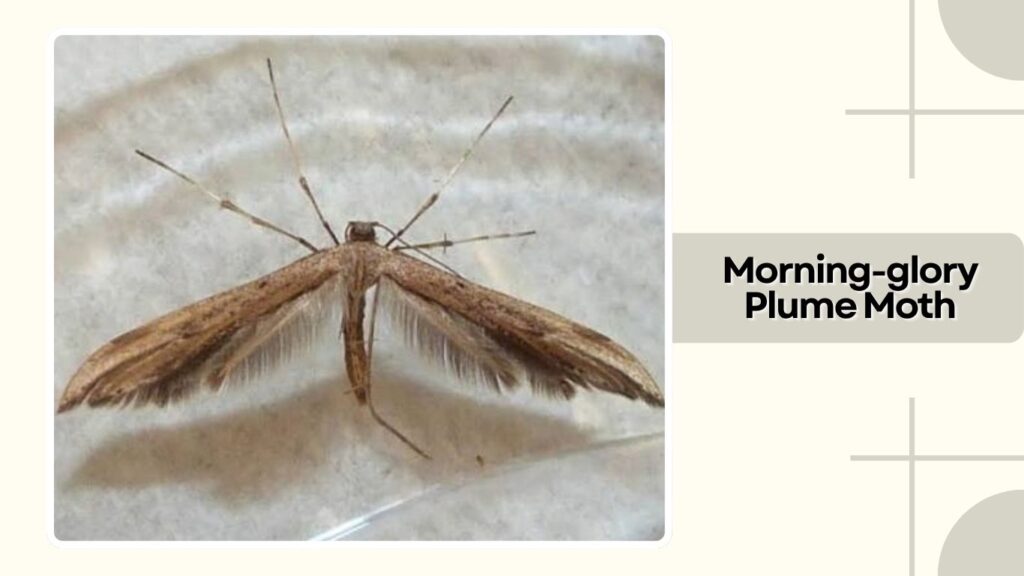
The Morning-glory Plume Moth (Emmelina monodactyla) is one of the most widespread and recognizable plume moths. Its narrow wings are often rolled tightly when at rest, producing a slender T-shaped silhouette. Although morning glory gives the species its common name, bindweeds are among its most important larval host plants.
Identification
- Common Name: Morning-glory Plume Moth
- Scientific Name: Emmelina monodactyla
- Family: Pterophoridae
- Wingspan: About 18–27 mm
- Color: Pale buff, brown, gray-brown, or rusty brown
- Wings: Narrow and divided, often tightly rolled at rest
- Body: Long and slender
- Distinctive Feature: Classic T-shaped resting posture with very narrow wings
Habitat and Distribution
Morning-glory Plume Moths have an exceptionally broad distribution, occurring across Europe, Asia, North Africa, and North America. They inhabit gardens, woodland edges, hedgerows, field margins, scrub, wetlands, and other areas where bindweed and related host plants are available.
Behavior and Diet
The larvae mainly feed on plants in the bindweed family, including Calystegia, Convolvulus, and Ipomoea. They consume young foliage, flowers, and occasionally developing seeds. Adults become active around dusk, visit flowers, and can also be attracted to artificial lights.
Lifespan and Lifecycle
Larvae commonly feed from late spring through summer, and two overlapping generations can occur in some regions. Pupation may take place away from the feeding site on dead vegetation or other nearby surfaces. Adults can overwinter and may therefore be encountered during unusually mild periods throughout much of the year.
6. Grape Plume Moth
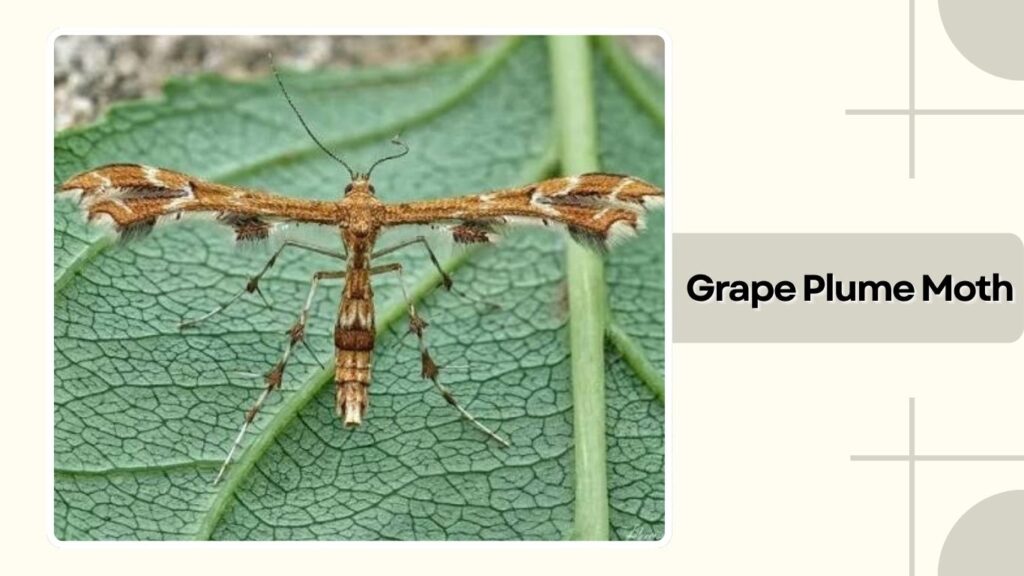
The Grape Plume Moth (Geina periscelidactylus) is a small plume moth native to North America and closely associated with grapevines. Its caterpillars feed on leaves and tender shoots, sometimes making the species a minor pest in cultivated vineyards. Like other plume moths, adults possess narrow, divided wings and a delicate T-shaped resting posture.
Identification
- Common Name: Grape Plume Moth
- Scientific Name: Geina periscelidactylus
- Family: Pterophoridae
- Wingspan: About 14–16 mm
- Adult Color: Light to medium brown
- Markings: Tan or darker patterned areas
- Larvae: Light green with fine pale hairs
- Distinctive Feature: Small plume moth strongly associated with grape foliage
Habitat and Distribution
Grape Plume Moths occur mainly in eastern North America. They are commonly associated with vineyards, gardens, woodland margins, and places where wild grapes or Virginia creeper grow. These host plants allow the moth to persist in both cultivated and natural environments.
Behavior and Diet
Caterpillars feed primarily on grapevines and Virginia creeper. They may chew leaves and web young terminal foliage together, creating a sheltered feeding location. Heavy feeding can leave holes or damaged shoot tips, although this species is generally considered a relatively minor grape pest.
Lifespan and Lifecycle
The species can overwinter as a pupa. Adults emerge in spring, mate, and females place small groups of eggs on grape wood or shoots near developing foliage. Larvae then feed on new growth before pupating. Adults are commonly observed during June and July in parts of their range.
7. Sheppard’s Plume Moth
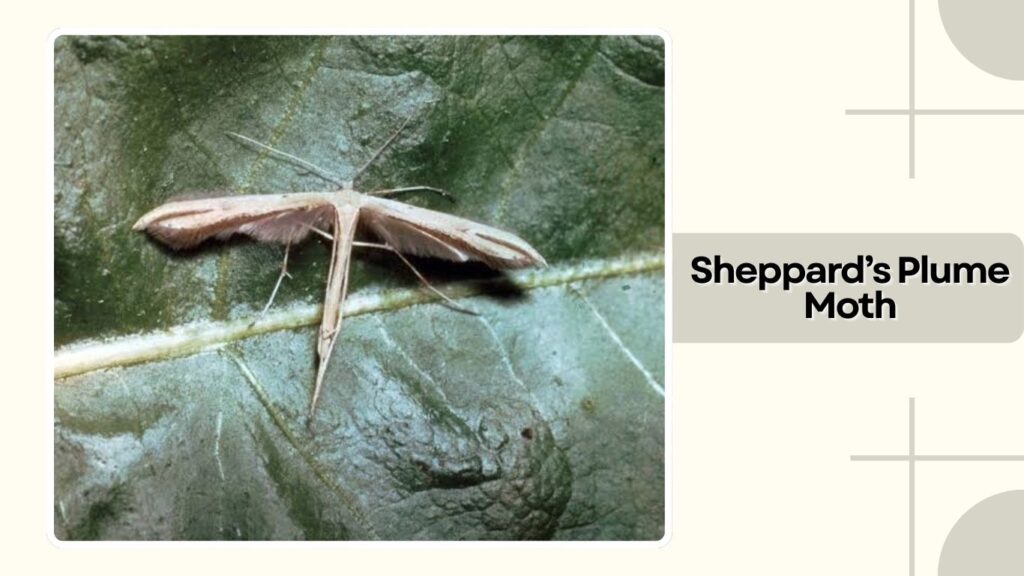
The Sheppard’s Plume Moth (Geina sheppardi) is a North American plume moth described as a distinct species in 1989. It is closely related to the Grape Plume Moth and can be difficult to distinguish from related Geina species using appearance alone. Its caterpillars are associated with wild grape plants.
Identification
- Common Name: Sheppard’s Plume Moth
- Scientific Name: Geina sheppardi
- Family: Pterophoridae
- Adult Shape: Small, slender, and T-shaped at rest
- Wing Structure: Narrow and deeply divided into feather-like lobes
- Color: Generally brownish with contrasting lighter markings
- Host Association: Strongly associated with grape
- Distinctive Feature: Very similar externally to other Geina plume moths
Habitat and Distribution
Records are concentrated in eastern and central portions of North America, including areas of the United States and southern Canada. Verified observations include Ontario, Wisconsin, Minnesota, Missouri, Pennsylvania, Kentucky, Ohio, and Alabama. Habitats containing wild grape vines are particularly suitable.
Behavior and Diet
The larvae feed on wild grape (Vitis), giving the species a close ecological connection with grape-growing habitats. Caterpillars feed on plant tissue while remaining relatively concealed within vegetation. Adults are inconspicuous and may be encountered resting on leaves or attracted to lights after dark.
Lifespan and Lifecycle
Detailed seasonal biology remains less extensively documented than for many agricultural moths. The species undergoes the standard complete metamorphosis of moths: egg, larva, pupa, and adult. Larval development is linked with actively growing grape vegetation, while adult records are most frequent during the warmer part of the year.
8. Himmelman’s Plume Moth
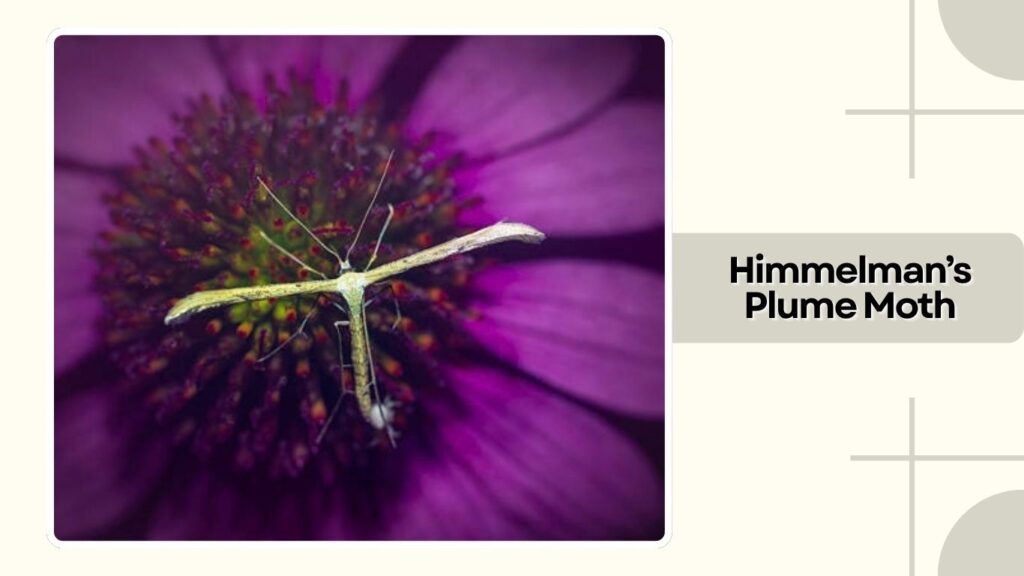
The Himmelman’s Plume Moth (Geina tenuidactylus, also frequently written G. tenuidactyla) is a small North American plume moth with brown-and-ivory patterned wings. Its caterpillars feed on plants such as blackberry, making wooded edges, thickets, and other habitats containing Rubus species favorable environments.
Identification
- Common Name: Himmelman’s Plume Moth
- Scientific Name: Geina tenuidactylus
- Family: Pterophoridae
- Wingspan: About 17 mm
- Color: Brown with ivory or whitish markings
- Antennae: Narrow with alternating pale and darker markings
- Resting Shape: Distinctive T-shaped posture
- Distinctive Feature: Patterned wings and spiny-looking legs
Habitat and Distribution
This moth is distributed across portions of North America, with records from eastern and western regions of the United States and Canada. Observations include Ontario, British Columbia, Massachusetts, New York, Maryland, Virginia, Wisconsin, Minnesota, and other areas. It is especially associated with places where blackberries and related plants occur.
Behavior and Diet
Caterpillars feed on the buds and foliage of blackberries and related Rubus plants. Strawberry has also been reported among its hosts. Adults may visit flowers for nectar and can be attracted to artificial lights at night.
Lifespan and Lifecycle
Females lay eggs on suitable host vegetation. The larvae hatch and feed through several developmental stages before forming pupae. Adults emerge during warmer months, with many North American observations occurring from late spring into midsummer. Like related plume moths, its yearly timing varies with latitude and local climate.
9. Long-harped Plume Moth
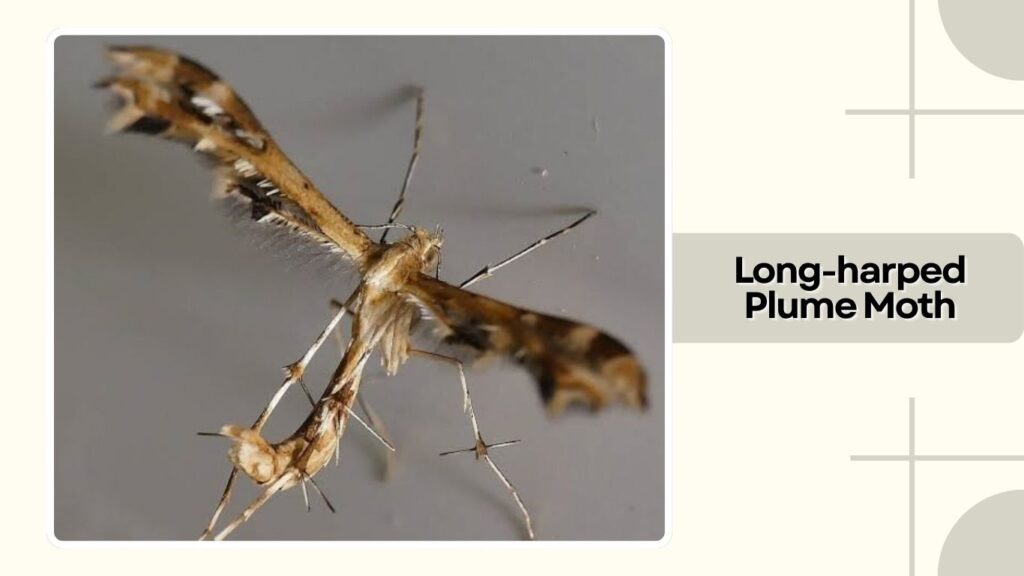
The Long-harped Plume Moth (Hellinsia arion) is a North American plume moth distinguished by its gray-brown coloration, pale scales, and narrow divided wings. It is not as commonly encountered or as thoroughly studied as several other plume moths, but its unusual wing structure and delicate resting posture make it characteristic of the family Pterophoridae.
Identification
- Common Name: Long-harped Plume Moth
- Scientific Name: Hellinsia arion
- Family: Pterophoridae
- Wingspan: About 22.5 mm
- Body Color: Brownish-gray mixed with white scales
- Forewings: Gray-brown with dark spots and pale scaling
- Hindwings: Light brownish-gray
- Distinctive Feature: Darker markings near the forewing cleft and strongly fringed plume-like wings
Habitat and Distribution
The Long-harped Plume Moth is known from western and central portions of North America. Its documented range extends from Texas and Arizona northward to Alberta, Canada. Records suggest that it occupies open or semi-open habitats where appropriate herbaceous vegetation is available.
Behavior and Diet
Specific caterpillar host plants remain poorly documented in major public species references. Adults are slender, cryptically colored moths that can easily blend with dried plant stems and vegetation. Like many plume moths, they are primarily associated with evening or nighttime activity and may rest quietly on vegetation during the day.
Lifespan and Lifecycle
Detailed lifecycle information for Hellinsia arion remains limited. Adults have been recorded in late July and early August in Alberta, indicating midsummer activity in the northern part of its range. The species passes through egg, larval, pupal, and adult stages, but the timing of immature stages and exact host relationships still require better documentation.
10. Coyote Brush Borer Plume Moth
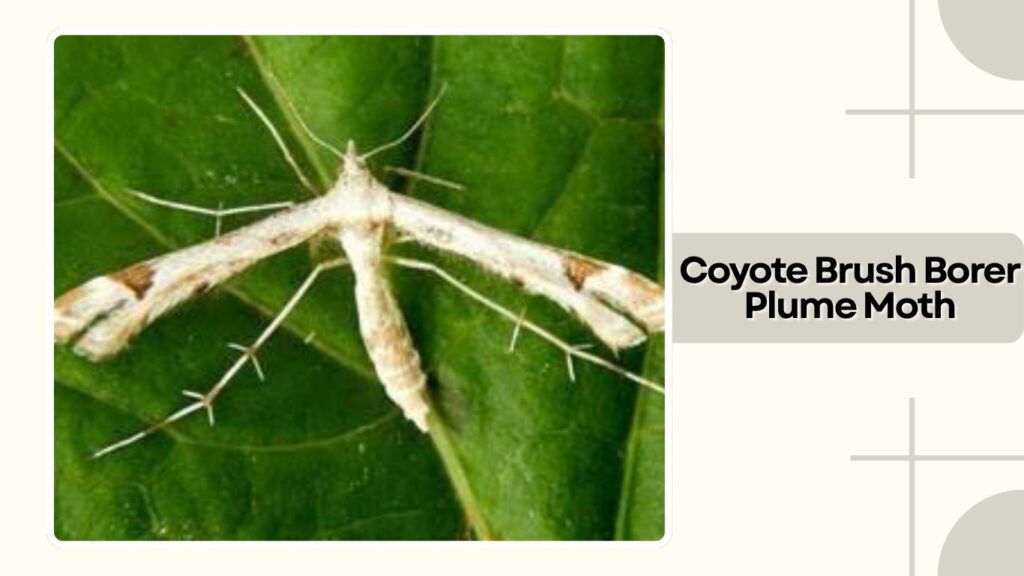
The Coyote Brush Borer Plume Moth is a comparatively large plume moth scientifically known as Hellinsia grandis. Unlike many plume moth caterpillars that feed openly on leaves, its larvae develop by boring into the stems of coyote brush. Adults have the narrow, divided wings and slender body characteristic of the Pterophoridae family. The species occurs in western North America and extends southward into Mexico and Guatemala.
Identification
- Common Name: Coyote Brush Borer Plume Moth
- Scientific Name: Hellinsia grandis
- Family: Pterophoridae
- Wingspan: About 34 mm
- Adult Color: Pale brownish-ochre
- Forewings: Long, narrow, and divided
- Hindwings: Slightly darker than the forewings
- Body: Slender and pale brown
- Distinctive Feature: Large size combined with pale, relatively uniform coloration
Habitat and Distribution
This plume moth is found in North America, particularly western areas such as California, and its range extends into Mexico and Guatemala. Because its caterpillars depend on coyote brush, habitats containing Baccharis pilularis are especially important. Coastal scrub, chaparral edges, open hillsides, and other places where coyote brush grows can provide suitable conditions.
Behavior and Diet
The caterpillars specialize on coyote brush. Rather than simply chewing exposed foliage, they tunnel into stems and feed internally. This stem-boring lifestyle provides protection from weather and many predators. Adults are more mobile and typically rest with their wings extended sideways in the characteristic plume-moth posture.
Lifespan and Lifecycle
Females place eggs on or near suitable host plants. After hatching, larvae enter coyote-brush stems and continue feeding as borers. They later pupate and emerge as adults. Adult activity has been recorded particularly in August, although exact seasonal timing can vary with locality.
11. Plain Plume Moth
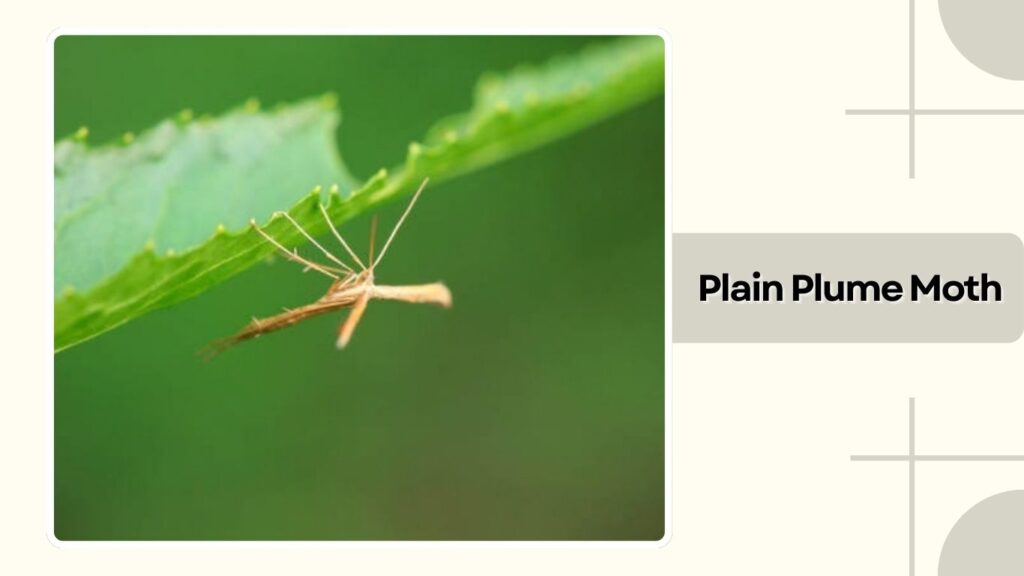
The Plain Plume Moth (Hellinsia homodactylus) is a North American plume moth with relatively understated coloration. Its larvae are associated with members of the aster family, including goldenrods, thoroughworts, and Joe-Pye weeds. Adults can be difficult to distinguish from several closely related Hellinsia species without careful examination.
Identification
- Common Name: Plain Plume Moth
- Scientific Name: Hellinsia homodactylus
- Family: Pterophoridae
- Wingspan: Roughly 23–26 mm
- Color: Pale cream, whitish, or light brown
- Body Shape: Long and slender
- Wings: Narrow with the typical plume-moth divisions
- Resting Position: Usually T-shaped
- Distinctive Feature: Plain pale coloration with relatively subtle markings
Habitat and Distribution
Plain Plume Moths occur across portions of North America, with records from both the United States and Canada. Suitable habitats include meadows, woodland margins, roadsides, fields, and other places where goldenrods and Joe-Pye weeds are abundant.
Behavior and Diet
The larvae feed on plants such as goldenrods (Solidago), thoroughworts (Eupatorium), and Joe-Pye weeds (Eutrochium). Their close dependence on herbaceous host plants means adults are often encountered around vegetation-rich open habitats. Adults are generally inconspicuous and can be active after dark.
Lifespan and Lifecycle
The Plain Plume Moth undergoes complete metamorphosis through egg, larval, pupal, and adult stages. Females select appropriate host vegetation for egg laying, allowing newly hatched caterpillars immediate access to food. Detailed generation timing varies geographically and remains less documented than its host associations.
12. Goldenrod Borer Plume Moth
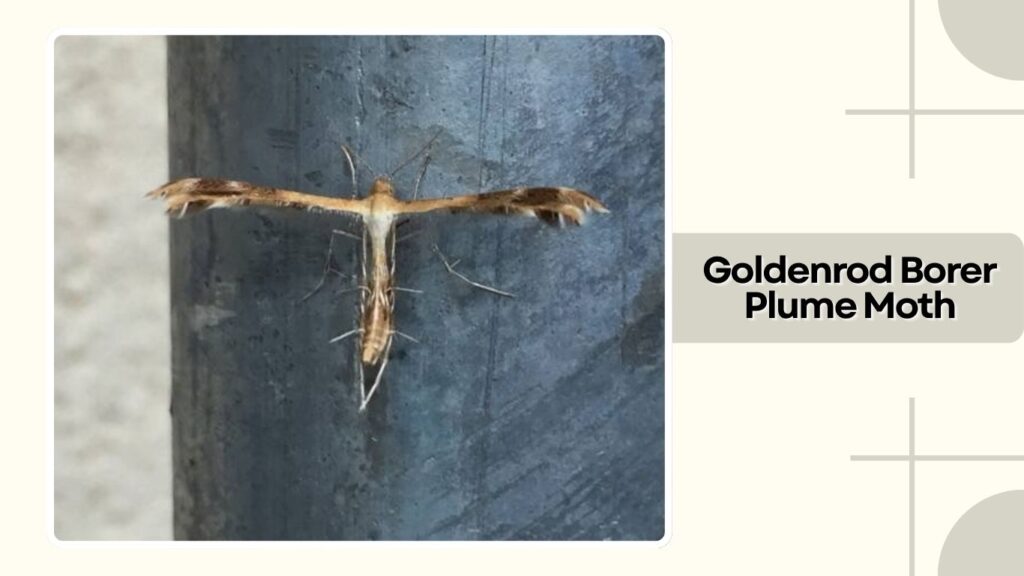
The Goldenrod Borer Plume Moth (Hellinsia kellicottii) gets its name from the unusual feeding behavior of its caterpillars. Instead of remaining exposed on leaves, the larvae tunnel through goldenrod stems and can eventually move toward the roots. This concealed lifestyle distinguishes it from many other plume moth caterpillars.
Identification
- Common Name: Goldenrod Borer Plume Moth
- Scientific Name: Hellinsia kellicottii
- Family: Pterophoridae
- Wingspan: About 14–29 mm
- Adult Color: Brownish-white to pale cream
- Hindwings: Brownish with silky appearance
- Larvae: Pale yellow with pinkish longitudinal markings
- Wing Shape: Narrow and divided
- Distinctive Feature: Larvae develop as internal borers of goldenrod
Habitat and Distribution
This species occurs broadly in eastern North America, with records extending westward in some regions. Meadows, forest edges, old fields, roadsides, and other habitats rich in goldenrod are especially suitable.
Behavior and Diet
Goldenrod is the principal larval host. Caterpillars tunnel into stems, branches, and lower portions of the plant. As winter approaches, larvae may move toward the base and roots, where the plant offers additional protection. Before pupating, a larva may plug its entrance hole.
Lifespan and Lifecycle
The species generally produces one generation per year. Larvae overwinter within their host plants and continue development when seasonal conditions become favorable. Adults can appear from spring into summer, with flight timing varying considerably by latitude.
13. Eupatorium Plume Moth
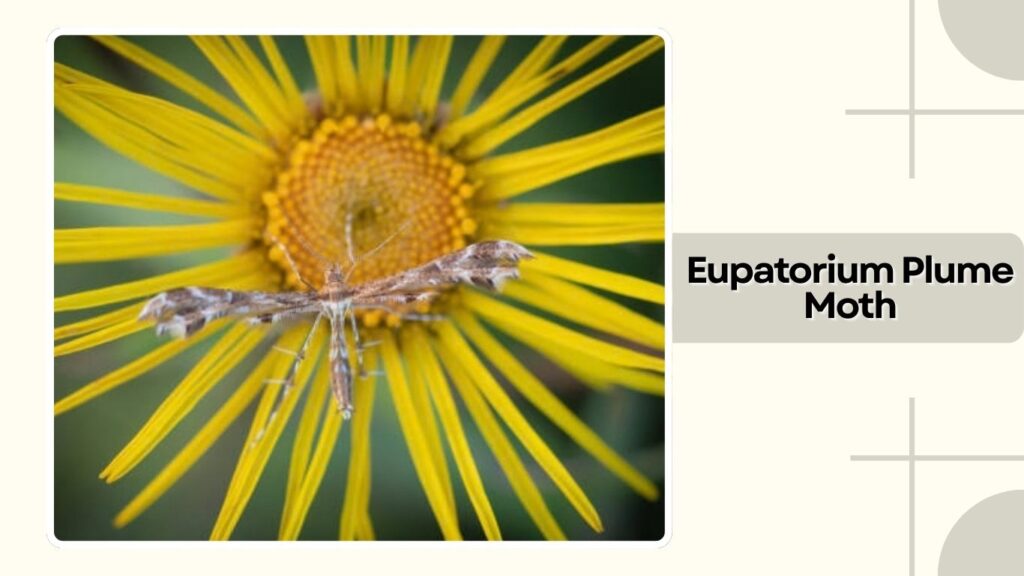
The Eupatorium Plume Moth (Oidaematophorus eupatorii), also called the Joe-Pye Weed Plume Moth, is a North American species closely associated with tall flowering plants such as Joe-Pye weed and thoroughwort. Its pale brown wings carry darker scaling that helps distinguish it from some similar plume moths.
Identification
- Common Name: Eupatorium Plume Moth
- Scientific Name: Oidaematophorus eupatorii
- Family: Pterophoridae
- Forewing Color: Pale ochre to wood-brown
- Markings: Dark brown scaling and spots near the wing cleft
- Hindwings: Brownish-gray
- Larvae: Greenish, sometimes with darker or purplish tones
- Body: Narrow and elongated
- Distinctive Feature: Brown patterning on otherwise pale forewings
Habitat and Distribution
The species has a broad range extending through parts of the United States and Canada and southward into Mexico, Guatemala, and Panama. It is most closely associated with places where its host plants grow, including meadows, moist woodland margins, roadsides, and other herbaceous habitats.
Behavior and Diet
Caterpillars feed on Joe-Pye weeds, thoroughworts, and willowherbs, including plants in Eutrochium, Eupatorium, and Epilobium. They generally consume above-ground plant tissues and foliage.
Lifespan and Lifecycle
Females lay eggs on appropriate host plants, and the larvae begin feeding after hatching. They pass through several larval stages before pupating and eventually emerging as adults. Detailed generation counts vary across the moth’s large geographic range, and some aspects of its complete seasonal cycle remain poorly documented.
14. Lobed Plume Moth
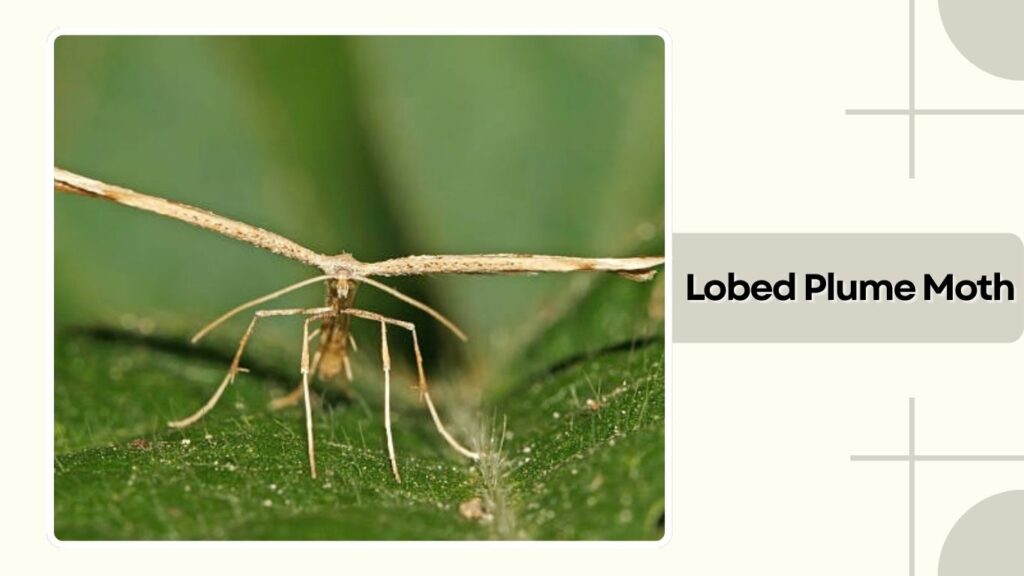
The Lobed Plume Moth (Dejongia lobidactylus) is a distinctive brown plume moth whose narrow wings are decorated with pale bands. Its larvae are particularly associated with goldenrods, where they feed around developing terminal buds. The species occurs mainly in northeastern North America and parts of central Canada.
Identification
- Common Name: Lobed Plume Moth
- Scientific Name: Dejongia lobidactylus
- Family: Pterophoridae
- Wingspan: Around 17 mm or slightly larger
- Forewings: Dark cinnamon-brown
- Markings: Pale yellow or whitish bands
- Head: Grayish-brown with pale lines above the eyes
- Hindwings: Dark brown
- Distinctive Feature: Contrasting light bands across dark divided forewings
Habitat and Distribution
Lobed Plume Moths are recorded mainly from the northeastern United States and central Canada, including Ontario and Quebec. Meadows, old fields, roadsides, woodland margins, and other areas containing goldenrod provide particularly favorable habitats.
Behavior and Diet
Larvae are known to feed on the terminal buds of goldenrod (Solidago). Other recorded host associations include Hypericum. Feeding around growing tips can affect developing plant tissues while giving the small caterpillars some shelter among tightly clustered leaves and buds.
Lifespan and Lifecycle
Adults have been recorded mainly from June through August. Eggs are deposited near host vegetation, after which the caterpillars develop on suitable plants before pupating. Adult emergence during summer completes the cycle, although detailed generation numbers are not well documented.
15. Gumweed Plume Moth
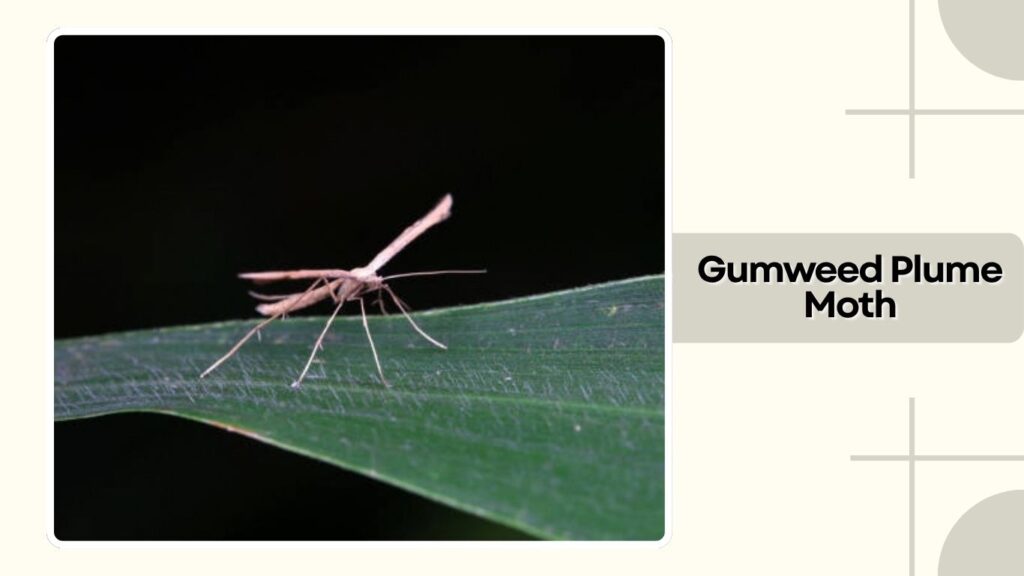
The Gumweed Plume Moth (Dejongia californicus) is a North American species associated primarily with plants in the aster family. Its common name reflects its connection with gumweeds, particularly plants in the genus Grindelia. Like other plume moths, adults have deeply divided wings with long fringes that create a delicate, feather-like appearance.
Identification
- Common Name: Gumweed Plume Moth
- Scientific Name: Dejongia californicus
- Family: Pterophoridae
- Body Shape: Small and slender
- Wings: Narrow, divided, and heavily fringed
- Adult Appearance: Generally brownish or mottled
- Resting Position: Wings held sideways in a T shape
- Distinctive Feature: Association with gumweed and related Asteraceae
- Former Scientific Placement: Previously placed in Aciptilus
Habitat and Distribution
This species occurs in North America and is especially associated with open habitats where gumweeds and related plants grow. Grasslands, disturbed areas, roadsides, dry fields, and coastal or semi-arid plant communities can provide suitable host vegetation.
Behavior and Diet
Its recorded larval host genera include Grindelia, Ambrosia, Heterotheca, and Isocoma. These all belong to the Asteraceae family. The caterpillars therefore tend to remain closely associated with flowering herbaceous or shrubby plants within this group.
Lifespan and Lifecycle
The moth progresses through egg, caterpillar, pupa, and adult stages. Females place eggs on appropriate host vegetation, and developing larvae feed on plant tissue before pupating. Detailed seasonal timing can differ geographically, and published sources provide less complete lifecycle information than for some better-studied agricultural plume moths.
16. Tropical Morning Glory Plume Moth
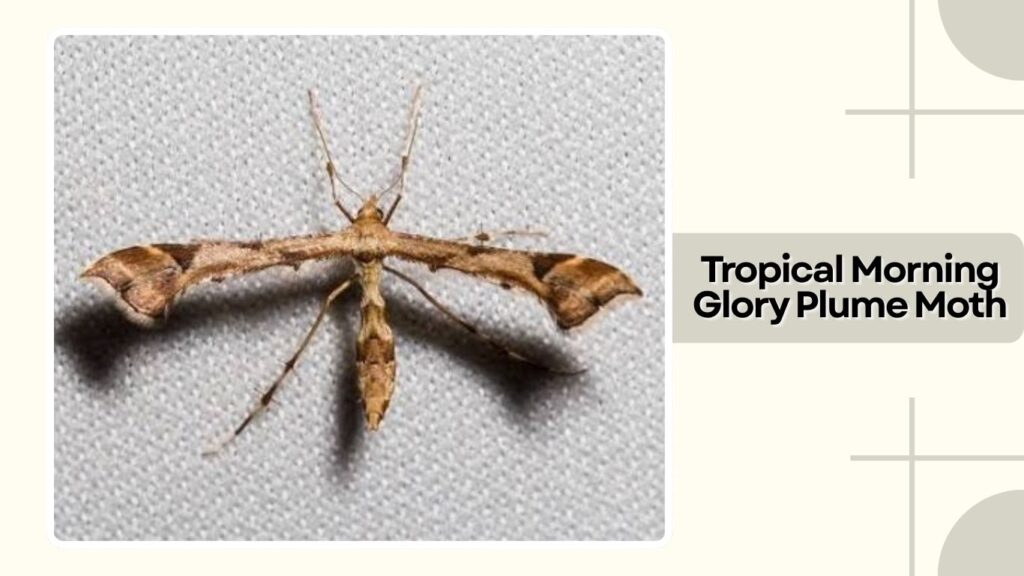
The Tropical Morning Glory Plume Moth (Emmelina buscki) is a warm-region species whose larvae specialize on morning-glory plants. Its pale tawny coloration and delicately divided wings help it blend with dry vegetation. It occurs from southern North America through Central America and into northern South America.
Identification
- Common Name: Tropical Morning Glory Plume Moth
- Scientific Name: Emmelina buscki
- Family: Pterophoridae
- Wingspan: About 20–23 mm
- Adult Color: Tawny to brownish-white
- Forewings: Whitish-tawny with scattered brown scales
- Hindwings: Gray-brown
- Abdomen: Pale with a faint brown dorsal stripe
- Distinctive Feature: Pale divided wings with scattered darker scaling
Habitat and Distribution
The species occurs in Florida, Mexico, the Caribbean, Central America, and northern South America. Gardens, roadsides, field margins, disturbed habitats, and tropical or subtropical areas supporting morning-glory vines can provide suitable habitat.
Behavior and Diet
Caterpillars feed on morning glory (Ipomoea), with Ipomoea indica specifically documented as a host. The larvae can skeletonize young leaves by consuming softer tissue while leaving portions of the leaf framework behind.
Lifespan and Lifecycle
Females lay eggs on suitable morning-glory plants. After hatching, the larvae feed on young foliage before pupating and emerging as adults. Adult records occur during several different months, including February, August, September, and December, suggesting an extended seasonal presence in warm climates.
17. Walsingham’s Plume Moth
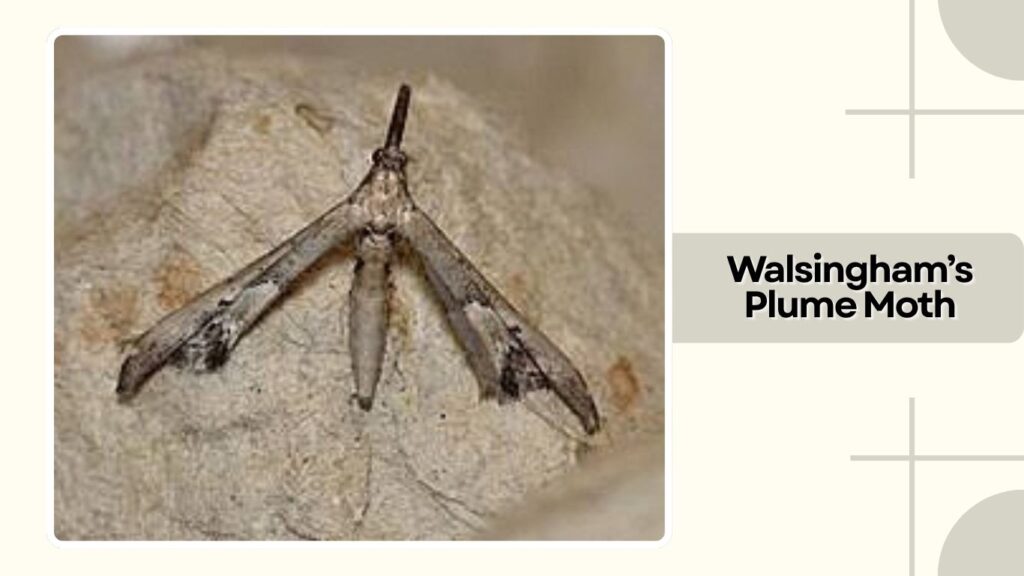
The Walsingham’s Plume Moth (Singularia walsinghami) is an uncommon North American plume moth named in honor of Lord Walsingham, an important early researcher of micro-moths. It has grayish-white wings with brown markings and belongs to a distinctive lineage within the plume moth family.
Identification
- Common Name: Walsingham’s Plume Moth
- Scientific Name: Singularia walsinghami
- Family: Pterophoridae
- Wingspan: About 25–26 mm
- Head: Grayish-white
- Thorax: Grayish-white
- Forewings: Grayish-white with brown along the costa
- Hindwings: Pale brown
- Distinctive Feature: Pale wings with several darker brown spots along the first forewing lobe
Habitat and Distribution
This species is known from North America, particularly Colorado, and appears to have a much more restricted documented distribution than many other plume moths. Its precise habitat requirements have not been thoroughly described in readily available biological records.
Behavior and Diet
Little published information is available about the caterpillar’s host plants or feeding behavior. Adults possess the typical divided wings and T-shaped resting posture associated with plume moths. Because the larval host remains poorly documented, it is best not to assign a specific food plant without stronger evidence.
Lifespan and Lifecycle
Detailed lifecycle information for Walsingham’s Plume Moth is also limited. Like other moths, it passes through egg, larva, pupa, and adult stages, but the timing of these stages, overwintering strategy, and number of yearly generations are not well established in commonly available references.
FAQs
1. What are plume moths?
Plume moths are small, slender moths belonging to the family Pterophoridae. They are easy to recognize because their narrow wings are deeply divided into feather-like lobes. When resting, many plume moths hold their wings sideways, giving their bodies a distinctive T-shaped appearance.
2. Where do plume moths live?
Plume moths are found in many parts of the world, including North America, Europe, Asia, Africa, and tropical regions. They commonly live in gardens, meadows, forests, wetlands, grasslands, and agricultural areas where suitable host plants are available.
3. What do plume moth caterpillars eat?
Plume moth caterpillars feed on many different plants depending on the species. Common host plants include morning glory, goldenrod, grape, geranium, blackberry, artichoke, thistle, and Joe-Pye weed. Some larvae feed on leaves and flowers, while others bore into stems or plant tissues.
4. Are plume moths harmful to plants?
Most plume moths cause only minor damage, but certain species can become agricultural or garden pests. Their caterpillars may chew leaves, damage flower buds, tunnel into stems, or feed on developing plant parts. Serious damage usually occurs only when larval populations become high.
5. How can you identify a plume moth?
The easiest way to identify a plume moth is by its unusual body shape and wings. Adults generally have a very slender body, long legs, and narrow wings divided into feather-like sections. Many species rest with their wings extended at right angles to the body, forming a noticeable T shape.