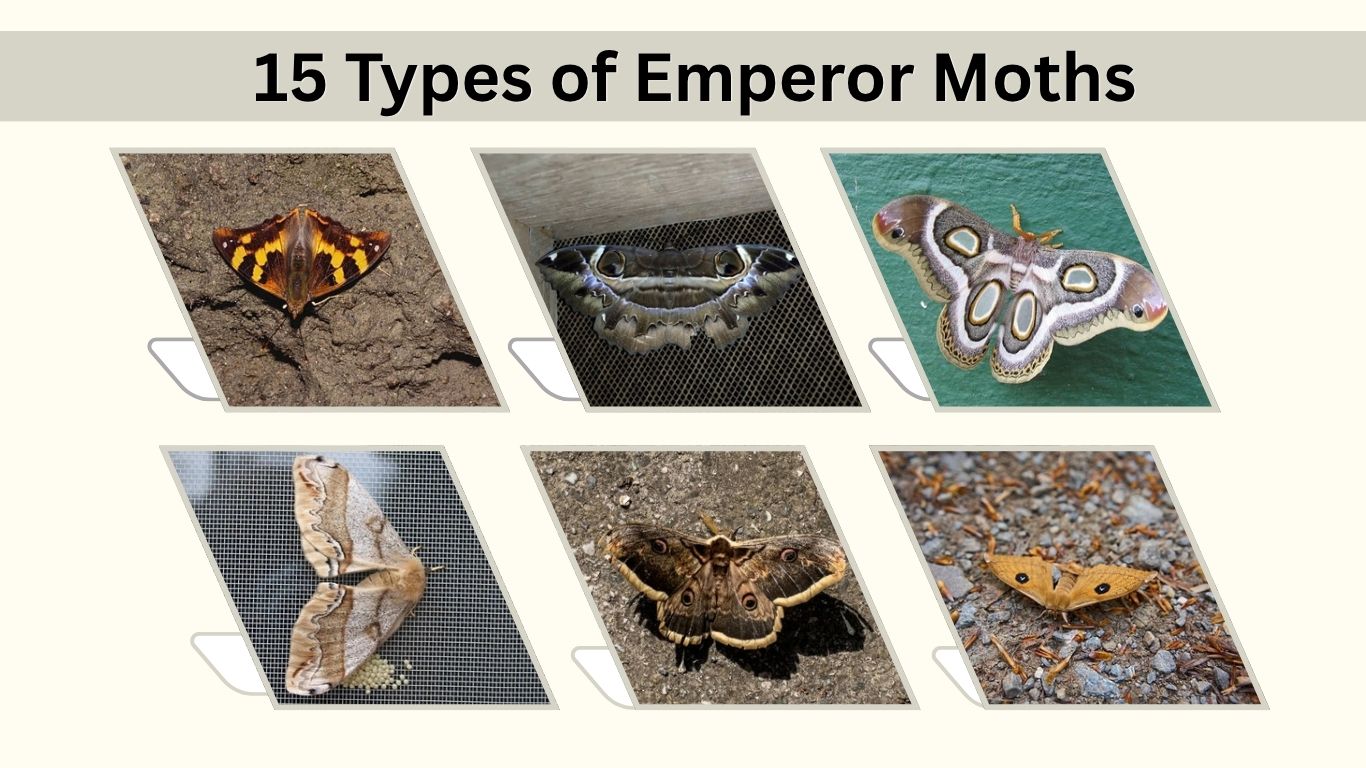
Emperor moths are among the most striking members of the Saturniidae family, known for their large size, bold wing patterns, and distinctive eyespots. These moths are found across Europe, Asia, Africa, and Australia, with each species adapted to different climates, habitats, and host plants. Some favor forests and woodlands, while others thrive in grasslands, savannas, or eucalyptus-rich environments. In this guide, we explore 15 types of emperor moths, including their identification, habitat and distribution, behavior and diet, and complete life cycle.
1. Small Emperor Moth
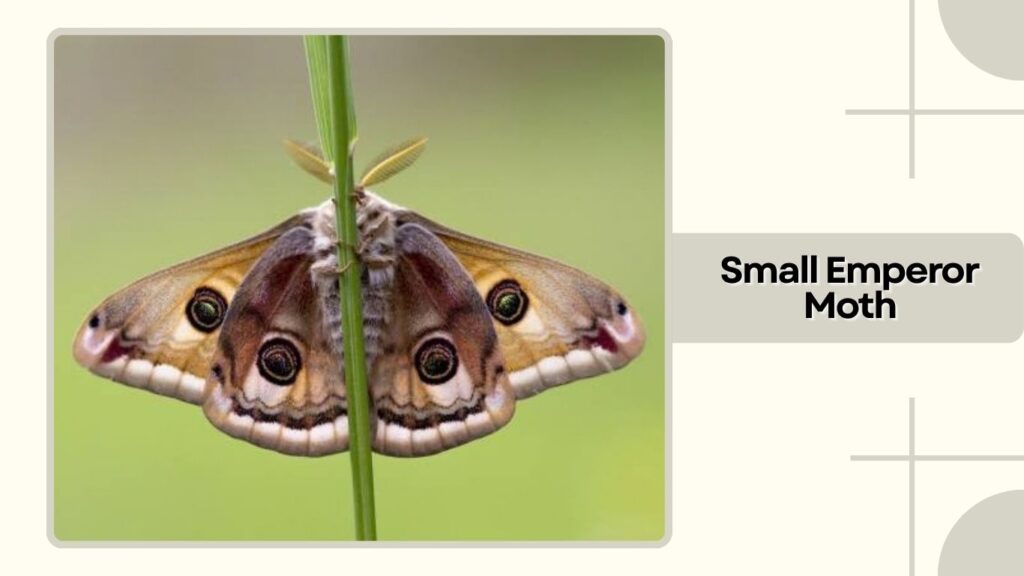
The Small Emperor Moth is a striking silk moth known for the large, peacock-like eyespots on all four wings. It occurs across open countryside, particularly heathland and moorland, where its caterpillars have access to suitable food plants. Males and females differ noticeably in appearance and activity, making this species especially interesting to observe throughout its seasonal life cycle.
Identification
- Wings: Broad wings with prominent circular eyespots on all four wings.
- Color: Males have brighter orange hindwings, while females are generally larger and grayer.
- Antennae: Males have large, strongly feathered antennae that help detect female pheromones.
- Body: Thick and furry, typical of emperor and silk moths.
- Caterpillar: Mature larvae are mainly green with black rings and yellow wart-like spots.
- Wingspan: Commonly around 40–60 mm, although size can vary.
Habitat and Distribution
Small Emperor Moths are strongly associated with heathland, moorland, open countryside, grassland scrub, woodland rides, and sand dunes. They are widespread in Britain and also occur across parts of Europe. Areas containing heather, bramble, and other suitable larval food plants provide particularly favorable habitat. Adults may be difficult to notice when resting because their patterned wings blend effectively with surrounding vegetation.
Behavior and Diet
Male Small Emperor Moths are unusual because they frequently fly during the daytime, rapidly searching for females. Females are more secretive during daylight and generally become active at night. Adult emperor moths concentrate primarily on reproduction, while the caterpillars do the feeding required for growth. Their larvae consume plants including heather and bramble, along with several other shrubs and woody plants.
Lifespan and Life Cycle
The life cycle begins when females lay eggs on suitable vegetation. Caterpillars hatch and feed actively, changing appearance as they grow before reaching their distinctive green mature stage. When fully developed, the caterpillar spins a tough silken cocoon and pupates inside it. The species normally overwinters as a pupa, and some individuals can remain in this stage for more than one winter. Adults usually emerge in spring, with the main flight period occurring around April and May in Britain.
2. Giant Emperor Moth
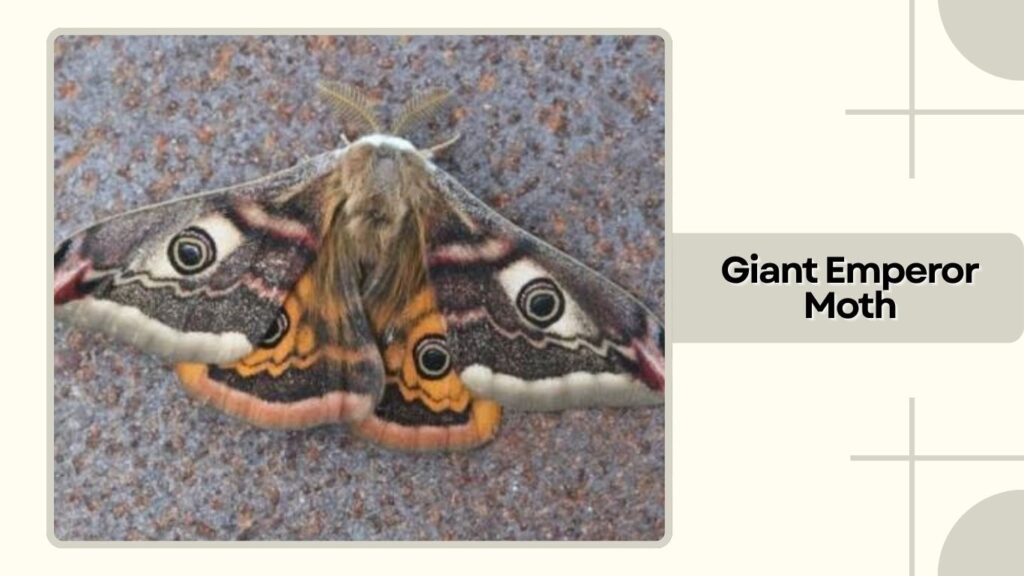
The Giant Emperor Moth is one of Europe’s most impressive silk moths and is also known as the giant peacock moth. Its enormous wings, bold eyespots, and heavy body make it easy to distinguish from most other European moths. The species favors warm landscapes where shrubs, orchards, and deciduous trees provide abundant food for its developing caterpillars.
Identification
- Wingspan: Commonly around 100–130 mm, with some individuals reported considerably larger.
- Wings: Broad grayish-brown wings marked with wavy bands.
- Eyespots: Each of the four wings carries a large colorful peacock-like eyespot.
- Body: Thick, furry, and robust.
- Antennae: Males possess strongly feathered antennae.
- Caterpillar: Large and green, with conspicuous raised tubercles along the body.
Habitat and Distribution
Giant Emperor Moths occur mainly across southern and parts of central Europe, extending into western Asia and North Africa. They prefer warm areas containing plenty of deciduous vegetation. Open scrubland, wooded slopes, traditional orchards, gardens, and countryside containing fruit trees can provide favorable habitat. The availability of suitable larval host plants is particularly important.
Behavior and Diet
Adults are primarily concerned with reproduction and have only a short adult stage. Females release pheromones that males can detect using their large feathered antennae. Caterpillars are responsible for nearly all feeding during the life cycle. They consume foliage from numerous trees and shrubs, including pear, apple, plum, blackthorn, almond, willow, poplar, and other deciduous plants.
Lifespan and Life Cycle
Females deposit eggs on branches or leaves of suitable food plants. After hatching, the caterpillars pass through several growth stages while feeding heavily on foliage. Mature larvae eventually spin strong cocoons in protected locations and transform into pupae. The species normally overwinters in the pupal stage, sometimes remaining there for more than one winter. Adults generally appear from spring into early summer.
3. Viennese Emperor Moth
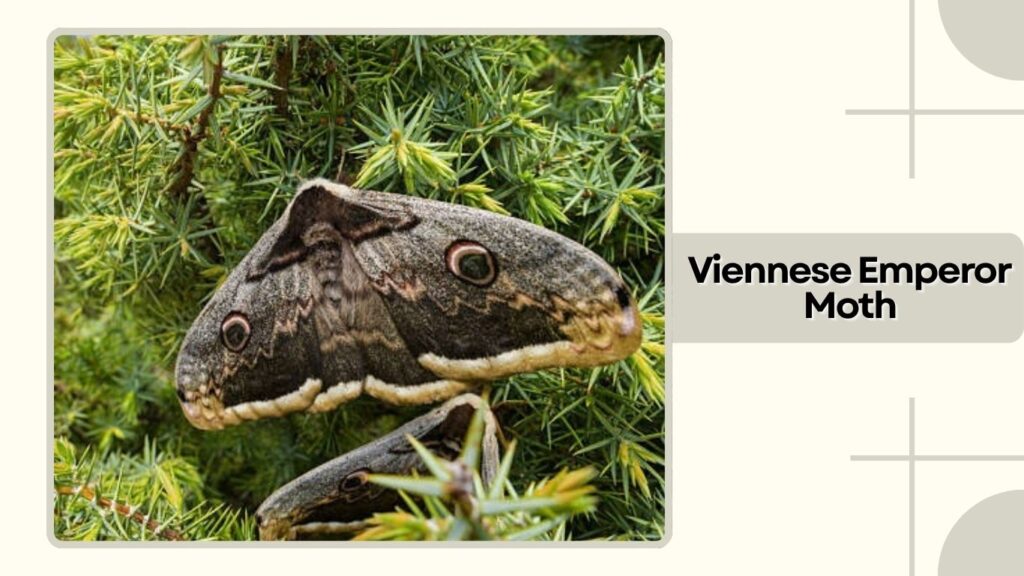
The Viennese Emperor Moth is actually another common name for the Giant Emperor Moth, Saturnia pyri, rather than a separate moth species. It received this traditional name because the species was originally described from the Vienna region. Despite the alternative name, it has the same distinctive eyespots, enormous wings, geographic distribution, host plants, and life cycle as the Giant Emperor Moth described above.
Identification
- Size: One of the largest moths occurring naturally in Europe.
- Wings: Large gray-brown wings crossed by darker irregular lines.
- Eyespots: Four prominent multicolored eyespots, one on each wing.
- Antennae: Males have broad, feather-like antennae.
- Body: Large, thick, and covered with dense hairs.
- Larvae: Mature caterpillars are large and green with noticeable colored tubercles.
Habitat and Distribution
The Viennese Emperor occurs across parts of southern and central Europe and continues eastward into western Asia, with populations also occurring around parts of North Africa. Warm woodland edges, shrub-covered hillsides, orchards, and other landscapes rich in deciduous trees provide suitable conditions. Fruit-growing areas can be particularly useful because several fruit trees serve as larval hosts.
Behavior and Diet
Adults may be attracted to lights at night. Reproduction dominates their brief adult life, with females releasing chemical pheromones to attract males. Caterpillars feed extensively before pupation, using stored energy later during adulthood. Common larval plants include pear, apple, plum, blackthorn, almond, willow, poplar, elm, and several other woody plants.
Lifespan and Life Cycle
Eggs are deposited on suitable host vegetation during spring. Newly hatched caterpillars begin feeding on leaves and increase dramatically in size through successive molts. Full-grown caterpillars seek protected places to construct tough silk cocoons. Pupae typically overwinter inside these cocoons before adults emerge the following spring, although prolonged pupal development can sometimes occur.
4. Sloe Emperor Moth
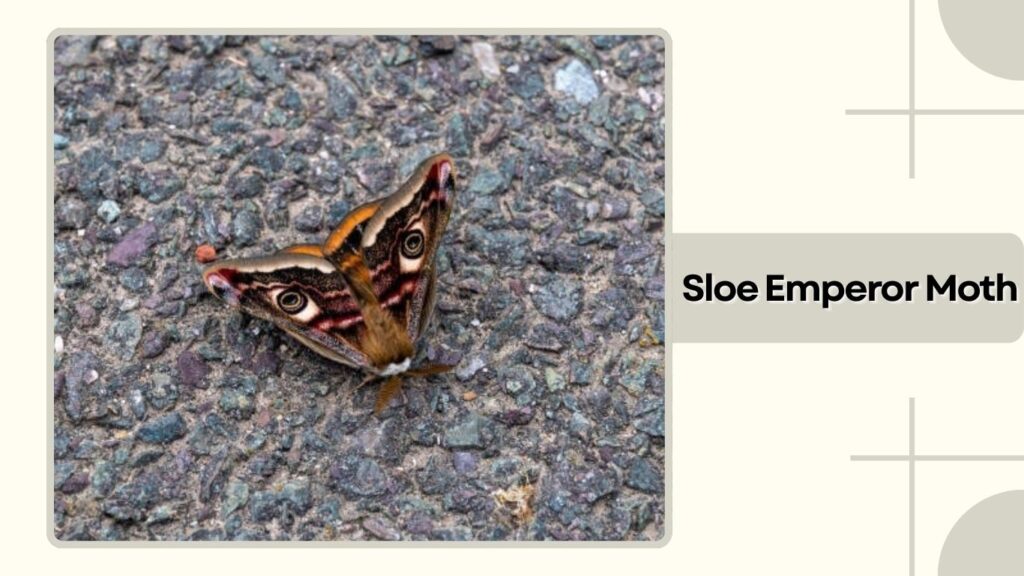
The Sloe Emperor Moth is a medium-to-large member of the Saturniidae family recognized by its prominent wing eyespots and association with blackthorn and other woody plants. It occurs mainly in eastern and southeastern Europe and neighboring parts of western Asia. Dry, warm landscapes containing scattered bushes provide particularly suitable habitat for both adults and developing caterpillars.
Identification
- Wingspan: Approximately 55–90 mm.
- Wings: Broad wings with muted brown, gray, and cream markings.
- Eyespots: A noticeable rounded eyespot occurs on each wing.
- Body: Thick and hairy, characteristic of emperor moths.
- Antennae: Males have strongly feathered antennae.
- Caterpillars: Young larvae are dark, while their appearance changes substantially as they develop.
Habitat and Distribution
Sloe Emperor Moths occur from eastern Austria and Poland through southeastern Europe, reaching Greece, Turkey, Armenia, Ukraine, and Kazakhstan. Their preferred habitats include dry grasslands, steppe-like areas, scrub, open hillsides, and landscapes with scattered blackthorn bushes. Warm continental environments containing mixed grassland and thorny shrubs can support healthy populations.
Behavior and Diet
The caterpillars most commonly feed on blackthorn, which explains the moth’s English name. Other recorded food plants include wild roses, hawthorn, elm, alder, willow, poplar, apple, and related woody species. Adults depend mainly on energy accumulated during the larval stage and devote their short adult period primarily to locating mates and reproducing.
Lifespan and Life Cycle
Females usually lay groups of eggs on stems of suitable host plants and may cover them with abdominal hairs. Eggs generally hatch within a couple of weeks under favorable conditions. Caterpillars feed and molt repeatedly before creating cocoons close to the ground or beneath protected objects. The species overwinters as a pupa, and some pupae can remain dormant for multiple years before emerging.
5. Autumn Emperor Moth
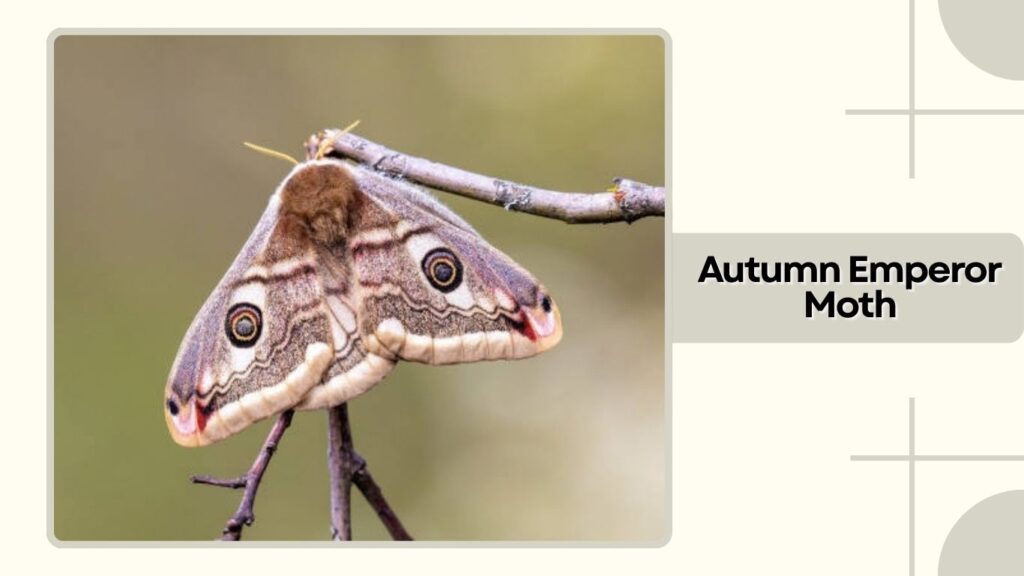
The Autumn Emperor Moth differs from many emperor moths because its adults appear mainly during autumn rather than spring. Known scientifically as Perisomena caecigena, this attractive silk moth occurs across southeastern Europe and western Asia. Its warm yellow-brown coloration provides effective camouflage among autumn vegetation, while its distinctive eyespots retain the characteristic appearance associated with many Saturniidae moths.
Identification
- Wingspan: Generally around 62–88 mm in the nominate form.
- Color: Usually golden yellow, orange-brown, or muted brown.
- Eyespots: Rounded eyespots appear on the wings.
- Body: Furry and relatively heavy compared with many ordinary moths.
- Sexual differences: Females are generally larger and heavier-bodied.
- Antennae: Males have more prominently feathered antennae.
Habitat and Distribution
Autumn Emperor Moths occur from northeastern Italy and southeastern Austria through Hungary, Slovenia, Croatia, Serbia, Albania, Romania, Bulgaria, Greece, and Turkey, extending into the Caucasus. Additional isolated populations occur farther south, including mountainous areas around Lebanon, Israel, and Cyprus. Woodlands and areas containing suitable deciduous trees provide important breeding habitat.
Behavior and Diet
Adults are most noticeable from late September into early November. As with other emperor moths, the caterpillar stage is responsible for gathering most of the energy needed for development and reproduction. Caterpillars feed particularly on oak species, although poplar, ash, pear, plum, and several other deciduous plants have also been recorded as hosts.
Lifespan and Life Cycle
Females lay eggs on or near suitable host trees. The caterpillars emerge and feed heavily on leaves while passing through multiple developmental stages. Once mature, they enter the pupal stage, where metamorphosis transforms them into adults. The species produces a seasonal generation whose adults characteristically emerge during autumn, explaining the common name Autumn Emperor Moth.
6. Tau Emperor Moth
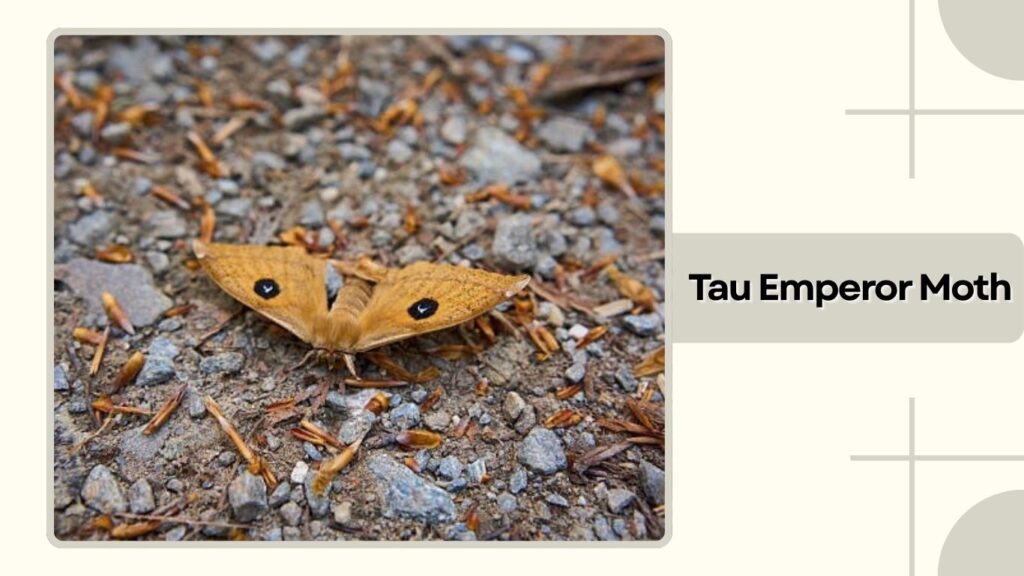
The Tau Emperor Moth is a distinctive European silk moth associated particularly with deciduous forests. Its name comes from the dark marking within its wing eyespots, which resembles the Greek letter tau (τ). Adults are most frequently encountered during spring, especially in woodland containing beech trees, while males may be seen actively flying during daylight in search of females.
Identification
- Wings: Broad and generally yellowish, orange-brown, or brown.
- Eyespots: Each wing carries a conspicuous dark-centered eyespot.
- Marking: The central pattern is associated with the Greek letter tau.
- Body: Thick and furry.
- Antennae: Males have large feathered antennae.
- Caterpillars: Young larvae possess unusual projections that become reduced as they mature.
Habitat and Distribution
Tau Emperor Moths inhabit many parts of Europe, particularly deciduous woodland. Mature forests containing European beech are especially suitable, although they can also occur in mixed woodland and younger riparian forests. Their distribution and abundance are closely connected to the availability of broadleaf trees used by developing caterpillars.
Behavior and Diet
Adult males are frequently active during the daytime, whereas females tend to become more active around dusk and at night. Adults lack a functional feeding proboscis and therefore do not feed. Caterpillars obtain the energy required for adulthood by consuming leaves, particularly European beech, but also hornbeam, birch, willow, oak, hawthorn, and other deciduous plants.
Lifespan and Life Cycle
Females deposit eggs after mating, and the eggs hatch into small caterpillars that pass through several instars. Mature larvae eventually leave the foliage and pupate close to or within the forest floor. The pupal stage survives winter, with adults emerging during spring as temperatures increase. Because adults cannot feed, their adult lifespan is relatively short and is devoted mainly to mating and egg laying.
7. Japanese Emperor Moth
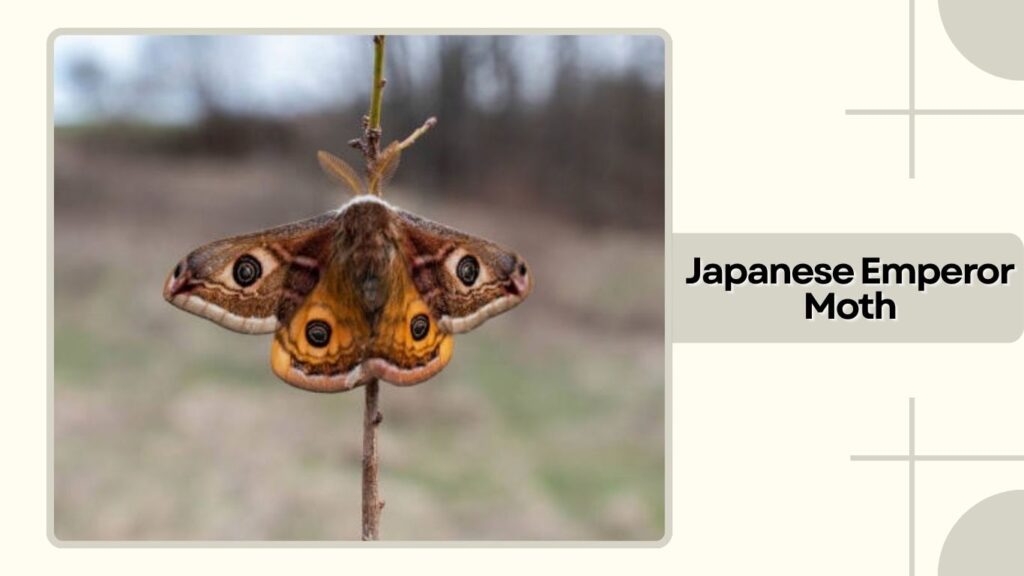
The Japanese Emperor Moth, also widely called the Japanese giant silkworm, is a large member of the Saturniidae family found across eastern Asia. Its broad wings, warm brown coloration, and striking eyespots give it the classic appearance associated with emperor moths. The species is particularly associated with deciduous woodland, where its caterpillars can feed on several different trees.
Identification
- Size: A large, heavy-bodied silk moth.
- Wings: Broad wings patterned with brown, tan, pinkish, and darker wavy markings.
- Eyespots: Distinctive eye-like markings occur on the wings.
- Body: Thick and densely covered with hair-like scales.
- Antennae: Males have strongly feathered antennae used for detecting females.
- Caterpillar: Large larvae develop on broadleaf trees before forming a cocoon.
Habitat and Distribution
Japanese Emperor Moths occur across Japan, China, Korea, and parts of Russia. They are most closely associated with wooded landscapes containing suitable deciduous host trees. Forest edges, mixed woodland, and plantations can all provide habitat. In China, the species has also been recorded as an important feeder on mature ginkgo trees and occurs across numerous provinces.
Behavior and Diet
The caterpillars are broadleaf feeders and can use several tree species. Recorded hosts include willow, beech, oak, walnut, and ginkgo. Larvae spend much of their development feeding and storing energy required for metamorphosis and adulthood. Their relatively large size means older caterpillars can consume substantial quantities of foliage.
Lifespan and Life Cycle
The Japanese Emperor Moth generally produces one generation each year. Females lay eggs that can survive winter, with development resuming as temperatures rise. Caterpillars hatch during the growing season and pass through several larval stages before pupating. Research on the species indicates that overwintering takes place in the egg stage, helping synchronize young larvae with the return of fresh foliage.
8. Southern Emperor Moth
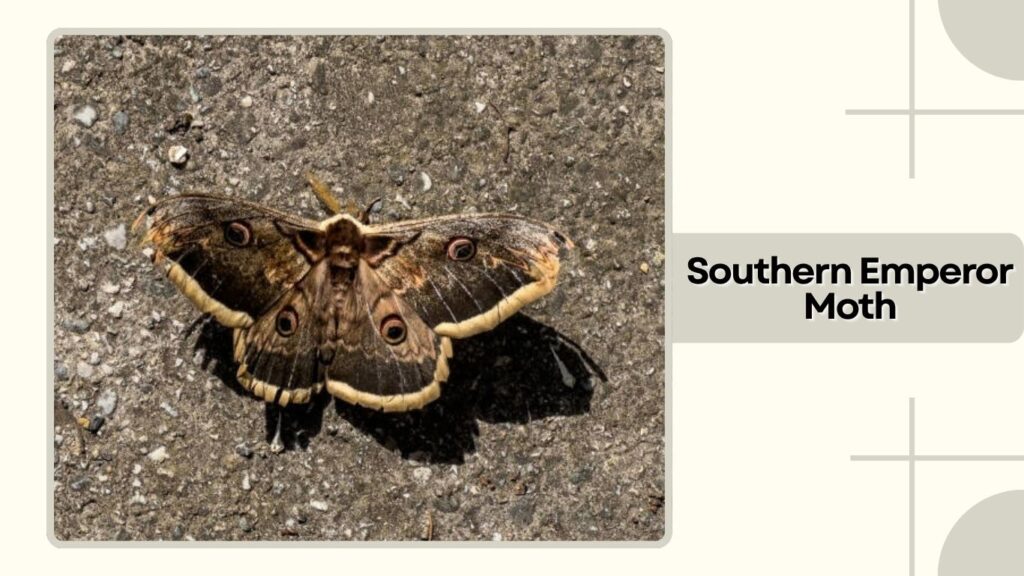
The Southern Emperor Moth is a colorful European saturniid closely related to the Small Emperor Moth. Its impressive eyespots, furry body, and strong differences between males and females make it an attractive species. It favors open landscapes containing shrubs and low woody vegetation, particularly areas where blackthorn, bramble, and other members of the rose family grow naturally.
Identification
- Wingspan: About 45–70 mm in males and roughly 50–95 mm in females.
- Eyespots: Large circular eyespots occur on all four wings.
- Male color: Brown forewings combined with brighter orange-toned hindwings.
- Female color: Usually paler gray, pinkish, or brown.
- Antennae: Males have broad, strongly feathered antennae.
- Caterpillar: Mature larvae become predominantly green.
Habitat and Distribution
Southern Emperor Moths occur through parts of southern and central Europe, including Italy and the Balkans, and extend east toward Turkey and the Caucasus. They favor open countryside containing scattered shrubs, hedgerows, dry grassland, woodland margins, and other relatively undisturbed habitats. Blackthorn-rich hedges are particularly useful breeding locations.
Behavior and Diet
Males commonly fly during daylight while actively searching for females, whereas females are more nocturnal. Adults do not feed, so their adult lives are mainly devoted to reproduction. Caterpillars consume many different plants, including blackthorn, bramble, hawthorn, rose, willow, birch, oak, and heather.
Lifespan and Life Cycle
The species normally has one generation per year. Adults generally appear from late winter through spring, depending on local climate and elevation. Females attach groups of eggs to host plants. Young caterpillars initially live together before becoming more independent as they grow. Mature larvae spin protective cocoons, and the species survives winter as a pupa inside the cocoon. Adults emerge the following spring.
9. Emperor Gum Moth
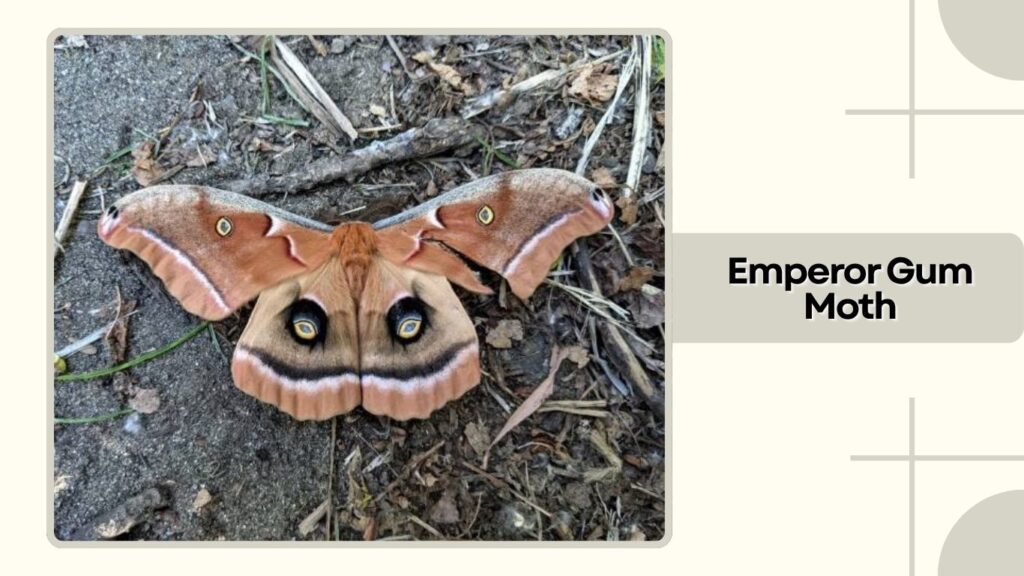
The Emperor Gum Moth is one of Australia’s best-known giant silk moths. Its reddish-brown wings, prominent eyespots, feather-like antennae, and enormous green caterpillars make it particularly distinctive. As its common name suggests, the species is strongly associated with eucalyptus trees, although its larvae can feed on several other plants as well.
Identification
- Color: Adults are mainly soft pinkish-fawn or reddish-brown.
- Eyespots: Four conspicuous orange-and-black eye markings decorate the wings.
- Body: Large, furry, and robust.
- Antennae: Broad and feather-like, particularly in males.
- Caterpillar: Large and bright green with colorful red, orange, or blue projections.
- Cocoon: Produces a tough, durable silk cocoon attached to vegetation.
Habitat and Distribution
Emperor Gum Moths occur naturally across much of eastern and northern Australia, including Queensland, New South Wales, Victoria, and the Northern Territory. They have also been introduced into New Zealand. Their preferred environments include eucalyptus forests and woodlands, although adults can sometimes appear around suburban areas where gum trees are abundant.
Behavior and Diet
Adults are nocturnal and can be attracted to artificial lights. They possess no functional feeding system and therefore live entirely on energy stored during their caterpillar stage. Larvae primarily feed on eucalyptus leaves, but other recorded hosts include brush box, water gum, cherry guava, pepper trees, and several ornamental plants.
Lifespan and Life Cycle
Females glue their eggs to eucalyptus leaves. Newly hatched caterpillars immediately begin feeding and increase greatly in size through successive molts. Mature caterpillars construct tough cocoons on branches and enter the pupal stage. Pupae may remain inside their cocoons for one year or longer when environmental conditions are unsuitable. Adults eventually emerge during warmer months and generally live only about two weeks, during which they mate and reproduce.
10. African Emperor Moth
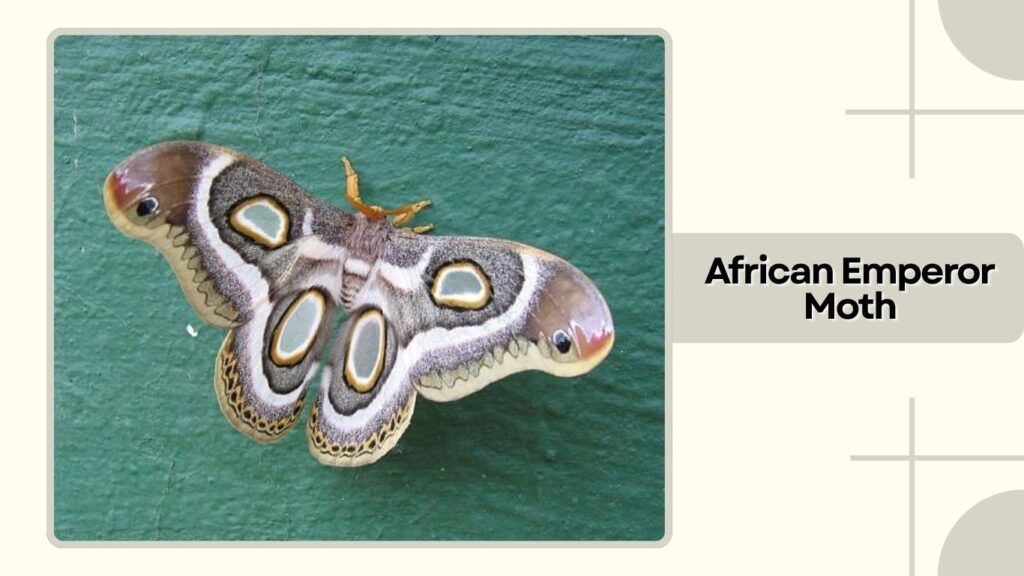
The African Emperor Moth (Bunaeopsis licharbas) belongs to a diverse group of large saturniid moths found throughout tropical Africa. It has attracted scientific attention because the structure of its eggs, caterpillars, and pupae provides useful information for studying relationships among African emperor moths. Its broad African range takes it through several different tropical and subtropical environments.
Identification
- Family: Saturniidae, the giant silk and emperor moth family.
- Body: Typically robust and densely scaled.
- Wings: Broad wings typical of the large African Saturniinae.
- Antennae: Males possess developed antennae adapted for detecting pheromones.
- Larvae: Pass through several distinct developmental stages.
- Pupa: Develops after the mature larval stage as part of complete metamorphosis.
Habitat and Distribution
This emperor moth has a remarkably wide African distribution. Records include Cameroon, Kenya, Nigeria, Tanzania, Uganda, Zambia, Gabon, Senegal, Mali, Guinea, the Democratic Republic of Congo, and several neighboring countries. Such a range means populations occur across woodland, savanna, forest margins, and other vegetated tropical environments.
Behavior and Diet
Like other Saturniidae, the species spends most of its growth period as a caterpillar. Larvae must obtain enough nutrients to support pupation and the adult reproductive stage. Detailed scientific descriptions exist for its immature stages, although reliable field information about its natural larval food plants remains comparatively limited. A recent checklist for Zambia specifically lists its larval hosts as unknown.
Lifespan and Life Cycle
Its development follows the classic egg, larva, pupa, and adult sequence. Research has documented structural changes across the different larval instars as well as characteristics of the egg and pupa. After completing its feeding stages, a mature larva transforms into a pupa before eventually emerging as an adult moth. Seasonal timing can vary geographically because its range covers many different climates across Africa.
11. Pine Emperor Moth
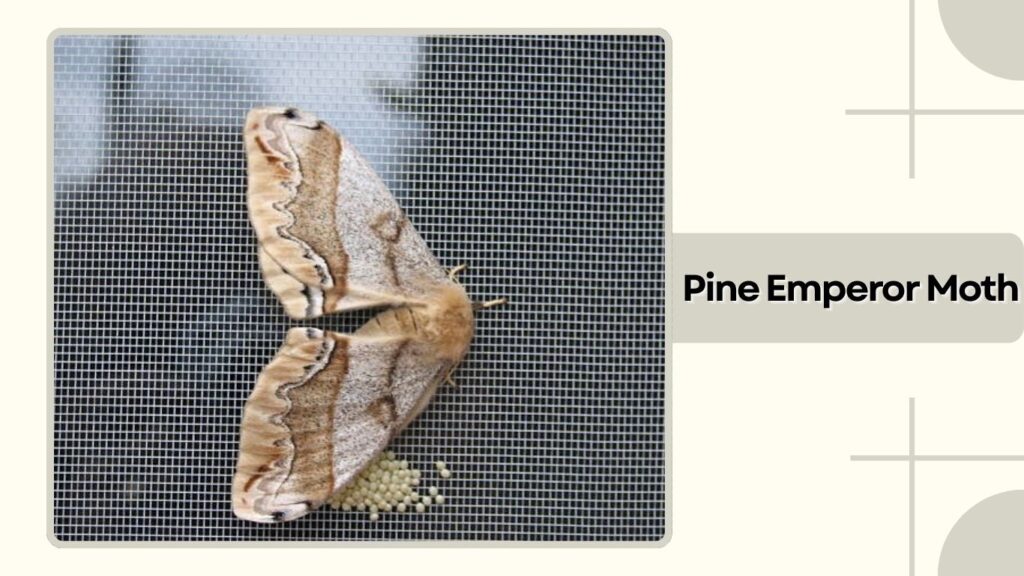
The Pine Emperor Moth is a large southern African saturniid especially notable for its caterpillars’ ability to feed on pine trees. Although native host plants formed part of its original diet, populations adapted readily to introduced pine plantations. Heavy larval outbreaks have therefore occasionally caused noticeable defoliation, making this emperor moth important both ecologically and in forestry.
Identification
- Wings: Large and broad with typical emperor-moth patterning.
- Eyespots: Distinctive eyespot markings are present on the wings.
- Color: Adults can vary from brownish to yellowish forms.
- Body: Heavy and furry.
- Larvae: Large caterpillars capable of feeding heavily on tree foliage.
- Eggs: Creamy colored with darker brownish or purplish markings.
Habitat and Distribution
Pine Emperor Moths occur mainly in southern Africa, including several regions of South Africa and neighboring areas. Populations have been recorded from the Western Cape, Eastern Cape, KwaZulu-Natal, and Mpumalanga. They occur naturally in landscapes containing indigenous vegetation but have also become strongly associated with commercial pine plantations.
Behavior and Diet
The caterpillars are remarkably adaptable feeders. Native host plants include species of Protea, Euclea, Rhus, and other southern African plants, while introduced hosts include pine and eucalyptus. Pine species such as Pinus radiata and P. patula can support substantial larval populations. In outbreak years, many caterpillars feeding together may remove considerable foliage.
Lifespan and Life Cycle
Adults in some South African populations emerge from around February through May. Females lay eggs either singly or in groups on suitable vegetation. The eggs may require several weeks to hatch, after which caterpillars feed through successive developmental stages. Mature larvae eventually pupate before producing the next adult generation. Field research reports an adult lifespan of roughly up to 10 days in some populations, emphasizing how strongly the adult stage is focused on reproduction.
12. Madagascan Emperor Moth
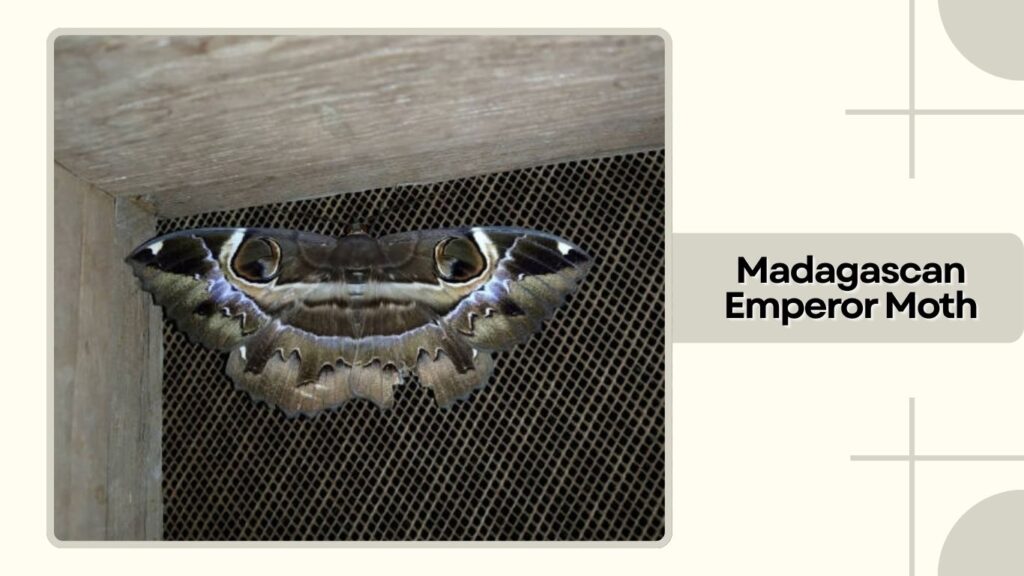
The Madagascan Emperor Moth is a large African silk moth belonging to the Saturniidae family. Known scientifically as Bunaea aslauga, it is recognized for its substantial size, broad wings, heavy body, and dramatic saturniid appearance. Although associated strongly with Madagascar through its common name, records also confirm its occurrence in mainland East Africa, including Kenya.
Identification
- Size: A large, broad-winged emperor moth.
- Wings: Wide wings with contrasting bands and markings typical of Bunaea moths.
- Body: Thick, furry, and robust.
- Antennae: Males possess more strongly feathered antennae than females.
- Eyespots: Wing markings help give the moth a dramatic, eye-like appearance.
- Caterpillar: Large-bodied larva adapted for feeding on woody host plants.
Habitat and Distribution
The Madagascan Emperor Moth has been recorded in Madagascar and Kenya. In Madagascar it occurs in environments containing suitable native trees and shrubs, including forested landscapes. Because larval development depends directly on host vegetation, populations are closely associated with places where suitable food plants remain available. GBIF recognizes Bunaea aslauga as an accepted species and lists Madagascan emperor moth as its English vernacular name.
Behavior and Diet
Most feeding takes place during the caterpillar stage. One documented larval food plant is Intsia bijuga, a tree in the legume family Fabaceae. Caterpillars spend their development consuming foliage and accumulating the resources required for pupation and adult reproduction. Adults, in contrast, have a much shorter reproductive phase characteristic of giant silk moths.
Lifespan and Life Cycle
Its development follows complete metamorphosis through egg, caterpillar, pupa, and adult stages. Females place eggs where newly hatched caterpillars can reach appropriate vegetation. Larvae then pass through several molts as they increase greatly in size. After completing their feeding period, mature caterpillars pupate and eventually emerge as large adult moths. Seasonal timing varies with local climate and rainfall.
13. Speckled Emperor
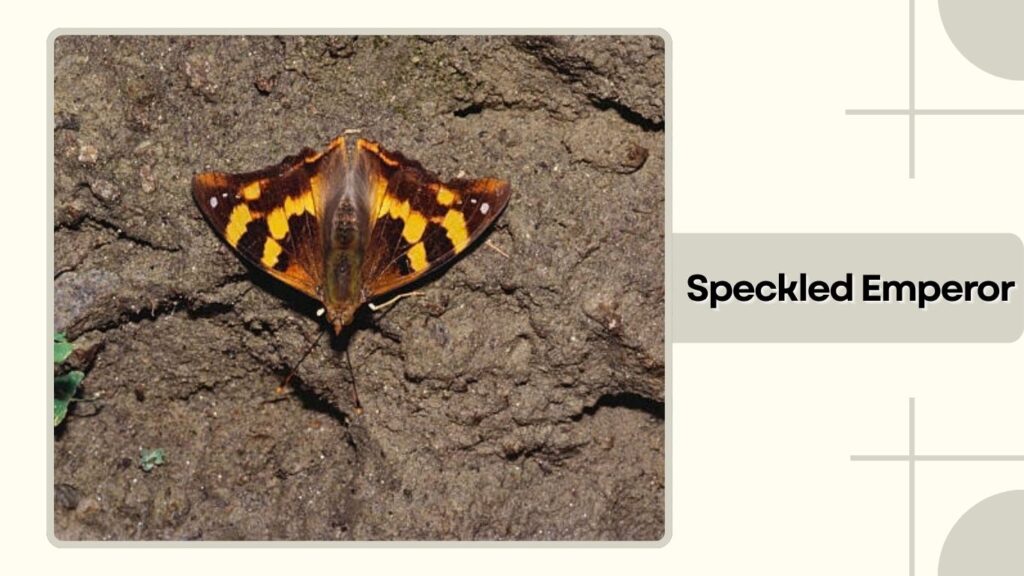
The Speckled Emperor is a large African emperor moth scientifically known as Gynanisa maja. Its considerable wingspan and patterned wings make it one of the more conspicuous Saturniidae of southern and eastern Africa. The species is also notable because its caterpillars use numerous woody host plants and are traditionally collected as food in some parts of its African range.
Identification
- Wingspan: Approximately 105–113 mm.
- Wings: Large and patterned with mottled or speckled markings.
- Body: Thick, hairy, and relatively heavy.
- Antennae: Males have conspicuously feathered antennae.
- Caterpillars: Large larvae that become prominent on host trees.
- Young larvae: Early instars may live and feed together in groups.
Habitat and Distribution
The Speckled Emperor is recorded from South Africa northward into eastern and south-central Africa, including Angola and Zambia. It inhabits landscapes containing suitable trees and shrubs, ranging from woodland and savanna to areas dominated by mopane and other native vegetation. Its wide selection of host plants allows it to survive in several different wooded African habitats.
Behavior and Diet
Its caterpillars feed on an unusually broad assortment of plants. Recorded hosts include mopane, acacias, Julbernardia, Pterocarpus, peaches, oaks, Robinia, and Schotia. Early-stage larvae can be gregarious, meaning several caterpillars remain and feed together before spreading out as they become larger. Caterpillars devote most of their time to eating and growth.
Lifespan and Life Cycle
Adults have been recorded flying mainly from late December through early February in parts of southern Africa. Females produce eggs from which young caterpillars emerge and begin feeding communally. Several molts follow before the larvae reach full size and enter the pupal stage. Metamorphosis produces the winged adult, whose main biological role is finding a mate and producing the next generation.
14. Cabbage Tree Emperor Moth
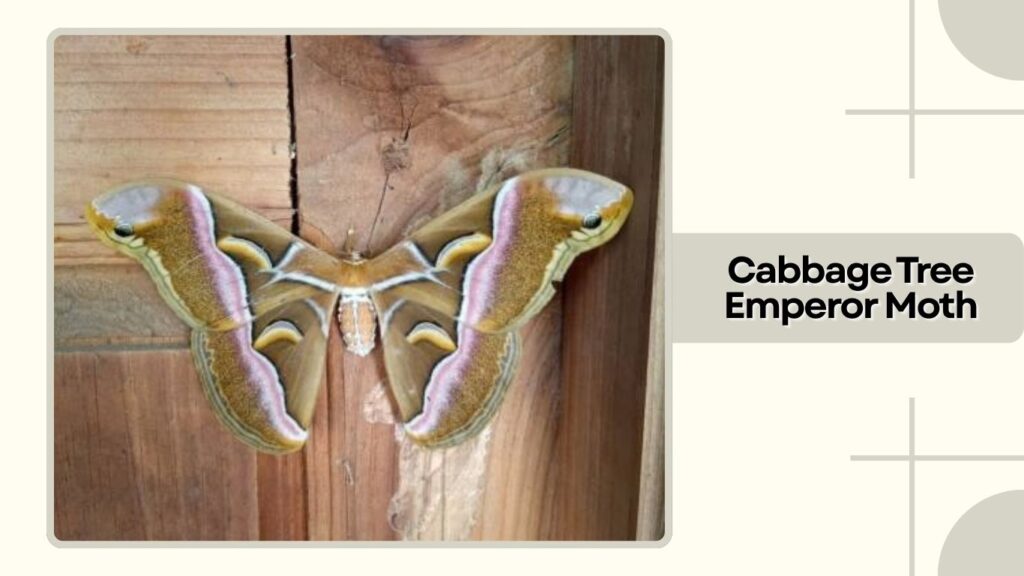
The Cabbage Tree Emperor Moth is a large African saturniid known scientifically as Bunaea alcinoe. It is particularly notable for its dramatic caterpillar, which is dark-colored and covered with prominent projections. Both the moth and its larvae occur across sub-Saharan Africa, where the caterpillars utilize several native tree species and are also collected as edible insects in some regions.
Identification
- Adult: Large, heavy-bodied emperor moth with broad wings.
- Body: Covered with dense hair-like scales.
- Antennae: Males generally possess broad feathered antennae.
- Caterpillar color: Mature larvae are predominantly deep black.
- Larval markings: Yellow or whitish raised processes occur along the body.
- Spiracles: Red coloration can be visible around the breathing openings of mature caterpillars.
Habitat and Distribution
The species occurs widely in sub-Saharan Africa. Research records populations of Bunaea alcinoe from eastern, central, western, and southern African environments. It is associated especially with woodland, forest edges, savanna woodland, and other habitats where its larval food trees grow. Distribution modeling has also demonstrated its broad potential range across suitable parts of Africa.
Behavior and Diet
Cabbage Tree Emperor caterpillars feed entirely on plant material. Recorded host plants include species belonging to Bauhinia, Croton, Cussonia, and Celtis, along with trees such as Harpephyllum afrum and Ekebergia capensis. Other studies of edible African Saturniidae have recorded larvae on trees including Pycnanthus angolensis and Dacryodes edulis.
Lifespan and Life Cycle
The life cycle begins with eggs and proceeds through several caterpillar instars. Larvae feed intensively during the growing stage and may become quite large before pupation. The pupal stage reorganizes the larval body into the adult moth. Seasonal occurrence varies geographically, but studies of edible Saturniidae report Cabbage Tree Emperor caterpillars particularly during portions of the African rainy and growing seasons, including June through August in some regions.
15. Pallid Emperor Moth
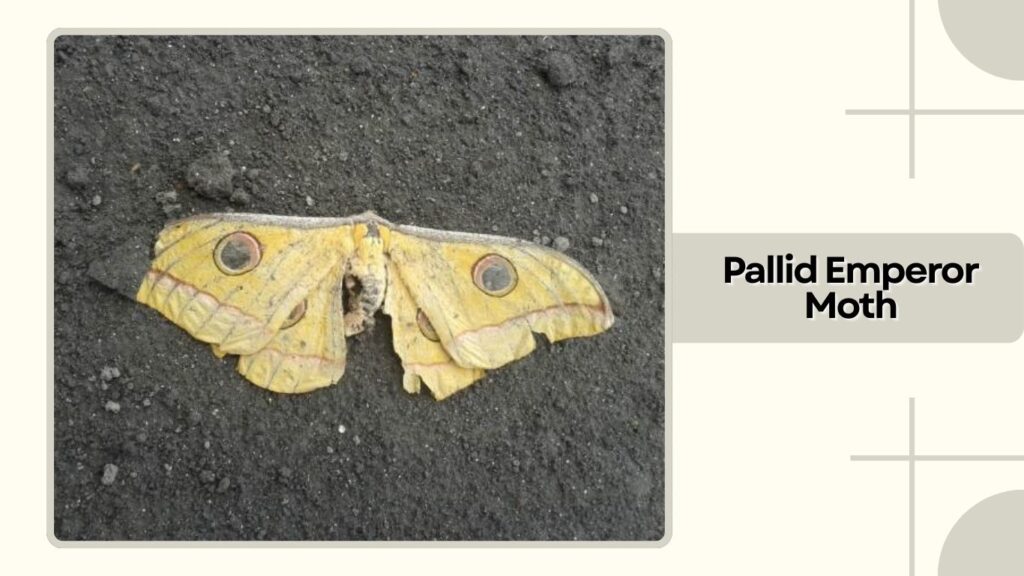
The Pallid Emperor Moth, scientifically known as Cirina forda, is an African Saturniidae species famous both ecologically and economically. Unlike many emperor moths with dramatic eyespots, adults have a comparatively subtle appearance. Its caterpillars can occur in large numbers on host trees, sometimes causing extensive defoliation, while also serving as an important traditional food source in several African communities.
Identification
- Color: Adults are generally pale, creamy or light brown.
- Wings: Broad and relatively lightly patterned.
- Hindwings: Usually display a small darker spot rather than a large true eyespot.
- Body: Stout and covered with hair-like scales.
- Caterpillar: Mature larvae can reach roughly 7–8 cm in some populations.
- Pupa: Forms underground rather than hanging openly from vegetation.
Habitat and Distribution
Pallid Emperor Moths are broadly distributed across sub-Saharan Africa. Records include Nigeria, Ghana, the Democratic Republic of the Congo, Tanzania, Zambia, Burundi, Zimbabwe, South Africa, and other countries. They inhabit woodland, savanna, and tree-rich landscapes where appropriate larval hosts are available.
Behavior and Diet
Host plants differ significantly between regions. In much of West Africa, caterpillars are strongly associated with the shea tree (Vitellaria paradoxa). Populations elsewhere have been recorded feeding on Burkea africana, Crossopteryx febrifuga, Euclea, Manilkara, Acacia, and several additional trees. Large groups of caterpillars can consume substantial amounts of foliage.
Lifespan and Life Cycle
Life-cycle timing varies across Africa. Nigerian populations may produce one generation annually, while two seasonal generations have been reported in some other regions. Females deposit clusters of eggs on host trees. Caterpillars can feed for around six weeks before descending to the soil. In Nigerian studies, mature larvae pupated underground, commonly at depths of roughly 6–15 cm, and the lengthy pupal period carried the species through much of the year before adult emergence.
FAQs
1. What is an emperor moth?
Emperor moths are members of the Saturniidae, a family containing many large silk moths. They typically have broad wings, heavy furry bodies, and reduced adult mouthparts. Many species also display conspicuous eyespots or transparent wing markings.
2. What do emperor moth caterpillars eat?
Their diet depends on the species. Emperor moth caterpillars generally eat leaves of trees, shrubs, and other woody plants. Host plants can include oak, willow, eucalyptus, blackthorn, mopane, shea, acacia, and many other plants.
3. Do adult emperor moths eat?
Many adult Saturniidae have strongly reduced mouthparts and feed little or not at all. They therefore depend heavily on energy accumulated while they were caterpillars. Their comparatively short adult stage is focused mainly on mating and reproduction.
4. Why do many emperor moths have eyespots?
Large wing eyespots can help discourage predators by creating the appearance of the eyes of a much larger animal. When threatened, a resting moth may expose these markings suddenly, potentially startling a bird or other predator long enough for the moth to escape.
5. How long does an emperor moth live?
There is no single lifespan for all emperor moths. The egg, caterpillar, and pupal stages can together last many months, and some species remain pupae through unfavorable seasons. Adult life is generally much shorter because reproduction rather than feeding is the primary purpose of the adult stage.