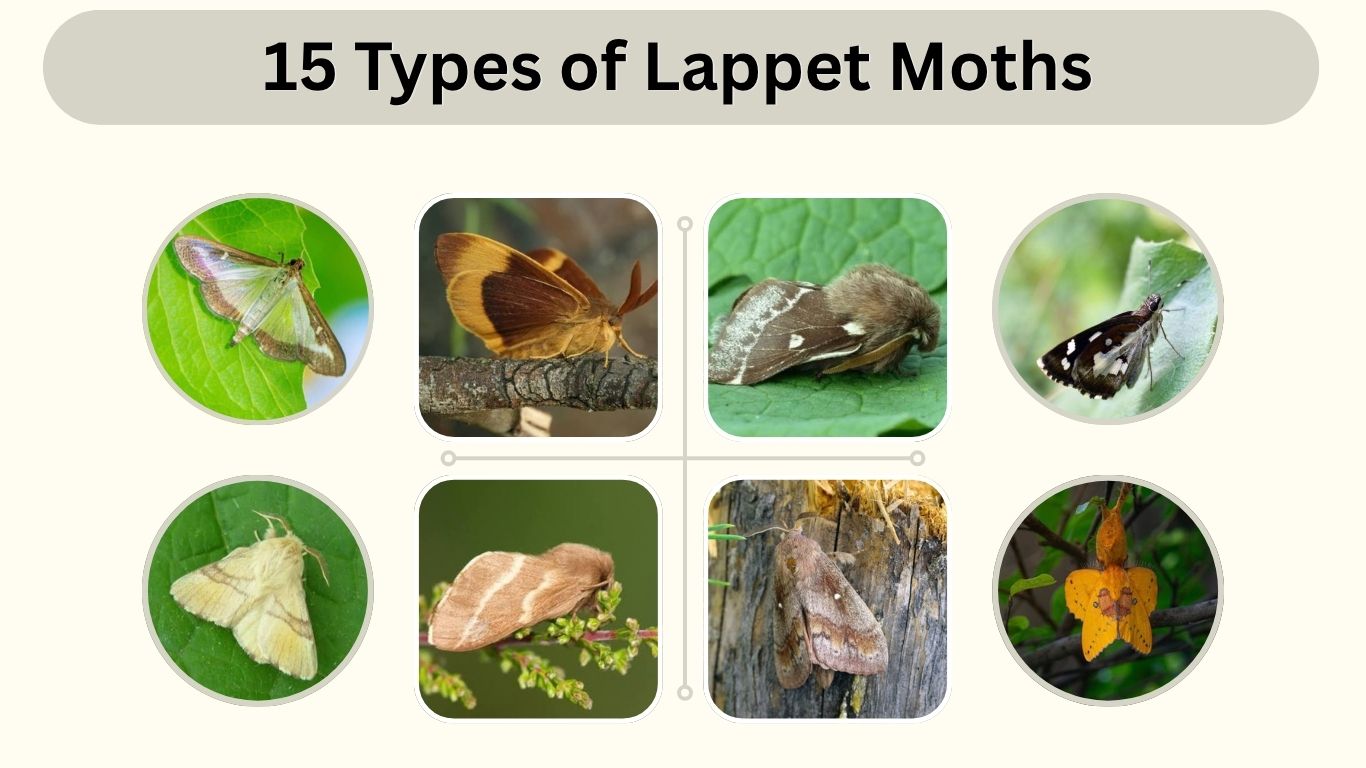
Lappet moths are fascinating members of the family Lasiocampidae, a diverse group known for their stout bodies, broad wings, and often hairy caterpillars. These moths occur in forests, grasslands, heathlands, wetlands, coastal areas, and gardens across many parts of the world. Some species, such as the Pine-Tree Lappet, can become important forest pests, while others are mainly valued for their unusual appearance and behavior. In this guide, you’ll discover 15 types of lappet moths along with their identification features, habitats, diets, behavior, and life cycles.
1. American Lappet Moth
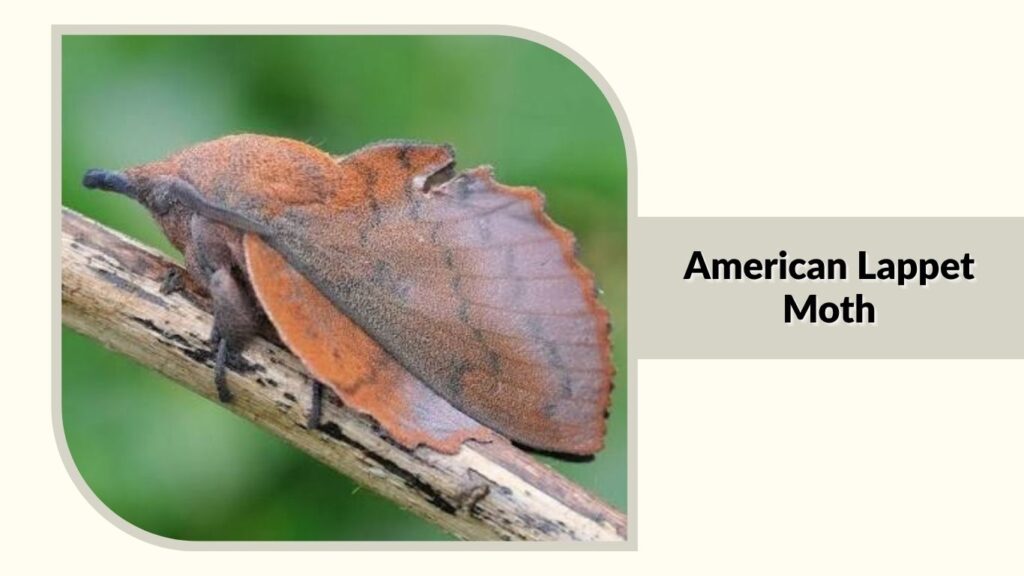
The American Lappet Moth (Phyllodesma americana) is a medium-sized North American moth recognized for its reddish-brown, leaf-like appearance. Its irregular wing edges and mottled coloration provide excellent camouflage among dead leaves and tree bark. The species belongs to the family Lasiocampidae, and its caterpillars are distinctive, hairy larvae that feed on a wide variety of deciduous trees and shrubs.
Identification
- Adults have a wingspan of about 29–49 mm.
- Wing color varies from reddish or yellowish brown to bluish gray.
- Outer wing margins are scalloped with pale markings along the edges.
- Forewings have a distinctive deep notch near the anal angle.
- Adults often resemble curled or dried leaves while resting.
- Caterpillars are hairy with blue, black, white, gray, and orange markings.
- Larvae have hairy side lobes known as “lappets.”
- Disturbed caterpillars may expose bright orange bands near the front of the body.
Habitat and Distribution
American Lappet Moths have a broad North American range extending from Nova Scotia southward and across much of the United States to California, with populations reaching north into British Columbia and Yukon. They inhabit deciduous and mixed forests, riparian areas, woodland edges, gardens, and other places containing suitable host plants. In the Pacific Northwest, they are particularly common in moist to moderately dry forests.
Behavior and Diet
Adults are primarily nocturnal and may be attracted to lights. Their cryptic resting posture helps them blend into leaves and bark during daylight hours. Caterpillars feed mainly at night and often rest lengthwise along twigs during the day. Their host plants include oak, birch, alder, willow, poplar, snowbrush, chinquapin, and several members of the rose family.
Lifespan and Life Cycle
The American Lappet Moth undergoes complete metamorphosis through egg, larval, pupal, and adult stages. There is generally one generation per year in northern areas, while southern populations may produce two generations. Caterpillars are commonly present during summer, and the species typically survives winter in the pupal stage. Adult flight periods vary geographically, extending roughly from spring through late summer.
2. Southern Lappet Moth
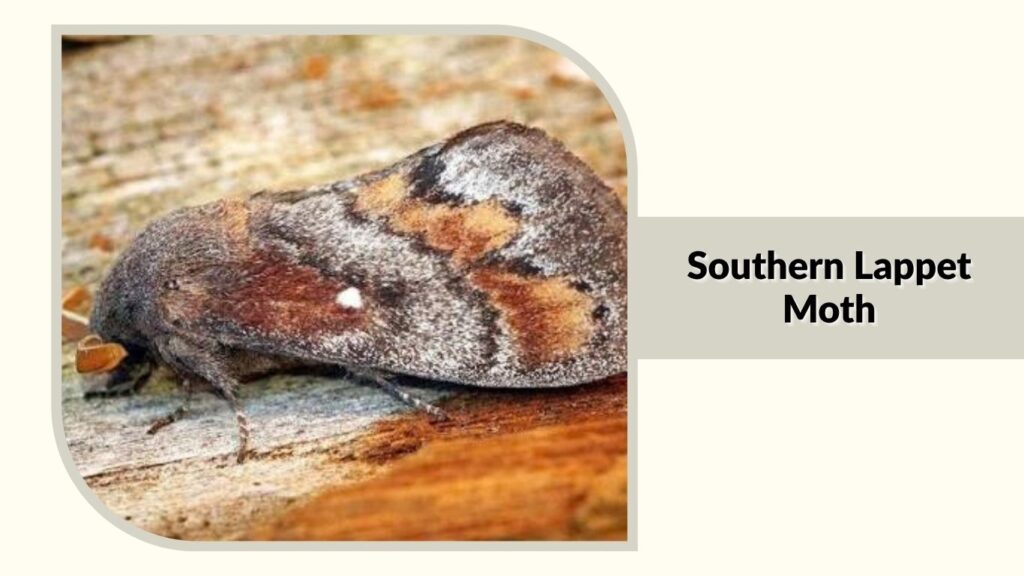
The Southern Lappet Moth (Phyllodesma occidentis) is a North American member of the family Lasiocampidae. Its subdued brown coloration and irregular markings allow the adult to blend effectively with bark and dried vegetation. It closely resembles the American Lappet Moth, so careful attention to wing shape and markings is often necessary for identification.
Identification
- Forewings are mainly brown to reddish brown.
- Wings have mottled markings that provide natural camouflage.
- A relatively distinct pale reniform marking occurs on the forewing.
- Outer wing margins are less scalloped than those of the American Lappet Moth.
- Adults have a thick, hairy body typical of lappet moths.
- Caterpillars are hairy and adapted for feeding on woody host plants.
Habitat and Distribution
Southern Lappet Moths occur primarily in the southeastern United States. Their documented range extends from coastal South Carolina through Florida and westward through portions of the South to Texas, with records reaching Kentucky. They are generally associated with wooded habitats where suitable trees and shrubs provide food for developing caterpillars.
Behavior and Diet
Adults are mainly nocturnal and tend to remain concealed during daylight. Their bark-like coloration makes them difficult to notice when resting. Information about the caterpillar is less complete than for the closely related American Lappet, but oak has been documented among its host plants. Larvae feed on foliage rather than damaging wood or stems.
Lifespan and Life Cycle
Like other lappet moths, this species undergoes complete metamorphosis through egg, caterpillar, pupa, and adult stages. Most growth occurs during the larval period, when caterpillars repeatedly molt while feeding on host vegetation. Species-specific life-history details remain comparatively poorly documented.
3. Riley’s Lappet Moth
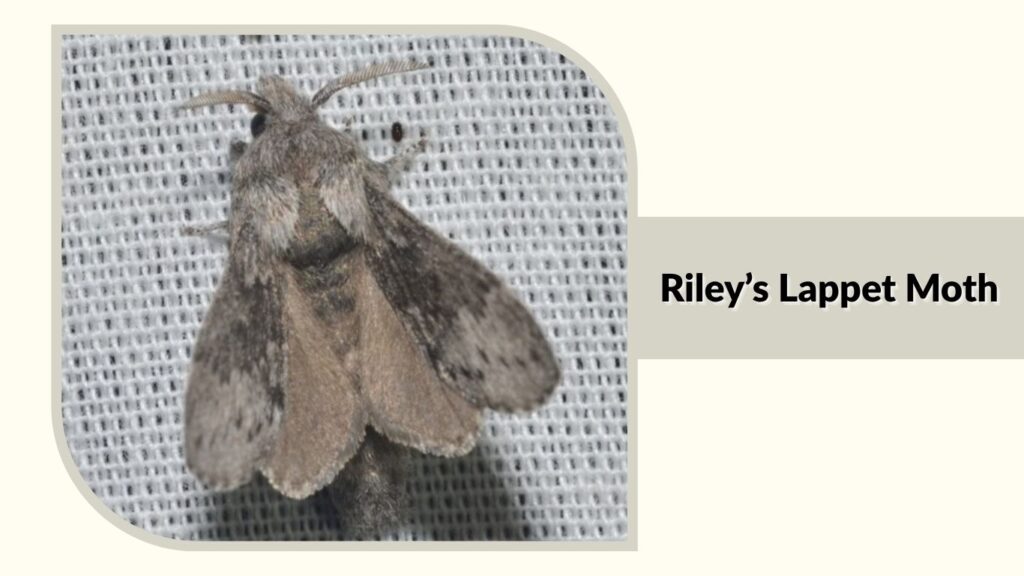
Riley’s Lappet Moth (Heteropacha rileyana) is a small, brown lappet moth native to parts of the United States. Its compact body, mottled wings, and subtle bark-like pattern make it easy to overlook. Unlike many broadly feeding lappet moths, its caterpillars have a particularly strong association with honey locust.
Identification
- Adult wingspan is approximately 27–36 mm.
- Wings are grayish brown to dark brown.
- Mottled markings help adults resemble tree bark.
- Adults have a stout and noticeably hairy body.
- Males possess conspicuously feathered antennae.
- Wings are broad with slightly curved outer margins.
Habitat and Distribution
Riley’s Lappet Moth occurs primarily across central and southern portions of the United States. Records extend through the Great Plains and south to Texas, with populations also occurring farther east. Habitats are closely associated with honey locust, including woodland edges, open forests, old fields, and other areas where these trees grow.
Behavior and Diet
The caterpillars feed primarily on honey locust (Gleditsia triacanthos). Their coloration and hairy bodies help conceal them against stems and foliage. Adult moths are nocturnal and may be attracted to artificial lights. Like many members of Lasiocampidae, adults devote their short adult stage mainly to finding mates and reproducing.
Lifespan and Life Cycle
Eggs hatch into foliage-feeding caterpillars that pass through several developmental stages before pupating. Adult records are concentrated from spring through summer, with moths reported from roughly late April into August. Exact timing varies according to climate and geographic location.
4. Pine-Tree Lappet
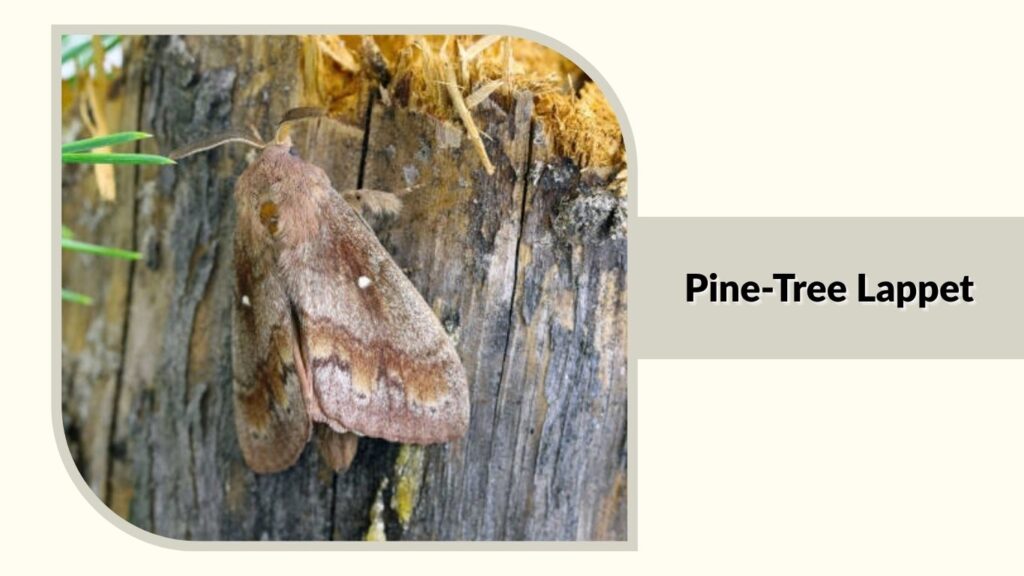
The Pine-Tree Lappet (Dendrolimus pini) is one of the most important forest-feeding lappet moths in Europe and parts of Asia. Its caterpillars primarily consume pine needles and can cause extensive defoliation when populations become unusually high. Adults are large, strongly camouflaged moths whose brown and gray wings blend exceptionally well with pine bark.
Identification
- Males generally have a wingspan of about 50–70 mm.
- Females can reach approximately 70–90 mm.
- Forewings range from gray-brown to brown.
- A reddish-brown band crosses the forewing.
- Dark irregular markings occur near the wing margins.
- Caterpillars are densely hairy and gray to brown.
- Mature larvae may show blue-black hair bands on the thorax.
Habitat and Distribution
The Pine-Tree Lappet is widespread through continental Europe, Russia, and portions of Asia, with records also reported from North Africa. Scots pine forests are its primary habitat, although other conifers can serve as hosts. A breeding population has also been documented in northern Scotland.
Behavior and Diet
Caterpillars feed heavily on pine needles, especially those of Scots pine. They can also use spruce, Douglas fir, fir, cedar, juniper, and larch. Large outbreaks may remove substantial amounts of foliage, reducing tree growth and making stressed trees more vulnerable to other pests. Adults fly mainly at night and are strongly attracted to light.
Lifespan and Life Cycle
Adults typically emerge during summer. Females may lay approximately 150–300 eggs on bark, twigs, or needles. Caterpillars feed before overwintering near the base of trees, then resume feeding in spring. They eventually pupate inside camouflaged cocoons. Development can take one to several years depending on climate; a two-year cycle is considered typical under current Scottish field conditions.
5. Small Lappet
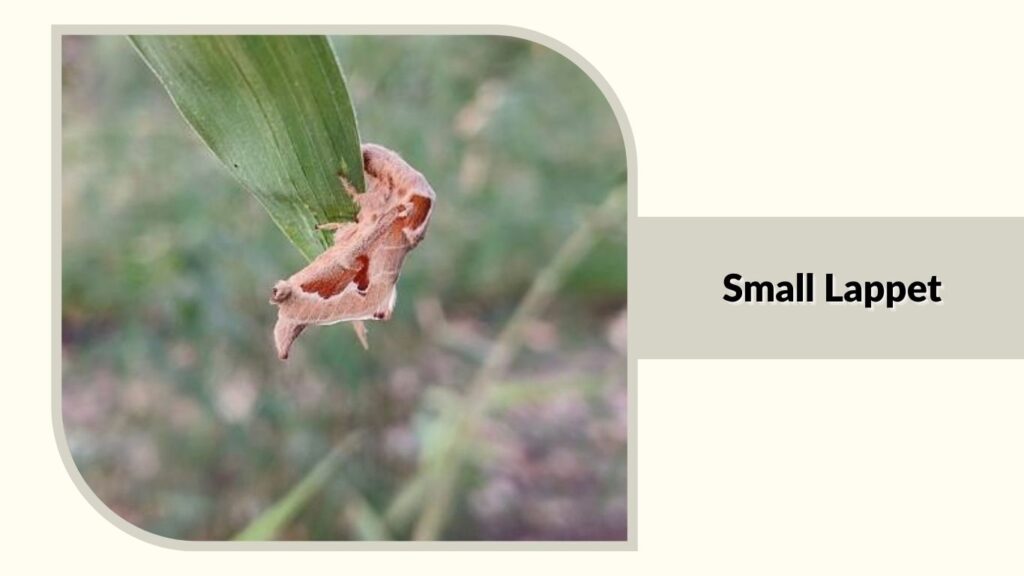
The Small Lappet (Phyllodesma ilicifolia) is a compact European and Asian lappet moth with a subtle brown appearance. As its common name suggests, it is smaller than many other members of the family. Historically found in parts of Britain, it is now considered possibly extinct there, although populations continue elsewhere within its wider Eurasian range.
Identification
- Adult wingspan is approximately 35–40 mm.
- Forewings are brownish to rusty brown.
- Wings may be lightly dusted with pale scales.
- Dark, wavy cross-lines occur across the forewings.
- A darker discal marking may be visible.
- Wing edges have alternating pale and darker markings.
- Adults resemble dried leaves when resting.
Habitat and Distribution
The Small Lappet occurs across portions of Europe and Asia. In Britain, it was historically associated with moorland and woodland habitats in parts of central and southwestern England, but confirmed records have been absent for decades. Bilberry-rich habitats were particularly important for former British populations.
Behavior and Diet
Adults are mainly nocturnal and depend heavily on camouflage while resting during daylight. In Britain, bilberry was a documented larval food plant. The caterpillars consume foliage and remain relatively inconspicuous among low vegetation.
Lifespan and Life Cycle
The species develops through egg, caterpillar, pupa, and adult stages. In its former British range, adults were associated mainly with April and May. Caterpillars develop on their host vegetation before eventually pupating, with seasonal timing varying across the species’ much broader Eurasian distribution.
6. Lappet Moth
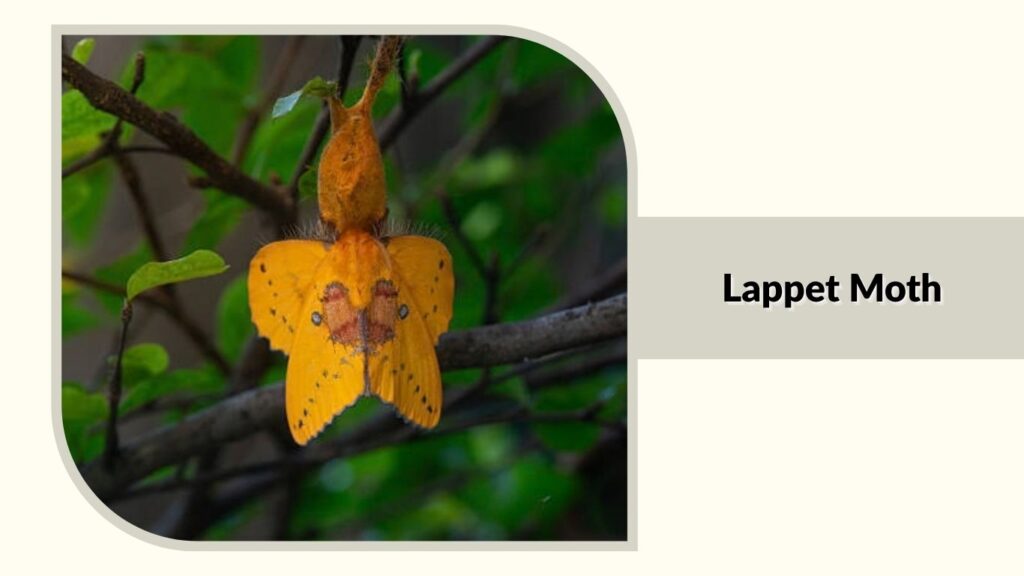
The Lappet Moth (Gastropacha quercifolia) is a large and distinctive species famous for resembling a cluster of dried leaves while resting. Its scientific name references this oak-leaf-like appearance, although oak is not its only food plant. The caterpillar’s fleshy lateral projections, or “lappets,” give the moth its common name.
Identification
- Adult wingspan ranges from approximately 50–90 mm.
- Females are noticeably larger than males.
- Wings are rich reddish brown to dark brown.
- Several wavy transverse lines cross the wings.
- Outer wing margins are strongly scalloped.
- Resting adults closely resemble curled dead leaves.
- Caterpillars have fleshy lateral lobes known as lappets.
- Larvae are gray-brown and densely hairy.
Habitat and Distribution
The Lappet Moth occurs across Europe and eastward through much of the Palearctic region to Japan. In Britain it is mainly local to southern and southeastern areas. It inhabits woodland edges, hedgerows, scrub, heathland, and other habitats containing suitable shrubs and small trees.
Behavior and Diet
Adults are nocturnal and readily come to lights during their flight season. Their unusual resting posture makes the wings resemble overlapping dried leaves, providing exceptional camouflage. Caterpillars feed on several woody plants, including hawthorn, blackthorn, willow, and oak.
Lifespan and Life Cycle
Females lay eggs that hatch into hairy caterpillars, which begin feeding on suitable host plants. The larvae continue developing through several molts before pupating. In Britain, adults are mainly on the wing during June and July. The species generally follows a seasonal annual cycle, with immature stages occupying most of the year before the next generation of adults emerges.
7. December Moth
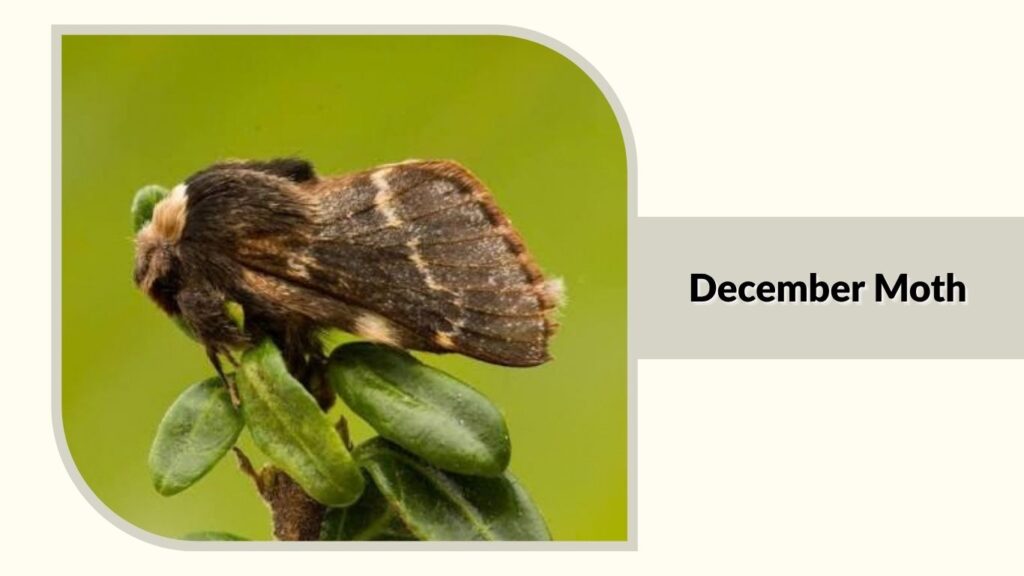
The December Moth (Poecilocampa populi) is an unusual lappet moth because adults appear very late in the year, often when most other moth activity has greatly declined. It is fairly common across much of Britain and is easily recognized by its dark, furry appearance and contrasting pale wing bands. Females are noticeably larger than males, while the thinly scaled wings can appear slightly translucent.
Identification
- Wingspan is approximately 30–45 mm.
- Adults are usually dark gray, charcoal, or blackish.
- Pale cream-colored bands cross the forewings.
- The thorax and body are densely covered with dark hairs.
- Females are distinctly larger than males.
- Wings may appear slightly translucent because they are thinly scaled.
- Its late autumn and early winter flight period is an important identification clue.
Habitat and Distribution
December Moths occur widely across Britain and are associated with woodland, hedgerows, gardens, parks, and other habitats containing deciduous trees. Their broad distribution reflects the caterpillar’s ability to use several different tree species rather than depending on a single host.
Behavior and Diet
Adults are nocturnal and may be attracted to lights on mild autumn and early-winter nights. The caterpillars emerge during spring and feed on the foliage of various deciduous trees. Because the larvae can use multiple woody hosts, the species can survive in both natural woodland and more managed landscapes.
Lifespan and Life Cycle
The December Moth follows an annual cycle through egg, caterpillar, pupa, and adult stages. Caterpillars feed mainly in spring before pupating, while adults appear unusually late, generally from October through December. Peak adult records in Britain occur particularly during November.
8. Pale Eggar
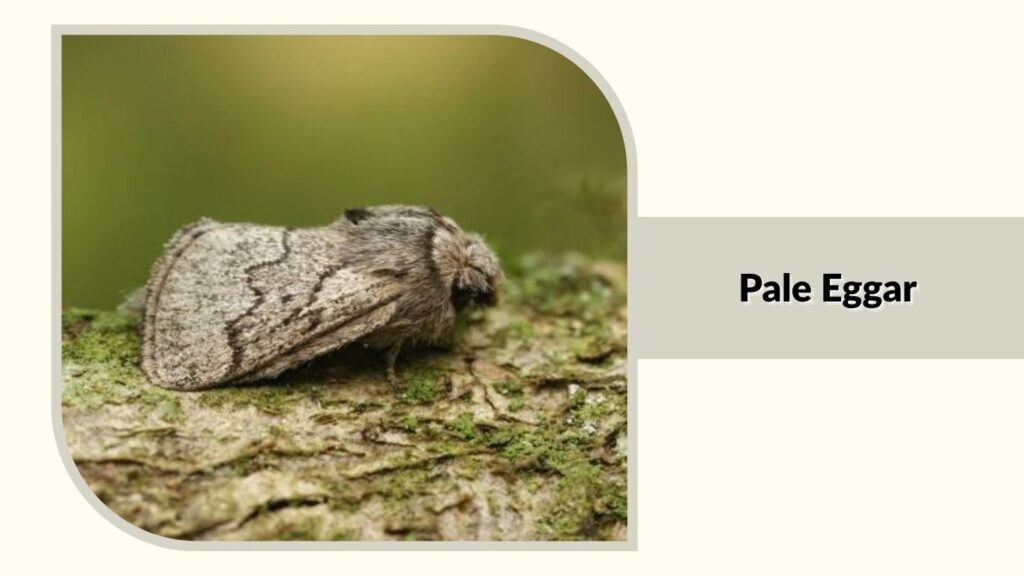
The Pale Eggar (Trichiura crataegi) is one of the smaller lappet moths, with a subtle appearance that varies considerably between individuals and regions. Northern forms tend to be darker than those found farther south. It is particularly associated with heathland, woodland edges, and areas containing shrubs such as hawthorn and blackthorn.
Identification
- Wingspan is approximately 25–30 mm.
- Adults are relatively small for members of Lasiocampidae.
- Wing color varies from pale gray-brown to much darker forms.
- Northern populations generally tend to be darker.
- The body is thick and hairy.
- Wings usually show muted transverse markings.
- Caterpillars are hairy and more colorful than the adults.
Habitat and Distribution
In Britain, the Pale Eggar ranges from England and Wales north into Scotland. It favors heathland and woodland margins where suitable larval food plants grow. These habitats typically provide a mixture of shrubs and low vegetation that supports caterpillar development.
Behavior and Diet
The caterpillars feed on a variety of woody and low-growing plants, including blackthorn, hawthorn, bilberry, and heather. This broad diet allows the species to occupy several types of semi-natural habitat. Adults are primarily nocturnal and are most likely to be encountered during their late-summer flight period.
Lifespan and Life Cycle
The Pale Eggar completes its development through egg, caterpillar, pupa, and adult stages. Adults are mainly seen during August and September. Caterpillars develop on their host plants earlier in the year before pupation produces the late-summer generation of moths.
9. Lackey Moth
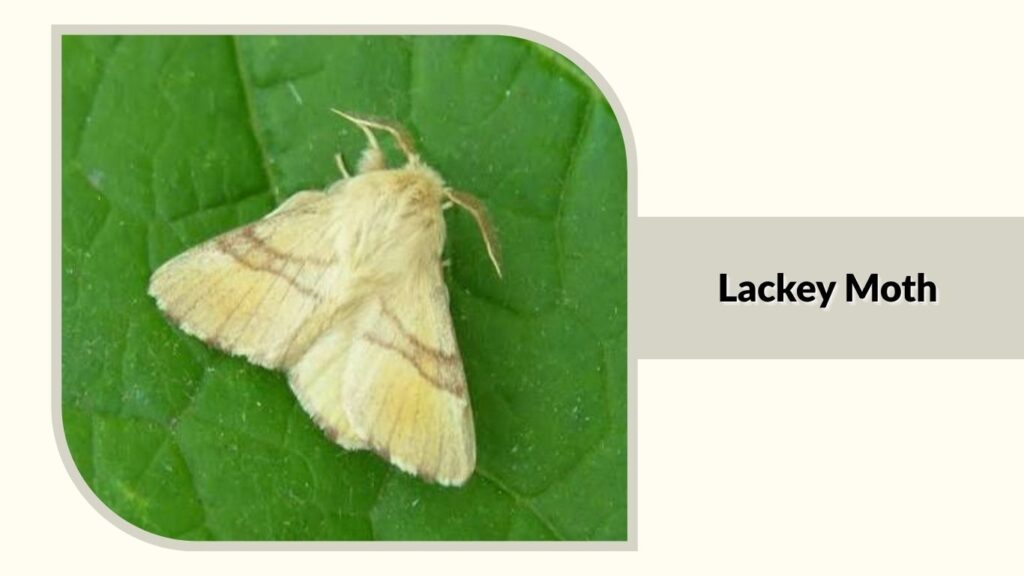
The Lackey Moth (Malacosoma neustria) is famous for its striking caterpillars, which are much more colorful than the relatively plain adults. Young larvae live communally inside conspicuous silken webs and feed together on trees and shrubs. Adults are relatively small lappet moths and occur mainly in the southern half of Britain.
Identification
- Adult wingspan is approximately 25–35 mm.
- Adults vary from yellowish brown to deeper reddish brown.
- Forewings usually show two transverse lines or bands.
- Adult coloration is fairly subdued.
- Caterpillars have bright orange, blue, white, and dark-brown stripes.
- Larvae are hairy and highly conspicuous.
- Groups of caterpillars often occupy communal silk webs.
Habitat and Distribution
The Lackey occurs mainly across southern Britain and is commonly associated with hedgerows, scrub, woodland edges, orchards, gardens, and other habitats containing suitable deciduous trees and shrubs. Its reliance on common woody plants allows colonies to develop in both countryside and landscaped environments.
Behavior and Diet
Caterpillars are highly social when young. Groups construct silken webs where they shelter and then move outward to feed on nearby foliage. Important food plants include hawthorn and blackthorn, although they also use several other trees and shrubs. The communal webs provide protection while the larvae are small.
Lifespan and Life Cycle
Eggs eventually hatch into groups of caterpillars that feed communally before becoming more independent as they mature. After completing larval growth, they pupate and later emerge as adults. In Britain, adults fly mainly during July and August, although records begin somewhat earlier in summer.
10. Ground Lackey
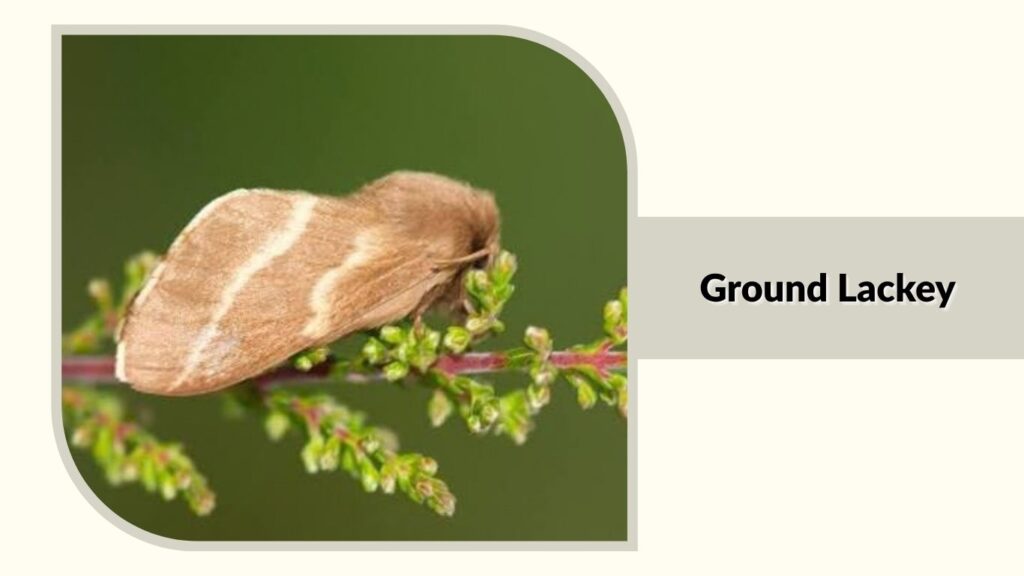
The Ground Lackey (Malacosoma castrensis) is a colorful but very localized lappet moth associated especially with coastal saltmarsh habitats. In Britain, it is restricted mainly to parts of the southeastern coast. Although adult moths can be difficult to encounter, the brightly colored caterpillars are much more conspicuous and may be seen basking in sunshine.
Identification
- Wingspan is approximately 31–41 mm.
- Adult wings are generally brownish or yellow-brown.
- Males and females may differ in size and coloration.
- Caterpillars are much brighter than adults.
- Larvae show combinations of blue-gray, orange, black, and pale markings.
- Long hairs cover much of the caterpillar’s body.
- Caterpillars may gather openly on low vegetation in sunny conditions.
Habitat and Distribution
In the British Isles, the Ground Lackey is strongly associated with southeastern coastal areas. Its preferred habitats include saltmarshes and other open coastal vegetation communities. This specialized habitat preference makes the species considerably more localized than the ordinary Lackey Moth.
Behavior and Diet
Ground Lackey caterpillars feed on a range of saltmarsh plants. Important food plants include sea wormwood and sea-lavender. The colorful larvae may bask openly in warm sunshine, making them easier to notice than the adults. Adult moths are nocturnal and are most often detected through light trapping.
Lifespan and Life Cycle
Like other members of the family, the species passes through egg, caterpillar, pupal, and adult stages. Larvae develop among low coastal vegetation before pupating. Adult Ground Lackeys are primarily on the wing during July and August, giving the species a relatively short midsummer adult season.
11. Small Eggar
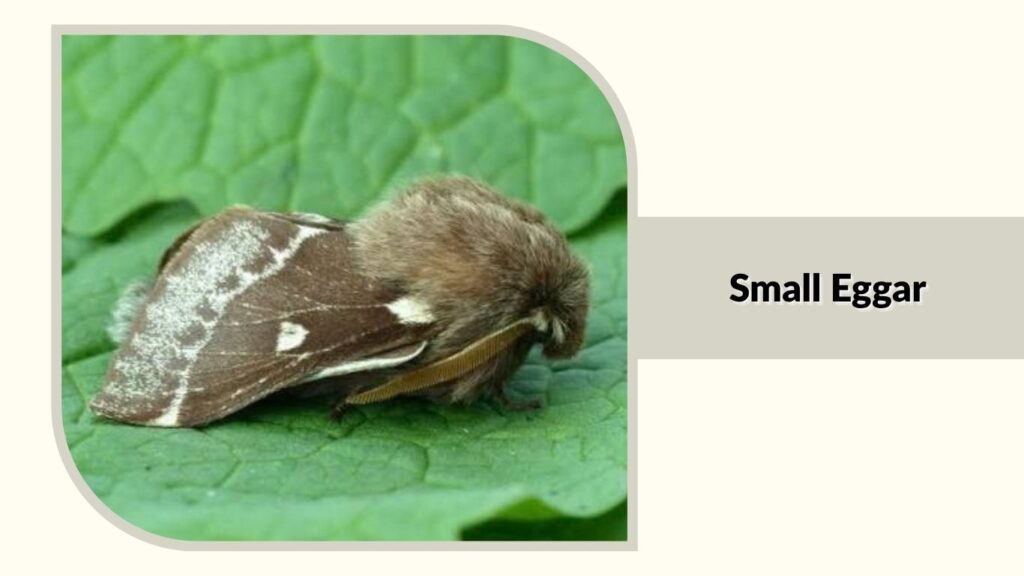
The Small Eggar (Eriogaster lanestris) is a scarce and localized lappet moth known especially for the large silken webs created by its caterpillars. Adults are rarely seen because they fly early in the year and are less conspicuous than the communal larval nests. In Britain, loss of hedgerows has contributed to a major reduction in its former range.
Identification
- Adult wingspan is approximately 30–40 mm.
- Adults have a thick, furry appearance.
- Wings are usually brownish with contrasting pale markings.
- Distinct white spots or patches occur on the forewings.
- Caterpillars are hairy and live together in large groups.
- Larvae construct dense, conspicuous silken webs.
- Webs are commonly found on hawthorn or blackthorn.
Habitat and Distribution
Small Eggars are closely associated with hedgerows, scrub, and landscapes containing mature hawthorn and blackthorn. Once more widespread, the species is now scarce and localized in Britain, with scattered colonies remaining in England, Ireland, and a few Welsh locations. Habitat loss, particularly the removal or deterioration of hedgerows, has contributed to this decline.
Behavior and Diet
The caterpillars are strongly social and live communally in dense silk nests. Groups may contain dozens of larvae that leave the web to feed on nearby hawthorn or blackthorn foliage before returning to shelter. The nests can become quite large and conspicuous as the caterpillars mature.
Lifespan and Life Cycle
Adults fly unusually early, mainly during February and March in Britain. Eggs hatch into communal caterpillars that remain together through much of their development. Mature larvae eventually leave their web to pupate, producing sturdy cocoons. The species generally has one generation per year, although pupae can sometimes remain dormant for extended periods before adult emergence.
12. Grass Eggar
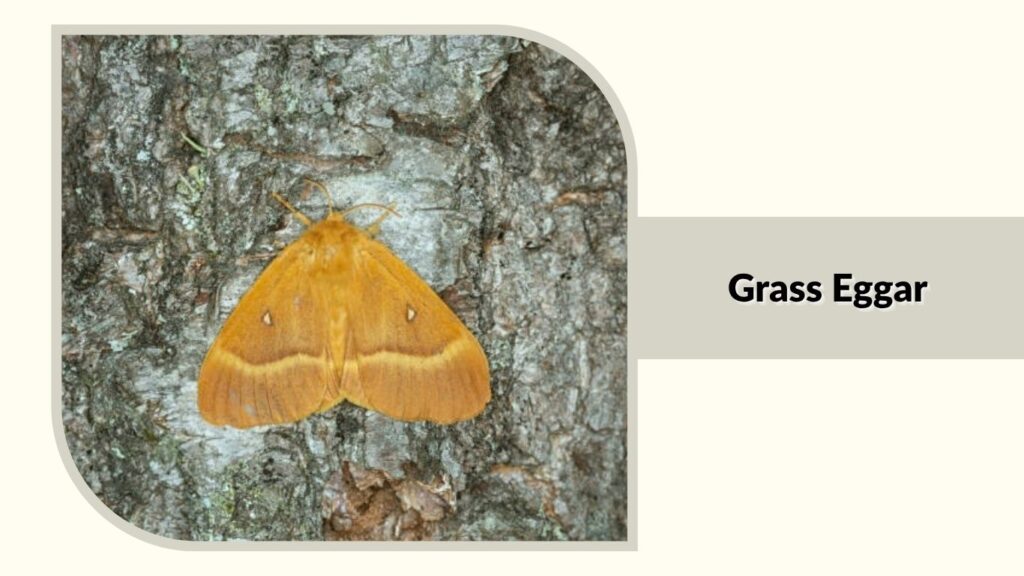
The Grass Eggar (Lasiocampa trifolii) is a medium-sized lappet moth associated mainly with open grassy habitats and coastal areas. Adult moths have warm brown coloration that provides good camouflage among dry vegetation. Females are generally larger than males but otherwise look similar. In Britain, the species has a localized distribution, with important populations occurring around coastal sand dunes and other suitable grass-dominated habitats.
Identification
- Adult wingspan is approximately 40–55 mm.
- Females are generally larger than males.
- Wings are usually brown to reddish brown.
- Forewings have a pale transverse line.
- A small pale spot may be visible on each forewing.
- Body is thick and covered with dense hairs.
- Caterpillars are large and noticeably hairy.
Habitat and Distribution
The Grass Eggar is found in parts of Europe and is localized in Britain. British populations are particularly associated with coastal sand hills in the northwest and southwest. A pale form known as the Pale Grass Eggar occurs around Dungeness in Kent. Open dunes, grasslands, and other areas with plentiful low vegetation provide suitable habitat.
Behavior and Diet
Adults are nocturnal and can be attracted to artificial lights. Caterpillars feed on a variety of grasses and other low-growing plants. Their broad diet allows them to use several types of open habitat, although local environmental conditions strongly influence where populations occur.
Lifespan and Life Cycle
The Grass Eggar undergoes complete metamorphosis through egg, caterpillar, pupa, and adult stages. Caterpillars spend much of their development feeding among grasses and low vegetation before pupating. Adults are primarily on the wing during August and September, although occasional records occur outside this period.
13. Oak Eggar
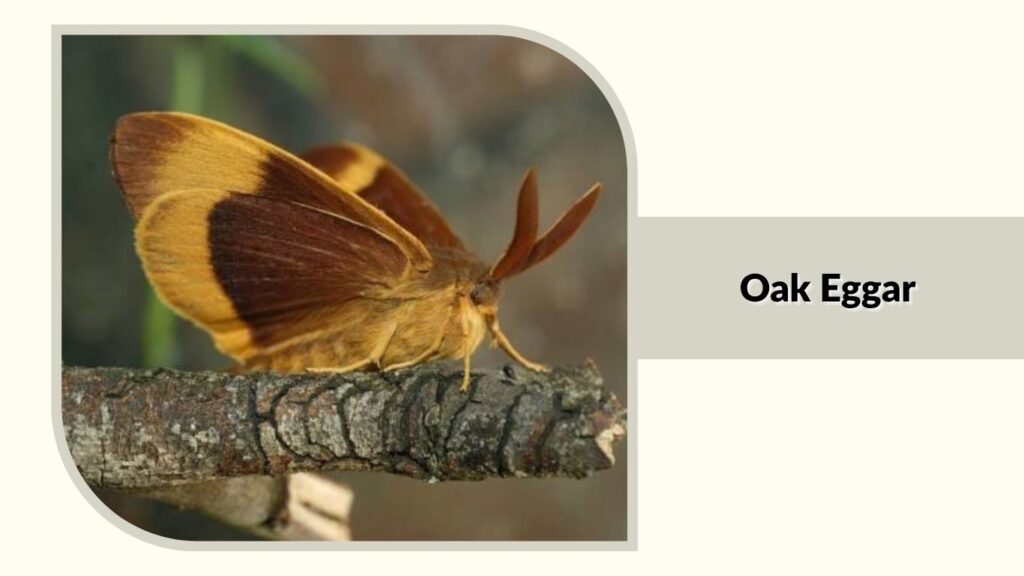
The Oak Eggar (Lasiocampa quercus) is a large and attractive lappet moth widely distributed across Britain. Despite its common name, its caterpillars do not normally feed on oak. The name instead refers to its tough, acorn-shaped cocoon. Males and females differ noticeably in appearance and behavior, making this species especially interesting to observe.
Identification
- Adult wingspan ranges from approximately 45–75 mm.
- Males are generally reddish brown.
- Females are larger and usually paler.
- A distinct pale spot appears on each forewing.
- Wings show a noticeable pale transverse band.
- The body is thick and densely hairy.
- Caterpillars are large, elongated, and heavily covered with hairs.
Habitat and Distribution
Oak Eggars occur across much of Britain in heathland, moorland, woodland edges, dunes, scrub, and other open habitats. Northern populations are often larger and darker than many southern forms. The species uses habitats containing plants such as heather, bilberry, bramble, willow, broom, hawthorn, hazel, and sea-buckthorn.
Behavior and Diet
Male Oak Eggars are unusual because they often fly rapidly during sunny daytime hours while searching for females. Females are more nocturnal and may come to lights. Caterpillars feed on numerous shrubs rather than oak, with heather and bilberry among their important food plants.
Lifespan and Life Cycle
Development varies geographically. Southern British populations can complete their cycle in one year, while northern populations may take two years. The longer northern cycle includes an extended larval period followed by overwintering as a pupa. Adults are mainly recorded from June through August, although timing differs between northern and southern areas.
14. Fox Moth
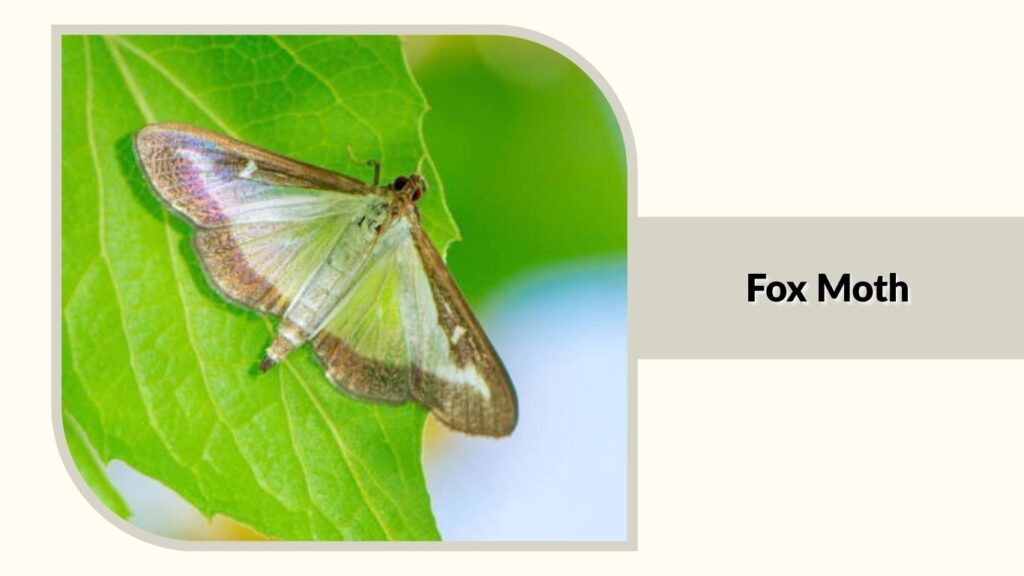
The Fox Moth (Macrothylacia rubi) is a widespread lappet moth named for the rich reddish-brown coloration of the male. Its large, extremely hairy caterpillar is often more noticeable than the adult and may be encountered crawling across paths or low vegetation. The species inhabits a broad variety of open environments and is widespread across much of Britain.
Identification
- Wingspan is approximately 40–65 mm.
- Males are usually reddish brown.
- Females are slightly larger and grayer.
- Adults have broad wings and a thick, hairy body.
- Males generally have strongly feathered antennae.
- Caterpillars have dense blackish and tawny-brown hairs.
- Mature larvae are large and easily recognizable.
Habitat and Distribution
Fox Moths are distributed widely throughout Britain and occur in many open or semi-open landscapes. Typical habitats include heathland, moorland, grassland, hedgerows, woodland clearings, and open woodland. They are especially common where suitable low-growing larval food plants occur.
Behavior and Diet
Male and female Fox Moths show different activity patterns. Males commonly fly during the afternoon, often moving rapidly while searching for females. Females tend to fly at night. The caterpillars feed on several low-growing plants, including heather and bramble, along with other herbaceous and woody vegetation.
Lifespan and Life Cycle
Eggs hatch into hairy caterpillars that feed through the warmer months. Larvae eventually overwinter before resuming development and pupating. Adults are most frequently observed from May through July. After mating and egg laying, the relatively short adult phase ends and the next generation continues mainly as caterpillars.
15. Drinker Moth
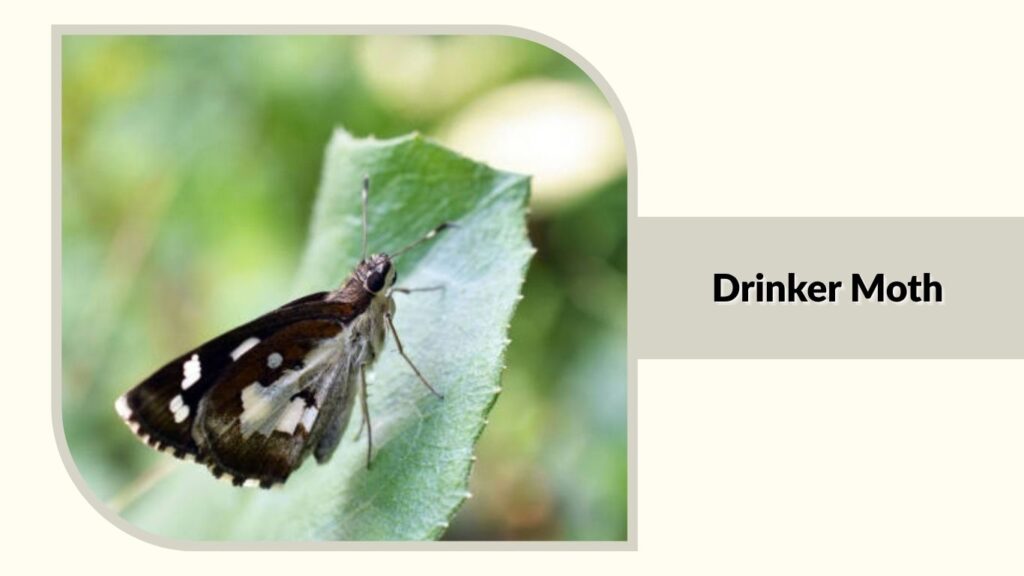
The Drinker Moth (Euthrix potatoria) is a distinctive lappet moth whose unusual name comes from the caterpillar’s reported habit of drinking droplets of dew from grasses. Adults have warm yellow, orange, or brown coloration, while the large hairy caterpillars are commonly found in damp grassy environments. It is particularly widespread across the southern half of Britain.
Identification
- Adult wingspan is approximately 45–65 mm.
- Females are usually yellowish and slightly larger.
- Males tend to be orange-brown.
- Two conspicuous white spots usually occur on each forewing.
- Wings are broad with gently curved outer edges.
- Caterpillars are large and densely hairy.
- Larvae have distinctive tufts and contrasting body markings.
Habitat and Distribution
Drinker Moths favor grassy and relatively damp environments. Typical habitats include marshes, reedbeds, wet meadows, woodland edges, gardens, hedgerows, and areas of tall grass. The species is fairly common across the southern half of Britain, particularly where its main larval food plants are abundant.
Behavior and Diet
Adults fly mainly at night, and males in particular are readily attracted to lights. Caterpillars feed primarily on grasses and reeds. They are often seen resting on grass stems and are traditionally associated with drinking morning dew, which inspired both the English common name and the species’ scientific name.
Lifespan and Life Cycle
The life cycle consists of egg, caterpillar, pupa, and adult stages. Caterpillars feed among grasses for an extended period before pupating in a silk cocoon. Adults are most frequently encountered during June, July, and August, with July producing particularly high numbers of records in Britain.
FAQs
1. What are lappet moths?
Lappet moths are members of the family Lasiocampidae, a widespread group of medium to large moths. Many have stout, hairy bodies and broad wings. Their caterpillars are usually hairy and may possess distinctive fleshy projections called lappets along the sides of the body.
2. What do lappet moth caterpillars eat?
Their diet depends on the species. Some caterpillars feed on trees and shrubs such as hawthorn, willow, blackthorn, and bramble, while others prefer grasses, reeds, heather, or bilberry. The Grass Eggar and Drinker, for example, are strongly associated with grasses.
3. Are lappet moths dangerous?
Adult lappet moths are not considered dangerous to people. They do not sting or bite. However, the hairs of some caterpillars may irritate sensitive skin, so handling unidentified hairy caterpillars directly is best avoided.
4. Are lappet moths active during the day or night?
Most lappet moths are primarily nocturnal, but there are notable exceptions. Male Oak Eggars often fly rapidly during sunny daytime conditions, and male Fox Moths commonly fly during the afternoon. Females of these species are generally more active at night.
5. How long is the lappet moth life cycle?
Life-cycle length varies considerably among species and climates. Many complete one generation each year, while some develop more slowly. Oak Eggars, for example, may complete development in one year in southern Britain but require two years in northern regions.