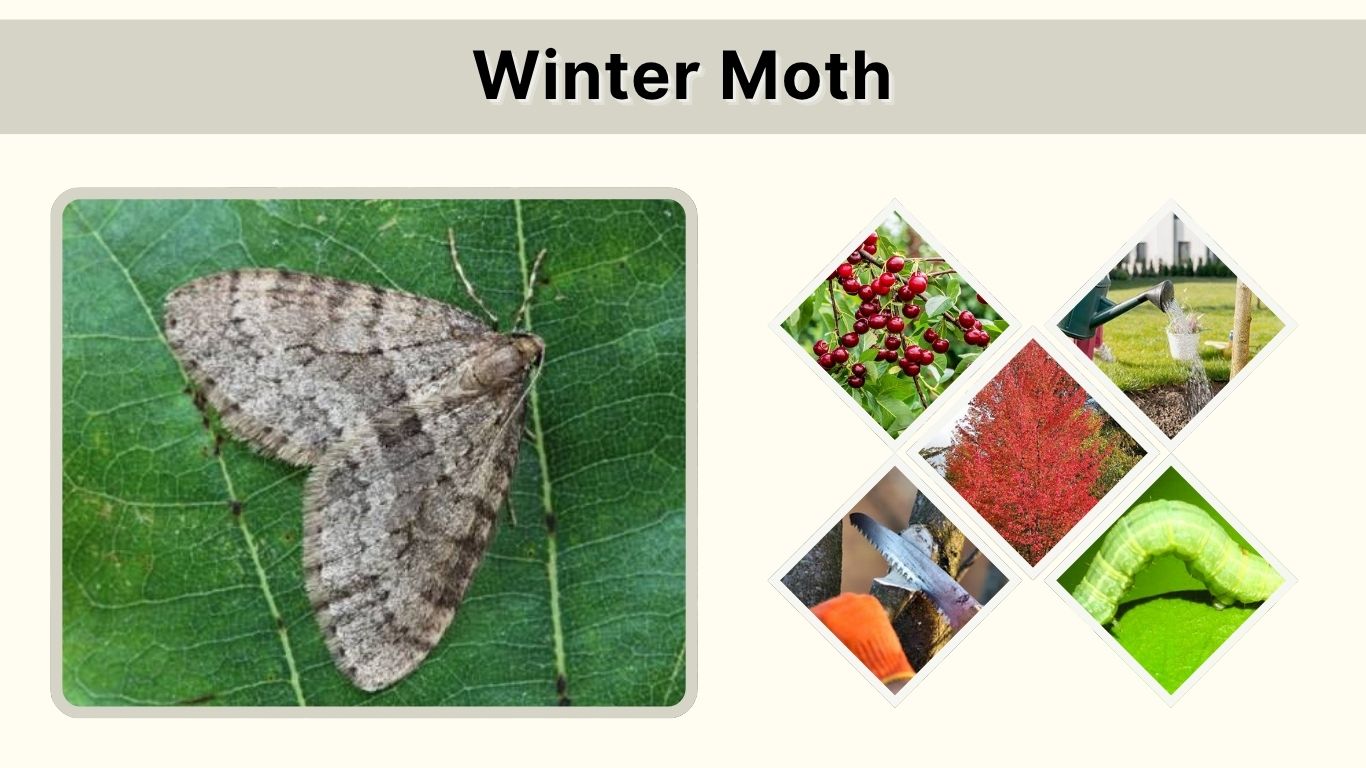
The winter moth is an unusual cold-season moth whose adults become active during late fall and early winter, often after other insects have disappeared. Scientifically known as Operophtera brumata, it is native to Europe but has become established in parts of North America. The caterpillars can damage trees by feeding on expanding buds and young leaves during spring. Understanding winter moth identification, caterpillar behavior, life cycle, diet, damage, and control methods can help homeowners recognize infestations and protect vulnerable trees.
What Is a Winter Moth?
Winter moths belong to the geometer moth family and are best known for their cold-weather activity. Adult males fly during late autumn and early winter, while females are nearly wingless and climb tree trunks to lay eggs. Their unusual seasonal behavior makes them easy to distinguish from most other moth species seen during warmer months.
Winter Moth Identification
Important identification features include:
- Scientific name: Operophtera brumata
- Family: Geometridae
- Adult male color: Grayish-brown
- Female: Nearly wingless
- Male wingspan: Roughly 1–1.5 inches
- Caterpillar color: Pale green
- Caterpillar type: Inchworm
- Activity: Late fall through winter
- Egg location: Tree bark and crevices
Male winter moths are small and relatively plain, while females look very different because their wings are extremely reduced.
Female Winter Moth
Female winter moths cannot fly normally. After emerging from the soil, they crawl upward along tree trunks and other vertical surfaces.
Males locate females using chemical signals. After mating, females lay eggs in bark crevices, under lichens, and around branches.
This crawling behavior is why tree-banding methods have sometimes been used to monitor or reduce female movement.
Winter Moth Caterpillar Identification
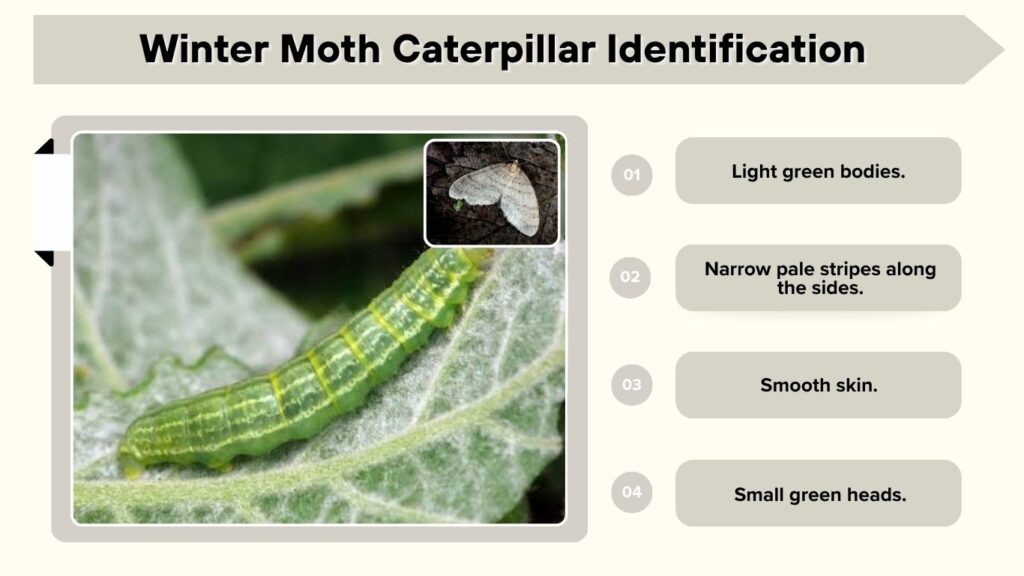
Winter moth caterpillars emerge in spring and are responsible for nearly all plant damage associated with the species. They are small green inchworms that can be difficult to notice when feeding inside newly opening buds. Once leaves expand, larger caterpillars feed more openly and may become easier to see.
What Does a Winter Moth Caterpillar Look Like?
Winter moth caterpillars typically have:
- Light green bodies
- Narrow pale stripes along the sides
- Smooth skin
- Small green heads
- About 1 inch maximum length
- Inchworm-like movement
- Few abdominal prolegs
- Slender body shape
Their looping movement is typical of many geometer moth caterpillars.
Are Winter Moth Caterpillars Poisonous?
Winter moth caterpillars are not considered poisonous or venomous to humans.
They do not have the defensive stinging spines or urticating hairs found on some tussock and slug moth caterpillars. Touching one is unlikely to cause a medically significant reaction.
However, unnecessary handling of wild insects is still best avoided, particularly if identification is uncertain.
Do Winter Moth Caterpillars Bite?
Winter moth caterpillars do not normally bite people.
Their mouthparts are designed for chewing plant tissues rather than defending themselves against humans. If someone develops irritation after handling an unknown caterpillar, it may have been another species rather than a winter moth larva.
Winter Moth Life Cycle
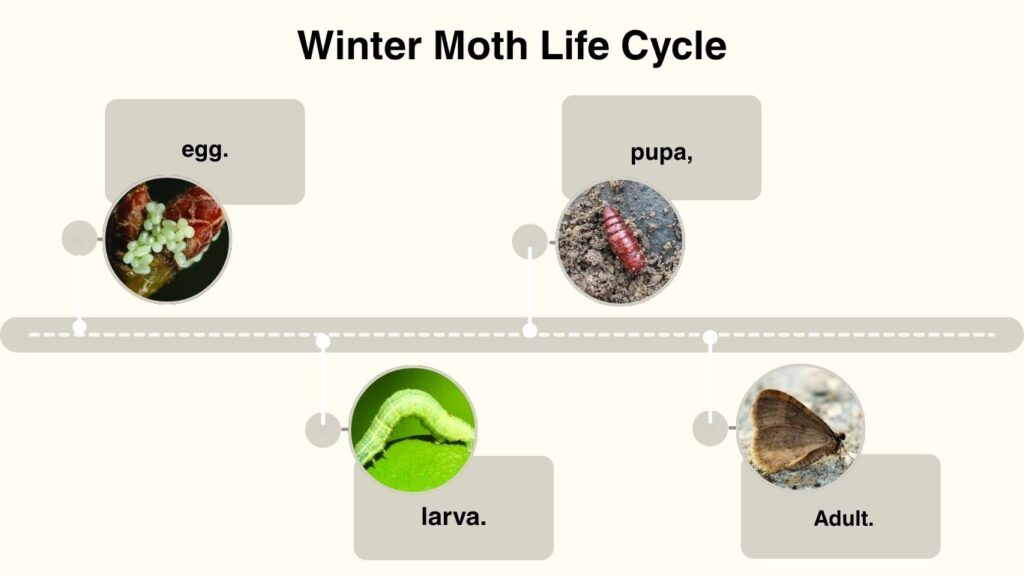
The winter moth has a distinctive annual life cycle synchronized with seasonal temperatures and the opening of tree buds. Eggs overwinter on trees, larvae hatch in spring, pupae develop in the soil during summer, and adults emerge during cold weather. Timing is important because young larvae need tender leaves and flower buds immediately after hatching.
Winter Moth Life Cycle Stages
The basic stages include:
- Egg: Eggs remain on tree bark through winter.
- Larva: Caterpillars hatch during spring.
- Feeding stage: Larvae eat buds and leaves.
- Pupa: Mature larvae drop to the soil.
- Adult: Moths emerge in late fall or winter.
- Mating: Females lay eggs for the next generation.
Only one generation usually occurs each year.
Winter Moth Eggs
Eggs are very small and are often laid in protected bark crevices or around branches.
They remain dormant through the coldest part of winter before hatching when spring temperatures rise.
Hatching must closely match bud development. Caterpillars emerging too early may have insufficient food, while those hatching too late may miss the most nutritious young plant tissues.
Winter Moth Pupa
After finishing their spring feeding period, mature caterpillars lower themselves from trees or fall to the ground.
They enter the soil and form pupae, remaining there through summer and much of autumn.
Adults emerge when temperatures become cold enough, giving the insect its distinctive common name.
What Do Winter Moth Caterpillars Eat?
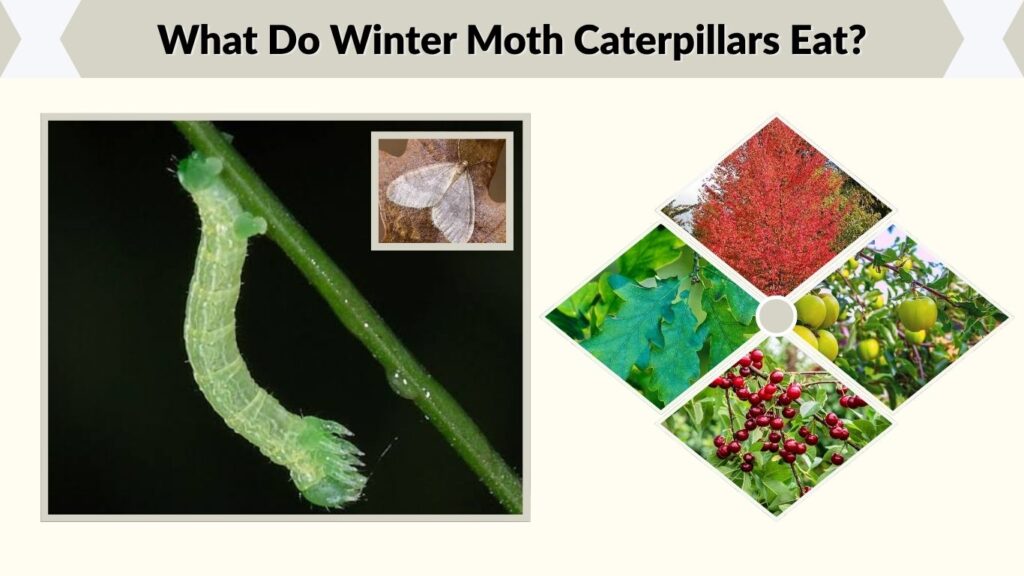
Winter moth caterpillars feed on a wide range of deciduous trees and shrubs. Their most damaging feeding occurs early in spring when larvae enter swelling buds before leaves fully open. High populations can strip foliage and weaken trees, especially when heavy defoliation occurs in successive years.
Common Host Plants
Winter moth caterpillars may feed on:
- Oak
- Maple
- Apple
- Crabapple
- Cherry
- Pear
- Blueberry
- Ash
- Elm
- Birch
- Basswood
- Other deciduous trees and shrubs
Fruit trees can suffer damage to both flower buds and developing foliage.
How Caterpillars Feed
Newly hatched larvae may enter partially opened buds and feed from inside.
This early feeding can destroy developing flowers and leaves before obvious damage becomes visible.
Older caterpillars feed more openly on expanded leaves. They often leave irregular holes and may eventually consume most of the leaf when populations are high.
Winter Moth Damage
Most winter moth damage occurs during the caterpillar stage. A single season of moderate feeding usually does not kill a mature healthy tree, but repeated severe defoliation can reduce growth and increase susceptibility to drought, disease, and other pests.
Signs of Winter Moth Damage
Look for:
- Damaged flower buds
- Small holes in expanding leaves
- Chewed leaf edges
- Webbing around buds
- Green caterpillars inside buds
- Large numbers of inchworms
- Thin tree canopies
- Severe spring defoliation
- Reduced fruit development
Trees already stressed by poor soil, drought, disease, or root damage may be especially vulnerable.
Does Winter Moth Kill Trees?
Winter moth feeding alone does not usually kill vigorous mature trees after a single infestation.
Repeated defoliation is more serious. A tree forced to repeatedly replace foliage uses stored energy reserves and may gradually weaken.
Keeping trees properly watered during drought and avoiding additional stress can improve recovery after caterpillar feeding.
Winter Moth Distribution in North America
Winter moth is native to Europe but has been introduced into parts of North America. It became particularly well known as an invasive pest in northeastern coastal areas, where suitable climate and host trees allowed populations to increase.
Winter Moth in Massachusetts
Massachusetts experienced significant winter moth outbreaks, particularly in eastern parts of the state and around coastal communities.
Cape Cod and surrounding regions became especially associated with winter moth damage. Biological control and changing population levels have reduced severe outbreaks in many areas, but local monitoring may still be useful.
Winter Moth in Maine and Rhode Island
Winter moth has also been documented in portions of Maine and Rhode Island.
The risk varies by location because populations are not evenly distributed. Homeowners should confirm local activity before assuming that spring inchworm damage is caused by winter moth, since several native caterpillars can create similar symptoms.
Winter Moth Control and Prevention
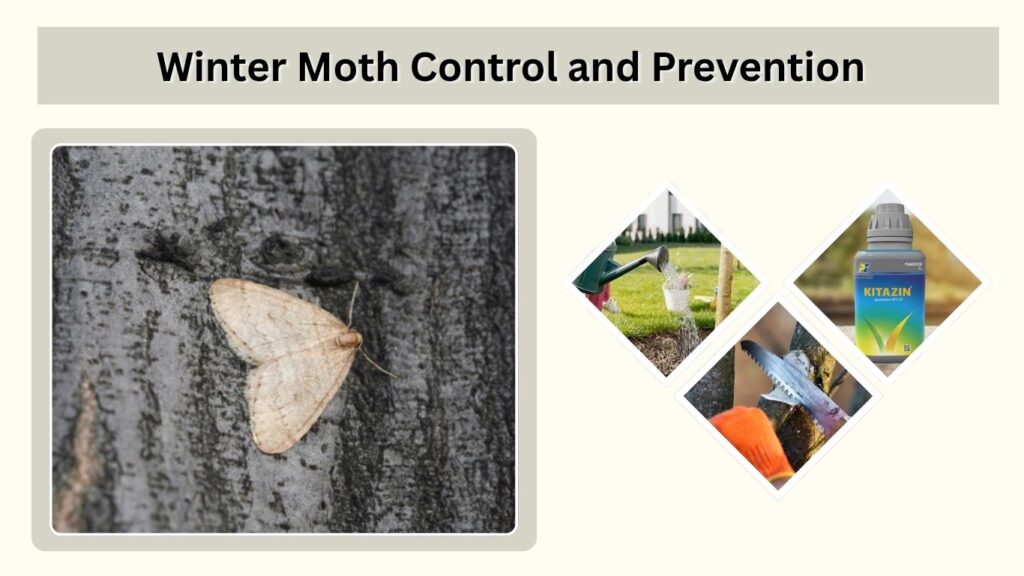
Winter moth control is most effective when treatment targets young caterpillars soon after they hatch. Spraying mature caterpillars later in spring may provide less benefit because much of the feeding damage has already occurred. Not every tree with a few caterpillars needs treatment.
Winter Moth Control Methods
Possible management approaches include:
- Monitor buds during early spring.
- Inspect trees for small green larvae.
- Keep trees healthy and adequately watered.
- Remove heavily damaged or dead branches.
- Consider appropriately labeled Btk treatments.
- Avoid unnecessary broad-spectrum pesticides.
- Encourage natural predators.
- Seek arborist advice for valuable trees.
Bacillus thuringiensis var. kurstaki (Btk) can kill young caterpillars when they consume treated foliage.
Winter Moth Tree Banding
Sticky bands placed around trunks may capture crawling adult females before they reach egg-laying sites.
However, tree banding generally does not provide complete control. Large numbers of eggs may still be laid below the band, and trapped insects can attract predators or create messy buildup.
Tree bands are therefore better considered a monitoring or supplementary method rather than a complete solution.
Winter Moth Spraying
Timing is critical when treating caterpillars.
Applications made shortly after larvae hatch are generally more useful than treatments applied after extensive defoliation. Any pesticide or microbial treatment should be labeled for the target insect and plant.
Avoid spraying blooming plants when pollinators are active unless the product instructions specifically allow safe use.
Winter Moth Predators and Biological Control
Winter moth populations are naturally affected by predators, parasitoids, weather, and disease. Birds consume caterpillars, while specialized parasitoids can significantly reduce populations over time.
Natural Enemies
Winter moth predators and enemies include:
- Insect-eating birds
- Predatory beetles
- Spiders
- Parasitic flies
- Parasitic wasps
- Other insect predators
One important biological-control agent is the parasitic fly Cyzenis albicans, which specifically attacks winter moth caterpillars.
Biological control programs using this fly have helped suppress winter moth populations in some invaded regions.
Winter Moth vs Gypsy Moth
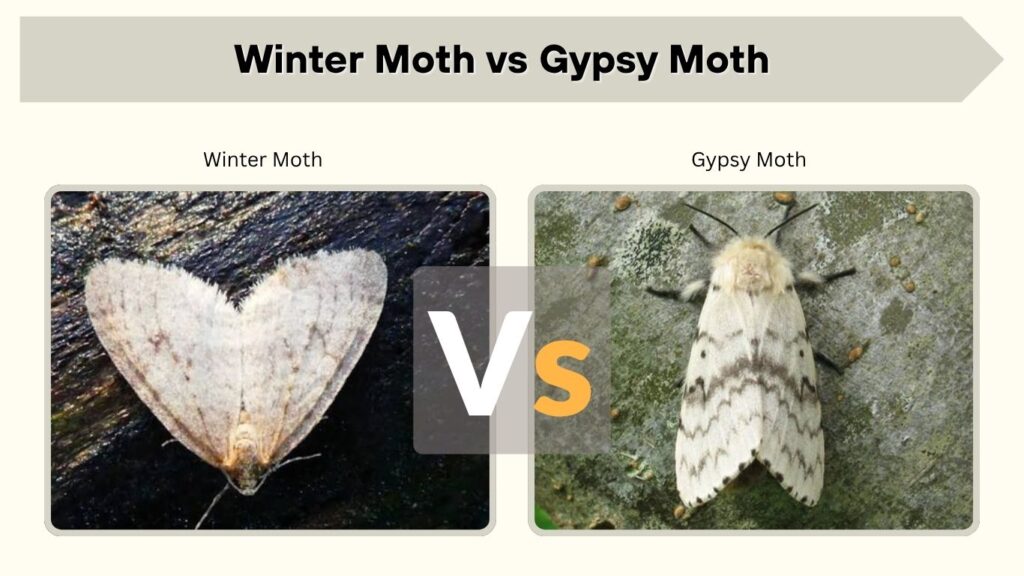
Winter moth and spongy moth, formerly commonly called gypsy moth, can both defoliate trees, but they are very different insects. Winter moth larvae are small green inchworms, while spongy moth caterpillars become much larger and have obvious colored spots along their backs.
Main Differences
Winter moth caterpillars are:
- Small and green
- Inchworm-like
- Active early in spring
- Associated with winter-active adults
Spongy moth caterpillars are:
- Larger and hairy
- Marked with blue and red spots
- Not inchworms
- Often visible openly on trunks and leaves
Correct identification is important because treatment timing differs between species.
FAQs
Winter moth behavior is unusual because adult activity occurs during the cold season while caterpillar damage happens months later in spring. Understanding these seasonal stages makes both identification and control easier.
What is the scientific name of the winter moth?
The scientific name is Operophtera brumata. It belongs to the geometer moth family Geometridae.
Are winter moth caterpillars dangerous?
No. They are not considered poisonous, venomous, or dangerous to people. Their main impact is damaging to trees and shrubs.
When do winter moth caterpillars appear?
Caterpillars generally hatch in spring around the time deciduous tree buds begin opening. Exact timing depends on local temperatures and plant development.
What do winter moth caterpillars eat?
They eat buds and leaves from oak, maple, apple, blueberry, cherry, birch, and numerous other deciduous plants.
How do you get rid of winter moth caterpillars?
Monitor trees early in spring, maintain plant health, and consider properly labeled Btk or other caterpillar-control products when populations are high. Early treatment is generally more effective than waiting until trees are heavily defoliated.