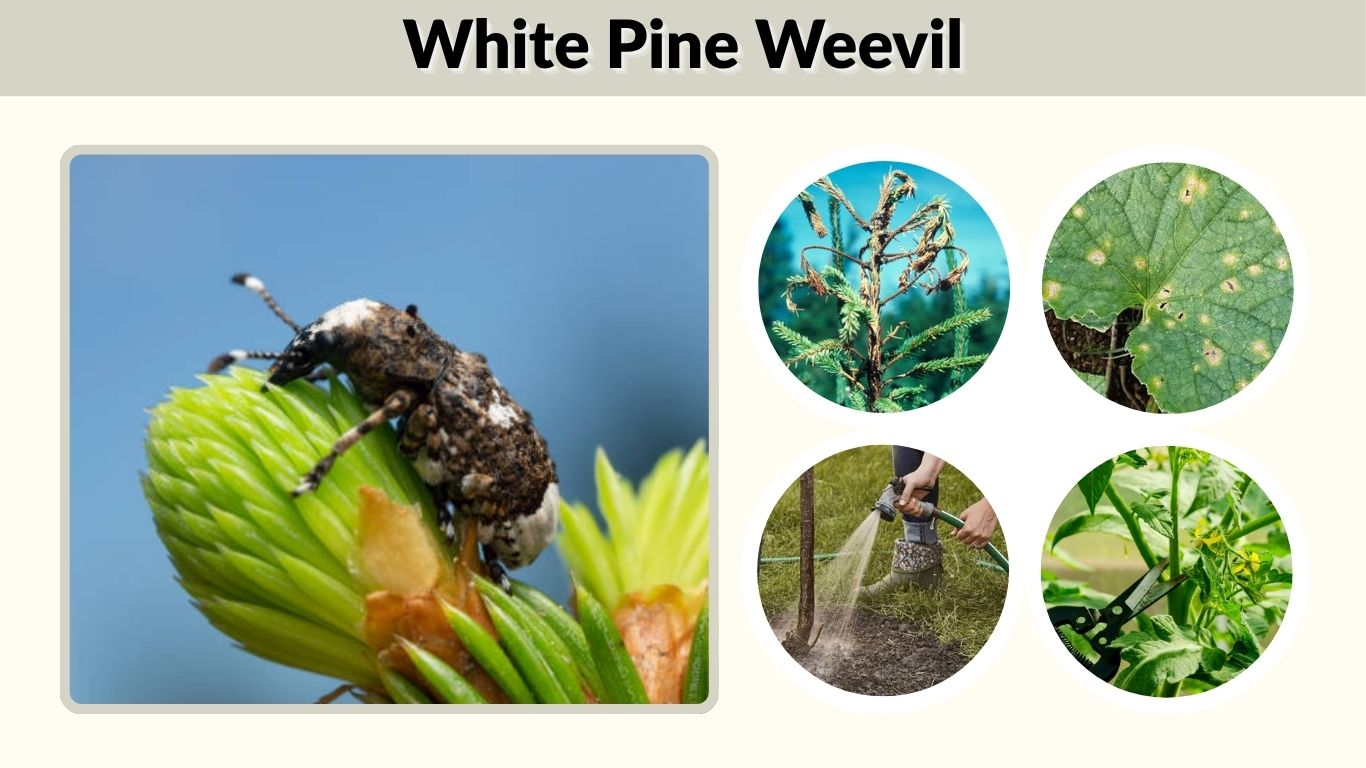
The white pine weevil is a destructive insect that attacks pine and spruce trees, causing damaged shoots, dead branches, and distorted growth. These small beetles lay eggs inside young tree leaders, where their larvae feed beneath the bark and damage growing tissues. Although infestations rarely kill an entire mature tree, repeated attacks can significantly affect its appearance and development. Understanding white pine weevil identification, life cycle, symptoms, and treatment methods helps homeowners protect valuable evergreens. This guide explains how to recognize infestations, control damage, and prevent future problems.
What Is a White Pine Weevil?
The white pine weevil (Pissodes strobi) is a small, snout-nosed beetle belonging to the Curculionidae family. It is a common pest of eastern white pine, spruce, and several other conifer species throughout North America.
Unlike insects that attack roots or consume needles, white pine weevils primarily damage the terminal leader, the main vertical shoot responsible for upward tree growth.
White Pine Weevil Identification
White pine weevils have several distinguishing physical characteristics.
- Scientific Name: Pissodes strobi
- Common Name: White pine weevil
- Family: Curculionidae
- Adult Size: Approximately ¼ inch long
- Body Color: Dark brown with irregular white and tan markings
- Snout: Long, narrow, and slightly curved downward
- Antennae: Elbowed, extending from the snout
- Larvae: Creamy-white, legless grubs with brown heads
Adult beetles have hard wing covers and mottled patterns that help them blend into tree bark. Their larvae generally remain hidden beneath the bark until development is complete.
White Pine Weevil Damage and Symptoms
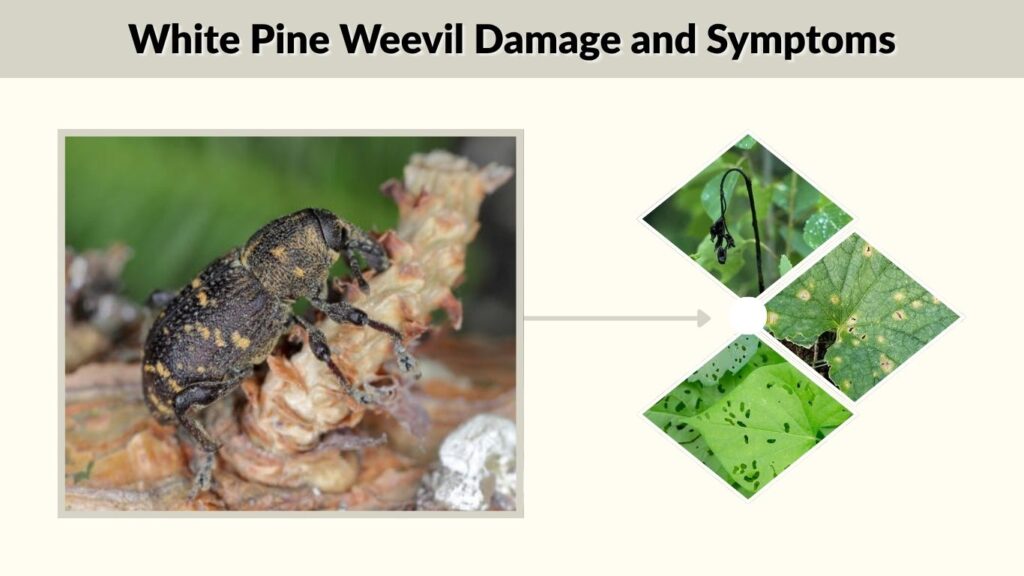
White pine weevil damage mainly affects the uppermost growing shoots of pine and spruce trees. The larvae tunnel beneath the bark, disrupting water and nutrient movement within the terminal leader.
As feeding continues, the affected shoot loses strength, wilts, and eventually dies. Although the remaining tree usually survives, repeated infestations can cause serious structural deformities.
Common Signs of White Pine Weevil Infestation
Several symptoms can help identify an infestation.
- Drooping Leaders: The uppermost shoot bends downward, forming a shepherd’s crook.
- Brown Needles: Needles on damaged shoots gradually turn yellow, reddish-brown, or brown.
- Resin Droplets: Small drops of sticky sap appear around feeding and egg-laying punctures.
- Dead Tree Tops: The central growing leader dies while lower branches remain healthy.
- Small Exit Holes: Adult weevils leave round openings after completing their development.
- Bushy Growth: Repeated attacks cause several side branches to grow upward.
These symptoms are particularly noticeable during late spring and early summer.
How White Pine Weevils Affect Tree Growth
The terminal leader controls the vertical development of a young conifer. When weevil larvae kill this shoot, nearby branches compete to replace it.
Consequently, affected trees may develop crooked trunks, forked tops, or irregular crowns.
Although a single infestation rarely kills the entire tree, repeated damage can reduce its ornamental and commercial value.
White Pine Weevil Life Cycle
The white pine weevil completes one generation annually in most locations. Its development includes four stages: egg, larva, pupa, and adult.
Understanding this seasonal cycle is important because pruning and insecticide treatments work best at specific times.
Egg and Larval Stages
Adult weevils become active during early spring as temperatures rise. They climb or fly toward the upper portions of suitable host trees.
Female beetles chew small cavities in the bark of terminal leaders and deposit their eggs inside.
After hatching, the larvae feed beneath the bark, gradually extending their tunnels downward. This feeding eventually girdles the shoot and causes the characteristic drooping leader.
Pupal and Adult Stages
Mature larvae create pupal chambers inside the damaged shoots. These chambers frequently contain shredded wood fibers.
New adults emerge during summer, often beginning in July, although timing varies by climate.
The beetles may feed on twigs before seeking overwintering sites in fallen needles, soil litter, and debris around trees.
They become active again the following spring.
What Trees Do White Pine Weevils Attack?
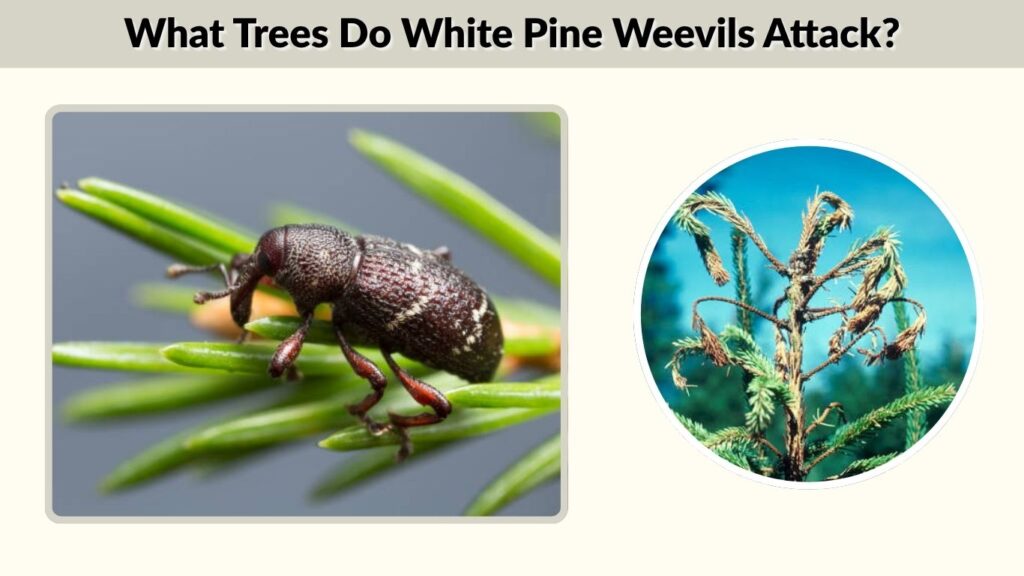
White pine weevils attack several conifer species, particularly young trees with prominent terminal leaders.
Eastern white pine (Pinus strobus) is among their most commonly affected hosts. However, Norway spruce, Colorado blue spruce, Sitka spruce, and certain other pines can also experience infestations.
Young, open-grown trees are especially vulnerable because their exposed leaders receive more sunlight and warmth, creating favorable conditions for adult weevil activity.
The pest occurs in various North American regions, including Ohio, Colorado, Pennsylvania, and surrounding states.
How to Get Rid of White Pine Weevils
Controlling white pine weevils involves removing infested leaders, monitoring adult activity, and preventing repeated attacks.
Because larvae remain protected beneath the bark, ordinary insecticide sprays become less effective after they begin feeding inside the shoots.
Early detection and properly timed pruning are therefore important management practices.
How to Remove Infested Pine Leaders
Follow these steps when damaged shoots are detected.
- Inspect the Tree: Examine the uppermost leader for wilting, brown needles, resin droplets, and curling growth.
- Locate the Damage: Identify where larval feeding has affected the leader. The damaged section may extend below the visibly wilted portion.
- Prune the Infested Leader: Cut into healthy wood below the entire infested area, ideally during late spring or early summer before adults emerge.
- Destroy Removed Material: Bag and dispose of infested shoots according to local guidelines. Do not leave them beneath the tree because adult weevils may still emerge.
- Monitor New Growth: Inspect the remaining leader and nearby trees for further damage throughout the growing season.
Pruning must occur before adult emergence to reduce the number of weevils developing around the tree.
Train a New Central Leader
After removing an infested leader, select one vigorous, healthy lateral branch immediately below the damaged area.
Guide this branch upward, using a support if necessary, until it develops into the new central leader.
Remove or shorten competing upright shoots to encourage a single dominant trunk. This helps restore the tree’s natural shape.
White Pine Weevil Insecticide Treatment
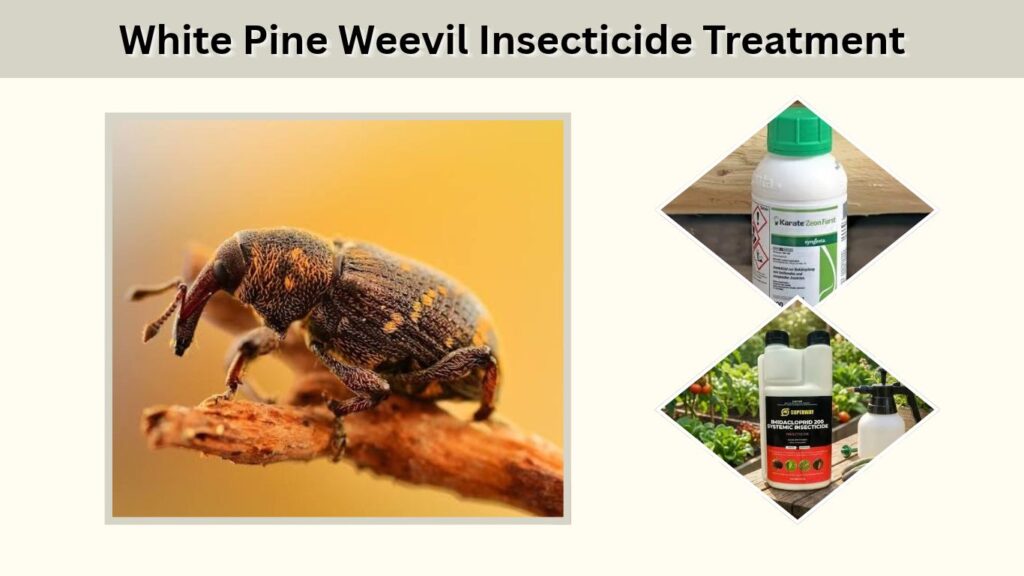
Insecticide treatment can help prevent white pine weevil damage, especially in valuable ornamental trees, nurseries, and Christmas tree plantations.
However, application timing is critical. Sprays generally target adult beetles before females lay eggs inside the terminal leader.
What Insecticide Kills White Pine Weevils?
Some registered insecticide products containing permethrin, bifenthrin, or cyfluthrin are used against adult white pine weevils.
These insecticides are typically applied to the terminal leader and upper growth rather than spraying the entire tree unnecessarily.
Certain systemic treatments containing imidacloprid may also provide preventive control under appropriate conditions.
Product effectiveness varies, and not every formulation is approved for this pest or application method. Always verify the pesticide label and follow local regulations.
When Should You Spray for White Pine Weevils?
Early spring is generally the preferred treatment period, before significant egg-laying occurs.
In many northern U.S. locations, adult activity begins around March or April, although weather and elevation can shift the timing.
Inspect leaders for fresh resin droplets, which can indicate adult feeding.
Once larvae are established beneath the bark, surface sprays are unlikely to provide satisfactory control.
How to Prevent White Pine Weevil Damage
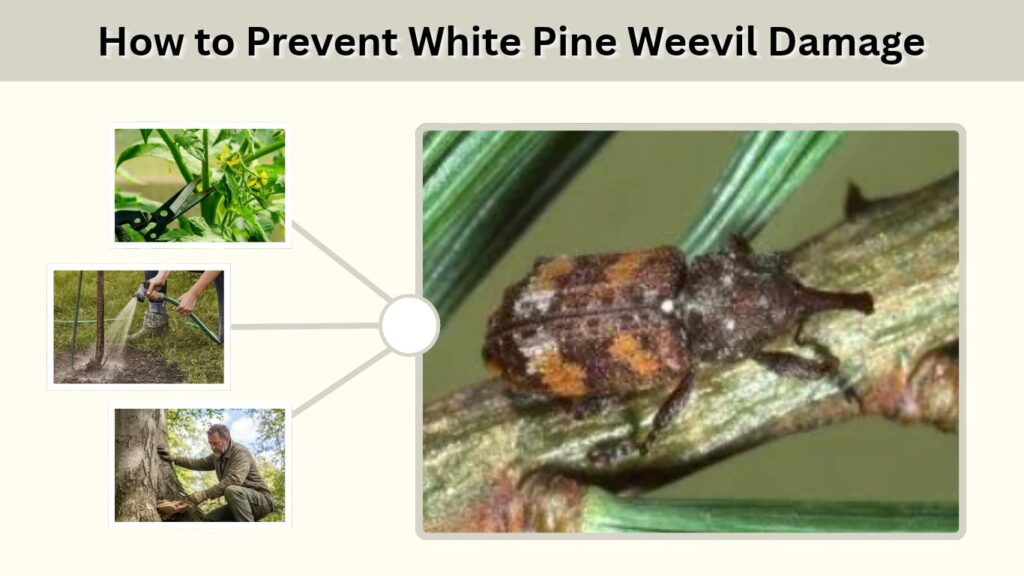
Preventing white pine weevil infestations is generally easier than repairing repeatedly damaged trees. Proper tree selection, regular monitoring, and good maintenance can reduce the likelihood of serious problems.
Homeowners should pay particular attention to young pines and spruces growing in exposed landscape locations.
Effective Prevention Methods
- Inspect Trees in Spring: Check terminal leaders for resin droplets and adult activity.
- Remove Damaged Shoots: Prune infested leaders before emerging adults spread to nearby trees.
- Maintain Tree Health: Provide appropriate irrigation and avoid unnecessary root or bark injuries.
- Consider Partial Shade: Young trees growing under suitable partial shade may experience fewer attacks than exposed trees.
- Restore Central Leaders: Train healthy lateral branches to maintain proper tree structure.
- Monitor Previous Infestations: Examine trees affected during earlier growing seasons for renewed activity.
These methods can reduce damage, although established weevil populations may require additional management.
White Pine Weevil vs. Other Pine Weevils
Not every pine weevil attacks the same parts of a tree.
The white pine weevil primarily targets terminal leaders, causing drooping shoots and distorted upper growth.
In contrast, pine root collar weevils attack bark around the lower trunk and root collar, potentially causing resin accumulation and damage near ground level.
The large pine weevil (Hylobius abietis), commonly encountered in European forestry, often damages young conifer seedlings by feeding on their bark.
Correct identification is essential because effective treatments depend on the weevil species and its feeding behavior.
FAQs
1. Do White Pine Weevils Kill Trees?
White pine weevils rarely kill entire established trees. Their larvae primarily destroy terminal leaders, causing crooked growth, multiple tops, and reduced height development. However, repeated infestations can severely damage young trees and affect their long-term appearance and commercial value.
2. Can White Pine Weevils Fly?
Yes, adult white pine weevils can fly. They also crawl along trunks and branches to reach suitable feeding and egg-laying locations. Their ability to move between trees contributes to infestations spreading through plantations, forests, and residential landscapes.
3. What Is the Best Time to Control White Pine Weevils?
Early spring is the preferred period for preventive insecticide treatment because adult beetles are becoming active. Infested leaders should be removed during late spring or early summer, before the new generation of adult weevils emerges from damaged shoots.
4. Are White Pine Weevils Harmful to Humans?
White pine weevils are not considered dangerous to humans. They are plant-feeding beetles and do not normally bite or sting people. Their primary impact involves damaging pine and spruce trees, particularly the terminal shoots responsible for upward growth.
5. Can Pine Trees Recover From White Pine Weevil Damage?
Yes, most affected pine trees can recover from individual attacks. Healthy lateral branches can replace dead terminal leaders, although the tree may develop an irregular shape. Proper pruning and training help restore a stronger central trunk over time.