
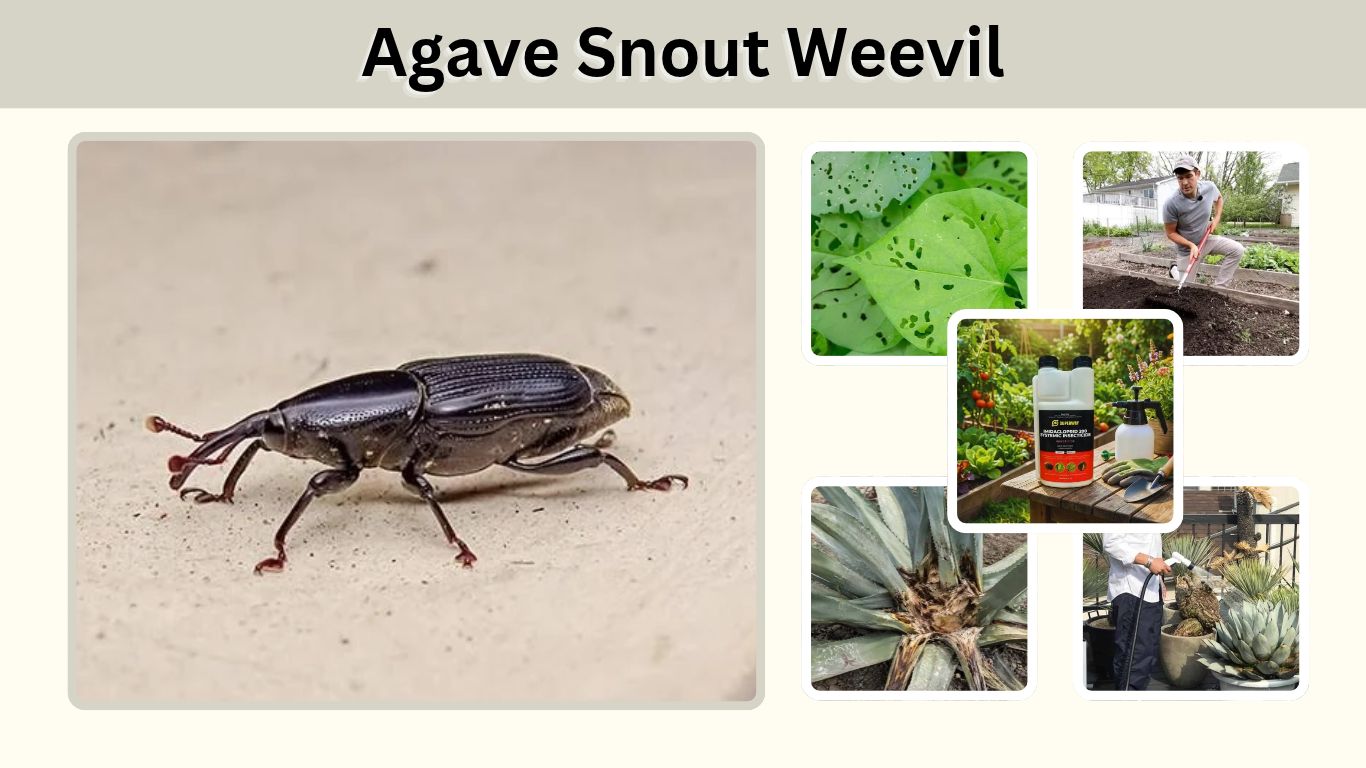
The agave snout weevil is a destructive pest that attacks agave plants, causing internal damage, root decay, and sometimes complete plant death. These small, dark beetles lay eggs inside agave tissues, where their larvae feed and weaken the plant. Unfortunately, infestations often remain hidden until serious damage appears. Understanding the agave snout weevil life cycle, early warning signs, and effective treatment methods can help protect your garden. This guide explains how to identify agave snout weevils, control infestations, and prevent future damage to your valuable agave plants.
What Is the Agave Snout Weevil?
The agave snout weevil (Scyphophorus acupunctatus) is a beetle belonging to the Curculionidae family. It primarily attacks agave plants but can also affect certain related ornamental plants. This insect is particularly troublesome in warm regions, including Arizona, California, and other areas where agaves are commonly grown.
Adult weevils chew into the plant’s base to feed and lay eggs. Their larvae subsequently tunnel through the fleshy tissues, causing serious internal destruction.
Agave Snout Weevil Identification
Agave snout weevils have several recognizable physical characteristics.
- Scientific Name: Scyphophorus acupunctatus
- Common Name: Agave snout weevil
- Family: Curculionidae
- Adult Size: Approximately ½–¾ inch long
- Body Color: Dark brown to black
- Body Shape: Elongated, with a distinctive narrow snout
- Larvae: Creamy-white, legless grubs with brown heads
Adult weevils have hard wing covers with lengthwise grooves. Their dark coloration helps them remain inconspicuous around the base of agave plants.
Signs of Agave Snout Weevil Infestation
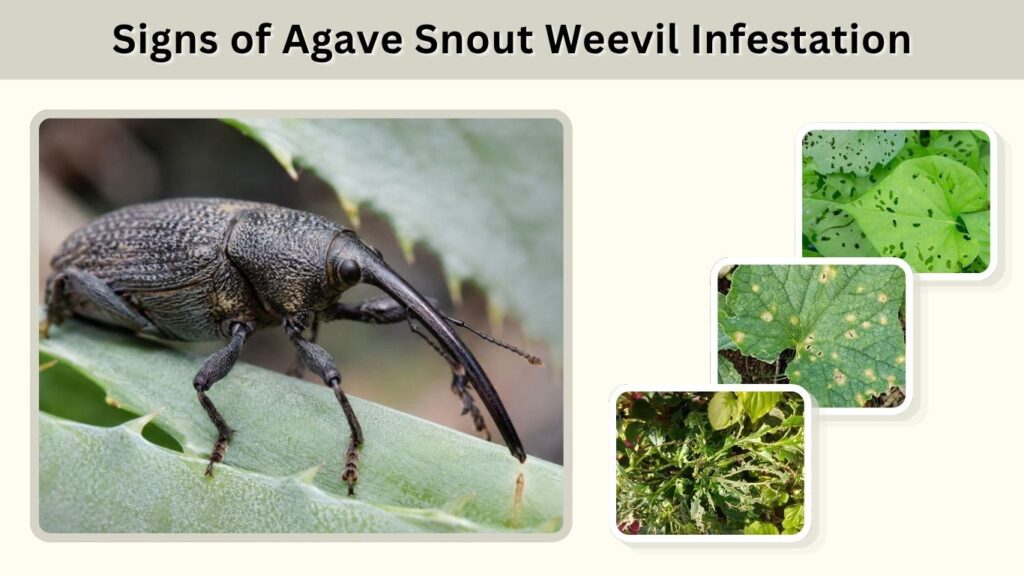
Identifying an agave snout weevil infestation early is challenging because much of the damage occurs inside the plant. However, certain changes in appearance can indicate pest activity.
Regularly inspecting agave plants, particularly around their crowns and lower leaves, may help detect problems before complete collapse occurs.
Early Signs of Infestation
Look for these warning signs:
- Small holes or punctures near the base of the plant.
- Yellowing or discoloration of lower leaves.
- Wilting leaves despite appropriate watering.
- Soft or unusually weak tissue around the crown.
- Darkened areas or signs of decay near the stem.
- Adult weevils crawling around the plant base.
These symptoms do not always confirm an infestation, but they should prompt a closer inspection.
Advanced Agave Snout Weevil Damage
Severely infested plants may suddenly lean, collapse, or separate from their roots. The center can become soft and rotten as larvae destroy the internal tissues.
A foul odor may develop when secondary bacterial decay occurs. Unfortunately, once the central growing point is extensively damaged, the plant usually cannot recover.
Agave Snout Weevil Life Cycle
The agave snout weevil passes through four developmental stages: egg, larva, pupa, and adult. Understanding this process helps explain why infestations spread and why controlling the insects becomes difficult once larvae enter the plant.
Under favorable warm conditions, development can occur rapidly, allowing multiple generations throughout the year.
Four Stages of Development
- Egg Stage: Female weevils chew openings into the plant base and deposit eggs inside the tissues. These protected locations provide suitable conditions for young larvae.
- Larval Stage: After hatching, creamy-white larvae tunnel into the crown, roots, and surrounding tissues. This is the most destructive stage because feeding damages vital plant structures.
- Pupal Stage: Mature larvae generally move into the upper soil or remain near the plant base to pupate. They develop into adults inside protected chambers.
- Adult Stage: Newly developed weevils emerge, feed, mate, and seek suitable plants for egg-laying. Adults can move to neighboring agaves and begin additional infestations.
In warm weather, the life cycle may take less than two months, although development varies with environmental conditions.
How Do Agave Snout Weevils Damage Plants?
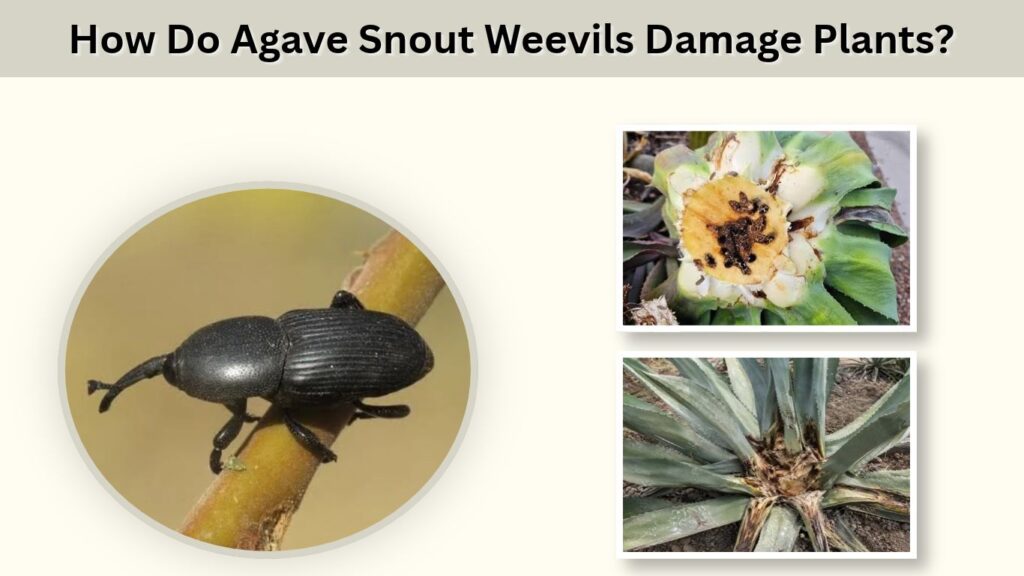
Agave snout weevil damage begins when adult females bore into the base of an agave plant. These openings allow eggs to be deposited inside protected plant tissues.
Once the larvae hatch, they feed on the fleshy interior, damaging the crown and upper roots. Their feeding tunnels interfere with the plant’s structure and its ability to transport water and nutrients.
Wounds caused by the insects also provide entry points for microorganisms associated with plant decay.
As the infestation progresses, the agave may become increasingly unstable. Eventually, the growing point and surrounding tissues can deteriorate completely.
Large, mature agaves are especially vulnerable because their thick, fleshy bases provide substantial feeding material for developing larvae.
How to Get Rid of Agave Snout Weevils
Getting rid of agave snout weevils requires prompt action and careful inspection. Unfortunately, insects feeding deep inside an agave are difficult to reach with ordinary treatments.
When severe damage is already visible, removing the affected plant is usually the most reliable way to reduce the risk to neighboring agaves.
Steps to Control an Infestation
- Inspect the Plant: Examine the crown, lower leaves, and surrounding soil for entrance holes, soft tissues, adult beetles, and larvae.
- Remove Severely Infested Plants: Carefully dig out plants with extensive internal damage. Avoid scattering decaying plant material around healthy agaves.
- Remove Nearby Infested Soil: Take away soil immediately surrounding the affected roots, where larvae or pupae may remain.
- Dispose of Infested Material: Seal or otherwise contain affected plant material and dispose of it according to local waste-management guidance. Do not place it in ordinary garden compost.
- Monitor Neighboring Agaves: Inspect nearby plants regularly for new symptoms and consider preventive management where the pest is established.
Removing infested plants does not guarantee elimination of every adult weevil, so continued monitoring remains important.
Agave Snout Weevil Treatment and Insecticides
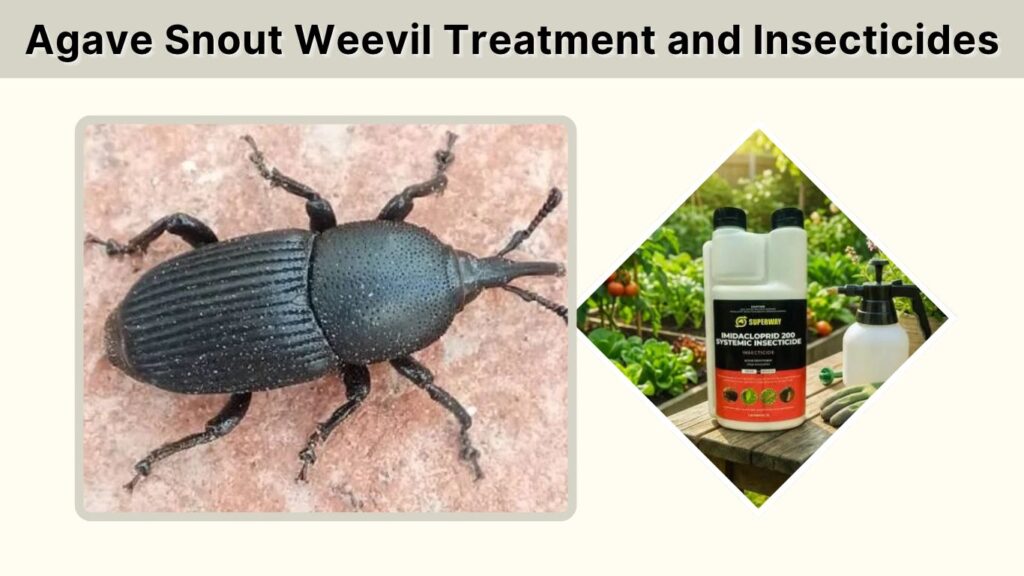
Agave snout weevil treatment is most effective before serious internal damage occurs. Once larvae have destroyed the crown, chemical treatment generally cannot restore the plant.
Insecticides may help protect valuable, currently uninfested agaves, but product selection and application timing are important.
Which Insecticides Work Against Agave Snout Weevils?
Certain systemic insecticides, including products containing imidacloprid, may provide preventive protection when applied before infestation.
However, effectiveness depends on the product, application method, local regulations, and whether the target use is specifically permitted on its label.
Never assume that a general-purpose insecticide, including products sold under names such as Triazicide, is effective against this particular pest without supporting label instructions.
Because systemic insecticides can pose risks to pollinators and other organisms, consider professional advice before treating valuable landscape plants. Always follow current pesticide labels and environmental precautions.
Can Natural Treatments Control Agave Snout Weevils?
Natural approaches focus mainly on plant sanitation, monitoring, and reducing conditions that favor infestation.
Removing infested material can interrupt pest development and protect nearby plants. Healthy growing conditions also reduce avoidable plant stress.
However, neem oil, insecticidal soap, and common homemade sprays should not be considered reliable cures for larvae already feeding deep inside agave tissues.
How to Prevent Agave Snout Weevil Infestations
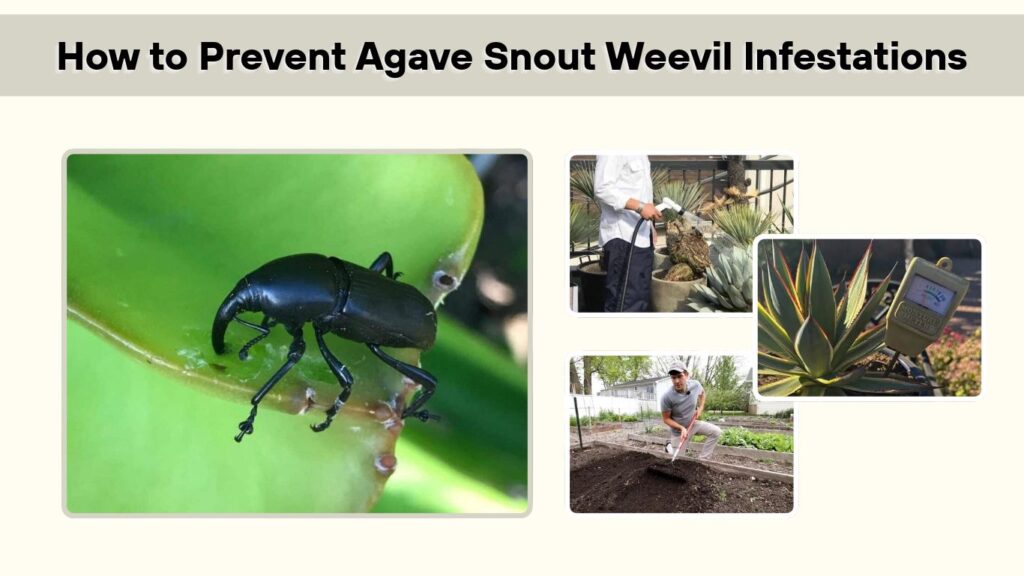
Prevention is the most practical strategy for managing agave snout weevils. Once the insects establish themselves inside a plant, successful control becomes much more difficult.
Gardeners can lower infestation risks through proper plant selection, suitable growing conditions, and regular inspections.
Effective Prevention Methods
- Improve Soil Drainage: Grow agaves in well-draining soil to prevent excess moisture around their roots.
- Avoid Overwatering: Established agaves generally require limited irrigation. Allow the soil to dry appropriately between watering sessions.
- Inspect Plants Regularly: Examine crowns and lower leaf bases for holes, discoloration, or wilting.
- Remove Infested Plants Promptly: Dispose of affected plants before additional insects emerge.
- Choose Less Susceptible Agaves: Consider smaller, narrow-leaved species in areas with recurring infestations.
- Inspect New Purchases: Check nursery plants for damage before introducing them into an established garden.
These practices cannot eliminate every possibility of infestation, but they can reduce the chances of serious losses.
Which Agave Plants Are Most Vulnerable?
Large agave species with broad, fleshy leaves are generally more susceptible to agave snout weevil attacks.
The century plant (Agave americana) is a well-known vulnerable species, particularly when grown as a mature landscape specimen.
Smaller agaves with narrower leaves are attacked less frequently, making them potentially better choices where the pest is common.
However, no agave should automatically be considered completely resistant. Local growing conditions, plant stress, and pest populations can influence infestation risks.
In Arizona, California, and other warm regions, gardeners should monitor susceptible agaves carefully throughout periods of insect activity.
FAQs
1. Can Agave Snout Weevils Fly?
Yes, adult agave snout weevils have functional wings and can fly. Their ability to move between plants contributes to the spread of infestations. They may also spread through infested nursery stock or transported plant material, making inspections important.
2. Can an Agave Recover From Snout Weevil Damage?
An agave with extensive crown damage usually cannot recover. When larvae destroy the growing point and secondary rot develops, the plant often collapses. Removing severely infested plants helps limit the pest’s spread to nearby healthy agaves.
3. Do Agave Snout Weevils Attack Small Plants?
Yes, small agaves can become infested, although larger, broad-leaved species are generally more susceptible. Young plants should still be inspected regularly, especially when growing near previously infested agaves or in gardens with established weevil populations.
4. What Is the Best Treatment for Agave Snout Weevils?
Prevention is generally more effective than treatment. Removing infested plants and nearby affected soil helps reduce pest populations. Certain labeled systemic insecticides may protect uninfested plants, but they are not reliable cures for agaves with extensive internal damage.
5. Are Agave Snout Weevils Dangerous to Humans?
Agave snout weevils are primarily plant pests and are not known to pose a significant danger to humans. Their greatest threat is to agave plants, where larval feeding and associated decay can cause extensive damage and plant death.
