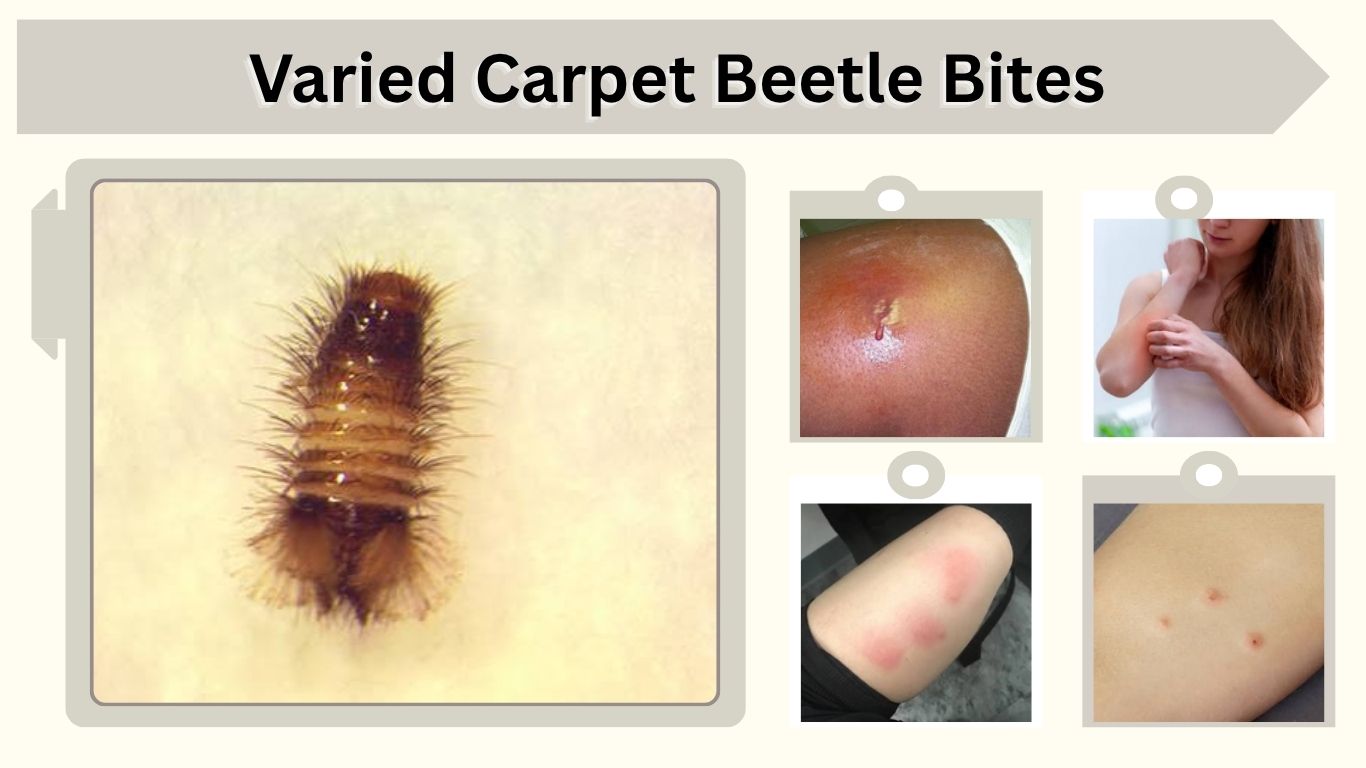
Varied carpet beetles do not bite humans. Neither adult beetles nor their larvae feed on blood or use people as hosts. However, the larvae are covered with tiny defensive hairs that can irritate sensitive skin. This reaction, known as carpet beetle dermatitis, may create itchy red bumps or welts that resemble insect bites. Finding the infestation and removing larvae, shed skins, and contaminated materials is essential for preventing recurring irritation.
Do Varied Carpet Beetles Bite?
Varied carpet beetles cannot bite people in the way that bed bugs, fleas, mosquitoes, or ticks do. Adult beetles mainly feed on pollen and nectar outdoors, while their larvae consume animal-based materials and organic debris inside buildings.
The confusion occurs because larval hairs can cause an allergic or irritating skin reaction. Loose hairs may collect in carpets, bedding, clothing, upholstery, air vents, and other dusty areas, even when no live larva is touching the person.
Do Adult Varied Carpet Beetles Bite Humans?
No. Adult varied carpet beetles are small, oval insects marked with irregular patches of white, brown, yellow, and black scales. They may enter homes through open windows or doors, but they do not seek humans, drink blood, or bite skin.
Adults are more commonly noticed crawling on windowsills because they are attracted to daylight and are attempting to move outdoors.
Do Varied Carpet Beetle Larvae Bite?
Varied carpet beetle larvae do not bite either. They have chewing mouthparts adapted for feeding on materials such as wool, feathers, fur, silk, leather, dead insects, pet hair, and lint.
Their bodies are covered with bristly hairs. When these hairs contact sensitive skin, they can trigger itching, redness, inflammation, or raised bumps. Shed larval skins may continue releasing irritating hairs after the larvae have moved elsewhere.
What Do Varied Carpet Beetle “Bites” Look Like?
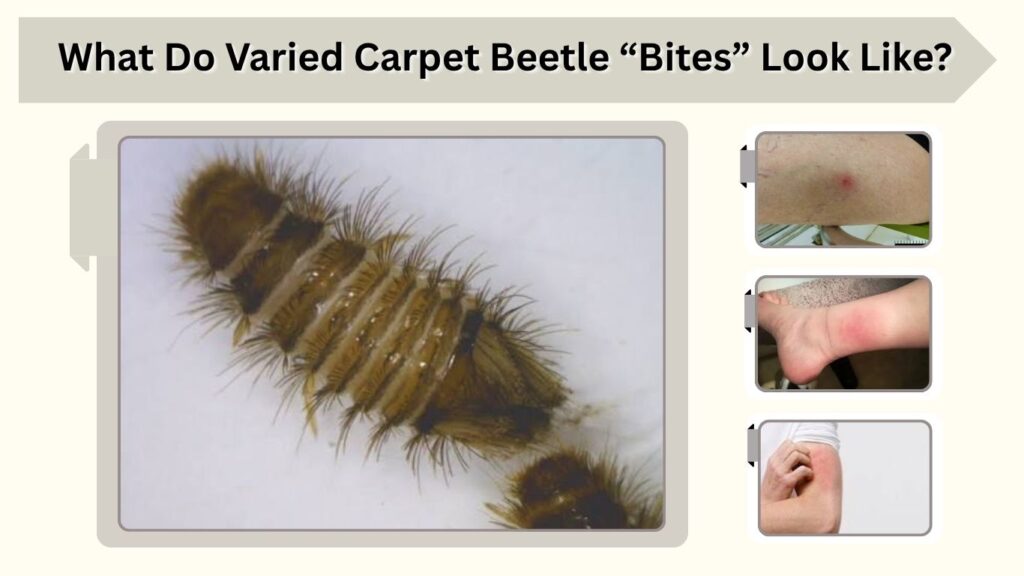
The marks commonly called varied carpet beetle bites are usually a form of dermatitis rather than actual puncture wounds. Appearance varies according to a person’s sensitivity and degree of exposure.
Possible symptoms include:
- Small red, pink, or skin-colored bumps
- Itchy welts or patches
- A burning or prickling sensation
- Localized swelling
- Dry or inflamed skin
- A rash beneath clothing
- Several bumps grouped closely together
On darker skin, redness may be less obvious. Raised texture, swelling, warmth, itching, or areas darker or lighter than the surrounding skin may be easier to notice.
How Long Does the Rash Last?
A mild reaction may begin improving after exposure stops, but the duration varies. Continued contact with contaminated bedding, clothing, carpeting, or furniture can make the rash appear persistent or cause it to return.
A rash lasting more than several days, spreading, becoming painful, or failing to improve should be evaluated by a healthcare professional because many skin conditions can look similar.
Carpet Beetle Rash vs. Bed Bug Bites
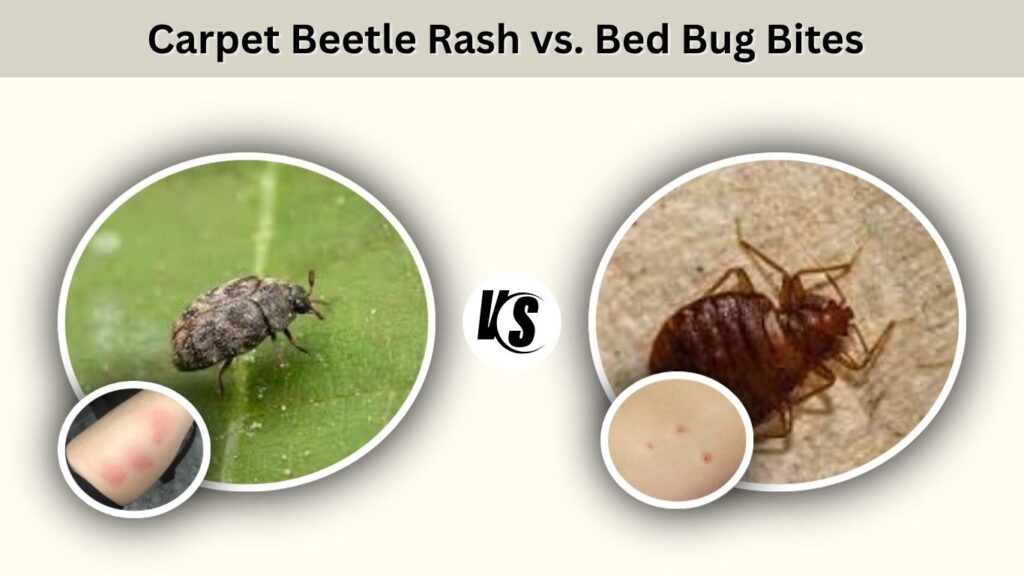
Carpet beetle dermatitis and bed bug bites can both produce itchy red bumps, but their causes and accompanying evidence differ.
| Feature | Carpet beetle dermatitis | Bed bug bites |
| Cause | Contact with larval hairs or shed skins | Blood-feeding bites |
| Skin puncture | No | Yes |
| Common pattern | Scattered rash or irritated patches | Clusters, lines, or irregular groups |
| Pest evidence | Hairy larvae, shed skins, fabric damage | Bed bugs, dark spots, eggs, blood marks |
| Typical hiding areas | Carpets, closets, vents, stored fabrics | Mattress seams, bed frames, nearby cracks |
Skin marks alone cannot reliably identify the pest. Bed bugs pierce the skin to feed and can cause delayed itchy swelling, while carpet beetles do not feed on humans. Inspecting the room and having captured specimens identified is more dependable than judging the rash’s appearance.
Why Does a Carpet Beetle Rash Occur?
Some people develop an allergic reaction to proteins associated with carpet beetle larval hairs or bodily fluids. Other people living in the same home may show no symptoms, even when exposed to the same infestation.
The reaction is more likely where larvae or shed skins accumulate, including:
- Beds and upholstered furniture
- Wool carpets and rugs
- Closets containing natural-fiber clothing
- Pet sleeping areas
- Air vents and ducts
- Baseboards and carpet edges
- Stored blankets, feathers, or fur
- Areas containing dead insects or animal nests
Carpet beetle larvae can survive on lint, hair, dead insects, dried pet food, feathers, wool, silk, and numerous other organic materials.
How to Treat a Varied Carpet Beetle Rash
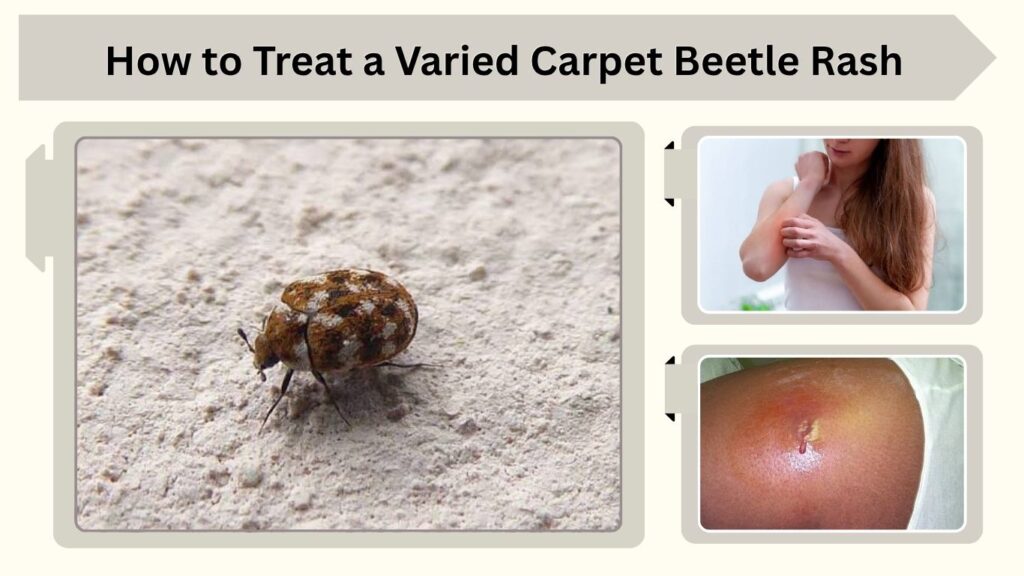
The most important step is to stop further contact with the irritating hairs. Avoid handling larvae or shed skins with bare hands.
Basic Skin Care
Wash exposed skin gently with lukewarm water and mild soap. Change potentially contaminated clothing and wash bedding, towels, and washable fabrics according to their care labels.
A cool compress may reduce itching and discomfort. Avoid hot showers and vigorous scrubbing, which can worsen irritated skin. Try not to scratch because damaged skin may become infected.
A pharmacist or healthcare professional may recommend an appropriate anti-itch treatment, antihistamine, or mild hydrocortisone product. Topical corticosteroids can reduce contact-dermatitis inflammation, but they should be used according to the label or professional advice, particularly on the face, near the eyes, or on children.
When to Seek Medical Attention
See a healthcare professional when:
- The rash is severe or rapidly spreading
- Symptoms do not improve
- The skin becomes increasingly painful or hot
- Pus, crusting, or other infection signs develop
- The rash repeatedly returns despite cleaning
- You are uncertain whether another pest or condition caused it
Seek emergency care for trouble breathing or swelling of the lips, tongue, mouth, face, or throat. These symptoms can indicate a serious allergic reaction.
How to Prevent Further Skin Reactions
Treating the rash without eliminating the infestation may provide only temporary relief. Remove the larvae and the materials supporting them.
Clean Infested Areas
Vacuum carpet edges, closets, baseboards, furniture seams, beneath beds, pet areas, vents, and other undisturbed spaces. Use a crevice tool to reach narrow gaps. Dispose of the vacuum contents outdoors in a sealed bag.
Wash and machine-dry suitable bedding and clothing according to their care labels. Dry-clean delicate wool, silk, fur, or feather-filled items. Store cleaned vulnerable fabrics in airtight containers.
Find the Larval Food Source
Inspect wool rugs, blankets, stored clothing, upholstered furniture, feathers, pet hair, lint, dried foods, dead insects, and abandoned animal nests. Discard heavily damaged, inexpensive items in sealed bags.
Thorough cleaning and source removal are central to carpet beetle control because larvae can remain concealed beneath furniture, inside closets, along floor edges, and around vents.
FAQs
Can Varied Carpet Beetles Bite Humans?
No. Adult varied carpet beetles and their larvae do not bite humans or feed on blood. The itchy marks associated with them are usually caused by contact with the stiff hairs covering the larvae or their discarded skins.
Are Varied Carpet Beetle Bites Dangerous?
The insects do not deliver dangerous bites. Most reactions involve localized itching or dermatitis, although sensitivity varies. Seek medical advice for a severe, persistent, infected, or unexplained rash and emergency assistance for breathing difficulty or facial swelling.
Can Carpet Beetle Larvae Crawl on Your Bed?
Yes. Larvae may wander onto beds while searching for lint, hair, feathers, wool, or other suitable food. Finding them in a bedroom does not mean they are feeding on the person, but their hairs may contaminate bedding and irritate skin.
Why Am I Getting a Rash but Nobody Else Is?
People have different sensitivities to larval hairs and insect proteins. One person may develop itchy bumps while others in the same household have no visible reaction. This difference does not confirm or rule out an infestation.
How Do I Stop Varied Carpet Beetle “Bites”?
Remove the source by vacuuming thoroughly, laundering bedding, treating infested fabrics, removing pet hair and lint, and inspecting stored natural-fiber materials. Continue cleaning until no larvae or shed skins appear. Medical treatment alone will not prevent recurrence while irritating hairs remain.