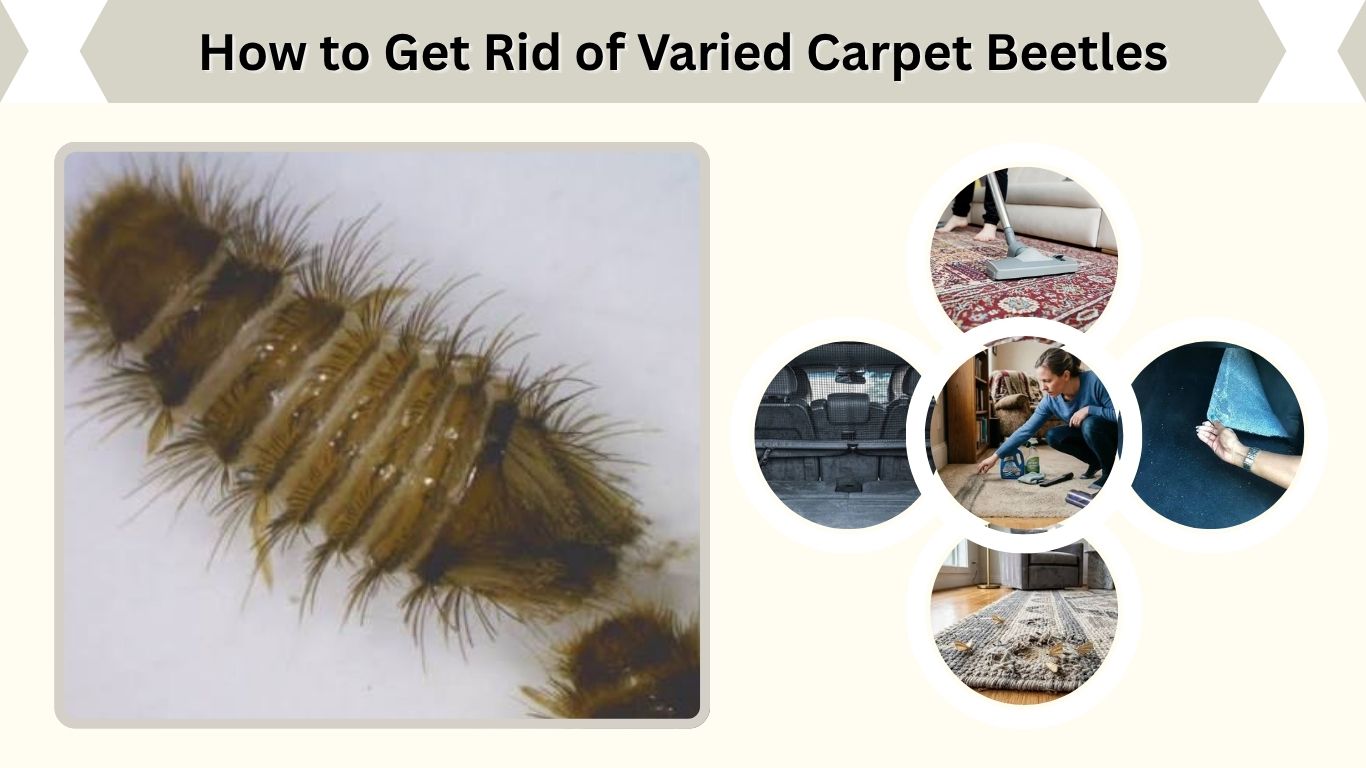
To get rid of varied carpet beetles, locate the material supporting the larvae, remove or treat infested items, vacuum hidden areas thoroughly, and protect vulnerable fabrics from reinfestation. Cleaning is more important than spraying because larvae often hide inside closets, beneath furniture, along carpet edges, and wherever lint or pet hair accumulates. Adult beetles are usually harmless pollen feeders; the hairy larvae are responsible for damaging carpets, clothing, upholstery, and other animal-based materials.
How to Identify a Varied Carpet Beetle Infestation
A few adult beetles near a window do not always indicate a serious infestation. However, repeated adult sightings, hairy larvae, shed skins, or unexplained fabric damage suggest that beetles may be reproducing indoors.
Identification Signs
Look for:
- Tiny, rounded adult beetles with mottled white, brown, yellow, and black scales
- Brown, segmented larvae covered with stiff hairs
- Empty larval skins in closets, drawers, or carpet edges
- Irregular holes in wool clothing and blankets
- Thinning or bare patches on natural-fiber carpets
- Damage around seams, cuffs, collars, folds, and hems
- Larvae beneath furniture or around air vents
- Adult beetles collecting on windowsills
Adult carpet beetles are approximately 1/16 to 1/8 inch long. Larvae are usually tan to brown, slow-moving, and around 1/8 to 1/4 inch long.
What Do Varied Carpet Beetle Larvae Eat?
Larvae can digest keratin, a protein found in animal-derived materials. They commonly damage wool, fur, silk, leather, feathers, felt, down-filled products, taxidermy, and natural-fiber upholstery.
They may also survive on:
- Pet hair and human hair
- Lint beneath furniture
- Dead insects in attics or light fixtures
- Bird or rodent nests
- Dry pet food, seeds, and stored foods
- Fabrics heavily soiled with food, perspiration, or body oils
Pure cotton and synthetic fabrics are rarely attacked unless they are blended with wool or contaminated with organic material.
How to Get Rid of Varied Carpet Beetles
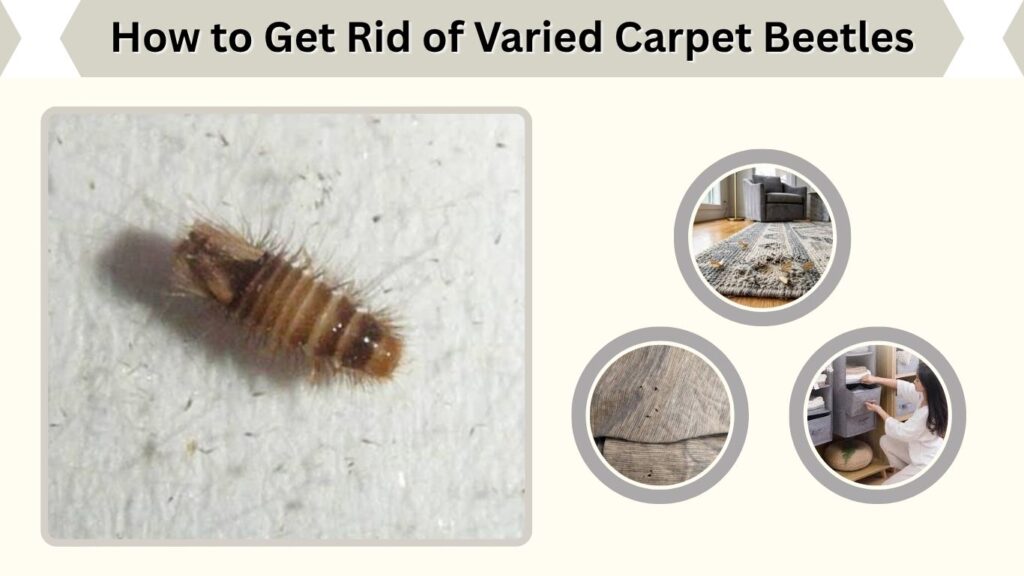
Successful control requires more than killing visible adult beetles. The priority is finding and eliminating the hidden larval food source.
1. Find the Source of the Infestation
Inspect dark, quiet areas containing materials that remain undisturbed for long periods.
Check:
- Carpet edges and undersides
- Baseboards and floor cracks
- Closets and storage boxes
- Wool rugs and stored clothing
- Upholstered furniture
- Heating vents and air ducts
- Attics, basements, and chimneys
- Pet sleeping areas
- Down pillows and feather decorations
- Birdseed, dry pet food, and pantry products
- Abandoned bird or rodent nests
Examine garment seams, cuffs, collars, pockets, and folded areas closely. Larvae often remain concealed within these protected sections.
2. Vacuum Thoroughly
Vacuuming removes larvae, eggs, shed skins, dead insects, pet hair, and lint that can support an infestation.
Concentrate on:
- Along carpet edges
- Beneath rugs
- Under beds and sofas
- Behind radiators
- Inside closets
- Around baseboards
- Beneath stored boxes
- Inside accessible floor vents
- Between sofa cushions
- Around pet bedding
Use a crevice attachment for narrow gaps. Empty the vacuum outdoors immediately or seal and discard the contents so surviving insects cannot escape back into the house.
Vacuum regularly until no additional larvae or shed skins appear. Rugs that are routinely cleaned are less likely to become infested than undisturbed carpet edges and stored textiles.
3. Wash or Heat-Treat Infested Fabrics
Wash washable clothing, blankets, curtains, and covers according to their care labels. Hot laundering and the heat generated by a clothes dryer can kill eggs and larvae.
Dry-clean delicate wool, silk, fur, or other items that cannot be washed safely. Place cleaned articles in sealed bags or airtight containers after treatment to prevent reinfestation.
| Infested item | Recommended action |
| Washable clothing or bedding | Launder and dry according to the care label |
| Delicate wool or silk | Professionally dry-clean |
| Small heat-sensitive objects | Consider controlled freezing |
| Heavily damaged inexpensive items | Seal in a bag and discard |
| Rugs and upholstery | Vacuum deeply and arrange professional cleaning if needed |
| Stored natural-fiber clothing | Clean before placing in airtight storage |
4. Freeze Suitable Items
Freezing can treat small articles that cannot be laundered. Seal the item in a plastic bag before freezing to protect it from moisture and condensation.
University of Kentucky guidance recommends keeping items at 0°F for at least one week. A freezer reaching −20°F may kill all life stages within approximately 72 hours. Allow frozen objects to return to room temperature before opening the bag, particularly when treating fragile items.
5. Remove Severely Infested Materials
Discard badly damaged items that are inexpensive or difficult to clean. Place them in sealed bags before moving them through the house.
Also remove animal nests, dead insects, or carcasses found in attics, wall spaces, vents, chimneys, or garages. Wear appropriate protection and avoid disturbing active bird nests or wildlife without checking local regulations.
6. Use Insecticide Only When Necessary
Cleaning and source removal should come before chemical treatment. An insecticide may help as a supplementary treatment around carpet edges, baseboards, floor-wall junctions, closet floors, and beneath furniture.
Choose only a product whose label specifically lists carpet beetles or fabric pests and permits use in the intended indoor area. Never apply insecticide directly to clothing, bedding, or surfaces not listed on the label. Follow all instructions concerning ventilation, pets, children, application amounts, and reentry.
Foggers or bug bombs are unlikely to solve the problem because larvae usually remain hidden inside materials and narrow crevices.
How to Get Rid of Varied Carpet Beetle Larvae
Larvae are the damaging stage, so treatment should target their hiding places and food supply.
Vacuum every location containing hair, lint, feathers, dead insects, or natural fibers. Wash or dry-clean nearby fabrics even when visible damage is limited to one item. Larvae can wander from the original source and appear in other rooms.
Sticky monitoring traps can help identify areas with continuing activity, but traps alone will not eliminate the infestation. Place them near closets, baseboards, windows, or damaged materials and continue inspecting for the original breeding source.
How to Get Rid of Varied Carpet Beetles in a Car
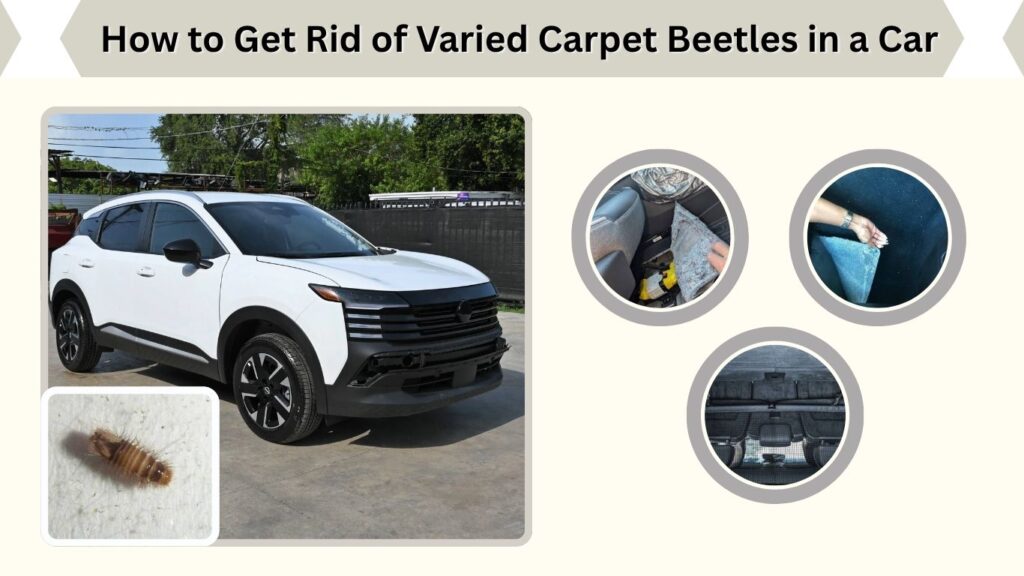
Carpet beetles may enter a vehicle on clothing, flowers, pet hair, blankets, or infested stored items. Larvae can survive on hair, food debris, wool floor mats, natural-fiber seat covers, feathers, and dead insects.
Cleaning a Beetle-Infested Car
Remove floor mats, blankets, seat covers, clothing, and stored objects. Inspect and treat each item separately.
Vacuum:
- Beneath and between seats
- Along carpet seams
- Inside the trunk
- Around seat rails
- Beneath floor mats
- Inside door pockets
- Around child seats
- Along upholstery folds
Dispose of vacuum contents outside. Wash removable fabrics according to their care labels and clean pet hair or food residue from the interior.
Avoid spraying an ordinary household pesticide throughout the passenger cabin. Vehicle interiors become hot, enclosed spaces, and products should only be used where the label explicitly permits that application. Consider professional pest control when larvae continue appearing after repeated deep cleaning.
How to Prevent Varied Carpet Beetles
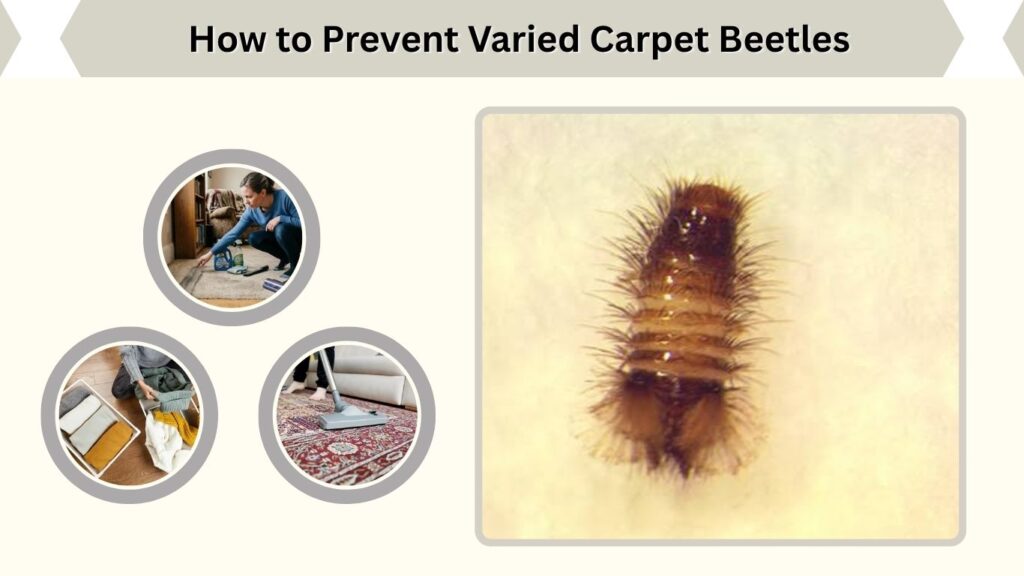
Prevention depends on keeping susceptible materials clean and limiting access to indoor breeding sites.
Practical Prevention Tips
- Vacuum carpet edges, closets, and furniture regularly.
- Remove accumulated pet hair and lint.
- Clean wool garments before long-term storage.
- Store vulnerable fabrics in sealed containers.
- Keep dry pet food, birdseed, and pantry goods tightly closed.
- Remove abandoned nests near roofs, vents, and windows.
- Repair damaged window screens.
- Seal openings around pipes and utility lines.
- Clean dead insects from windowsills, attics, and light fixtures.
- Inspect secondhand rugs, furniture, and clothing before bringing them indoors.
Cedar chests alone may not provide dependable protection because they are often not airtight enough to maintain an effective concentration of cedar oils.
FAQs
Do Varied Carpet Beetles Bite Humans?
No. Varied carpet beetles do not bite people. However, contact with the stiff hairs of their larvae can cause an itchy or irritated skin reaction in sensitive individuals. Finding unexplained skin marks does not automatically mean the home has bed bugs.
What Kills Varied Carpet Beetle Larvae?
Hot laundering, clothes-dryer heat, dry-cleaning, appropriate freezing, thorough vacuuming, and source removal can kill or physically remove larvae. A properly labeled insecticide may supplement cleaning in cracks or carpet edges, but it should not be applied directly to clothing or bedding.
Why Do Varied Carpet Beetles Keep Coming Back?
Recurring beetles usually indicate that a hidden food source remains. Common sources include pet hair beneath furniture, an overlooked wool garment, lint inside vents, dead insects in an attic, bird nests, stored pet food, or an infested rug.
Can You Completely Eliminate Varied Carpet Beetles?
Yes, but complete control may take time because larvae hide in undisturbed locations. Locating the breeding source, treating infested fabrics, cleaning surrounding areas, and monitoring for new activity are more effective than simply killing adult beetles near windows.
When Should You Call Pest Control?
Contact a professional when larvae continue appearing after extensive cleaning, several rooms are affected, the source is inside a wall or inaccessible vent, valuable rugs or collections are at risk, or insecticide treatment may be required in sensitive areas.