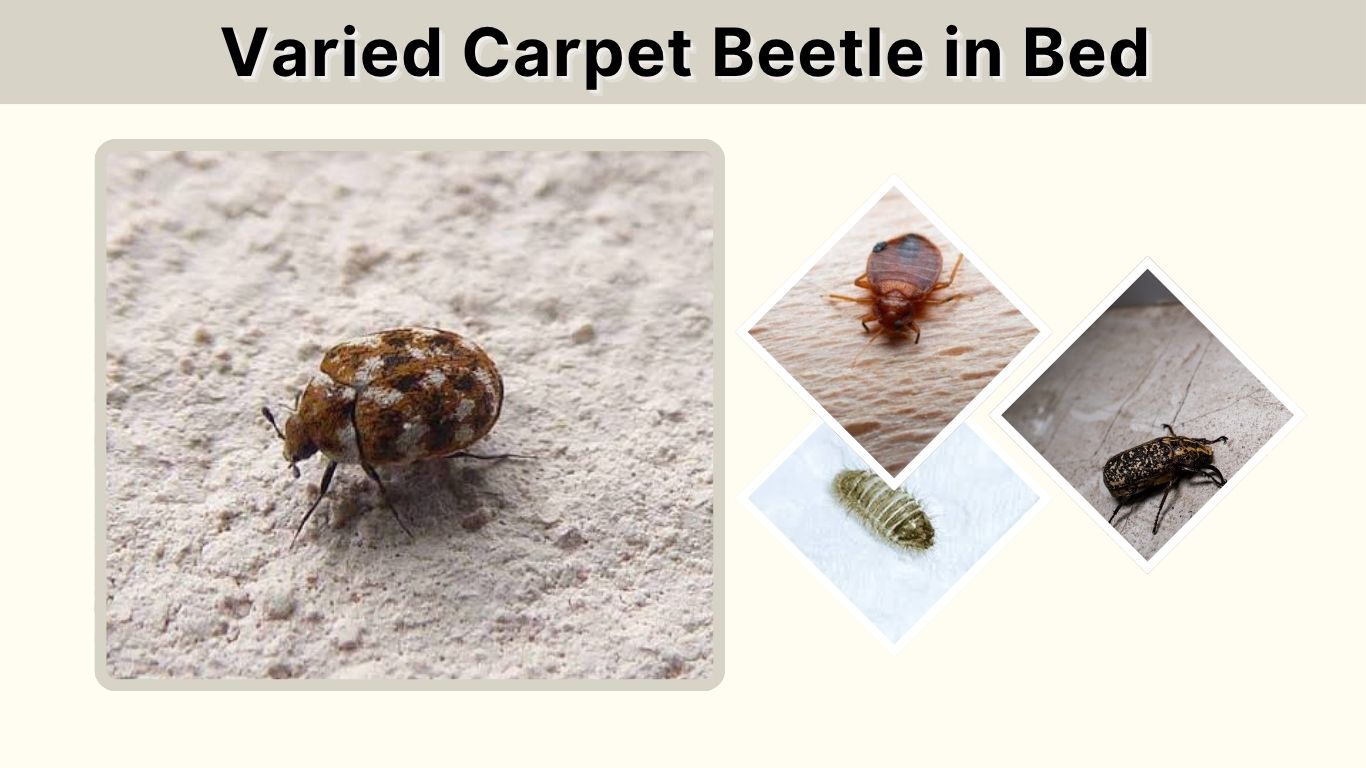
Finding a varied carpet beetle in your bed can be alarming, especially because its larvae and shed skins are sometimes confused with bed bugs. However, varied carpet beetles do not feed on human blood or live on people. Their larvae enter bedrooms while searching for wool, feathers, hair, lint, dead insects, and other animal-based materials. Although they do not bite, their tiny hairs can cause an itchy skin reaction in sensitive individuals.
Why Are Varied Carpet Beetles in Your Bed?
A varied carpet beetle on a bed does not necessarily mean the insects are living inside the mattress. One adult beetle may simply have flown indoors and landed on the bedding. Adults normally feed on pollen, while the destructive larvae feed on materials containing animal proteins.
Repeated sightings of larvae, shed skins, or damaged fabrics suggest that a food source is nearby.
Common Attractions Around a Bed
Varied carpet beetle larvae may feed on or hide among:
- Wool blankets and mattress pads
- Feather or down pillows
- Silk and fur materials
- Pet hair and human hair
- Lint beneath furniture
- Dead insects around windows
- Upholstered headboards
- Stored clothing under the bed
- Felt, leather, and natural-fiber rugs
- Abandoned bird or insect nests nearby
Larvae can survive on many materials, including wool, feathers, fur, silk, dead insects, pet food, lint, hair, and natural-fiber furnishings.
What Does a Varied Carpet Beetle Look Like?
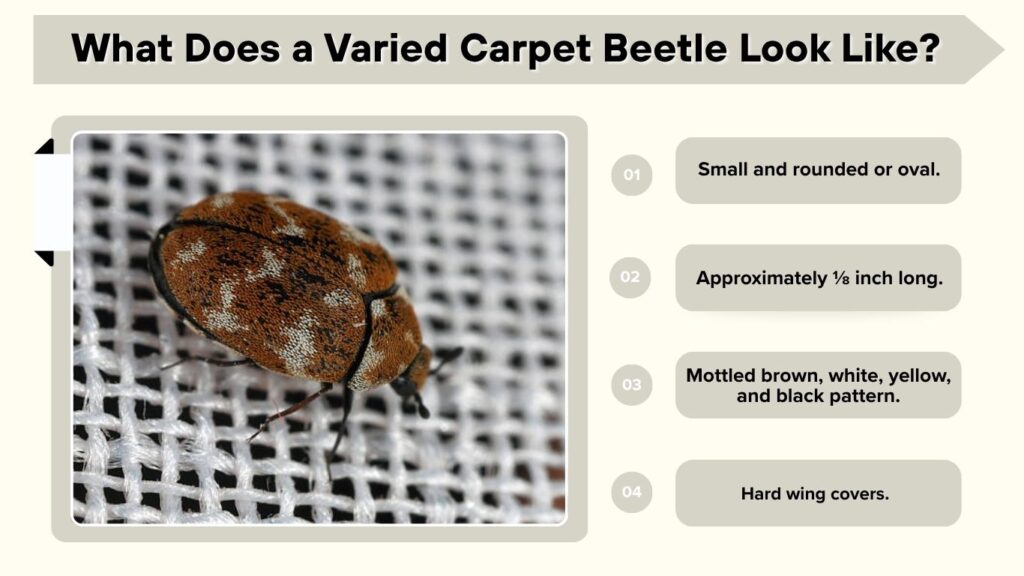
The adult varied carpet beetle, Anthrenus verbasci, is a tiny, rounded beetle covered with mottled white, brown, black, and yellowish scales. It is usually about ⅛ inch long and may initially resemble a tiny patterned lady beetle.
Adult Identification
- Small and rounded or oval
- Approximately ⅛ inch long
- Mottled brown, white, yellow, and black pattern
- Hard wing covers
- Six short legs
- Often seen near windows or flowers
Adults commonly appear near windows because they are attracted to light and try to return outdoors.
Larva Identification
The larva looks completely different from the adult. It has an elongated, carrot-shaped body covered with brown hairs or bristles. The rear end may have noticeable tufts of longer hairs.
Common signs include:
- Brown or tan banded body
- Wider rear and narrower head
- Dense hairs covering the body
- Slow crawling movement
- Empty, hairy shed skins
- Small damaged areas in natural fabrics
Carpet beetle larvae repeatedly shed their skins while growing. These empty skins may remain in bedding, drawers, closets, carpets, and furniture after the larva has moved elsewhere.
Varied Carpet Beetle vs Bed Bug
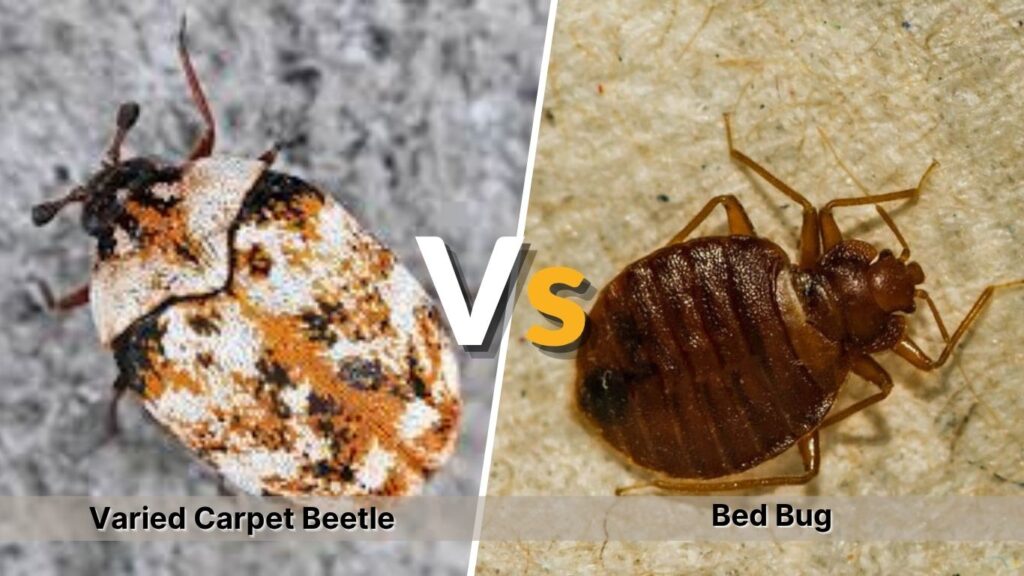
Carpet beetles and bed bugs require completely different treatments. Correct identification is therefore essential before applying pesticides or discarding furniture. The EPA specifically warns that carpet beetles are sometimes mistaken for bed bugs.
| Feature | Varied carpet beetle | Bed bug |
| Adult shape | Rounded and dome-shaped | Flat and broadly oval |
| Adult color | Mottled brown, white and yellow | Uniform reddish brown |
| Larva or nymph | Hairy, banded larva | Smooth, pale nymph |
| Food | Fibers, hair and dead insects | Blood |
| Wings | Adult beetles can fly | Cannot fly |
| Skin effect | Larval hairs may cause irritation | Bites may cause itchy marks |
| Bedding signs | Shed hairy skins and fabric damage | Blood spots, fecal marks and eggs |
Bed Bug Identification
Adult bed bugs are approximately 5–7 millimeters long, flat, oval, reddish brown, and roughly comparable to an apple seed. Young nymphs are smaller and may appear pale or translucent.
Physical signs of bed bugs include:
- Live flat, reddish-brown insects
- Dark fecal spots on bedding
- Rusty or reddish bloodstains
- Tiny pale eggs and eggshells
- Smooth, pale shed skins
- Bugs hiding in mattress seams and bed-frame cracks
Skin marks alone cannot confirm bed bugs because their bites can resemble other insect bites, allergic reactions, eczema, or hives.
Do Varied Carpet Beetles Bite in Bed?
Varied carpet beetles do not bite people. Neither the adults nor larvae drink blood, and they do not feed on human skin.
However, contact with the hairs of carpet beetle larvae can trigger an allergic skin reaction known as carpet beetle dermatitis. Reports describe irritation caused by larval hairs and insect body fluids rather than an actual bite.
Possible Skin Symptoms
A sensitive person may experience:
- Small red bumps
- Itching or burning
- Localized patches of irritation
- A rash where skin touched bedding
- Symptoms resembling insect bites
The reaction may appear after someone sleeps on bedding contaminated with larvae or shed hairs. Because rashes have many possible causes, their appearance cannot reliably identify the insect.
Wash exposed skin gently and avoid scratching. Seek medical advice if the rash is severe, spreads, becomes infected, affects breathing, or does not improve.
How to Get Rid of Varied Carpet Beetles in Bed
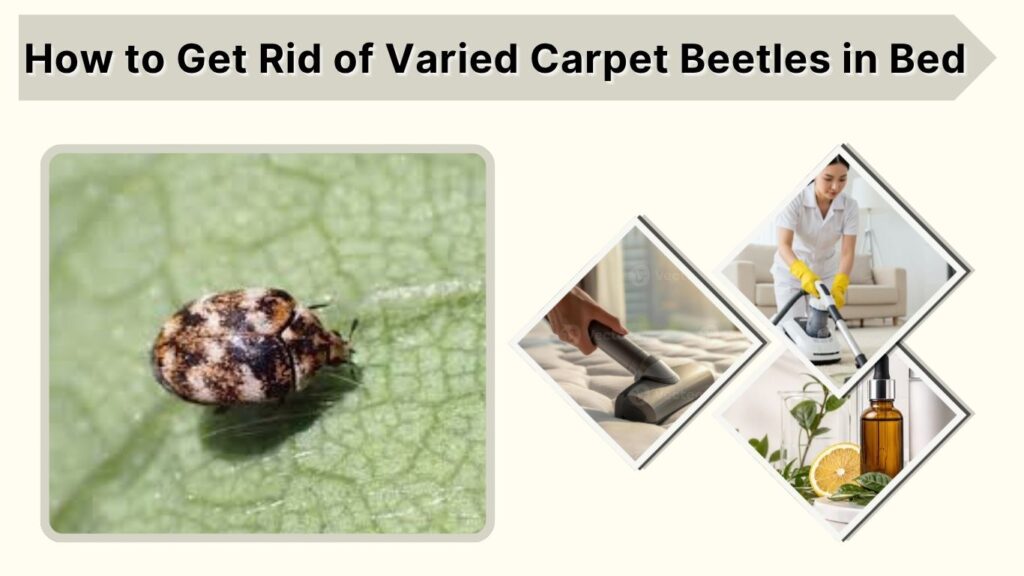
Successful control requires removing larvae, shed hairs, and the food source supporting the infestation. Treating only the adult beetles will not solve the underlying problem.
1. Strip and Clean the Bed
Remove sheets, blankets, pillowcases, mattress covers, and washable soft furnishings. Wash and dry them using the hottest settings permitted by their care labels.
Dry-clean wool, silk, fur, and other delicate materials when normal washing is unsuitable. Never apply pesticides directly to clothing or bedding unless the product label specifically allows that use.
2. Vacuum Thoroughly
Vacuum the entire mattress surface, paying particular attention to seams, tufts, piping, buttons, and the underside. Also vacuum:
- Bed-frame joints
- Headboards
- Baseboards
- Carpet edges
- Beneath the bed
- Closets and drawers
- Upholstered furniture
- Heating and air-return vents
Empty the vacuum outdoors immediately or seal and discard its contents.
3. Inspect Natural-Fiber Items
Check wool blankets, feather pillows, rugs, felt decorations, stored clothing, stuffed animals, and upholstered furniture. Look for larvae, hairy skins, irregular holes, thinning fabric, and accumulations of lint-like debris.
4. Find Hidden Food Sources
Inspect for pet hair, dead insects, bird nests, rodent nests, forgotten pet food, and lint in inaccessible spaces. Carpet beetles may continue appearing until these materials are removed.
5. Store Vulnerable Materials Securely
After cleaning, place woolens, feathers, furs, silk, and similar items in sealed containers or garment bags. Insect-resistant storage prevents adult beetles from laying eggs on susceptible materials.
6. Consider Professional Control
Contact a pest-control professional when larvae continue appearing after repeated cleaning, the source is hidden inside walls or air ducts, or valuable textiles are being damaged. Confirm the insect’s identity before beginning chemical treatment.
FAQs
Can varied carpet beetles live inside a mattress?
They may hide around mattress seams or beneath the bed, but they do not feed on ordinary synthetic mattress foam. They are more likely to remain where feather filling, wool padding, hair, lint, dead insects, or another suitable food source is present.
Why did I find only one carpet beetle on my bed?
A single adult may have flown indoors and landed on the bedding accidentally. Finding one beetle does not automatically prove an infestation. Inspect nearby fabrics, windowsills, closets, and carpet edges for larvae or shed skins before deciding treatment is necessary.
Do carpet beetles crawl on people while they sleep?
A wandering larva may accidentally crawl across bedding or clothing, but carpet beetles do not seek people as hosts. They are attracted to suitable food materials rather than body heat, carbon dioxide, or blood.
Does a carpet beetle rash look like bed bug bites?
Both may produce itchy red bumps, making skin symptoms alone unreliable. Carpet beetle irritation comes from contact with larval hairs, while bed bugs pierce the skin and feed on blood. Inspect the room for physical insect evidence before identifying the cause.
Should I throw away my mattress?
Usually not. Vacuuming the mattress, laundering bedding, removing nearby food sources, and treating infested natural-fiber items are generally more appropriate. Replacement may be considered only when a heavily infested mattress contains inaccessible wool, feathers, or other animal-based filling.