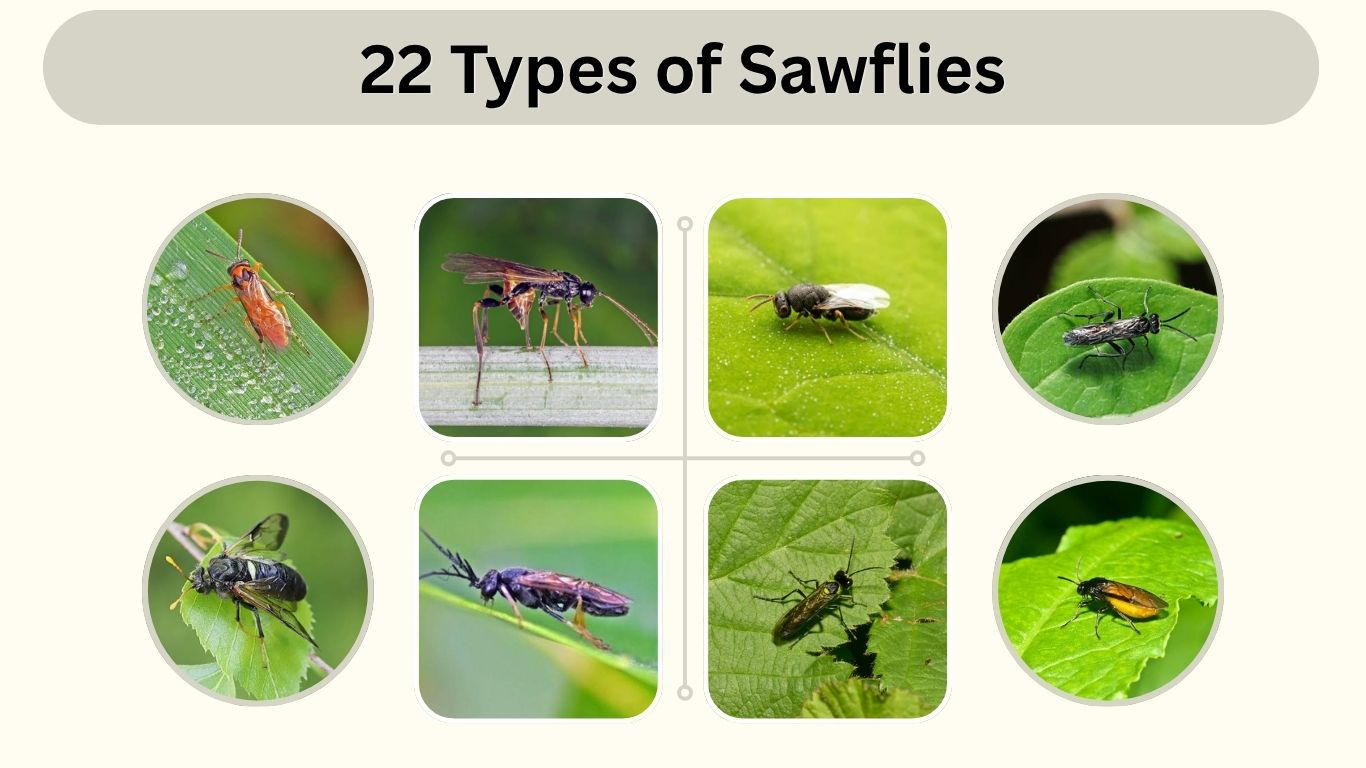
Sawflies are fascinating insects that resemble wasps, while their larvae often look like caterpillars. Found in forests, gardens, and agricultural landscapes, different types of sawflies feed on pine needles, leaves, fruits, and ornamental plants. Some species cause significant plant damage, while others have little impact. This guide explores 22 types of sawflies, highlighting their identification features, habitats, feeding behaviors, and life cycles to help you recognize these unique insects.
1. European Pine Sawfly (Neodiprion sertifer)
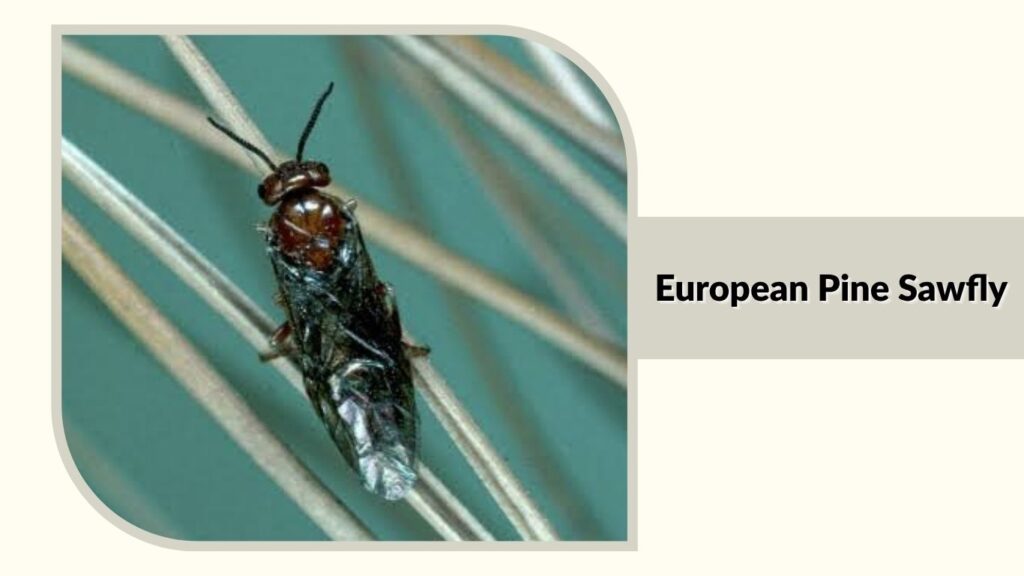
The European Pine Sawfly (Neodiprion sertifer) is a common pine-feeding insect belonging to the family Diprionidae. Originally native to Europe, this species has spread to North America, where it frequently affects ornamental pines, forests, and Christmas tree plantations. Its caterpillar-like larvae feed in groups, causing noticeable needle loss and weakening the appearance of infested trees.
Identification
- Scientific Name: Neodiprion sertifer
- Family: Diprionidae
- Adult Size: Approximately 10–12 mm long.
- Larval Size: Around 18–25 mm when fully grown.
- Body Color: Grayish-green larvae with light and dark longitudinal stripes.
- Head: Shiny black with dark-colored legs.
- Adult Appearance: Females are reddish-brown, while males are mostly black with feathery antennae.
- Distinctive Features: Caterpillar-like larvae gather in colonies and raise their heads when disturbed.
Habitat and Distribution
European Pine Sawflies inhabit coniferous forests, pine plantations, nurseries, and landscaped gardens. They commonly attack Scots pine, red pine, mugo pine, and jack pine. Their populations are established across parts of Europe and North America, particularly where suitable host trees are abundant.
Feeding Habits and Behavior
The larvae primarily consume older pine needles, often feeding together in large groups. Young larvae scrape needle surfaces, while mature larvae consume entire needles. Heavy infestations can leave branches partially defoliated, although healthy trees usually survive. When threatened, the larvae simultaneously raise their heads as a defensive response.
Life Cycle and Reproduction
European Pine Sawflies produce one generation annually. Females lay eggs inside pine needles during autumn, where they remain throughout winter. Larvae emerge in spring and feed for several weeks before forming cocoons in protected locations. Adults emerge in late summer or autumn, completing the annual reproductive cycle.
2. Redheaded Pine Sawfly (Neodiprion lecontei)
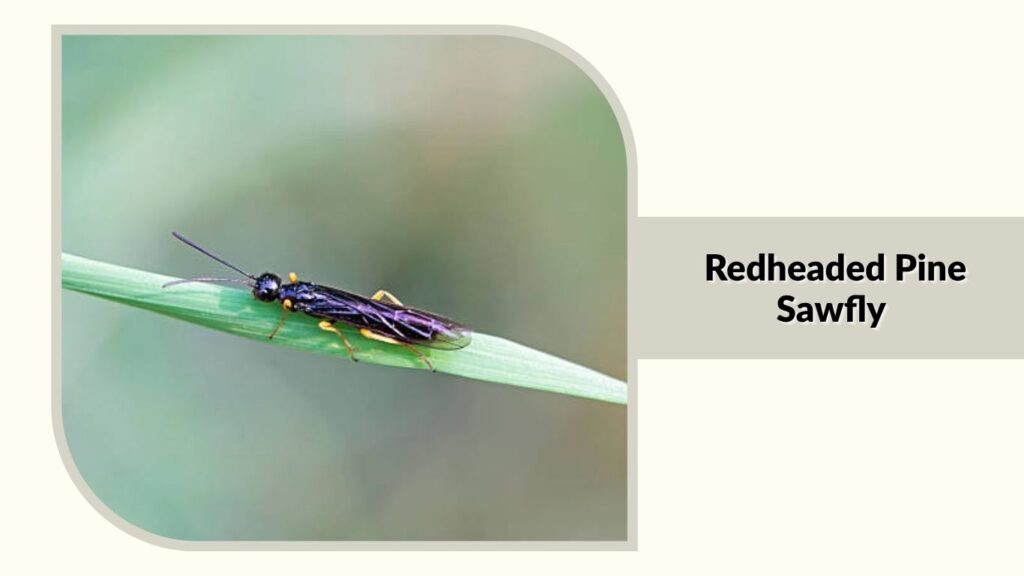
The Redheaded Pine Sawfly (Neodiprion lecontei) is a destructive pine-feeding insect belonging to the family Diprionidae. Native to North America, this species is widely distributed throughout the eastern United States and southeastern Canada. Its larvae are recognizable by their reddish heads and spotted bodies. Heavy infestations can cause significant needle loss, particularly on young or stressed pine trees.
Identification
- Scientific Name: Neodiprion lecontei
- Family: Diprionidae
- Adult Size: Approximately 5–10 mm long.
- Larval Size: Around 20–30 mm when fully grown.
- Body Color: Yellowish-white or pale green with rows of black spots.
- Head: Distinctive reddish-orange or reddish-brown.
- Adult Appearance: Mostly black, with females having pale markings underneath their abdomens.
- Distinctive Features: Six irregular rows of black spots and a reddish head distinguish mature larvae.
Habitat and Distribution
Redheaded Pine Sawflies inhabit pine forests, plantations, nurseries, and landscaped properties throughout eastern North America. They commonly feed on red pine, jack pine, loblolly pine, shortleaf pine, and pitch pine. Young pine trees growing in dry, wet, or otherwise stressful conditions are particularly vulnerable to infestations.
Feeding Habits and Behavior
The larvae feed together in colonies, consuming both older and newly developed pine needles. Young larvae initially scrape needle surfaces, while mature larvae eat entire needles. Large colonies may completely defoliate small trees, potentially causing reduced growth, branch damage, or tree death during severe infestations.
Life Cycle and Reproduction
Females deposit eggs inside small slits cut along pine needles. After hatching, larvae feed for several weeks before dropping to the ground and forming protective cocoons. Depending on regional temperatures, this species may complete one to several generations annually, with colder regions generally supporting fewer generations.
3. White Pine Sawfly (Neodiprion pinetum)
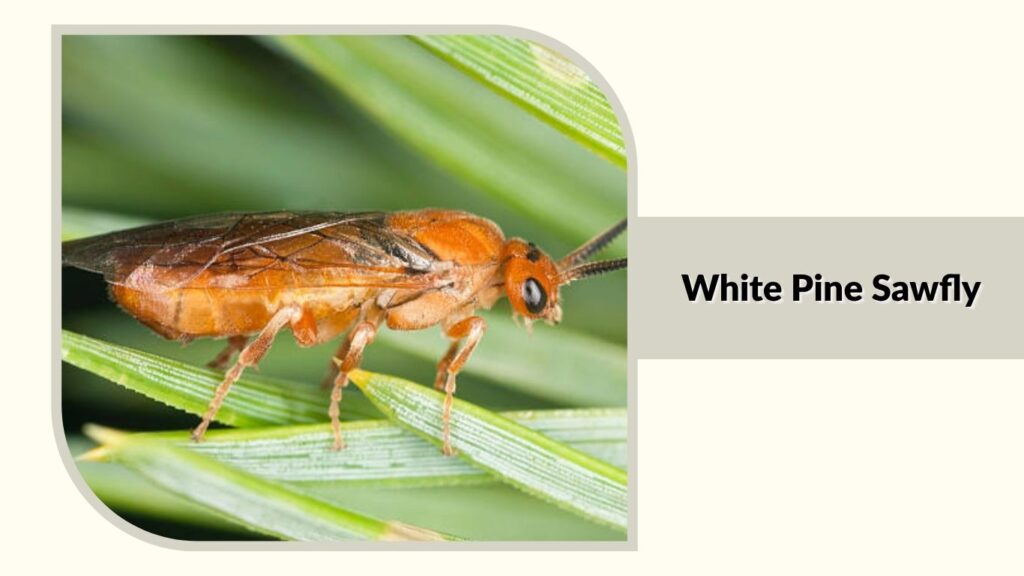
The White Pine Sawfly (Neodiprion pinetum) is a native North American insect commonly associated with eastern white pine trees. This species belongs to the family Diprionidae and is particularly noticeable during its larval stage. Its pale-colored larvae feed in groups, sometimes causing extensive needle damage. Although moderate infestations usually produce temporary defoliation, repeated heavy feeding can weaken ornamental and forest pine trees.
Identification
- Scientific Name: Neodiprion pinetum
- Family: Diprionidae
- Larval Size: Approximately 25 mm when fully grown.
- Body Color: Pale yellow, cream, or whitish.
- Head: Shiny black and rounded.
- Body Markings: Four longitudinal rows of black spots.
- Adult Appearance: Small, broad-bodied, wasp-like insects with transparent wings.
- Distinctive Features: Pale larvae with black heads, four rows of spots, and a dark spot near the rear end.
Habitat and Distribution
White Pine Sawflies inhabit coniferous forests, pine plantations, residential landscapes, and nurseries across eastern North America. Eastern white pine is their preferred host, although they occasionally feed on red pine, pitch pine, shortleaf pine, and mugo pine. Trees growing in open landscapes may develop easily visible larval colonies.
Feeding Habits and Behavior
The larvae consume pine needles while feeding together in colonies. Newly hatched larvae scrape the softer outer needle tissues, leaving partially damaged needles that eventually dry out. Older larvae consume entire needles. Heavy populations can produce extensive defoliation, reducing a tree’s ability to photosynthesize and maintain healthy growth.
Life Cycle and Reproduction
Adult females insert eggs into small cuts along pine needles using their saw-like egg-laying organs. After hatching, larvae feed through the warmer months before developing into cocoons. The insect usually overwinters as a prepupa inside its cocoon. Depending on climate, one to several generations may occur annually.
4. Introduced Pine Sawfly (Diprion similis)
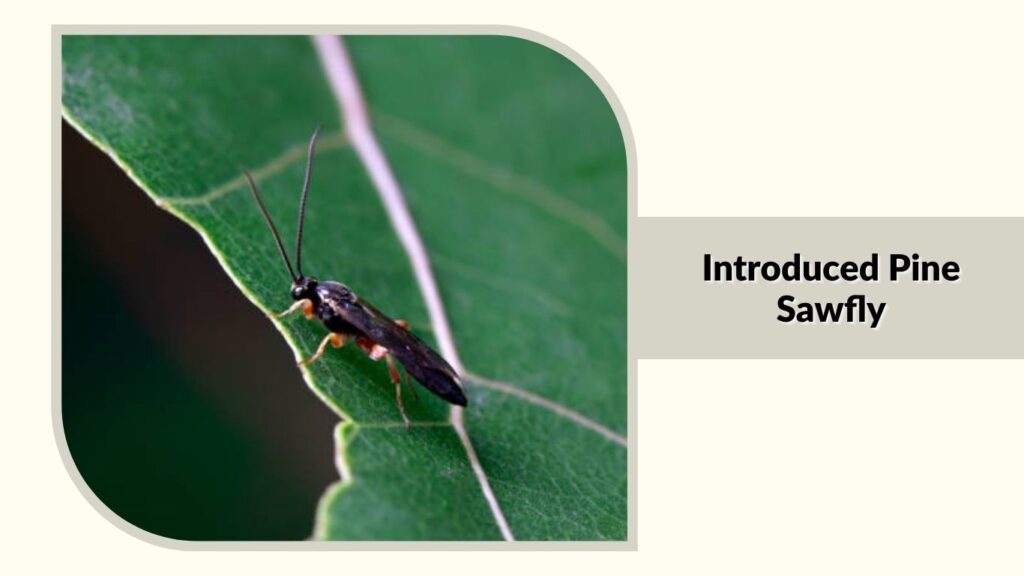
The Introduced Pine Sawfly (Diprion similis) is a pine-feeding insect originally native to Europe and Asia. It was accidentally introduced into North America, where it became established in several regions. This species primarily attacks eastern white pine but can also feed on other pine varieties. Its distinctive larvae have mottled bodies with dark stripes, making them recognizable among other pine sawflies.
Identification
- Scientific Name: Diprion similis
- Family: Diprionidae
- Adult Size: Approximately 7–11 mm long.
- Larval Size: Around 18–28 mm when fully grown.
- Body Color: Yellowish, whitish, and dark brown to black.
- Head: Shiny black.
- Adult Appearance: Females have yellow-and-black markings, while males are darker with feathery antennae.
- Distinctive Features: Two dark dorsal stripes and mottled sides covered with yellowish-white spots.
Habitat and Distribution
Introduced Pine Sawflies inhabit pine forests, ornamental landscapes, nurseries, and Christmas tree plantations. They are widespread across eastern North America, with additional populations in western regions. Eastern white pine is their preferred host, although they also attack Scots pine, red pine, jack pine, and mugo pine.
Feeding Habits and Behavior
Young larvae feed together on pine needles, initially consuming their outer tissues. As they mature, they disperse and often feed individually. Severe infestations may strip needles from large portions of a tree, particularly the upper crown. Repeated damage can weaken trees and reduce their growth.
Life Cycle and Reproduction
Females lay eggs inside slits cut along pine needles. The larvae hatch, feed, and eventually spin protective cocoons on branches, bark, or nearby ground surfaces. The species commonly produces two generations annually in northern regions, with additional generations possible in warmer climates. Late-season larvae overwinter inside their cocoons.
5. Blackheaded Pine Sawfly (Neodiprion excitans)
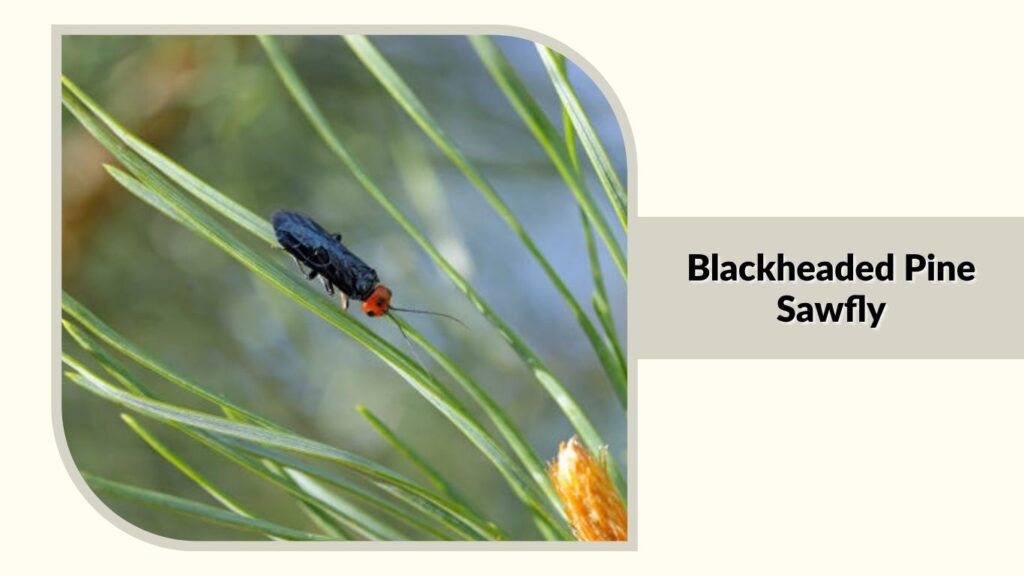
The Blackheaded Pine Sawfly (Neodiprion excitans) is a native North American species belonging to the family Diprionidae. It primarily attacks pine trees throughout the southeastern United States, particularly in warm climates where multiple generations can develop annually. Its larvae are recognizable by their glossy black heads and olive-green bodies. Heavy infestations can cause considerable defoliation, especially in pine plantations and young forests.
Identification
- Scientific Name: Neodiprion excitans
- Family: Diprionidae
- Larval Size: Approximately 20–25 mm when mature.
- Body Color: Olive-green with dark longitudinal markings.
- Head: Glossy black and rounded.
- Body Markings: Two black stripes, rows of black spots, and prominent spots near the rear.
- Adult Appearance: Small, wasp-like insects with transparent wings and distinctive antennae.
- Distinctive Features: Shiny black head combined with dark body stripes and lateral spots.
Habitat and Distribution
Blackheaded Pine Sawflies inhabit pine forests, commercial plantations, and landscaped areas throughout the southeastern United States. They commonly feed on loblolly pine, longleaf pine, shortleaf pine, and slash pine. Their populations are especially associated with regions where suitable pine hosts remain available throughout the growing season.
Feeding Habits and Behavior
The larvae feed on pine needles, frequently forming colonies along branches. Young larvae consume softer needle surfaces, while older larvae may remove entire needles. During severe infestations, large colonies can strip considerable foliage from young trees, affecting photosynthesis and growth. Repeated defoliation may increase susceptibility to environmental stress.
Life Cycle and Reproduction
Females deposit eggs within pine needles using their saw-like ovipositors. Newly hatched larvae develop through several feeding stages before forming protective cocoons in sheltered locations. In warm southern climates, this species may complete four or five generations annually, allowing populations to increase rapidly under favorable conditions.
6. Common Pine Sawfly (Diprion pini)
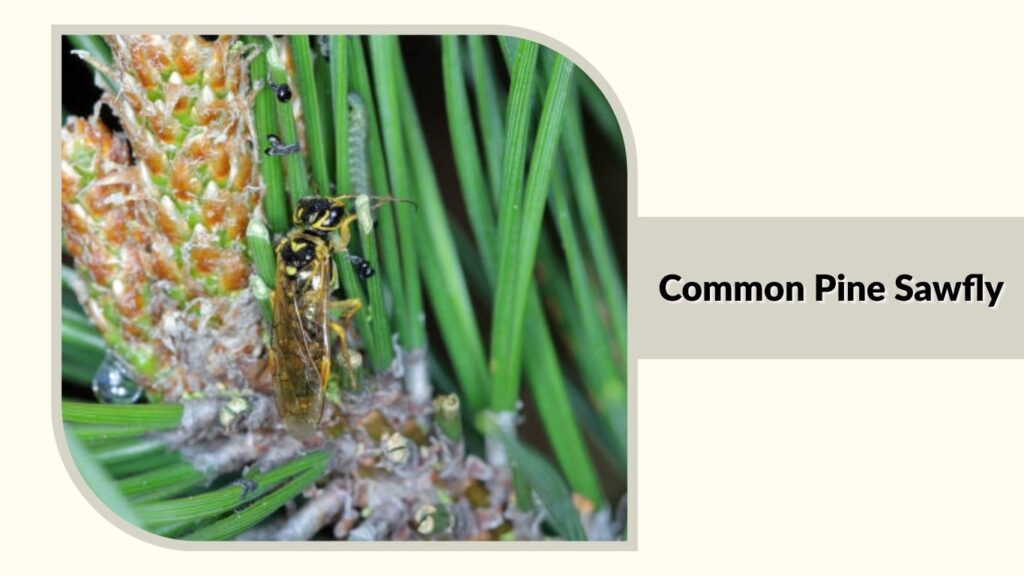
The Common Pine Sawfly (Diprion pini) is a widespread European insect belonging to the family Diprionidae. It primarily feeds on Scots pine but may also attack other pine species. Its caterpillar-like larvae gather in colonies and consume large quantities of needles, sometimes causing extensive forest defoliation. The species is considered an important pine pest in several European regions where commercial forestry is widespread.
Identification
- Scientific Name: Diprion pini
- Family: Diprionidae
- Adult Size: Approximately 7–10 mm long.
- Larval Size: Up to 25 mm when fully grown.
- Body Color: Pale yellow-green with dark markings.
- Head: Brown or reddish-brown.
- Adult Appearance: Females are yellowish with dark markings, while males are darker with comb-like antennae.
- Distinctive Features: Greenish larvae with brown heads, dark spots, and a tendency to feed in large groups.
Habitat and Distribution
Common Pine Sawflies inhabit coniferous forests, pine plantations, woodland edges, and ornamental landscapes throughout Europe and parts of Asia. Scots pine is their principal host, although they occasionally attack other pine varieties. Populations may become especially abundant in extensive pine forests where food resources are plentiful.
Feeding Habits and Behavior
Larvae feed together in colonies, consuming pine needles and occasionally damaging tender shoots. Young larvae initially remove softer needle tissues, while older individuals consume entire needles. When disturbed, colonies may raise their bodies simultaneously as a defensive response. Heavy infestations can weaken trees and reduce forest productivity.
Life Cycle and Reproduction
Females insert eggs into pine needles during spring or summer. After hatching, larvae feed for several weeks before spinning cocoons on vegetation or in sheltered ground locations. One or two generations commonly develop annually, depending on climate. Some individuals remain dormant inside cocoons for extended periods before emerging as adults.
7. Jack Pine Sawfly (Neodiprion pratti banksianae)
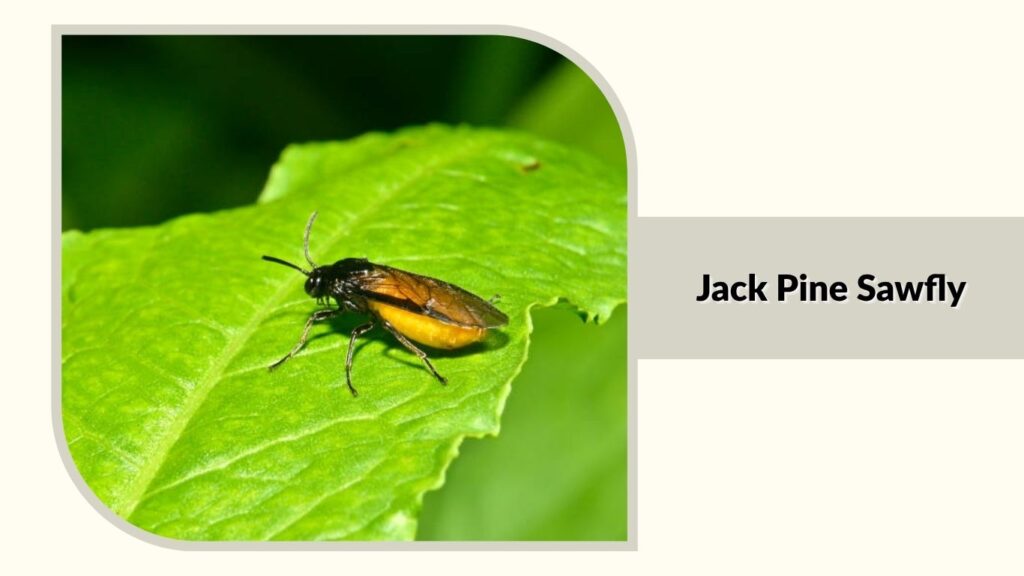
The Jack Pine Sawfly (Neodiprion pratti banksianae) is a pine-feeding insect belonging to the family Diprionidae. Native to North America, this subspecies primarily affects jack pine and other hard pine species. Its caterpillar-like larvae feed on pine needles, sometimes causing extensive defoliation. Large populations can weaken young trees and reduce forest productivity when infestations continue over multiple seasons.
Identification
- Scientific Name: Neodiprion pratti banksianae
- Family: Diprionidae
- Larval Size: Approximately 15–25 mm when mature.
- Body Color: Yellowish with variable dark markings.
- Head: Rounded and distinctly colored from the body.
- Body Markings: Usually two dorsal stripes with additional lateral markings.
- Adult Appearance: Small, wasp-like insects with transparent wings and prominent antennae.
- Distinctive Features: Caterpillar-like larvae feeding in colonies on pine needles.
Habitat and Distribution
Jack Pine Sawflies inhabit coniferous forests, pine plantations, and woodland environments throughout parts of the northern United States and Canada. They are particularly associated with jack pine forests around the Great Lakes. Their populations thrive where suitable pine hosts are abundant, especially in areas containing young and mature pine stands.
Feeding Habits and Behavior
The larvae primarily consume pine needles, frequently feeding together in colonies. Young larvae scrape needle surfaces, while older larvae consume larger portions or entire needles. Heavy infestations may leave branches sparsely covered, reducing photosynthesis and slowing tree growth. Repeated defoliation can increase vulnerability to environmental stress.
Life Cycle and Reproduction
Adult females deposit eggs into small slits along pine needles. After hatching, larvae develop through several feeding stages before forming protective cocoons. Development typically follows a seasonal cycle, with eggs overwintering and larvae becoming active during the growing season. Adults eventually emerge to reproduce and begin another generation.
8. Larch Sawfly (Pristiphora erichsonii)
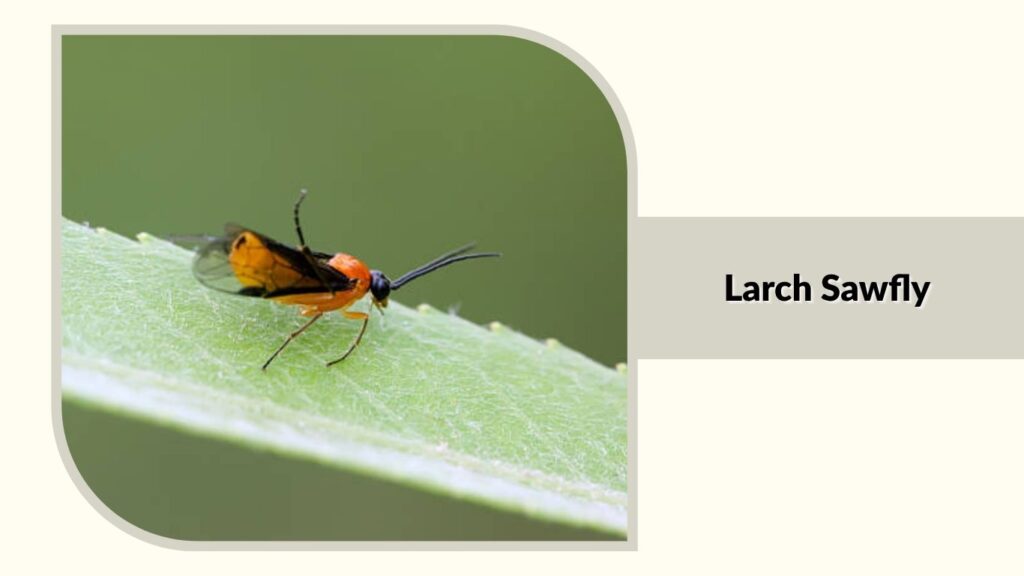
The Larch Sawfly (Pristiphora erichsonii) is a common insect pest that feeds on larch and tamarack trees. Belonging to the family Tenthredinidae, this species occurs across Europe, Asia, and North America. Its larvae consume soft larch needles, sometimes causing widespread defoliation. Heavy infestations can weaken trees, reduce growth, and affect forest productivity, particularly when repeated over several years.
Identification
- Scientific Name: Pristiphora erichsonii
- Family: Tenthredinidae
- Adult Size: Approximately 8 mm long.
- Larval Size: Around 16–18 mm when fully grown.
- Body Color: Grayish-green with a pale underside.
- Head: Shiny black and rounded.
- Adult Appearance: Mostly black with a broad orange band around the abdomen.
- Distinctive Features: Larvae curl their bodies upward into a J-shaped position when disturbed.
Habitat and Distribution
Larch Sawflies inhabit coniferous forests, woodland plantations, and landscaped areas containing larch trees. They commonly attack eastern larch, western larch, and tamarack. The species occurs across temperate and northern forest regions, particularly in areas where larch trees dominate the landscape.
Feeding Habits and Behavior
Larvae feed together on clusters of larch needles, removing foliage from older branches. Young larvae consume tender needle tissues, while mature larvae eat larger portions. Heavy feeding can leave trees with thin, sparse crowns. Although healthy trees often recover, repeated infestations can reduce growth and increase susceptibility to environmental stress.
Life Cycle and Reproduction
Adult females emerge during spring or summer and deposit eggs inside developing larch shoots. Egg-laying injuries may cause young shoots to curl. Larvae hatch and feed for several weeks before dropping to the ground and forming cocoons. They overwinter as prepupae in the soil. The species generally completes one generation annually, although some individuals remain dormant for additional years.
9. Hemlock Sawfly (Neodiprion tsugae)
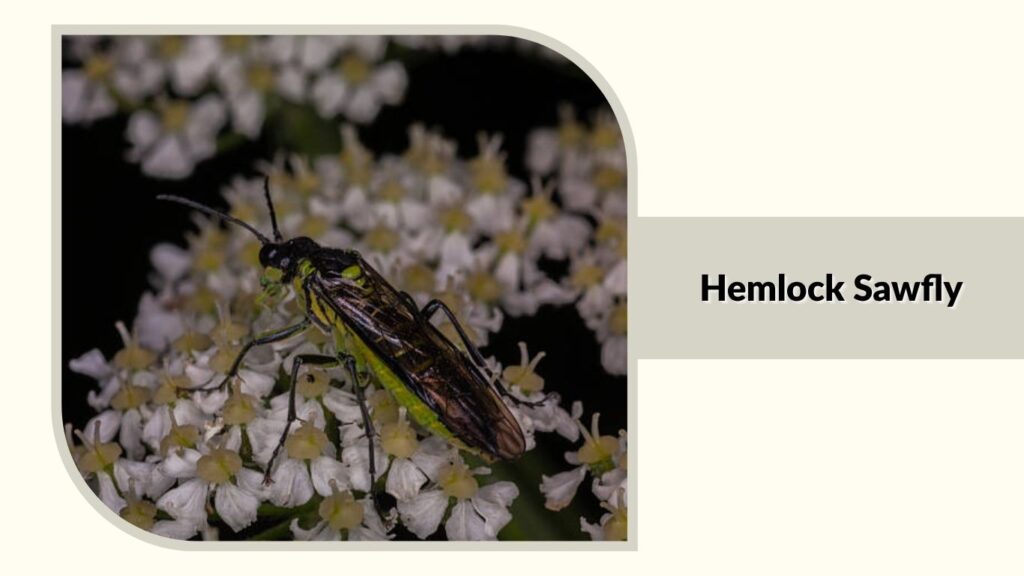
The Hemlock Sawfly (Neodiprion tsugae) is a native North American insect belonging to the family Diprionidae. This species primarily attacks western hemlock and mountain hemlock trees in the Pacific Northwest. Its caterpillar-like larvae feed on needles, sometimes causing substantial defoliation during population outbreaks. Severe infestations can weaken trees, particularly when combined with damage from other forest insects.
Identification
- Scientific Name: Neodiprion tsugae
- Family: Diprionidae
- Adult Size: Approximately 5–8 mm long.
- Larval Size: Around 15–20 mm when fully grown.
- Body Color: Green to yellowish-green.
- Head: Shiny black throughout larval development.
- Body Markings: Longitudinal stripes in various shades of gray, green, and yellow.
- Adult Appearance: Yellowish-brown females and darker males with feathery antennae.
- Distinctive Features: Eight pairs of abdominal prolegs and colony-feeding behavior.
Habitat and Distribution
Hemlock Sawflies inhabit moist coniferous forests throughout the Pacific Northwest, including Oregon, Washington, British Columbia, and southeastern Alaska. They primarily feed on western hemlock, although mountain hemlock also serves as a host. Populations are especially common in coastal forests where cool, humid conditions support abundant hemlock growth.
Feeding Habits and Behavior
Young larvae feed together on older hemlock needles, gradually consuming foliage from branches. As they mature, individuals may spread throughout the tree crown and feed separately. Severe infestations can produce thin, grayish-looking foliage. Repeated defoliation may reduce tree growth and increase susceptibility to environmental stress.
Life Cycle and Reproduction
Females lay eggs inside current-year hemlock needles during autumn. The eggs overwinter before hatching in late spring or early summer. Larvae feed for several weeks before forming protective cocoons on vegetation or in sheltered locations. Adults generally emerge between August and October, completing one generation annually.
10. Elm Sawfly (Cimbex americana)
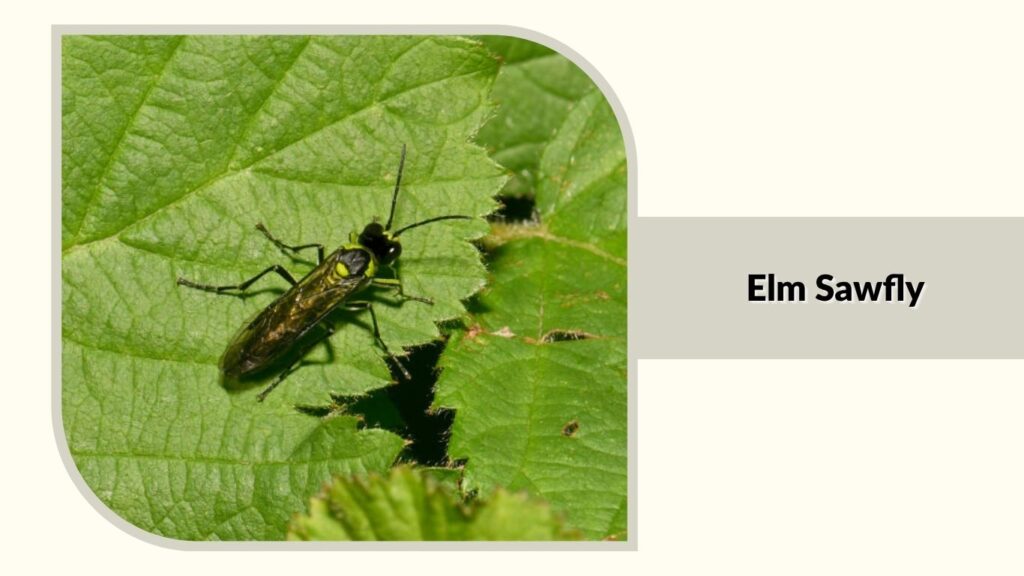
The Elm Sawfly (Cimbex americana) is one of the largest sawfly species found in North America. Belonging to the family Cimbicidae, this insect is recognizable by its large, wasp-like adult body and thick, caterpillar-like larvae. It primarily feeds on elm and willow trees but occasionally attacks other hardwood species. Although infestations are usually localized, large larval populations can cause noticeable leaf loss.
Identification
- Scientific Name: Cimbex americana
- Family: Cimbicidae
- Adult Size: Approximately 20–25 mm long.
- Larval Size: Around 40–50 mm when fully grown.
- Body Color: Pale green, yellowish-green, or whitish.
- Head: Rounded and relatively small.
- Body Markings: Dark longitudinal dorsal stripe and visible side spiracles.
- Adult Appearance: Large, robust, wasp-like insects with smoky wings.
- Distinctive Features: Large larvae that curl into a circular or S-shaped position when disturbed.
Habitat and Distribution
Elm Sawflies inhabit deciduous forests, woodland edges, parks, and residential landscapes across North America. Their preferred host plants include elm and willow, although they may occasionally feed on maple, birch, cottonwood, and poplar. They are commonly encountered in areas with mature deciduous trees.
Feeding Habits and Behavior
The larvae consume broadleaf foliage, chewing along leaf margins and gradually removing substantial portions. Unlike some smaller sawflies, mature larvae are frequently observed feeding individually. During heavy infestations, affected branches may lose much of their foliage. However, serious outbreaks are relatively uncommon, and healthy trees generally tolerate occasional feeding.
Life Cycle and Reproduction
Adult Elm Sawflies emerge during spring and summer. Females deposit eggs into host leaves, where developing larvae begin feeding after hatching. Larvae grow throughout summer before descending to the ground and forming protective cocoons. They generally overwinter in their cocoons, with adults emerging during the following growing season.
11. Dogwood Sawfly (Macremphytus tarsatus)
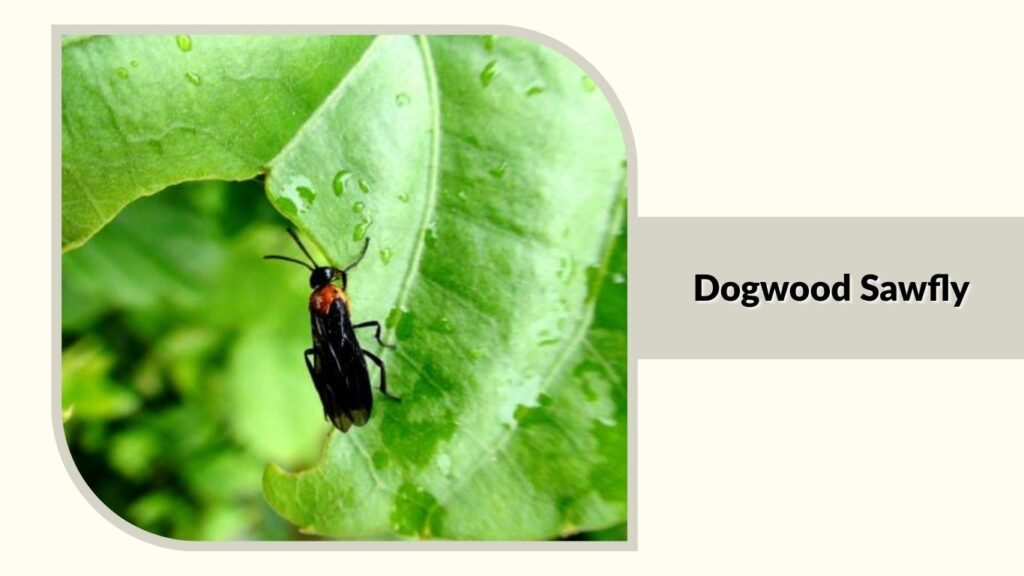
The Dogwood Sawfly (Macremphytus tarsatus) is a leaf-feeding insect belonging to the family Tenthredinidae. Native to North America, this species commonly attacks ornamental and wild dogwood shrubs. Its larvae are particularly distinctive because their appearance changes dramatically during development. Younger larvae develop a white, powdery covering, while mature larvae display yellowish bodies with black markings. Heavy infestations can cause extensive leaf damage.
Identification
- Scientific Name: Macremphytus tarsatus
- Family: Tenthredinidae
- Larval Size: Approximately 25 mm when mature.
- Body Color: Yellowish-green with dark markings.
- Head: Shiny black in mature larvae.
- Body Markings: Black rectangular spots along the body.
- Adult Appearance: Slender, shiny black insects resembling small wasps.
- Distinctive Features: White, waxy coating during intermediate larval stages.
- Host Plants: Gray dogwood, red-osier dogwood, and other dogwood species.
Habitat and Distribution
Dogwood Sawflies inhabit woodland edges, gardens, parks, and landscaped properties throughout eastern North America. They are commonly associated with gray dogwood and red-osier dogwood shrubs. The insects prefer environments containing abundant host foliage, particularly in areas where ornamental dogwoods are planted.
Feeding Habits and Behavior
Young larvae gather in groups and skeletonize dogwood leaves by consuming the soft tissues between veins. As they mature, they become more aggressive feeders, sometimes leaving only the central leaf vein intact. Large colonies can defoliate entire branches. Despite their caterpillar-like appearance, these larvae are not moth or butterfly caterpillars.
Life Cycle and Reproduction
Adult females emerge from late spring through midsummer and deposit eggs on dogwood leaves. Newly hatched larvae feed throughout summer, passing through several developmental stages. Mature larvae eventually leave their host plants and burrow into decaying wood, where they create overwintering chambers. Pupation occurs the following spring, and one generation typically develops annually.
12. Dusky Birch Sawfly (Croesus latitarsus)
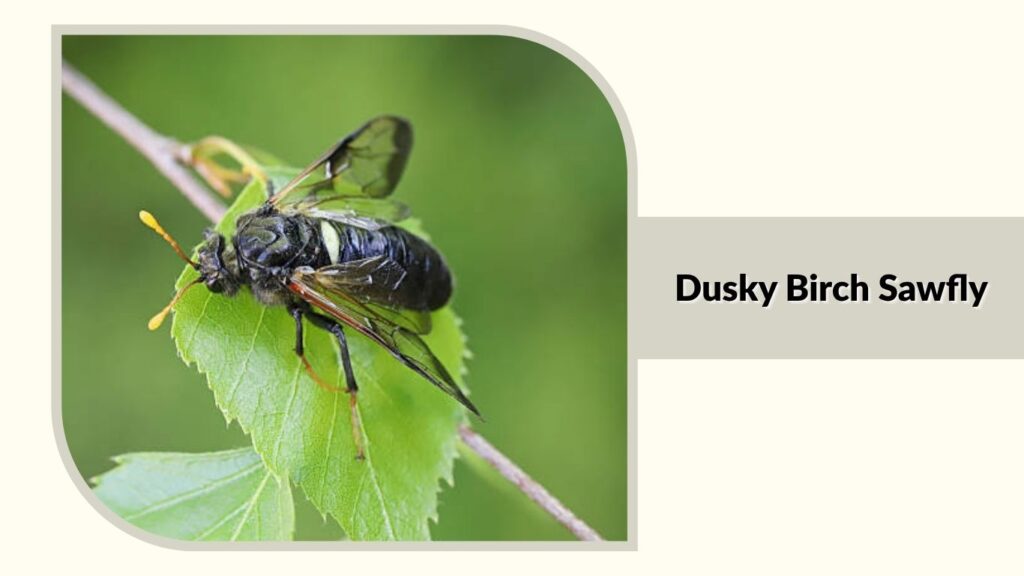
The Dusky Birch Sawfly (Croesus latitarsus) is a leaf-feeding insect belonging to the family Tenthredinidae. Native to North America, this species primarily attacks birch trees in forests, gardens, and landscaped areas. Its caterpillar-like larvae feed in groups and can remove substantial portions of foliage. Although healthy trees generally tolerate occasional defoliation, repeated heavy infestations may reduce growth and weaken affected birches.
Identification
- Scientific Name: Croesus latitarsus
- Family: Tenthredinidae
- Larval Size: Approximately 20–25 mm when fully grown.
- Body Color: Yellowish-green with distinctive black markings.
- Head: Shiny black and rounded.
- Body Markings: Dark spots arranged along the body.
- Adult Appearance: Small, dark-colored, wasp-like insects with transparent wings.
- Distinctive Features: Larvae often raise their rear bodies into an S-shaped position when disturbed.
Habitat and Distribution
Dusky Birch Sawflies inhabit deciduous forests, woodland edges, parks, and residential landscapes throughout North America. They primarily attack paper birch, gray birch, river birch, yellow birch, and other birch species. Trees growing in open, sunny locations may develop noticeable larval colonies during the warmer months.
Feeding Habits and Behavior
The larvae feed together along birch leaf margins, gradually consuming the softer tissues. Younger larvae often leave major leaf veins intact, creating a skeletonized appearance. Mature larvae can consume nearly entire leaves. Heavy infestations may cause significant defoliation, particularly on smaller trees.
Life Cycle and Reproduction
Adult females lay eggs in birch foliage during spring. Newly hatched larvae feed for several weeks before dropping to the soil and forming protective cocoons. The insects overwinter as prepupae underground. Depending on regional conditions, one or two generations may develop annually, with larvae appearing from late spring through early autumn.
13. European Apple Sawfly (Hoplocampa testudinea)
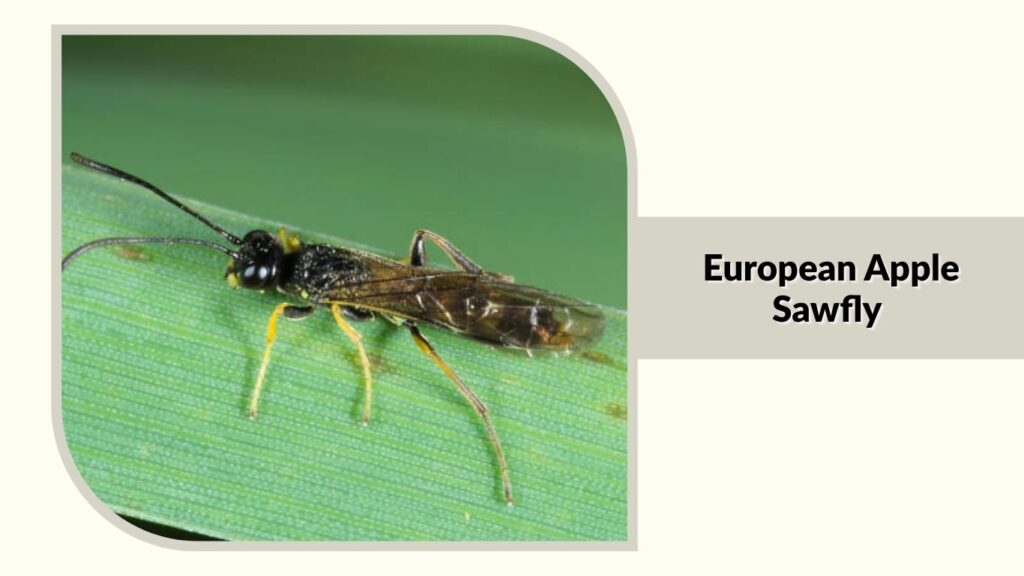
The European Apple Sawfly (Hoplocampa testudinea) is a fruit-feeding insect belonging to the family Tenthredinidae. Originally native to Europe, this species has become established in several apple-growing regions of North America. Unlike many sawflies that feed on leaves, its larvae develop inside young apples. Infestations can cause distinctive fruit scars, premature fruit drop, and reduced harvest quality.
Identification
- Scientific Name: Hoplocampa testudinea
- Family: Tenthredinidae
- Adult Size: Approximately 6–8 mm long.
- Larval Size: Around 10–12 mm when mature.
- Body Color: Creamy white or pale yellow.
- Head: Dark brown to black in young larvae.
- Adult Appearance: Small, orange-brown insects with transparent wings.
- Distinctive Features: Larvae tunnel inside young apples, leaving winding brown scars and damaged fruit tissues.
- Host Plants: Primarily cultivated apple trees.
Habitat and Distribution
European Apple Sawflies inhabit commercial apple orchards, backyard gardens, and fruit-growing regions throughout Europe and northeastern North America. They are particularly associated with apple trees during spring flowering. Orchards containing susceptible apple varieties may experience recurring infestations when developing larvae successfully complete their life cycles.
Feeding Habits and Behavior
Young larvae tunnel beneath the surface of developing apples, producing narrow, winding scars. As they grow, they may penetrate deeper into the fruit and damage the core. Individual larvae can move between several apples, creating entry holes filled with brown waste material. Severely damaged fruits often fall prematurely.
Life Cycle and Reproduction
Adult sawflies emerge during spring, usually around apple blossom time. Females insert eggs into flower tissues, and newly hatched larvae enter developing fruitlets. After feeding, mature larvae leave damaged apples and burrow into the soil. They overwinter underground in protective cocoons, with one generation occurring annually.
14. Common Rose Sawfly (Endelomyia aethiops)
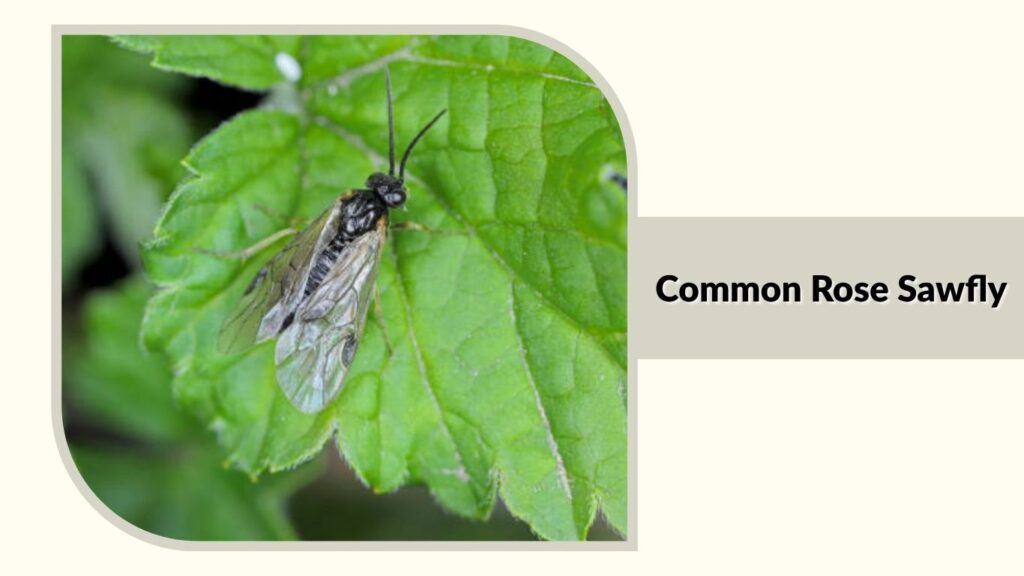
The Common Rose Sawfly (Endelomyia aethiops), also known as the common roseslug, is a leaf-feeding insect belonging to the family Tenthredinidae. Originally native to Europe, this species is now widespread across North America. Its small, slug-like larvae feed on rose leaves, creating transparent patches and skeletonized foliage. Although infestations can damage the appearance of rose bushes, established plants usually recover without serious long-term harm.
Identification
- Scientific Name: Endelomyia aethiops
- Family: Tenthredinidae
- Adult Size: Approximately 8–12 mm long.
- Larval Size: Around 12–15 mm when fully grown.
- Body Color: Translucent yellowish-green.
- Head: Orange-brown or light brown.
- Body Shape: Slender, tapered, and somewhat slug-like.
- Adult Appearance: Small, glossy black insects with two pairs of transparent wings.
- Distinctive Features: Smooth, pale green larvae that create windowpane-like damage on rose leaves.
Habitat and Distribution
Common Rose Sawflies inhabit gardens, parks, ornamental landscapes, and areas containing wild roses. They are widespread throughout Europe and North America. Both cultivated and wild rose species serve as suitable host plants, particularly in environments with abundant spring foliage.
Feeding Habits and Behavior
The larvae consume soft leaf tissues, initially leaving the opposite leaf surface and veins intact. This feeding creates pale, transparent patches that eventually dry and turn brown. Older larvae may chew small holes through leaves. Despite their slug-like appearance, these insects are closely related to wasps rather than true slugs.
Life Cycle and Reproduction
Adults emerge during spring and deposit eggs inside rose leaves. Newly hatched larvae begin feeding in late spring and continue developing for several weeks. Once mature, they drop to the ground and enter the soil, where they remain through winter. This species generally completes one generation annually.
15. Bristly Roseslug Sawfly (Cladius difformis)
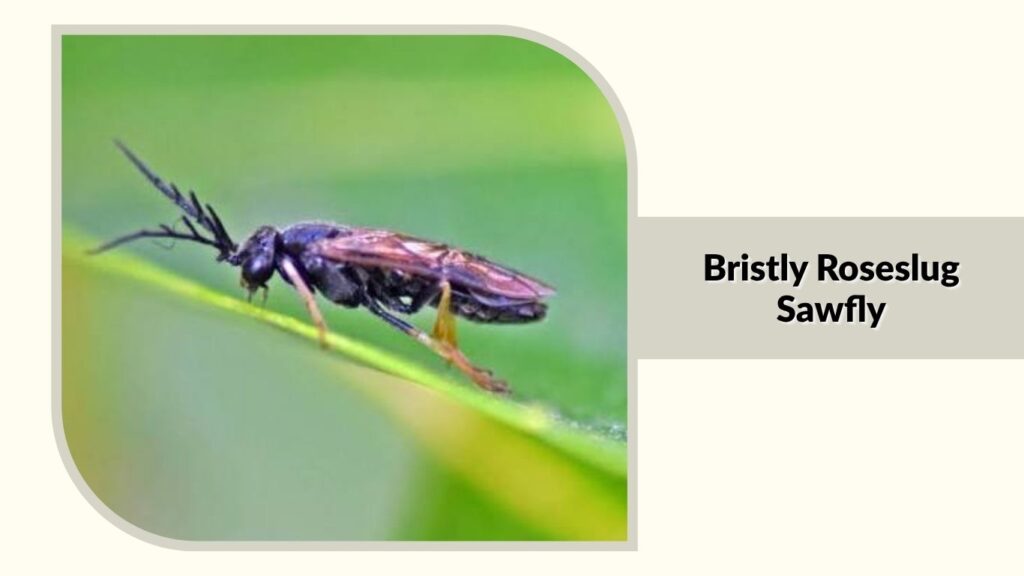
The Bristly Roseslug Sawfly (Cladius difformis) is a common rose-feeding insect belonging to the family Tenthredinidae. Native to Europe, it has spread to North America, where it frequently damages ornamental roses. Its larvae are recognizable by their pale green bodies and tiny bristle-like hairs. Unlike some other rose sawflies, this species can produce multiple generations during the growing season, increasing the potential for repeated foliage damage.
Identification
- Scientific Name: Cladius difformis
- Family: Tenthredinidae
- Adult Size: Approximately 10–13 mm long.
- Larval Size: Around 12–19 mm when mature.
- Body Color: Pale green to yellowish-green.
- Head: Orange or yellowish-orange.
- Body Texture: Covered with tiny, bristle-like hairs.
- Adult Appearance: Stout, black, wasp-like insects with transparent wings.
- Distinctive Features: Slug-like larvae with fine bristles along their backs and sides.
Habitat and Distribution
Bristly Roseslug Sawflies inhabit ornamental gardens, landscaped parks, nurseries, and residential properties throughout Europe and North America. They primarily attack cultivated and wild roses. Their populations are particularly noticeable in warmer regions where environmental conditions support repeated generations throughout the growing season.
Feeding Habits and Behavior
Young larvae feed on the undersides of rose leaves, scraping away soft surface tissues and creating pale, transparent patches. As they mature, they chew larger holes and may leave only major veins intact. Heavy infestations can significantly reduce foliage and affect the ornamental appearance of rose bushes.
Life Cycle and Reproduction
Females insert eggs into rose leaf stalks using their saw-like ovipositors. After hatching, larvae feed for several weeks before forming cocoons in the soil or on plant material. Adults emerge and reproduce repeatedly during warm weather. Several generations may occur annually, and the insects generally overwinter as pupae in the soil.
16. Azalea Sawfly (Euura lipovskyi)
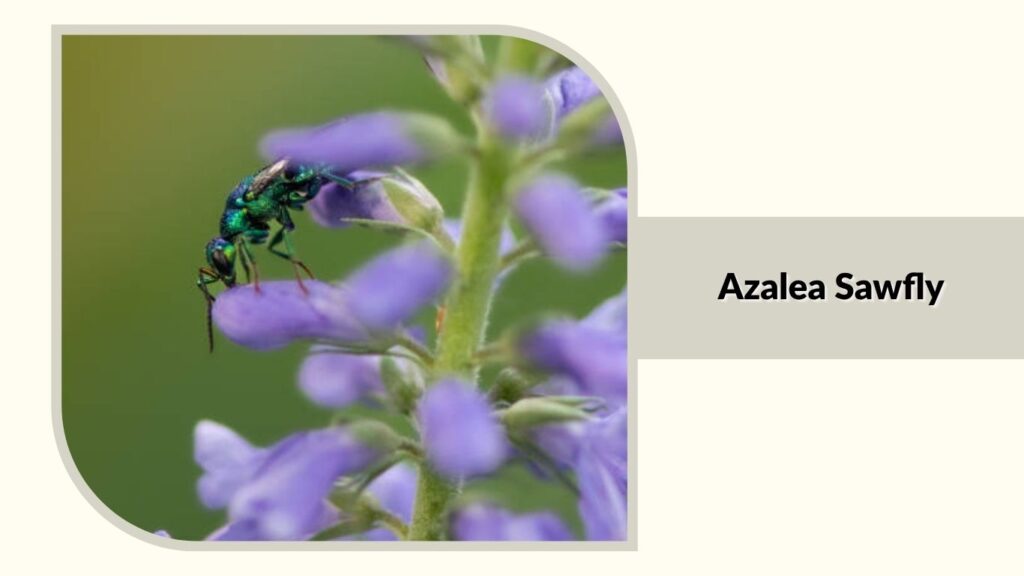
The Azalea Sawfly (Euura lipovskyi), formerly known as Nematus lipovskyi, is a leaf-feeding insect belonging to the family Tenthredinidae. This species primarily attacks deciduous azaleas, sometimes causing extensive foliage damage during spring. Its green, caterpillar-like larvae blend naturally with azalea leaves, making early infestations difficult to detect. Large populations may strip leaves from ornamental shrubs, reducing their appearance and temporarily weakening plant growth.
Identification
- Scientific Name: Euura lipovskyi
- Former Scientific Name: Nematus lipovskyi
- Family: Tenthredinidae
- Larval Size: Approximately 15–20 mm when fully grown.
- Body Color: Light green to yellowish-green.
- Head: Pale green or yellowish.
- Body Shape: Smooth, slender, and caterpillar-like.
- Adult Appearance: Small, delicate, wasp-like insects with transparent wings.
- Distinctive Features: Green larvae that closely resemble azalea foliage and feed along leaf edges.
Habitat and Distribution
Azalea Sawflies inhabit ornamental gardens, residential landscapes, woodland gardens, and nurseries containing deciduous azaleas. This species occurs in eastern North America and has also been reported from the Pacific Northwest. It is particularly associated with gardens containing native azalea species and other suitable deciduous hosts.
Feeding Habits and Behavior
The larvae feed along azalea leaf margins, gradually working inward toward the central veins. Their green coloration provides effective camouflage against foliage. During severe infestations, larvae may consume most of the leaf tissue, leaving only the larger veins. Damage is generally most noticeable during late spring and early summer.
Life Cycle and Reproduction
Adult females emerge during spring and lay eggs on developing azalea foliage. The larvae hatch and begin feeding on tender leaves, growing through several developmental stages. Mature larvae eventually leave their host plants and enter the soil to complete development. The species generally has one generation annually, with its feeding activity concentrated in spring.
17. Columbine Sawfly (Pristiphora rufipes)
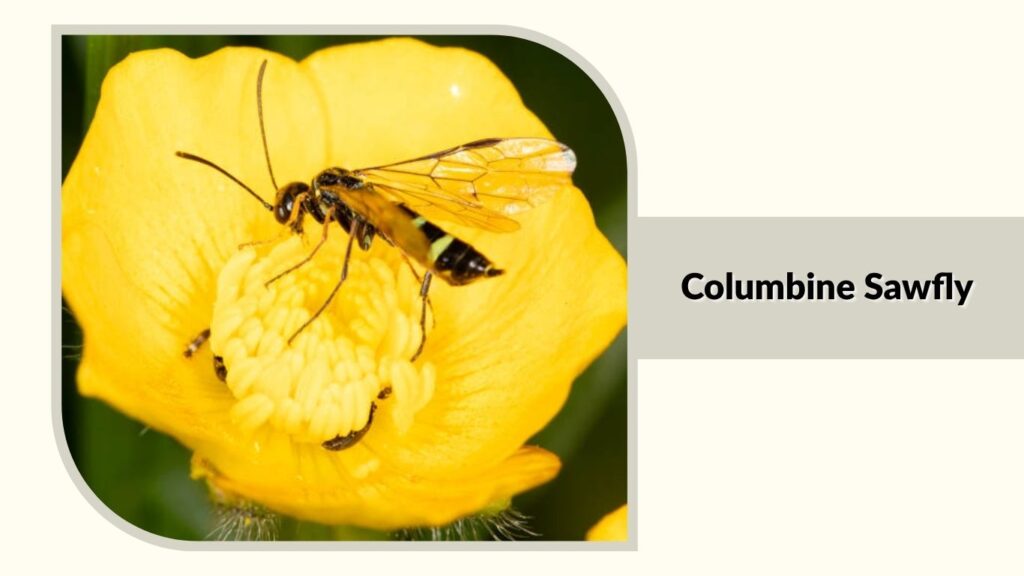
The Columbine Sawfly (Pristiphora rufipes) is a leaf-feeding insect belonging to the family Tenthredinidae. Originally native to Europe, this species has become established in several parts of North America. Its caterpillar-like larvae primarily attack columbine plants, feeding on tender foliage during spring and early summer. Heavy infestations can cause extensive defoliation, although established plants usually recover by producing new leaves.
Identification
- Scientific Name: Pristiphora rufipes
- Family: Tenthredinidae
- Adult Size: Approximately 6–7 mm long.
- Larval Size: Around 12–19 mm when fully grown.
- Body Color: Pale green to yellowish-green.
- Head: Greenish to brownish.
- Adult Appearance: Small, black, wasp-like insects with pale orange legs and transparent wings.
- Distinctive Features: Smooth green larvae without prominent stripes or spots, commonly found feeding along leaf margins.
Habitat and Distribution
Columbine Sawflies inhabit flower gardens, woodland edges, landscaped parks, and natural areas where columbine plants grow. They occur throughout Europe and parts of North America, particularly in temperate regions. Their preferred hosts belong to the genus Aquilegia, including several ornamental and wild columbine species.
Feeding Habits and Behavior
The larvae feed along the edges of columbine leaves, gradually consuming the soft tissues toward the central veins. Their green coloration helps them blend into surrounding foliage, making early infestations difficult to detect. Severe feeding can leave plants almost completely defoliated. However, healthy columbines commonly develop replacement foliage later in the season.
Life Cycle and Reproduction
Adult females emerge during spring and deposit eggs into columbine leaves. The larvae hatch and begin feeding during May and June. After several weeks, mature larvae drop to the ground and enter the soil to form cocoons. They remain underground through winter, with adults emerging the following spring. This species generally produces one generation annually.
18. Hibiscus Sawfly (Atomacera decepta)
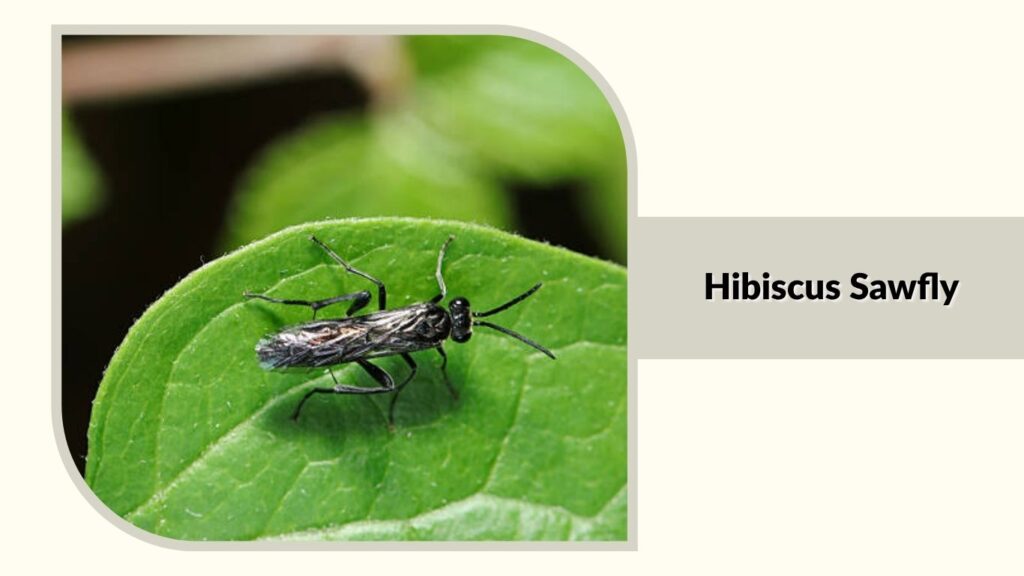
The Hibiscus Sawfly (Atomacera decepta) is a leaf-feeding insect belonging to the family Argidae. Native to North America, this species frequently attacks hardy hibiscus and related ornamental plants. Its small, green larvae consume leaf tissues, creating numerous holes and a skeletonized appearance. Heavy infestations can significantly reduce foliage, particularly during warm months when repeated generations develop.
Identification
- Scientific Name: Atomacera decepta
- Family: Argidae
- Adult Size: Approximately 4–8 mm long.
- Larval Size: Around 13 mm when fully grown.
- Body Color: Pale green to yellowish-green.
- Head: Shiny black in older larvae.
- Body Texture: Covered with tiny black spines.
- Adult Appearance: Small, black, fly-like insects with reddish-brown markings on the thorax.
- Distinctive Features: Green larvae with black heads and fine dark spines, commonly found underneath hibiscus leaves.
Habitat and Distribution
Hibiscus Sawflies inhabit gardens, ornamental landscapes, wetlands, and nurseries throughout eastern North America. They commonly attack hardy hibiscus species, including rose mallow and swamp hibiscus. Their populations are especially noticeable in warm, humid environments where host plants produce abundant tender foliage.
Feeding Habits and Behavior
Young larvae initially consume soft tissues from the undersides of hibiscus leaves, leaving small transparent patches. As they mature, they chew larger holes through the foliage, often avoiding major veins. Severe infestations may skeletonize entire leaves, leaving plants with a thin and damaged appearance. Repeated feeding can reduce ornamental quality and temporarily weaken plants.
Life Cycle and Reproduction
Adult females deposit eggs individually inside leaf tissues, usually near the margins. Newly hatched larvae feed for several weeks before forming protective cocoons near the base of host plants or in surrounding vegetation. Adults subsequently emerge and reproduce. In favorable climates, the species may complete several generations annually, potentially reaching six generations during an extended growing season.
19. Gooseberry Sawfly (Euura ribesii)
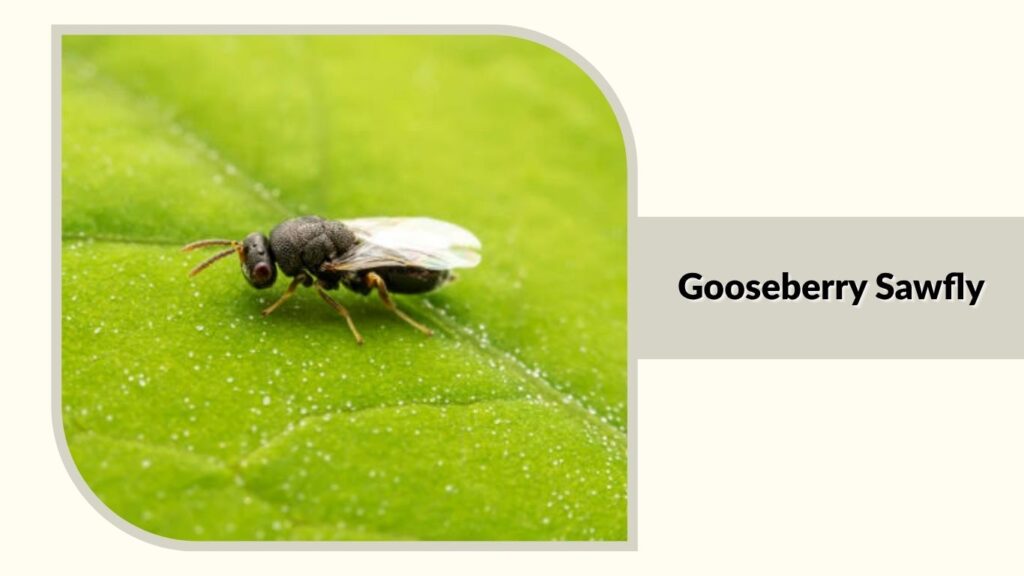
The Gooseberry Sawfly (Euura ribesii), also known as the Common Gooseberry Sawfly, is a destructive leaf-feeding insect belonging to the family Tenthredinidae. Formerly classified as Nematus ribesii, this species commonly attacks gooseberry and currant bushes. Its green, black-spotted larvae can rapidly consume foliage, sometimes leaving entire shrubs nearly bare. Repeated infestations may weaken plants and reduce fruit production.
Identification
- Scientific Name: Euura ribesii
- Former Scientific Name: Nematus ribesii
- Family: Tenthredinidae
- Adult Size: Approximately 5–7 mm long.
- Larval Size: Around 20 mm when fully grown.
- Body Color: Pale green with numerous black spots.
- Head: Shiny black and rounded.
- Adult Appearance: Yellowish insects with black heads, dark thoracic markings, and transparent wings.
- Distinctive Features: Green larvae with black-spotted bodies, commonly feeding on gooseberry foliage.
Habitat and Distribution
Gooseberry Sawflies inhabit fruit gardens, orchards, hedgerows, and agricultural landscapes throughout Europe and parts of North America. They primarily attack gooseberry bushes, although red and white currants also serve as suitable hosts. Their populations frequently develop in cultivated areas where host shrubs produce abundant foliage during spring and summer.
Feeding Habits and Behavior
Young larvae typically begin feeding on the lower and inner leaves of gooseberry bushes. As they grow, they move upward and outward, consuming increasingly large portions of foliage. Heavy infestations may leave only major leaf veins intact. Repeated defoliation can weaken bushes and reduce their ability to produce healthy fruit crops.
Life Cycle and Reproduction
Adult females emerge during spring and deposit eggs on the undersides of host leaves. The larvae hatch and feed for several weeks before dropping into the soil to form cocoons. New adults emerge and reproduce during warmer months. This species can produce up to three generations annually, with larvae commonly active from April through September.
20. Pear Sawfly (Caliroa cerasi)
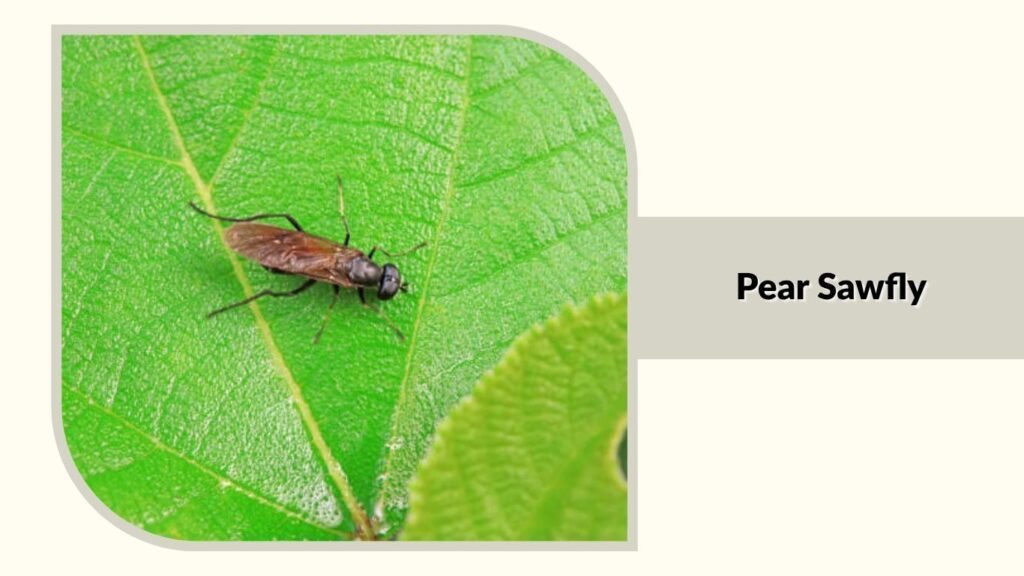
The Pear Sawfly (Caliroa cerasi), commonly called the Pear Slug or Cherry Slug, is a leaf-feeding insect belonging to the family Tenthredinidae. This species is widely distributed across temperate regions and frequently attacks pear, cherry, and other related trees. Its larvae resemble tiny, slimy slugs rather than ordinary caterpillars. Heavy infestations can cause significant leaf damage, reducing the appearance and health of ornamental and fruit trees.
Identification
- Scientific Name: Caliroa cerasi
- Family: Tenthredinidae
- Adult Size: Approximately 5 mm long.
- Larval Size: Around 10–12 mm when fully grown.
- Body Color: Yellowish underneath an olive-green to black slimy coating.
- Head: Yellowish-brown, often hidden beneath the slimy covering.
- Body Shape: Broad near the head and gradually tapering toward the rear.
- Adult Appearance: Small, glossy black, wasp-like insects with transparent wings.
- Distinctive Features: Slug-like larvae covered in sticky mucus, usually feeding on the upper surfaces of leaves.
Habitat and Distribution
Pear Sawflies inhabit orchards, residential gardens, parks, and woodland edges across Europe, North America, and other temperate regions. They primarily attack pear and cherry trees but also feed on plum, hawthorn, mountain ash, and cotoneaster. Their populations are common in areas containing suitable deciduous host plants.
Feeding Habits and Behavior
The larvae feed on the upper surfaces of leaves, removing soft tissues while leaving the major veins and lower leaf surfaces intact. This creates a distinctive skeletonized or windowpane appearance. Damaged leaves eventually turn brown and may fall prematurely. Large populations can reduce photosynthesis and temporarily weaken affected trees.
Life Cycle and Reproduction
Adult females emerge during spring and deposit eggs inside host leaves. After hatching, the larvae feed for several weeks before dropping to the soil to pupate. A second generation commonly develops during late summer. The species generally overwinters underground, with new adults emerging the following spring. Two generations typically occur annually in temperate regions.
21. Wheat Stem Sawfly (Cephus cinctus)
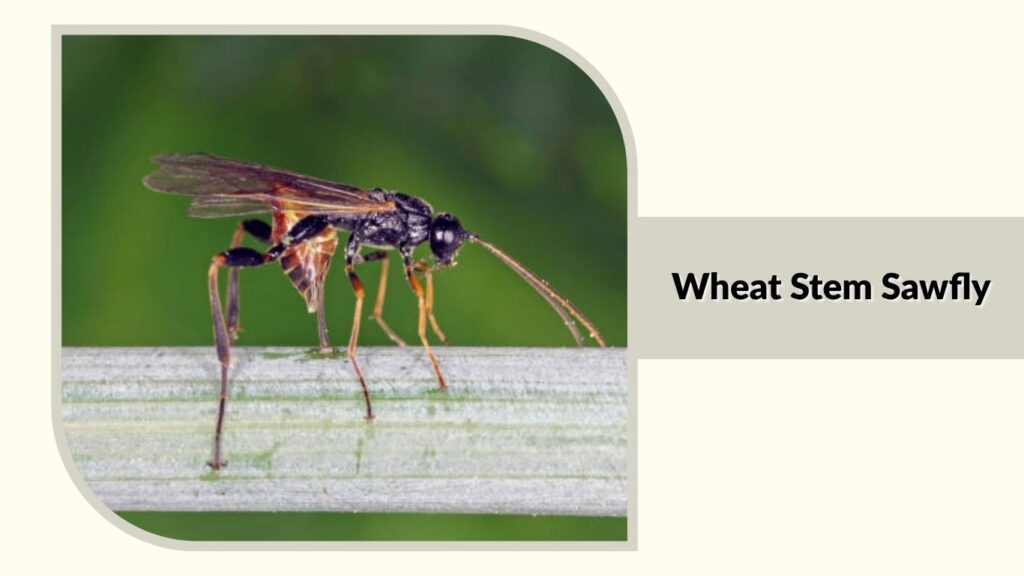
The Wheat Stem Sawfly (Cephus cinctus) is an economically important agricultural insect belonging to the family Cephidae. This species primarily attacks wheat crops across western North America, where its larvae develop inside plant stems. Unlike leaf-feeding sawflies, Wheat Stem Sawfly larvae consume internal stem tissues, weakening plants and reducing grain production. Heavy infestations can cause extensive stem breakage and significant agricultural losses.
Identification
- Scientific Name: Cephus cinctus
- Family: Cephidae
- Adult Size: Approximately 8–13 mm long.
- Larval Size: Around 12–13 mm when fully grown.
- Body Color: Creamy white to pale yellow larvae.
- Head: Dark brown with a hardened head capsule.
- Adult Appearance: Slender, black insects with yellow abdominal bands and transparent wings.
- Distinctive Features: Legless larvae that develop inside wheat stems and often curl into an S-shaped position.
Habitat and Distribution
Wheat Stem Sawflies inhabit agricultural fields, grasslands, and cereal-growing regions throughout western North America. They are particularly common in the northern Great Plains, including Montana, North Dakota, and parts of Canada. Wheat is their primary agricultural host, although they also develop in certain native grasses and other cereal crops.
Feeding Habits and Behavior
The larvae feed internally within wheat stems, consuming soft tissues and interfering with plant development. As they mature, they move toward the stem base and cut a groove around its interior. This weakens the stem, making it susceptible to breaking and lodging. Severe infestations can reduce grain yield and harvesting efficiency.
Life Cycle and Reproduction
Adult females emerge during late spring or early summer and deposit eggs inside developing wheat stems. Larvae hatch and feed internally throughout the growing season. Mature larvae overwinter inside protective chambers near the stem base. Pupation occurs the following spring, and one generation develops annually.
22. Turnip Sawfly (Athalia rosae)
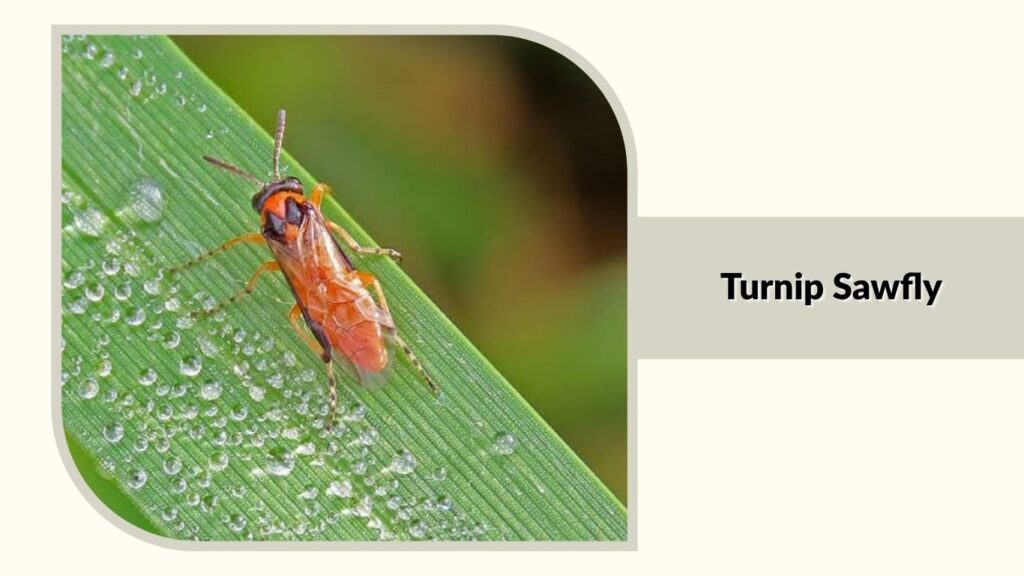
The Turnip Sawfly (Athalia rosae) is a leaf-feeding insect belonging to the family Tenthredinidae. This species is widely distributed across Europe and parts of Asia, where it frequently attacks crops belonging to the cabbage family. Its dark-colored larvae consume large amounts of foliage, sometimes causing severe damage to turnips, mustard plants, and oilseed rape. Heavy infestations can significantly affect young crops and reduce agricultural productivity.
Identification
- Scientific Name: Athalia rosae
- Family: Tenthredinidae
- Adult Size: Approximately 6–8 mm long.
- Larval Size: Around 18–25 mm when fully grown.
- Body Color: Dark greenish-gray to almost black.
- Head: Shiny black and rounded.
- Body Markings: Pale longitudinal stripes along the sides.
- Adult Appearance: Orange-yellow body with black head, dark thoracic markings, and transparent wings.
- Distinctive Features: Dark caterpillar-like larvae that rapidly consume leaves of brassica crops.
Habitat and Distribution
Turnip Sawflies inhabit agricultural fields, vegetable gardens, grassland edges, and areas containing wild cruciferous plants. They are widespread throughout Europe and occur in parts of Asia. Common host plants include turnips, mustard, radishes, and oilseed rape. Their populations are particularly noticeable during warm growing seasons when host foliage is abundant.
Feeding Habits and Behavior
The larvae feed openly on plant leaves, chewing irregular holes through soft tissues. As they mature, they consume larger sections of foliage, sometimes leaving only major veins and stalks. Severe infestations can completely defoliate young brassica plants. Adult sawflies primarily visit flowers, where they consume nectar and contribute to pollination.
Life Cycle and Reproduction
Adult females deposit eggs inside the leaves of suitable host plants. Newly hatched larvae begin feeding immediately and continue developing through several stages. Once mature, they enter the soil and form protective cocoons before pupation. Depending on climate, two or three generations may develop annually, with overwintering generally occurring inside soil cocoons.
FAQs
1. How can you identify different types of sawflies?
Sawflies can be identified by their body colors, markings, sizes, and preferred host plants. Their larvae often resemble caterpillars but typically have six or more pairs of abdominal prolegs, unlike most butterfly and moth caterpillars.
2. Are sawflies harmful to humans?
Most sawflies are harmless to humans. They do not sting like many other wasps, and their larvae primarily feed on plant materials. However, some species can cause extensive damage to garden plants, shrubs, and trees.
3. Which types of sawflies cause the most plant damage?
Pine sawflies, gooseberry sawflies, pear sawflies, and hibiscus sawflies can cause significant damage when populations become abundant. Their larvae consume needles, leaves, or other plant tissues, sometimes causing extensive defoliation.
4. What is the difference between sawflies and caterpillars?
Sawfly larvae generally have six or more pairs of abdominal prolegs without the tiny hooks found on caterpillar prolegs. Most moth and butterfly caterpillars have five or fewer pairs. Sawflies develop into wasp-like adults rather than butterflies or moths.
5. How can you control sawfly larvae naturally?
Small infestations can often be controlled by handpicking larvae, removing heavily infested leaves, or washing them off plants with water. Encouraging natural predators, including birds and beneficial insects, can also help reduce sawfly populations.