
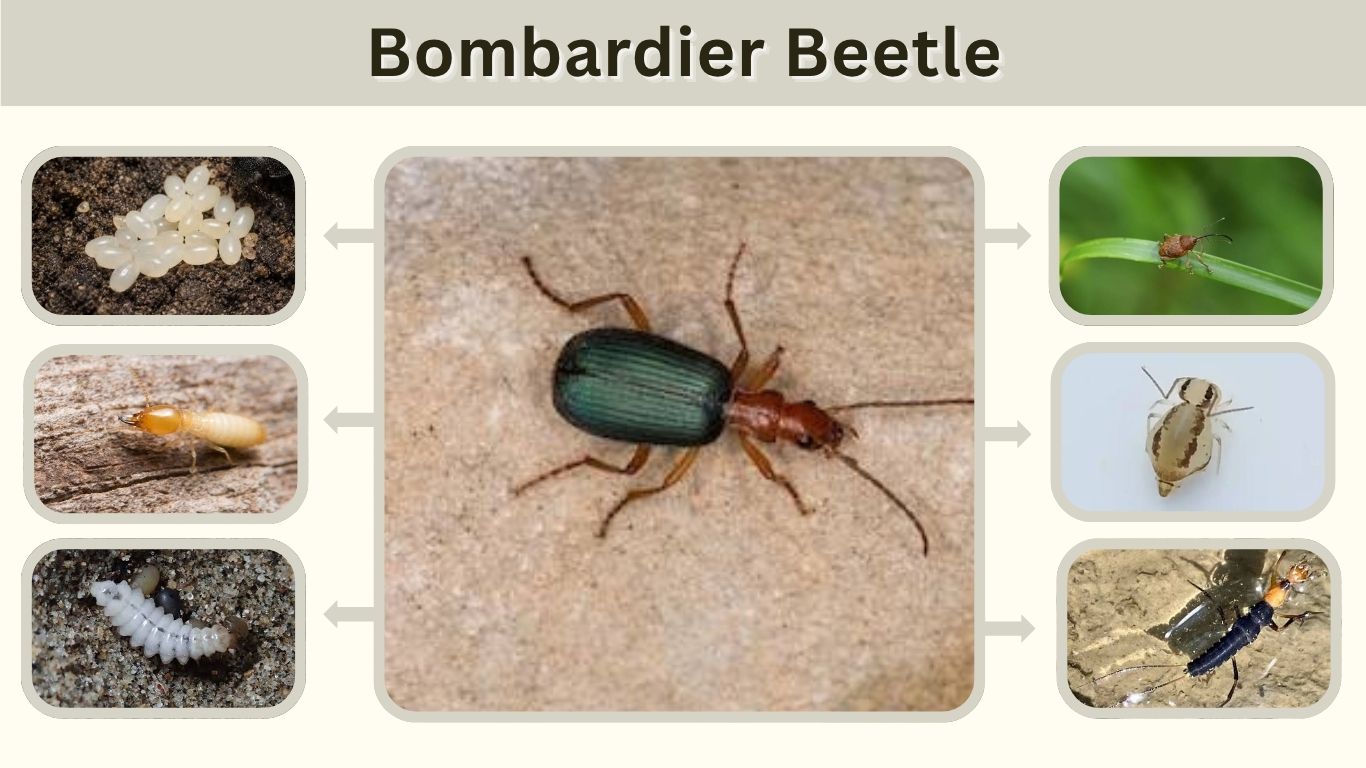
The bombardier beetle is a remarkable insect famous for its explosive chemical defense mechanism. When threatened, this small ground beetle releases a hot, irritating spray that can discourage even larger predators. Found in forests, grasslands, and gardens worldwide, bombardier beetles play an important ecological role. Understanding their identification, unusual defensive abilities, habitat, diet, life cycle, and potential dangers helps explain why these fascinating insects have attracted scientific attention for generations.
What Is a Bombardier Beetle?
A bombardier beetle is a type of ground beetle belonging to the family Carabidae. Rather than referring to one species, the name describes hundreds of related beetle species recognized for their remarkable chemical defense systems. These insects are generally small, fast-moving predators that spend much of their time searching for food or shelter near the ground.
Bombardier Beetle Identification
Bombardier beetles vary in appearance depending on the species, although many share distinctive physical characteristics.
- Scientific classification: Family Carabidae; particularly the subfamilies Brachininae and Paussinae.
- Body length: Many North American Brachinus species measure approximately 5–13 mm.
- Body color: Often reddish-orange, brown, or yellowish, with dark wing covers.
- Head: Prominent eyes and strong mouthparts.
- Legs: Six slender legs adapted for rapid movement.
- Antennae: Long, segmented structures used to detect their surroundings.
- Wing covers: Hardened protective forewings, often dark blue, black, or metallic green.
One recognizable feature of many species is the contrast between their reddish head and thorax and darker wing covers.
True vs. False Bombardier Beetle
False bombardier beetles, particularly species in the genus Galerita, resemble true bombardier beetles in body shape and coloration.
Both belong to the ground beetle family, but their defense mechanisms differ.
True bombardier beetles can produce a hot chemical discharge through a rapid reaction inside specialized abdominal glands.
False bombardier beetles also release irritating defensive chemicals, but they lack the characteristic explosive, near-boiling spray of true bombardier beetles.
Both groups are generally harmless when left undisturbed.
How Does a Bombardier Beetle Protect Itself?
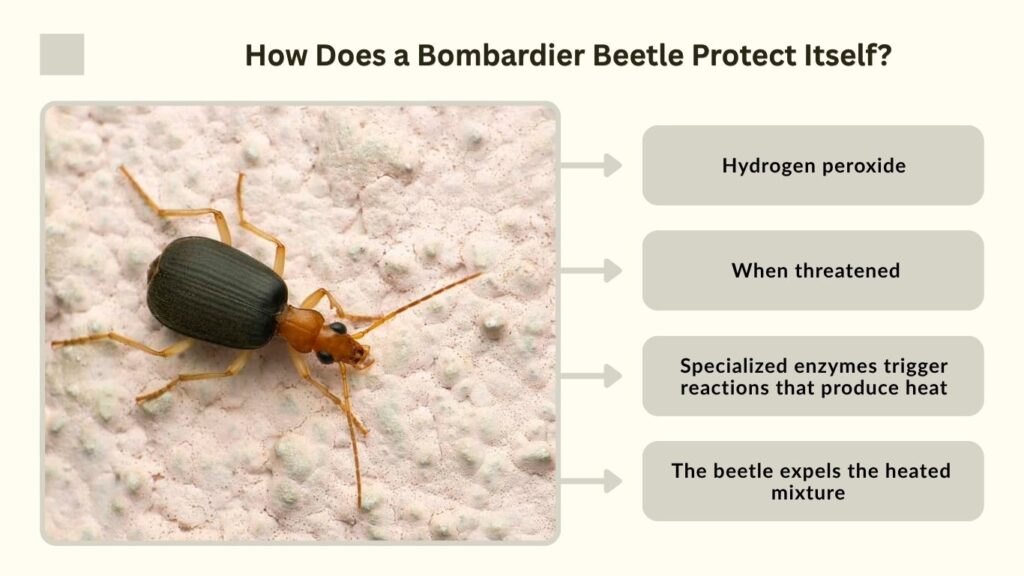
The bombardier beetle’s defense mechanism is one of the most fascinating adaptations in the insect world. Unlike insects that depend primarily on camouflage, speed, or biting, bombardier beetles use specialized chemical glands to discourage predators. Their ability to produce and release a heated chemical mixture provides protection against threats such as ants, spiders, and amphibians.
How the Bombardier Beetle’s Chemical Spray Works
The beetle possesses specialized abdominal glands containing chemical compounds used for defense.
In well-studied explosive species, the defensive system operates through several steps:
- Chemical storage: Hydrogen peroxide and hydroquinones are held in a reservoir.
- Chemical activation: When threatened, the beetle transfers these chemicals into a reaction chamber.
- Rapid reaction: Specialized enzymes trigger reactions that produce heat, oxygen, and irritating benzoquinones.
- Pressure buildup: Gas generation increases pressure inside the chamber.
- Chemical discharge: The beetle expels the heated mixture through an opening near the end of its abdomen.
This reaction creates rapid pulses that may produce an audible popping sound.
The beetle’s specialized internal structures help prevent damage to its own body during discharge.
How Hot Is a Bombardier Beetle’s Spray?
The spray produced by explosive bombardier beetles can reach temperatures approaching 100°C (212°F), approximately the boiling point of water.
This remarkable temperature is generated by an exothermic chemical reaction.
Some species can direct their spray toward approaching predators with considerable accuracy.
The discharged chemicals can travel several centimeters, with distances of up to approximately 20 centimeters reported.
Despite its explosive appearance, the beetle does not produce actual flames.
Does a Bombardier Beetle Spray Acid?
Bombardier beetle spray is often described as acid, but this description is chemically inaccurate for the best-known explosive species.
The defensive liquid primarily contains water and irritating compounds called benzoquinones.
These substances, together with the heat of the discharge, make the spray effective against predators.
Are Bombardier Beetles Dangerous to Humans?
Bombardier beetles are not aggressive toward humans and generally prefer escaping rather than confronting people. However, their defensive spray can cause discomfort or injury when the insects are handled or disturbed. The greatest concern is accidental exposure to sensitive areas, especially the eyes. Understanding their defensive behavior helps people avoid unnecessary contact.
Can a Bombardier Beetle Bite or Burn You?
Bombardier beetles possess mandibles capable of pinching, although their chemical defense is a more notable concern than biting.
If threatened, an adult can discharge hot, irritating chemicals toward nearby skin.
Possible effects include redness, burning sensations, irritation, and localized skin injury.
Eye exposure is more serious because the discharge can damage sensitive tissues. Medical reports have documented eye injuries following direct bombardier beetle spray exposure.
These beetles do not actively seek out humans to attack.
What to Do if a Bombardier Beetle Sprays You
If exposed to a bombardier beetle’s defensive chemicals, take appropriate first-aid measures.
- Skin exposure: Rinse the affected skin under running water for at least 15 minutes.
- Eye exposure: Immediately flush the eye with clean, lukewarm water for 15–20 minutes.
- Avoid rubbing: Rubbing affected areas may worsen irritation.
- Eye injuries: Seek prompt medical assessment after eye exposure.
- Severe symptoms: Obtain medical attention for blistering, significant pain, or persistent irritation.
Avoid intentionally provoking the beetle to observe its chemical defense.
Where Do Bombardier Beetles Live?
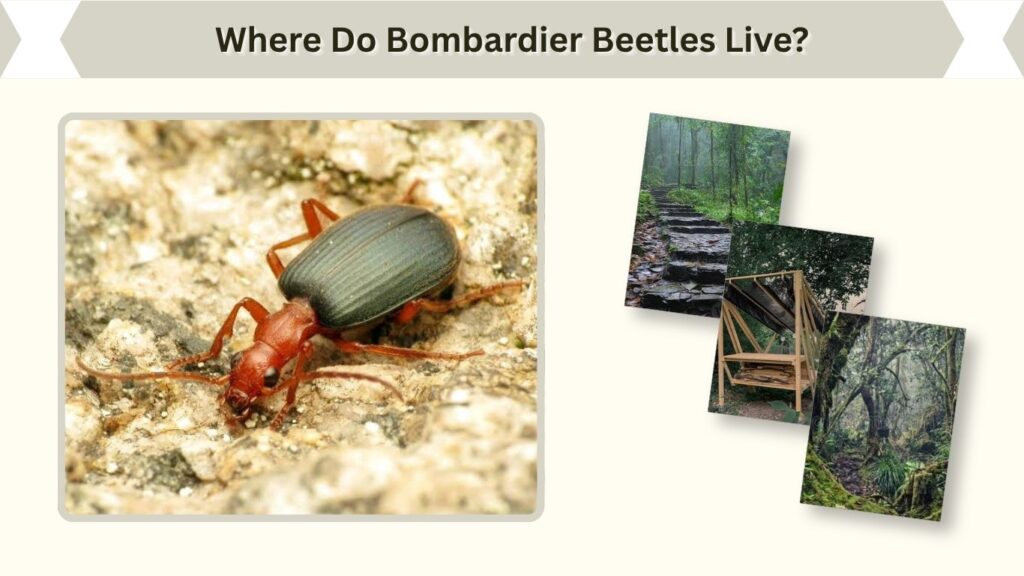
Bombardier beetles occur across many regions of the world, inhabiting environments that provide suitable shelter, moisture, and insect prey. They are commonly associated with natural ground cover and locations that offer protection during daylight hours. Their distribution varies among species, with some occurring in relatively restricted habitats and others occupying much broader geographic ranges.
Geographic Range and Habitat
Bombardier beetles occur on every continent except Antarctica.
In North America, species of the genus Brachinus inhabit numerous regions of the United States, including eastern, southern, and western areas.
Common habitats include woodlands, grasslands, riverbanks, floodplains, and areas near temporary ponds.
Adults frequently shelter beneath stones, fallen logs, loose bark, and leaf litter.
Many species become particularly active at night, when they emerge to search for prey.
Why Are Bombardier Beetles Found Near Houses?
Bombardier beetles may occasionally wander near houses, especially where outdoor lighting attracts insects.
Gardens, damp ground, and accumulated vegetation may provide suitable shelter.
If one enters a house, it is generally an accidental visitor rather than a sign of an indoor infestation.
Avoid handling it directly. Instead, gently guide it outside using a container and a piece of stiff paper.
What Do Bombardier Beetles Eat?
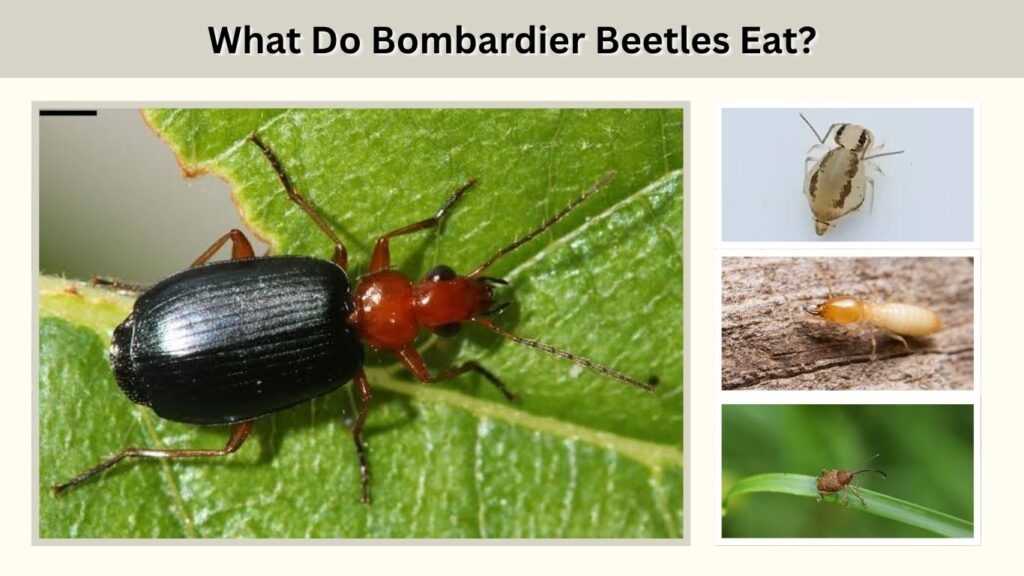
Bombardier beetles are primarily carnivorous insects that feed on other small invertebrates. Their hunting behavior contributes to natural food webs and helps regulate some insect populations. However, feeding habits differ between adults and larvae. Certain species have particularly specialized larval diets, making their development more complicated than that of many familiar garden beetles.
Adult Bombardier Beetle Diet
Adult bombardier beetles hunt small insects and other suitable invertebrate prey.
Their diet can include insects and other arthropods found near the soil surface.
Adults use their mandibles to capture and consume prey.
Many species search for food after sunset, moving quickly beneath vegetation and around ground-level hiding places.
Their predatory habits make them useful participants in natural ecosystems.
Bombardier Beetle Baby and Life Cycle
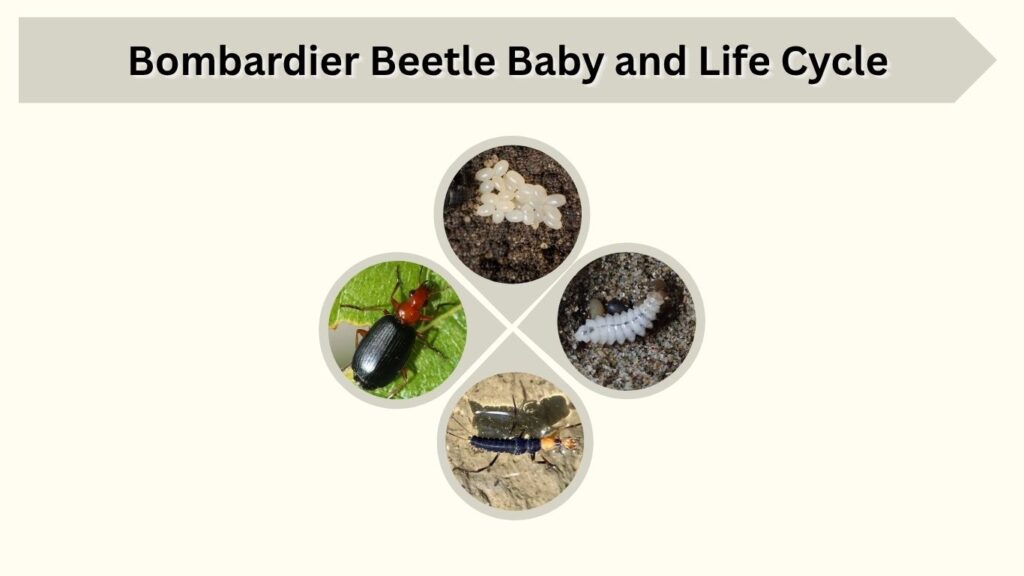
Bombardier beetles undergo complete metamorphosis, consisting of four developmental stages: egg, larva, pupa, and adult.
A baby bombardier beetle is a larva rather than a miniature adult.
The life cycle of many Brachinus species is especially unusual. Females deposit eggs in small mud cells, and newly hatched larvae eventually locate suitable host insects.
Some Brachinus larvae develop by feeding on the pupae of aquatic beetles.
After completing larval development, they pupate and transform into adults.
Newly emerged adults gradually develop the hardened body structures and coloration associated with mature bombardier beetles.
Why Are Bombardier Beetles Important?
Bombardier beetles contribute to ecological balance by participating in predator-prey relationships. Adult beetles consume other small invertebrates, while their larvae may depend on particular host insects for development. Their chemical defenses also influence interactions with predators. Maintaining suitable natural habitats helps protect these beetles and the wider biodiversity associated with them.
Interesting Bombardier Beetle Facts
- Bombardier beetles belong to a group containing hundreds of species worldwide.
- Some species discharge chemicals at temperatures close to 100°C.
- Their defensive spray can produce audible popping sounds.
- Certain species can aim their discharge in several directions.
- Some bombardier beetle larvae develop by consuming aquatic beetle pupae.
- Research has shown that some bombardier beetles can survive being swallowed by toads after triggering their defensive spray.
These characteristics make bombardier beetles important subjects in biological and chemical-defense research.
FAQs
1. Can bombardier beetles kill humans?
Bombardier beetles are not considered deadly to humans under normal circumstances. However, their hot chemical spray can cause painful irritation or injury, particularly if it reaches the eyes.
2. Do bombardier beetles actually shoot fire?
No. Bombardier beetles do not produce flames. Their defensive system releases a heated chemical mixture that may reach temperatures close to 100°C.
3. Can bombardier beetles spray more than once?
Yes. Many explosive bombardier beetles can release several rapid pulses of defensive chemicals during a single encounter. Their ability to continue spraying depends on their available chemical reserves.
4. Are bombardier beetles poisonous to touch?
Bombardier beetles are not typically dangerous from brief contact alone. However, handling can trigger the release of irritating defensive chemicals, so direct contact should be avoided.
5. Do bombardier beetles live in the United States?
Yes. Numerous bombardier beetle species occur throughout the United States. They inhabit grasslands, forests, floodplains, and other environments with suitable prey and shelter.
