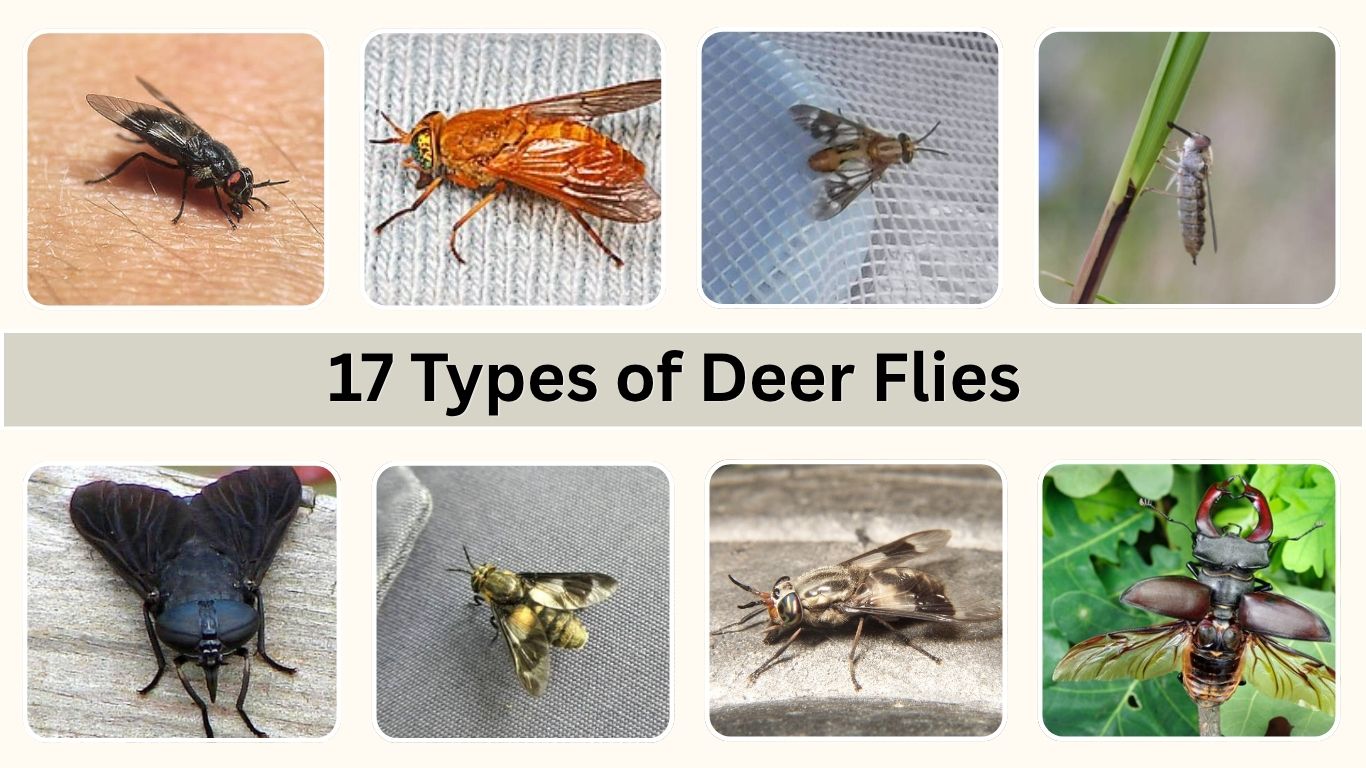
Deer flies are small, fast-moving insects recognized by their colorful eyes, dark-patterned wings, and painful bites. They are commonly found near wetlands, streams, marshes, forests, and damp meadows where their larvae can develop. While male deer flies feed mainly on nectar and plant sugars, females require blood to produce eggs. Different species vary in body color, wing markings, size, habitat, and geographic range. This guide explores 17 types of deer flies, including striped, black, twin-lobed, and wandering species, with useful details about their identification, appearance, distribution, feeding habits, and behavior in natural environments around the world today for curious readers.
1. Wandering Deer Fly (Chrysops aberrans)
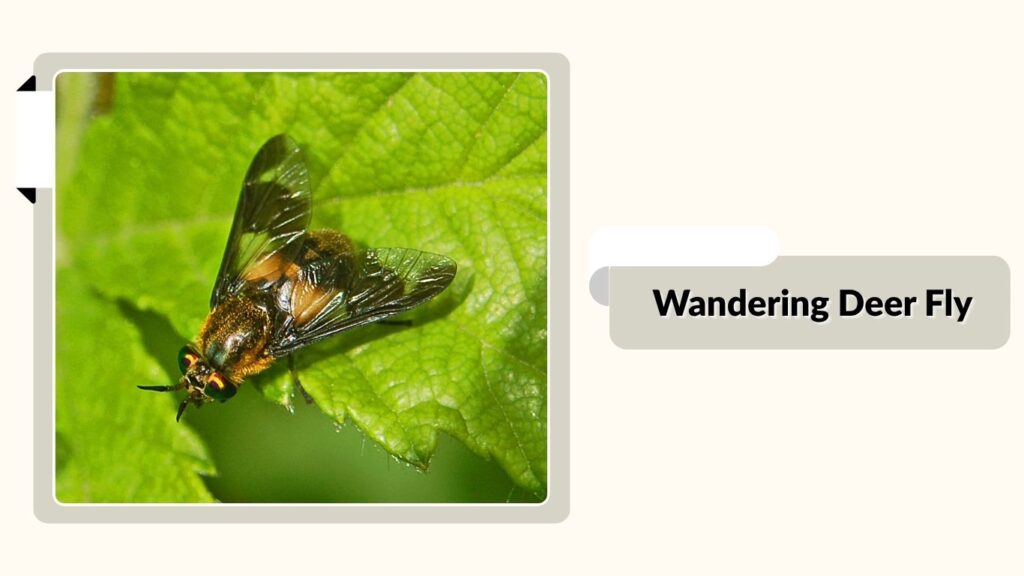
The wandering deer fly is a small North American biting fly belonging to the family Tabanidae. It has boldly patterned wings, a striped body, and large, colorful compound eyes. Although it resembles several related deer flies, careful examination of its wing spots and abdominal markings can help distinguish it.
Identification
- Scientific name: Chrysops aberrans
- Family: Tabanidae
- Body length: Approximately 7–9 mm
- Body color: Yellowish-brown with dark markings
- Eyes: Large, iridescent, and multicolored
- Wings: Clear sections with broad dark bands
- Abdomen: Yellow-orange with black rectangular markings
Size and Appearance
The wandering deer fly has a compact body with a striped thorax and a distinctly patterned abdomen. Its wings contain dark areas near the front edges and tips. It closely resembles Chrysops striatus, but it generally has a slightly larger spot near the wing tip and differences in its side markings.
Habitat and Distribution
This deer fly occurs in North America and has been documented in both the United States and Canada. Records include areas of Pennsylvania, Massachusetts, Maine, New York, and Ontario. It is commonly encountered during summer around moist landscapes where suitable deer-fly breeding habitats are available.
Diet and Behavior
Like other deer flies, adult females take blood meals from mammals and can deliver painful bites. Males do not bite and primarily feed on nectar and pollen. Adults are active during daylight and may be attracted to people, livestock, movement, and dark-colored objects.
2. Furious Deer Fly (Chrysops aestuans)
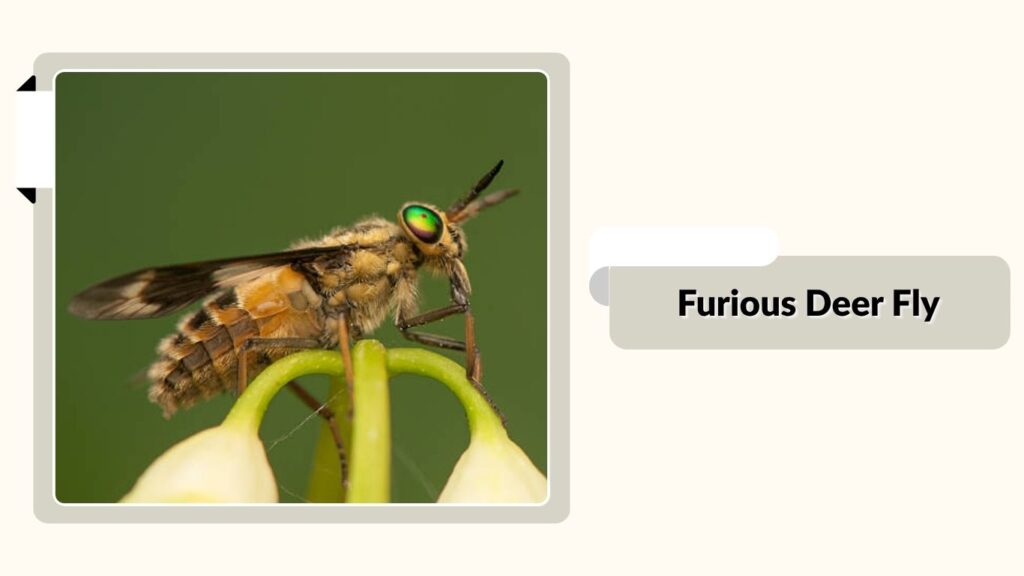
The furious deer fly is a colorful North American species known for its persistent biting behavior. Like other deer flies, it has large patterned eyes and dark markings across otherwise transparent wings. Females seek mammalian blood for egg development, whereas males obtain energy from flowers and other plant-based foods.
Identification
- Scientific name: Chrysops aestuans
- Family: Tabanidae
- Body length: Approximately 10 mm
- Body color: Yellowish-brown with dark markings
- Eyes: Large, metallic, and multicolored
- Wings: Clear with a dark central band and apical spot
- Abdomen: Yellow-orange with dark spots or stripes
Size and Appearance
This deer fly has a compact, sturdy body and a broad head dominated by its brilliant compound eyes. The thorax usually displays dark longitudinal stripes, while the abdomen combines yellow or orange coloring with black markings. Wing patterns can vary slightly among individuals, particularly near the tip.
Habitat and Distribution
The furious deer fly occurs across parts of the United States and Canada. Records include Ontario, Saskatchewan, North Dakota, and Washington. Adults are commonly encountered near lakes, streams, wetlands, willow growth, and other moist environments suitable for larval development.
Diet and Behavior
Females use cutting mouthparts to create a small wound and drink the resulting blood. They may bite humans, deer, livestock, and other mammals. Males do not bite and feed mainly on nectar and pollen. Adults are active during warm daylight hours and may repeatedly circle a potential host.
3. Dark Deer Fly (Chrysops ater)
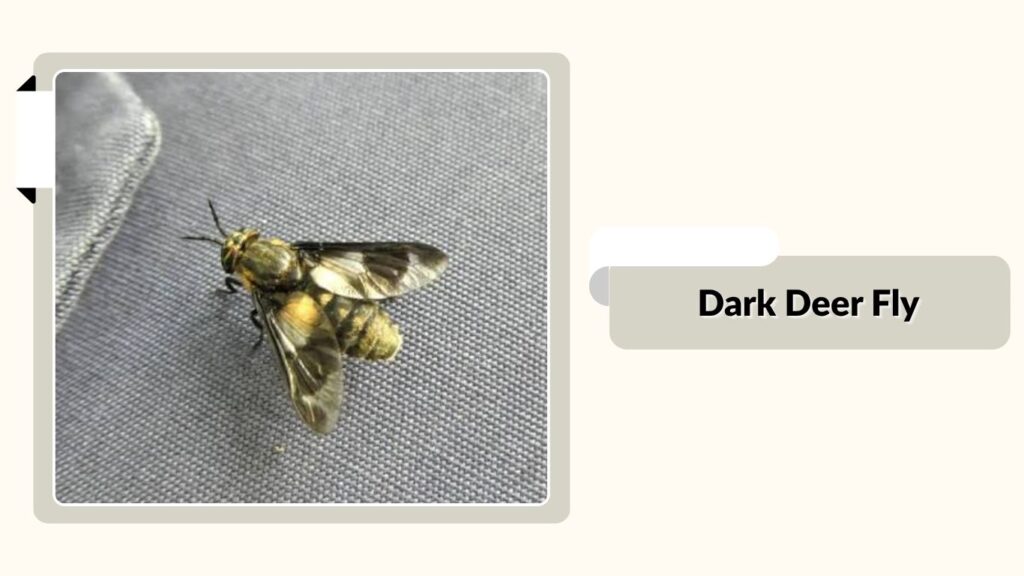
The dark deer fly is a predominantly black deer fly found across northern North America. It is also called the black deer fly or malicious deer fly in some regional guides. Its dark body distinguishes it from the yellow-orange appearance of many related species.
Identification
- Scientific name: Chrysops ater
- Family: Tabanidae
- Body color: Glossy black or dark brown
- Thorax: Dark with faint grayish markings
- Eyes: Large and iridescent
- Wings: Transparent with dark brown bands
- Legs: Mostly dark
- Body shape: Compact and strongly built
Size and Appearance
This species has a darker and less colorful body than many familiar deer flies. The abdomen is mostly black, while subtle pale hairs or gray markings may appear on the thorax. Its wings retain the characteristic dark pattern associated with the genus Chrysops. Females have separated eyes, while male eyes meet above the head.
Habitat and Distribution
The dark deer fly has a broad transcontinental range across boreal North America. Its distribution extends southward into areas such as West Virginia, Colorado, and Utah. It is associated with forests, bogs, marshes, lakeshores, and other damp northern landscapes.
Diet and Behavior
Adult females bite mammals to obtain the protein needed for egg production. Their bites may be painful because they slice the skin rather than inserting a narrow needle-like mouthpart. Males consume nectar and other sugary plant liquids. Adults are strong fliers and may travel several miles from breeding areas.
4. Beautiful Deer Fly (Chrysops callidus)
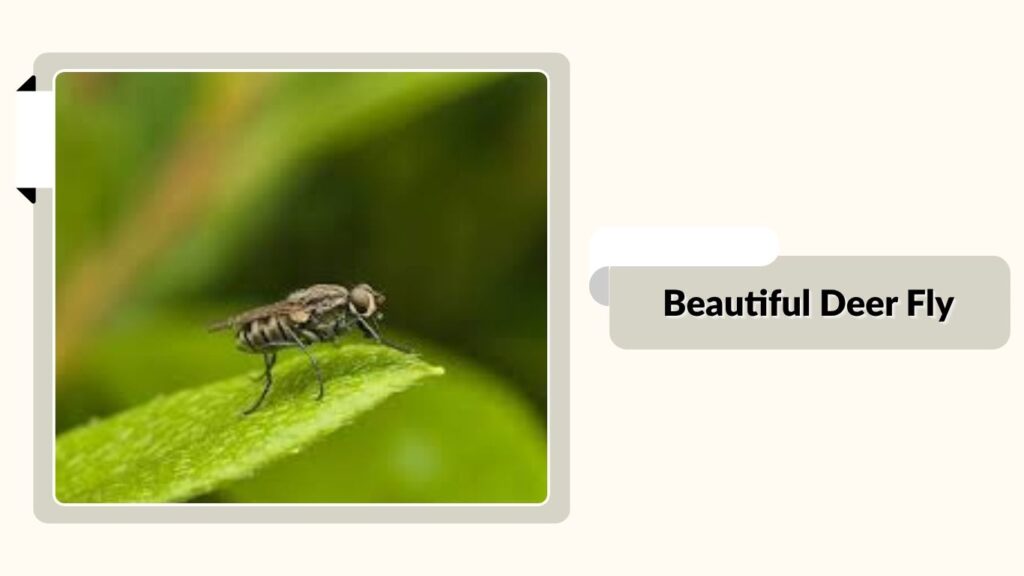
The beautiful deer fly earns its common name from its colorful eyes, patterned wings, and contrasting yellow-and-black body. It is a North American deer fly that may look attractive when viewed closely, although females can become persistent and painful biters around people and animals.
Identification
- Scientific name: Chrysops callidus
- Family: Tabanidae
- Body color: Yellowish-brown and black
- Thorax: Dark with pale longitudinal stripes
- Eyes: Bright green, gold, purple, or red
- Wings: Clear with broad dark markings
- Abdomen: Yellow with black spots or bands
- Body length: Similar to a house fly
Size and Appearance
The beautiful deer fly has a wide head, short antennae, and strongly patterned compound eyes. A dark band crosses each wing, while the yellow abdomen bears several dark spots. The exact arrangement of these markings is important because several related North American species look remarkably similar.
Habitat and Distribution
This species occurs in Canada and the United States. Adults are often encountered near moist forests, marshes, ponds, streams, and low-lying shaded areas. Females may deposit egg masses on plants growing near water, allowing the newly hatched larvae to fall into wet soil or shallow water.
Diet and Behavior
Females feed on the blood of humans, cattle, dogs, deer, and other mammals. Males are harmless and consume nectar or pollen. Beautiful deer flies locate hosts partly through movement, body heat, carbon dioxide, and dark colors. They are generally most active during sunny, warm weather.
5. Brownish Deer Fly (Chrysops brunneus)
The brownish deer fly is a marsh-associated North American species with muted brown, yellow, and gray coloring. It is less dramatically marked than some other deer flies, but it still possesses the patterned wings, large eyes, and compact body characteristic of the genus Chrysops.
Identification
- Scientific name: Chrysops brunneus
- Family: Tabanidae
- Body length: Commonly around 10–15 mm
- Body color: Brownish-yellow or gray-brown
- Thorax: Gray with darker lines
- Eyes: Large and iridescent
- Wings: Broadly patterned with brown
- Abdomen: Pale brown with darker markings
Size and Appearance
Adults are usually about the size of a house fly or slightly larger. Their brownish coloration can blend well with dried grasses, mud, and wetland vegetation. Females have a visible gap between their eyes, whereas the eyes of males meet at the top of the head.
Habitat and Distribution
Brownish deer flies have been recorded in coastal and inland parts of North America, including Massachusetts, Illinois, Louisiana, and Texas. They are especially associated with marshes, wildlife refuges, coastal wetlands, and other areas containing moist soil or shallow water.
Diet and Behavior
Females may land quietly on exposed skin before cutting and feeding. People often notice the fly only when the bite begins to hurt. Males feed on flowers and do not bite. The immature stages develop in damp environments, where larvae feed on small organisms or organic material.
6. Splayed Deer Fly (Chrysops caecutiens)
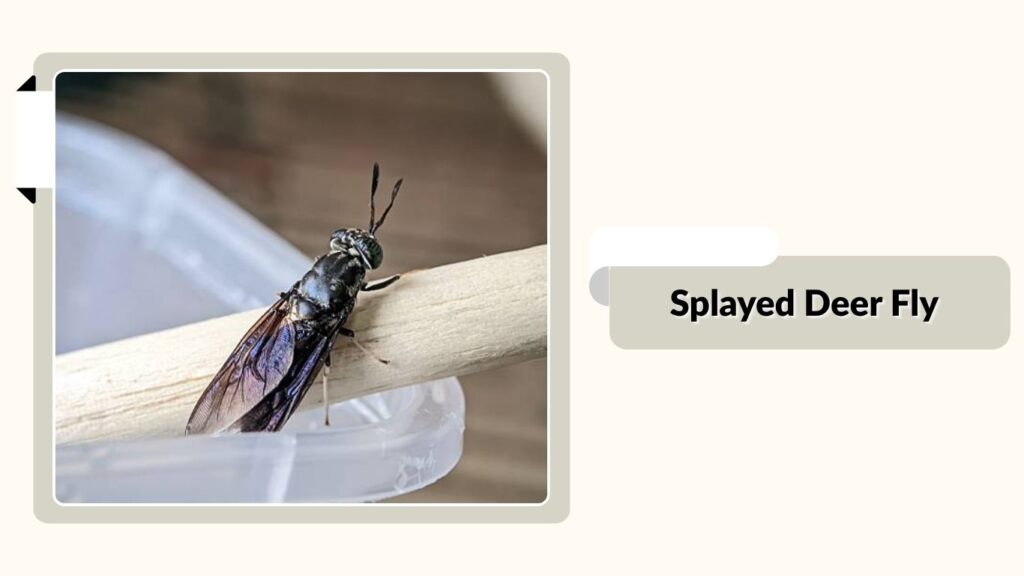
The splayed deer fly is a European species named for the swept-back or slightly spread position of its patterned wings. It has a dark body, vivid eyes, and small orange areas near the base of the abdomen. Females are familiar biting insects in damp woodlands and marshy landscapes.
Identification
- Scientific name: Chrysops caecutiens
- Family: Tabanidae
- Body length: Approximately 7–10 mm
- Body color: Mostly dark brown or black
- Eyes: Red and green with colorful patterns
- Wings: Darkly marked and swept backward
- Abdomen: Dark with orange coloring near the base
- Legs: Mostly dark
Size and Appearance
This species has a broad head and a relatively narrow abdomen. Its boldly patterned wings are held in a distinctive swept-back position while resting. Males possess eyes that meet above the head, while females have a wide gap between them. The species resembles the rarer black deer fly, Chrysops sepulcralis.
Habitat and Distribution
The splayed deer fly is widely distributed across Europe and occurs throughout much of Britain and Ireland. It favors wet woodland, bogs, marshes, damp riversides, stream banks, and areas with dense waterside vegetation.
Diet and Behavior
Females approach people and large mammals to obtain blood, frequently targeting the head, shoulders, and back of the neck. Males feed on nectar. Larvae develop in wet mud or sand near water, while adults are usually observed during warm summer conditions.
7. Atlantic Deer Fly (Chrysops atlanticus)
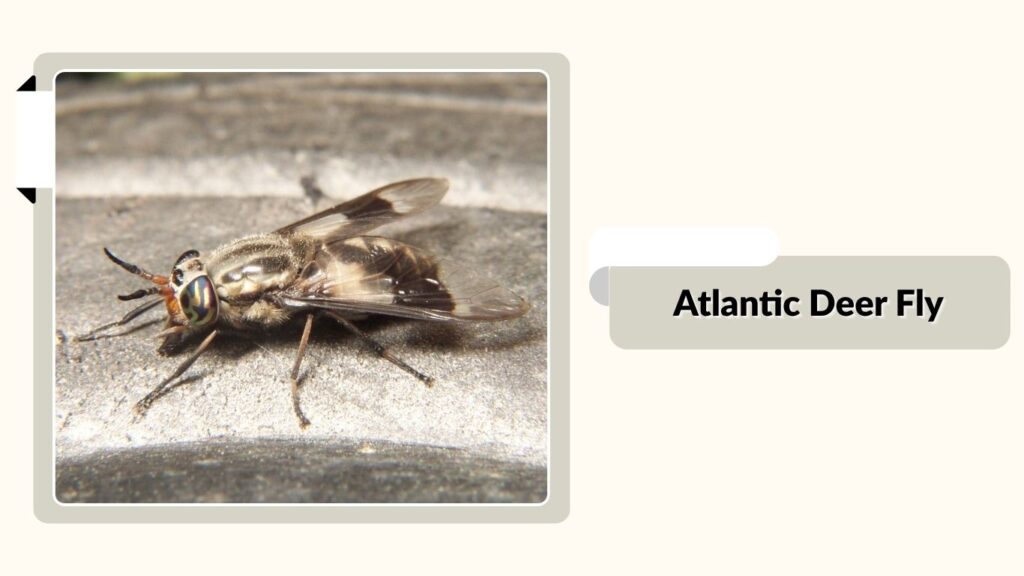
The Atlantic deer fly is a North American species strongly associated with the Atlantic coastal region. It belongs to the Chrysops flavidus species group and shares the yellowish body and boldly marked wings seen in several closely related coastal deer flies.
Identification
- Scientific name: Chrysops atlanticus
- Family: Tabanidae
- Body color: Yellow, brown, and black
- Thorax: Grayish with darker stripes
- Eyes: Large, metallic, and patterned
- Wings: Clear with dark crossbands
- Abdomen: Yellowish with black markings
- Body shape: Short, broad, and robust
Size and Appearance
The Atlantic deer fly has a broad head and wings that appear oversized compared with its compact body. The dark wing pattern, abdominal markings, leg color, antennae, and facial features must all be examined for reliable identification because members of the flavidus group can look very similar.
Habitat and Distribution
Records are concentrated in eastern North America, particularly around Atlantic coastal states and provinces. Individuals have been documented in coastal Massachusetts, including Essex County. The species is most likely to occur around salt marshes, coastal wetlands, damp meadows, and muddy shoreline vegetation.
Diet and Behavior
Adult females feed on mammalian blood and may bite humans visiting coastal habitats. Males depend on nectar and other plant sugars. Larvae generally develop in saturated soil or shallow wetland environments, while adults are strongest during warm, sunny weather.
8. Striped Deer Fly (Chrysops vittatus)
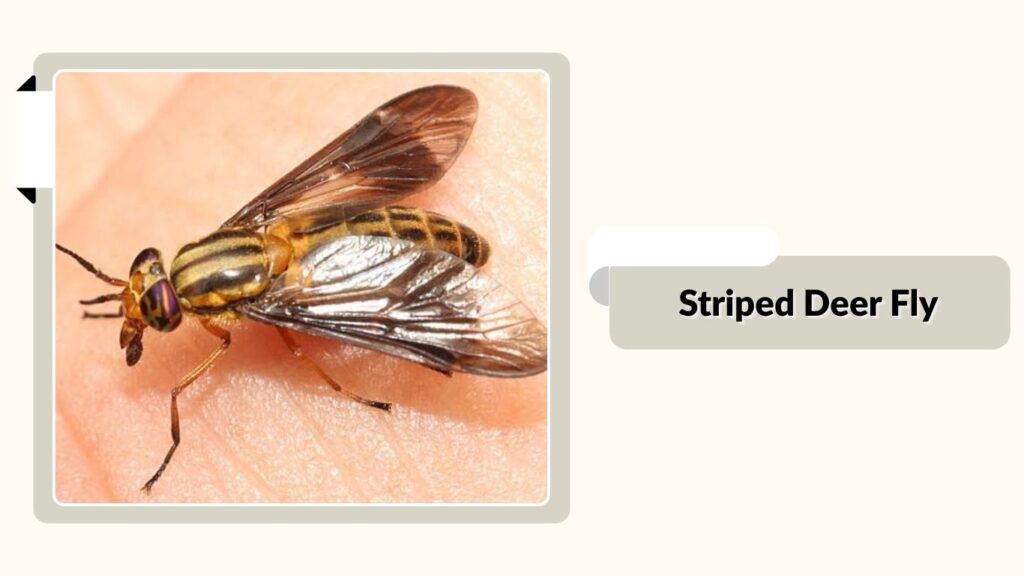
The striped deer fly is one of the best-known North American deer flies. Its common name refers to the longitudinal stripes running across both the thorax and abdomen. It is yellowish overall and possesses brilliantly colored eyes and dark-patterned wings.
Identification
- Scientific name: Chrysops vittatus
- Family: Tabanidae
- Body length: Approximately 10–12 mm
- Body color: Primarily yellowish
- Thorax: Three dark longitudinal stripes
- Abdomen: Four dark stripes
- Eyes: Large and iridescent
- Wings: Clear with distinctive brown markings
Size and Appearance
Striped deer flies have broad, blunt abdomens and prominent eyes that may display green, purple, red, and gold shades. Females possess a space between their eyes, while the eyes of males touch. Their combination of thoracic and abdominal stripes makes them more recognizable than many related species.
Habitat and Distribution
This species occurs throughout the eastern half of the United States and southeastern Canada. It inhabits open woodland, wetland edges, ponds, rivers, and streams. Eggs are deposited near water, and the larvae develop in aquatic habitats or saturated wetland soil.
Diet and Behavior
Females bite mammals to obtain blood for maturing their eggs. Males feed on nectar and pollen. The larvae are predators that consume worms and other small aquatic invertebrates. Adults are most frequently encountered during the warmer months near suitable breeding habitats.
9. Twin-Lobed Deer Fly (Chrysops relictus)
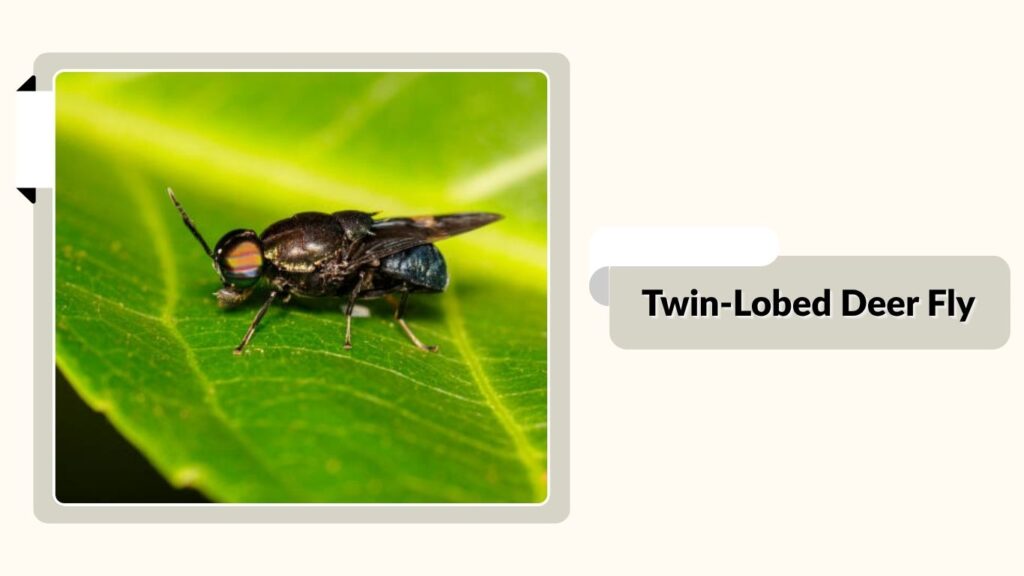
The twin-lobed deer fly is a widespread European species recognizable by the two prominent dark lobes within its wing pattern. It has a yellow-and-black body, colorful eyes, and sharply patterned wings. Females are well known for delivering painful bites to walkers, livestock, and other mammals.
Identification
- Scientific name: Chrysops relictus
- Family: Tabanidae
- Body length: Approximately 8–10.5 mm
- Body color: Yellow and black
- Eyes: Metallic green, gold, red, or purple
- Wings: Clear with two dark lobed markings
- Thorax: Dark with pale stripes
- Abdomen: Yellowish with dark central markings
Size and Appearance
This is a medium-sized deer fly with colorful eyes and a conspicuous black-and-yellow abdomen. Its dark wing pattern creates two rounded lobes, inspiring its common name. The species can resemble the splayed deer fly, so leg coloring, facial markings, and abdominal patterns may need examination.
Habitat and Distribution
Twin-lobed deer flies occur widely across Europe, including Britain and Ireland. Their preferred habitats include damp floodplain meadows, wet woodland, marshes, muddy paths, riverbanks, and other moist landscapes with soft ground.
Diet and Behavior
Females may follow people through damp grasslands or woodland before landing and biting. Males feed on nectar and do not take blood. Larvae develop in moist soil containing large amounts of water and feed on decaying organic matter or small organisms.
10. Black Deer Fly (Chrysops sepulcralis)
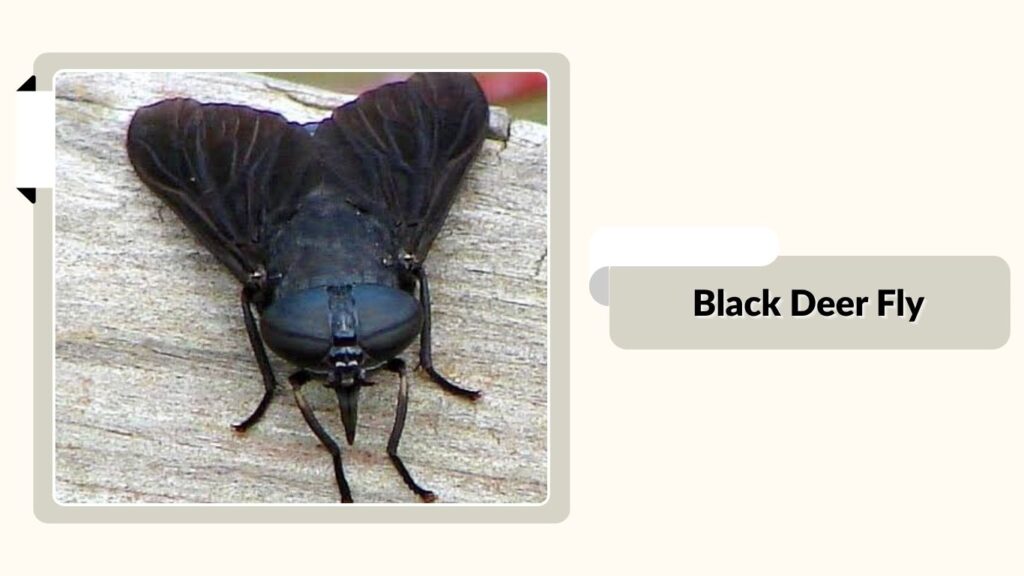
The black deer fly is a dark European species recognized by its mostly black abdomen and patterned wings. Unlike many deer flies with yellow or orange abdominal markings, this species has a much darker overall appearance. It is uncommon and strongly associated with undisturbed bogs and wet heathland.
Identification
- Scientific name: Chrysops sepulcralis
- Family: Tabanidae
- Body color: Primarily black or dark brown
- Abdomen: Black without prominent yellow markings
- Eyes: Large, colorful, and iridescent
- Wings: Clear and dark-patterned
- Body shape: Small, broad-headed, and compact
Size and Appearance
Black deer flies have glossy dark bodies, large compound eyes, and short antennae. The abdomen is black above and below, while the face may appear shiny brown. Dark wing markings create a noticeable contrast with the transparent sections of each wing, helping distinguish the species from ordinary house flies.
Habitat and Distribution
This species has a limited European distribution. In Britain, it is mainly recorded from Dorset, the New Forest, Shropshire, Cumbria, and southwestern Scotland. It prefers valley mires, raised bogs, moors, and wet heathlands containing abundant sphagnum moss. Adults are primarily observed during July and August.
Diet and Behavior
Females obtain blood from mammals to support egg development and may bite people visiting boggy habitats. Males feed on nectar and other plant sugars. The larvae develop in moist environments near ponds, bogs, or wet ground and consume decaying organic matter or small organisms.
11. One-Striped Deer Fly (Chrysops univittatus)
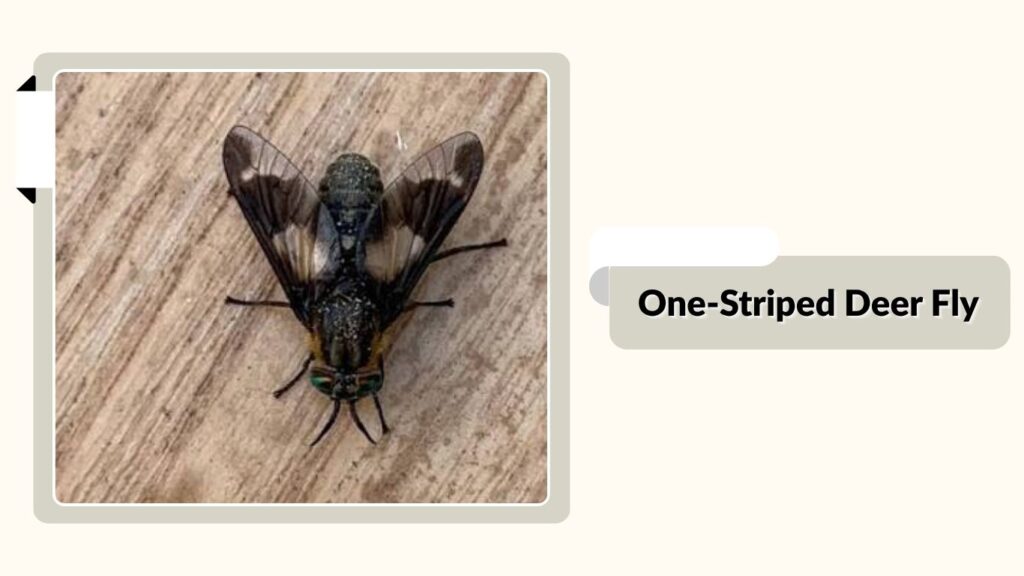
The one-striped deer fly is a North American species named for the prominent dark stripe running along its abdomen. It has the colorful eyes, compact body, and boldly marked wings typical of deer flies. Females may become troublesome around people, animals, and outdoor recreation areas near wetlands.
Identification
- Scientific name: Chrysops univittatus
- Family: Tabanidae
- Body color: Yellowish-brown and black
- Abdomen: Prominent central dark stripe
- Thorax: Gray or brown with darker lines
- Eyes: Iridescent green, gold, or purple
- Wings: Clear with dark crossbands
- Body size: Small to medium
Size and Appearance
This deer fly has a broad head and a short, sturdy abdomen. Its single dominant abdominal stripe inspired its common name. The wings have dark markings across their central portions, while the remaining sections are transparent. Reliable identification may require examining the wing pattern, legs, antennae, and facial markings together.
Habitat and Distribution
The one-striped deer fly occurs across the eastern United States and southeastern Canada. It is generally associated with open woodlands, damp meadows, marshes, ponds, streams, and other landscapes containing wet soil or standing water.
Diet and Behavior
Female one-striped deer flies use cutting mouthparts to open the skin of mammals and drink the resulting blood. Males do not bite and instead visit flowers for nectar and pollen. Adults are usually most active during warm daylight hours and may repeatedly circle moving hosts.
12. Sherman’s Deer Fly (Chrysops shermani)
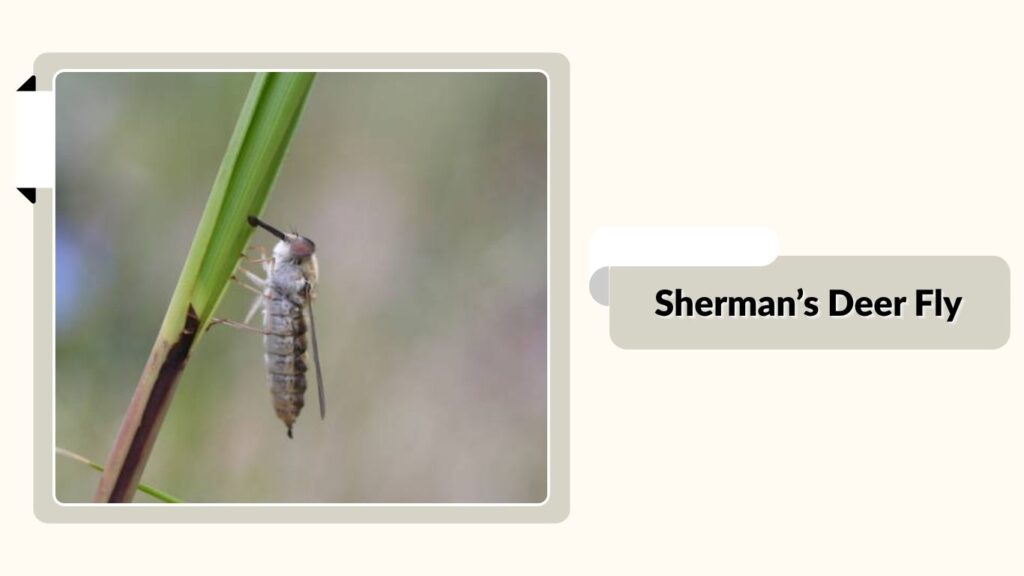
Sherman’s deer fly is a North American species described in 1907. It has a patterned yellow-and-dark body, large iridescent eyes, and partially darkened wings. Although not as widely recognized as the striped deer fly, it is a secure and established species across parts of its range.
Identification
- Scientific name: Chrysops shermani
- Family: Tabanidae
- Body color: Yellowish-brown with black markings
- Thorax: Dark with lighter longitudinal lines
- Eyes: Brightly colored and patterned
- Wings: Clear with dark bands or patches
- Abdomen: Yellow and black
- Body shape: Compact and strongly built
Size and Appearance
Sherman’s deer fly resembles several closely related North American species. It has a wide head, short antennae, powerful wings, and a blunt abdomen. Identification usually depends on the exact shapes of the dark wing markings and the arrangement of colors on the face, legs, and abdominal segments.
Habitat and Distribution
This species is found in the United States and Canada, with records from northeastern regions such as Vermont. It is generally encountered around wetlands, damp forests, bogs, lakes, and other moist habitats where deer fly larvae can develop.
Diet and Behavior
Females can bite humans, deer, cattle, horses, and other mammals. Their bites may be immediately painful because the mouthparts slice the skin. Males obtain energy from nectar and pollen. Adults are most noticeable during warm summer weather.
13. Sacken’s Deer Fly (Chrysops sackeni)
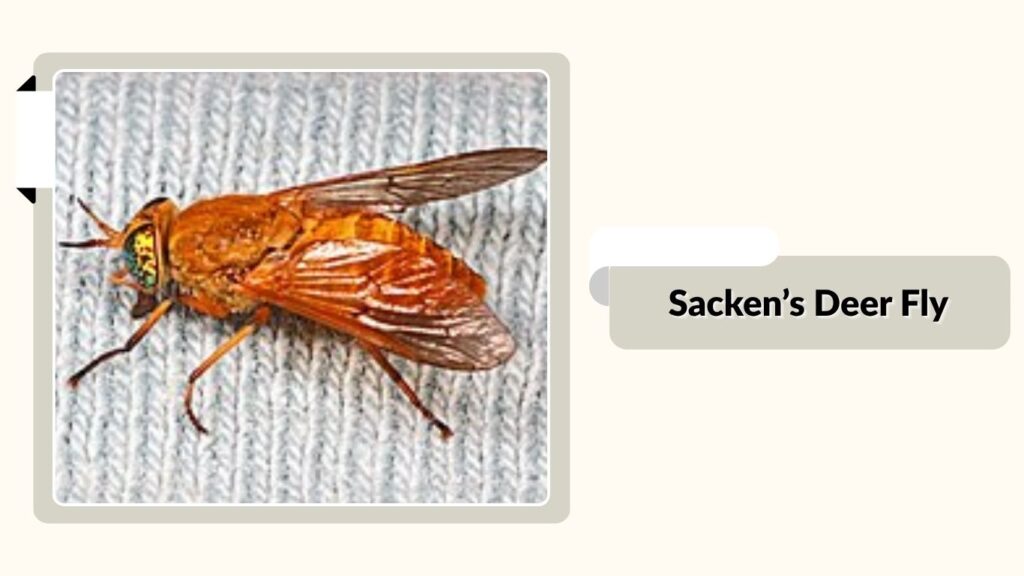
Sacken’s deer fly is a North American species named after the entomologist Carl Robert Osten-Sacken. It has the characteristic patterned wings and colorful eyes of the genus Chrysops. Detailed examination is often necessary because several related deer flies share similar yellow, black, and brown markings.
Identification
- Scientific name: Chrysops sackeni
- Family: Tabanidae
- Body color: Yellowish-brown with dark markings
- Eyes: Large, metallic, and multicolored
- Wings: Transparent with dark crossbands
- Thorax: Gray-brown with darker stripes
- Abdomen: Yellow-orange and black
- Body size: Small to medium
Size and Appearance
This species has a broad head, short antennae, and a sturdy body. Dark markings cross the wings and create a broken or banded appearance. Females have separated eyes, while male eyes meet or nearly meet above the head. The wing pattern and facial coloring are important for separating it from similar deer flies.
Habitat and Distribution
Sacken’s deer fly occurs in both Canada and the United States. Canadian records include Manitoba, Ontario, Quebec, and Saskatchewan. It is typically associated with marshes, wet meadows, lakeshores, stream margins, and damp woodland habitats.
Diet and Behavior
Females seek blood from mammals for egg development. Males rely on nectar, pollen, and plant sugars. Like other deer flies, adults are visually attracted to movement and dark objects and may follow people or animals through open wetland areas.
14. Square-Spot Deer Fly (Chrysops viduatus)
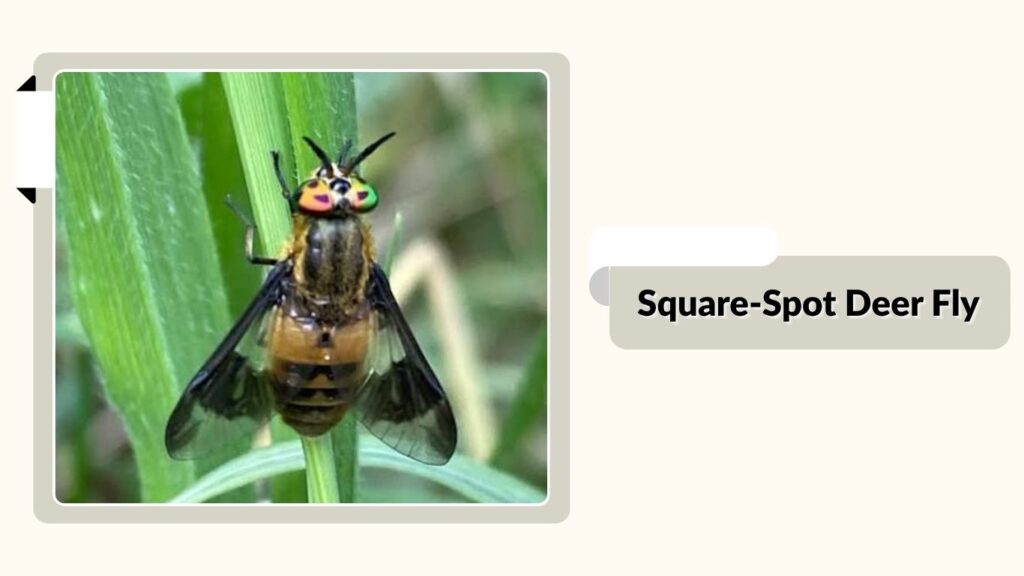
The square-spot deer fly is a European species named for the block-shaped dark markings visible within its wing pattern. It has bright compound eyes and a contrasting yellow-and-black body. The species is widespread but often localized around mature wetlands containing peat and wet vegetation.
Identification
- Scientific name: Chrysops viduatus
- Family: Tabanidae
- Body color: Yellow, brown, and black
- Wing pattern: Dark bands with square-shaped spots
- Eyes: Bright green, gold, or reddish
- Thorax: Dark with lighter stripes
- Abdomen: Yellowish with black markings
- Body shape: Short and compact
Size and Appearance
Square-spot deer flies are small to medium-sized insects with broad heads and large patterned eyes. Their wings contain clearly defined dark areas surrounded by transparent sections. The square-like wing spots are especially helpful, although close examination may still be required to distinguish them from related European deer flies.
Habitat and Distribution
This species occurs across parts of Europe. In Britain, it is widespread but localized, especially in southern regions. It inhabits wet meadows, peatlands, calcareous fens, base-poor mires, wet woodland, and older marshes. Larvae have been found in wet, peaty plant material.
Diet and Behavior
Females bite large mammals and may also attack humans. Males feed on flowers and do not bite. Adults usually fly in warm weather and may be abundant where undisturbed valley mires or mature wetland systems remain intact.
15. Variegated Deer Fly (Chrysops variegatus)
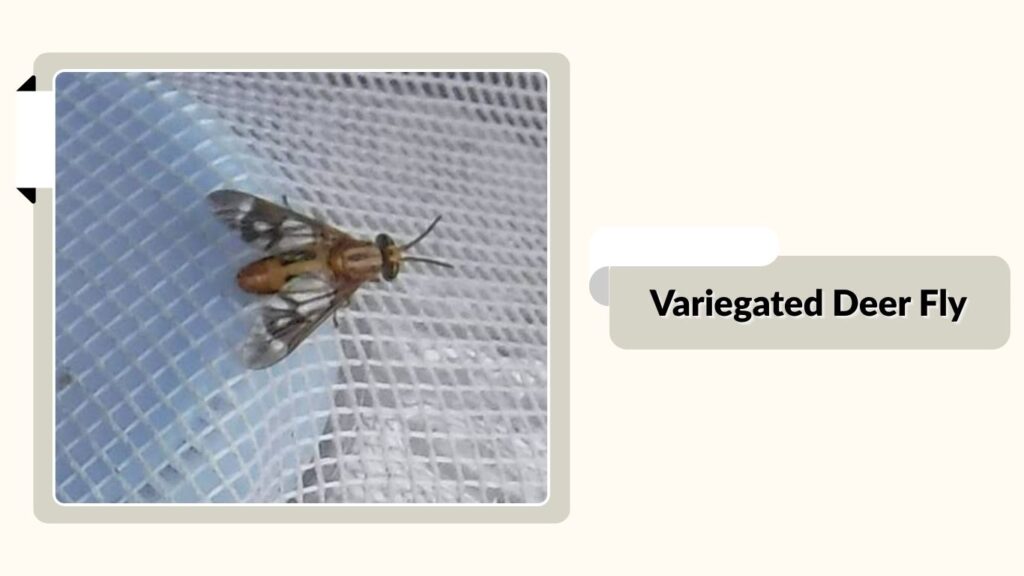
The variegated deer fly is a striking species with a reddish-brown body, striped thorax, colorful eyes, and strongly patterned wings. Its common name refers to the mixture of dark, pale, and brown markings covering its body and wings. It is recorded in tropical parts of the Americas.
Identification
- Scientific name: Chrysops variegatus
- Family: Tabanidae
- Body color: Reddish-brown, yellow, and black
- Thorax: Dark longitudinal stripes
- Eyes: Metallic green with darker patterns
- Wings: Brown-marked with clear rounded spots
- Abdomen: Reddish or orange-brown
- Body shape: Slender and compact
Size and Appearance
This species is particularly noticeable because of the pale transparent spots within its dark wing pattern. The thorax has several dark stripes, while the abdomen may appear reddish-orange. Its brilliant green eyes and warm body colors give it a more tropical appearance than many dark northern deer flies.
Habitat and Distribution
The variegated deer fly occurs in Mexico and other tropical or subtropical areas of the Americas. Records include the Yucatán Peninsula and Quintana Roo. It is most likely to occur around humid forests, marshes, river edges, wet grasslands, and other warm habitats with moist breeding ground.
Diet and Behavior
Female variegated deer flies feed on mammalian blood, while males consume nectar and pollen. Adults are active during daylight and may be attracted to movement, body heat, carbon dioxide, and dark clothing.
16. Adulterous Deer Fly (Chrysops moechus)
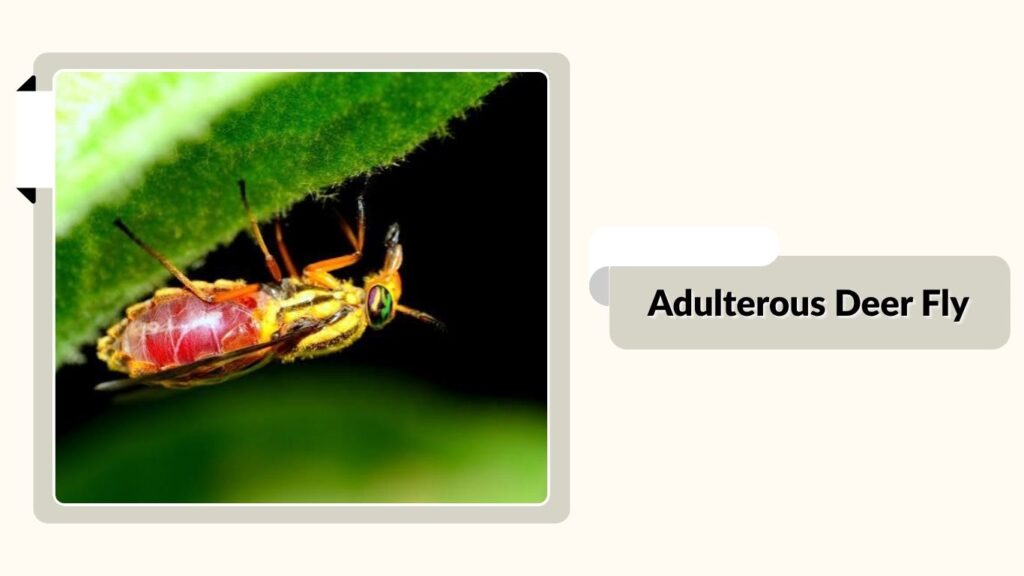
The adulterous deer fly is a North American species with the scientific name Chrysops moechus. It has patterned wings, a yellow-and-dark body, and large iridescent eyes. Its unusual common name comes from the meaning of its scientific species name rather than from any distinctive aspect of its behavior.
Identification
- Scientific name: Chrysops moechus
- Family: Tabanidae
- Body color: Yellowish-brown and black
- Thorax: Gray or brown with dark stripes
- Eyes: Metallic and multicolored
- Wings: Clear with bold brown markings
- Abdomen: Yellow-orange with dark patterns
- Body size: Small to medium
Size and Appearance
The adulterous deer fly has a broad head and wings that appear relatively large compared with its short body. Dark bands cross the wings, while the abdomen displays contrasting yellow and black areas. Accurate identification requires checking the wing, face, antennae, and leg coloration.
Habitat and Distribution
This species occurs in Canada and the United States. It is associated with moist habitats such as marshes, bogs, damp woodlands, streams, ponds, and wet meadows. The immature stages develop in saturated soil, mud, or organic material close to water.
Diet and Behavior
Females bite mammals to obtain blood needed for producing eggs. Males are harmless nectar feeders. Adults fly mainly during daylight and may pursue humans or animals by following their movement and carbon dioxide.
17. Bothersome Deer Fly (Chrysops excitans)
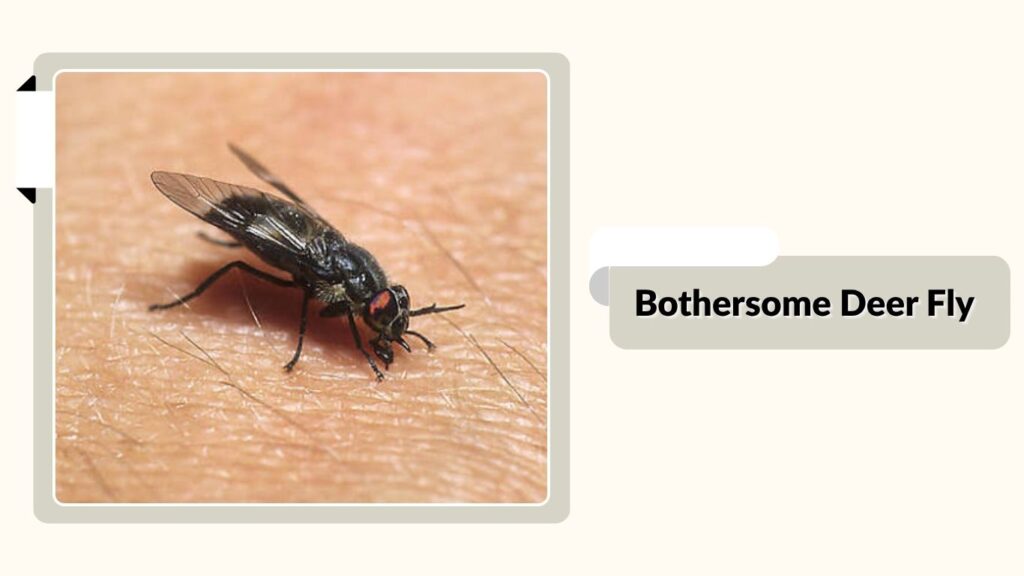
The bothersome deer fly, also called the agitated deer fly in some regional sources, is a North American species known for persistently approaching mammals. It has a dark body, patterned eyes, and partly marked wings. The species is particularly associated with northern bogs, fens, and peatlands.
Identification
- Scientific name: Chrysops excitans
- Family: Tabanidae
- Alternative name: Agitated deer fly
- Body color: Dark brown or black
- Eyes: Bright green, gold, or reddish
- Wings: Partly darkened, often without a strong apical spot
- Legs: Mostly dark
- Body shape: Broad-headed and robust
Size and Appearance
This species is generally larger and darker than several related North American deer flies. Its abdomen may appear nearly black, while the wings have central dark markings. The exact wing pattern, facial stripes, and abdominal color must be examined closely for a reliable species identification.
Habitat and Distribution
The bothersome deer fly is found in northern North America, including Canada and parts of the United States. Research has found it especially frequently in fens and sphagnum bogs, suggesting a strong connection to peatland breeding habitats.
Diet and Behavior
Females may persistently circle and bite humans, deer, livestock, and other mammals. Males consume nectar and pollen. Adults are generally more numerous in open habitats than along heavily shaded forest edges and are most active during the warmer part of their flight season.
FAQs
1. Are deer flies dangerous to humans?
Deer flies are usually not dangerous, but females can deliver painful bites. Their bites may cause redness, swelling, itching, and irritation. In rare cases, sensitive individuals may experience a stronger allergic reaction that requires medical attention.
2. Why do deer flies bite people?
Only female deer flies bite because they need protein from blood to produce eggs. They use sharp mouthparts to cut the skin and feed on the blood. Male deer flies do not bite and mainly consume nectar and other plant sugars.
3. Where are deer flies commonly found?
Deer flies are commonly found near wetlands, ponds, streams, marshes, bogs, damp forests, and wet meadows. Their larvae usually develop in moist soil or shallow water. Adults are especially active during warm, sunny weather.
4. What do deer flies look like?
Deer flies are small to medium-sized flies with colorful compound eyes, patterned wings, and compact bodies. Many species have yellow, black, brown, or orange markings. Their dark-banded wings are one of the easiest features to recognize.
5. How can you prevent deer fly bites?
Wear long sleeves, long pants, and light-colored clothing when visiting wetlands or wooded areas. Insect repellent may help, although deer flies can be persistent. Avoid outdoor activity during their most active periods, especially on warm, sunny days.